

2 layers135.6 × 85.3 mm
 EduardoGFilho/Project-Arduino-Trilateration
This repo contains code for a project at ESISAR which consisted in: - Using trilateration and an ultrassonic sensor to locate a "robot" (which doesn't move) within a grid surrounded by beacons in known positions.
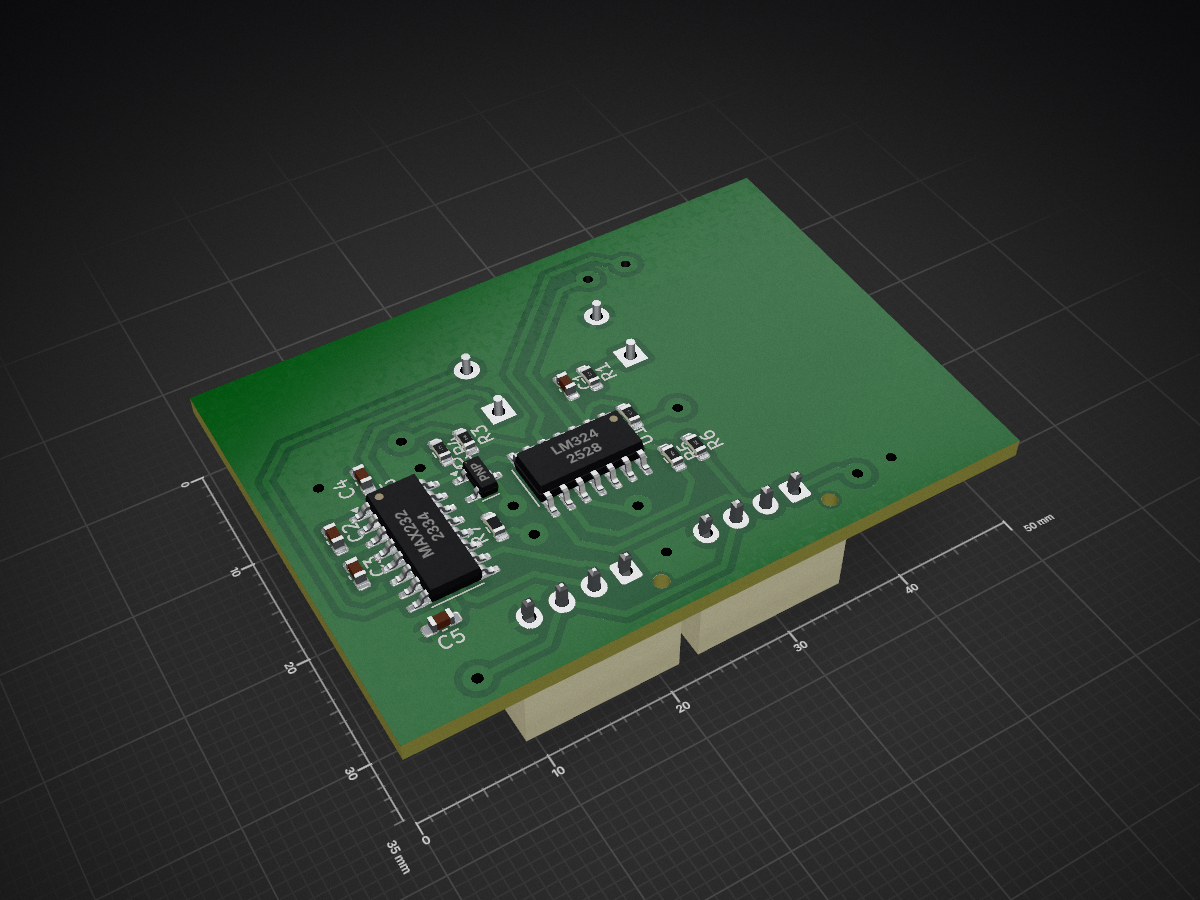
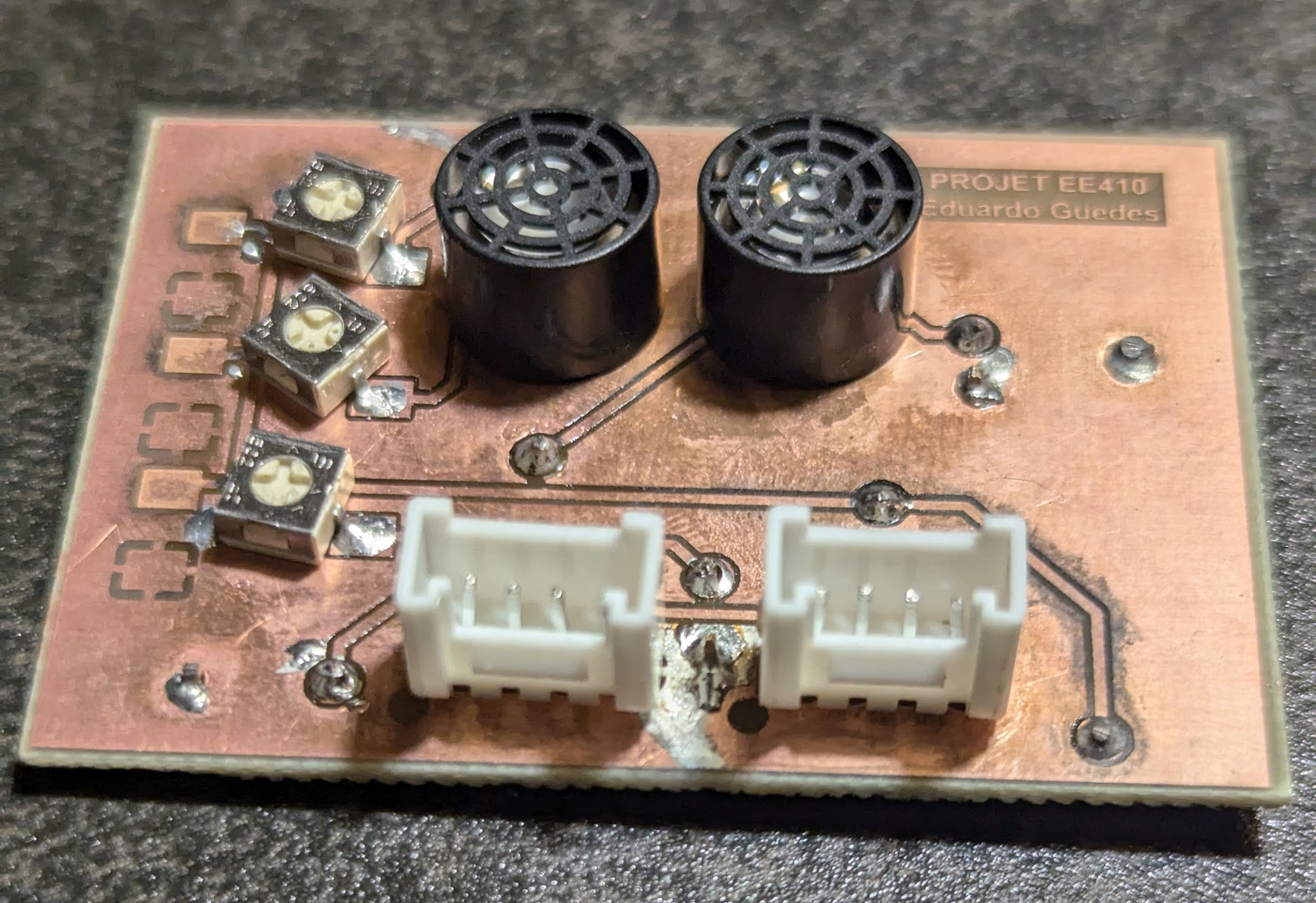
Esisar projet trilateration v2 is an open-source printed circuit board by EduardoGFilho, from the EduardoGFilho/Project-Arduino-Trilateration repository on GitHub. It is a 2-layer board of 50 × 35 mm with 22 parts on 30 nets, routed with 151 tracks and 13 vias.
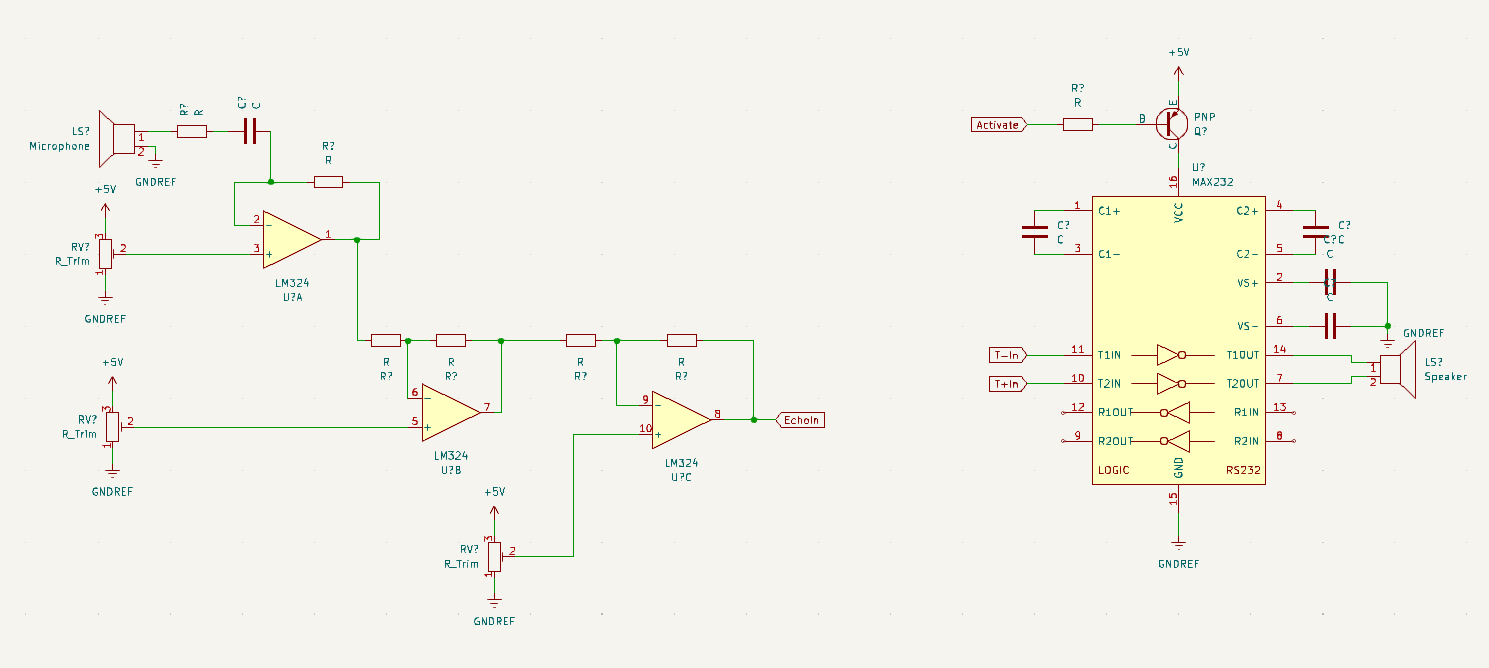
It is built around the MAX232N and LM324. Its parts include 7 resistors, 5 capacitors, 2 ICs, 2 connectors and 1 transistor.
Eduardo Guedes and Rémy Pourtier
This repo contains code for a project at ESISAR which consisted in:
Some other ideas which were not implemented:
Using more beacons
Live streaming the data instead of loading from a file
Moving the "robot" around
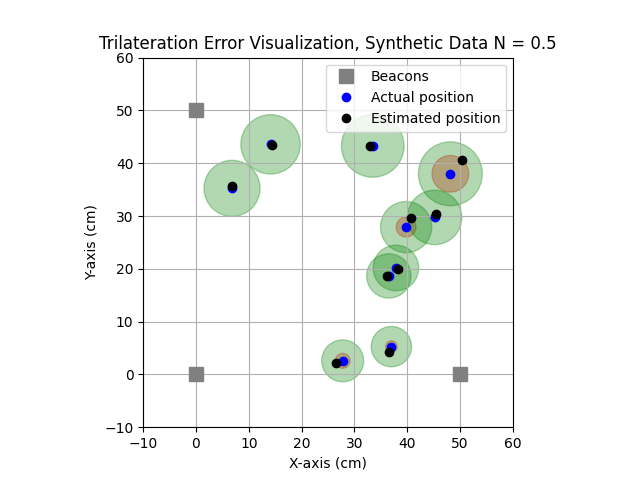
Trilateration consists in estimating a position given the distance to a set of known distances, which contrast to triangulation that uses a set of angles.
Bellow is an image made with mock data to test the equations
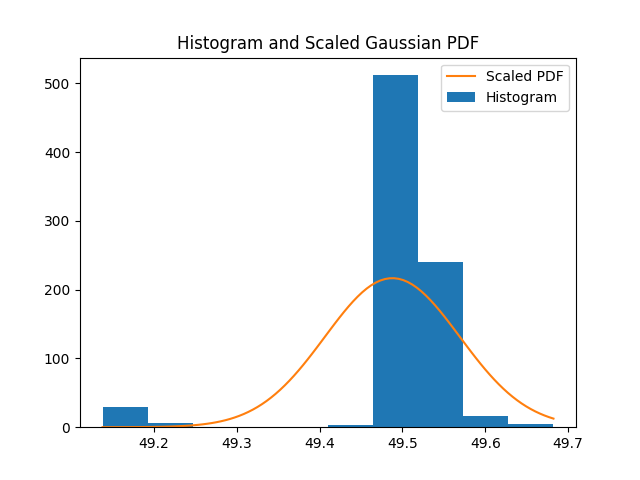
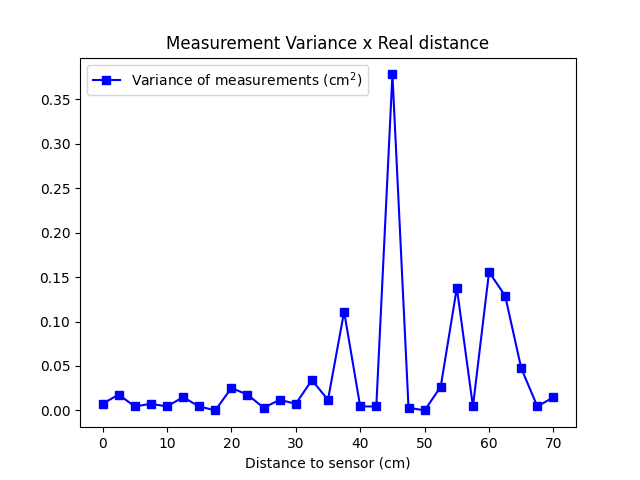
The sensor was mounted on fixed position and two types of measurements were done. One in which the beacon was at a fixed 50cm which was use to estimate the mean, variance and a histogram of the data.
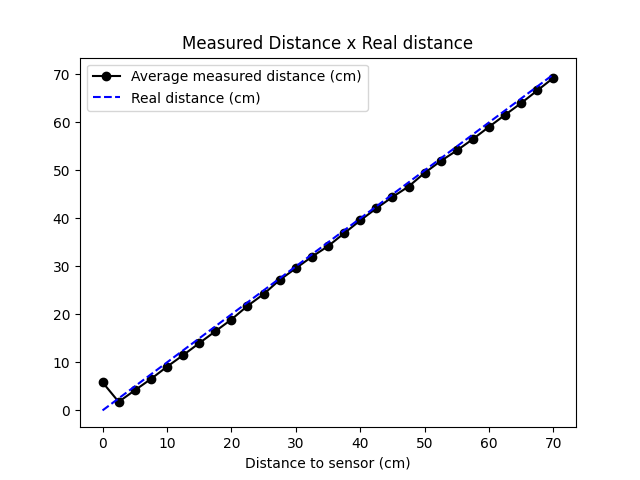
The second type of measurements were done with a varying distance and fewer samples, used to estimate how the mean and variance vary with distance
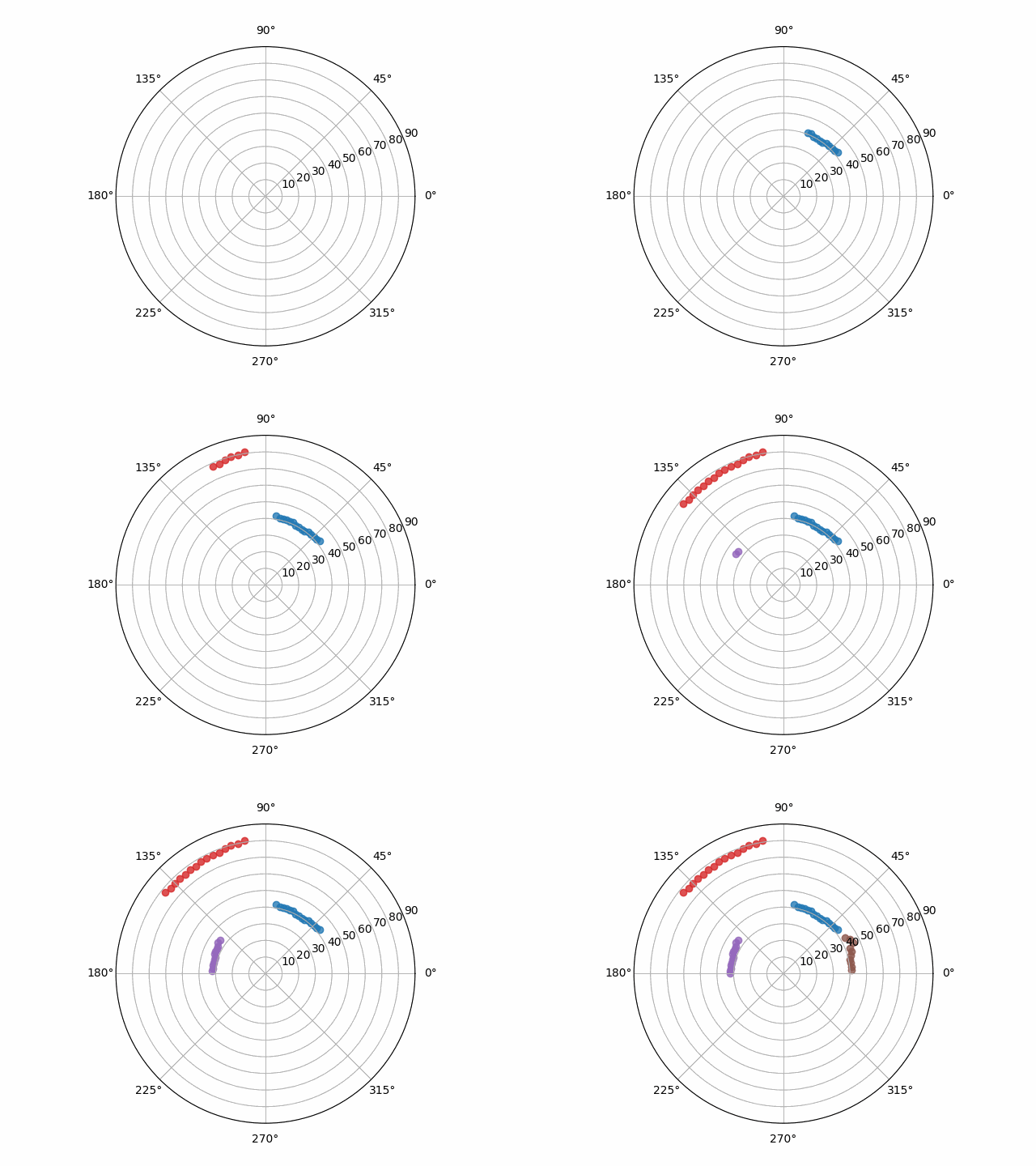
For actually applying trilateration we have to identify the beacons, which appear as multiple diferent points captured by the sensor. In order to deal with that we have though of an algorithm to cluster points together and consider them a beacon if a cluster is big enough.
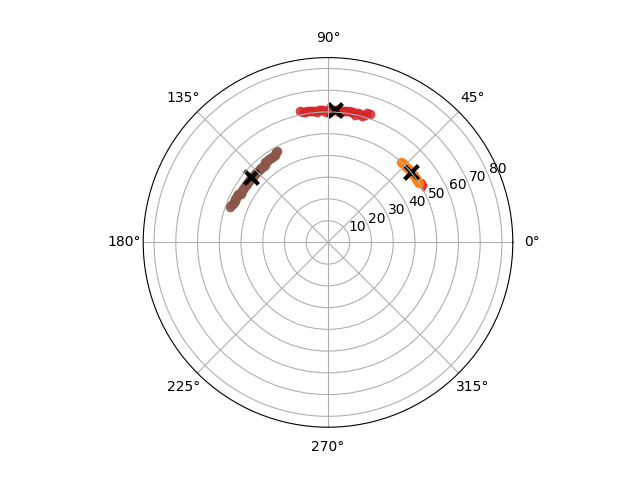
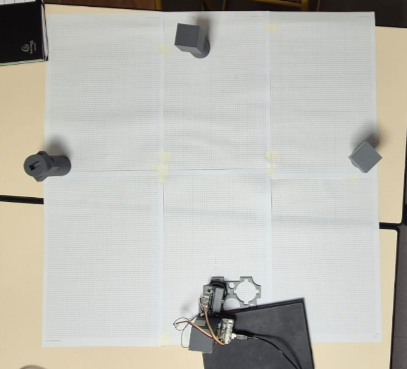
How the grid looked like
The board was heavily inspired by Homemade ultrasonic distance sensor. The biggest problem encountered was adjusting the gain of the AmpOps, since the triple aplification meant very small changes would cause the output to saturate. We couldn't fix this problem by the end of the project.
| Qty | Value | Footprint | References |
|---|---|---|---|
| 4 | C | Capacitor_SMD:C_0603_1608Metric_Pad1.08x0.95mm_HandSolder | C2, C3, C4, C5 |
| 3 | 100k | Resistor_SMD:R_0603_1608Metric_Pad0.98x0.95mm_HandSolder | R2, R4, R6 |
| 3 | 10k | Resistor_SMD:R_0603_1608Metric_Pad0.98x0.95mm_HandSolder | R1, R3, R5 |
| 3 | 5k | Potentiometer_SMD:Potentiometer_ACP_CA6-VSMD_Vertical | RV1, RV2, RV3 |
| 2 | Conn_01x04 | Connector_JST:JST_XH_B4B-XH-AM_1x04_P2.50mm_Vertical | J1, J2 |
| 1 | 10nF | Capacitor_SMD:C_0603_1608Metric_Pad1.08x0.95mm_HandSolder | C1 |
| 1 | LM324 | Package_SO:SOIC-14_3.9x8.7mm_P1.27mm | U1 |
| 1 | MAX232 | Package_SO:SO-16_3.9x9.9mm_P1.27mm | U2 |
| 1 | Microphone | Library:TR4010R-T | LS1 |
| 1 | PNP | Package_TO_SOT_SMD:SOT-23 | Q1 |
| 1 | R | Resistor_SMD:R_0603_1608Metric_Pad0.98x0.95mm_HandSolder | R7 |
| 1 | Speaker | Library:TR4010R-T | LS2 |


lynchaj/duodyne
Duodyne is a hobbyist retrocomputer system designed to run ROMWBW. It is comprised of modules on a system bus


peterheinrich/InternetOverSpaghetti
Transmitting IP packages over a pair of spaghetti thus demonstrating how media independent IP really is.

necroware/ps2-serial-mouse-adapter
PS/2 to serial port mouse adapter

LimeProgramming/USB-serial-mouse-adapter
Convert USB mouse to Serial mouse using Pi Pico

RetroFuturisticEngineer/RetroARDUInput
Use USB Keyboards, Mice and Joysticks on PC/XT, PC/AT, Tandy 1000, Atari, Amiga, C64 and Apple
It measures 50 × 35 mm and has 2 copper layers, 1.6 mm thick.
22 parts, built around the MAX232N and LM324. The full list of its parts is on this page, with links to each part's symbol and footprint where PCBKit's library has them.
From the EduardoGFilho/Project-Arduino-Trilateration repository on GitHub, at the commit this page was made from: the board is esisar_projet_trilateration/esisar_projet_trilateration_v2.kicad_pcb and its schematic esisar_projet_trilateration/esisar_projet_trilateration_v2.kicad_sch. PCBKit opens the board in the browser, with nothing to install.
Its repository states no licence, so its author keeps all rights: ask EduardoGFilho before reusing the design.