2 layers95 × 70 mm
Ltl
ThomasStolt/LongTermEnvLogger
The aim of this project is to measure, store, display and evaluate the temperature in the rooms of a large building over an extended time period. This project has 2 main components:
62 parts

 Cath272/ESP32-Low-Power-Temp-Monitor
In the project files you may find ESP32-C3 instead of ESP32-C6. I named it wrong when i created the project. The issue is just the file names, the footprints are correct and use a C6.
ESP32 C3 Zigbee Temp is an open-source printed circuit board by Cath272, from the Cath272/ESP32-Low-Power-Temp-Monitor repository on GitHub, published under the GPL-3.0 licence. It is a 2-layer board of 108 × 75 mm with 75 parts on 73 nets, routed with 436 tracks and 64 vias.
It is built around the ESP32-C6-WROOM-1-N4, BME280 and TPL5111DDCR, with the TPS63020, USBLC6-2SC6 and TS-1089S-02526 among its other parts. Its parts include 23 capacitors, 22 resistors, 6 ICs, 5 diodes and 5 switches. It belongs with the radio and wireless boards and the ESP32 and RISC-V boards of this library.


ESP32 Low Power Temp Monitor is an ESP32 C6 based low power Temperature and Humidity Monitor that aims to have a device that is very efficent and doen't need charging.
The device reads the temperature, relative humidity and barometric pressure and displays it on an 4.2 inch Epaper Display, alonside the current date and time. The device is awake just for a few seconds as it reads the tempereature and displays it and then goes to sleep. It performs a reading every minute. One a day it connects to WiFi and checks the current time to sync up with an NTP server to account for Daylight saving time and potential drifts in the internal esp32 real time clock.
In the project files you may find ESP32-C3 instead of ESP32-C6. I named it wrong when i created the project. The issue is just the file names, the footprints are correct and use a C6. The TPL5111 is currenly does not work properly so i emulated it in software using the esp32 deep sleep.
This project is based around a ESP32 C6 Wroom 1 Module that incorporates a RISC-V single-core microprocessor with 4MB of flash, WiFi 6 and Zigbee
The TPS63020 is High Efficiency Single Inductor Buck-Boost Converter, used for converting the 5v from usb or the Li-ion battery voltage(3.0v to 4.2v) to a very stable 3.3V for the Microcontroller and the epaper display. The main advantage of this ic is its low operating quiescent current: 25 μA; and it's low cost:0.55€
The BME280 is a digital humidity, pressure and temperature sensor.
GDEY042Z98 Tri color (Black, White and Red) Epaper display using a SSD1683 driver chip, the main benefit of this display is its big size (4.2 inch) and very good price for an Epaper display (around 10€) datasheet
The TPL5111 is a Nano Power System timer for power gating. It is used to turn on the esp32 every minute to read the temperature
The MCP7381 is an integrated Li-ion cell battery controller
Small 250Mah generic Li-ion cell with protection, used because of its small size
Generic 1W 5V Solar panel
| Component | Image | Model | Pcs | Price |
|---|---|---|---|---|
| ESP32-C6-WROOM-1-N8 |  | ESP32-C6-WROOM-1-N8 | 1 | € 4.91 |
| Buck Boost Coverter | TPS63020 | 1 | € 0.52 | |
| TPL5111 |  | TPL5111 | 1 | € 0.47 |
| BME280 |  | BME280 | 1 | € 2.78 |
| MCP7381 |  | MCP7381 | 1 | € 0.84 |
| Solar Panel | 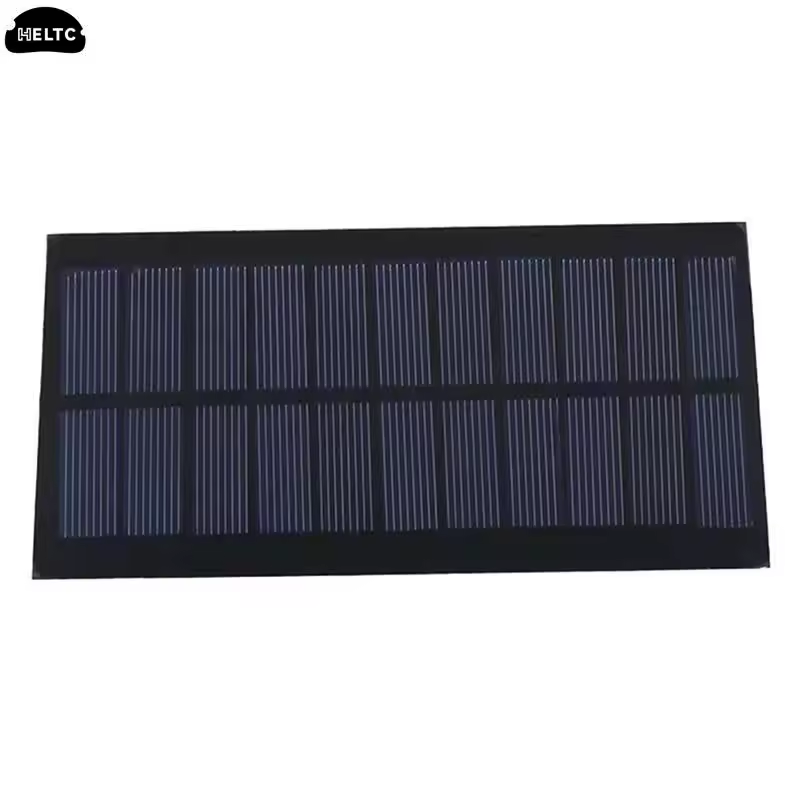 | 5V 1W Solar Panel | 1 | € 2.23 |
| 4.2 Inch Epaper Display | 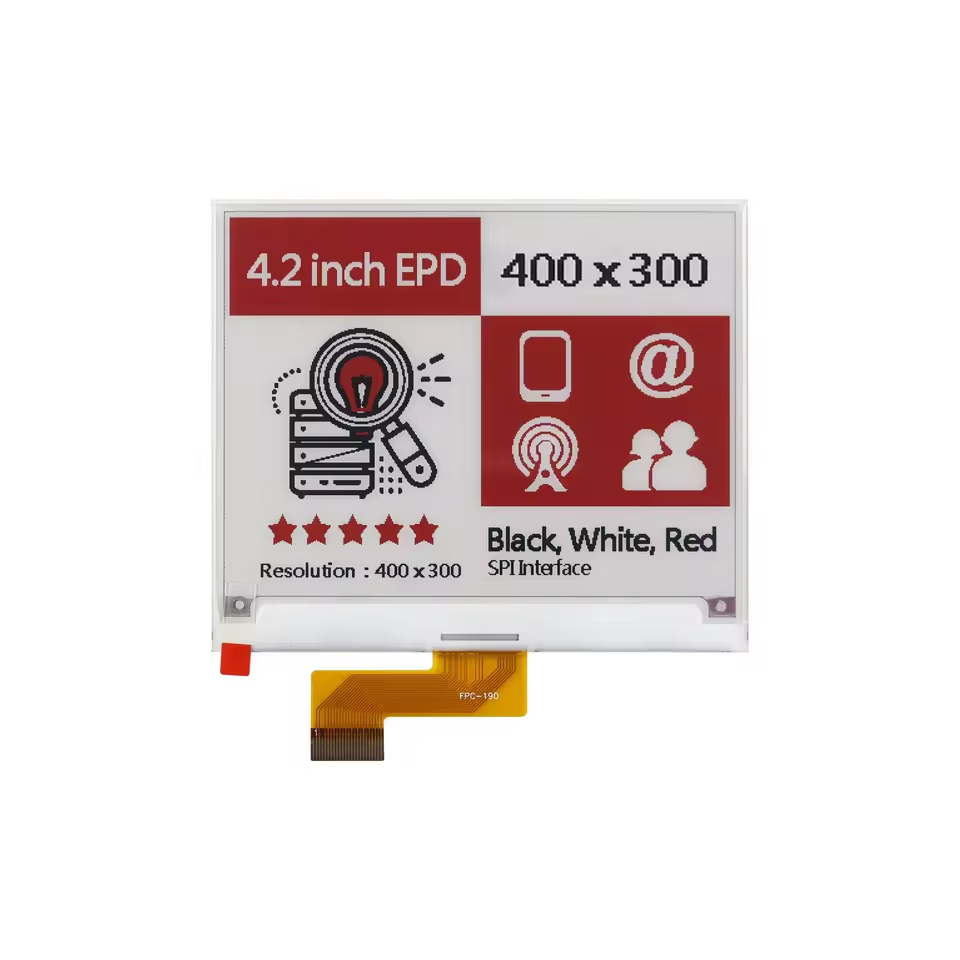 | GDEY042Z98 | 1 | € 11.64 |
The case was make using autocad and exported to stl The stl files can be found in the 3D Parts folder
The gerber production zip file can be found in the Production folder
The device wakes up, connect to wifi on the first boot, reads the time from an NTP server, and then for the next 24 hours it just reads the temperature and displays it. The time is kept in a register while the esp sleeps and increments it on every boot. Every 24 hours it connect to Wifi to check the time again for accuracy. The program can be found in the Project_Code folder
The program is based around the GxEPD2 libary for interfacing with the Epaper display,
The font used in this project is Roboto with 2 diffrent font sizes: 16pt for the time, date, altitude and barometric pressure and 48pt for the Temeprature and relative humidity The font were converted from True Type to Adafruit's GFX Font format (also used by GxEPD2 as it is based on Adafruit GFX) using the ttf2gfx utility
Adafruit_BME280 for the BME280 sensor
For time i used 4 libraries:
| Qty | Value | Footprint | References |
|---|---|---|---|
| 10 | 1uF | Capacitor_SMD:C_0603_1608Metric | C7, C8, C9, C26, C27, C28, C29, C30, C31, C32 |
| 8 | 10k | Resistor_SMD:R_0402_1005Metric | R8, R9, R10, R18, R19, R20, R21, R22 |
| 5 | 22uF | Capacitor_SMD:C_0805_2012Metric | C11, C12, C15, C16, C17 |
| 5 | TS-1089S-02526 | easyeda2kicad:SW-SMD_4P-L4.2-W3.3-P2.15-LS5.1 | SW1, SW2, SW3, SW4, SW5 |
| 4 | 100nF | Capacitor_SMD:C_0402_1005Metric | C13, C14, C19, C25 |
| 4 | 1N5819 SOD323 | Diode_SMD:D_SOD-323 | D1, D2, D3, D6 |
| 3 | 100K | Resistor_SMD:R_0402_1005Metric | R13, R14, R16 |
| 3 | 4.7uF | Capacitor_SMD:C_0805_2012Metric | C6, C10, C18 |
| 2 | 5.1K | Resistor_SMD:R_0402_1005Metric | R1, R2 |
| 2 | IRLML9301TRPBF | easyeda2kicad:SOT-23_L2.9-W1.3-P1.90-LS2.4-BR | Q4, Q5 |
| 1 | 0.47 | Resistor_SMD:R_0402_1005Metric | R11 |
| 1 | 1.5uH | Inductor_SMD:L_APV_ANR4030 | L1 |
| 1 | 100k | Resistor_SMD:R_0402_1005Metric | R17 |
| 1 | 10uF | Capacitor_SMD:C_0805_2012Metric | C24 |
| 1 | 15K | Resistor_SMD:R_0402_1005Metric | R15 |
| 1 | 180k | Resistor_SMD:R_0402_1005Metric | R4 |
| 1 | 1M | Resistor_SMD:R_0402_1005Metric | R3 |
| 1 | 1N5819 | Diode_SMD:D_SOD-323 | D4 |
| 1 | 2.2 | Resistor_SMD:R_0402_1005Metric | R12 |
| 1 | 200R | Resistor_SMD:R_0402_1005Metric | R5 |
| 1 | 22K | Resistor_SMD:R_0402_1005Metric | R7 |
| 1 | 2K | Resistor_SMD:R_0402_1005Metric | R6 |
| 1 | 2N7002-SOT23 | easyeda2kicad:SOT-23_L2.9-W1.3-P1.90-LS2.4-BR | Q1 |
| 1 | 68uH | Inductor_SMD:L_APV_ANR4030 | L2 |
| 1 | BME280 | Package_LGA:Bosch_LGA-8_2.5x2.5mm_P0.65mm_ClockwisePinNumbering | U4 |
| 1 | Battery+ | TestPoint:TestPoint_Pad_2.0x2.0mm | TP2 |
| 1 | Battery- | TestPoint:TestPoint_Pad_2.0x2.0mm | TP1 |
| 1 | Conn_01x24_Pin | fooprints_2:MOLEX_5034802400 | J1 |
| 1 | ESP32-C6-WROOM-1-N4 | easyeda2kicad:WIRELM-SMD_ESP32-C6-WROOM-1 | U1 |
| 1 | Jumper_2_Open | Jumper:SolderJumper-2_P1.3mm_Open_TrianglePad1.0x1.5mm | JP1 |
| 1 | LOGO | LOGO | G*** |
| 1 | MCP73831-2-OT | Package_TO_SOT_SMD:SOT-23-5 | U6 |
| 1 | PFMF.050.1 | Fuse:Fuse_1812_4532Metric | F1 |
| 1 | Solar+ | TestPoint:TestPoint_Pad_2.0x2.0mm | TP3 |
| 1 | Solar- | TestPoint:TestPoint_Pad_2.0x2.0mm | TP4 |
| 1 | TPL5111DDCR | easyeda2kicad:TSOT-23-6_L2.9-W1.6-P0.95-LS2.8-BL | U2 |
| 1 | TPS63020 | easyeda2kicad:VSON-14_L4.0-W3.0-P0.50-BL-EP_TI_DSJ | U3 |
| 1 | USBLC6-2SC6 | Package_TO_SOT_SMD:SOT-23-6 | U5 |
| 1 | USB_C_Receptacle_USB2.0_14P | Connector_USB:USB_C_Receptacle_GCT_USB4110 | J2 |
ThomasStolt/LongTermEnvLogger
The aim of this project is to measure, store, display and evaluate the temperature in the rooms of a large building over an extended time period. This project has 2 main components:

weiweiweiopen/self-powered-iv-curve-tester-with-single-dssc
Single-DSSC energy-harvesting I-V tester: KiCad hardware, relay switching, GPIO firmware, and energy estimates.

oomlout/oomlout_oomp_project_bot_v_2


JamPsym/letki
A new schematic simplification is in progress. See the next-iteration note for the checked 33 Ω candidate. This directory and its frozen exports still represent the previous 34 Ω circuit; the candidate has no…

It measures 108 × 75 mm and has 2 copper layers, 1 mm thick.
75 parts, built around the ESP32-C6-WROOM-1-N4, BME280, TPL5111DDCR and TPS63020. The full list of its parts is on this page, with links to each part's symbol and footprint where PCBKit's library has them.
From the Cath272/ESP32-Low-Power-Temp-Monitor repository on GitHub, at the commit this page was made from: the board is PCB/ESP32 C3 Zigbee Temp/ESP32 C3 Zigbee Temp.kicad_pcb and its schematic PCB/ESP32 C3 Zigbee Temp/DC-DC Circuit.kicad_sch. PCBKit opens the board in the browser, with nothing to install.
Its repository publishes it under the GPL-3.0 licence: you may reuse it on that licence's terms (keep the author's notice, and for a copyleft licence share your changes alike).