2 layers106.8 × 96.4 mm
Hasp flight computer
Big-Red-Sat/High-Altitude-Student-Platform
This repository contains the hardware designs, data, and analysis of perovskite solar cells on high altitude balloons
284 parts3

 Big-Red-Sat/High-Altitude-Student-Platform3
This repository contains the hardware designs, data, and analysis of perovskite solar cells on high altitude balloons
Hasp flight computer is an open-source printed circuit board by Big-Red-Sat, from the Big-Red-Sat/High-Altitude-Student-Platform repository on GitHub. It is a 2-layer board of 106.8 × 96.4 mm with 292 parts on 230 nets, routed with 1,635 tracks and 238 vias.
It is built around the OPA2387DGK, SN74LV1T34DBV and ADG841YKSZ-500RL7, with the ADG839YKSZ-REEL7, 74HC237 and DEV-16771 among its other parts. Its parts include 82 resistors, 76 capacitors, 66 ICs and 14 connectors. It belongs with the power boards of this library.


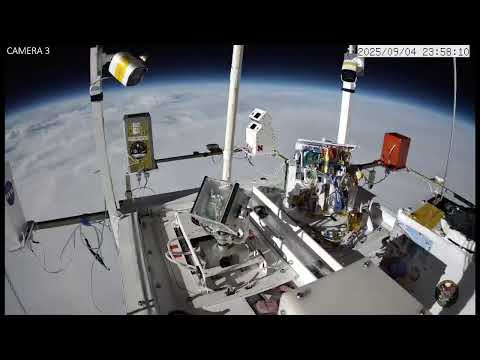
This repository contains the designs, data, and analysis from UNL's Aerospace Club's Aerospace eXperimental Payloads (AXP) payload aboard National Aeronautics and Space Administration (NASA) and Louisiana State University's (LSU) High Altitude Student Platform (HASP) program. Our payload continued our work from Big Red Sat-1 on emerging perovskite solar cell science, in collaboration with the National Renewable Energy Laboratory (NREL). Our test flights and the HASP flight setup the framework for the next main Big Red Sat mission.

We integrated and tested new perovskite solar modules for their maiden voyage. These devices are composed of multiple individual perovskite solar cells in a series thereby raising the voltage and current production of the solar cell. In addition to these novel devices, we incorporated next generation perovskite solar cells of the same physical construction as in Big Red Sat-1.
To monitor the performance of these devices in flight, we not only curve trace them continuously, but we are also monitoring the wavelength of light incident on the mounting panel, the intensity of the illumination, and the position of the sun in the sky at the time of data capture. This provides us an improved look into the dynamics of power production in these devices and will provide insight into how well they perform at 100k+ foot elevation.
As part of the validation process for our designs, we perform multiple test flights using our high altitude balloons along with various ground tests.
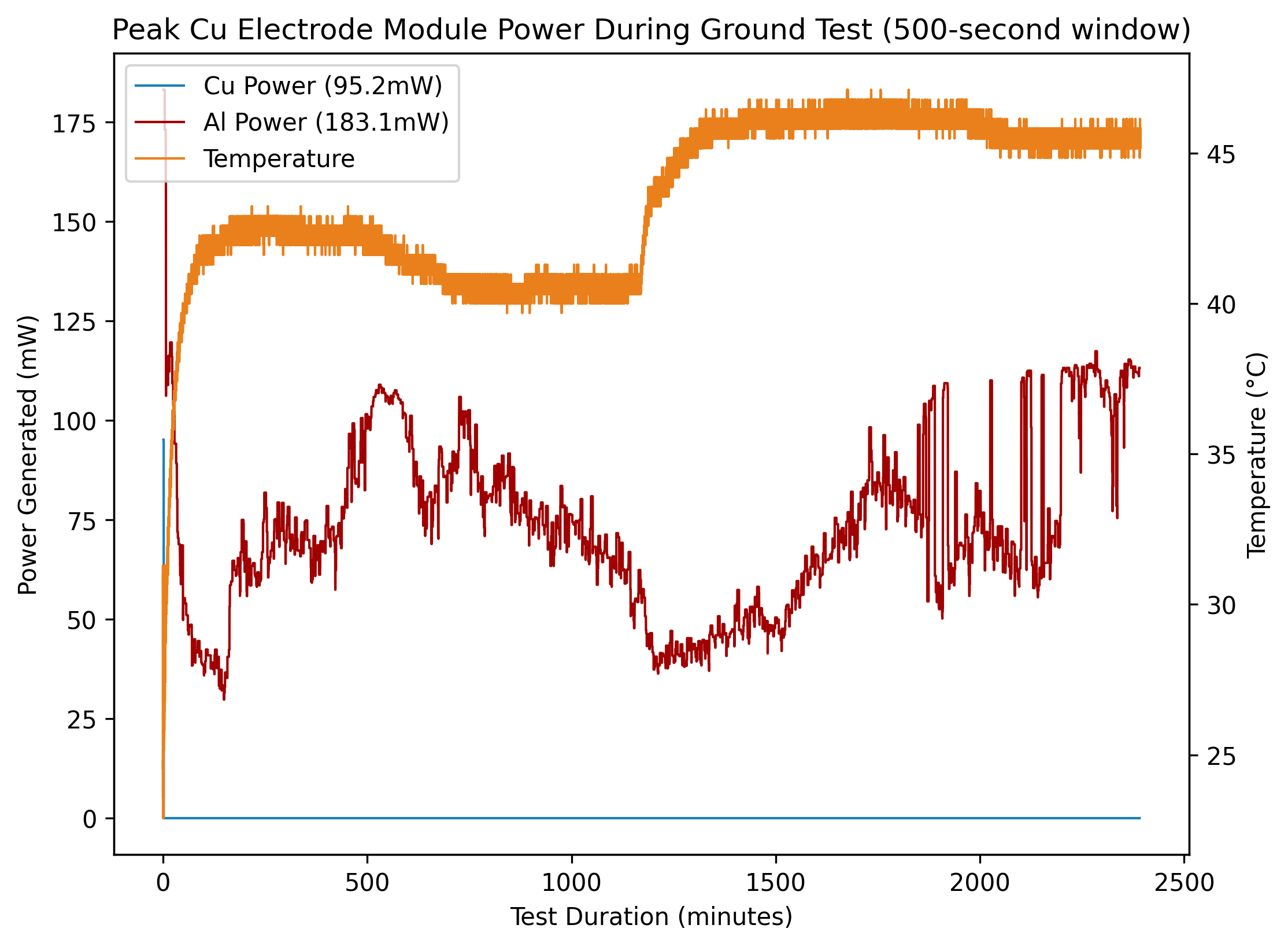
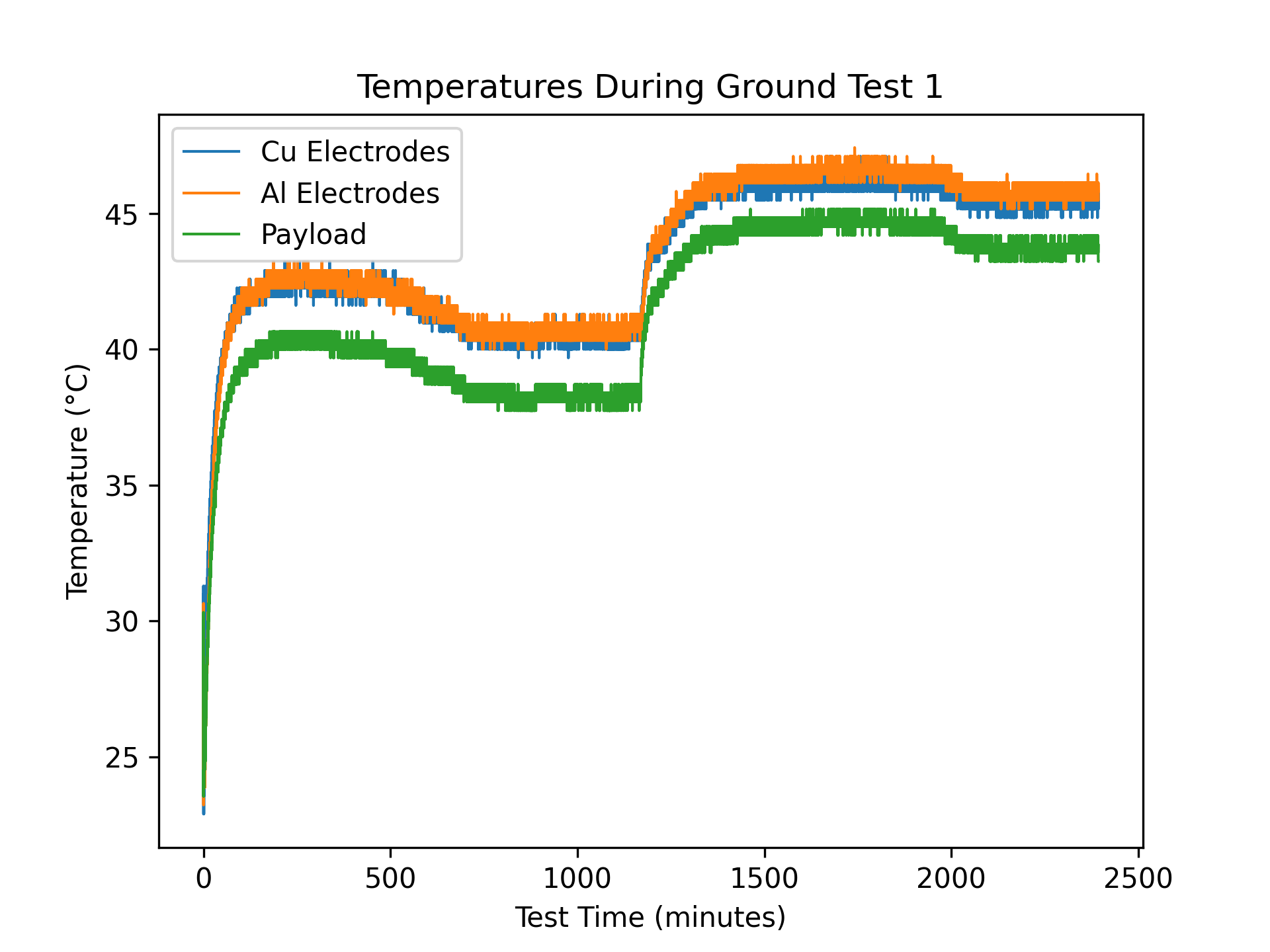
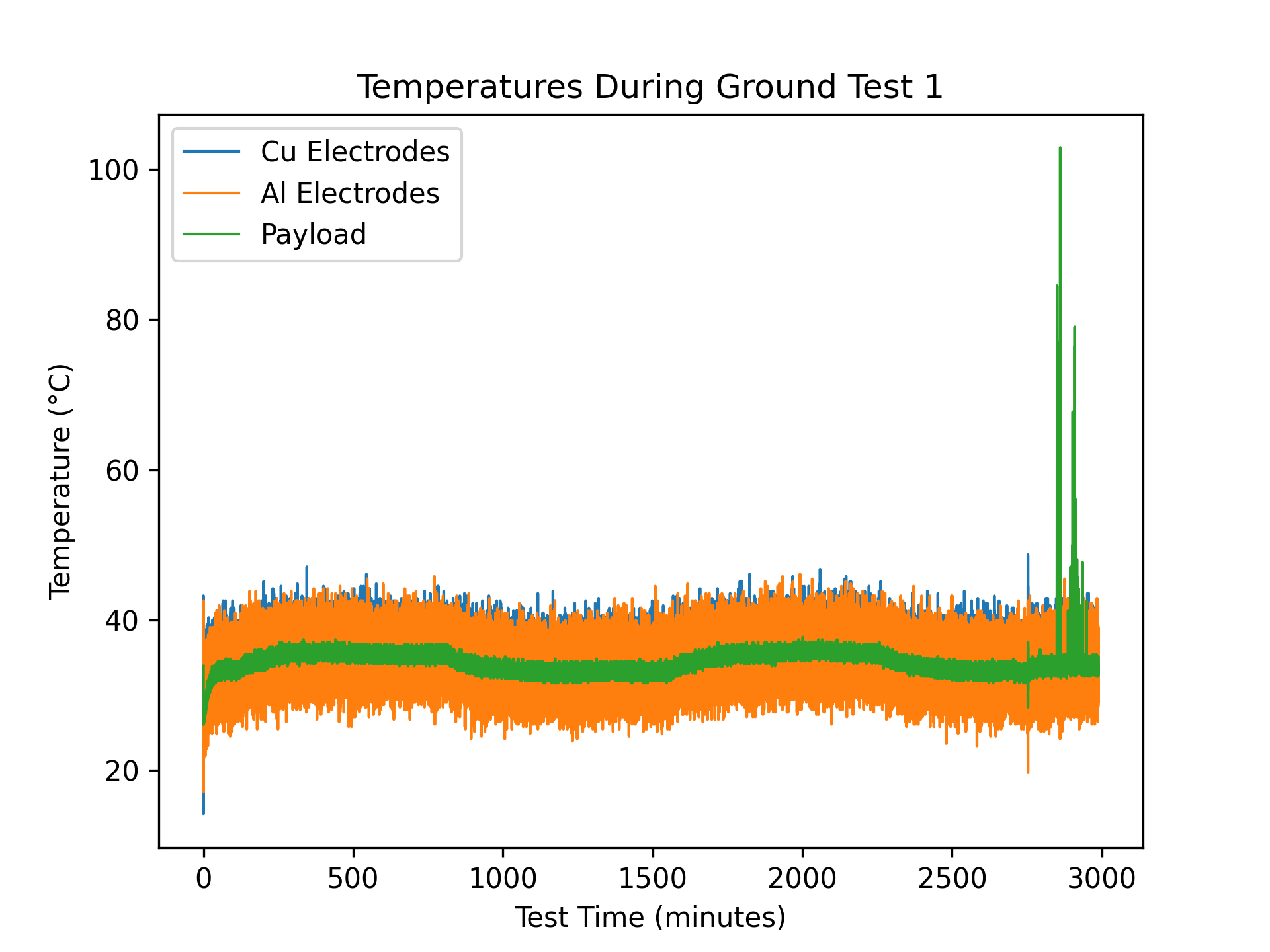
When considering how well our payload will perform in the sky, it is imperiative to test it on the ground to make sure that all of your assumptions on operation are correct. To this end, we tested each of our payloads using a large area, full spectrum, grow lights to assess how well the perovskite solar cells handled extended operation under illumination and how well our data collection performed during the same. Before the launch of Big Red Sat-1.1, we performed two extended ground tests to make sure our systems were operational.
The first ground test showed an electrical connection issue with the Al module and an interesting increase in temperature that we believe corresponds with the HVAC system turning off in the University.
After adjusting the Al module connections, a second ground test was performed with the same data collection and processing approach. Notice the decrease in power in the Al module over time, we believe this is due to the same electrical connection issue as before and that the electrode tab was damaged, limiting our ability to monitor it accurately.
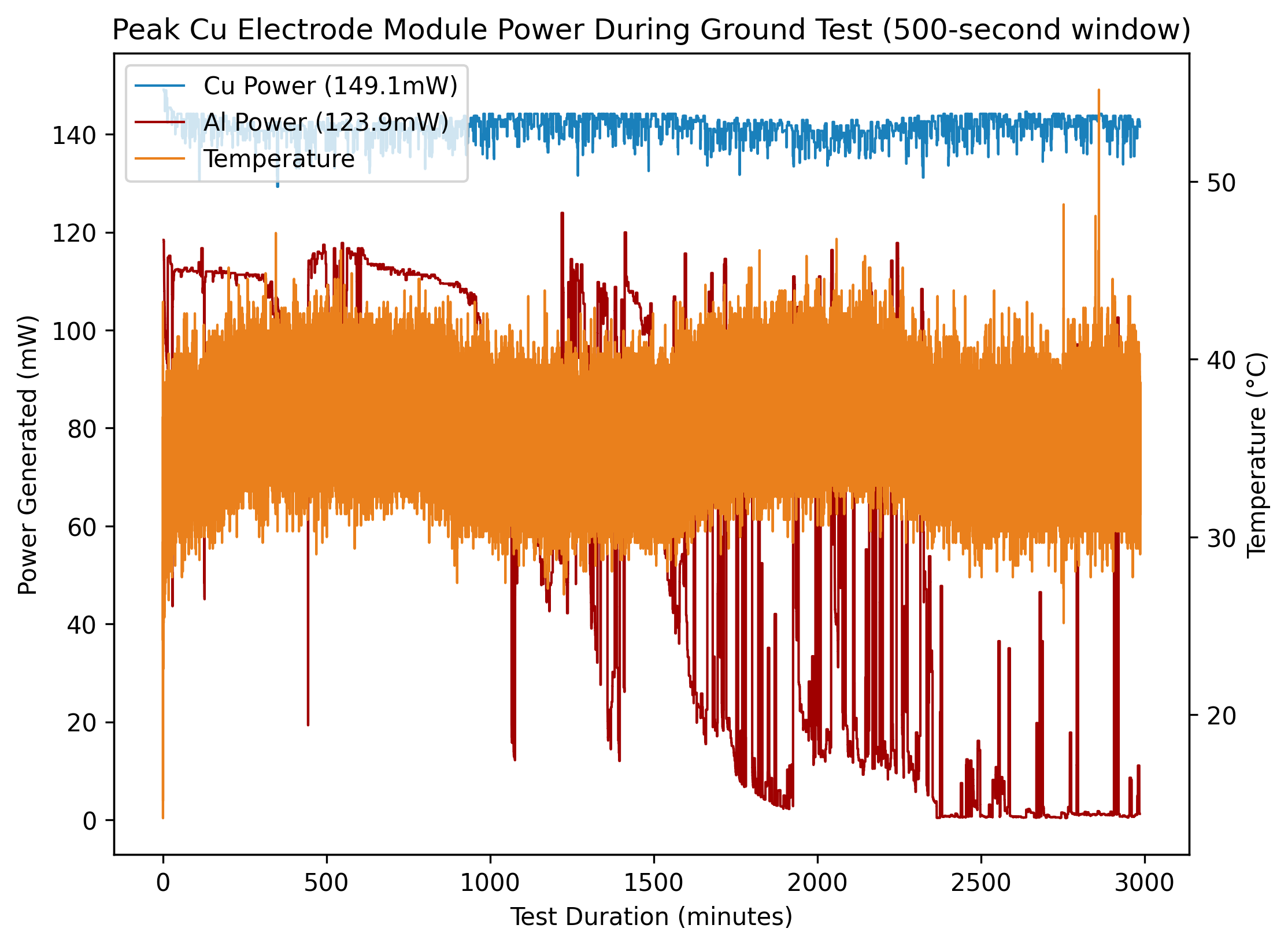
We were comfortable with at least one of the modules working during flight. With these two ground tests completed, we were planned to launch our payload.
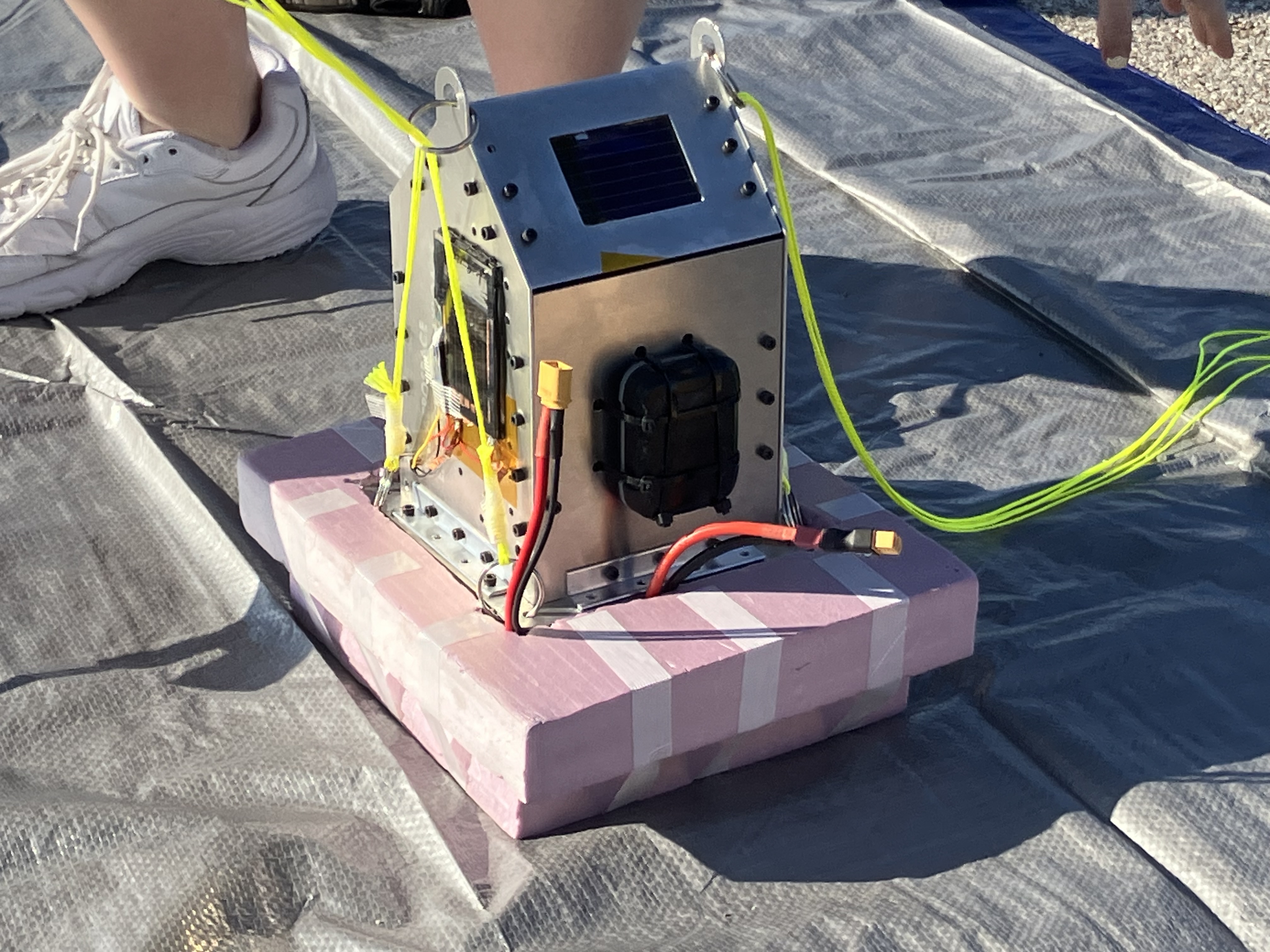
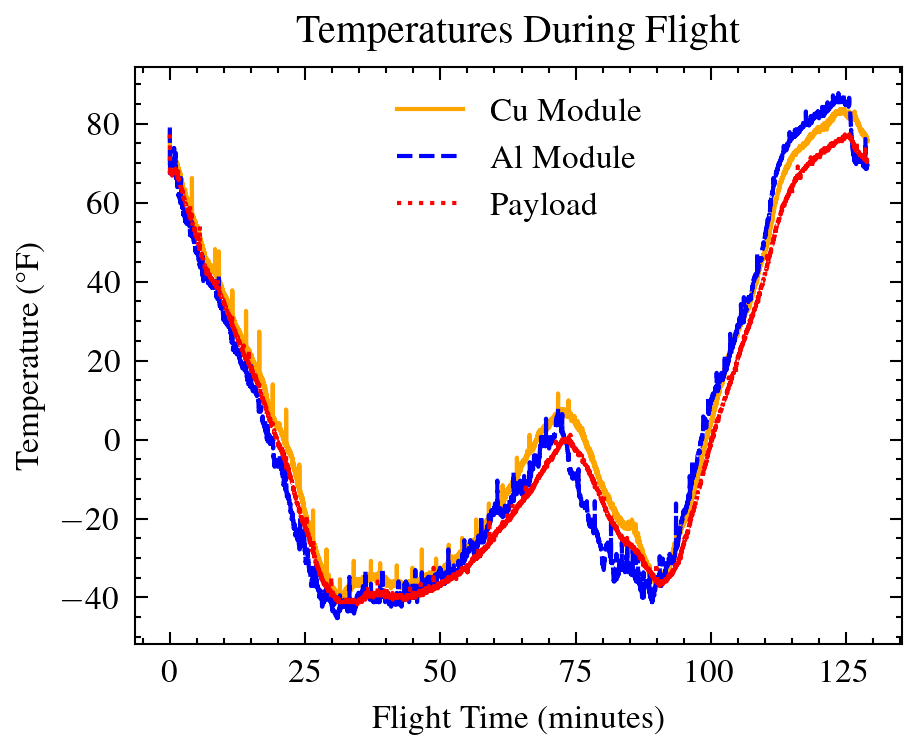
Our first flight was a quick turnaround on the mechanical and electrical platforms and we had designed systems that only monitored the performance of the perovskite modules while held at a fixed resistance. With the voltage and current monitoring, we successfully tracked the development of the module's temperature, voltage, and current up to 92k feet of elevation. With an attached 360 GoPro video, we can monitor the status of the payload during the flight, the video can be found below.
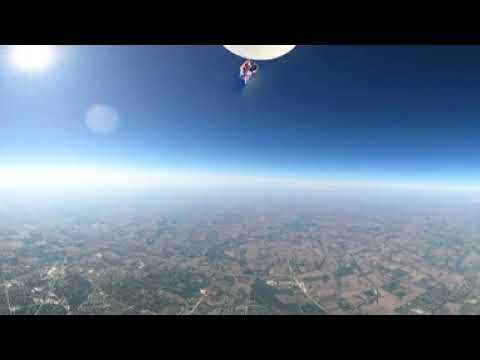
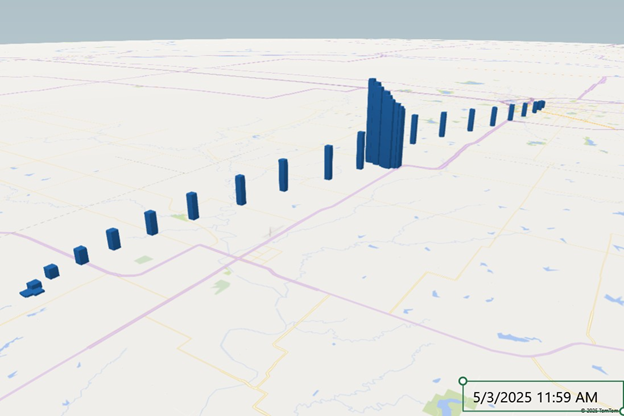
This flight produced a successful data collection for one of the modules. There were two modules on board, one that was manufactured using copper (Cu) electrodes and another using aluminum (Al) electrodes. We had an electrical connection issue with the Al module, but no such issues with the Cu module. According to our SPOT Trace GPS tracker, BRS-1.1 reached a maximum flight altitude of 92,678 feet with a flight duration of 1 hour, 49 minutes, and 21 seconds.
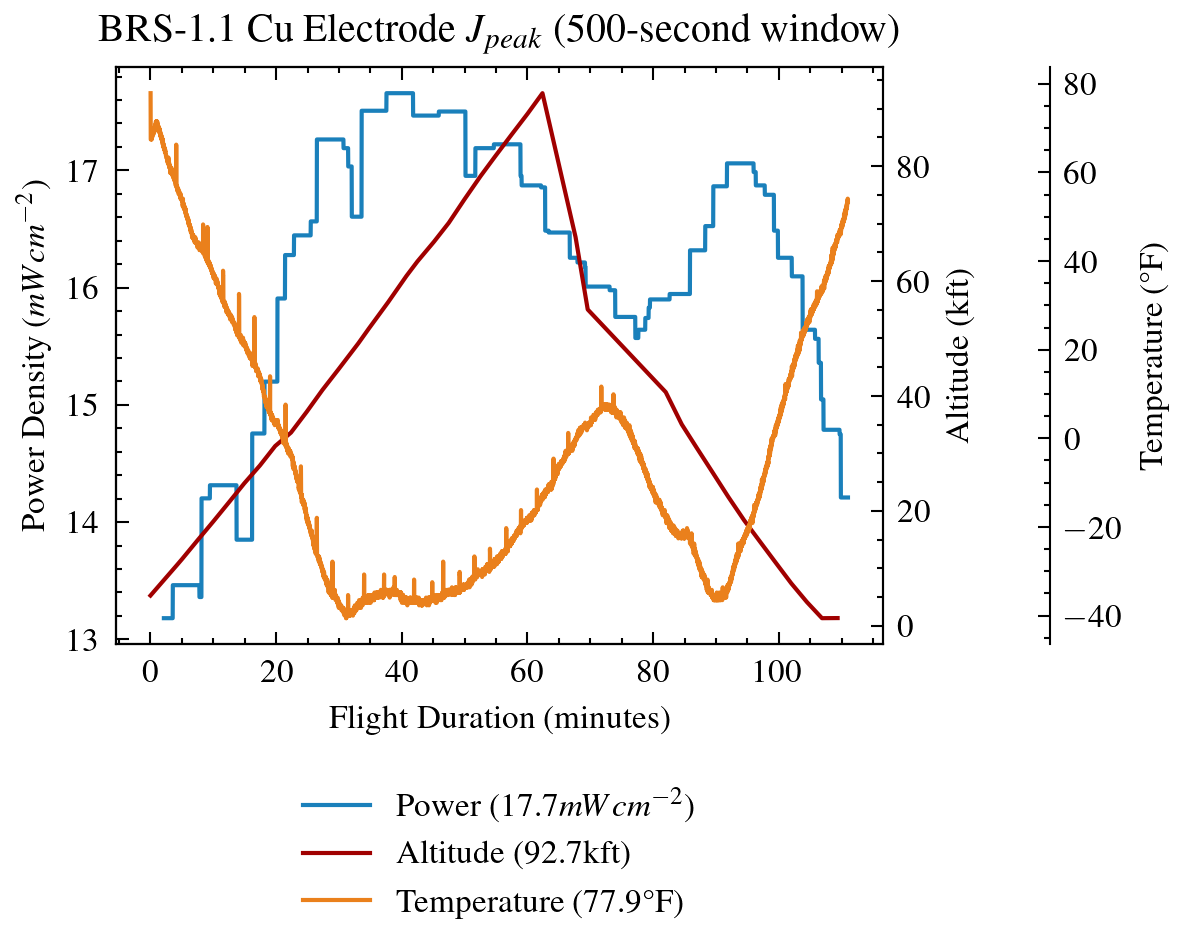
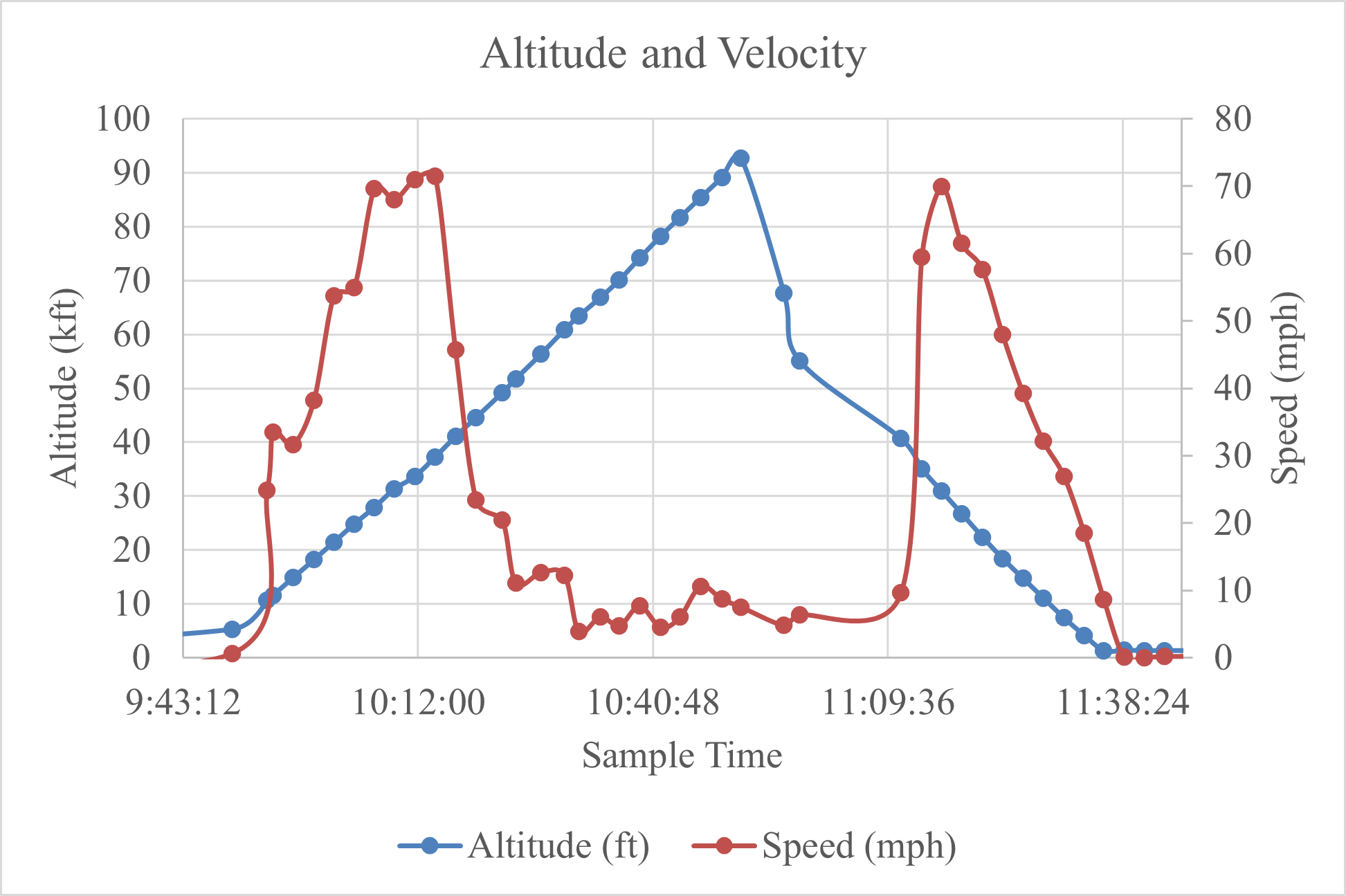
Looking forward to our next flight, we decided to add curve tracers for the modules to improve our insights into the changing dynamics of the devices, as well as integrate a 9-axis IMU to monitor our flight dynamics. In addition to this, we decided to add a multi-channel wavelength sensor to investigate the changing wavelength intesity in flight and a spare sun vector sensor, which was left over from BRS-1 and were not concerned about damaging during landing.
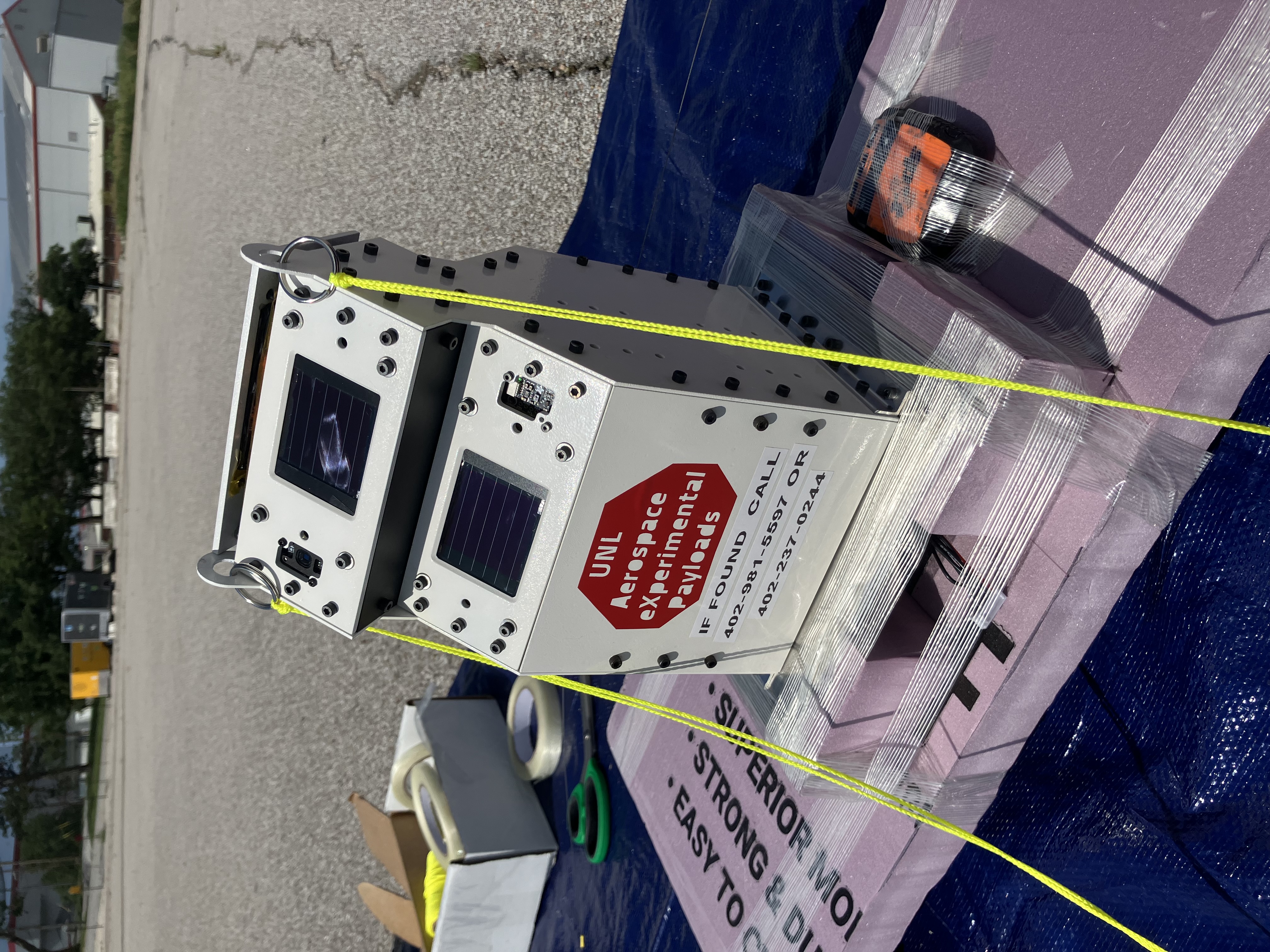
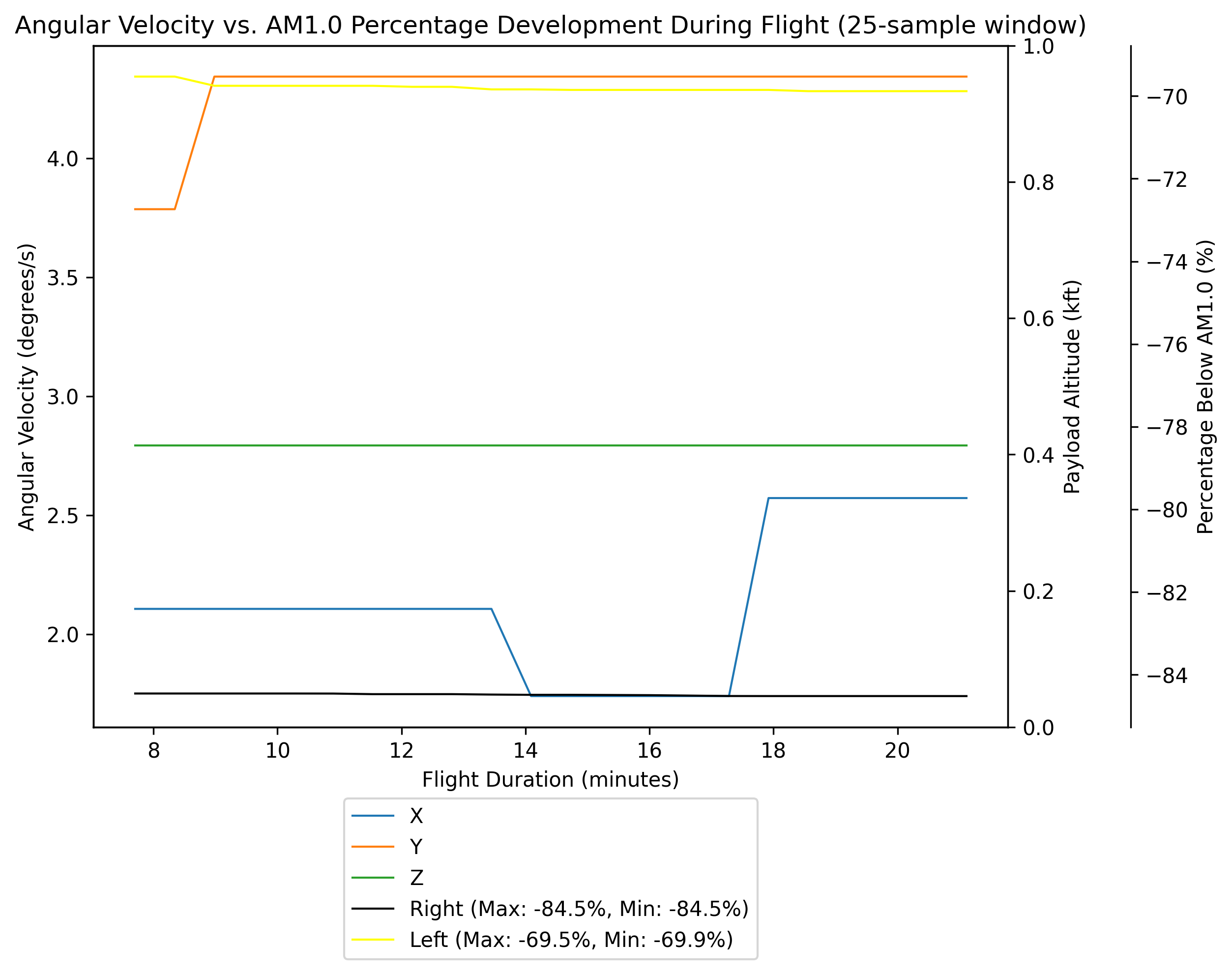
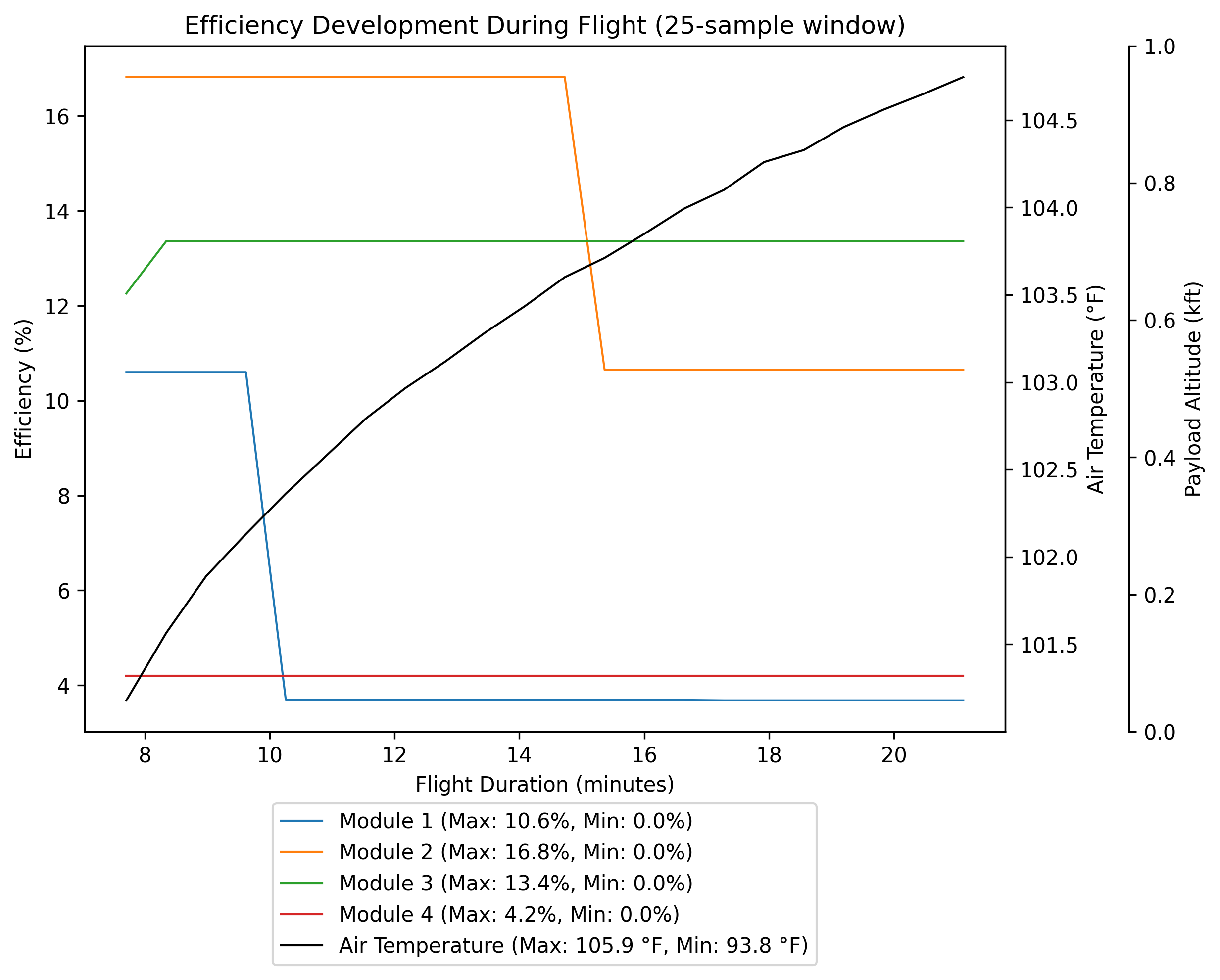
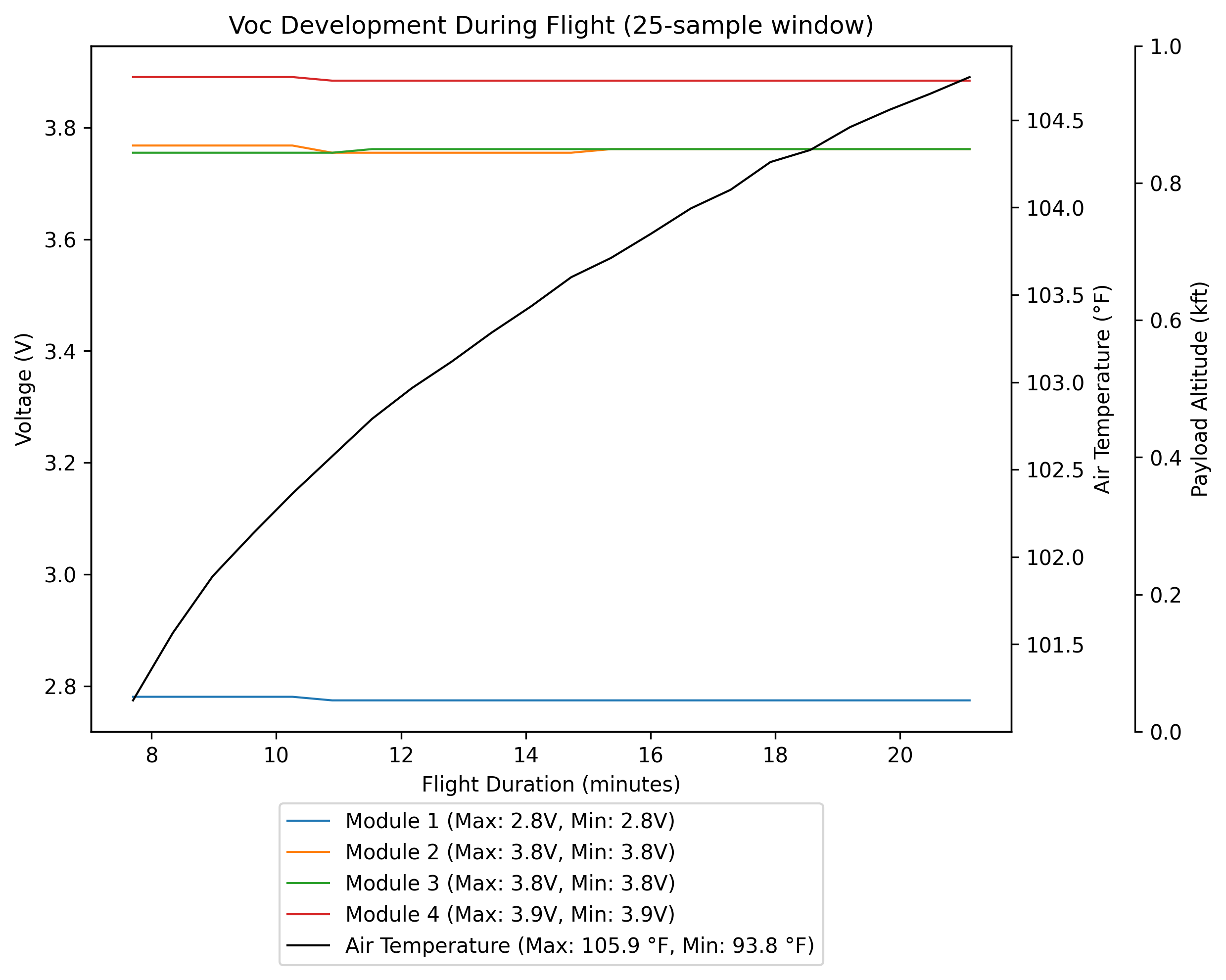
Our second flight added multiple systems and additional deck of perovskite modules. We added curve tracing circuitry for the perovskite solar cells, light wavelength monitoring, a sun vector sensor, and an accelerometer to improve flight dynamics monitoring.
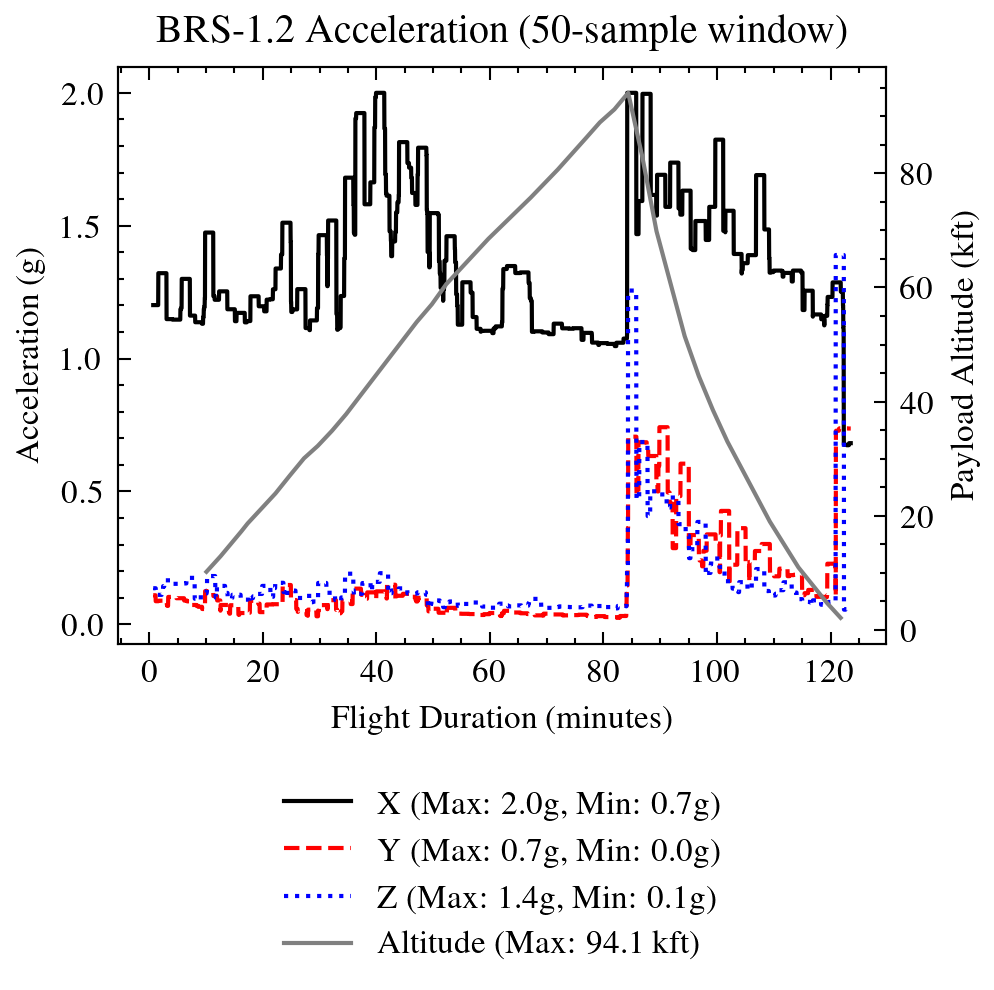
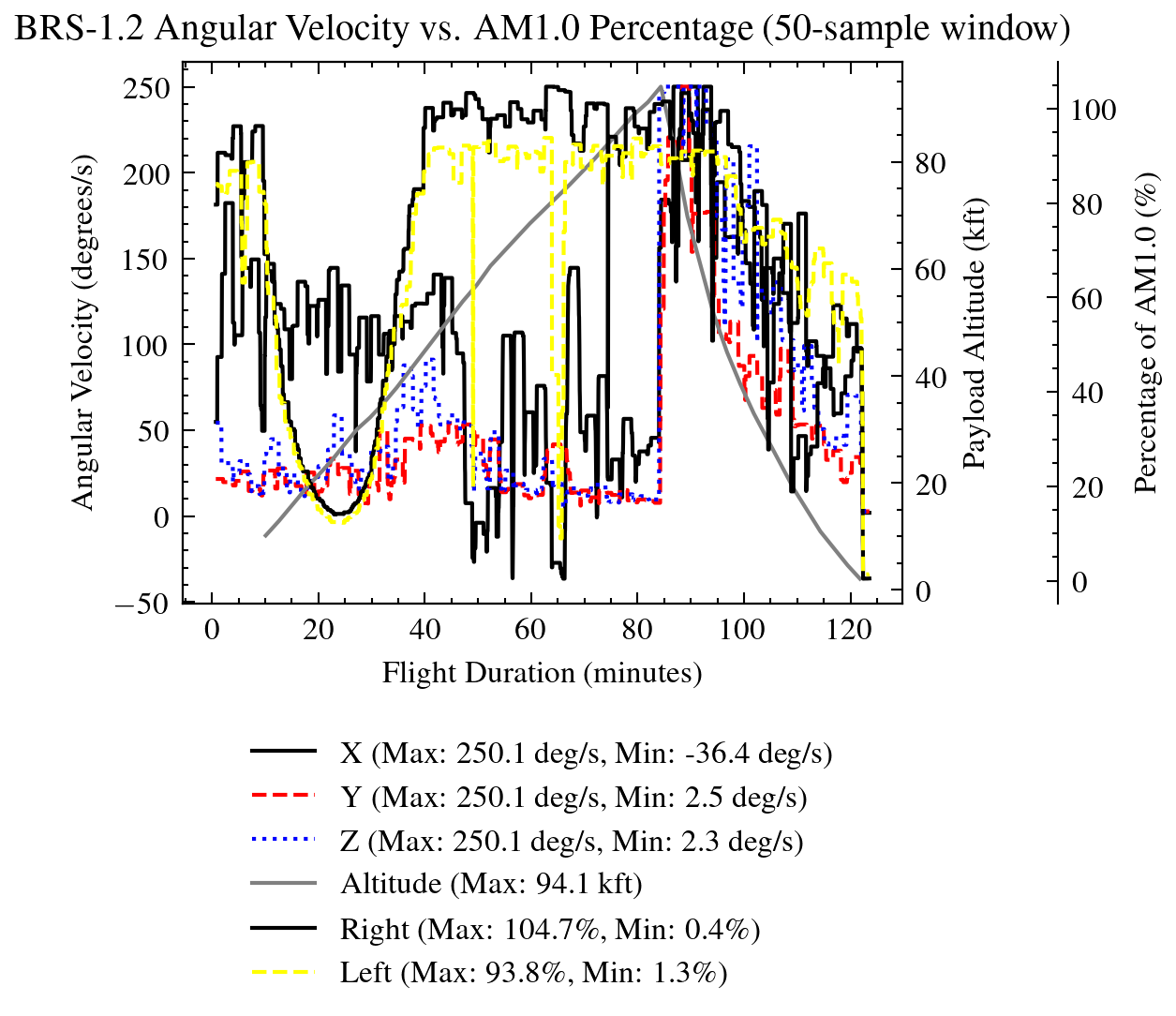
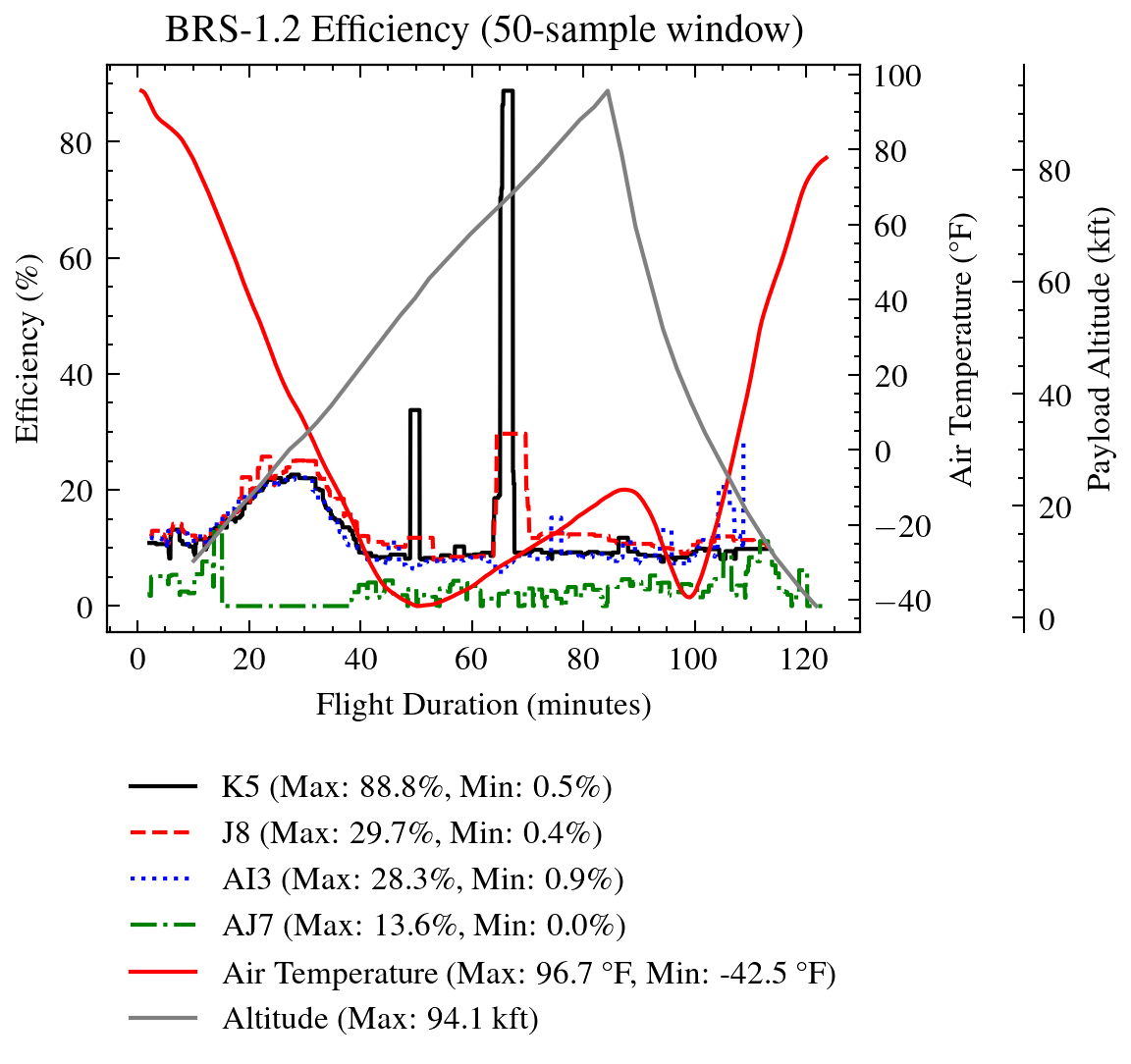
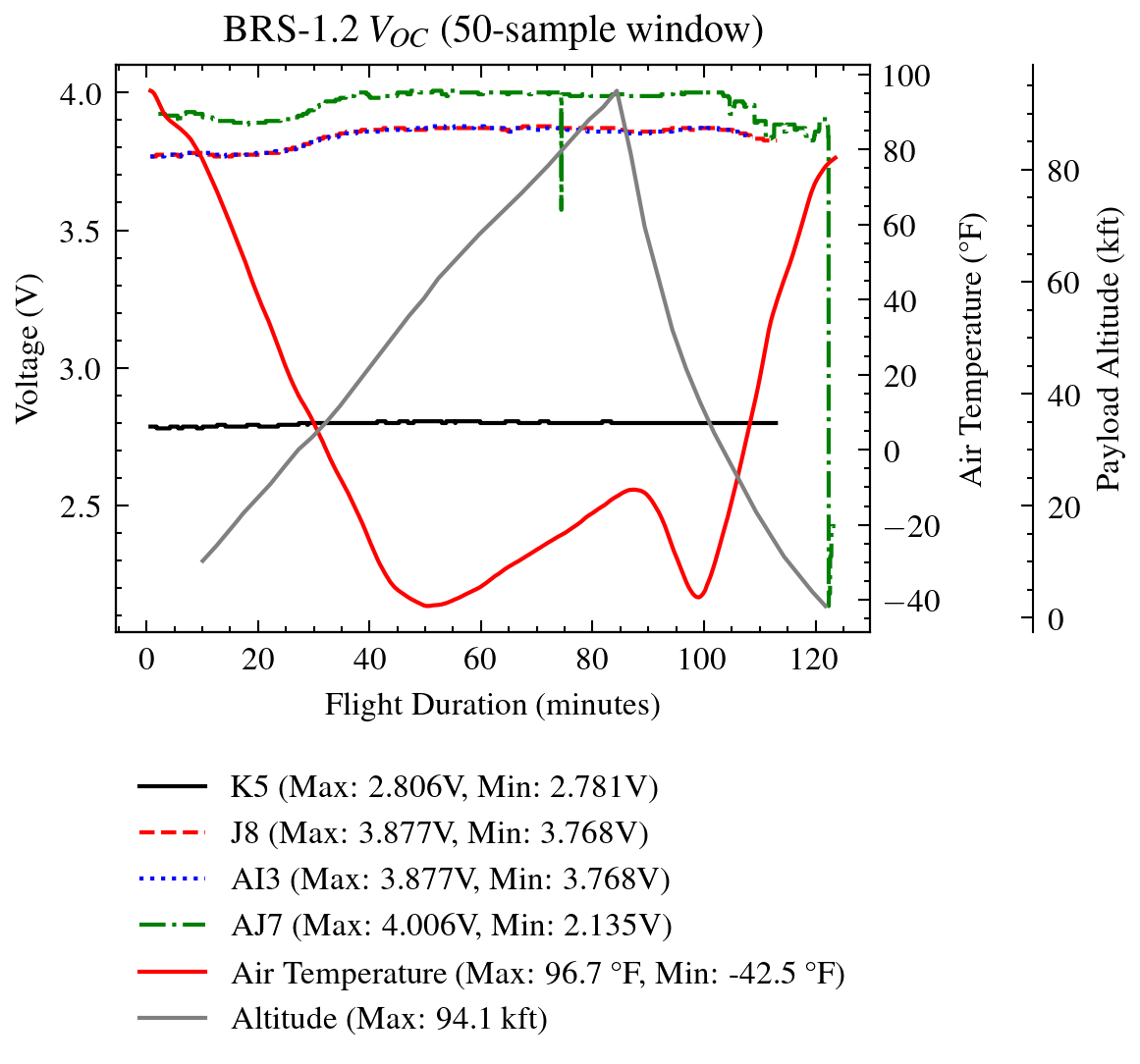
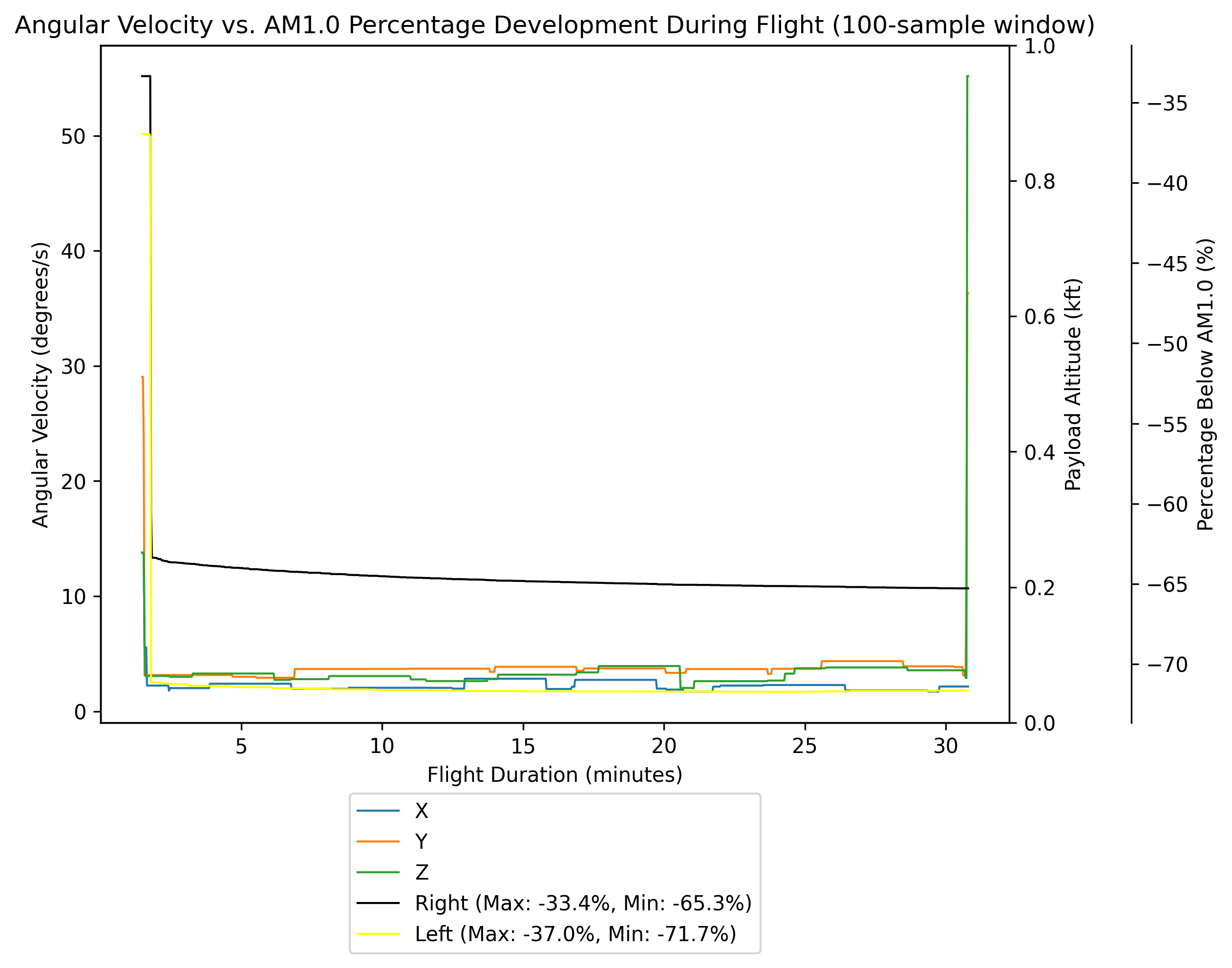
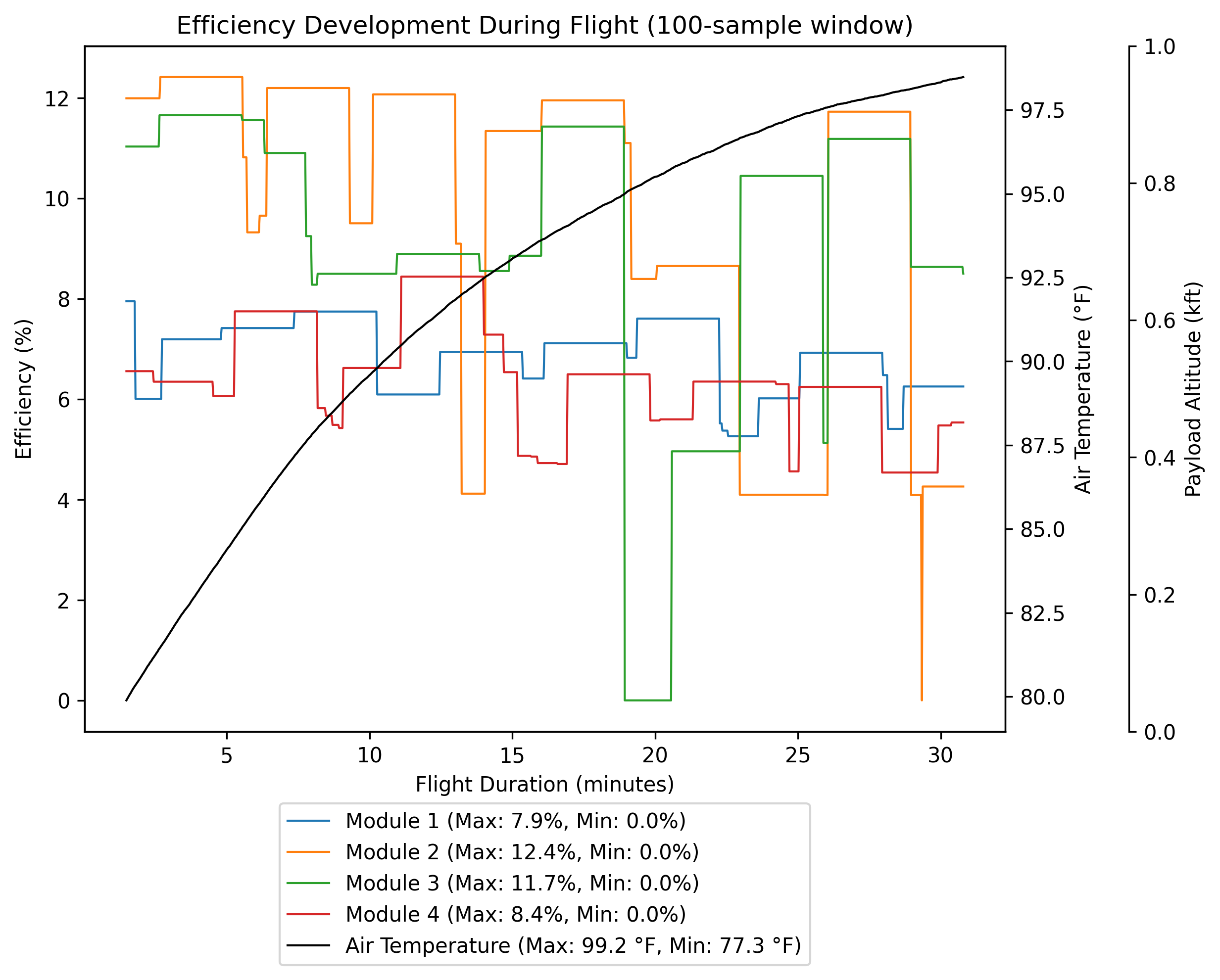
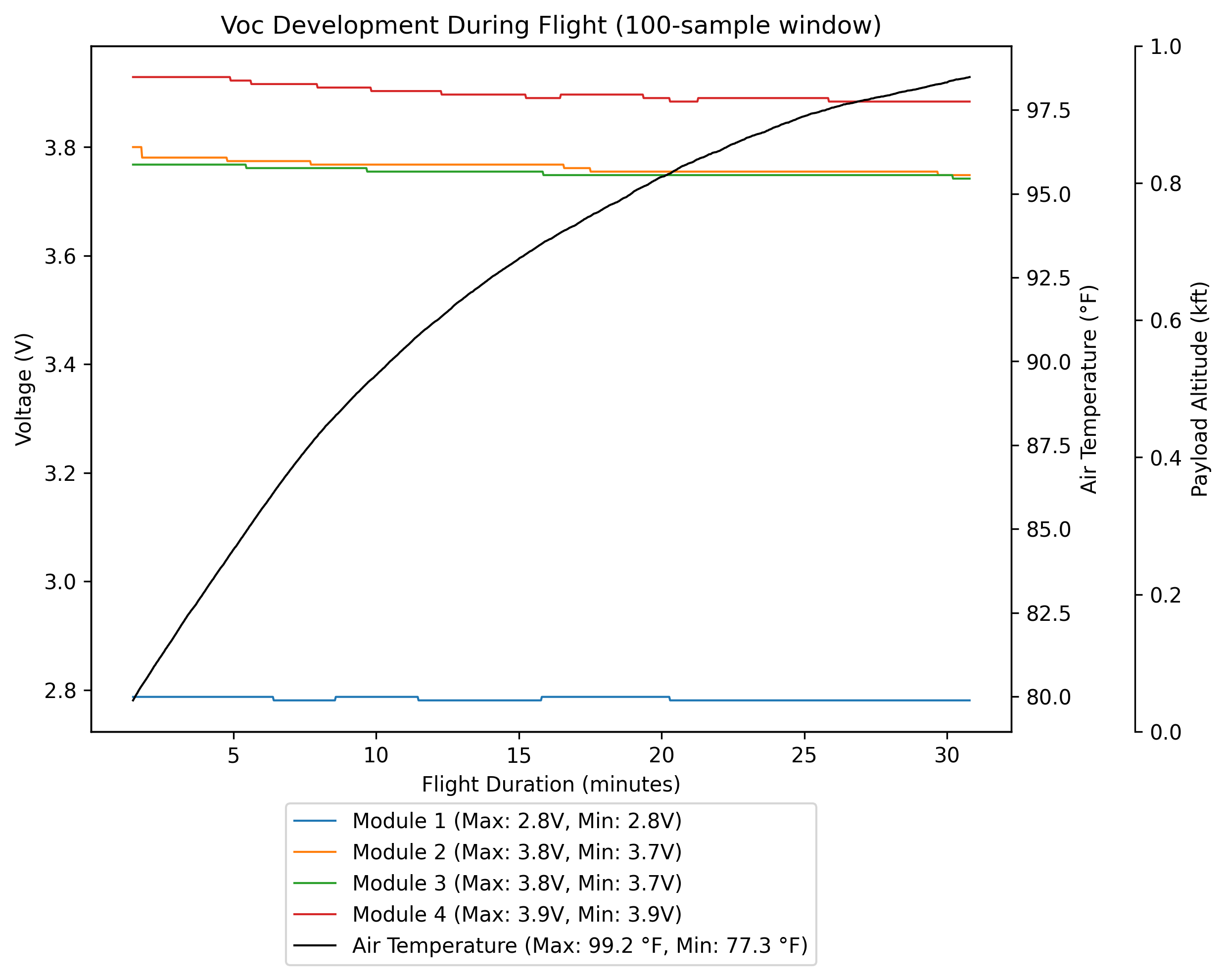
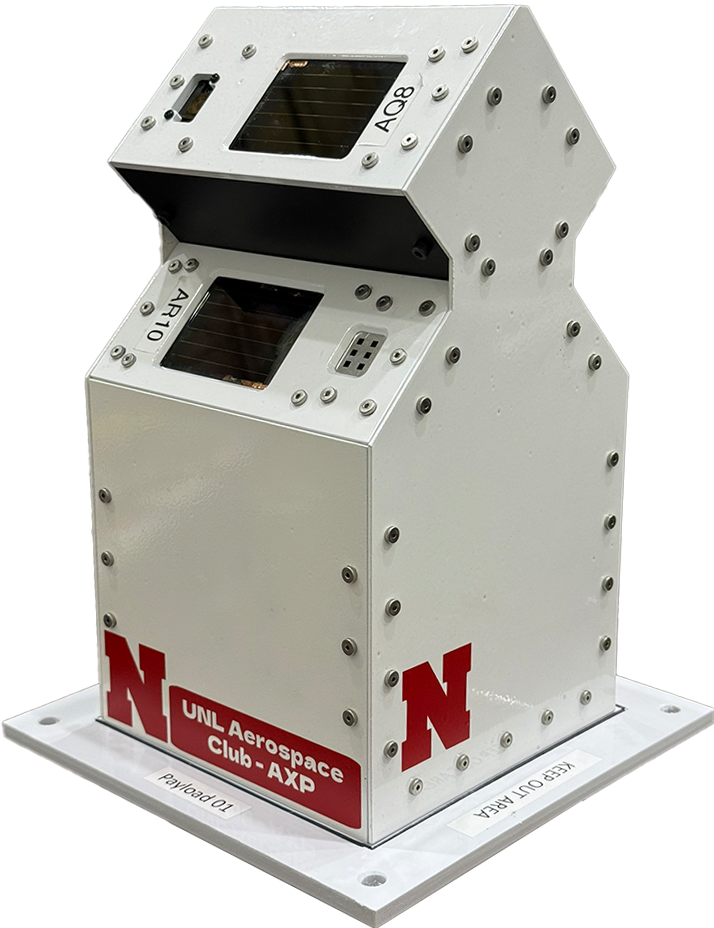
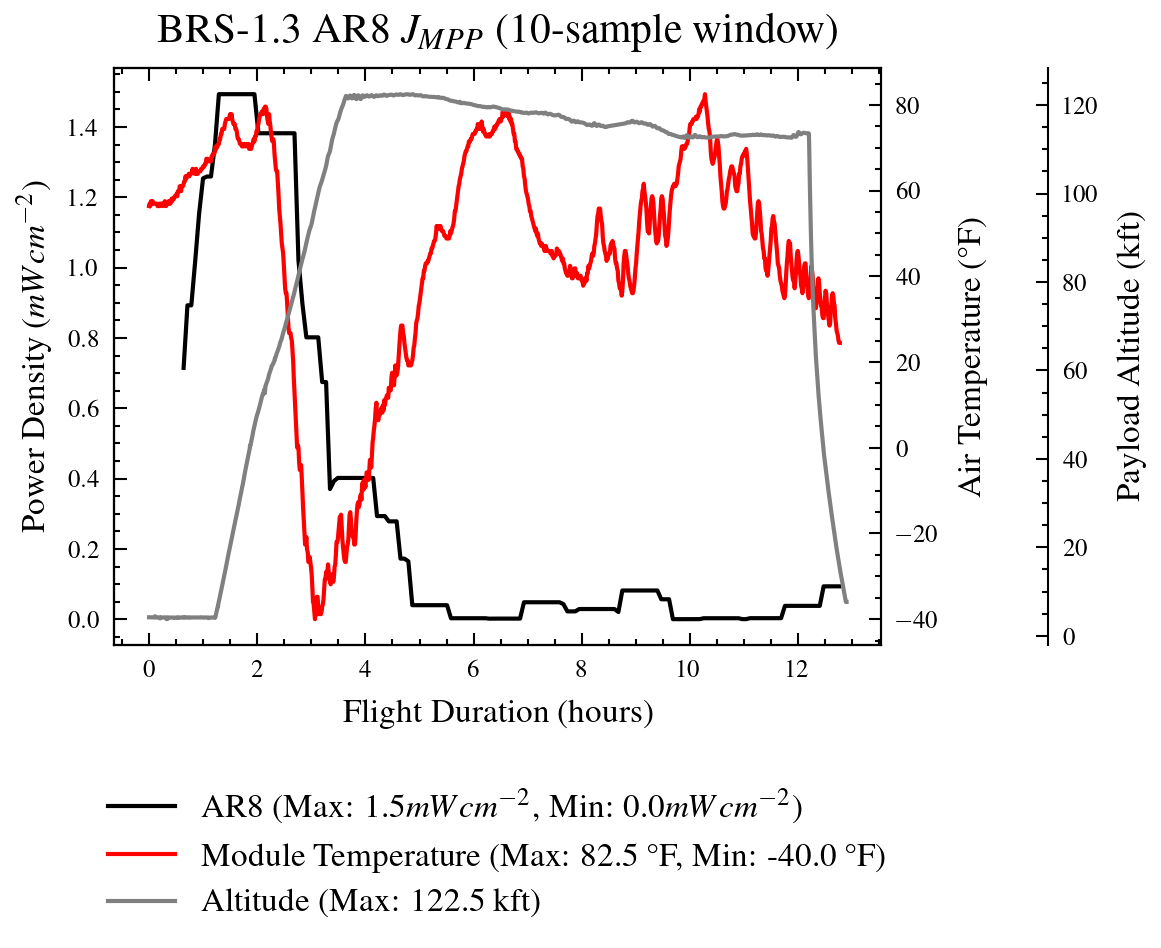
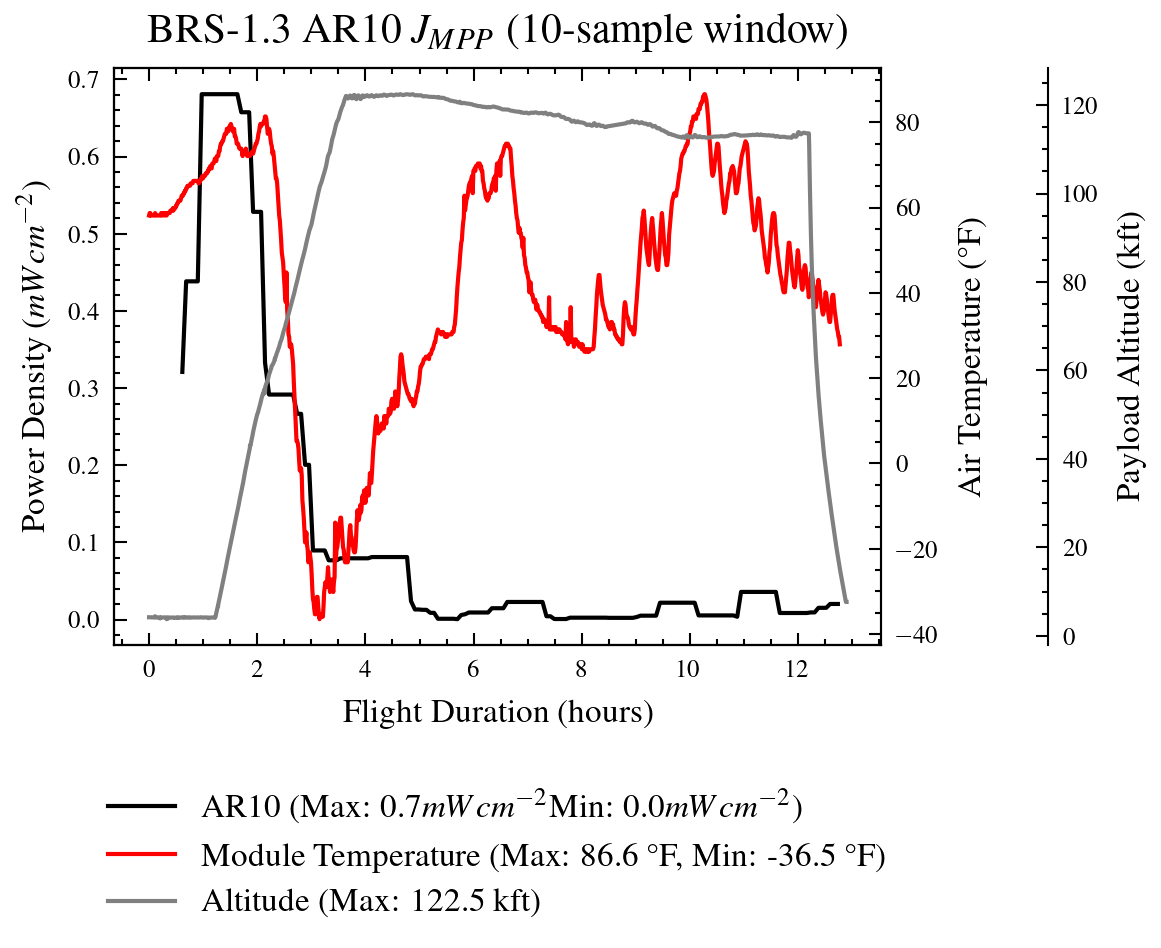
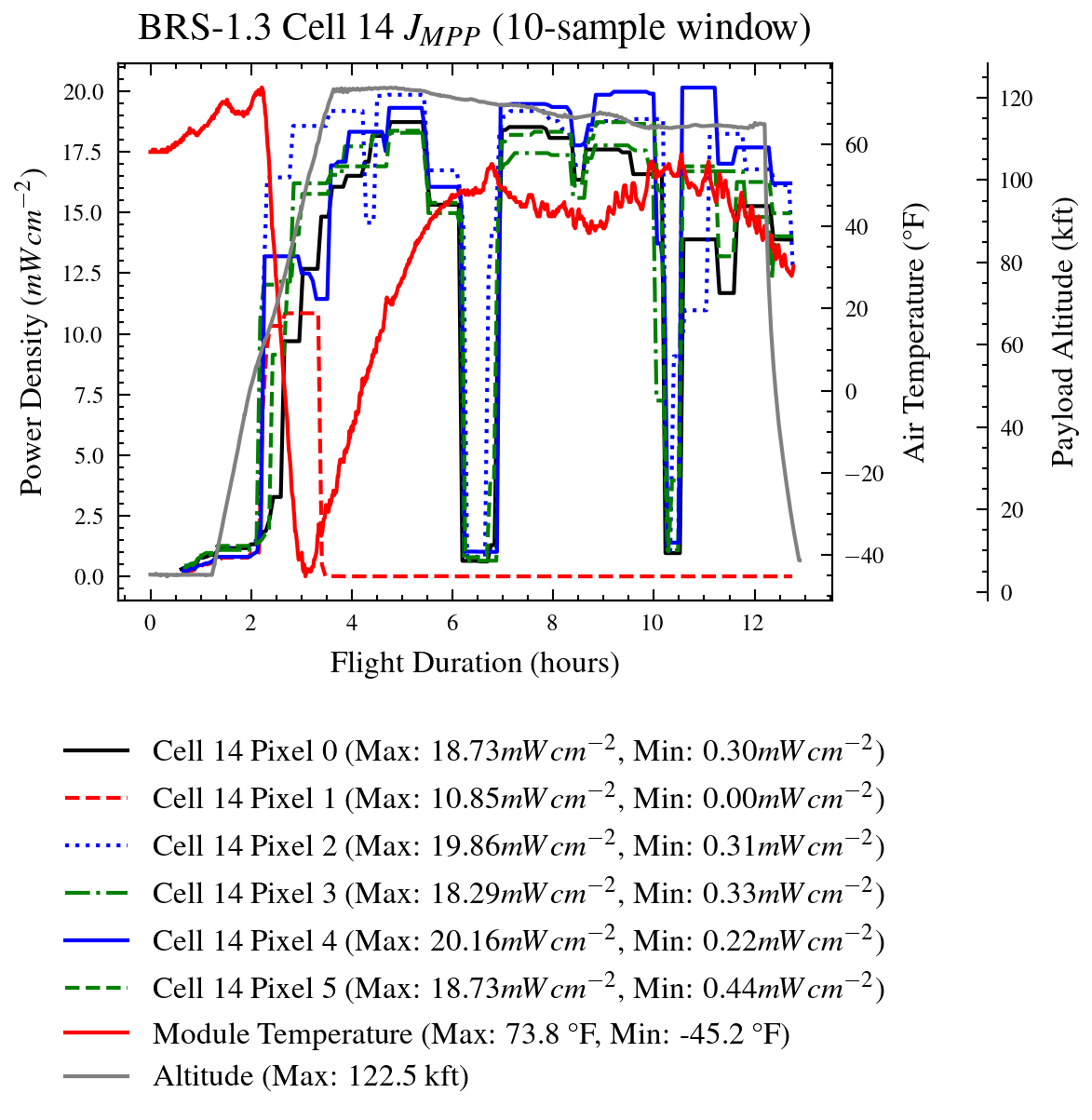
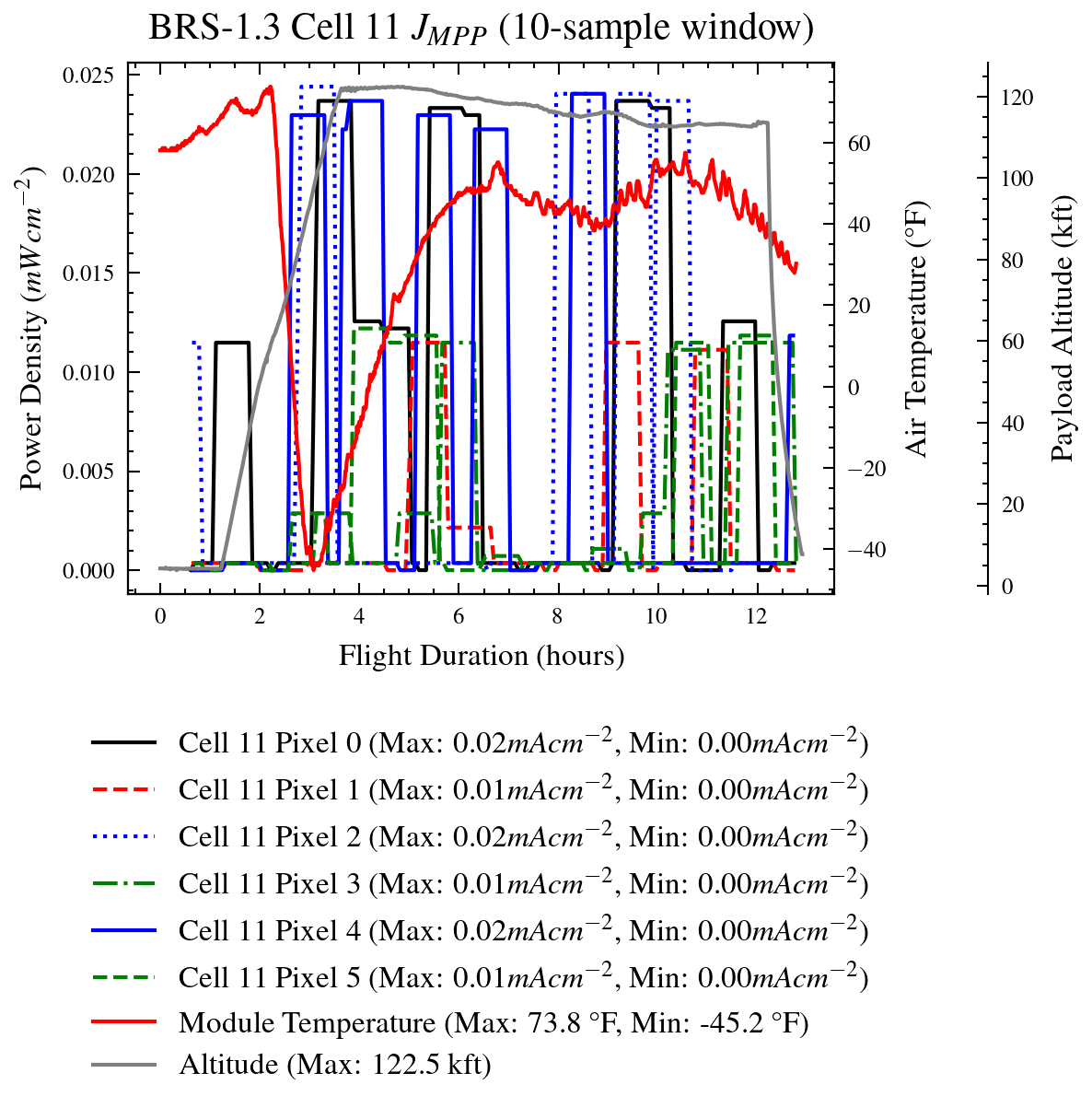
During our HASP flight, the modules did not survive 39 day period between integration and flight. One of the perovskite cells survived, Cell 14, while Cell 11 died before flight.
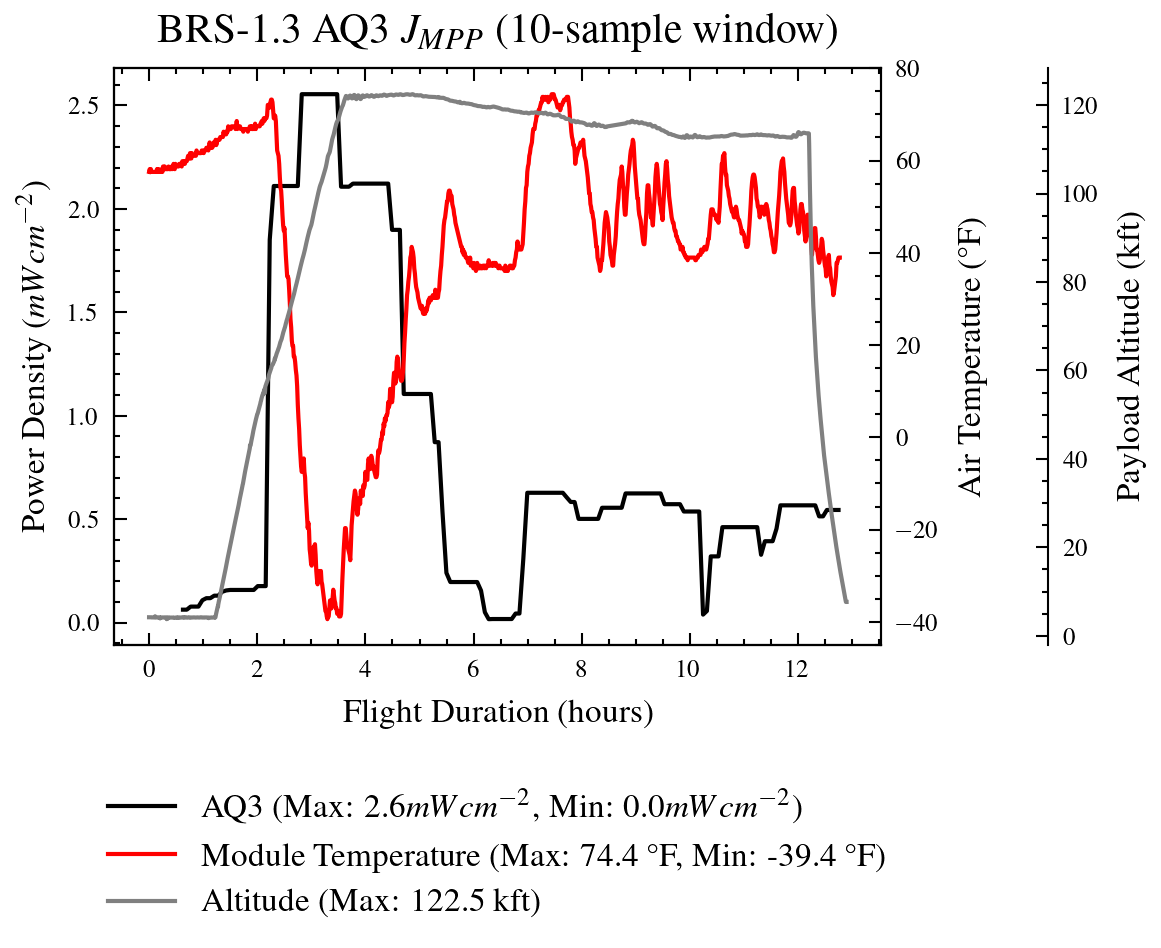
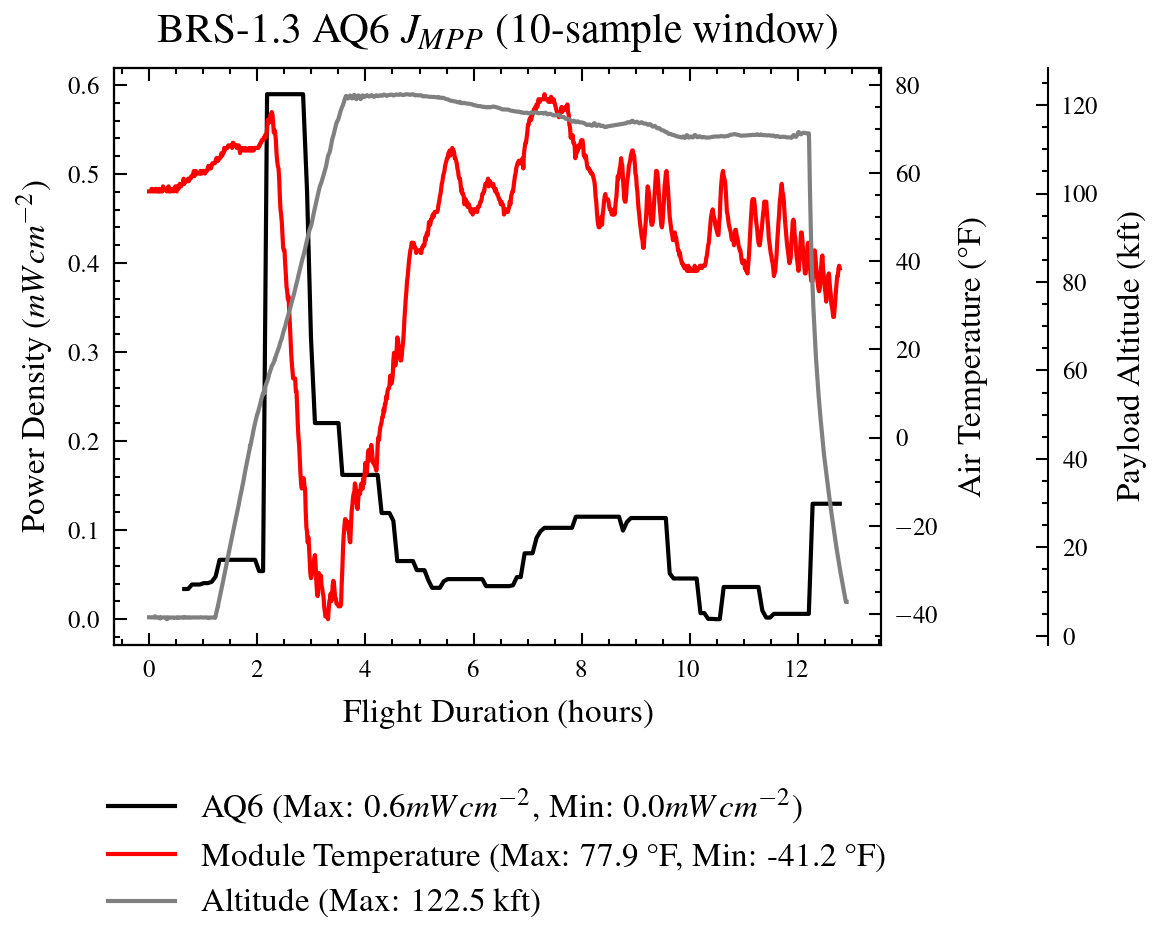
If this repository is useful to your research, then please cite the repository using the BibTeX definition below.
@software{
  Arce_High_Altitude_Student_2025,
  author = {Arce, Walker S. and Wayman, Nick and Orsi, Vince and Woodshank, Anna and Doughty, Luke and Stelling, Karen and Wagner, Rachael},
  month = dec,
  title = {{High Altitude Student Platform Big Red Sat Results Dataset}},
  url = {https://github.com/Big-Red-Sat/High-Altitude-Student-Platform},
  version = {1.0.0},
  year = {2025}
}The database from our High Altitude Student Platform testing is licensed under an Open Data Commons Attribution License (ODC-By), the software to process the data and generate figures is licensed under an MIT license, and the repository is licensed under a Creative Commons Attribution-ShareAlike 4.0 International Public License.
Mutiple Python scripts are included to replicate our results, with a global requirements.txt file providing the packages needed to setup a Python virtual environment. We used Python 3.12 for our own setup. The steps to reproduce are:
For information or questions regarding this repository, please contact Rachael Wagner (rwagner5@unl.edu).
| Qty | Value | Footprint | References |
|---|---|---|---|
| 65 | 0.1u | Capacitor_SMD:C_0603_1608Metric | C1, C10, C11, C16, C17, C101, C102, C106, C107, C110, C111, C114, C115, C122, C123, C128 +49 |
| 33 | TestPoint | TestPoint:TestPoint_Pad_1.0x1.0mm | TP1, TP11, TP19, TP21, TP22, TP23, TP24, TP25, TP26, TP27, TP28, TP29, TP30, TP31, TP32, TP33 +17 |
| 32 | ADG841YKSZ-500RL7 | ul_ADG841YKSZ-500RL7:ADG841YKSZ-500RL7 | U10, U16, U17, U18, U19, U20, U22, U28, U31, U32, U33, U34, U35, U36, U37, U40 +16 |
| 22 | ADG839YKSZ-REEL7 | ul_ADG839YKSZ-REEL7:ADG839YKSZ-REEL7 | U24, U25, U26, U27, U42, U43, U44, U45, U46, U47, U48, U49, U50, U51, U52, U53 +6 |
| 18 | 0 | Resistor_SMD:R_0603_1608Metric | R11, R12, R13, R26, R27, R28, R29, R38, R39, R40, R41, R44, R45, R47, R48, R71 +2 |
| 12 | 470 | Resistor_SMD:R_0603_1608Metric | R6, R7, R8, R9, R14, R15, R22, R23, R24, R25, R30, R31 |
| 8 | 10n | Capacitor_SMD:C_0603_1608Metric | C24, C25, C26, C27, C32, C33, C34, C35 |
| 8 | 1M | Resistor_SMD:R_0603_1608Metric | R18, R19, R20, R21, R34, R35, R36, R37 |
| 4 | 1000 | Resistor_SMD:R_0603_1608Metric | R43, R58, R59, R67 |
| 4 | 100k | Resistor_THT:R_Axial_DIN0204_L3.6mm_D1.6mm_P5.08mm_Vertical | R75, R76, R77, R78 |
| 4 | 100m | Resistor_SMD:R_1206_3216Metric | R16, R17, R32, R33 |
| 4 | 16000 | Resistor_SMD:R_0603_1608Metric | R4, R51, R63, R74 |
| 4 | 2000 | Resistor_SMD:R_0603_1608Metric | R1, R46, R60, R68 |
| 4 | 250 | Resistor_SMD:R_0603_1608Metric | R10, R53, R56, R65 |
| 4 | 4.7k | Resistor_SMD:R_0603_1608Metric | R81, R82, R83, R84 |
| 4 | 4000 | Resistor_SMD:R_0603_1608Metric | R2, R49, R61, R69 |
| 4 | 50 | Resistor_SMD:R_0603_1608Metric | R5, R52, R55, R64 |
| 4 | 500 | Resistor_SMD:R_0603_1608Metric | R42, R54, R57, R66 |
| 4 | 74HC237 | Package_SO:TSSOP-16_4.4x5mm_P0.65mm | U4, U5, U15, U23 |
| 4 | 8000 | Resistor_SMD:R_0603_1608Metric | R3, R50, R62, R70 |
| 4 | Current Test | TestPoint:TestPoint_2Pads_Pitch2.54mm_Drill0.8mm | TP6, TP7, TP16, TP17 |
| 4 | I | TestPoint:TestPoint_Pad_1.0x1.0mm | TP2, TP4, TP12, TP14 |
| 4 | INA169 | Package_TO_SOT_SMD:SOT-23-5 | U11, U12, U13, U79 |
| 4 | MountingHole_Pad | MountingHole:MountingHole_3.2mm_M3_Pad_Via | H1, H2, H3, H4 |
| 4 | V | TestPoint:TestPoint_Pad_1.0x1.0mm | TP3, TP5, TP13, TP15 |
| 4 | Voltage Test+ | TestPoint:TestPoint_Pad_1.0x1.0mm | TP8, TP10, TP18, TP20 |
| 3 | 47u | Capacitor_THT:CP_Radial_D10.0mm_P5.00mm | C8, C9, C127 |
| 3 | Conn_01x07 | Connector_Molex:Molex_KK-254_AE-6410-07A_1x07_P2.54mm_Vertical | J1, J2, J3 |
| 2 | Conn_01x09 | Connector_Molex:Molex_KK-254_AE-6410-09A_1x09_P2.54mm_Vertical | J5, J6 |
| 2 | OPA2387 | Package_SO:VSSOP-8_3.0x3.0mm_P0.65mm | U1, U2 |
| 1 | Conn_01x02 | Connector_AMASS:AMASS_XT60-M_1x02_P7.20mm_Vertical | J14 |
| 1 | Conn_01x05 | Connector_PinHeader_2.54mm:PinHeader_1x05_P2.54mm_Vertical | J12 |
| 1 | Conn_01x08 | Connector_Molex:Molex_KK-254_AE-6410-08A_1x08_P2.54mm_Vertical | J4 |
| 1 | DEV-16771 | DEV-16771:MODULE_DEV-16771 | U3 |
| 1 | HASP | Connector_PinHeader_2.54mm:PinHeader_1x06_P2.54mm_Vertical | J7 |
| 1 | LOGO | logos:nebraska_n | G*** |
| 1 | NeoPixel | Connector_PinHeader_2.54mm:PinHeader_1x03_P2.54mm_Vertical | J13 |
| 1 | RS232 HV | Connector_PinHeader_2.54mm:PinHeader_1x06_P2.54mm_Vertical | J8 |
| 1 | RS232 LV | Connector_PinHeader_2.54mm:PinHeader_1x06_P2.54mm_Vertical | J9 |
| 1 | SN74LV1T34DBV | Package_TO_SOT_SMD:SOT-23-5 | U81 |
| 1 | Sun Sensor 1 | Connector_PinHeader_2.54mm:PinHeader_1x04_P2.54mm_Vertical | J10 |
| 1 | Sun Sensor 2 | Connector_PinHeader_2.54mm:PinHeader_1x04_P2.54mm_Vertical | J11 |
Big-Red-Sat/High-Altitude-Student-Platform
This repository contains the hardware designs, data, and analysis of perovskite solar cells on high altitude balloons

Big-Red-Sat/High-Altitude-Student-Platform
This repository contains the hardware designs, data, and analysis of perovskite solar cells on high altitude balloons

Big-Red-Sat/High-Altitude-Student-Platform
This repository contains the hardware designs, data, and analysis of perovskite solar cells on high altitude balloons

Big-Red-Sat/Big-Red-Sat-1
This repository contains the designs for the Big Red Sat-1, a 1U CubeSat examining the performance of perovskite solar cells in low earth orbit.

Big-Red-Sat/Perovskite-Curve-Tracer
This repository contains the source hardware and software files for a passive, solar cell, curve tracer.


Blender-Guy1/Business_Card
This is the necessary files to make your own PCB Business Cards.


DavidMFlynn/SimpleServoCtrl16
PIC16F1847 based R/C servo controller, 16 channels.
It measures 106.8 × 96.4 mm and has 2 copper layers, 1.6 mm thick.
292 parts, built around the OPA2387DGK, SN74LV1T34DBV, ADG841YKSZ-500RL7 and ADG839YKSZ-REEL7. The full list of its parts is on this page, with links to each part's symbol and footprint where PCBKit's library has them.
From the Big-Red-Sat/High-Altitude-Student-Platform repository on GitHub, at the commit this page was made from: the board is HASP Flight Computer/v2/hasp_flight_computer.kicad_pcb and its schematic HASP Flight Computer/v1/HASP_Power_System-Matthew-PC.kicad_sch. PCBKit opens the board in the browser, with nothing to install.
Its repository states no licence, so its author keeps all rights: ask Big-Red-Sat before reusing the design.