2 layers20.5 × 24.8 mm

 AYUSH-pro-grammer/pathFinder
Hello!! This is my Hack Club Stasis project its based on reaction time and a bit of fun
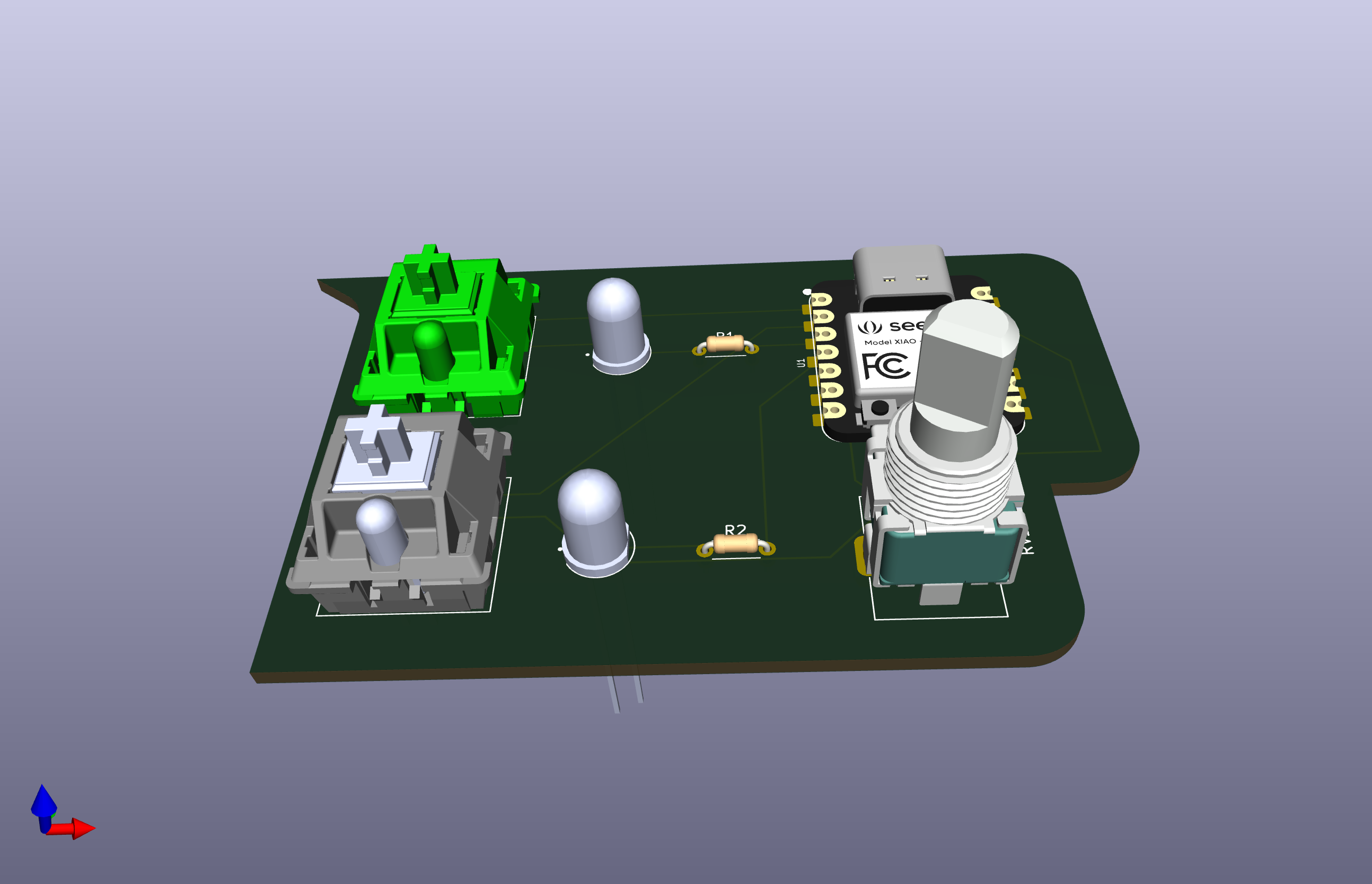
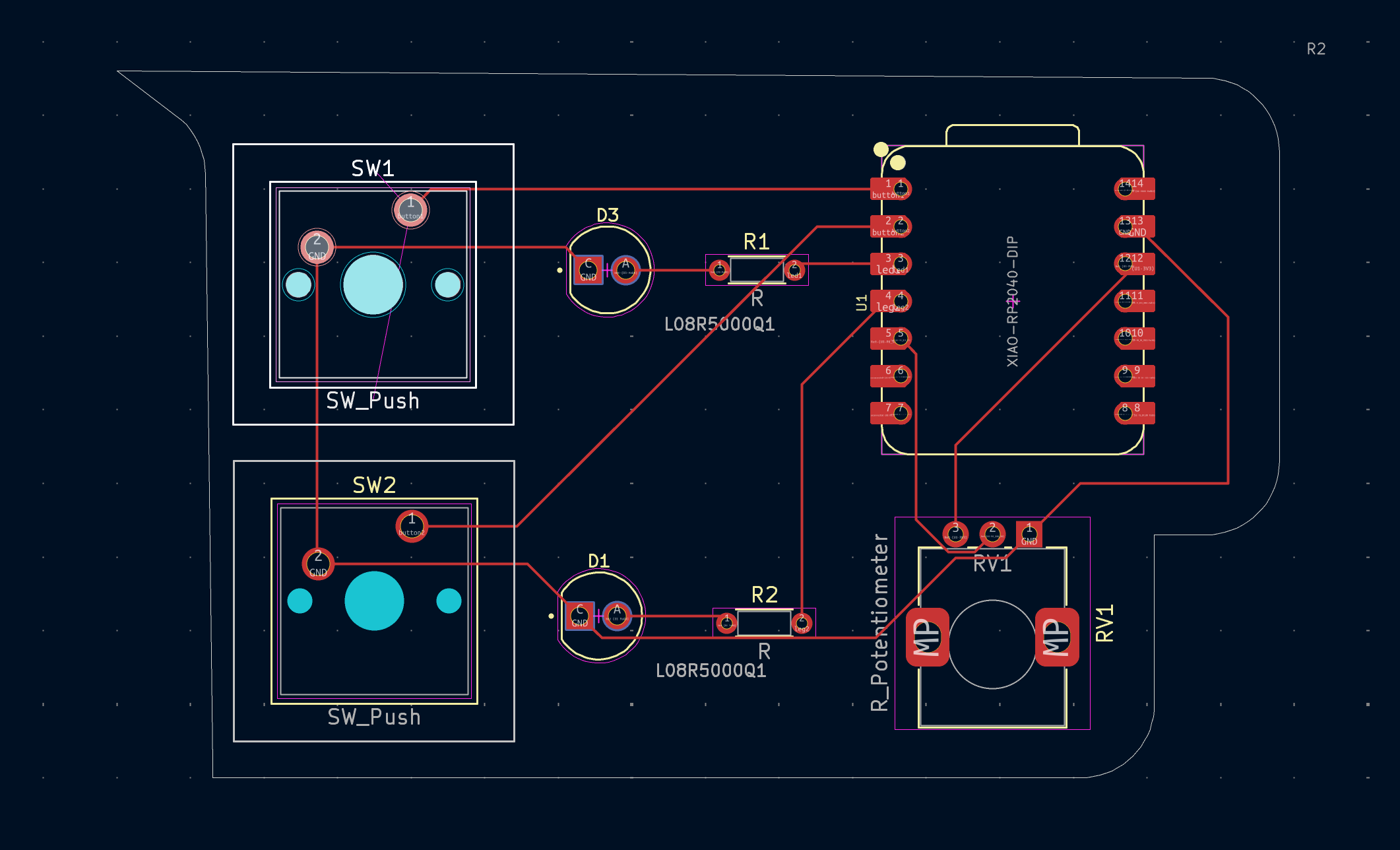
PathFinder is an open-source printed circuit board by AYUSH-pro-grammer, from the AYUSH-pro-grammer/pathFinder repository on GitHub. It is a 2-layer board of 79 × 48 mm with 8 parts on 16 nets, routed with 35 tracks and 0 vias.
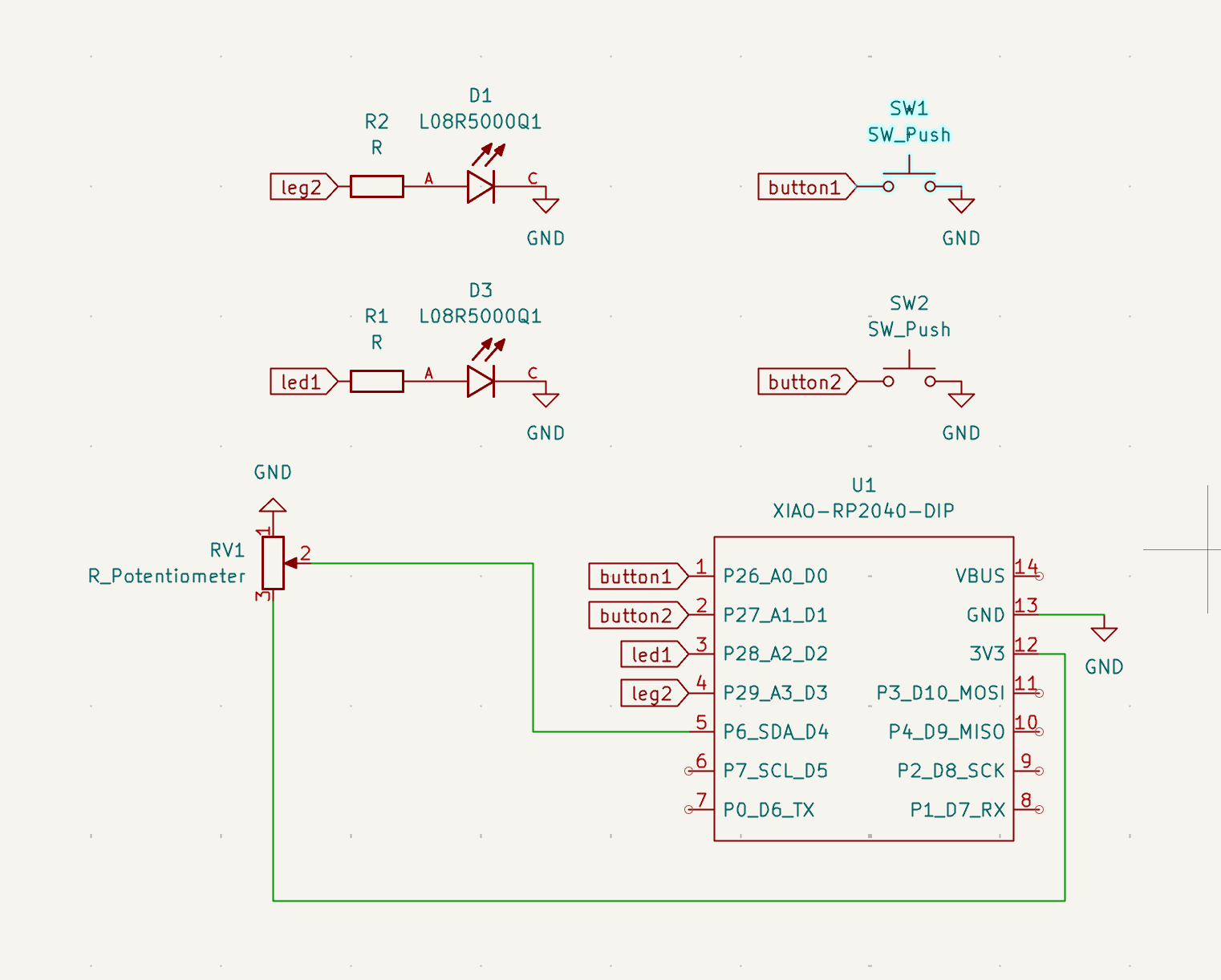
Its parts include 2 resistors, 2 diodes, 2 switches and 1 IC. It belongs with the RP2040 boards of this library.
Hello!! This is my Hack Club Stasis project its based on reaction time and a bit of fun
int btn1 = D0;
int btn2 = D1;
int led1 = D2;
int led2 = D3;

int potentio = D4;

long btn2cnt = 0;
long button1time = 0;
long button2time = 0;

void setup() {
  pinMode(btn1, INPUT_PULLUP);
  pinMode(btn2, INPUT_PULLUP);
  pinMode(potentio, INPUT);

  pinMode(led1, OUTPUT);
  pinMode(led2, OUTPUT);
}

void loop() {

  int pot_reading = analogRead(potentio);
int brightness = map(pot_reading, 0, 1023, 0, 255);| Qty | Value | Footprint | References |
|---|---|---|---|
| 2 | L08R5000Q1 | footprints:LEDRD254W57D500H1070 | D1, D3 |
| 2 | R | Resistor_THT:R_Axial_DIN0204_L3.6mm_D1.6mm_P5.08mm_Horizontal | R1, R2 |
| 2 | SW_Push | Button_Switch_Keyboard:SW_Cherry_MX_1.00u_PCB | SW1, SW2 |
| 1 | R_Potentiometer | Potentiometer_THT:Potentiometer_Alps_RK09K_Single_Vertical | RV1 |
| 1 | XIAO-RP2040-DIP | footprints:XIAO-RP2040-DIP | U1 |

joeycastillo/Sensor-Watch
A board replacement for the classic Casio F-91W wristwatch

rusefi/rusefi
rusefi - GPL internal combustion engine control unit

hoglet67/RGBtoHDMI
Bare-metal Raspberry Pi project that provides pixel-perfect sampling of Retro Computer RGB/YUV video and conversion to HDMI

shanteacontrols/OpenDeck
A platform for building interactive control and sensing devices using MIDI and OSC built with Zephyr RTOS.

hackclub/OnBoard
💡 Join 1,000 teenagers and make your first PCB with a $100 grant!

dangiu/PicoMemcard
Emulating PSX Memory Card (or controller) using a Raspberry Pi Pico

OLIMEX/DIY-LAPTOP
Do It Yourself Open Source Hardware and Software Modular Hacker's Friendly Laptop
It measures 79 × 48 mm and has 2 copper layers, 1.6 mm thick.
8 parts. The full list of its parts is on this page, with links to each part's symbol and footprint where PCBKit's library has them.
From the AYUSH-pro-grammer/pathFinder repository on GitHub, at the commit this page was made from: the board is pathFinder.kicad_pcb and its schematic pathFinder.kicad_sch. PCBKit opens the board in the browser, with nothing to install.
Its repository states no licence, so its author keeps all rights: ask AYUSH-pro-grammer before reusing the design.