

2 layers86 × 60 mm
Pmbh
3351666087/solar-vest
Self-powered solar-harvesting wearable ECG vest: PCBs, 3D-printed enclosures, vest patterns, simulation and an interactive 3D explorer
100 parts

Self-powered solar-harvesting wearable ECG vest: PCBs, 3D-printed enclosures, vest patterns, simulation and an interactive 3D explorer
Libb is an open-source printed circuit board by 3351666087, from the 3351666087/solar-vest repository on GitHub. It is a 2-layer board of 56 × 37 mm with 26 parts on 10 nets, routed with 144 tracks and 12 vias.
It is built around the AO3401A, B5819W and BAT54S, with the SMF5.0A among its other parts. Its parts include 5 resistors, 4 capacitors, 3 diodes, 3 connectors and 1 IC. It belongs with the power boards of this library.


A self-powered, solar-harvesting wearable for ECG research
一件为心电研究而做的太阳能自供电可穿戴背心




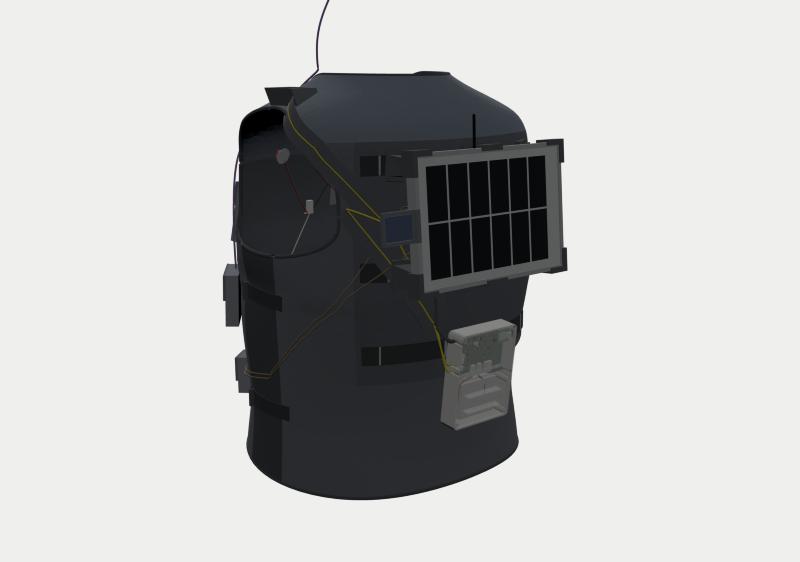
Solar Vest is a research platform that answers one question:
Can a body-worn 6 V / 6 W solar panel keep a Bluetooth ECG acquisition unit running, and does solar powering change the ECG signal compared with an identical battery-powered control recorded on the same subject at the same time?
A rigid 6 V / 6 W panel rides on the back of a vest. It charges a 1S Li-ion cell through PMB-H, an MPPT charger and power-monitor board of our own design. The battery feeds BITalino B (the device under test) through LIB, an ideal-diode hold-up board with supercapacitors. BITalino C records ECG from mirror-symmetric electrodes on its own battery as the control, and BITalino A (HeartBIT) adds ear-lobe PPG. Six INA226 monitors log every energy path, and a XIAO nRF52840 streams the telemetry over BLE to a gateway and on to a remote web console.
The energy budget (see docs/architecture-v3.md) says continuous acquisition is only fully self-powered on good days; on a typical day the panel extends runtime by about 76 %, and duty-cycled measurement reaches energy balance.
flowchart LR
    PV["6 V / 6 W solar panel"] --> PMB
    REF["REF1 / REF2 reference cells"] --> PMB

    subgraph PMB["PMB-H (back pod)"]
        direction TB
        CHG["CN3791 MPPT charger<br/>night back-feed cut-off"]
        INA["6 x INA226<br/>PV hi/lo, BAT, LOAD, REF1, REF2"]
        MCU["XIAO nRF52840 Sense<br/>firmware v2"]
        INA -- "I2C" --> MCU
    end

    CHG <--> BAT["1S Li-ion 2500 mAh"]
    PMB -- "VLOAD (LOAD_EN)" --> LIB["LIB (chest pod)<br/>LM66100 ideal diode<br/>+ 2 x 10 F supercaps"]
    LIB --> B["BITalino B<br/>Core BLE, ECG (DUT)"]
    C["BITalino C<br/>Board Kit BLE, ECG<br/>own battery (control)"]
    A["BITalino A<br/>HeartBIT, ear-lobe PPG"]

    MCU -- "BLE telemetry / commands" --> GW["Gateway<br/>Mac (bleak) | ESP32 (MicroPython) | browser relay"]
    GW -- "HTTPS /api/ingest" --> SRV["Console server<br/>console.example.org"]
    SRV --> UI["Web console"]
    B -. "BLE ECG" .-> PHONE["Phone / Mac recording"]
    C -. "BLE ECG" .-> PHONE
A -. "Classic BT PPG" .-> PHONE| Part | What it is | Where |
|---|---|---|
| PMB-H (back pod) | CN3791 MPPT charger (set point 5.93 V), night back-feed cut-off, 6 × INA226 (panel high / indoor range, battery, load, two reference cells), NTC, XIAO nRF52840 Sense logger | hardware/pcb/pmbh/ |
| LIB (chest pod) | Hold-up board: feeds BITalino Core B through an LM66100 ideal diode; 2 × 10 F supercaps take over if the supply drops | hardware/pcb/libb/ |
| Fabrication outputs | KiCad 10 projects (generated from SKiDL), schematics PDF, Gerbers, JLCPCB BOM + CPL (*_v3.xlsx are the ordered files), 3D models, final placement images, rotation audit | hardware/pcb/ |
| Enclosures | 18 printable parts (STEP / STL / 3MF): back pod, chest pod, C case, ear clip, six panel shoes (18–52 mm air gap), REF holders, bench stand, webbing hook | hardware/enclosures/ (read README_print-list.txt) |
| Vest patterns | Shell, lining and accessory patterns: DXF, 1:1 plotter PDF, A4 tiles, body-fitted placement data | hardware/vest/ |
| Wiring | 20-wire harness specified pin-to-pin with routed lengths: table (md / csv), system diagram (svg), interactive guide | hardware/wiring/ |
| BITalino A / B / C | A: HeartBIT (Core BT) + ear-lobe PPG · B: Core BLE, solar-powered DUT · C: Board Kit BLE on its own battery (control) | docs/bom-and-system-overview.md |
| Component | What it is | Where |
|---|---|---|
| Firmware | Arduino sketch for the XIAO nRF52840: INA226 sampling, MPPT / charge / load control, safety lockouts, BLE GATT telemetry and commands, settings persisted in flash | firmware/solarvest_pmb/ |
| Bring-up sketch | Serial-console bench test for PMB-H (toggle every control pin, read every INA226) | firmware/pmbh_bringup/, tools/serial_bridge.py |
| Console server | Python 3.12, standard library only; SQLite storage, session login, device-token ingest, command queue; single-file HTML console with Web Bluetooth relay | software/server/ |
| Mac gateway | Python + bleak; BLE central → HTTPS, offline buffer, runs unattended under caffeinate | software/gateway-mac/ |
| ESP32 gateway | MicroPython 1.28 port of the same gateway (uses aioble) | software/gateway-esp32/ |
| Protocol | Interface spec (GATT layout, HTTP API, console UI) and shared decode test vectors | software/SPEC.md, software/protocol/vectors.json |
| CAD / EDA generators | build123d enclosures, SKiDL / pcbnew board scripts, JLCPCB rotation check, vest patterns, harness, fit checks, ngspice testbenches | tools/cad/ |
.
├── docs/          Architecture v3 (+ v1/v2 history), v3.1 change list, build & assembly guide,
│                  BOM cross-reference, retrospective, tailoring survey, renders
├── hardware/      PCB projects and fab files, printable enclosures, vest patterns, wiring
├── firmware/      XIAO nRF52840 firmware, bench bring-up sketch, packing check
├── software/      Console server, Mac and ESP32 gateways, protocol spec and test vectors
├── simulation/    ngspice report and figures (MPPT stability, night back-feed, hold-up)
├── explorer/      Interactive 3D explorer (open index.html, works offline)
├── viewer/        Earlier glTF viewer of the full assembly (incl. a body-fitted variant)
├── modeling/      Component models: BITalino Core, panel, supercap, HeartBIT kit, viewer
├── body/          Body reconstruction used to fit the vest (owner's data, published with consent)
├── research/      Toolchain survey and the parametric samples that validated it
├── tools/         CAD/EDA/simulation generators, explorer source, serial bridge
├── pdf/           Pipeline that typesets the architecture documents to PDF (fonts not included)
└── THIRD_PARTY_NOTICES.md
Start with docs/build-and-assembly-guide.md.
Open explorer/index.html in Chrome, Edge or Safari (works offline). Press P for the guided tour, X for X-ray and E to explode. The wiring guide is hardware/wiring/wiring-guide.html.
Core Seeeduino:nrf52 1.1.13 (Adafruit Bluefruit based). No external libraries are needed.
arduino-cli config add board_manager.additional_urls \
  https://files.seeedstudio.com/arduino/package_seeeduino_boards_index.json
arduino-cli core update-index
arduino-cli core install Seeeduino:nrf52@1.1.13

FQBN=Seeeduino:nrf52:xiaonRF52840Sense
arduino-cli compile --fqbn $FQBN firmware/solarvest_pmb
arduino-cli upload  --fqbn $FQBN -p /dev/cu.usbmodem101 firmware/solarvest_pmb

python3 firmware/pack_check.py          # firmware packing vs protocol vectors
For a first power-up use firmware/pmbh_bringup instead (serial 115200; h prints help).
cd software/server
python3 test_server.py                  # end-to-end HTTP tests (stdlib unittest)
node test_decoder.mjs                   # console JS decoder vs vectors.json
python3 ../gateway-esp32/test_host.py   # ESP32 gateway logic on CPython

SV_CONSOLE_PASSWORD=change-me SV_DEVICE_TOKEN=dev-token SV_SESSION_SECRET=$(openssl rand -hex 32) \
SV_DB=./solarvest.db SV_COOKIE_SECURE=0 PORT=8790 python3 server.py
# then open http://localhost:8790software/deploy.sh copies the server to a Docker host that already runs a Caddy edge container, builds the image and adds a site block. Everything is set through environment variables; the values below are placeholders.
# ~/.config/solarvest/server.env holds SV_CONSOLE_PASSWORD, SV_DEVICE_TOKEN, SV_SESSION_SECRET
SV_SSH_HOST=your-server SV_DOMAIN=console.example.org \
SV_DOCKER_NETWORK=web SV_EDGE_CONTAINER=caddy ./software/deploy.shMac (unattended, sleep prevented):
mkdir -p ~/.config/solarvest
printf 'SV_URL=https://console.example.org\nSV_DEVICE_TOKEN=...\n' > ~/.config/solarvest/gateway.env
./software/gateway-mac/run.sh            # creates .venv, installs bleak, runs gateway.py
python3 software/gateway-mac/gateway.py --selftest   # decoder check, exit 0/1
python3 software/gateway-mac/gateway.py --dry-run    # replay vectors without Bluetooth
Browser relay: log in to the console in Chrome / Edge on Android or a Mac and use the panel Use this device as the gateway (Web Bluetooth; the screen must stay on; not available in Safari / iOS).
ESP32: software/gateway-esp32/push.sh [port] uploads aioble, main.py and a config.json built from ~/.config/solarvest/gateway.env and ~/.config/solarvest/wifi.json.
Everything is generated by code; there is no GUI CAD.
| What | How |
|---|---|
| Explorer | cd tools/cad/SolarVest_Explorer_src && npm install && npm run build (three 0.160, three-mesh-bvh 0.8, esbuild) |
| Enclosures | Python 3.12 + build123d trimesh manifold3d scipy shapely: tools/cad/enclosures.py (the panel shoes also need the body model, which is not included) |
| Fit check | python tools/cad/check_fit.py <parts dir> <data dir>: interference and free travel of every board and battery |
| PCBs | KiCad 10 + SKiDL: tools/cad/pmbh.py, libb.py, then place_*.py, fab.py (Gerbers, BOM, CPL), jlc_rotcheck.py (pad-matched placement rotations) |
| Simulation | ngspice through KiCad's bundled libngspice: tools/cad/simulation/ |
Some scripts expect tool locations from the original workstation (KiCad app path, scratch directories); adapt them as needed.
Bench bring-up done (2026-10-28):
Next:
[!WARNING] BITalino is a research device, not a medical device.
Details: docs/bom-and-system-overview.md.
modeling/.aioble (MIT, © 2021 Jim Mussared), vendored in software/gateway-esp32/lib/aioble/.Personal identifiers (names, institution, e-mail addresses, local paths, third-party contacts) have been removed; the supervisor is referred to by role only. The body data in body/ and viewer/*_PRIVATE*.glb belongs to the project owner and is published with their consent.
No license has been chosen yet, so all rights are reserved by the author. Third-party parts keep their own licenses (see the notices).
Solar Vest 是一个研究平台,要回答的问题只有一个:
一块穿在身上的 6 V / 6 W 太阳能板,能不能让蓝牙心电采集单元持续工作?和同一个人、同一时间、用电池供电的同款对照组相比,太阳能供电会不会影响心电信号?
背心后背装一块 6 V / 6 W 硬质太阳能板,经自研的 MPPT 充电与功率监测板 PMB-H 给单节锂电充电。电池通过 LIB(理想二极管 + 超级电容的掉电保持板)给 BITalino B(被测设备)供电;BITalino C 用自己的电池、在镜像对称的电极位置同步采集心电作为对照;BITalino A(HeartBIT)另外采集耳垂 PPG。6 路 INA226 记录每一条能量路径,XIAO nRF52840 把遥测数据经 BLE 发给网关,再上传到远程网页控制台。
按能量预算(见 docs/architecture-v3.md):连续采集只有在好天气下才能完全自供电;典型日子里太阳能能把续航延长约 76%,改为间歇测量则可以做到能量收支平衡。
flowchart LR
    PV["6 V / 6 W 太阳能板"] --> PMB
    REF["REF1 / REF2 参考电池片"] --> PMB

    subgraph PMB["PMB-H(背部仓)"]
        direction TB
        CHG["CN3791 MPPT 充电<br/>夜间防倒灌"]
        INA["6 × INA226<br/>PV 高/低量程、BAT、LOAD、REF1、REF2"]
        MCU["XIAO nRF52840 Sense<br/>固件 v2"]
        INA -- "I2C" --> MCU
    end

    CHG <--> BAT["单节锂电 2500 mAh"]
    PMB -- "VLOAD(LOAD_EN)" --> LIB["LIB(胸前仓)<br/>LM66100 理想二极管<br/>+ 2 × 10 F 超级电容"]
    LIB --> B["BITalino B<br/>Core BLE,心电(被测)"]
    C["BITalino C<br/>Board Kit BLE,心电<br/>自带电池(对照)"]
    A["BITalino A<br/>HeartBIT,耳垂 PPG"]

    MCU -- "BLE 遥测 / 指令" --> GW["网关<br/>Mac(bleak)| ESP32(MicroPython)| 浏览器中继"]
    GW -- "HTTPS /api/ingest" --> SRV["控制台服务器<br/>console.example.org"]
    SRV --> UI["网页控制台"]
    B -. "BLE 心电" .-> PHONE["手机 / Mac 记录"]
    C -. "BLE 心电" .-> PHONE
A -. "经典蓝牙 PPG" .-> PHONE| 部分 | 说明 | 位置 |
|---|---|---|
| PMB-H(背部仓) | CN3791 MPPT 充电(设定点 5.93 V)、夜间防倒灌、6 × INA226(太阳能板高量程/室内量程、电池、负载、两块参考电池片)、NTC、XIAO nRF52840 Sense 记录仪 | hardware/pcb/pmbh/ |
| LIB(胸前仓) | 掉电保持板:经 LM66100 理想二极管给 BITalino Core B 供电,供电跌落时由 2 × 10 F 超级电容接管 | hardware/pcb/libb/ |
| 生产文件 | KiCad 10 工程(由 SKiDL 生成)、原理图 PDF、Gerber、嘉立创 BOM + 坐标文件(*_v3.xlsx 为实际下单版本)、3D 模型、最终贴片图、旋转角核对 | hardware/pcb/ |
| 外壳 | 18 个打印件(STEP / STL / 3MF):背部仓、胸前仓、C 外壳、耳夹、6 个太阳能板支脚(留 18–52 mm 空气层)、参考电池片支架、桌面支架、织带挂钩 | hardware/enclosures/(先看 README_print-list.txt) |
| 背心版型 | 面料、里料、配件版型:DXF、1:1 绘图仪 PDF、A4 拼贴、贴合身体的布局数据 | hardware/vest/ |
| 接线 | 20 根线的线束,逐针定义并给出走线长度:接线表(md / csv)、系统接线图(svg)、交互式指南 | hardware/wiring/ |
| BITalino A / B / C | A:HeartBIT(Core BT)+ 耳垂 PPG · B:Core BLE,太阳能供电的被测设备 · C:Board Kit BLE,自带电池(对照) | docs/bom-and-system-overview.md |
| 组件 | 说明 | 位置 |
|---|---|---|
| 固件 | XIAO nRF52840 的 Arduino 程序:INA226 采样、MPPT / 充电 / 负载控制、安全锁定、BLE GATT 遥测与指令、设置存入 flash | firmware/solarvest_pmb/ |
| 点亮测试程序 | PMB-H 桌面测试,走串口:逐个切换控制引脚、读取每颗 INA226 | firmware/pmbh_bringup/、tools/serial_bridge.py |
| 控制台服务器 | Python 3.12,只用标准库;SQLite 存储、登录会话、设备令牌上传、指令队列;单文件 HTML 控制台,自带 Web Bluetooth 中继 | software/server/ |
| Mac 网关 | Python + bleak;BLE 主机 → HTTPS,离线缓存,用 caffeinate 防休眠、无人值守运行 | software/gateway-mac/ |
| ESP32 网关 | 同一网关的 MicroPython 1.28 移植版(基于 aioble) | software/gateway-esp32/ |
| 协议 | 接口规范(GATT 布局、HTTP API、控制台界面)和共用的解码测试向量 | software/SPEC.md、software/protocol/vectors.json |
| CAD / EDA 生成脚本 | build123d 外壳、SKiDL / pcbnew 电路板脚本、嘉立创旋转角核对、背心版型、线束、装配干涉检查、ngspice 仿真 | tools/cad/ |
.
├── docs/          架构文档 v3(及 v1/v2 历史版本)、v3.1 变更清单、制造与装配指南、
│                  物料对照、项目回顾、裁缝调研、效果图
├── hardware/      PCB 工程与生产文件、可打印外壳、背心版型、接线
├── firmware/      XIAO nRF52840 固件、桌面点亮程序、打包校验
├── software/      控制台服务器、Mac 与 ESP32 网关、协议规范与测试向量
├── simulation/    ngspice 仿真报告与图(MPPT 稳定性、夜间倒灌、掉电保持)
├── explorer/      交互式 3D 浏览器(打开 index.html,可离线使用)
├── viewer/        早期的整机 glTF 查看器(含贴合人体的版本)
├── modeling/      元件建模:BITalino Core、太阳能板、超级电容、HeartBIT 套件、查看器
├── body/          用于背心贴合的人体还原(项目负责人本人数据,经本人同意公开)
├── research/      工具链调研及验证用的参数化样例
├── tools/         CAD/EDA/仿真生成脚本、3D 浏览器源码、串口桥
├── pdf/           把架构文档排版成 PDF 的流程(不含字体)
└── THIRD_PARTY_NOTICES.md
建议从 docs/build-and-assembly-guide.md 开始看。
用 Chrome、Edge 或 Safari 打开 explorer/index.html(可离线)。按 P 进入导览,X 透视,E 爆炸视图。接线指南见 hardware/wiring/wiring-guide.html。
内核 Seeeduino:nrf52 1.1.13(基于 Adafruit Bluefruit),不需要额外的库。
arduino-cli config add board_manager.additional_urls \
  https://files.seeedstudio.com/arduino/package_seeeduino_boards_index.json
arduino-cli core update-index
arduino-cli core install Seeeduino:nrf52@1.1.13

FQBN=Seeeduino:nrf52:xiaonRF52840Sense
arduino-cli compile --fqbn $FQBN firmware/solarvest_pmb
arduino-cli upload  --fqbn $FQBN -p /dev/cu.usbmodem101 firmware/solarvest_pmb

python3 firmware/pack_check.py          # 校验固件打包与协议测试向量一致
第一次上电请改用 firmware/pmbh_bringup(串口 115200,输入 h 查看帮助)。
cd software/server
python3 test_server.py                  # 端到端 HTTP 测试(标准库 unittest)
node test_decoder.mjs                   # 控制台 JS 解码器对照 vectors.json
python3 ../gateway-esp32/test_host.py   # 在 CPython 上测试 ESP32 网关逻辑

SV_CONSOLE_PASSWORD=change-me SV_DEVICE_TOKEN=dev-token SV_SESSION_SECRET=$(openssl rand -hex 32) \
SV_DB=./solarvest.db SV_COOKIE_SECURE=0 PORT=8790 python3 server.py
# 然后打开 http://localhost:8790software/deploy.sh 把服务器拷到一台已经运行 Caddy 入口容器的 Docker 主机上,构建镜像并追加站点配置。所有设置都通过环境变量传入,下面的值都是占位符。
# ~/.config/solarvest/server.env 中写 SV_CONSOLE_PASSWORD、SV_DEVICE_TOKEN、SV_SESSION_SECRET
SV_SSH_HOST=your-server SV_DOMAIN=console.example.org \
SV_DOCKER_NETWORK=web SV_EDGE_CONTAINER=caddy ./software/deploy.shMac(无人值守,防休眠):
mkdir -p ~/.config/solarvest
printf 'SV_URL=https://console.example.org\nSV_DEVICE_TOKEN=...\n' > ~/.config/solarvest/gateway.env
./software/gateway-mac/run.sh            # 自动建 .venv、装 bleak、运行 gateway.py
python3 software/gateway-mac/gateway.py --selftest   # 解码器自检,返回 0/1
python3 software/gateway-mac/gateway.py --dry-run # 不用蓝牙,回放测试向量浏览器中继:在安卓或 Mac 上用 Chrome / Edge 登录控制台,使用面板 Use this device as the gateway(基于 Web Bluetooth;屏幕需保持常亮;Safari / iOS 不支持)。
ESP32:software/gateway-esp32/push.sh [串口] 会上传 aioble、main.py,以及由 ~/.config/solarvest/gateway.env 和 ~/.config/solarvest/wifi.json 生成的 config.json。
所有内容都由代码生成,不用图形界面 CAD。
| 内容 | 方法 |
|---|---|
| 3D 浏览器 | cd tools/cad/SolarVest_Explorer_src && npm install && npm run build(three 0.160、three-mesh-bvh 0.8、esbuild) |
| 外壳 | Python 3.12 + build123d trimesh manifold3d scipy shapely:tools/cad/enclosures.py(太阳能板支脚还需要人体模型,仓库中未包含) |
| 干涉检查 | python tools/cad/check_fit.py <零件目录> <数据目录>:检查每块板和电池的干涉与活动余量 |
| PCB | KiCad 10 + SKiDL:tools/cad/pmbh.py、libb.py,然后 place_*.py、fab.py(Gerber、BOM、坐标)、jlc_rotcheck.py(按焊盘匹配的贴片旋转角) |
| 仿真 | 通过 KiCad 自带的 libngspice 调用 ngspice:tools/cad/simulation/ |
部分脚本写死了原工作站上的工具路径(KiCad 安装路径、临时目录),使用时请按需修改。
桌面联调已完成(2026-10-28):
下一步:
[!WARNING] BITalino 是科研设备,不是医疗器械。
详见 docs/bom-and-system-overview.md。
modeling/。aioble(MIT,© 2021 Jim Mussared),随附于 software/gateway-esp32/lib/aioble/。已去除个人身份信息(姓名、学校、邮箱、本地路径、第三方联系方式),导师只以身份称呼。body/ 和 viewer/*_PRIVATE*.glb 中的身体数据属于项目负责人本人,经本人同意公开。
目前尚未选择开源许可,因此作者保留所有权利。第三方内容仍遵循各自的许可(见第三方声明)。
| Qty | Value | Footprint | References |
|---|---|---|---|
| 5 | TP | TestPoint:TestPoint_Pad_D1.5mm | TP1, TP2, TP3, TP4, TP5 |
| 3 | 100k | Resistor_SMD:R_0603_1608Metric | R1, R3, R4 |
| 2 | 100n | Capacitor_SMD:C_0603_1608Metric | C2, C4 |
| 2 | 10F 2.7V | hw:SuperCap_D10_L25_Flat_P5.00mm | SC1, SC2 |
| 2 | 22u 25V | Capacitor_SMD:C_0805_2012Metric | C1, C3 |
| 2 | M2 | MountingHole:MountingHole_2.2mm_M2 | H1, H2 |
| 2 | PH2.0 2P | Connector_JST:JST_PH_S2B-PH-SM4-TB_1x02-1MP_P2.00mm_Horizontal | J2, J3 |
| 1 | 1k | Resistor_SMD:R_0603_1608Metric | R5 |
| 1 | 33 1W | Resistor_SMD:R_2512_6332Metric | R2 |
| 1 | AO3401A | Package_TO_SOT_SMD:SOT-23 | Q1 |
| 1 | B5819W | Diode_SMD:D_SOD-123 | D2 |
| 1 | BAT54S | Package_TO_SOT_SMD:SOT-23 | D3 |
| 1 | LM66100DCKR | Package_TO_SOT_SMD:SOT-363_SC-70-6 | U1 |
| 1 | PH2.0 5P | Connector_JST:JST_PH_S5B-PH-SM4-TB_1x05-1MP_P2.00mm_Horizontal | J1 |
| 1 | SMF5.0A | Diode_SMD:D_SOD-123F | D1 |
3351666087/solar-vest
Self-powered solar-harvesting wearable ECG vest: PCBs, 3D-printed enclosures, vest patterns, simulation and an interactive 3D explorer

rjsc/BECom
BECom - Battery Emulator Companion - Open Source Hardware, designed to run dalathegreat/Battery-Emulator

olerast67/emotion-keychain
Брелок с OLED-экраном и анимированными эмоциями


dataehora/beatconfused
A small web studio of fast, elegant, install-free music tools. Every tool is plain HTML, CSS and vanilla JavaScript with the Web Audio API — no build step, no dependencies, no accounts, works offline after first load.


D0kRay/hpe-mini
Clean Hellen One starter structure for a custom rusEFI-compatible PCB.
It measures 56 × 37 mm and has 2 copper layers, 1.6 mm thick.
26 parts, built around the AO3401A, B5819W, BAT54S and SMF5.0A. The full list of its parts is on this page, with links to each part's symbol and footprint where PCBKit's library has them.
From the 3351666087/solar-vest repository on GitHub, at the commit this page was made from: the board is hardware/pcb/libb/libb.kicad_pcb and its schematic hardware/pcb/libb/libb.kicad_sch. PCBKit opens the board in the browser, with nothing to install.
Its repository states no licence, so its author keeps all rights: ask 3351666087 before reusing the design.