2 layers276 × 87.1 mm

 zzeneg/molekula98
Framework for building ergo keyboards
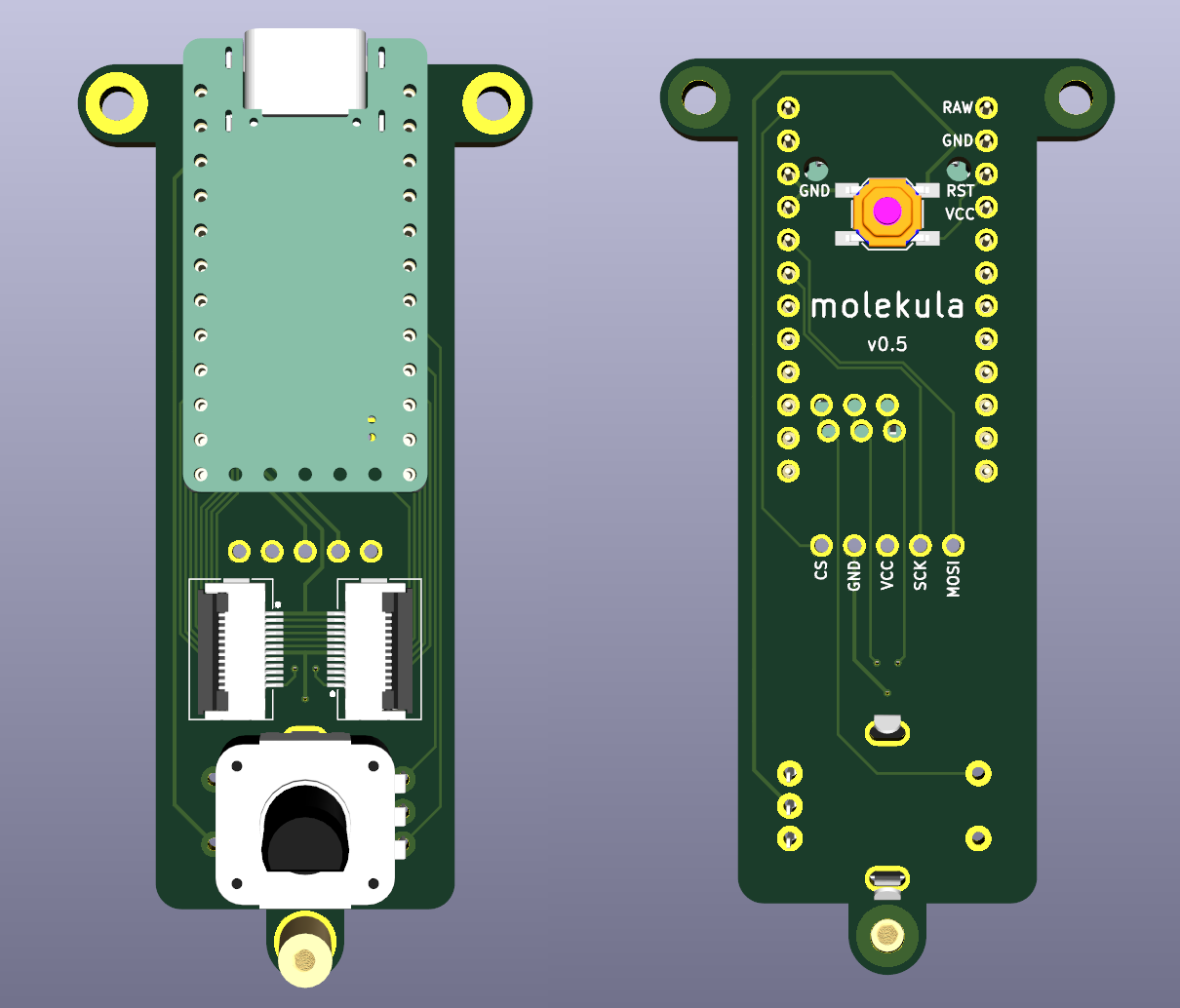
Central promicro encoder is an open-source printed circuit board by zzeneg, from the zzeneg/molekula repository on GitHub, published under the MIT licence. It is a 2-layer board of 44.6 × 70.5 mm with 17 parts on 47 nets, routed with 299 tracks and 18 vias.
It is built around the AFC11-S12ICA-00 and FPC05012-09200. Its parts include 8 connectors and 2 switches. It belongs with the keyboards and input boards and the AVR (ATmega, ATtiny) boards of this library.


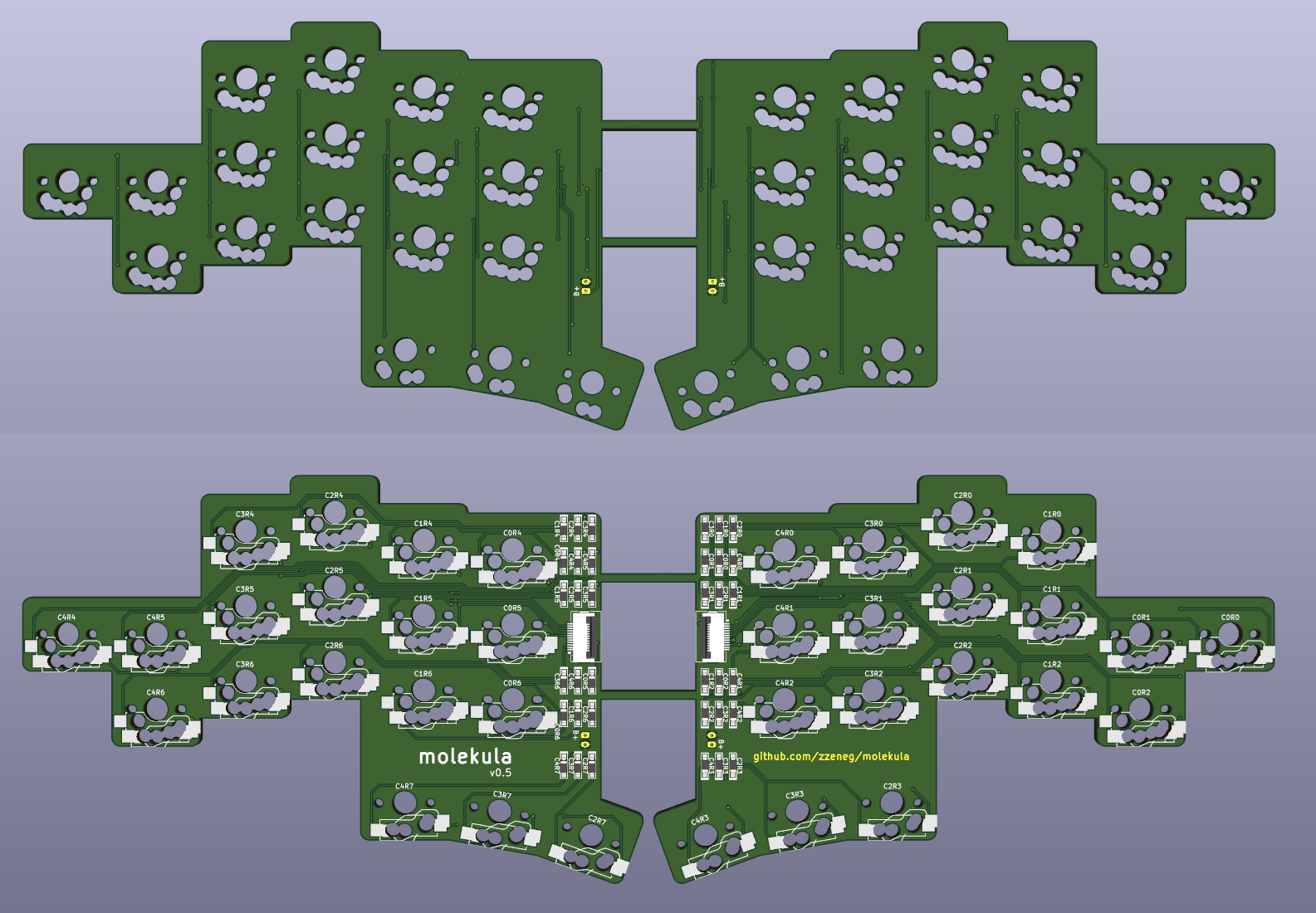
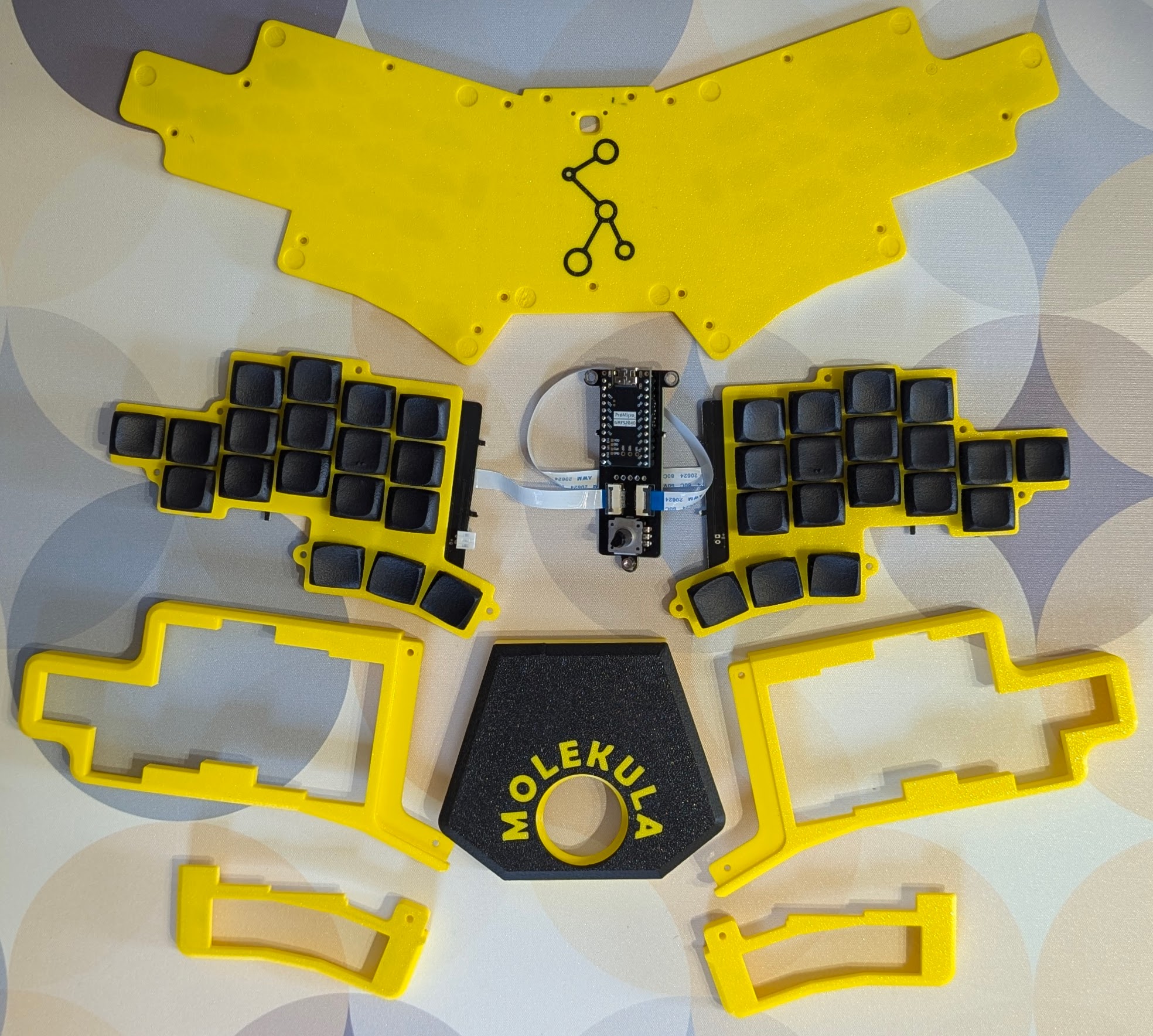
This project aims to provide components for building modular ergo keyboards by separating one main PCB into central and side parts. Side is a dumb PCB, with key matrix only (up to 25 keys), and accepts all switch types (MX/ChocV1/ChocV2/GLP). Central is a keyboard brain, which contains any MCU (wired/wireless/integrated) and additional hardware - encoders/touchpads/trackballs/displays/etc, while keeping its size under 100x100mm. PCBs are interconnected with 12-pin FFC cables, and can be replaced/updated independently.
Such modular approach allows for quick, cheap and easy experimenting with different hardware, prototyping, and reusing of side PCBs.
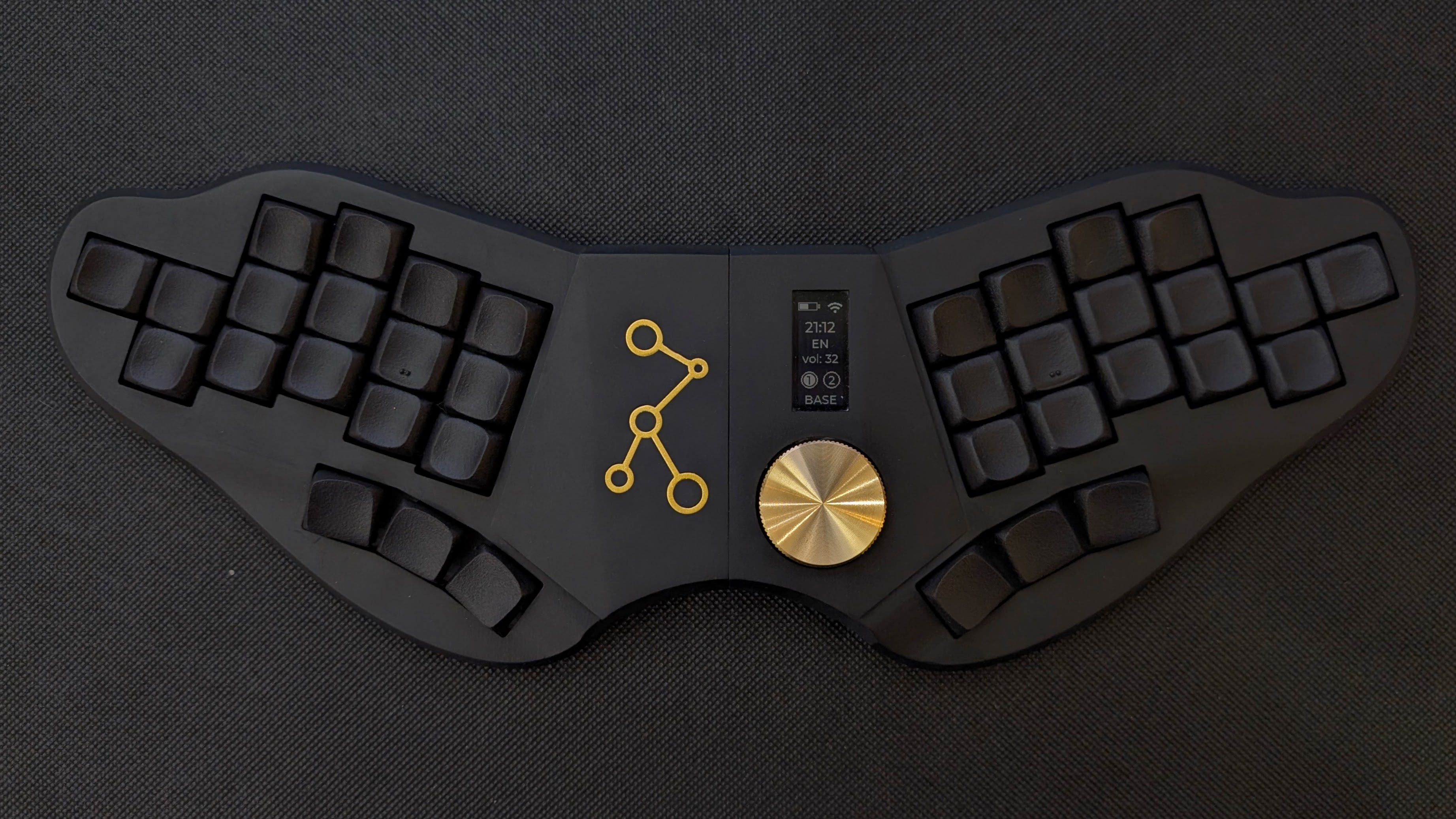
Reference design using molekula PCBs.
Features:
Unibody that can be disassembled into two parts for traveling
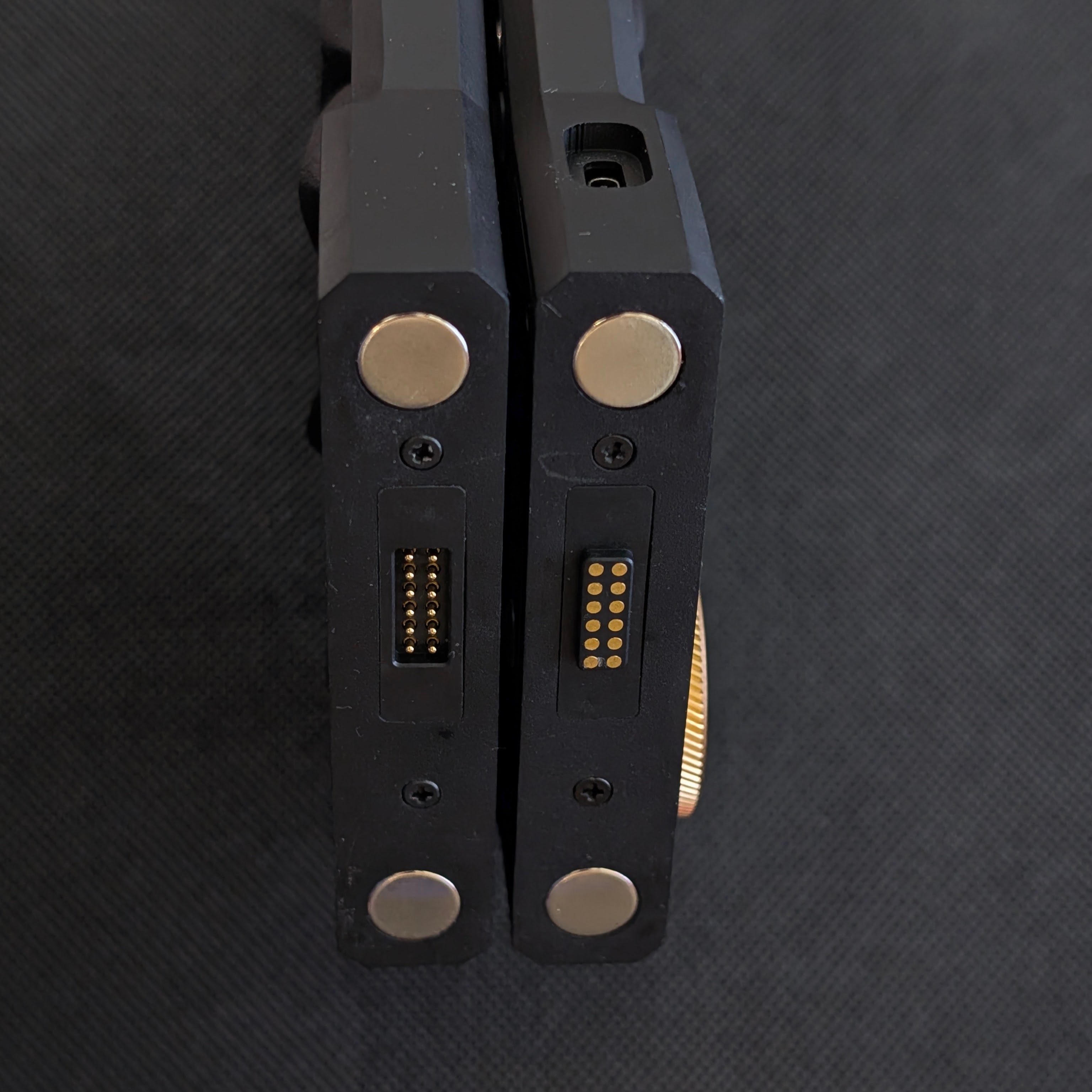
Unibody assembled from multiple parts, to allow easy modifications and experiments.
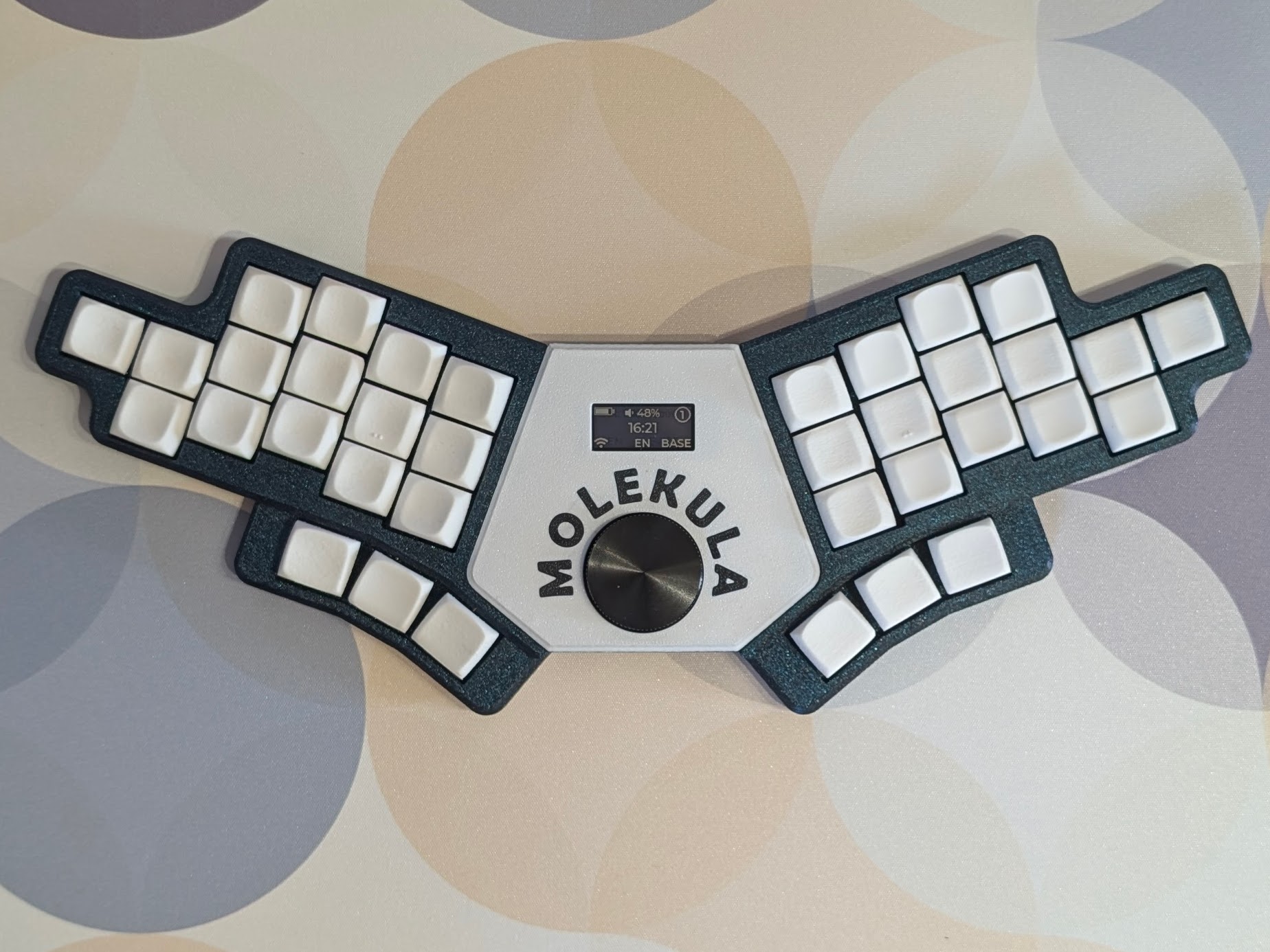
Keycaps designed for minY spacing (19mmx16mm):
If you like my work and want to support my future designs, please consider sponsorship.
Molekula2 keyboard was sponsored by PCBWay. I can highly recommend their PCBA and 3D printing services - "Imaging Black" resin looks fantastic.

| Qty | Value | Footprint | References |
|---|---|---|---|
| 7 | MountingHole | zzkeeb:Hole_M2-solder-nut-2.5 | H1, H2, H3, H4, H5, H6, H7 |
| 2 | C262499 | zzkeeb:Connector_FFC-12pin-0.5mm-vertical | J8, J9 |
| 2 | C479750 | zzkeeb:Connector_FFC-12pin-0.5mm-horizontal | J2, J3 |
| 2 | Conn_01x12_Socket | zzkeeb:Connector_Magnetic-12pin | J10, J11 |
| 1 | Display_nice-view | zzkeeb:Display_nice-view | J6 |
| 1 | N!N | zzkeeb:MCU_nice-nano | J1 |
| 1 | RotaryEncoder_Switch | zzkeeb:RotaryEncoder_EC11 | SW38 |
| 1 | SW_Push | zzkeeb:Button_SW_SPST_SKQG_WithoutStem | SW37 |


ProccyBoi/kiku
kiku is an open-source portable audio player built around an STM32H523 microcontroller. The project combines Bluetooth audio, local microSD playback, FM radio, a colour display, headphone and speaker outputs, battery…


hoglet67/RGBtoHDMI
Bare-metal Raspberry Pi project that provides pixel-perfect sampling of Retro Computer RGB/YUV video and conversion to HDMI


hackclub/OnBoard
💡 Join 1,000 teenagers and make your first PCB with a $100 grant!

DDeGonge/OS-ARM
This arm is not industrial and it will not be fast, but that is not my goal. But it will hopefully be a very nice looking arm fully capable of 6dof motion, cheap enough to keep it accessable but capable enough to…
It measures 44.6 × 70.5 mm and has 2 copper layers, 1.6 mm thick.
17 parts, built around the AFC11-S12ICA-00 and FPC05012-09200. The full list of its parts is on this page, with links to each part's symbol and footprint where PCBKit's library has them.
From the zzeneg/molekula repository on GitHub, at the commit this page was made from: the board is pcbs/central-promicro-encoder/central-promicro-encoder.kicad_pcb and its schematic keyboards/Molekula2/pcb.kicad_sch. PCBKit opens the board in the browser, with nothing to install.
Its repository publishes it under the MIT licence: you may reuse it on that licence's terms (keep the author's notice, and for a copyleft licence share your changes alike).