2 layers100 × 100 mm
Controller
yonathan-star/orbitscore
OrbitScore: optical rhythm-disc percussion sequencer — Half Life Music Week
28 parts
 yonathan-star/orbitscore
OrbitScore: optical rhythm-disc percussion sequencer — Half Life Music Week
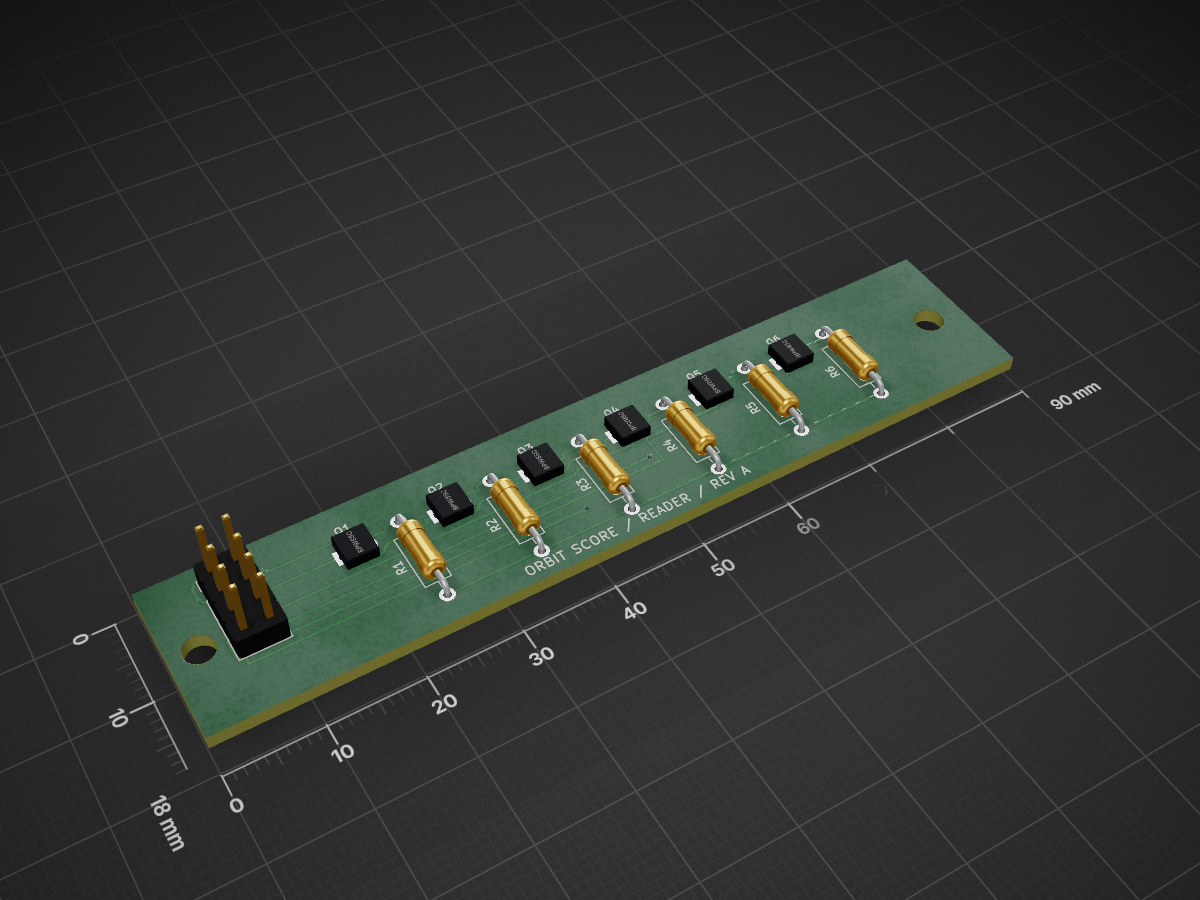
Reader is an open-source printed circuit board by yonathan-star, from the yonathan-star/orbitscore repository on GitHub. It is a 2-layer board of 90 × 18 mm with 15 parts on 8 nets, routed with 301 tracks and 2 vias.
Its parts include 6 resistors, 6 transistors and 1 connector.
A tabletop percussion sequencer that reads interchangeable perforated rhythm discs. One disc stores sixteen steps across four tracks: kick, snare, hi-hat, and tom. Turn the disc by hand to scan the pattern; a Raspberry Pi Pico then loops it at an independent electronic tempo.
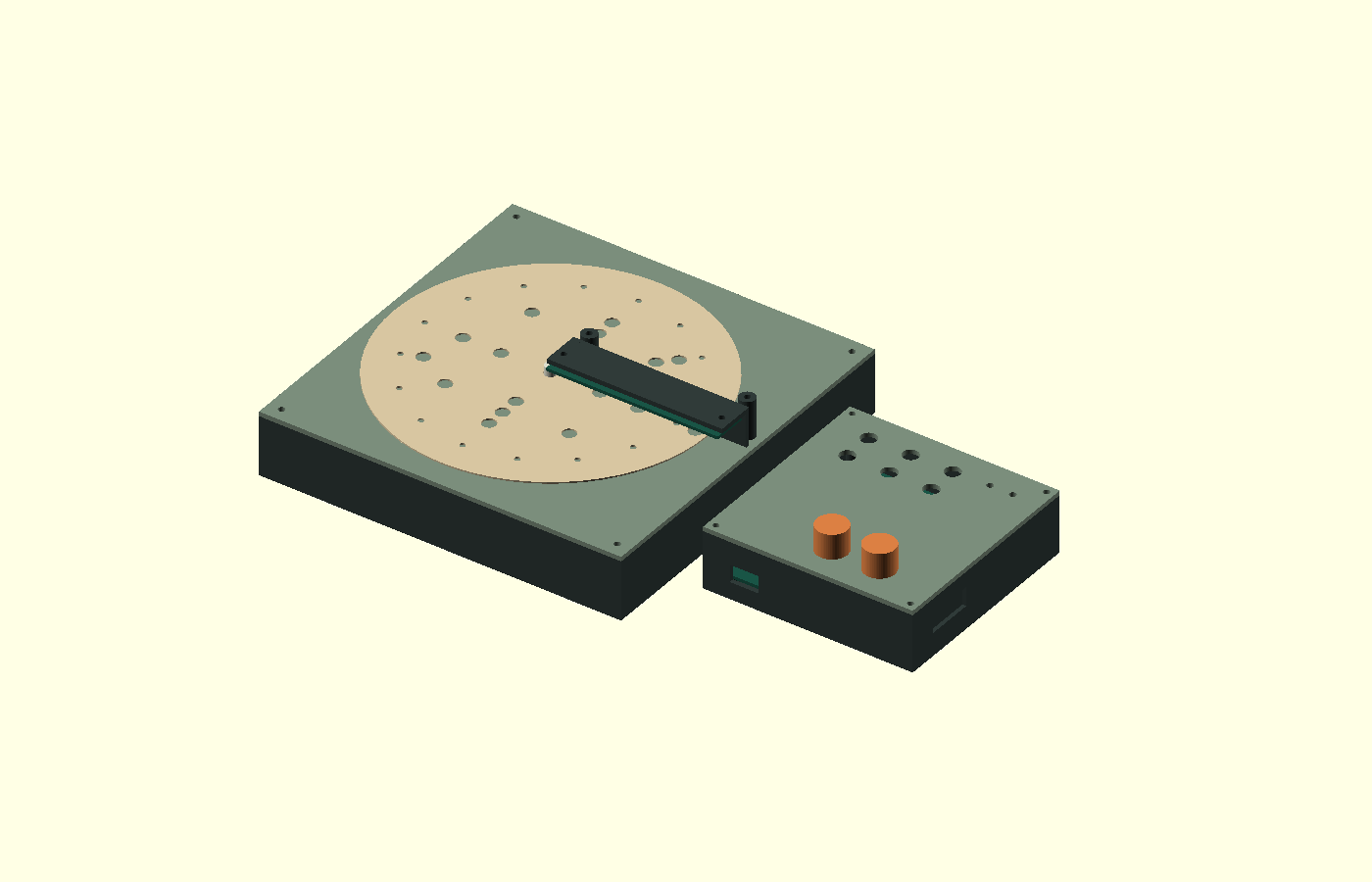
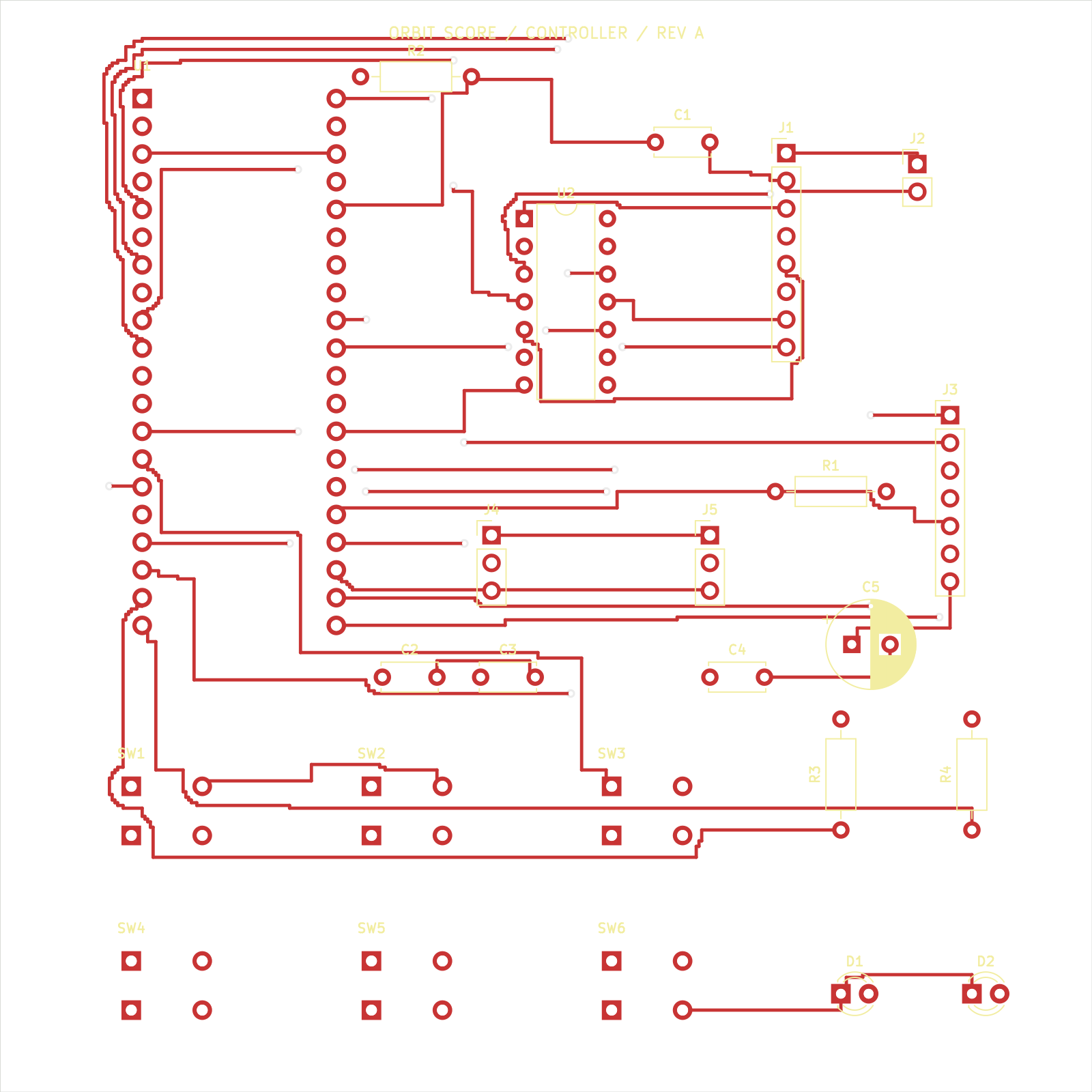
Six optical channels read four data tracks, a clock track, and an index marker. Separate controller, reader, and emitter boards connect the optical scanner to the Pico. A MAX98357A amplifier drives a speaker. Two knobs set tempo and gain; four track mutes control the arrangement.
The 164 mm disc fits a 190 × 190 mm scanner enclosure. The controls occupy a separate 110 × 110 mm pod. The firmware synthesizes the four percussion voices mathematically.
hardware/: editable KiCad schematics, layouts, local footprints, Gerbers, and drill files for all three boards.mechanical/: OpenSCAD source, individual printable STL parts, and board STEP references.firmware/: MicroPython scanner, sequencer, and percussion synthesis.bom.csv: component list with researched prices and explicitly marked allowances.docs/: design specifications, assembly wiring, budget, and bring-up procedure.verification/: firmware and board-check reports.The supplied reports record nine desktop firmware tests passed, 159 matching schematic/PCB pin assignments, zero unconnected pads, and zero electrical DRC errors. These checks validate files and software logic. The physical assembly, optical sensitivity, ambient-light immunity, Pico audio timing, and printed fit remain untested.
Before fabrication, check purchased component footprints, optical polarity/current, enclosure clearances, and the final vendor carts. The BOM includes procurement allowances and is not a delivered-price quote.
Open hardware/controller/controller.kicad_pro in KiCad 7 or newer. Open mechanical/orbitscore.scad in OpenSCAD. See docs/wiring-and-assembly.txt and docs/bring-up.txt before connecting hardware.
| Qty | Value | Footprint | References |
|---|---|---|---|
| 6 | 10k | OrbitScore:R_Axial_DIN0207_L6.3mm_D2.5mm_P10.16mm_Horizontal | R1, R2, R3, R4, R5, R6 |
| 6 | BPW85C | OrbitScore:BPW85C | Q1, Q2, Q3, Q4, Q5, Q6 |
| 2 | MountingHole_3.2mm | OrbitScore:MountingHole_3.2mm | H39, H869 |
| 1 | CONTROLLER | OrbitScore:PinHeader_2x04_P2.54mm_Vertical | J1 |
It measures 90 × 18 mm and has 2 copper layers, 1.6 mm thick.
15 parts. The full list of its parts is on this page, with links to each part's symbol and footprint where PCBKit's library has them.
From the yonathan-star/orbitscore repository on GitHub, at the commit this page was made from: the board is hardware/reader/reader.kicad_pcb and its schematic hardware/controller/controller.kicad_sch. PCBKit opens the board in the browser, with nothing to install.
Its repository states no licence, so its author keeps all rights: ask yonathan-star before reusing the design.
yonathan-star/orbitscore
OrbitScore: optical rhythm-disc percussion sequencer — Half Life Music Week

yonathan-star/orbitscore
OrbitScore: optical rhythm-disc percussion sequencer — Half Life Music Week

google/mozc-devices
Circuit diagrams and firmware source code for Gboard DIY keyboards

hoglet67/RGBtoHDMI
Bare-metal Raspberry Pi project that provides pixel-perfect sampling of Retro Computer RGB/YUV video and conversion to HDMI

mntmn/amiga2000-gfxcard
MNT VA2000, an Open Source Amiga 2/3/4000 Graphics Card (Zorro II/III), written in Verilog

hackclub/OnBoard
💡 Join 1,000 teenagers and make your first PCB with a $100 grant!

kenp-io/not-for-airpods-repairs
The content of this repository is licensed under the WTFPL License. Please have a close look at the terms before using this material.

Luos-io/luos_engine
Open-source and real-time orchestrator for cyber-physical-systems, to easily design, test and deploy embedded applications and digital twins.

Chrismettal/EleLab_v2
Cheap DIY lab system for hobbyists and the tinkering folk
