
2 layers98 × 27 mm
Each module responds to weight through a load cell, allowing the pitch to change based on the object placed on it.
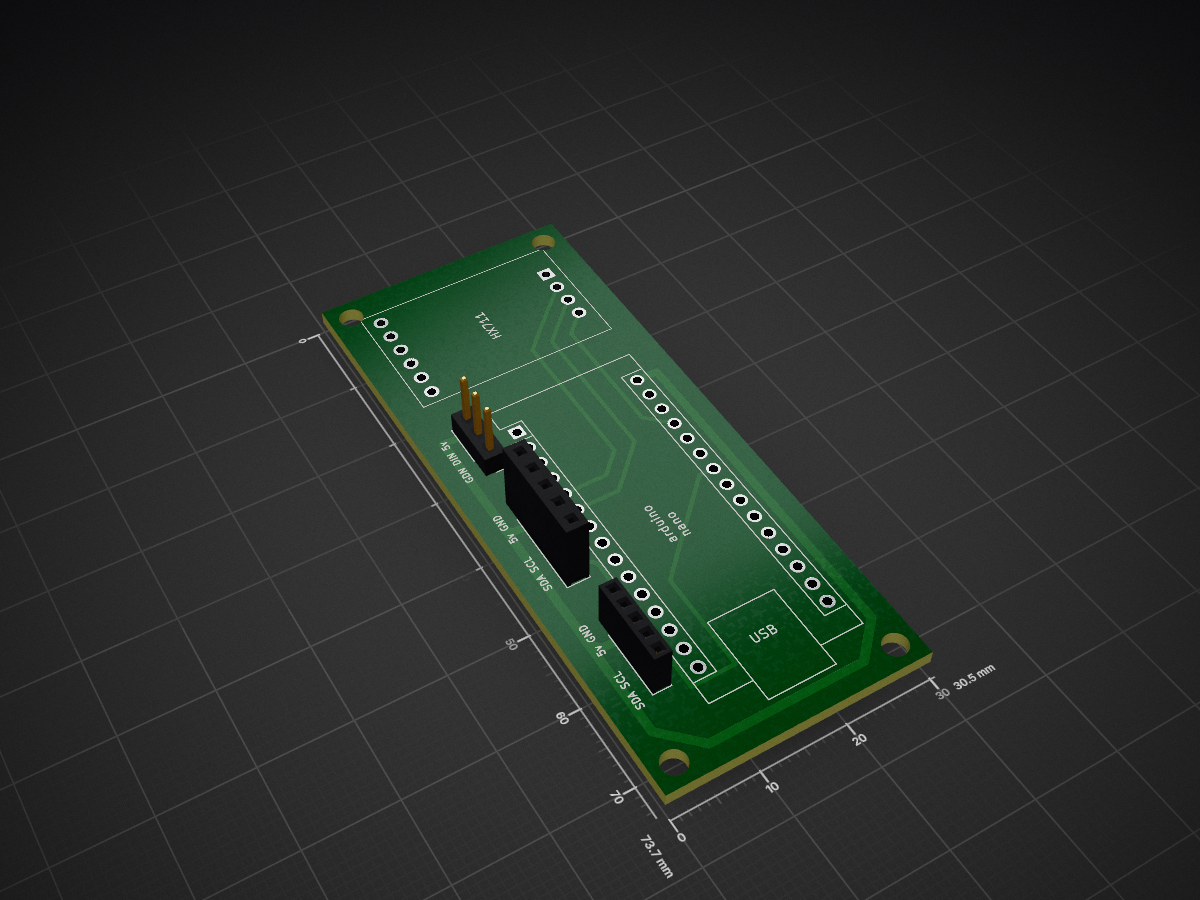
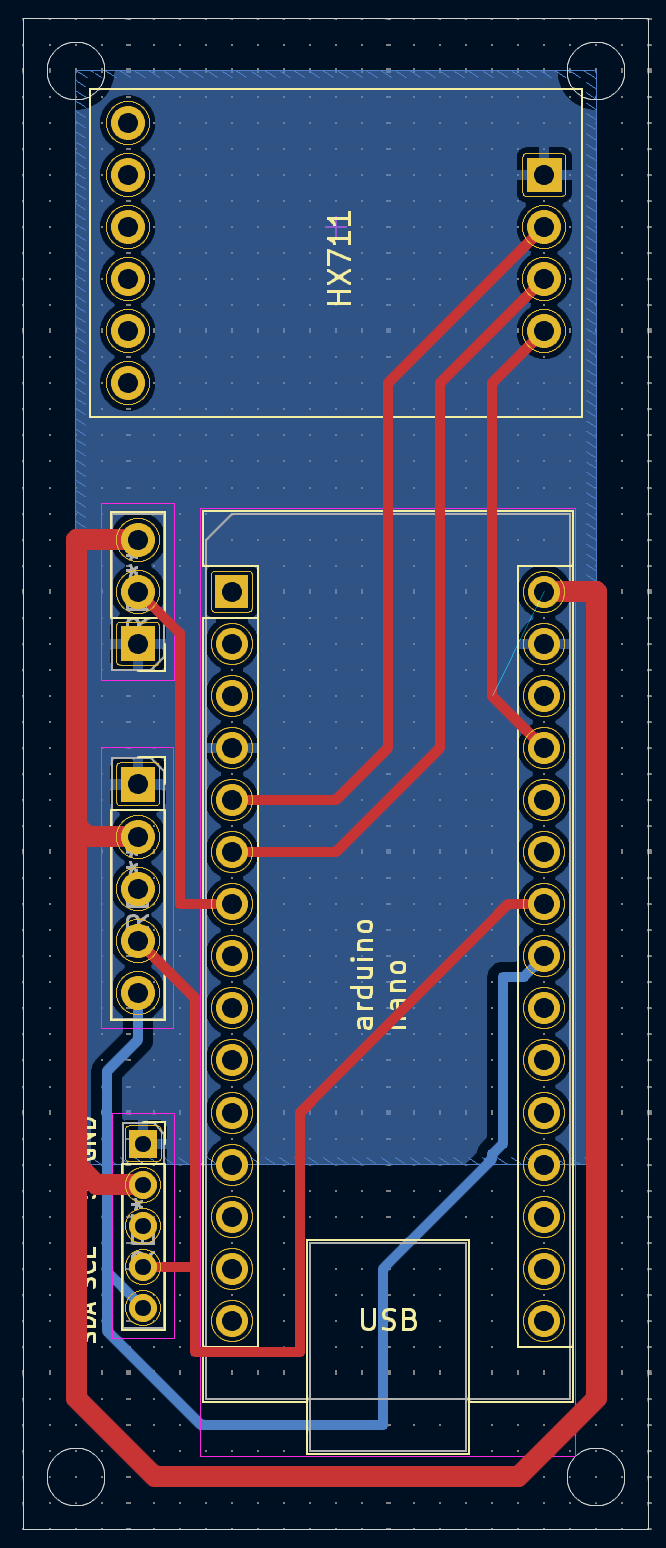
Wave is an open-source printed circuit board by Yellow-Moonlight, from the Yellow-Moonlight/Wave repository on GitHub. It is a 2-layer board of 30.5 × 73.7 mm with 5 parts on 4 nets, routed with 51 tracks and 0 vias.
A Modular Interactive Sequencer for kids
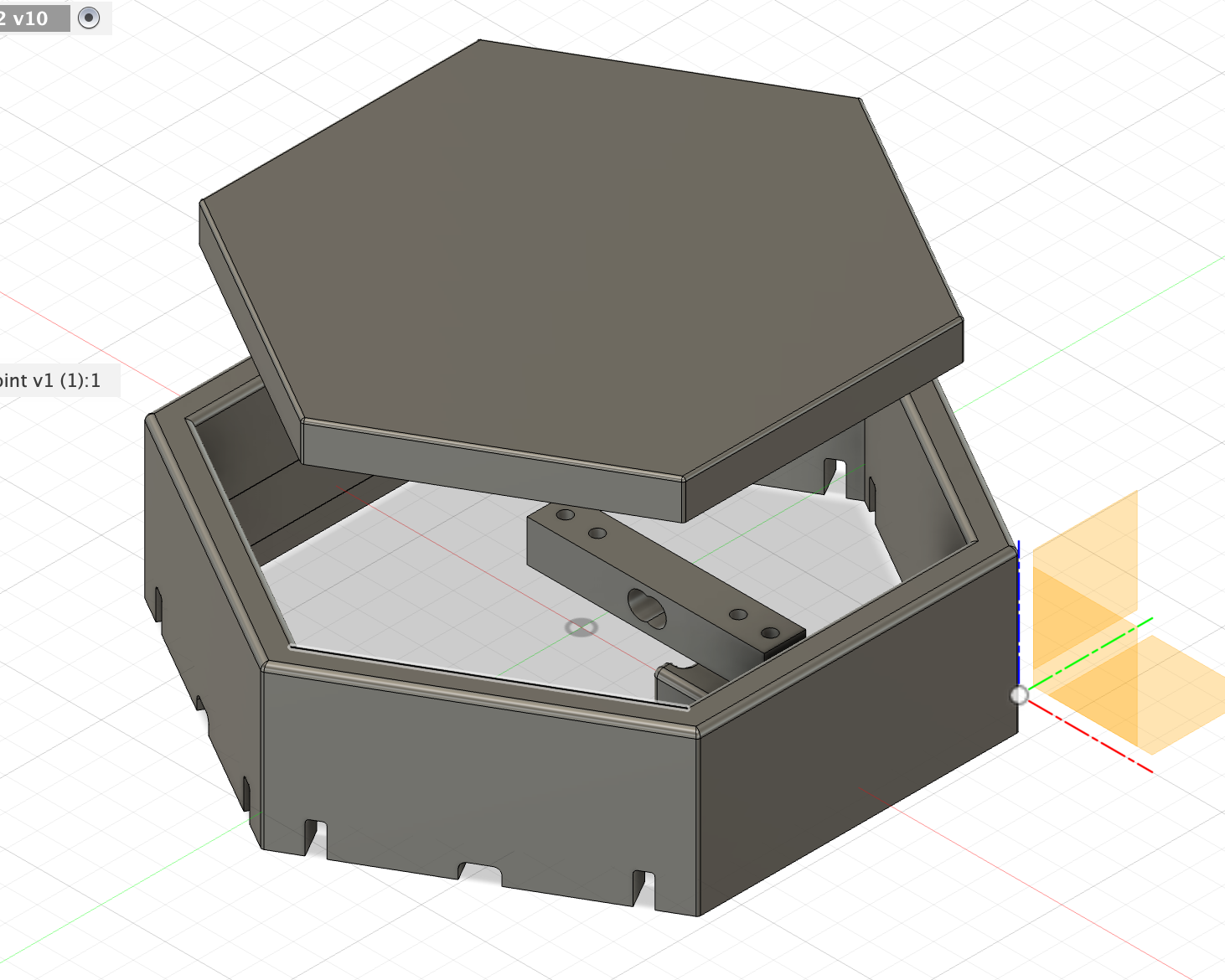
Wave is a modular, interactive sequencer designed for physical engagement and flexible arrangement. Using hexagonal modules connected via joints, users can build and reshape the instrument in a variety of layouts.
Each module responds to weight through a load cell, allowing the pitch to change based on the object placed on it. This tactile interface enables intuitive sound control, offering a unique experience compared to traditional sequencers.
Modular Design
Hexagonal modules connect via joints, forming custom configurations.
Weight-Based Pitch Control
Each module uses a load cell to detect weight, which determines the pitch of the step.
I2C Communication
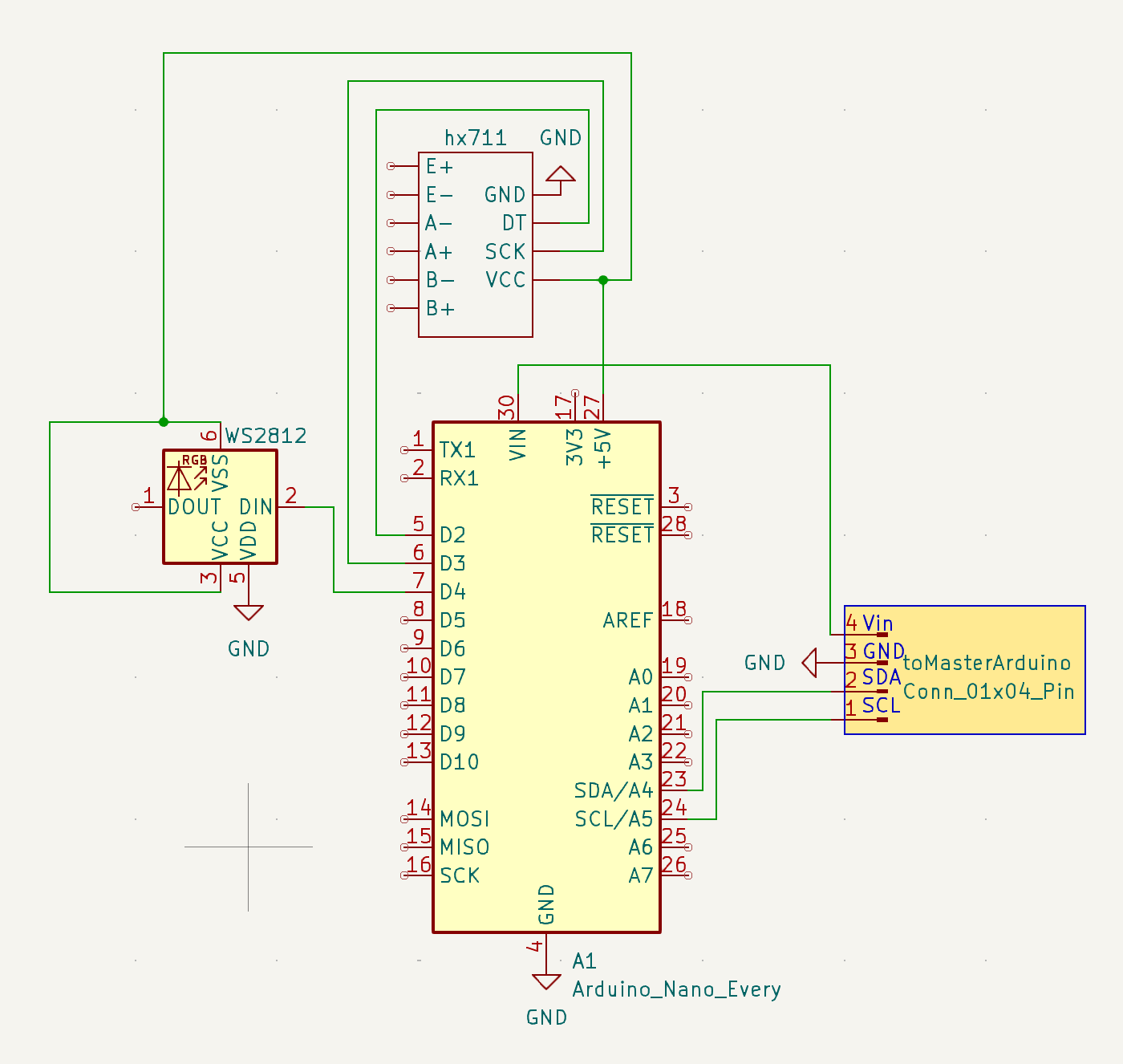
Each module contains a Slave Arduino that sends data to the Master Arduino over I2C.
Signal Output
The master processes the input and generates Gate and CV Out signals to control external analog or modular synths.
Planned Features
You can download the 3D model of Wave and use it for printing or modification. Below is a preview of the model:
The circuit for Wave was designed using KiCad. Below are previews of the schematic symbol and PCB layout:
Schematic Symbol
PCB Layout
Wave is ideal for experimental music setups, sound installations, or educational environments where interaction, modularity, and sound design meet.
🚧 Wave is currently under development. More updates and documentation will be available soon.
It measures 30.5 × 73.7 mm and has 2 copper layers, 1.6 mm thick.
5 parts. The full list of its parts is on this page, with links to each part's symbol and footprint where PCBKit's library has them.
From the Yellow-Moonlight/Wave repository on GitHub, at the commit this page was made from: the board is circuit/Wave.kicad_pcb and its schematic circuit/Wave.kicad_sch. PCBKit opens the board in the browser, with nothing to install.
Its repository states no licence, so its author keeps all rights: ask Yellow-Moonlight before reusing the design.

joypad-ai/joypad-os
Universal controller firmware for building adapters, dongles, and custom controllers.

OLIMEX/OLINUXINO
OLINUXINO is Open Source / Open Hardware, low cost from EUR 24 Linux Industrial grade Single Board Computer capable to operate -25+85C

jamro/tiny-engineer
A small desktop robot that brings an AI coding assistant to life, physically acting out when it reads files, thinks, writes code, and finishes work.

hackclub/OnBoard
💡 Join 1,000 teenagers and make your first PCB with a $100 grant!


Luos-io/luos_engine
Open-source and real-time orchestrator for cyber-physical-systems, to easily design, test and deploy embedded applications and digital twins.