2 layers54.6 × 89.5 mm

 tamanishi/Pinky4120
A split 4 x 7 vertically staggered keys and 4 thumb keys keyboard.
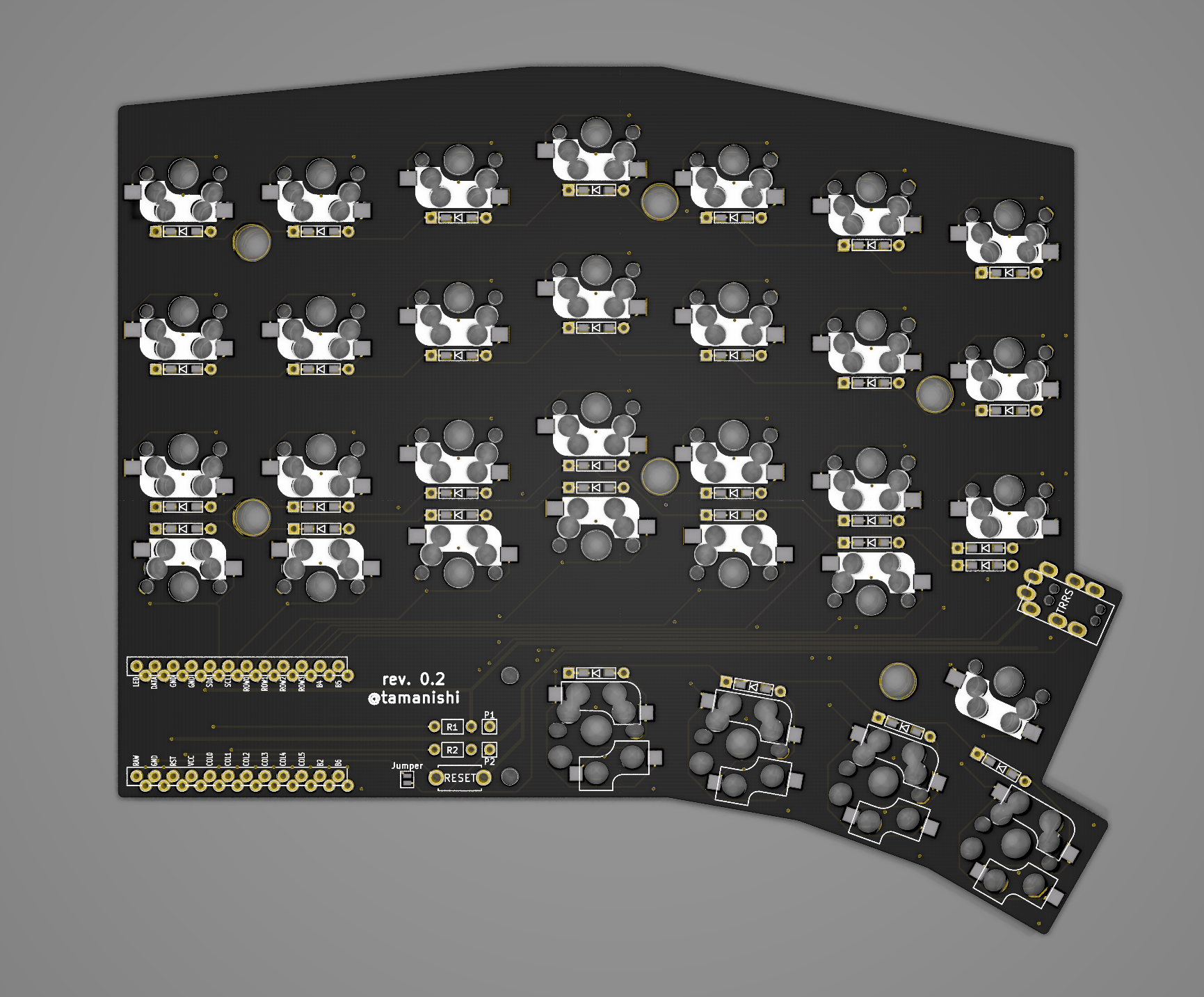
Pinky4 is an open-source printed circuit board by tamanishi, from the tamanishi/Pinky4 repository on GitHub. It is a 2-layer board of 138.9 × 119.9 mm with 80 parts on 56 nets, routed with 990 tracks and 111 vias.
Its parts include 33 switches, 32 diodes, 3 connectors, 2 resistors and 1 IC. It belongs with the keyboards and input boards and the AVR (ATmega, ATtiny) boards of this library.
Warning
If you are using Kicad 6, please see https://github.com/tamanishi/Pinky4/issues/4 .
A split 4 x 7 vertically staggered keys and 4 thumb keys keyboard.
An idea is inspired from crkbd, Lily58, Ergo42 and Helix.
Pinky4 is designed for PoC.
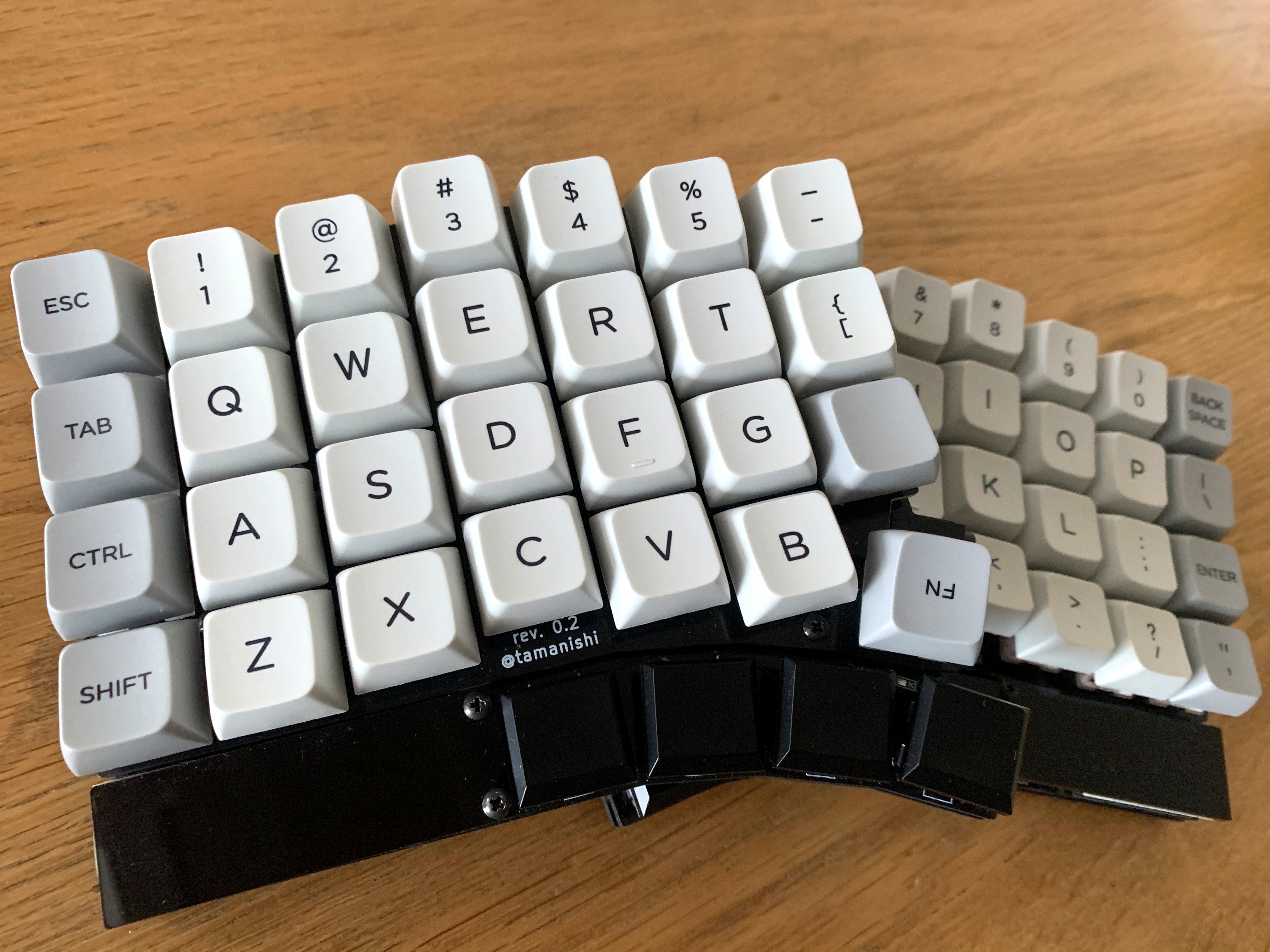
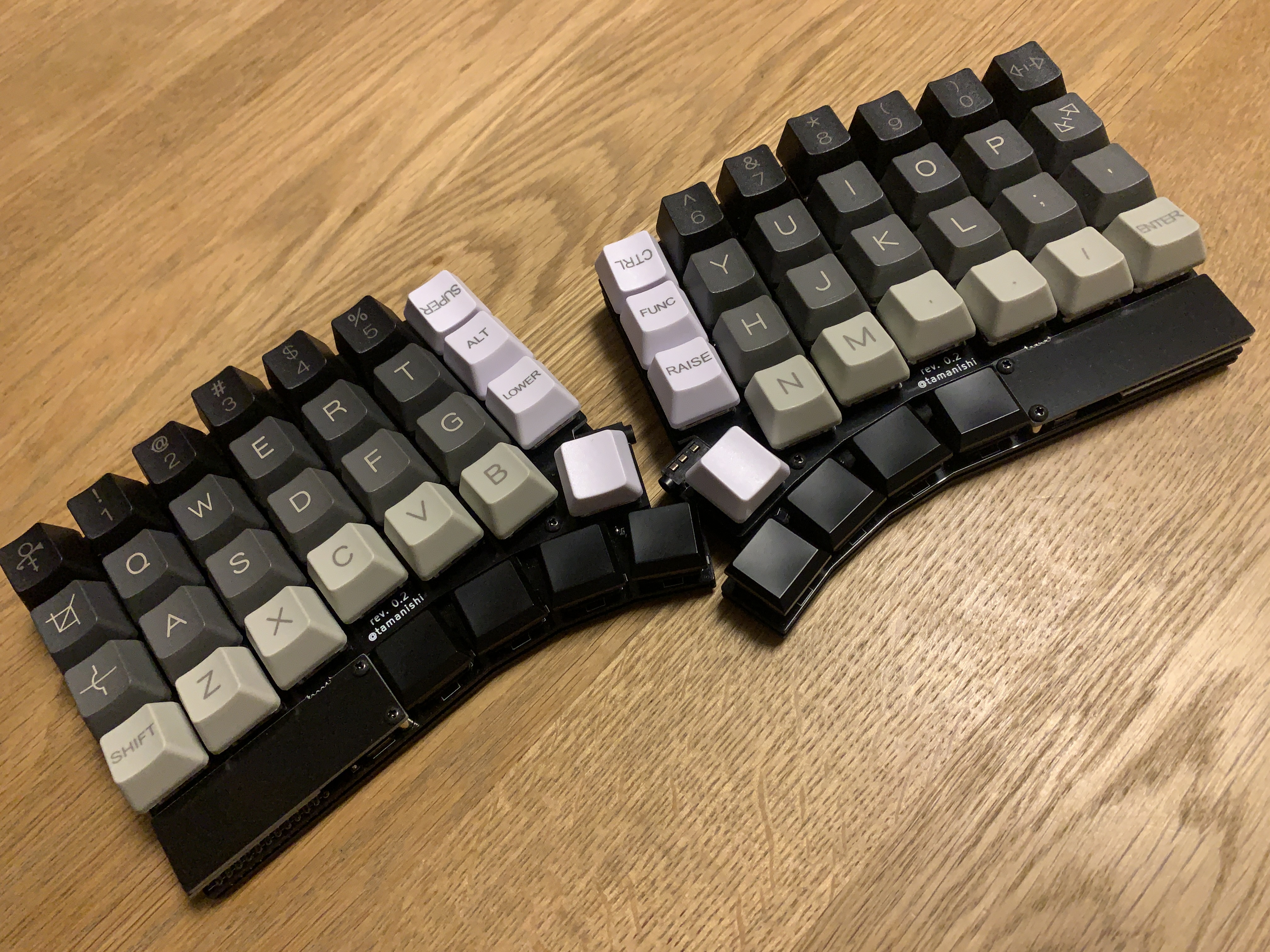
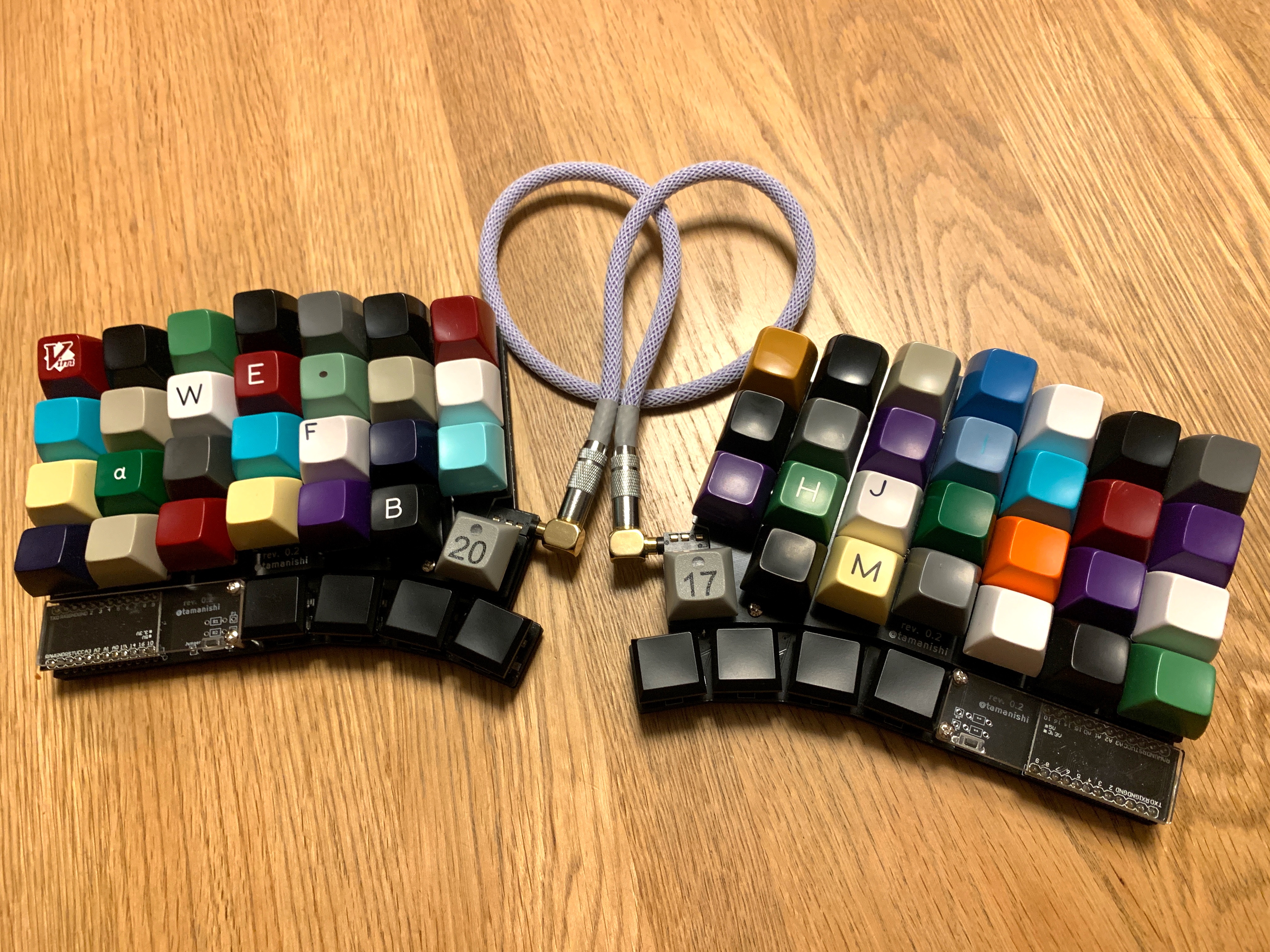
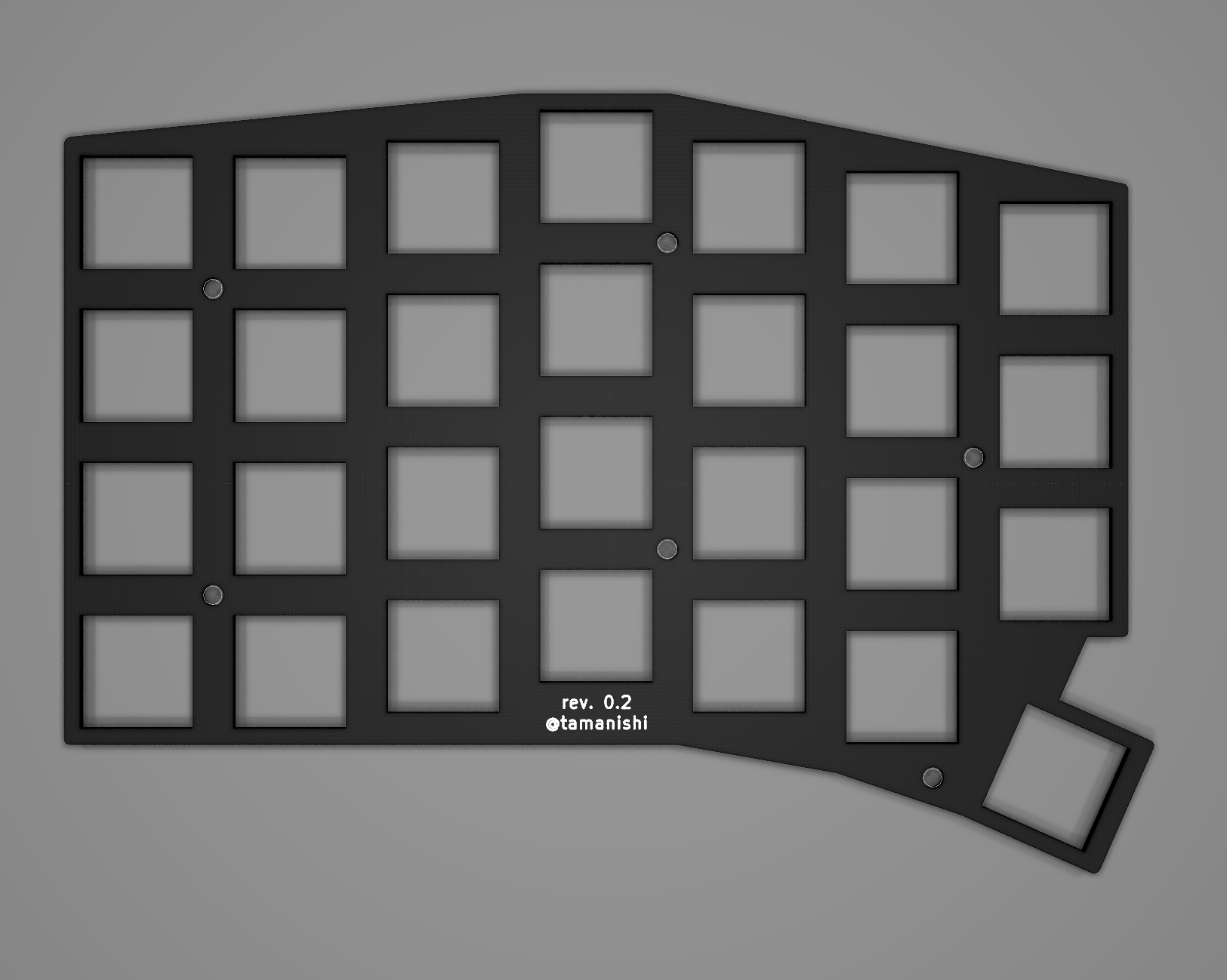
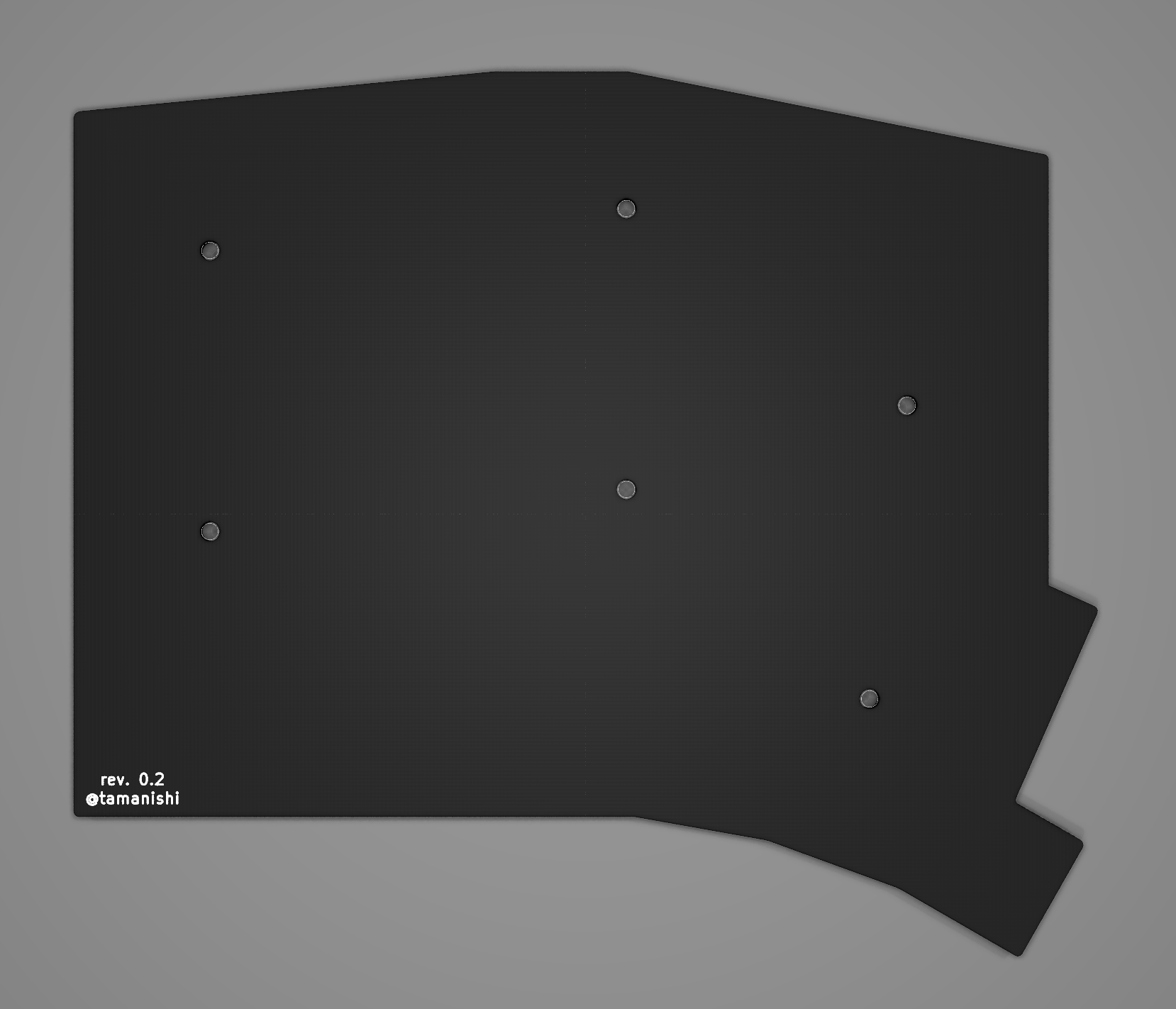
| # | name | qty |
|---|---|---|
| 1 | pcbs | 2 |
| 2 | top plates | 2 |
| 3 | bottom plates | 2 |
| 4 | Pro Micros | 2 |
| 5 | 2 pins tact switches | 2 |
| 6 | TRRS connectors | 2 |
| 7 | diodes (1N4148 or 1N4148W) | 64 |
| 8 | Kailh PCB Sockets (MX Sockets) | 56 |
| 9 | Kailh PCB Sockets (Choc Sockets) | 8 |
| 10 | Cherry MX compatible keyswitches | 56 |
| 11 | Kailh low profile (Choc) keyswitches | 8 |
| 12 | Cherry MX compatible keycaps | 56 |
| 13 | Kailh low profile (Choc) compatible keycaps | 8 |
| 14 | TRS or TRRS cable | 1 |
| 15 | 7mm M2 standoffs (for top and bottom plates) | 12 |
| 16 | 5mm M2 standoffs (for Pro Micro cover plates) | 4 |
| 17 | 4mm M2 screws | 32 |
| 18 | rubber cushions | 8 |
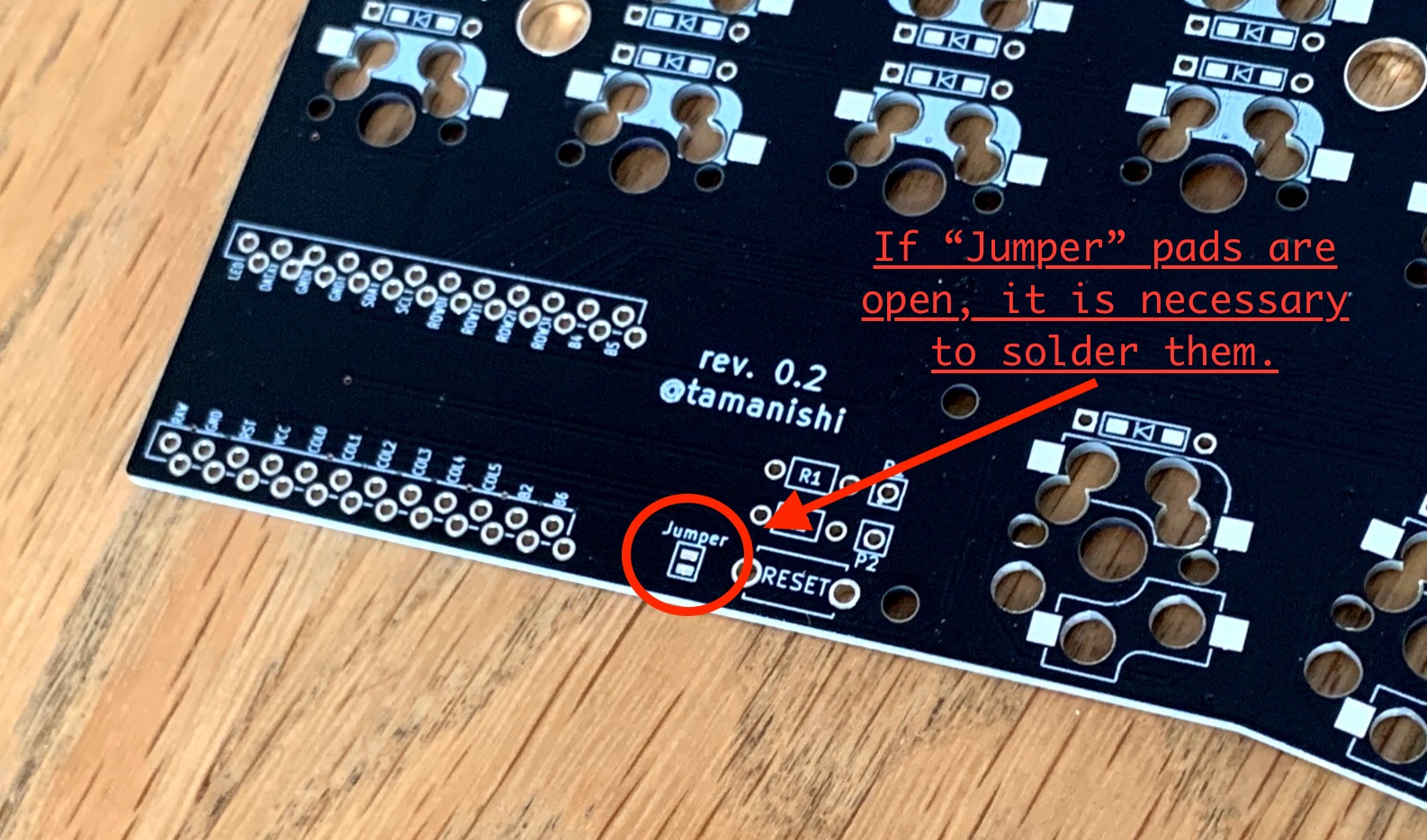
See Quantum Mechanical Keyboard Firmware and its Pinky support page
| Qty | Value | Footprint | References |
|---|---|---|---|
| 32 | D | kbd:D3_TH_SMD | D1, D2, D10, D11, D12, D13, D14, D15, D16, D17, D18, D19, D20, D21, D22, D23 +16 |
| 28 | SW_PUSH | kbd:CherryMX_Hotswap | SW2, SW10, SW11, SW12, SW13, SW14, SW15, SW16, SW17, SW19, SW20, SW21, SW22, SW24, SW25, SW26 +12 |
| 6 | Val** | kbd:HOLE | Ref**, Ref**, Ref**, Ref**, Ref**, Ref** |
| 4 | SW_PUSH | kbd:CherryMX_KailhLowProfile_Hotswap | SW18, SW23, SW28, SW33 |
| 2 | R | kbd:R | R1, R2 |
| 2 | VAL** | kbd:HOLE_M2 | HOLE_M2, HOLE_M2 |
| 2 | i2c-pin | kbd:1pin_conn | P1, P2 |
| 1 | kbd:JPC2 | JP1 | |
| 1 | MJ-4PP-9 | kbd:MJ-4PP-9 | J1 |
| 1 | ProMicro | kbd:ProMicro_v2 | U1 |
| 1 | RESET_SW | kbd:ResetSW | SW1 |

Staacks/gbinterceptor
Capture or stream Game Boy gameplay footage via USB without modifying the Game Boy.

Chrismettal/EleLab_v2
Cheap DIY lab system for hobbyists and the tinkering folk

ohmtech-rdi/eurorack-blocks
Software to Hardware Prototyping for Eurorack using C++, Max/Gen~ or Faust

jpconstantineau/ErgoTravel
A Portable Ergonomic Split Keyboard inspired from the ErgoDox, Let's Split and Minidox

marksard/Keyboards
This repository is warehouse of my keyboard architecture.

tebl/RC6502-Apple-1-Replica
An expandable SBC-version of the Apple 1 computer, easy to get started with and lot of cool stuff that can be added to it!

It measures 138.9 × 119.9 mm and has 2 copper layers, 1.6 mm thick.
80 parts. The full list of its parts is on this page, with links to each part's symbol and footprint where PCBKit's library has them.
From the tamanishi/Pinky4 repository on GitHub, at the commit this page was made from: the board is pcb/Pinky4.kicad_pcb. PCBKit opens the board in the browser, with nothing to install.
Its repository states no licence, so its author keeps all rights: ask tamanishi before reusing the design.