2 layers100 × 69 mm

 sbarry753/cse1233
computer engineering capstone group project
Preamp is an open-source printed circuit board by sbarry753, from the sbarry753/cse123 repository on GitHub. It is a 2-layer board of 81 × 62 mm with 28 parts on 16 nets, routed with 57 tracks and 0 vias.
Its parts include 9 resistors, 5 capacitors, 2 connectors, 1 IC and 1 diode. It belongs with the audio and music boards of this library.
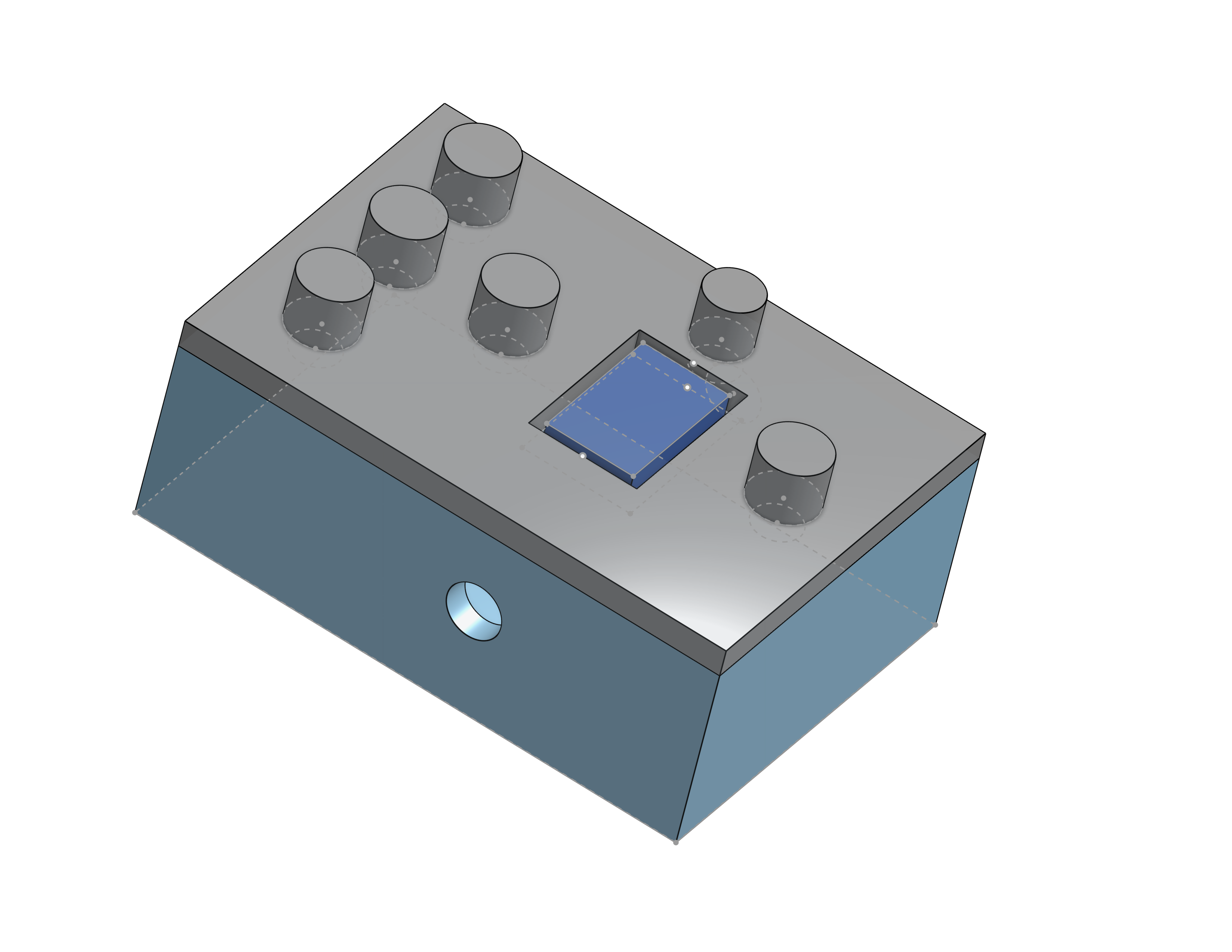 GuSynth is a research + hardware project building a real-time polyphonic guitar synth pedal capable of transforming a guitar into other instruments with ultra-low latency.
The project combines:
The goal is a standalone guitar pedal that lets a guitarist play naturally while hearing the output as another instrument.
Most pitch detection and guitar synthesis systems rely on longer analysis windows, which adds noticeable delay. GuSynth instead focuses on extracting useful information from the earliest part of the note, especially the pick attack, so the system can react quickly enough for live performance.
The project currently explores two connected ML stages:
A harmonic LUT-based pipeline and analog processing stages support the overall system.
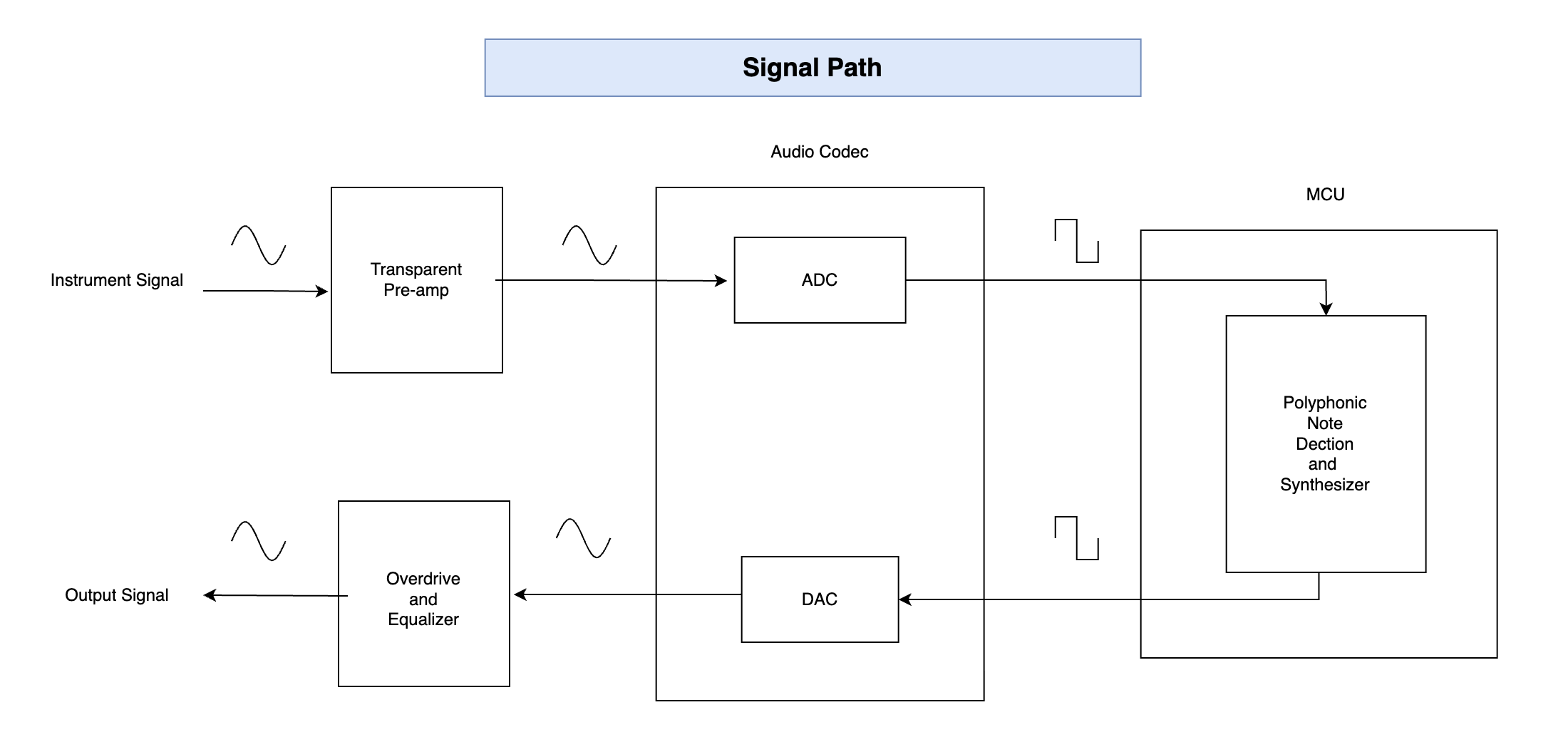
This is the full signal path of the pedal, from instrument input through conversion, inference/synthesis, and output shaping.
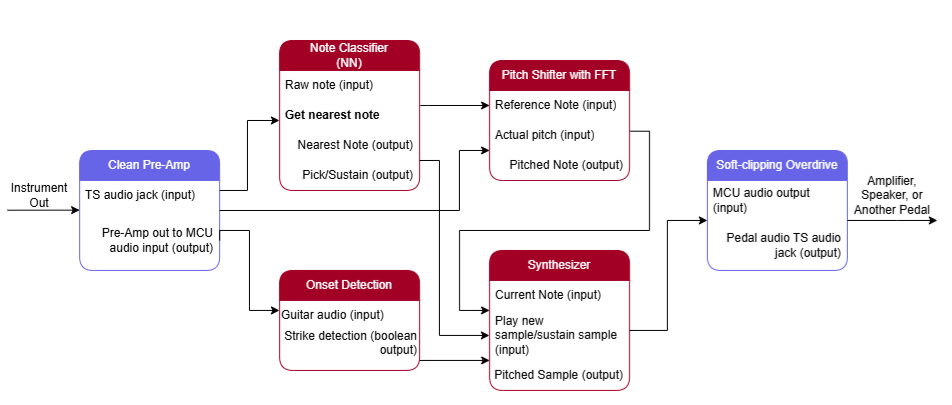
This diagram shows the higher-level pedal architecture and how the DSP / neural / synthesis stages connect together.
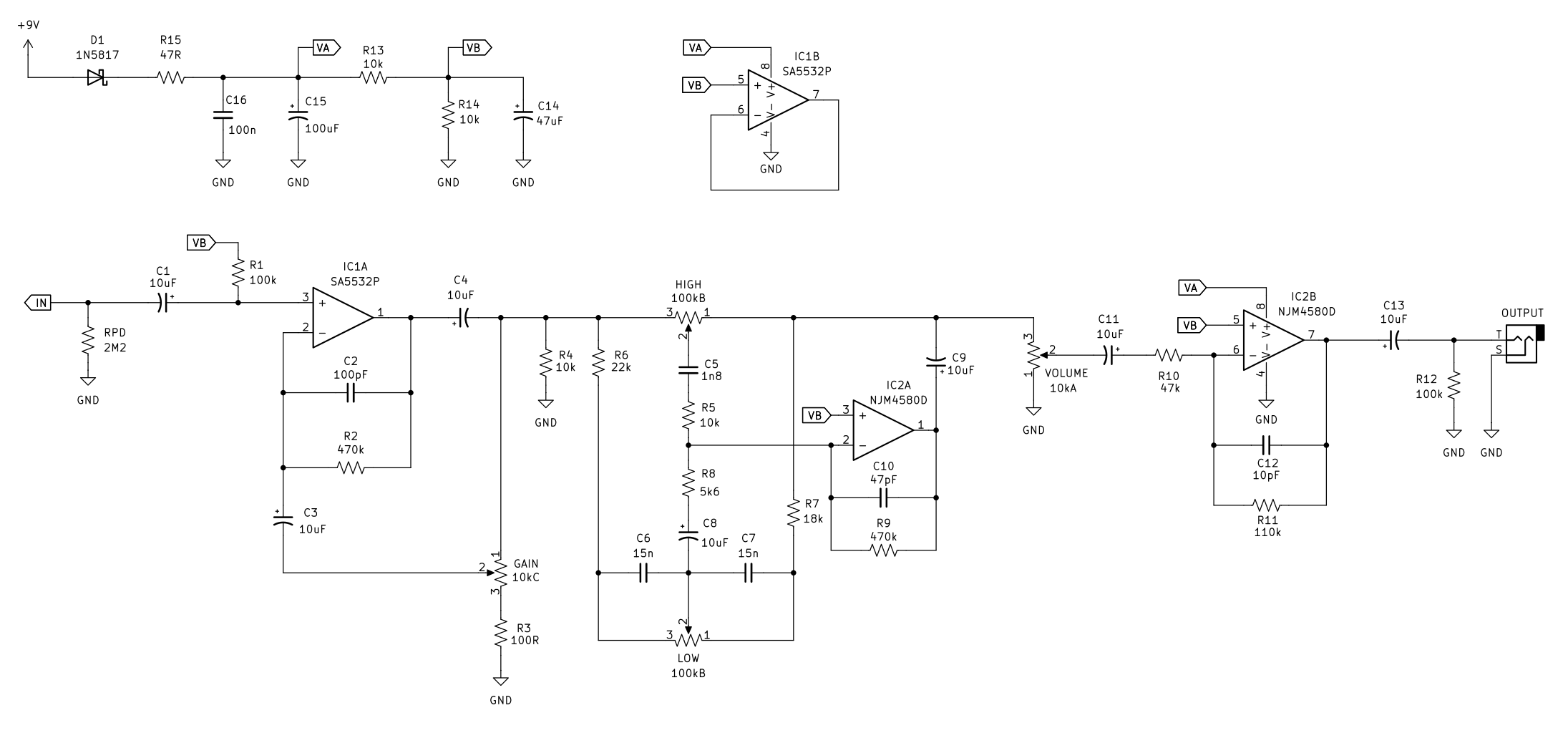
This section documents one of the analog reference directions used in the project for tone shaping / overdrive exploration.
The first model is designed to recognize notes from very short guitar input windows, with a strong focus on the transient / pick attack region.
It is intended to:

After (first NN output / note-detection-driven result):

The second model takes guitar input and transforms it toward the sound of another instrument.
Current work is focused on guitar → piano-style transfer, with the long-term goal of supporting more instruments and cleaner real-time conversion.
It is intended to:
Alongside the neural models, the project includes a harmonic fingerprint LUT approach used for analysis and refinement.
This system helps by:
Rather than treating the project as purely neural or purely classical DSP, GuSynth explores a hybrid approach.
The long-term target is a compact embedded pedal platform.
The pedal is not only digital / ML based. Analog stages are also important for:
This is especially useful when blending guitar and synthetic instrument textures.
Documentation/images/
Diagrams, schematics, and system figures
Documentation/audio/
WAV demos for model outputs
Documentation/video/
Video demonstrations of the system
LUT - In Development/
Harmonic fingerprint / template detection work
DAISY - In Development/
Embedded hardware and firmware work
JUCE - In Development/
Desktop or plugin prototyping
A standalone guitar pedal that:
GuSynth is a hybrid guitar-synthesis system exploring how far real-time note inference and timbre transfer can be pushed under embedded, performance-critical latency constraints.
It is not just a guitar effect — it is an attempt to turn the guitar into a real-time expressive controller for other instruments.
| Qty | Value | Footprint | References |
|---|---|---|---|
| 4 | TP_GND | TestPoint:TestPoint_Loop_D3.50mm_Drill0.9mm_Beaded | TP1, TP2, TP3, TP4 |
| 2 | 100k | Resistor_THT:R_Axial_DIN0414_L11.9mm_D4.5mm_P15.24mm_Horizontal | R8, R9 |
| 2 | AudioJack2_Switch | Connector_Audio:Jack_6.35mm_Neutrik_NMJ4HCD2_Horizontal | J1, J2 |
| 1 | 0.1uF | Capacitor_THT:CP_Radial_D8.0mm_P3.80mm | C1 |
| 1 | 10M | Resistor_THT:R_Axial_DIN0414_L11.9mm_D4.5mm_P15.24mm_Horizontal | R2 |
| 1 | 10k | Resistor_THT:R_Axial_DIN0414_L11.9mm_D4.5mm_P15.24mm_Horizontal | R7 |
| 1 | 15uF | Capacitor_THT:CP_Radial_D8.0mm_P3.80mm | C4 |
| 1 | 1N4007 | Diode_THT:D_DO-41_SOD81_P10.16mm_Horizontal | D1 |
| 1 | 1k | Resistor_THT:R_Axial_DIN0414_L11.9mm_D4.5mm_P15.24mm_Horizontal | R3 |
| 1 | 1uF | Capacitor_THT:CP_Radial_D8.0mm_P3.80mm | C5 |
| 1 | 2.7k | Resistor_THT:R_Axial_DIN0414_L11.9mm_D4.5mm_P15.24mm_Horizontal | R5 |
| 1 | 22M | Resistor_THT:R_Axial_DIN0414_L11.9mm_D4.5mm_P15.24mm_Horizontal | R1 |
| 1 | 4.7uF | Capacitor_THT:CP_Radial_D8.0mm_P3.80mm | C3 |
| 1 | 470 | Resistor_THT:R_Axial_DIN0414_L11.9mm_D4.5mm_P15.24mm_Horizontal | R6 |
| 1 | 47pF | Capacitor_THT:CP_Radial_D8.0mm_P3.80mm | C2 |
| 1 | 56k | Resistor_THT:R_Axial_DIN0414_L11.9mm_D4.5mm_P15.24mm_Horizontal | R4 |
| 1 | Battery | Connector_PinSocket_2.54mm:PinSocket_1x02_P2.54mm_Vertical | BT1 |
| 1 | C500k | Potentiometer_THT:Potentiometer_Alpha_RD901F-40-00D_Single_Vertical | RV1 |
| 1 | LOGO | LOGO | G*** |
| 1 | TL071 | Package_DIP:DIP-8_W7.62mm_LongPads | U1 |
| 1 | TP_4.5V | TestPoint:TestPoint_Loop_D3.50mm_Drill0.9mm_Beaded | TP7 |
| 1 | TP_POSTAMP | TestPoint:TestPoint_Loop_D3.50mm_Drill0.9mm_Beaded | TP6 |
| 1 | TP_PREAMP | TestPoint:TestPoint_Loop_D3.50mm_Drill0.9mm_Beaded | TP5 |


joeycastillo/Sensor-Watch
A board replacement for the classic Casio F-91W wristwatch

TalismanDesign/PocketMage_PDA
An E-Ink PDA device using the ESP32 S3.

rusefi/rusefi
rusefi - GPL internal combustion engine control unit

hackclub/OnBoard
💡 Join 1,000 teenagers and make your first PCB with a $100 grant!

asterics/esp32_mouse_keyboard
ESP32 implementation for HID over GATT Keyboard and Mouse (Bluetooth Low Energy). Including serial API for external modules (similar to Adafruit EZKey HID)


Luos-io/luos_engine
Open-source and real-time orchestrator for cyber-physical-systems, to easily design, test and deploy embedded applications and digital twins.

Chrismettal/EleLab_v2
Cheap DIY lab system for hobbyists and the tinkering folk
It measures 81 × 62 mm and has 2 copper layers, 1.6 mm thick.
28 parts. The full list of its parts is on this page, with links to each part's symbol and footprint where PCBKit's library has them.
From the sbarry753/cse123 repository on GitHub, at the commit this page was made from: the board is Analog/preamp/preamp/preamp.kicad_pcb and its schematic Analog/424_overdrive_eq/424_overdrive_eq.kicad_sch. PCBKit opens the board in the browser, with nothing to install.
Its repository states no licence, so its author keeps all rights: ask sbarry753 before reusing the design.