
4 layers28.4 × 47.9 mm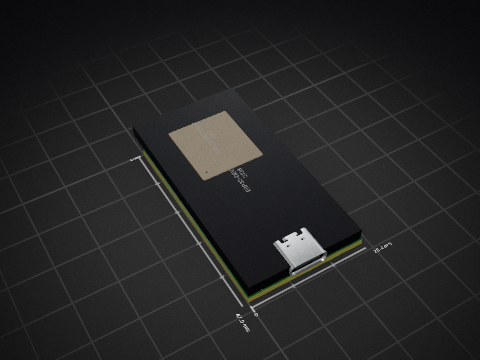
Easyduino ESP32
Hanqaqa/Easyduino
Easily dive into different PCB KiCad designs of the most popular microcontroller devboards
29 parts755CERN-OHL-P-2.0

PCB design and schematic for the MCP251863T-H/SS using SPI into CAN
CAN 1 is an open-source printed circuit board by saavedAN, from the saavedAN/MCP251863_CAN_SPI repository on GitHub, published under the MIT licence. It is a 4-layer board of 115.3 × 50.1 mm with 29 parts on 80 nets, routed with 304 tracks and 22 vias.
Its parts include 15 capacitors, 4 connectors, 3 ICs, 3 crystals and 2 resistors.
PCB design and schematic for the MCP251863T-H/SS using SPI into CAN
| Qty | Value | Footprint | References |
|---|---|---|---|
| 9 | .1uf | Capacitor_SMD:C_1206_3216Metric_Pad1.33x1.80mm_HandSolder | C1, C2, C3, C4, C5, C6, C7, C8, C9 |
| 6 | 20pf | Capacitor_SMD:C_1206_3216Metric_Pad1.33x1.80mm_HandSolder | C10, C11, C12, C13, C14, C15 |
| 3 | DE9_Plug_SPI | Library_costume:CONN_64TXLF_AMP | J1, J2, J3 |
| 3 | MCP251863T-H/SS | Library_costume:28L-SSOP_MCH | U1, U2, U3 |
| 3 | ~ | Library_costume:FC4STCBMF20.0 | X1, X2, X3 |
| 2 | 120 | Resistor_THT:R_Axial_DIN0207_L6.3mm_D2.5mm_P2.54mm_Vertical | R1, R2 |
| 2 | Conn_01x02 | Connector_JST:JST_EH_B2B-EH-A_1x02_P2.50mm_Vertical | CAN1, CAN2 |
| 1 | DE9_Plug_Power | Library_costume:CONN_64TXLF_AMP | J4 |
Hanqaqa/Easyduino
Easily dive into different PCB KiCad designs of the most popular microcontroller devboards


EvanKrall/pipad
A PCB for putting a Raspberry Pi CM4 inside a 1st-generation iPad.


alvarop/chaac
This is a work in progress for a wireless weather station project.


colinleroy/BurgerDisk
A daisy-chainable Smartport hard drive for the Apple II

esden/glasgow-addons
Various interface addon boards and expansions for the Glasgow Digital Interface Explorer
It measures 115.3 × 50.1 mm and has 4 copper layers, 1.6 mm thick.
29 parts. The full list of its parts is on this page, with links to each part's symbol and footprint where PCBKit's library has them.
From the saavedAN/MCP251863_CAN_SPI repository on GitHub, at the commit this page was made from: the board is CAN_1.kicad_pcb and its schematic CAN_1.kicad_sch. PCBKit opens the board in the browser, with nothing to install.
Its repository publishes it under the MIT licence: you may reuse it on that licence's terms (keep the author's notice, and for a copyleft licence share your changes alike).