2 layers65 × 30 mm
Rgb to hdmi
hoglet67/RGBtoHDMI
Bare-metal Raspberry Pi project that provides pixel-perfect sampling of Retro Computer RGB/YUV video and conversion to HDMI
36 parts1kGPL-3.0

 rmingon/cryptoboard
In an era where digital privacy is constantly threatened, our project offers a truly secure and low-level encrypted messaging system.
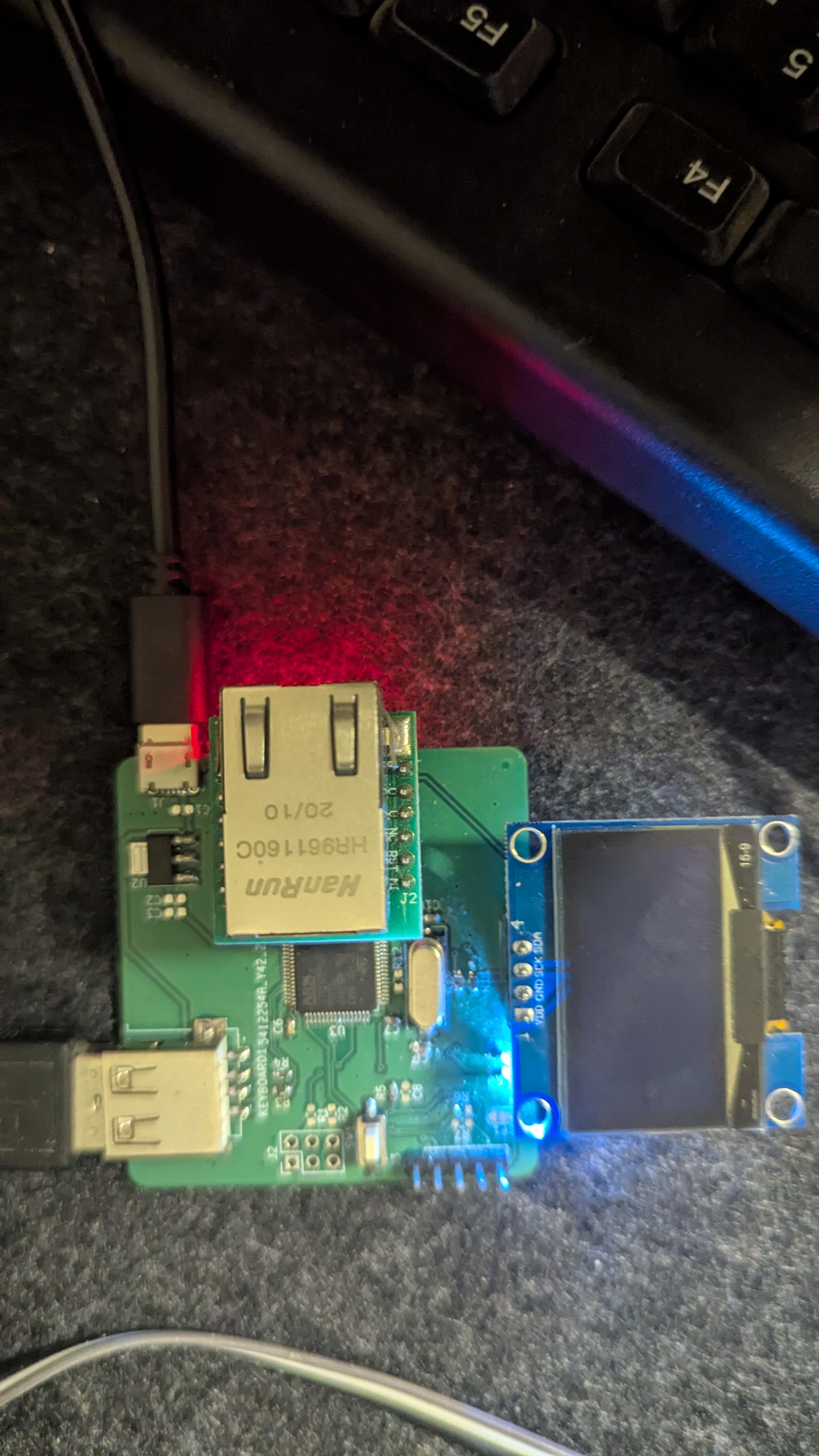
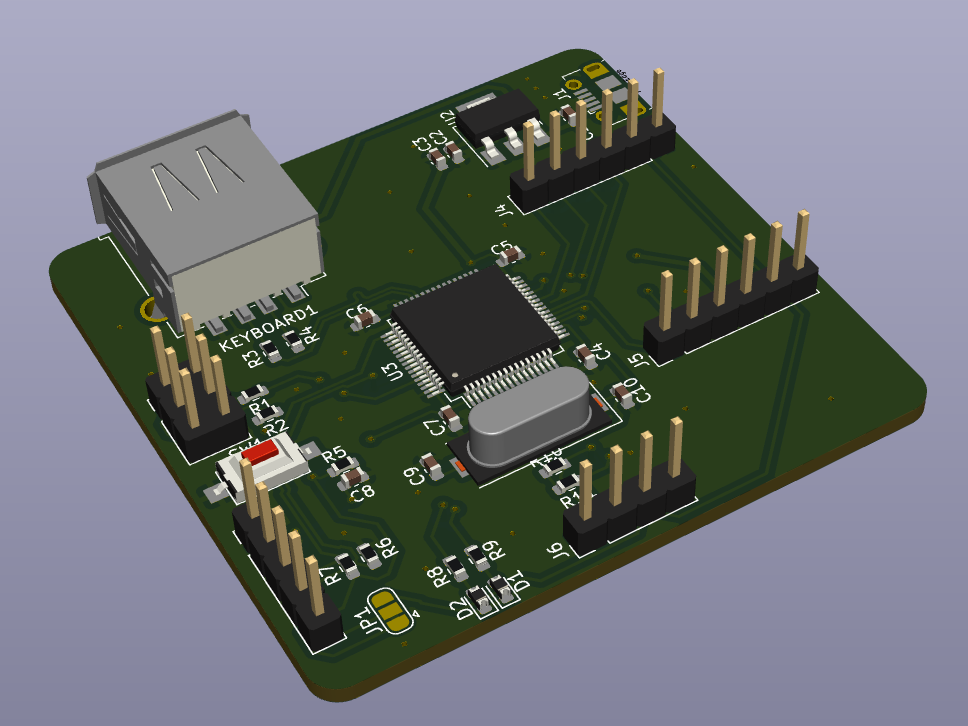
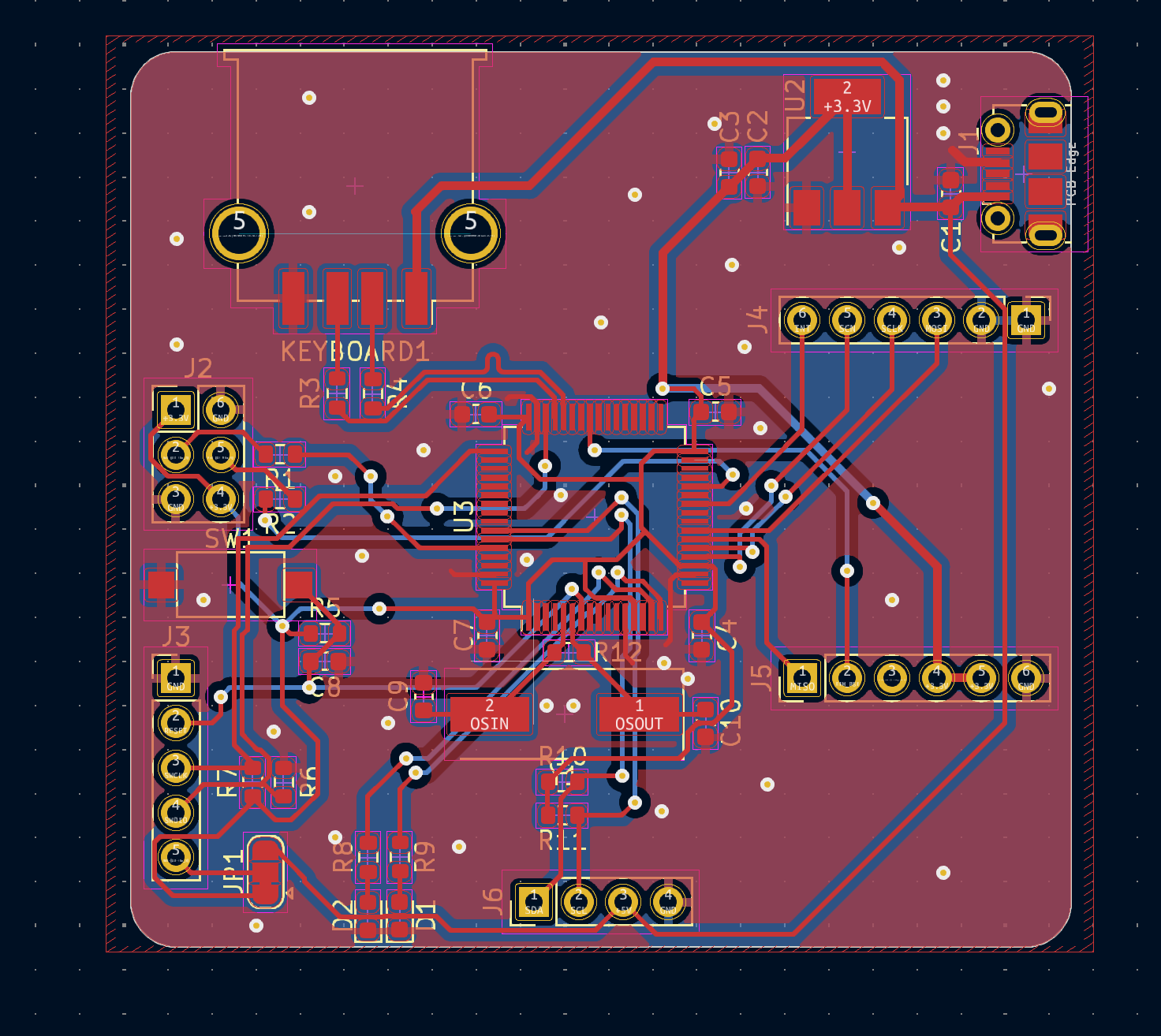
Cryptoboard is an open-source printed circuit board by rmingon, from the rmingon/cryptoboard repository on GitHub. It is a 2-layer board of 53.3 × 50.8 mm with 36 parts on 68 nets, routed with 349 tracks and 62 vias.
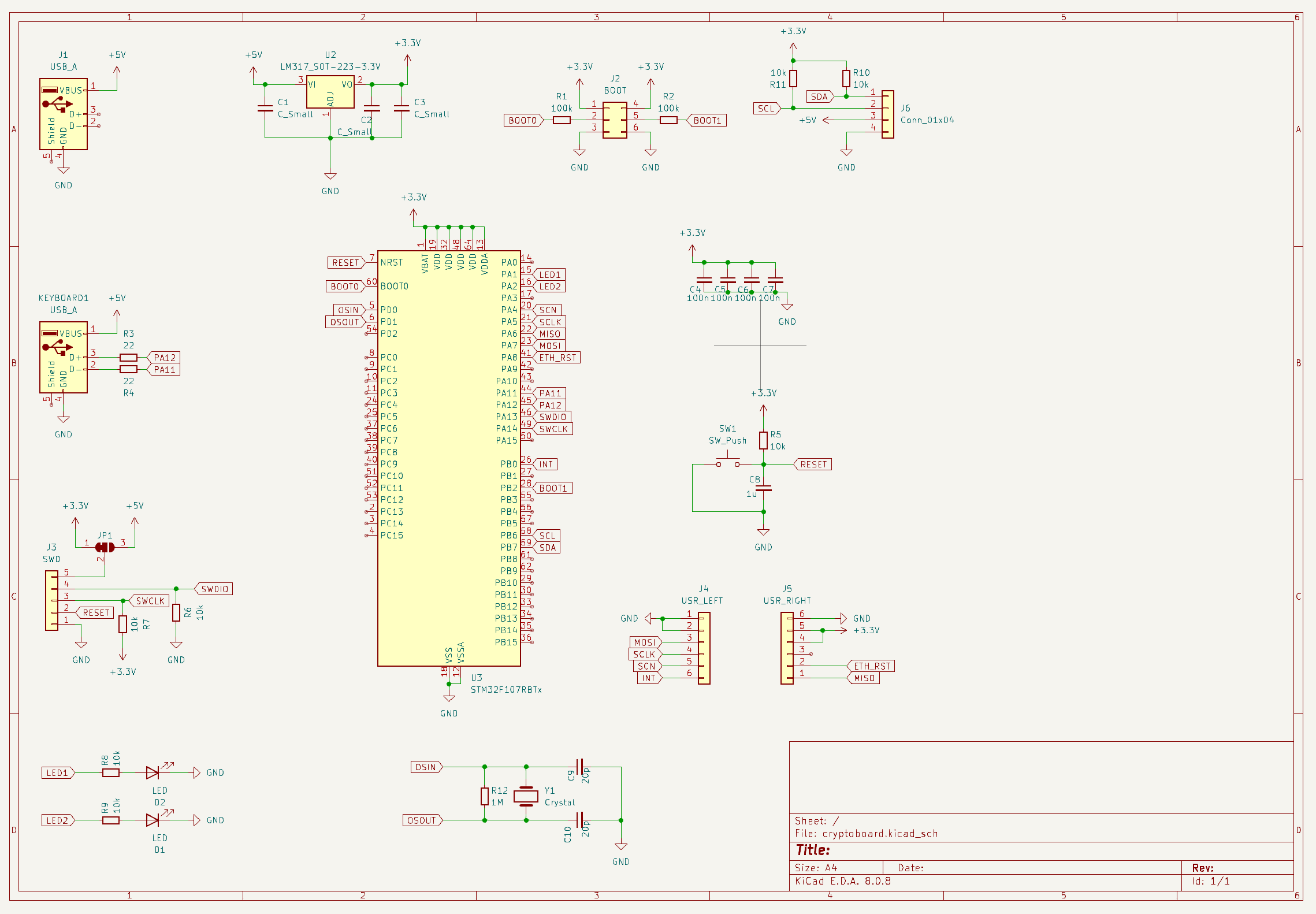
Its parts include 12 resistors, 10 capacitors, 6 connectors, 2 ICs and 2 diodes. It belongs with the STM32 boards of this library.
In an era where digital privacy is constantly threatened, our project offers a truly secure and low-level encrypted messaging system. By utilizing the STM32F103 microcontroller, W5500 Ethernet module, and a simple HID keyboard, we create a direct, encrypted communication channel between identical devices.
Before using the system, each user must manually input an interruption vector for SHA-256 encryption using the connected keyboard. This vector serves as a unique key known only to the user and is not stored anywhere within the system, making external breaches virtually impossible.
Unlike conventional messaging apps that rely on internet-based services, our system operates on a direct peer-to-peer Ethernet connection. This means no external servers can intercept or store messages.
Each session requires the user to set up a unique SHA-256 encryption vector, ensuring that even if an attacker gains access to the system, previous messages cannot be decrypted.
The messaging protocol is implemented at a very low level, avoiding standard protocols like TCP/IP that could be vulnerable to packet sniffing. This makes it extremely difficult for an attacker to analyze network traffic and extract meaningful data.
This project is perfect for individuals or organizations needing absolute privacy in communications. Whether for personal security, journalistic protection, or sensitive military applications, our STM32F103-based system ensures that messages remain confidential and beyond the reach of any third-party eavesdropping.
| Qty | Value | Footprint | References |
|---|---|---|---|
| 7 | 10k | Resistor_SMD:R_0603_1608Metric | R5, R6, R7, R8, R9, R10, R11 |
| 4 | 100n | Capacitor_SMD:C_0603_1608Metric | C4, C5, C6, C7 |
| 3 | C_Small | Capacitor_SMD:C_0603_1608Metric | C1, C2, C3 |
| 2 | 100k | Resistor_SMD:R_0603_1608Metric | R1, R2 |
| 2 | 20p | Capacitor_SMD:C_0603_1608Metric | C9, C10 |
| 2 | 22 | Resistor_SMD:R_0603_1608Metric | R3, R4 |
| 2 | LED | Diode_SMD:D_0603_1608Metric | D1, D2 |
| 1 | 1M | Resistor_SMD:R_0603_1608Metric | R12 |
| 1 | 1u | Capacitor_SMD:C_0603_1608Metric | C8 |
| 1 | BOOT | Library:PinHeader_2x03_P2.54mm_Vertical_new | J2 |
| 1 | Conn_01x04 | Connector_PinHeader_2.54mm:PinHeader_1x04_P2.54mm_Vertical | J6 |
| 1 | Crystal | Crystal:Crystal_SMD_HC49-SD | Y1 |
| 1 | LM317_SOT-223-3.3V | Package_TO_SOT_SMD:SOT-223-3_TabPin2 | U2 |
| 1 | STM32F107RBTx | Package_QFP:LQFP-64_10x10mm_P0.5mm | U3 |
| 1 | SWD | Connector_PinHeader_2.54mm:PinHeader_1x05_P2.54mm_Vertical | J3 |
| 1 | SW_Push | Button_Switch_SMD:SW_SPST_CK_RS282G05A3 | SW1 |
| 1 | SolderJumper_3_Bridged12 | Jumper:SolderJumper-3_P1.3mm_Bridged12_RoundedPad1.0x1.5mm | JP1 |
| 1 | USB_A | Connector_USB:USB_Micro-B_Molex-105017-0001 | J1 |
| 1 | USB_A | Connector_USB:USB_A_TE_292303-7_Horizontal | KEYBOARD1 |
| 1 | USR_LEFT | Connector_PinHeader_2.54mm:PinHeader_1x06_P2.54mm_Vertical | J4 |
| 1 | USR_RIGHT | Connector_PinHeader_2.54mm:PinHeader_1x06_P2.54mm_Vertical | J5 |
It measures 53.3 × 50.8 mm and has 2 copper layers, 1.6 mm thick.
36 parts. The full list of its parts is on this page, with links to each part's symbol and footprint where PCBKit's library has them.
From the rmingon/cryptoboard repository on GitHub, at the commit this page was made from: the board is pcb/cryptoboard.kicad_pcb and its schematic pcb/cryptoboard.kicad_sch. PCBKit opens the board in the browser, with nothing to install.
Its repository states no licence, so its author keeps all rights: ask rmingon before reusing the design.
hoglet67/RGBtoHDMI
Bare-metal Raspberry Pi project that provides pixel-perfect sampling of Retro Computer RGB/YUV video and conversion to HDMI

hackclub/OnBoard
💡 Join 1,000 teenagers and make your first PCB with a $100 grant!


tardate/LittleArduinoProjects
a collection of "Little Electronic & Arduino Projects", most involving electronics or an Arduino in one way or another!


Neumi/open_echo
Open Source echo sounder / depth sounder / SONAR for bathymetry and research. Arduino based and compatible.

