2 layers12.5 × 12.5 mm
FPC DIP 4PIN
rac2030/breakout-boards
Various breakoutboards for electronic components I play with
2 parts4MIT

 rac2030/breakout-boards4
Various breakoutboards for electronic components I play with
FPC DIP 4PIN chinaI2C is an open-source printed circuit board by rac2030, from the rac2030/breakout-boards repository on GitHub, published under the MIT licence. It is a 2-layer board of 12.5 × 12.5 mm with 2 parts on 4 nets, routed with 29 tracks and 6 vias.
Created to play with Sensirion sensor samples on a Flex PCB for working on the software while the board design is still in progress. It is used with SMT FPC flip type connector from Ali (Product I ordered) with 1.0mm pitch.
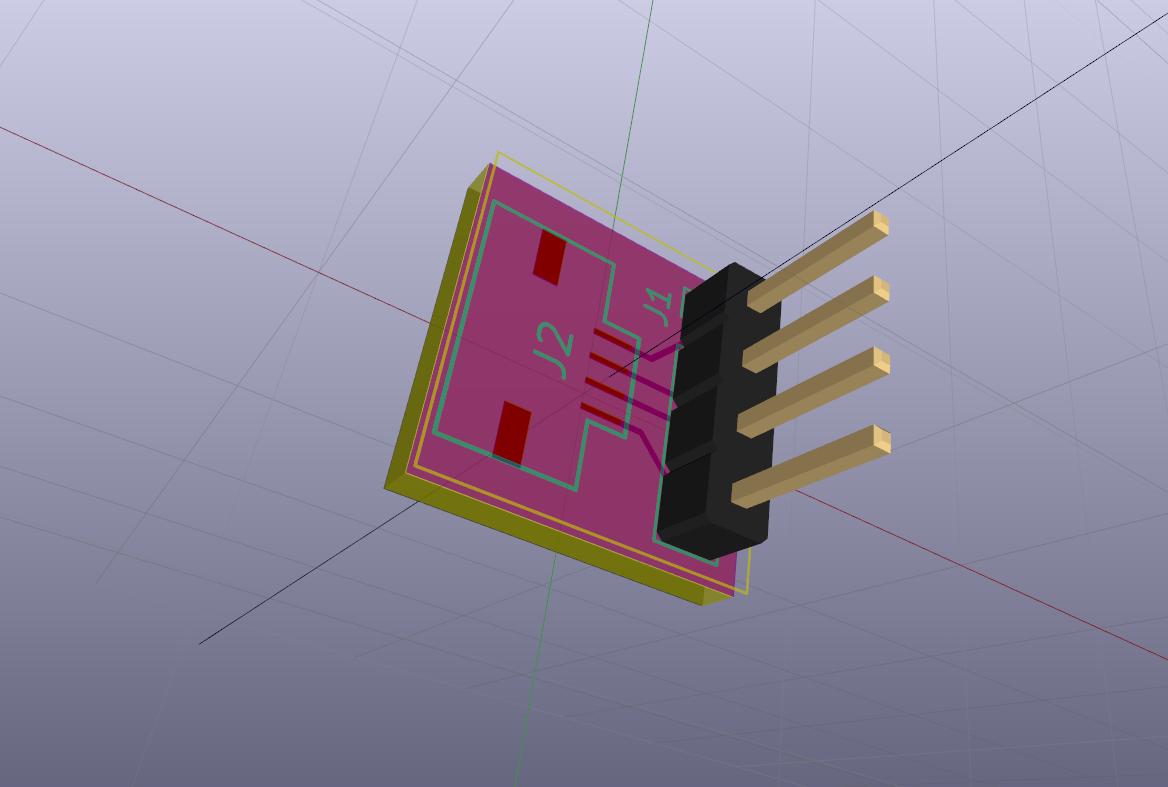
Rev. 0.1:

| Qty | Value | Footprint | References |
|---|---|---|---|
| 1 | 4 Pin FPC (1mm pitch) | footprints:FPC_4_1mm | J2 |
| 1 | Breadboard holes | Pin_Headers:Pin_Header_Straight_1x04_Pitch2.54mm | J1 |
rac2030/breakout-boards
Various breakoutboards for electronic components I play with

hzeller/rpi-rgb-led-matrix
Controlling up to three chains of 64x64, 32x32, 16x32 or similar RGB LED displays using Raspberry Pi GPIO


adamws/kicad-kbplacer
KiCad plugin for automatic keyboard's key placement and routing

Luos-io/luos_engine
Open-source and real-time orchestrator for cyber-physical-systems, to easily design, test and deploy embedded applications and digital twins.

NVNTLabs/switch2-SDEX2M2
Micro SD Express to M.2 NVME Adapter for Nintendo Switch 2

BlueSCSI/BlueSCSI-v2
BlueSCSI v2/Ultra - an open source, open hardware, SCSI emulator using the Pi Pico PR2040 and Pico 2 RP2350

ohmtech-rdi/eurorack-blocks
Software to Hardware Prototyping for Eurorack using C++, Max/Gen~ or Faust

It measures 12.5 × 12.5 mm and has 2 copper layers, 1.6 mm thick.
2 parts. The full list of its parts is on this page, with links to each part's symbol and footprint where PCBKit's library has them.
From the rac2030/breakout-boards repository on GitHub, at the commit this page was made from: the board is FPC-DIP_4PIN/FPC-DIP_4PIN-chinaI2C.kicad_pcb. PCBKit opens the board in the browser, with nothing to install.
Its repository publishes it under the MIT licence: you may reuse it on that licence's terms (keep the author's notice, and for a copyleft licence share your changes alike).