4 layers

 qwertpas/pennyesc5
Tiny and cheap brushless motor controller
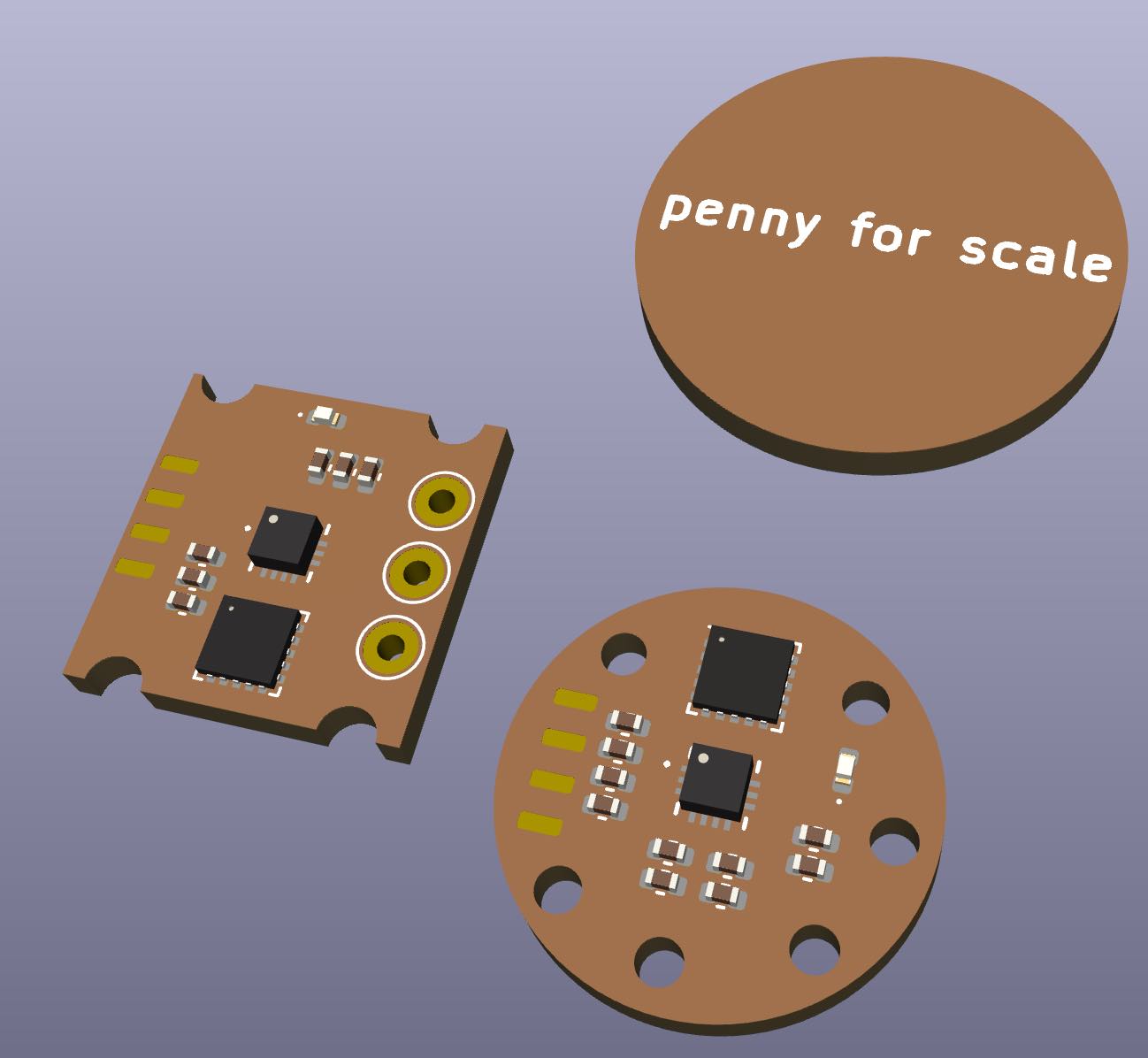
Pennyesc is an open-source printed circuit board by qwertpas, from the qwertpas/pennyesc repository on GitHub, published under the MIT licence. It is a 4-layer board of 15.9 × 14 mm with 28 parts on 36 nets, routed with 349 tracks and 63 vias.
Its parts include 7 capacitors, 7 resistors and 3 ICs. It belongs with the robots and motor control boards and the STM32 boards of this library.
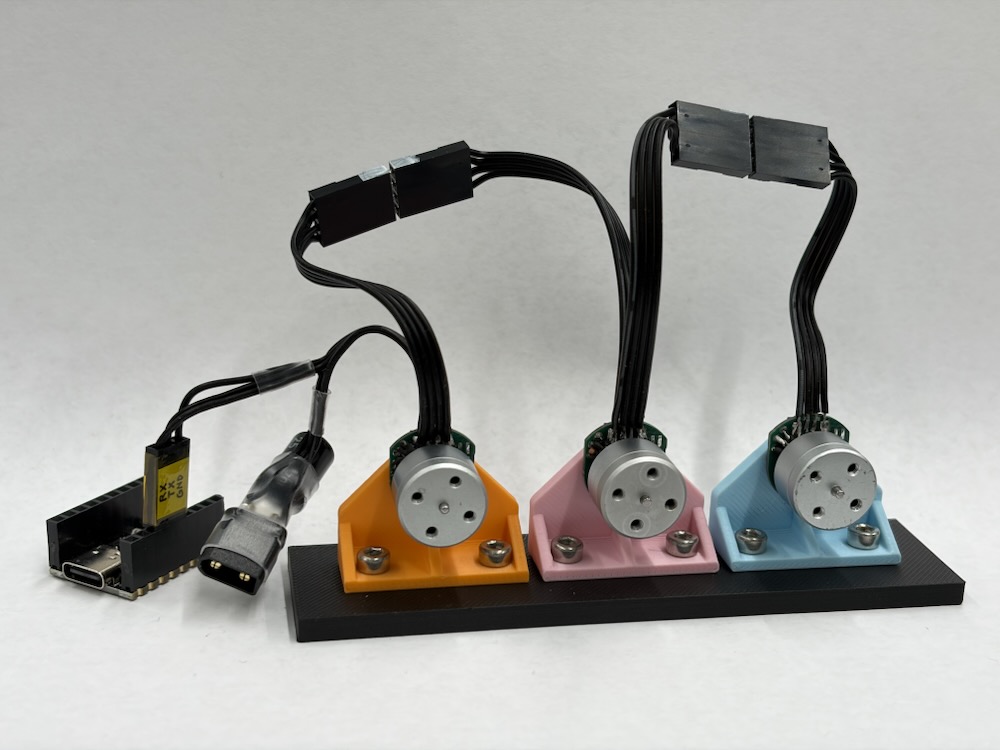
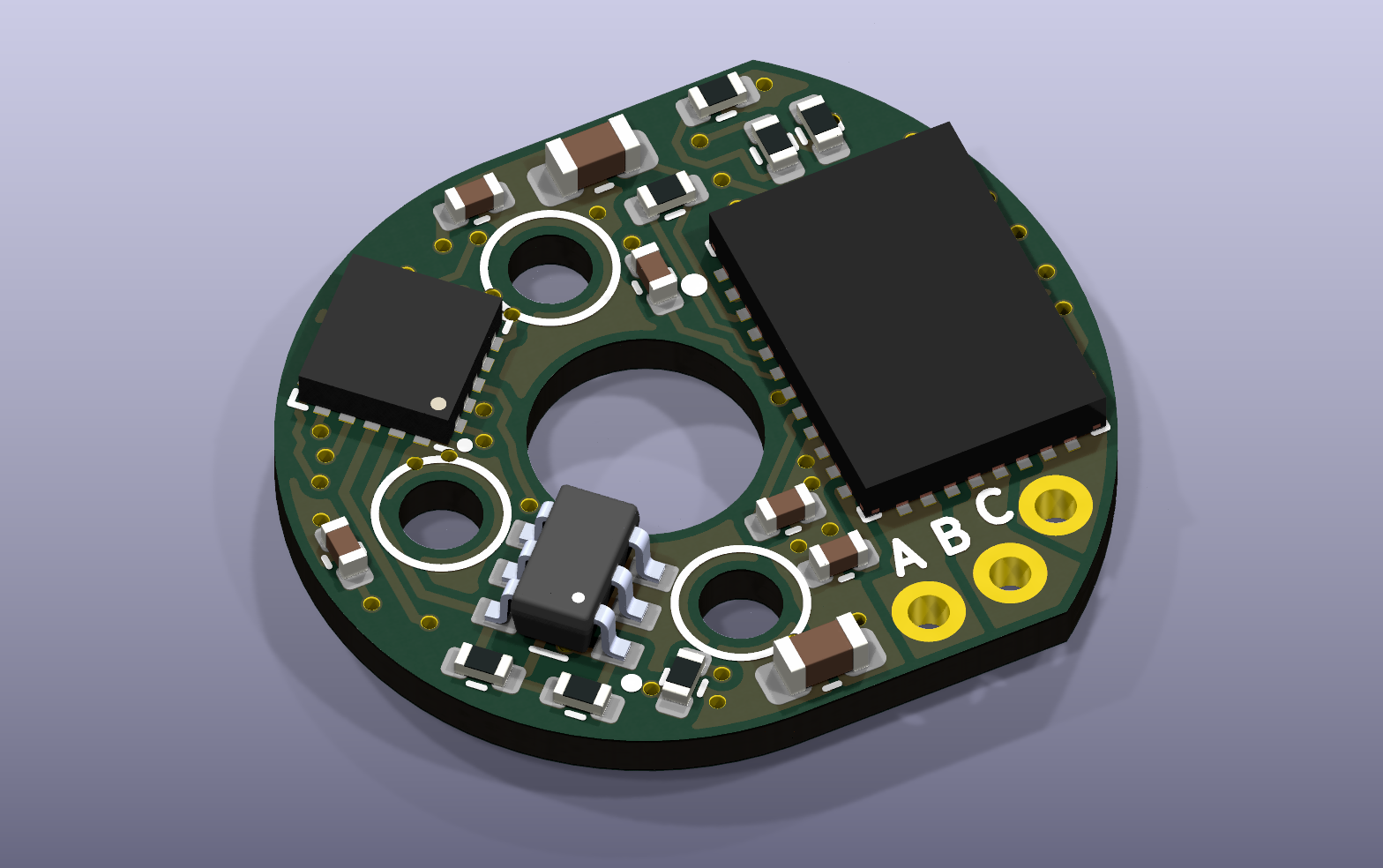
Works and spins a 1104 motor with closed loop speed and position control! Can daisy chain a few on the same UART bus by using open drain output.
Finished layout and placed order with JLCPCB! Gerber, BOM, and CPL files in pennyesc/production/
Ended up being about $6/board for raw components, but after setup fees ($16), shipping ($39), and customs ($21) the total was $111 for 5 boards. It should be a lot better when ordering in larger quantities.
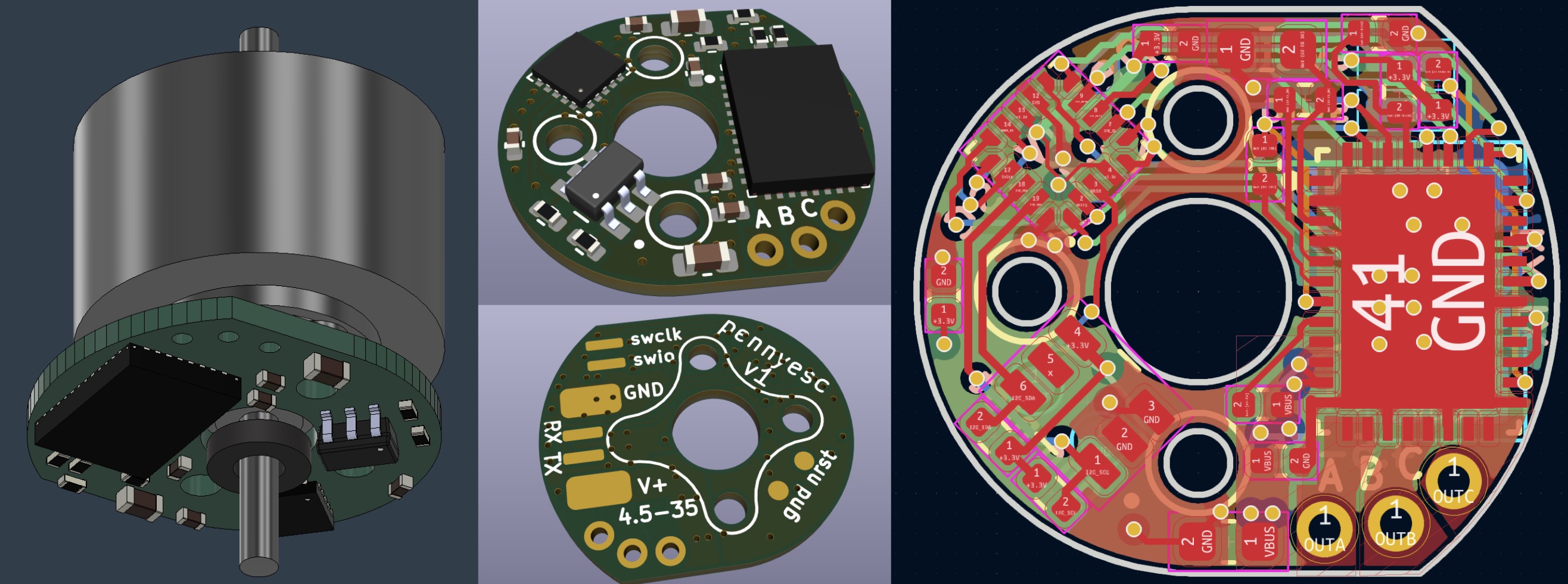
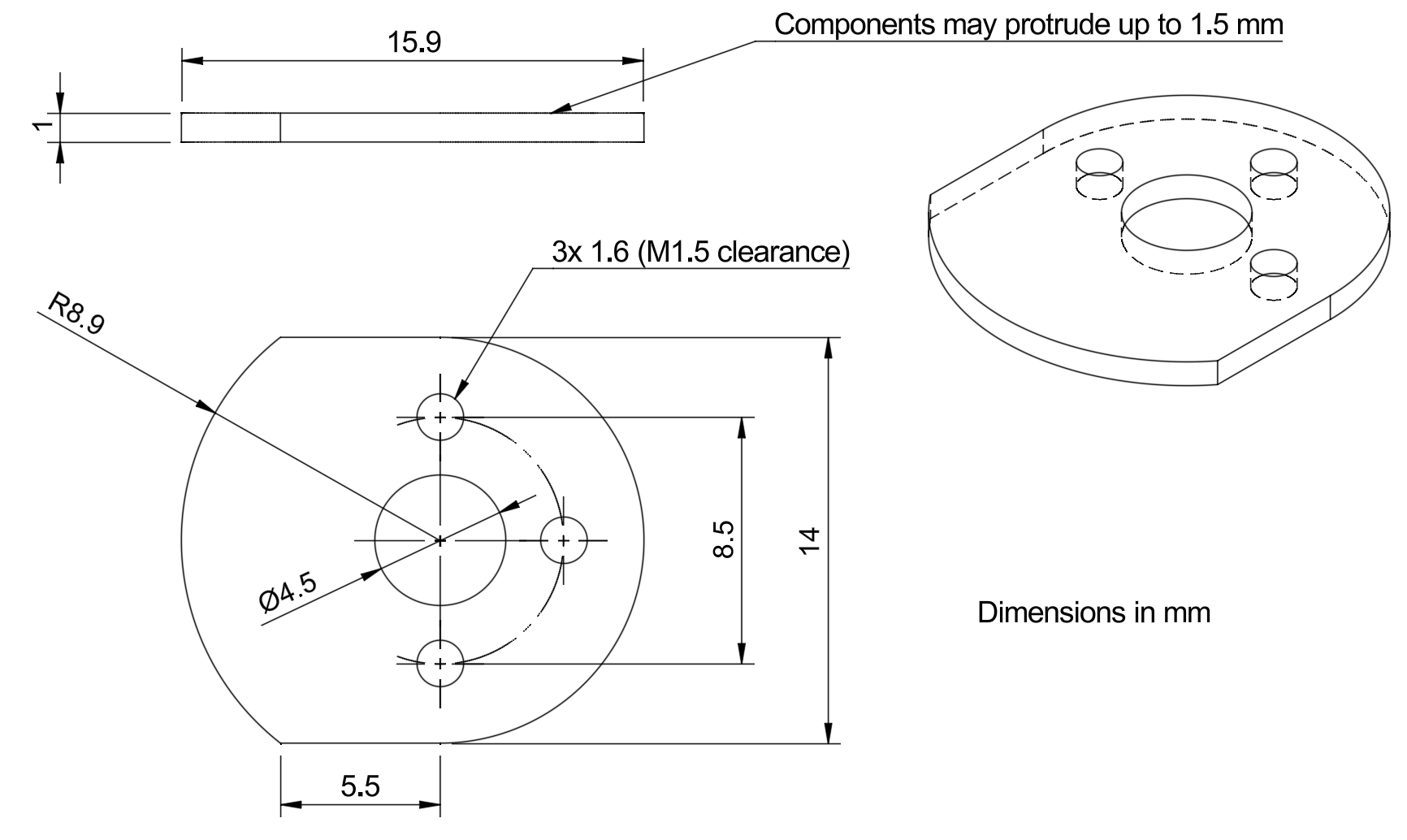
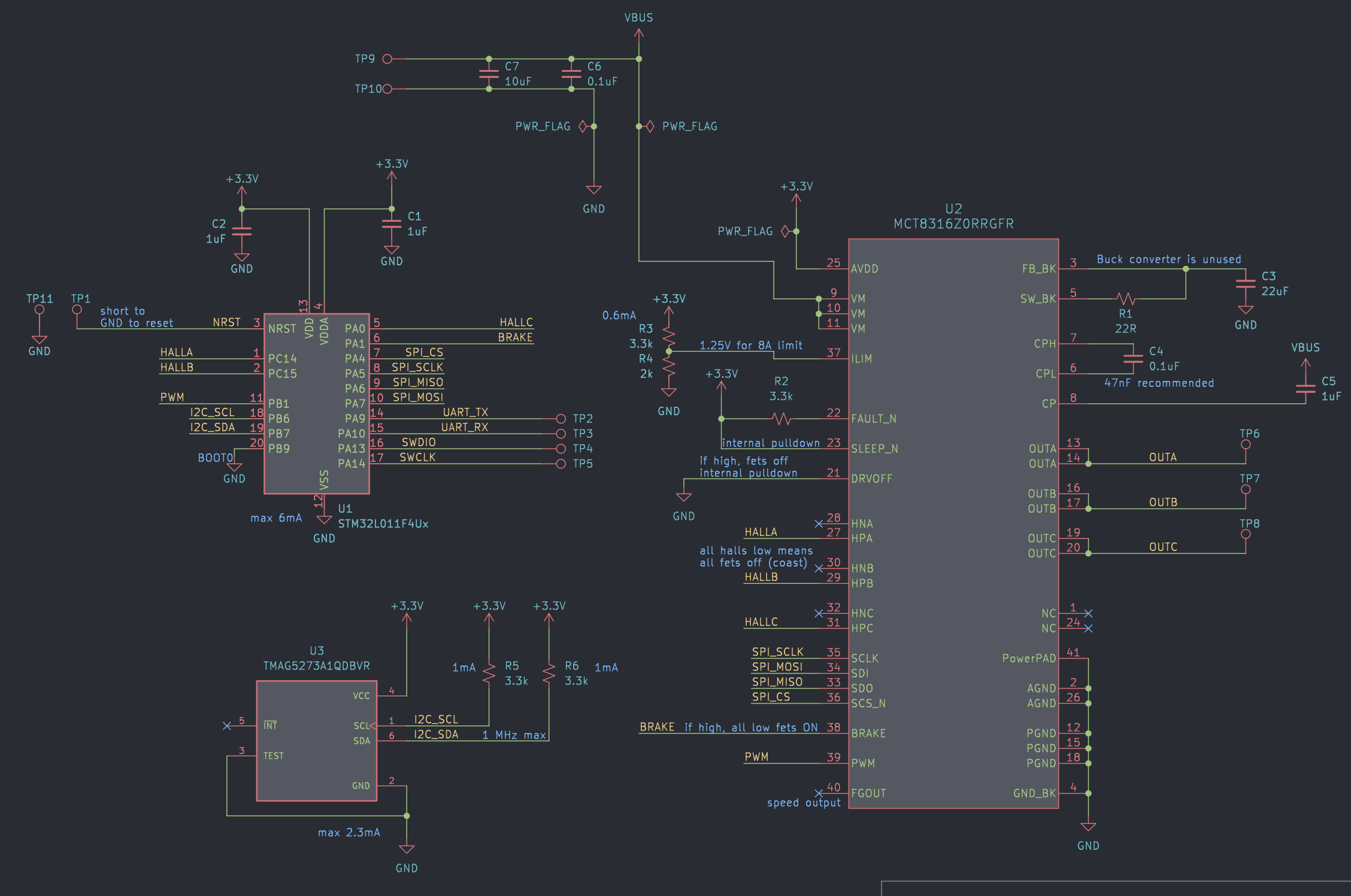
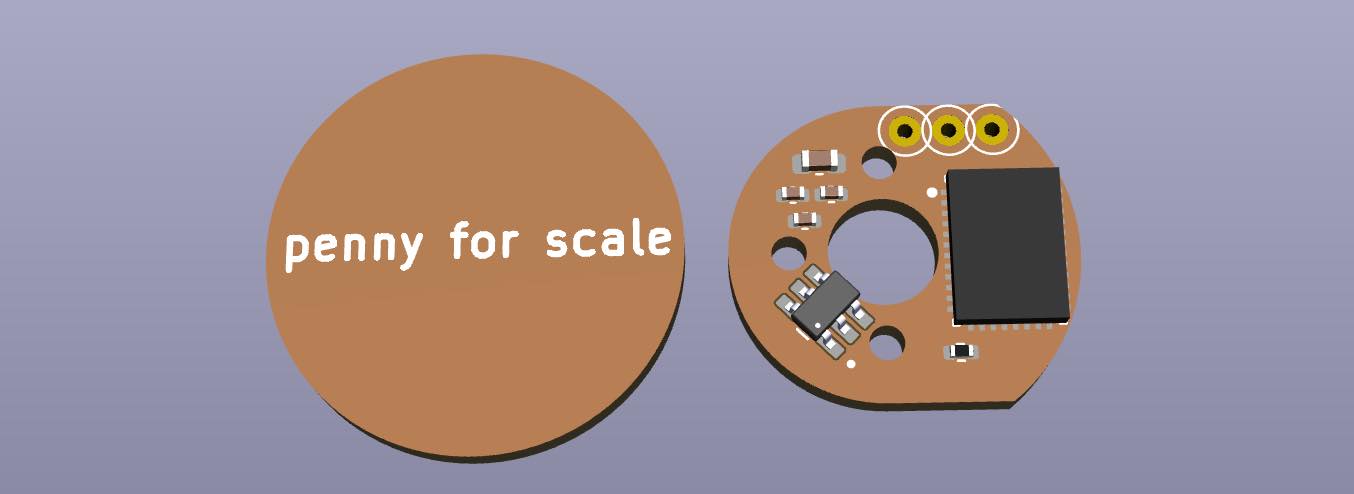
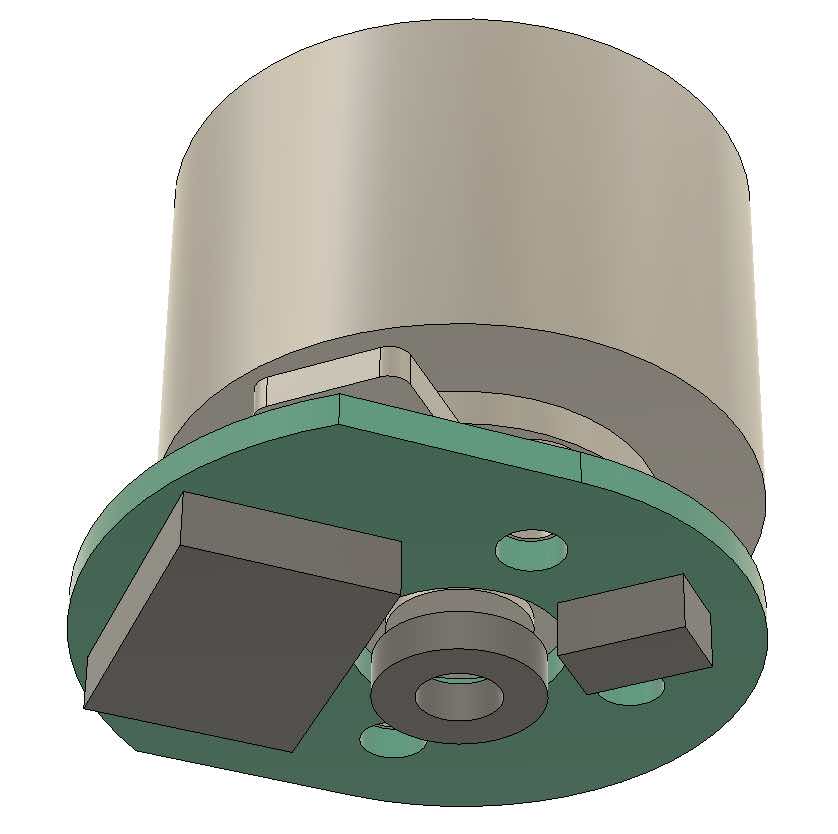
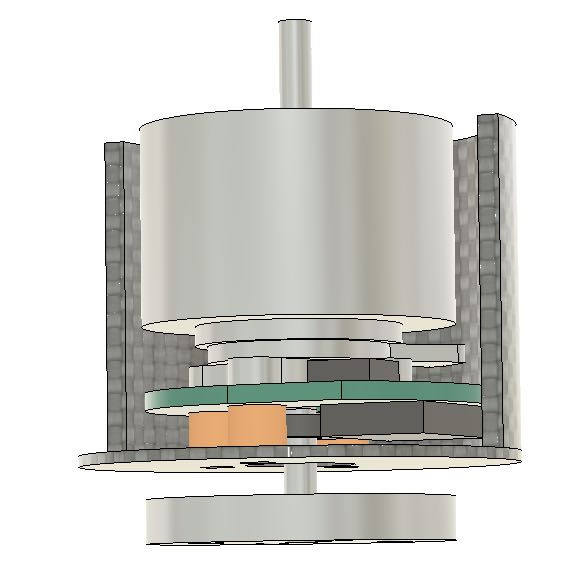
Changed to TI TMAG5273 magnetic angle sensor and TI MCT8316Z power stage for lower price and higher current limit. Price for components should be around $8 per board from JLCPCB. Also thinking of using only 3 mounting holes and allowing for pass through shaft (off-axis magnet sensing). Pass through shaft could be useful for "floating motor" electric muscles.
| Qty | Value | Footprint | References |
|---|---|---|---|
| 4 | 3.3k | Resistor_SMD:R_0402_1005Metric | R2, R3, R5, R6 |
| 4 | TestPoint | pennyesc:TestPoint_Pad_Rect | TP2, TP3, TP4, TP5 |
| 3 | 1uF | Capacitor_SMD:C_0402_1005Metric | C1, C2, C5 |
| 3 | TestPoint | pennyesc:SolderHole_1.0x1.6mm | TP6, TP7, TP8 |
| 2 | 0.1uF | Capacitor_SMD:C_0402_1005Metric | C4, C6 |
| 2 | TestPoint | pennyesc:Power_Pad_Rect | TP9, TP10 |
| 2 | TestPoint | pennyesc:TestPoint_Pad_1mm | TP1, TP11 |
| 1 | 10uF | Capacitor_SMD:C_0603_1608Metric | C7 |
| 1 | 1k | Resistor_SMD:R_0402_1005Metric | R8 |
| 1 | 22R | Resistor_SMD:R_0402_1005Metric | R1 |
| 1 | 22uF | Capacitor_SMD:C_0603_1608Metric | C3 |
| 1 | 2k | Resistor_SMD:R_0402_1005Metric | R4 |
| 1 | MCT8316Z0R | pennyesc:MCT8316Z0RRGFR-IPC_C | U2 |
| 1 | STM32L011F4Ux | Package_DFN_QFN:ST_UFQFPN-20_3x3mm_P0.5mm | U1 |
| 1 | TMAG5273A1QDBVR | pennyesc:SOT95P280X140-6N | U3 |


loxodes/vna
Under development open hardware microwave vector network analyzer

DRWJSCHMIDT/T41
This is the repository for the officially released V10, V11, and V12 versions of the T41 Software Defined Transceiver hardware and kits.


alvarop/debugotron
Debugotron is a collection of debugging/automation tools I've wanted in the past but didn't have access to. Currently, the tools include:


It measures 15.9 × 14 mm and has 4 copper layers, 1 mm thick.
28 parts. The full list of its parts is on this page, with links to each part's symbol and footprint where PCBKit's library has them.
From the qwertpas/pennyesc repository on GitHub, at the commit this page was made from: the board is pennyesc.kicad_pcb and its schematic pennyesc.kicad_sch. PCBKit opens the board in the browser, with nothing to install.
Its repository publishes it under the MIT licence: you may reuse it on that licence's terms (keep the author's notice, and for a copyleft licence share your changes alike).