2 layers20.5 × 24.8 mm

 psi-4ward/HMSensor-FlashStation4
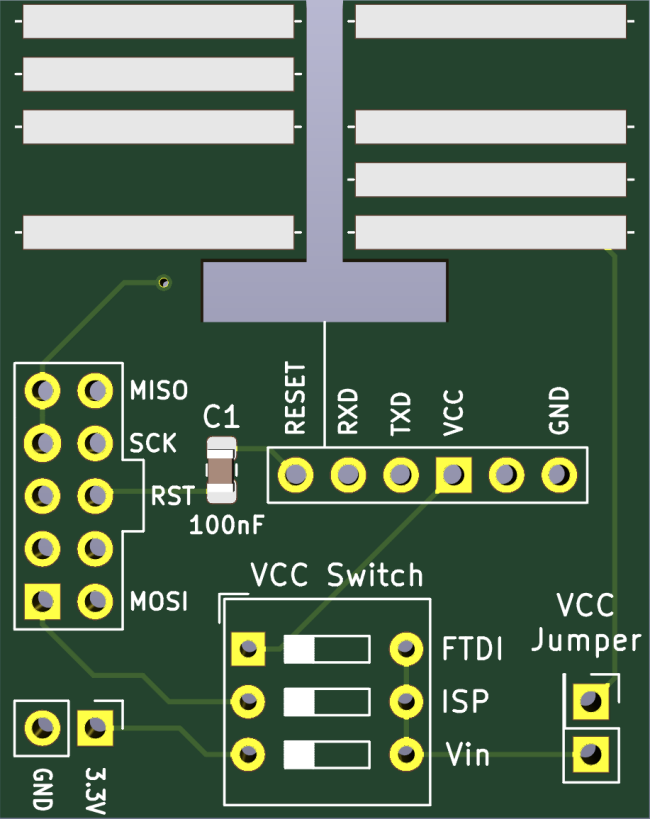
Helper PCB to flash Asksin++ HMSensor PCBs
Flash Station is an open-source printed circuit board by psi-4ward, from the psi-4ward/HMSensor-FlashStation repository on GitHub, published under the MIT licence. It is a 2-layer board of 31.2 × 39.4 mm with 8 parts on 17 nets, routed with 52 tracks and 8 vias.
Its parts include 6 connectors, 1 capacitor and 1 switch. It belongs with the home automation and IoT boards of this library.
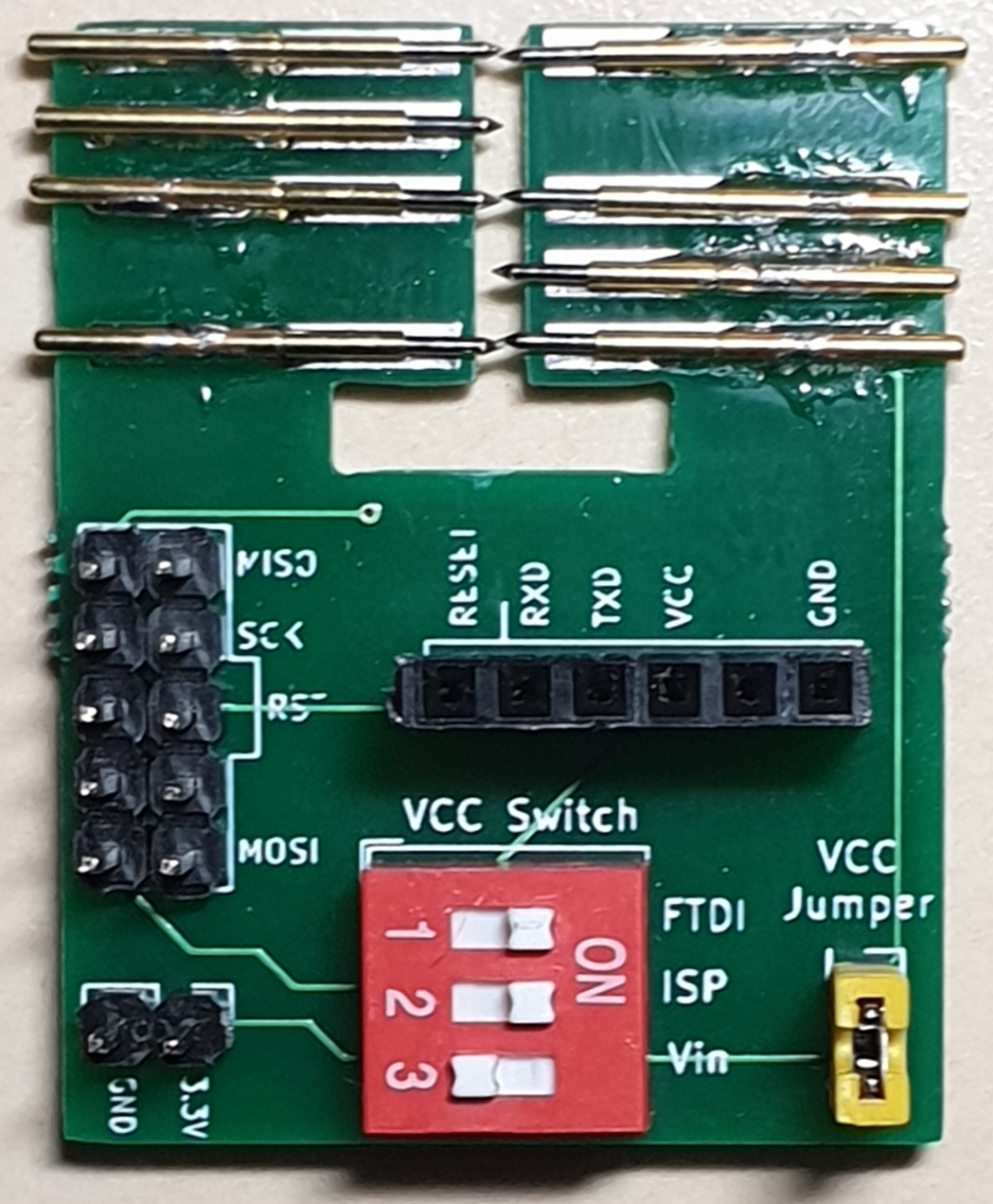
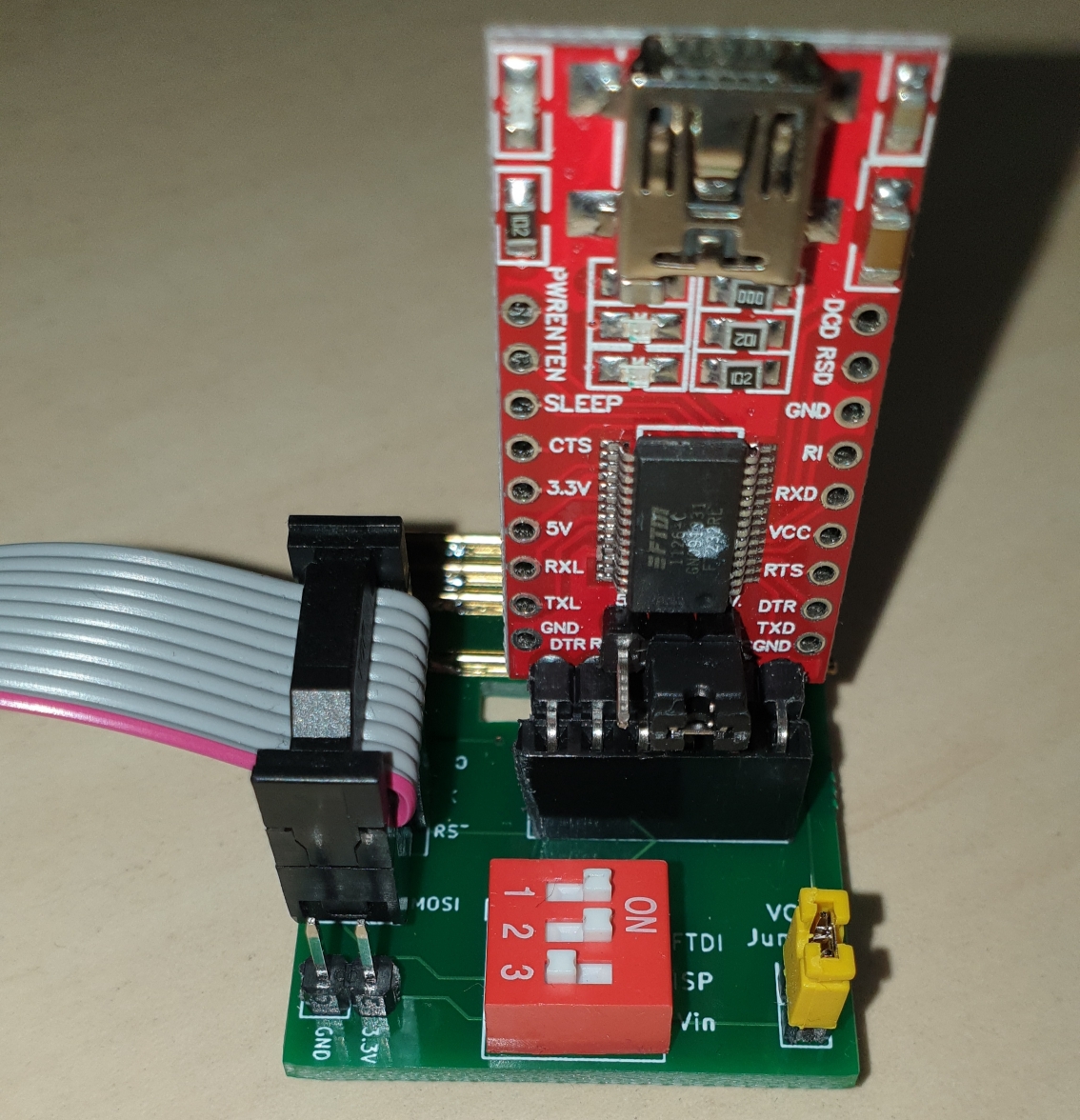
Hilfsplatine um HMSensor PCBs mit Hilfe von PogoPins einzuspannend und zu flashen.
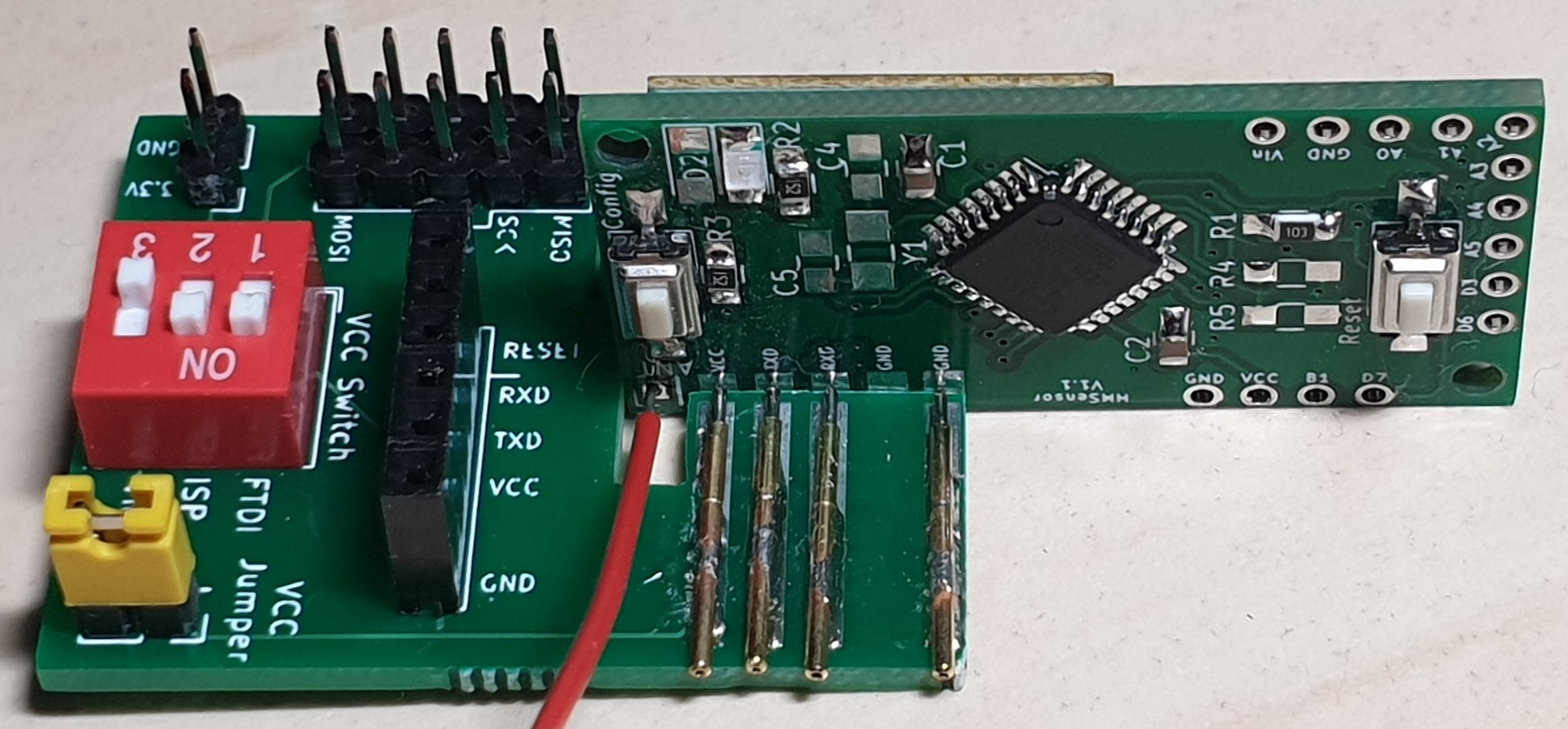
HMSensor versucht eine universelle Hardware-Basis für AskSin++ Sensoren und Aktoren zu sein.
Auf dem Testaufbau sind P75-B1 Pogo Pins verbaut.
MIT
| Qty | Value | Footprint | References |
|---|---|---|---|
| 1 | 100nF | Capacitor_SMD:C_0805_2012Metric_Pad1.15x1.40mm_HandSolder | C1 |
| 1 | FTDI | Connector_PinHeader_2.54mm:PinHeader_1x06_P2.54mm_Vertical | J2 |
| 1 | HMSensor Pogo 1 | footprints:PogoPad_5x | J5 |
| 1 | HMSensor Pogo 2 | footprints:PogoPad_5x | J4 |
| 1 | ISP | Connector_PinHeader_2.54mm:PinHeader_2x05_P2.54mm_Vertical | J3 |
| 1 | VCC Jumper | Connector_PinHeader_2.54mm:PinHeader_2x01_P2.54mm_Vertical | J6 |
| 1 | VCC Switch | Button_Switch_THT:SW_DIP_SPSTx03_Slide_9.78x9.8mm_W7.62mm_P2.54mm | SW1 |
| 1 | Vin 3.3V | Connector_PinHeader_2.54mm:PinHeader_1x02_P2.54mm_Vertical | J1 |

joeycastillo/Sensor-Watch
A board replacement for the classic Casio F-91W wristwatch

rusefi/rusefi
rusefi - GPL internal combustion engine control unit

hoglet67/RGBtoHDMI
Bare-metal Raspberry Pi project that provides pixel-perfect sampling of Retro Computer RGB/YUV video and conversion to HDMI

shanteacontrols/OpenDeck
A platform for building interactive control and sensing devices using MIDI and OSC built with Zephyr RTOS.

hackclub/OnBoard
💡 Join 1,000 teenagers and make your first PCB with a $100 grant!

dangiu/PicoMemcard
Emulating PSX Memory Card (or controller) using a Raspberry Pi Pico

OLIMEX/DIY-LAPTOP
Do It Yourself Open Source Hardware and Software Modular Hacker's Friendly Laptop
It measures 31.2 × 39.4 mm and has 2 copper layers, 1.6 mm thick.
8 parts. The full list of its parts is on this page, with links to each part's symbol and footprint where PCBKit's library has them.
From the psi-4ward/HMSensor-FlashStation repository on GitHub, at the commit this page was made from: the board is Flash-Station.kicad_pcb. PCBKit opens the board in the browser, with nothing to install.
Its repository publishes it under the MIT licence: you may reuse it on that licence's terms (keep the author's notice, and for a copyleft licence share your changes alike).