2 layers152 × 88 mm
RFBitBangSMT
profdc9/RFBitBanger
A QRP digital transceiver created from readily available parts for off-the-grid maintenance
271 parts222

 profdc9/RFBitBanger222
A QRP digital transceiver created from readily available parts for off-the-grid maintenance
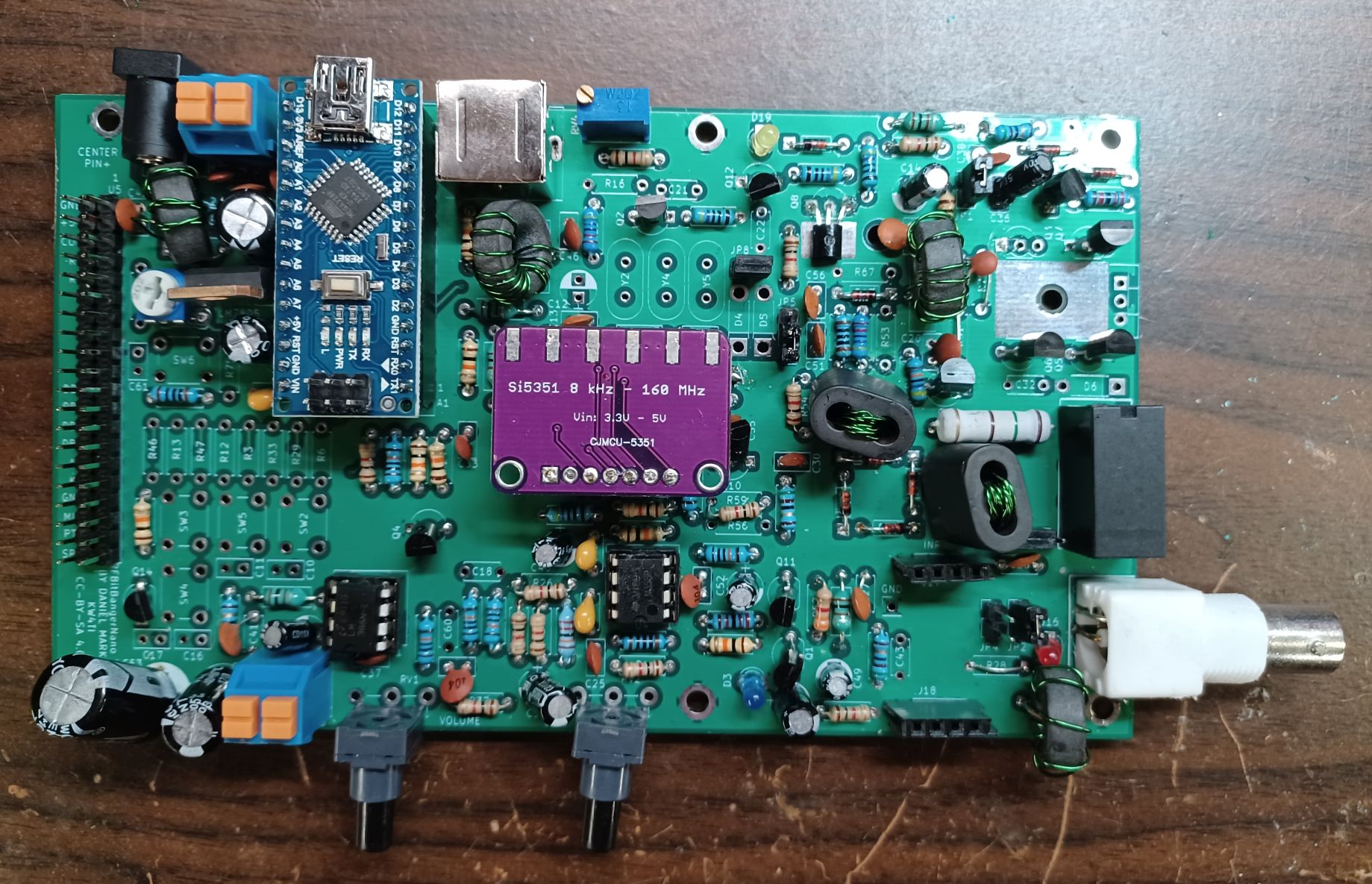
RFBitBangerNano is an open-source printed circuit board by profdc9, from the profdc9/RFBitBanger repository on GitHub. It is a 2-layer board of 152 × 88 mm with 209 parts on 135 nets, routed with 1,284 tracks and 20 vias.
It is built around the LM358, LM386 and SI5351A-B-GT, with the SS8550 among its other parts. Its parts include 70 resistors, 51 capacitors, 18 connectors, 17 diodes and 15 transistors. It belongs with the AVR (ATmega, ATtiny) boards of this library.


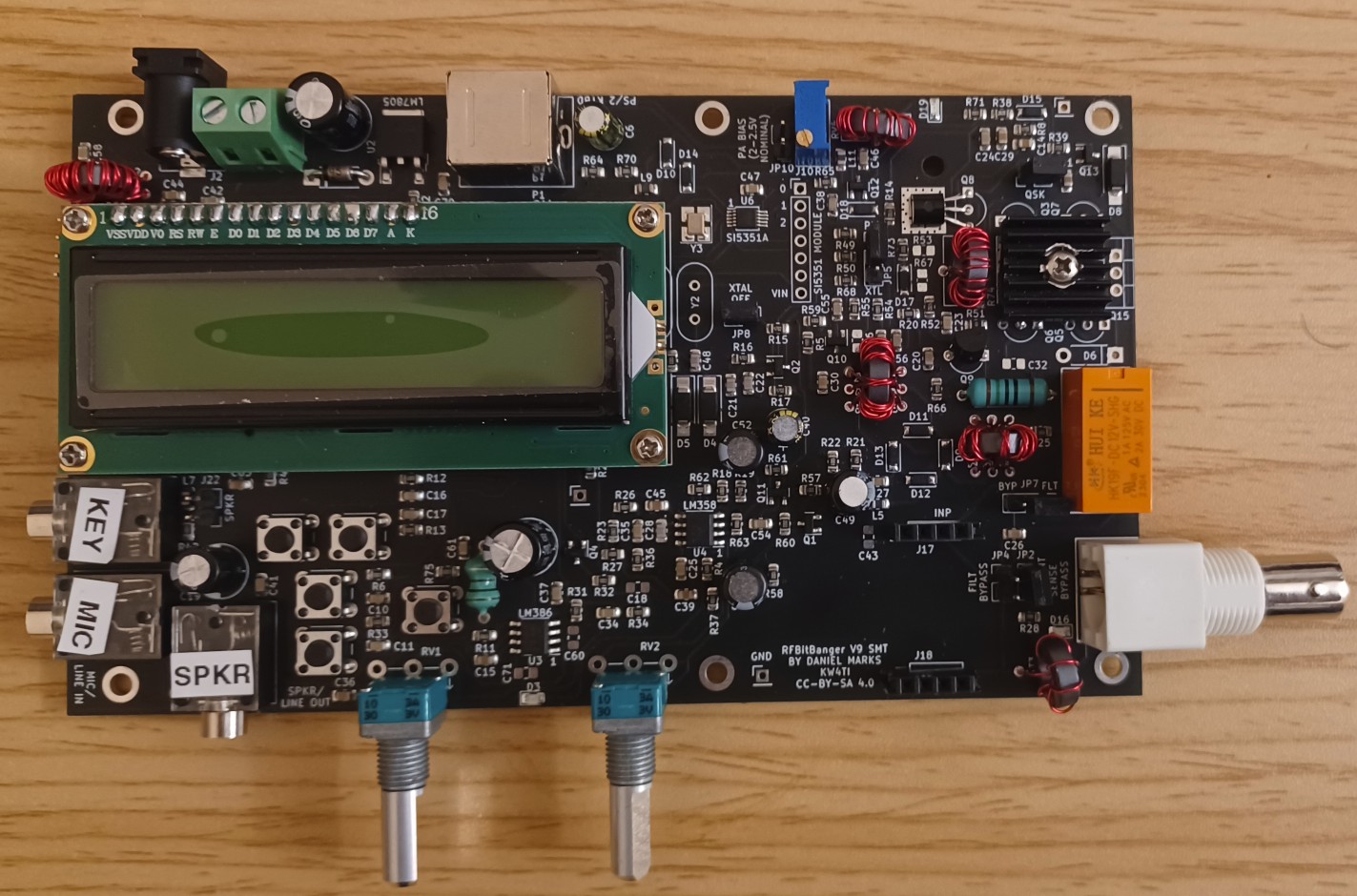
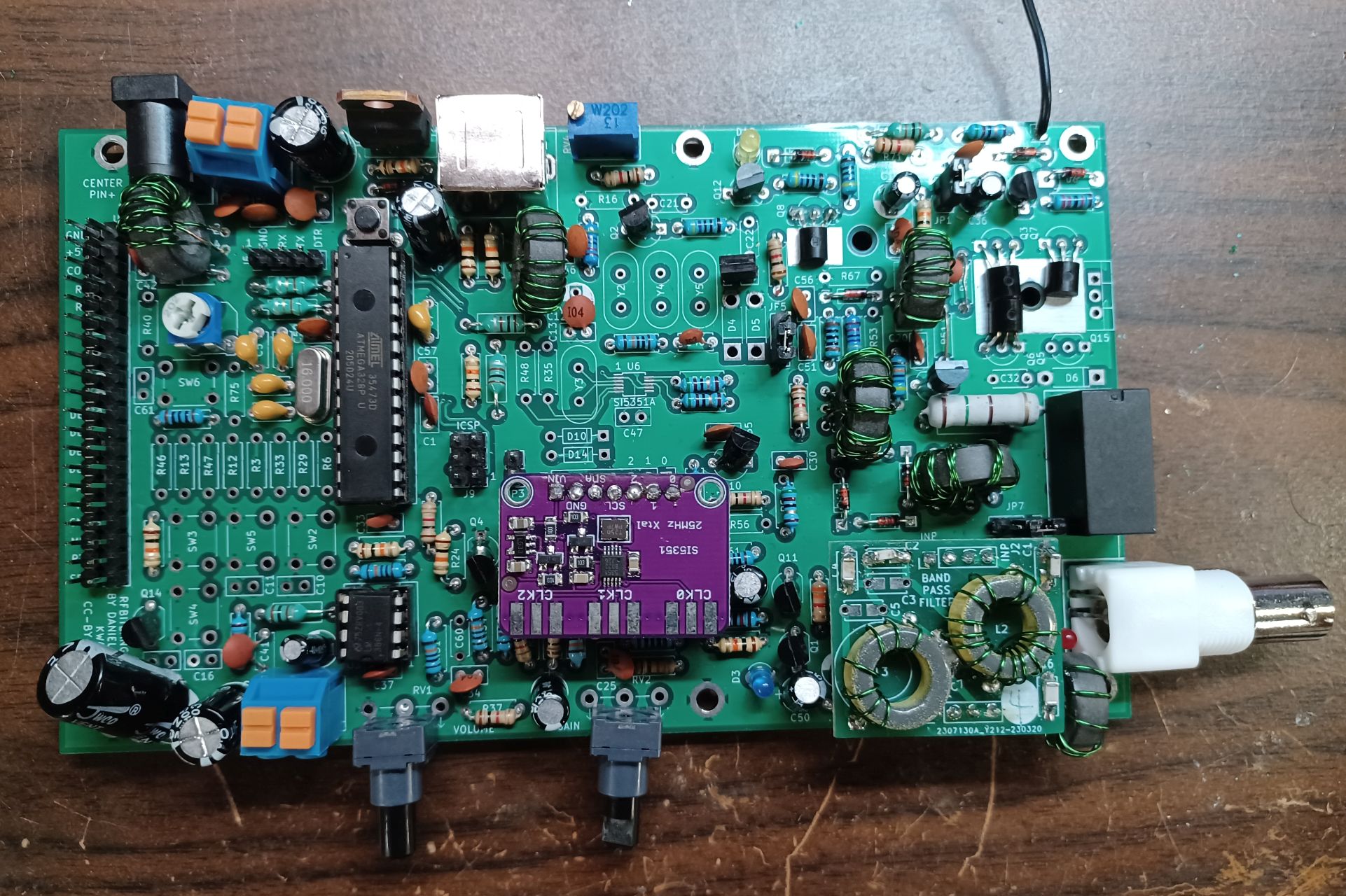
The RFBitBanger is an off-the-grid QRP radio. It is not just designed to be used off the grid, it is designed to be assembled and maintained off-the-grid. Most radios require specialized parts that would be difficult to obtain in an extreme parts shortage or in remote places. This radio is designed to be assembled and maintained using the most common jellybean components that might be in a hobbyist junkpile. It will mainly support low bandwidth/digital modes to make the most of limited power.
A presentation presented at the 2023 QSO Today conference on the RFBitBanger can be viewed on Youtube here.
Design goals:
The RFBitBanger folder is the schematic and PCB for the radio itself. The MatchTest is a PCB that has a directional coupler for measuring forward/reverse power as well as a reflection bridge to help match antenna impedance. The Code folder contains the current RFBitBanger code. The CAD directory contains FreeCAD parametric models and STL files. The Docs directory contains a guide to the transceiver and the details of the SCAMP digital mode implementation.
This design was started after a discuss on the Collapse OS mailing list about hardware is maintainable even without access to parts suppliers, for example Digikey/Mouser, etc. or even Amazon. Projects such as civboot seek to provide a means of resurrecting technology and infrastructure after a catastrophic event. This design is to provide a means of communication if other forms of communications become unavailable, especially in rural areas or urban environments with compromised infrastructure.
Any comments to profdc9 AT gmail.com.
| Qty | Value | Footprint | References |
|---|---|---|---|
| 22 | 100 nF | Capacitors_THT:C_Disc_D5.0mm_W2.5mm_P2.50mm | C10, C11, C13, C16, C17, C20, C24, C25, C34, C37, C38, C42, C44, C46, C47, C51 +6 |
| 18 | 1k | Resistors_THT:R_Axial_DIN0207_L6.3mm_D2.5mm_P7.62mm_Horizontal | R4, R6, R12, R13, R18, R22, R26, R27, R33, R36, R37, R54, R59, R65, R68, R71 +2 |
| 16 | 10k | Resistors_THT:R_Axial_DIN0207_L6.3mm_D2.5mm_P7.62mm_Horizontal | R3, R7, R24, R29, R30, R35, R40, R46, R47, R48, R58, R62, R64, R70, R72, R73 |
| 9 | 1N4148 | Diodes_THT:D_DO-35_SOD27_P7.62mm_Horizontal | D9, D10, D11, D12, D13, D14, D15, D17, D18 |
| 8 | Conn_01x01 | Connectors:1pin | J3, J4, J6, J7, J8, J13, J20, J21 |
| 7 | 100k | Resistors_THT:R_Axial_DIN0207_L6.3mm_D2.5mm_P7.62mm_Horizontal | R9, R10, R31, R32, R34, R55, R61 |
| 7 | 2N3904 | TO_SOT_Packages_THT:TO-92_Inline_Wide | Q1, Q2, Q4, Q10, Q11, Q12, Q14 |
| 5 | 100 uH | Inductors_THT:L_Axial_L6.6mm_D2.7mm_P10.16mm_Horizontal_Vishay_IM-2 | L3, L5, L9, L10, L11 |
| 5 | SW_Push | Buttons_Switches_THT:SW_PUSH_6mm | SW2, SW3, SW4, SW5, SW6 |
| 4 | 10 uF | Capacitors_THT:CP_Radial_D5.0mm_P2.50mm | C12, C15, C50, C52 |
| 4 | 2N7000 | TO_SOT_Packages_THT:TO-92_Inline_Wide | Q3, Q6, Q7, Q9 |
| 4 | 470R | Resistors_THT:R_Axial_DIN0207_L6.3mm_D2.5mm_P7.62mm_Horizontal | R8, R14, R17, R19 |
| 4 | 47R | Resistors_THT:R_Axial_DIN0207_L6.3mm_D2.5mm_P7.62mm_Horizontal | R11, R28, R49, R50 |
| 3 | 100 pF | Capacitors_THT:C_Disc_D5.0mm_W2.5mm_P5.00mm | C21, C22, C48 |
| 3 | 100R | Resistors_THT:R_Axial_DIN0207_L6.3mm_D2.5mm_P7.62mm_Horizontal | R2, R20, R63 |
| 3 | 1N4007 | Diodes_THT:D_DO-41_SOD81_P7.62mm_Horizontal | D1, D4, D5 |
| 3 | 51R | Resistors_THT:R_Axial_DIN0207_L6.3mm_D2.5mm_P7.62mm_Horizontal | R5, R21, R25 |
| 3 | 7.X MHz | Crystals:Crystal_HC49-U_Vertical | Y2, Y4, Y5 |
| 3 | LED | LEDs:LED_D3.0mm | D3, D16, D19 |
| 3 | NC | Capacitors_THT:C_Disc_D5.0mm_W2.5mm_P5.00mm | C18, C43, C60 |
| 3 | NC | Resistors_THT:R_Axial_DIN0207_L6.3mm_D2.5mm_P7.62mm_Horizontal | R53, R56, R67 |
| 2 | 0R | Resistors_THT:R_Axial_DIN0207_L6.3mm_D2.5mm_P7.62mm_Horizontal | R51, R74 |
| 2 | 10 nF | Capacitors_THT:C_Disc_D5.0mm_W2.5mm_P2.50mm | C30, C33 |
| 2 | 100 nF | Capacitors_THT:C_Disc_D5.0mm_W2.5mm_P5.00mm | C27, C41 |
| 2 | 100 uF | Capacitors_THT:CP_Radial_D5.0mm_P2.50mm | C6, C40 |
| 2 | 1000 uF | Capacitors_THT:CP_Radial_D8.0mm_P3.50mm | C3, C53 |
| 2 | 10k | RFBitBangerNano:Potentiometer_Big_Small_Combined | RV1, RV2 |
| 2 | 22k | Resistors_THT:R_Axial_DIN0207_L6.3mm_D2.5mm_P7.62mm_Horizontal | R39, R60 |
| 2 | 470k | Resistors_THT:R_Axial_DIN0207_L6.3mm_D2.5mm_P7.62mm_Horizontal | R16, R66 |
| 2 | 47k | Resistors_THT:R_Axial_DIN0207_L6.3mm_D2.5mm_P7.62mm_Horizontal | R15, R52 |
| 2 | Conn_01x01 | Pin_Headers:Pin_Header_Straight_1x01_Pitch2.54mm | J15, J16 |
| 2 | SS8550 | TO_SOT_Packages_THT:TO-92_Inline_Wide | Q8, Q13 |
| 2 | Trifilar | RFBitBangerNano:TripleWindingTransformerRef | T1, T2 |
| 1 | 1 nF | Capacitors_THT:C_Disc_D5.0mm_W2.5mm_P5.00mm | C7 |
| 1 | 1 uF | Capacitors_THT:CP_Radial_D5.0mm_P2.50mm | C39 |
| 1 | 10 nF | RFBitBangerNano:C_Disc_D5.0mm_W2.5mm_P5.00mm_Dual | C26 |
| 1 | 10 nF | Capacitors_THT:C_Disc_D5.0mm_W2.5mm_P5.00mm | C23 |
| 1 | 100 uH | RFBitBangerNano:SmallVerticalToroid | L4 |
| 1 | 10k | Potentiometers:Potentiometer_Triwood_RM-065 | RV3 |
| 1 | 150R | Resistors_THT:R_Axial_DIN0309_L9.0mm_D3.2mm_P12.70mm_Horizontal | R41 |
| 1 | 1N4001 | Diodes_THT:D_DO-41_SOD81_P7.62mm_Horizontal | D8 |
| 1 | 2.2 uF | Capacitors_THT:CP_Radial_D5.0mm_P2.50mm | C14 |
| 1 | 22 uF | Capacitors_THT:CP_Radial_D5.0mm_P2.50mm | C49 |
| 1 | 22 uH | RFBitBangerNano:SmallVerticalToroid | L6 |
| 1 | 220 uF | Capacitors_THT:CP_Radial_D7.5mm_P2.50mm | C19 |
| 1 | 220k | Resistors_THT:R_Axial_DIN0207_L6.3mm_D2.5mm_P7.62mm_Horizontal | R23 |
| 1 | 27 MHz | Crystals:Crystal_HC49-U_Vertical | Y3 |
| 1 | 2R2 | Resistors_THT:R_Axial_DIN0207_L6.3mm_D2.5mm_P7.62mm_Horizontal | R38 |
| 1 | 2k | Potentiometers:Potentiometer_Trimmer_Bourns_3296W | RV4 |
| 1 | 33 pF | RFBitBangerNano:C_Disc_D5.0mm_W2.5mm_P5.00mm_Dual | C32 |
| 1 | 330 nF | Capacitors_THT:C_Disc_D5.0mm_W2.5mm_P5.00mm | C45 |
| 1 | 330 pF | Capacitors_THT:C_Disc_D5.0mm_W2.5mm_P5.00mm | C35 |
| 1 | 3k3 | Resistors_THT:R_Axial_DIN0207_L6.3mm_D2.5mm_P7.62mm_Horizontal | R57 |
| 1 | 4.7 uF | Capacitors_THT:CP_Radial_D5.0mm_P2.50mm | C36 |
| 1 | Arduino_Nano_v3.x | Module:Arduino_Nano | A1 |
| 1 | BYPASS | Pin_Headers:Pin_Header_Straight_1x02_Pitch2.54mm | JP4 |
| 1 | Barrel_Jack | Connectors:BARREL_JACK | J2 |
| 1 | Common-Mode Choke | RFBitBangerNano:DoubleWindingTransformer | T4 |
| 1 | Conn_01x20 | Pin_Headers:Pin_Header_Straight_1x20_Pitch2.54mm | J19 |
| 1 | Conn_Coaxial | RFBitBangerNano:bnc_90_1-1337543-0_pad_combo | J12 |
| 1 | Current | RFBitBangerNano:SamplingTransformer | T3 |
| 1 | DPDTRelay | RFBitBangerNano:G2VRelay | RLY1 |
| 1 | D_Zener | Diodes_THT:D_DO-41_SOD81_P7.62mm_Horizontal | D6 |
| 1 | Filt1 | Pin_Headers:Pin_Header_Straight_1x04_Pitch2.54mm | J17 |
| 1 | Filt2 | Pin_Headers:Pin_Header_Straight_1x04_Pitch2.54mm | J18 |
| 1 | JREF1 | Pin_Headers:Pin_Header_Straight_1x03_Pitch2.54mm | JP5 |
| 1 | JVAL1 | Pin_Headers:Pin_Header_Straight_1x03_Pitch2.54mm | JP7 |
| 1 | LCD1602ExtraPins | Pin_Headers:Pin_Header_Straight_1x20_Pitch2.54mm | U5 |
| 1 | LM358 | Housings_DIP:DIP-8_W7.62mm_Socket | U4 |
| 1 | LM386 | Housings_DIP:DIP-8_W7.62mm_Socket | U3 |
| 1 | LM7805_TO220 | TO_SOT_Packages_THT:TO-220-3_Vertical | U2 |
| 1 | Mini-DIN_6pins_ver4 | RFBitBangerNano:Connector_Mini-DIN_Female_6Pin_2rows | P1 |
| 1 | NC | TO_SOT_Packages_THT:TO-92_Inline_Wide | Q5 |
| 1 | NC | TO_SOT_Packages_THT:TO-220-3_Vertical | Q15 |
| 1 | POWER | Connectors_Terminal_Blocks:TerminalBlock_bornier-2_P5.08mm | J1 |
| 1 | QSK | Pin_Headers:Pin_Header_Straight_1x02_Pitch2.54mm | JP1 |
| 1 | SI5351A | Housings_SSOP:MSOP-10_3x3mm_Pitch0.5mm | U6 |
| 1 | SPEAKER | Connectors_Terminal_Blocks:TerminalBlock_bornier-2_P5.08mm | J11 |
| 1 | Sample | Pin_Headers:Pin_Header_Straight_1x02_Pitch2.54mm | JP2 |
| 1 | Shutdown | Pin_Headers:Pin_Header_Straight_1x02_Pitch2.54mm | JP8 |
The 208 most common of 209 parts.
profdc9/RFBitBanger
A QRP digital transceiver created from readily available parts for off-the-grid maintenance

profdc9/RFBitBanger
A QRP digital transceiver created from readily available parts for off-the-grid maintenance

profdc9/RFBitBanger
A QRP digital transceiver created from readily available parts for off-the-grid maintenance

profdc9/RFBitBanger
A QRP digital transceiver created from readily available parts for off-the-grid maintenance

profdc9/RFBitBanger
A QRP digital transceiver created from readily available parts for off-the-grid maintenance

profdc9/RFBitBanger
A QRP digital transceiver created from readily available parts for off-the-grid maintenance

profdc9/RFBitBanger
A QRP digital transceiver created from readily available parts for off-the-grid maintenance

profdc9/RFBitBanger
A QRP digital transceiver created from readily available parts for off-the-grid maintenance

profdc9/RFBitBanger
A QRP digital transceiver created from readily available parts for off-the-grid maintenance

Arhamee/hardware-portfolio
Multi-layer PCB designs in KiCad 10 schematic capture to fabrication-ready Gerbers. High-speed routing, BGA escape, power electronics.


profdc9/MCTheremin
Microcontroller based theremin using the STM32F103C8T6 bluepill board


It measures 152 × 88 mm and has 2 copper layers, 1.6 mm thick.
209 parts, built around the LM358, LM386, SI5351A-B-GT and SS8550. The full list of its parts is on this page, with links to each part's symbol and footprint where PCBKit's library has them.
From the profdc9/RFBitBanger repository on GitHub, at the commit this page was made from: the board is RFBitBangerNano/RFBitBangerNano.kicad_pcb. PCBKit opens the board in the browser, with nothing to install.
Its repository states no licence, so its author keeps all rights: ask profdc9 before reusing the design.