
2 layers36 × 54 mm

 Pegoku/StorageSystem12
Indicators is an open-source printed circuit board by Pegoku, from the Pegoku/StorageSystem repository on GitHub. It is a 2-layer board of 44.5 × 18 mm with 12 parts on 4 nets, routed with 36 tracks and 0 vias.
It is built around the WS2812B-B/T. Its parts include 4 connectors, 1 capacitor and 1 diode.
This is a versatile and customizable Storage System. It has the ability to combine multiple Storage Systems via the use of ESP32 (a cheap microcontroller) as controllers for the neopixels (indicators). It has a simple but useful WebUI and an API. The storage bins are compatible with Gridfinity 1x4 bins.
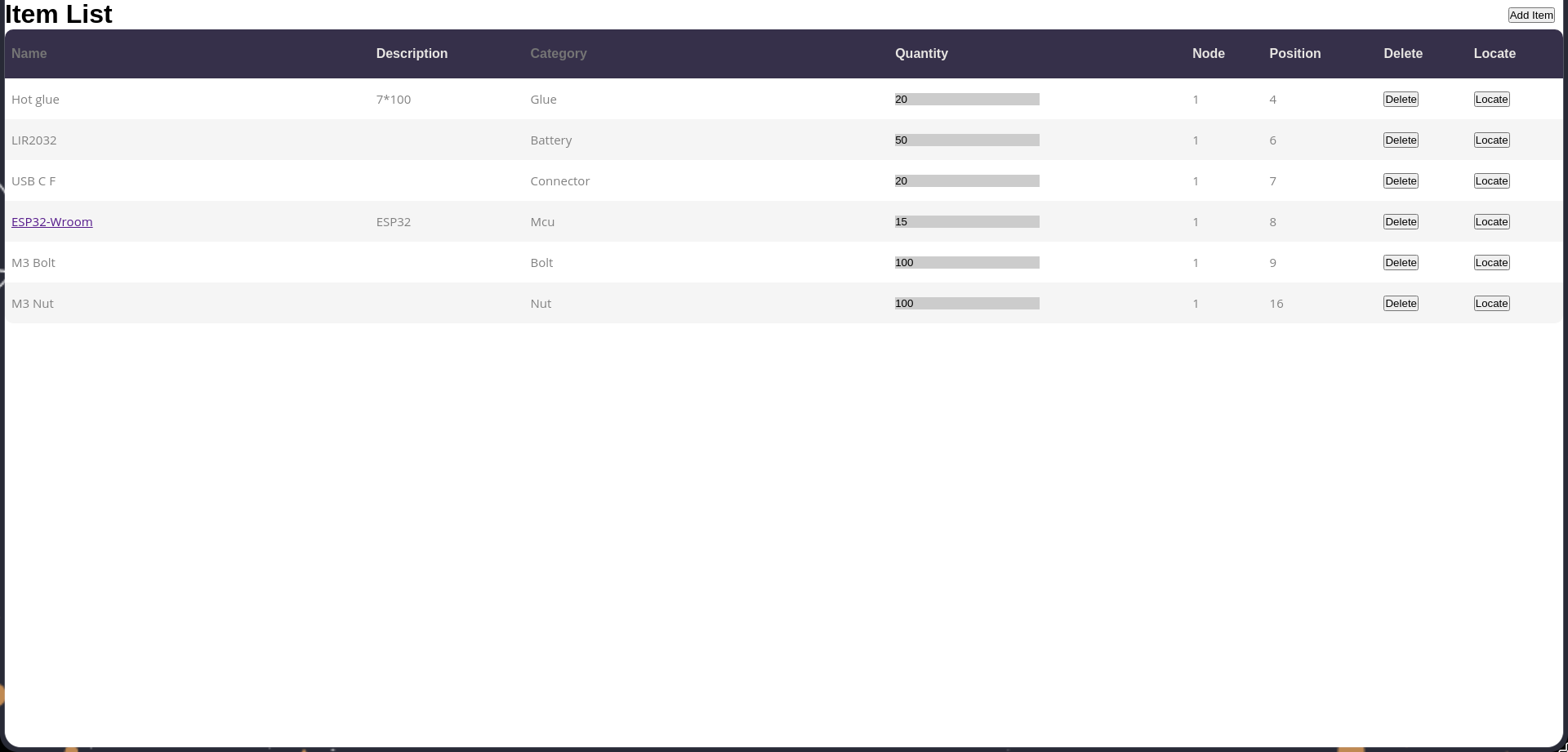
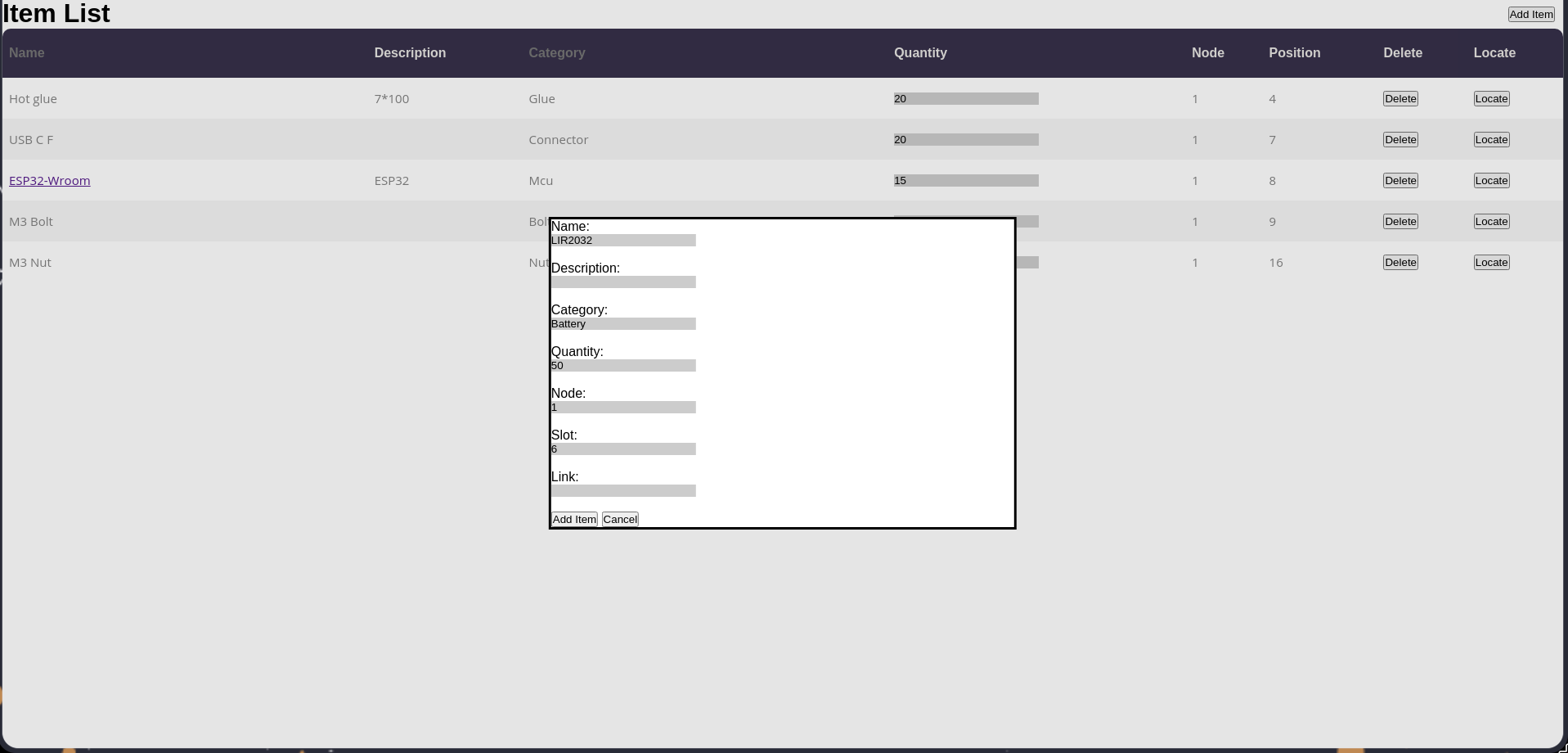
/api/listGETcategory (optional): Filter items by category.node (optional): Filter items by node.position (optional): Filter items by position.id (optional): Filter items by ID:/api/locategetGETid (required): The ID of the item to locate./api/nodesGETid (optional): Filter nodes by ID./api/additemPOST{
"name": "string",
"description": "string",
"category": "string",
"quantity": "integer",
"node": "integer",
"position": "integer",
"url": "string",
"slots": "array"
}/api/addnodePOST {
"id": "integer",
"ip": "string",
"positions": "integer"
}/api/deletePOST {
"id": "integer"
}/api/editPOST {
"id": "integer",
"name": "string",
"description": "string",
"category": "string",
"quantity": "integer",
"node": "integer",
"position": "integer",
"url": "string",
"slots": "array"
} /api/movePOST {
"id": "integer",
"node": "integer",
"position": "integer"
}/api/locatePOST {
"id": "integer"
}server variablegit clone https://github.com/Pegoku/StorageSystem.git
cd StorageSystemdocker compose up -d --buildgit clone https://github.com/Pegoku/StorageSystem.git
cd StorageSystem/Code/Serverpython3 -m venv .venv
source .venv/bin/activate
pip install -r requirements.txtpython3 main.pygit clone https://github.com/Pegoku/StorageSystem.git
cd StorageSystemdocker buildx build -t storagesystem:server -f server.Dockerfile .
docker run -p 5505:5505 -v ./database.db:/app/database.db storagesystem:serverhttp://localhost:5505.git clone https://github.com/Pegoku/StorageSystem.git
cd StorageSystemplatformio runinclude/.env.template file and rename it to include/.env.platformio run --target uploadplatformio device monitorgit clone https://github.com/Pegoku/StorageSystem.git
cd StorageSystem/Code/Apppython3 -m venv .venv
source .venv/bin/activate
pip install -r requirements.txtpython3 main.pygit clone https://github.com/Pegoku/StorageSystem.git
cd StorageSystemdocker buildx build -t storagesystem:app -f app.Dockerfile .
docker run -p 5506:5506 storagesystem:apphttp://localhost:5506.Contributions are welcome! Please fork the repository and submit a pull request with your changes.
| Qty | Value | Footprint | References |
|---|---|---|---|
| 6 | TestPoint | TestPoint:TestPoint_Pad_D1.5mm | TP1, TP2, TP3, TP4, TP5, TP6 |
| 2 | Conn_01x03 | Connector_PinSocket_2.54mm:PinSocket_1x03_P2.54mm_Horizontal | J3, J4 |
| 2 | Conn_01x03 | Connector_PinHeader_2.54mm:PinHeader_1x03_P2.54mm_Horizontal | J1, J2 |
| 1 | C | Capacitor_SMD:C_0603_1608Metric | C1 |
| 1 | WS2812B-B | easyeda2kicad:LED-SMD_4P-L5.0-W5.0-BL_TC5050RGB | LED1 |
It measures 44.5 × 18 mm and has 2 copper layers, 1.6 mm thick.
12 parts, built around the WS2812B-B/T. The full list of its parts is on this page, with links to each part's symbol and footprint where PCBKit's library has them.
From the Pegoku/StorageSystem repository on GitHub, at the commit this page was made from: the board is PCB/Indicators/Indicators.kicad_pcb and its schematic PCB/Indicators/Indicators.kicad_sch. PCBKit opens the board in the browser, with nothing to install.
Its repository states no licence, so its author keeps all rights: ask Pegoku before reusing the design.

Twisted-Fields/acorn-robot-electronics
PCB hardware designs in KICAD for Acorn, the precision farming rover from Twisted Fields.


IvanVeloz/smart-usb-plug
A smart plug for USB with energy measurement and Matter over Thread support

Kilan777/HomeDeck
Jarvis HomeDeck: a Raspberry Pi CM4 carrier board and voice-assistant software for a 7-inch smart display (KiCad hardware, generated from Python, plus the Python/JS assistant)

lxdinh/Piano_Prof
Custom PCB hardware controller integrated with a responsive LED strip, designed to provide real-time feedback for interactive piano instruction

UCSD-Silberman-Classes-and-Projects/148-winter-2025-final-project-team-11
148-winter-2025-final-project-team-11 created by GitHub Classroom

