2 layers50 × 50 mm
Microphone amp
manyetox/Light-Modulator-MEMS-Mic-Amp
PCB designs for a Bluetooth audio-controlled laser/LED modulator and MEMS microphone receiver/amplifier for optical audio experiments.
34 parts

 PawelReich/GitKop3
Metal detector, my engineering thesis
GitKop is an open-source printed circuit board by PawelReich, from the PawelReich/GitKop repository on GitHub. It is a 2-layer board of 80 × 101 mm with 39 parts on 62 nets, routed with 233 tracks and 38 vias.
It is built around the MCP6281-E/P, BAV19 and BC547, with the BC557, IRF740 and RJ45 among its other parts. Its parts include 13 resistors, 8 capacitors, 4 ICs, 4 connectors and 3 diodes. It belongs with the STM32 boards of this library.


This is a repository containing my engineering thesis document, hardware and software project with simulations.
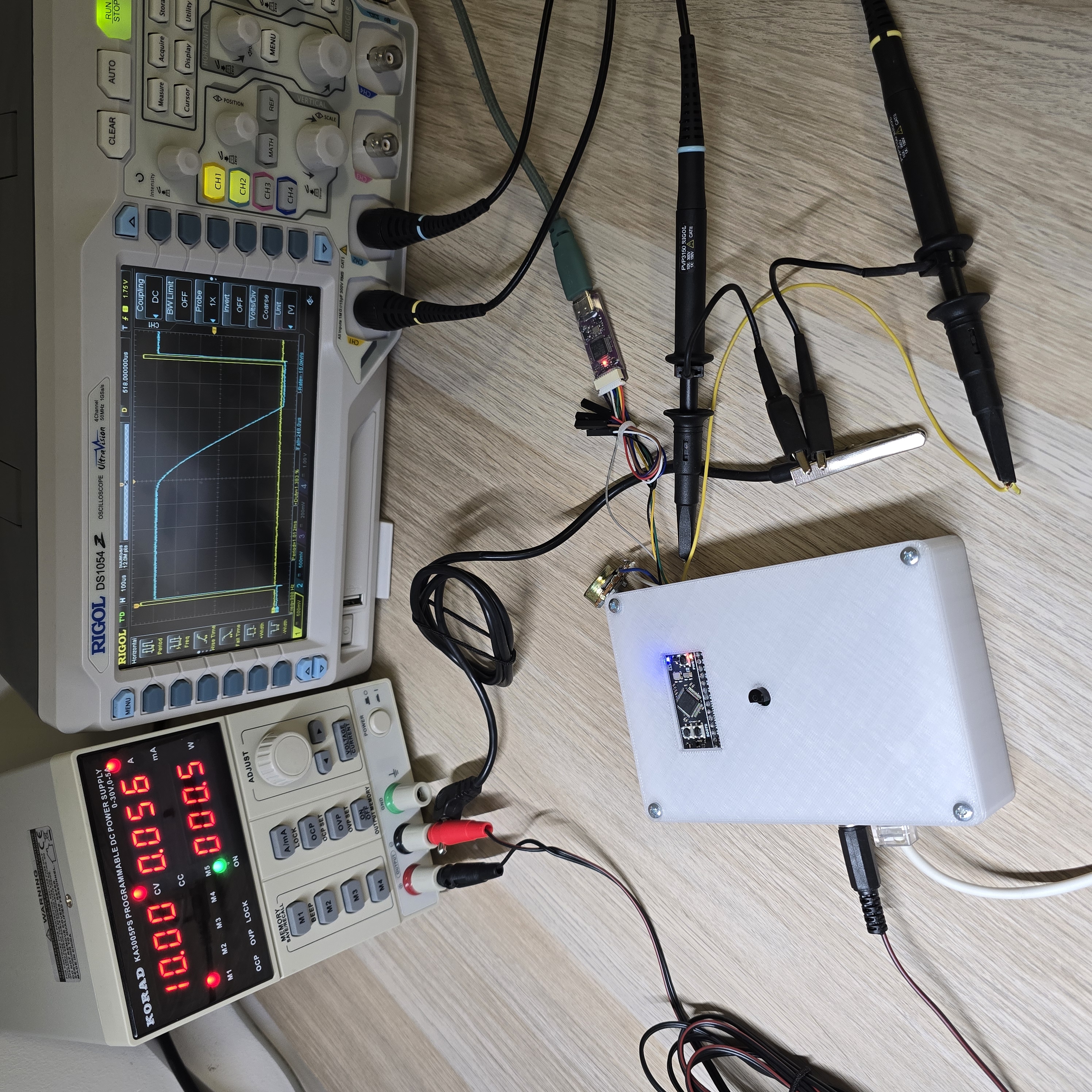
The heart of the device is a STM32H523CE microcontroller, with custom-made PCB.
You can read the thesis here. It is written in Polish.
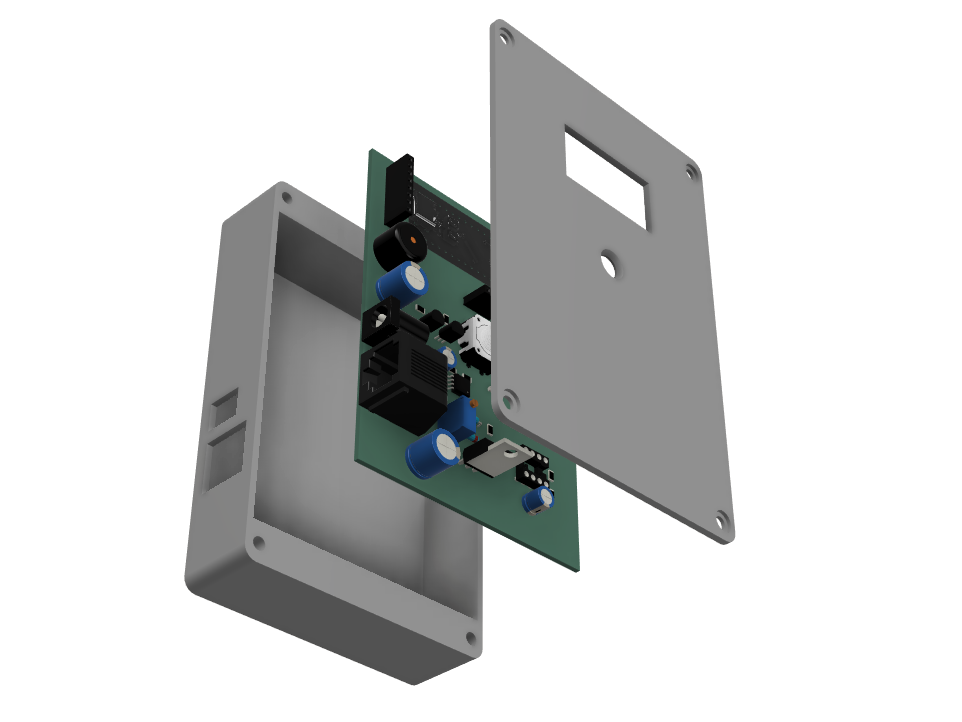
The subject of this thesis is the design and implementation of a metal detector prototype operating in Pulse Induction technology. The theoretical part contains a historical outline of the development of detection methods, starting from discoveries in the 19th century and ending with modern solutions. An analysis of physical phenomena, such as Faraday’s law of induction or eddy currents, which constitute the foundation of the device’s operation, was performed. A review of existing popular metal detector architectures and coil types was also conducted, justifying the choice of technology. In the practical part, the process of building a prototype based on the STM32H523CE microcontroller with an ARM Cortex M-33 core is described in detail. The operation of the created software implementing real-time data acquisition and signal anomaly detection through the analysis of response time and decay slope is explained. The project assumes the creation of a functional mobile device, along with a manufactured printed circuit board and a probe enclosed in a designed housing made using 3D printing technology
The software is currently written in baremetal C with HAL. Accompanying software is written in Python with tkinter.
| Qty | Value | Footprint | References |
|---|---|---|---|
| 5 | 1000 | Resistor_SMD:R_1206_3216Metric_Pad1.30x1.75mm_HandSolder | R2, R3, R8, R9, R10 |
| 5 | 100uF | Capacitor_THT:CP_Radial_D6.3mm_P2.50mm | C2, C5, C6, C7, C8 |
| 2 | 1500uF | Capacitor_THT:CP_Radial_D10.0mm_P5.00mm | C3, C4 |
| 2 | 2000 | Resistor_SMD:R_1206_3216Metric_Pad1.30x1.75mm_HandSolder | R7, R11 |
| 2 | BAV19 | Diode_THT:D_DO-35_SOD27_P7.62mm_Horizontal | D1, D2 |
| 1 | 100 | Resistor_SMD:R_1206_3216Metric_Pad1.30x1.75mm_HandSolder | R1 |
| 1 | 170 | Resistor_SMD:R_1206_3216Metric_Pad1.30x1.75mm_HandSolder | R5 |
| 1 | 1M | Resistor_SMD:R_1206_3216Metric_Pad1.30x1.75mm_HandSolder | R12 |
| 1 | 1k | Resistor_SMD:R_1206_3216Metric_Pad1.30x1.75mm_HandSolder | R13 |
| 1 | 1u | Capacitor_SMD:C_1206_3216Metric_Pad1.33x1.80mm_HandSolder | C1 |
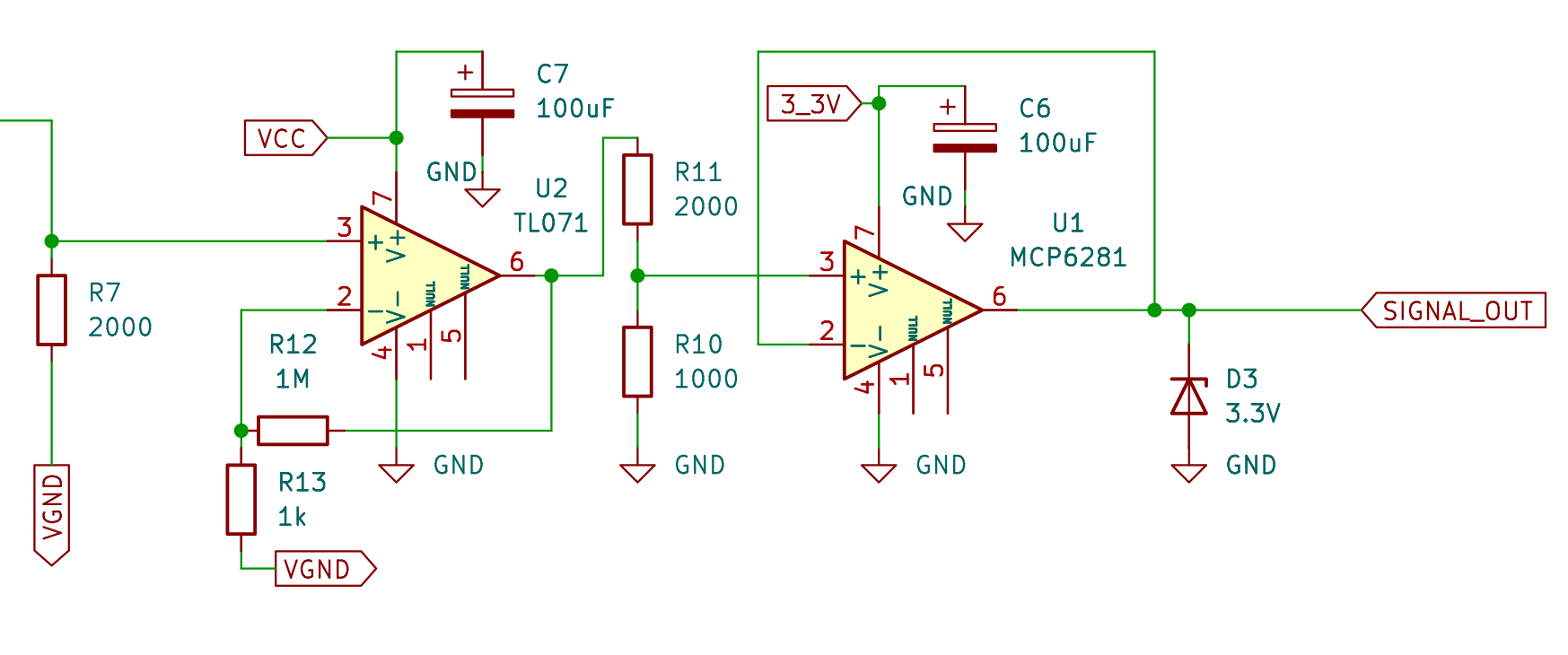
| 1 | 3.3V | Diode_SMD:D_MiniMELF_Handsoldering | D3 |
| 1 | 3100 | Resistor_SMD:R_1206_3216Metric_Pad1.30x1.75mm_HandSolder | R6 |
| 1 | 6800 | Resistor_SMD:R_1206_3216Metric_Pad1.30x1.75mm_HandSolder | R4 |
| 1 | BC547 | Package_TO_SOT_THT:TO-92_Inline | Q2 |
| 1 | BC557 | Package_TO_SOT_THT:TO-92_Inline | Q1 |
| 1 | Buzzer | Buzzer_Beeper:Buzzer_12x9.5RM7.6 | BZ1 |
| 1 | Conn_01x04_Socket | Connector_PinSocket_2.54mm:PinSocket_1x04_P2.54mm_Vertical | J3 |
| 1 | Conn_01x08_Socket | Connector_PinSocket_2.54mm:PinSocket_1x08_P2.54mm_Vertical | J2 |
| 1 | IRF740 | Package_TO_SOT_THT:TO-220-3_Vertical | Q3 |
| 1 | LF33_TO252 | Package_TO_SOT_SMD:TO-252-2 | U4 |
| 1 | MCP6281 | Package_DIP:DIP-8_W7.62mm_Socket_LongPads | U1 |
| 1 | POWER_Socket | Connector_BarrelJack:BarrelJack_Horizontal | J1 |
| 1 | RJ45 | MTJ-881X1:MTJ881X1 | J4 |
| 1 | R_Trim | Potentiometer_THT:Potentiometer_Bourns_3296W_Vertical | RV1 |
| 1 | RotaryEncoder_Switch | Rotary_Encoder:RotaryEncoder_Bourns_Vertical_PEC12R-3x17F-Sxxxx | SW1 |
| 1 | TL071 | Package_SO:SOIC-8_5.3x5.3mm_P1.27mm | U3 |
| 1 | TL071 | Package_DIP:DIP-8_W7.62mm_Socket_LongPads | U2 |
| 1 | U1 | STM32F4x1CxU6 CoreBoard WeActStudio:STM32F4x1CxU6 WeActStudio | 1 |
It measures 80 × 101 mm and has 2 copper layers, 1.6 mm thick.
39 parts, built around the MCP6281-E/P, BAV19, BC547 and BC557. The full list of its parts is on this page, with links to each part's symbol and footprint where PCBKit's library has them.
From the PawelReich/GitKop repository on GitHub, at the commit this page was made from: the board is KiCad/GitKop.kicad_pcb and its schematic KiCad/GitKop.kicad_sch. PCBKit opens the board in the browser, with nothing to install.
Its repository states no licence, so its author keeps all rights: ask PawelReich before reusing the design.
manyetox/Light-Modulator-MEMS-Mic-Amp
PCB designs for a Bluetooth audio-controlled laser/LED modulator and MEMS microphone receiver/amplifier for optical audio experiments.

CatoLynx/LAWO-Arduino
Arduino Nano adapter board for LAWO XY5 flipdot displays


Majklzbastlirny/NixieClock
ESP-IDF firmware for a 6-tube multiplexed ESP32 nixie clock (WiFi/SNTP, Home Assistant, web UI, alarm, temperatures)


dotnet/iot
This repo includes .NET Core implementations for various IoT boards, chips, displays and PCBs.

robsonsmartins/usbflashprog
A memory device programmer (Flash/EPROM/E2PROM) board and software, connected to PC by USB port.
