
2 layers18 × 22 mm
TFDU4101-breakout simplified
partlyhuman/wqv-blink
An easy-to-use, self-contained device that retrieves photos from the Casio WQV-1, WQV-2, WQV-3, and WQV-10 camera watches
9 parts4

 partlyhuman/wqv-blink4
An easy-to-use, self-contained device that retrieves photos from the Casio WQV-1, WQV-2, WQV-3, and WQV-10 camera watches
WQV1-S3-SuperMini is an open-source printed circuit board by partlyhuman, from the partlyhuman/wqv-blink repository on GitHub. It is a 2-layer board of 38 × 38 mm with 11 parts on 21 nets, routed with 42 tracks and 16 vias.
It is built around the TFDU4101-TR3. Its parts include 3 capacitors, 3 ICs and 1 resistor. It belongs with the ESP32 boards of this library.
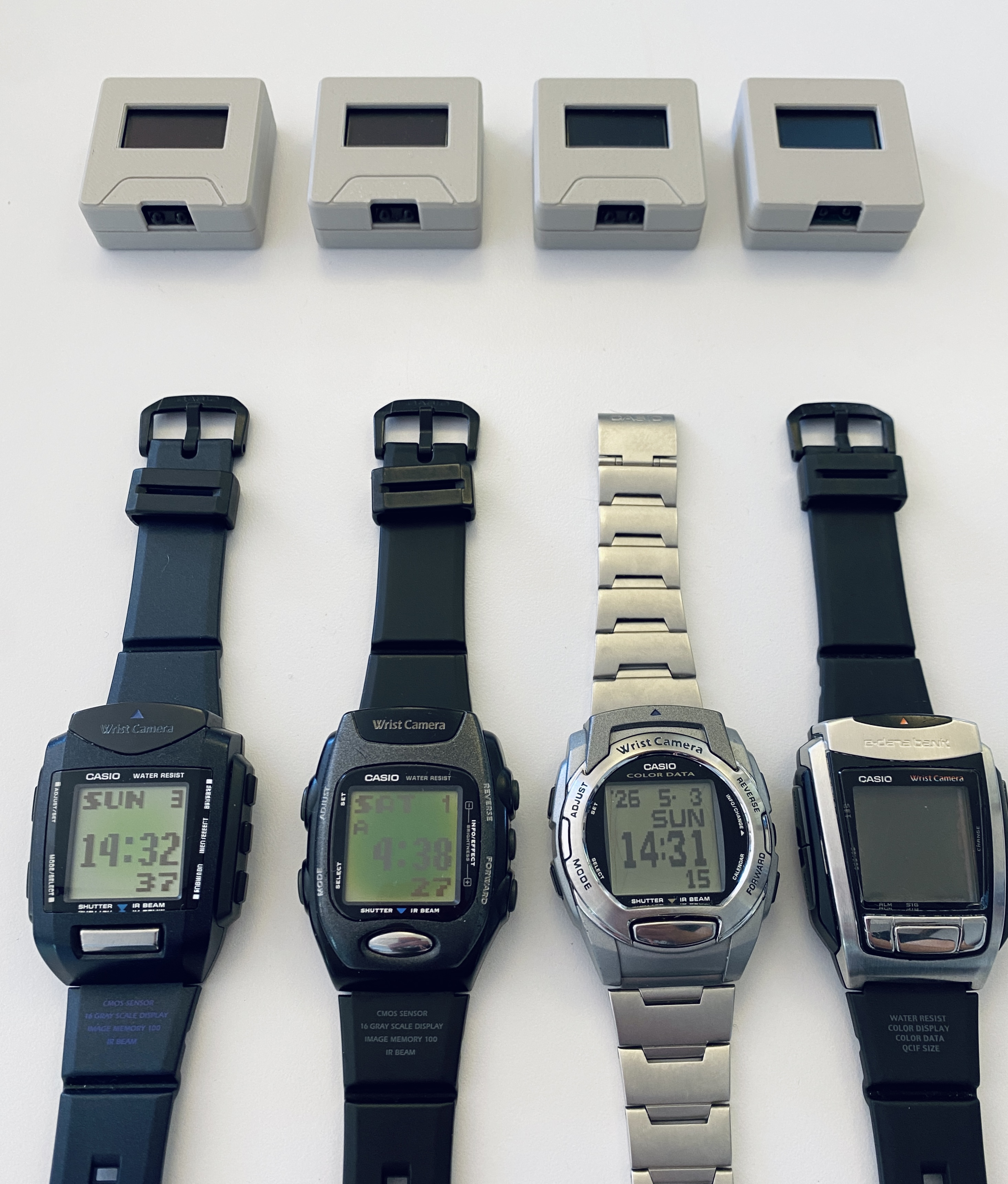
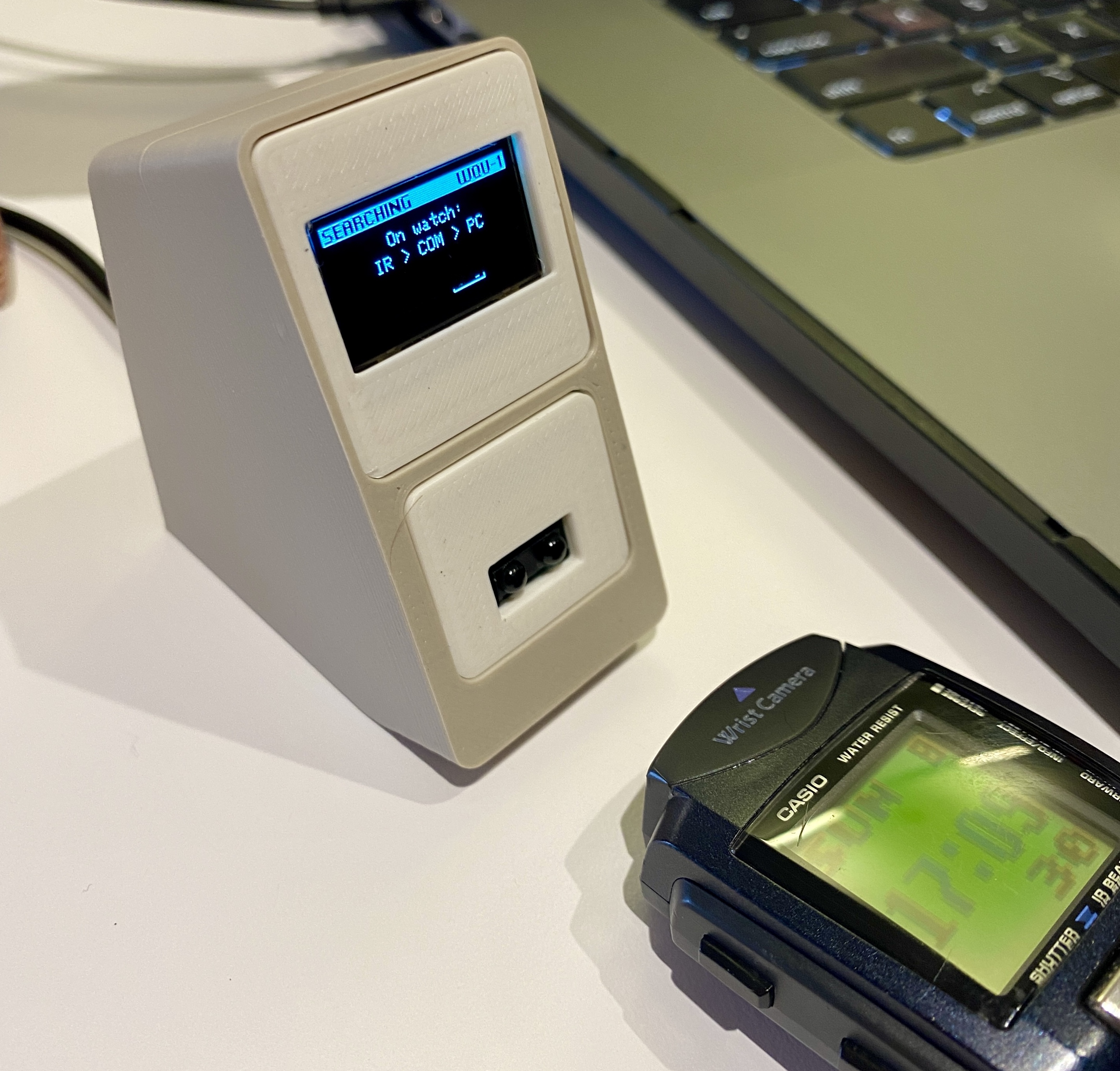
This is an easy-to-use, self-contained device that retrieves photos from the series of extremely cool 2000-era Casio WQV camera watches and stores them as a USB drive.
See the wiki for all instructions!
Pre-assembled devices ars available in limited quantities on my Ko-Fi shop!
Firmware wqv12:
Firmware wqv310:
The PCB, case, and firmware in this repository go together as pictured here.
Gerbers are included. Fabricate with basic options, nothing fancy. 1.6mm thickness, HASL is just fine.
| Reference | Value | Details |
|---|---|---|
| R1 | 0-20R | 0805 Resistor |
| C1 | 1uF | 0805 Capacitor |
| C2 | 1uF | 0805 Capacitor |
| C3 | 0.1uF | 0805 Capacitor |
| U1 | ESP32-S3 Super Micro | https://www.aliexpress.com/item/1005007523988592.html |
| U2 | SSD1306_OLED_128x64 | https://www.aliexpress.com/item/1005006141235306.html (Yellow Blue) |
| U3 | TFDU4101-TR3 | https://www.digikey.com/short/nrdh27mb |
R1 is used to save power to the IR LED. The TFDU4101 has built-in LED resistors so this can be 0R for maximum TX power. There is a lot of good info on sample circuits and component values in the TFDU4101 datasheet (PDF)
The case is split into a top and bottom print. It can be printed with very basic settings. With the correct orientation, no supports are needed.
Builds are made with PlatformIO. In the firmware's directory, run pio run -e esp32_s3_supermini or use the PlatformIO VSCode extension. Note that this will not give you the dual-boot/dual-firmware option; for this, extra scripts are included. Alternatively, if you do not need to change anything, you can use the web updater to program the ESP32.
Breakouts are included to make a hand-wired device possible using breadboards, perfboards, jumpers, etc.
Currently this builds on ESP32-S2 and -S3 based boards. You can choose to include a common 0.96" monochrome SSD1306 screen or not based on the Platform.io environment.
Other ESP32 SoCs like the C3 lack the hardware to support USB Device mode, which we use to mount as a USB drive. See the Espressif USB peripheral FAQ.
PSRAM is used if found on your board, but is not required. Flash space large enough to store 99 images (<1MB) as well as the program is required, should not be an issue.
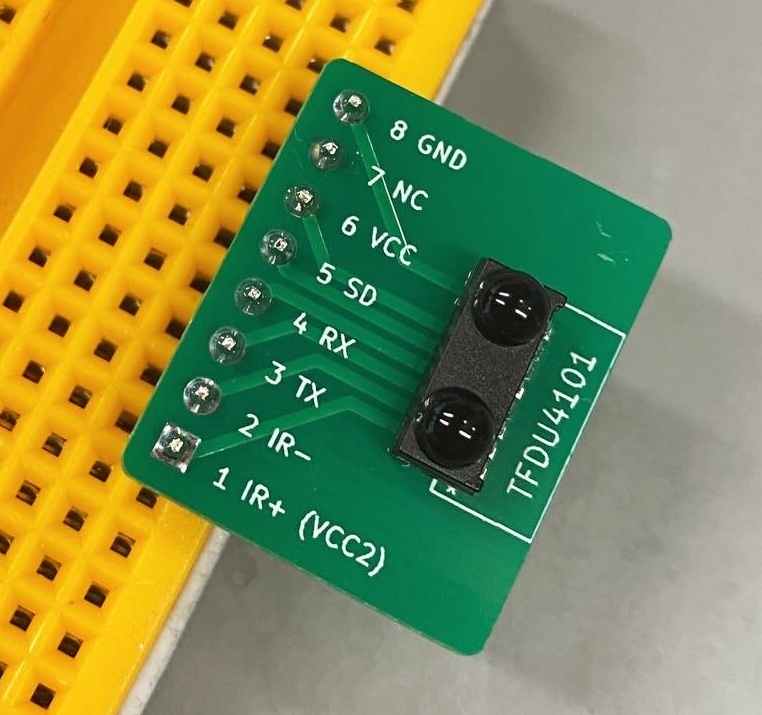
A Vishay TFDU4101 is the only required external component, used for bidirectional IRDA communication with the watch. It is still in production and widely available for cheap! In this repository you will find breakout PCBs that will give it 2.54mm standard header pins, one barebones, and a more user-friendly one which includes the passive components, and a solder bridge to optionally power the IR LED & logic from a single supply (recommended, up to +6V is acceptable according to the datasheet). The silkscreen gives two possible orientations of the TFDU4101 so you can choose to aim it upwards or outwards. Double-check pin 1 to make sure your orientation is correct.
| Qty | Value | Footprint | References |
|---|---|---|---|
| 4 | MountingHole | MountingHole:MountingHole_2.7mm_M2.5 | H1, H2, H3, H4 |
| 2 | 1u | Capacitor_SMD:C_0805_2012Metric_Pad1.18x1.45mm_HandSolder | C1, C2 |
| 1 | 0.1u | Capacitor_SMD:C_0805_2012Metric_Pad1.18x1.45mm_HandSolder | C3 |
| 1 | 10R | Resistor_SMD:R_0805_2012Metric_Pad1.20x1.40mm_HandSolder | R1 |
| 1 | ESP32-S3 Super Micro | REB_ESP32:ESP32-S3-SuperMicro_THT | U1 |
| 1 | SSD1306_OLED_128x64 | REB_OLED:SSD1306 | U2 |
| 1 | TFDU4101-TR3 | REB_IRDA:TFDU4101 Positioning Guides | U3 |
partlyhuman/wqv-blink
An easy-to-use, self-contained device that retrieves photos from the Casio WQV-1, WQV-2, WQV-3, and WQV-10 camera watches

partlyhuman/wqv-blink
An easy-to-use, self-contained device that retrieves photos from the Casio WQV-1, WQV-2, WQV-3, and WQV-10 camera watches


google/mozc-devices
Circuit diagrams and firmware source code for Gboard DIY keyboards


FrameworkComputer/ExpansionCards
Reference designs and documentation to create Expansion Cards for the Framework Laptop

hoglet67/RGBtoHDMI
Bare-metal Raspberry Pi project that provides pixel-perfect sampling of Retro Computer RGB/YUV video and conversion to HDMI

hackclub/OnBoard
💡 Join 1,000 teenagers and make your first PCB with a $100 grant!


tardate/LittleArduinoProjects
a collection of "Little Electronic & Arduino Projects", most involving electronics or an Arduino in one way or another!
It measures 38 × 38 mm and has 2 copper layers, 1.6 mm thick.
11 parts, built around the TFDU4101-TR3. The full list of its parts is on this page, with links to each part's symbol and footprint where PCBKit's library has them.
From the partlyhuman/wqv-blink repository on GitHub, at the commit this page was made from: the board is pcb/WQV1-S3-SuperMini/WQV1-S3-SuperMini.kicad_pcb and its schematic pcb/TFDU4101-breakout-simplified/TFDU4101-breakout-simplified.kicad_sch. PCBKit opens the board in the browser, with nothing to install.
Its repository states no licence, so its author keeps all rights: ask partlyhuman before reusing the design.