
2 layers90 × 140 mm
Drumkid
mattybrad/drumkid
Version 4 was the first successful working design, with full code, schematics, Gerbers, etc available on GitHub.
70 parts137
This is a prototype around a PCB I sent off to fab in March 2022... that I'm slowly bringing back to life. I'm kind of using it as a springboard for the next thing, whatever that is and whenever it happens!
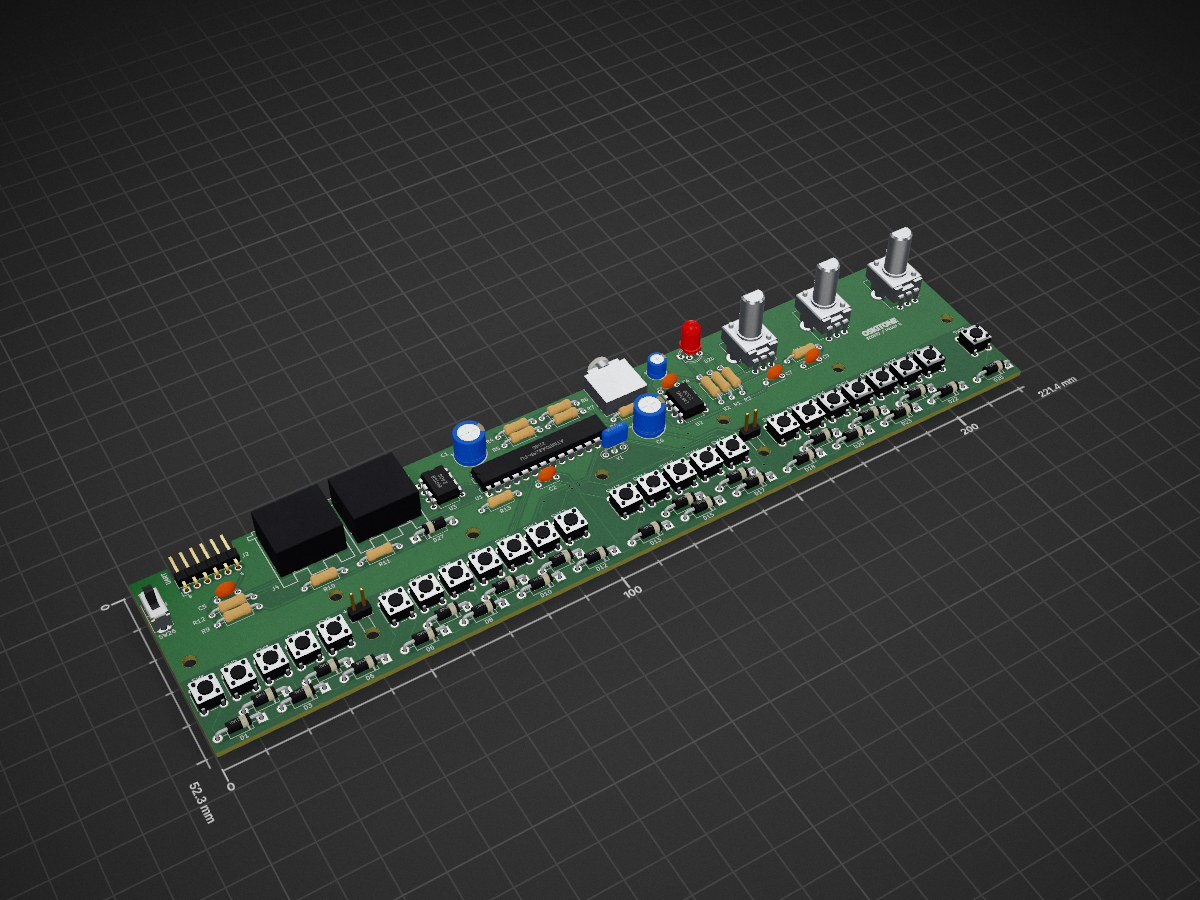
Scout is an open-source printed circuit board by oskitone, from the oskitone/scout_2_prototype repository on GitHub. It is a 2-layer board of 221.4 × 52.3 mm with 98 parts on 81 nets, routed with 538 tracks and 10 vias.
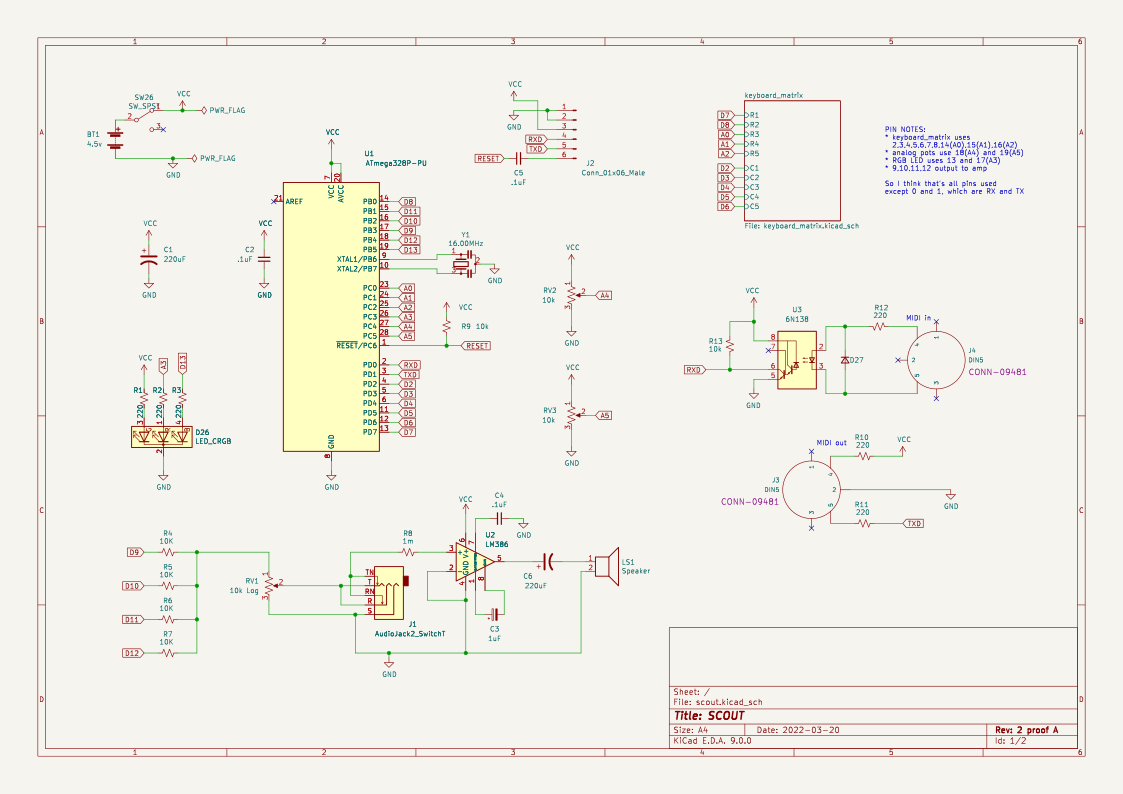
It is built around the ATMEGA328P-PU and LM386. Its parts include 27 diodes, 26 switches, 14 resistors, 8 capacitors and 4 connectors. It belongs with the AVR (ATmega, ATtiny) boards of this library.


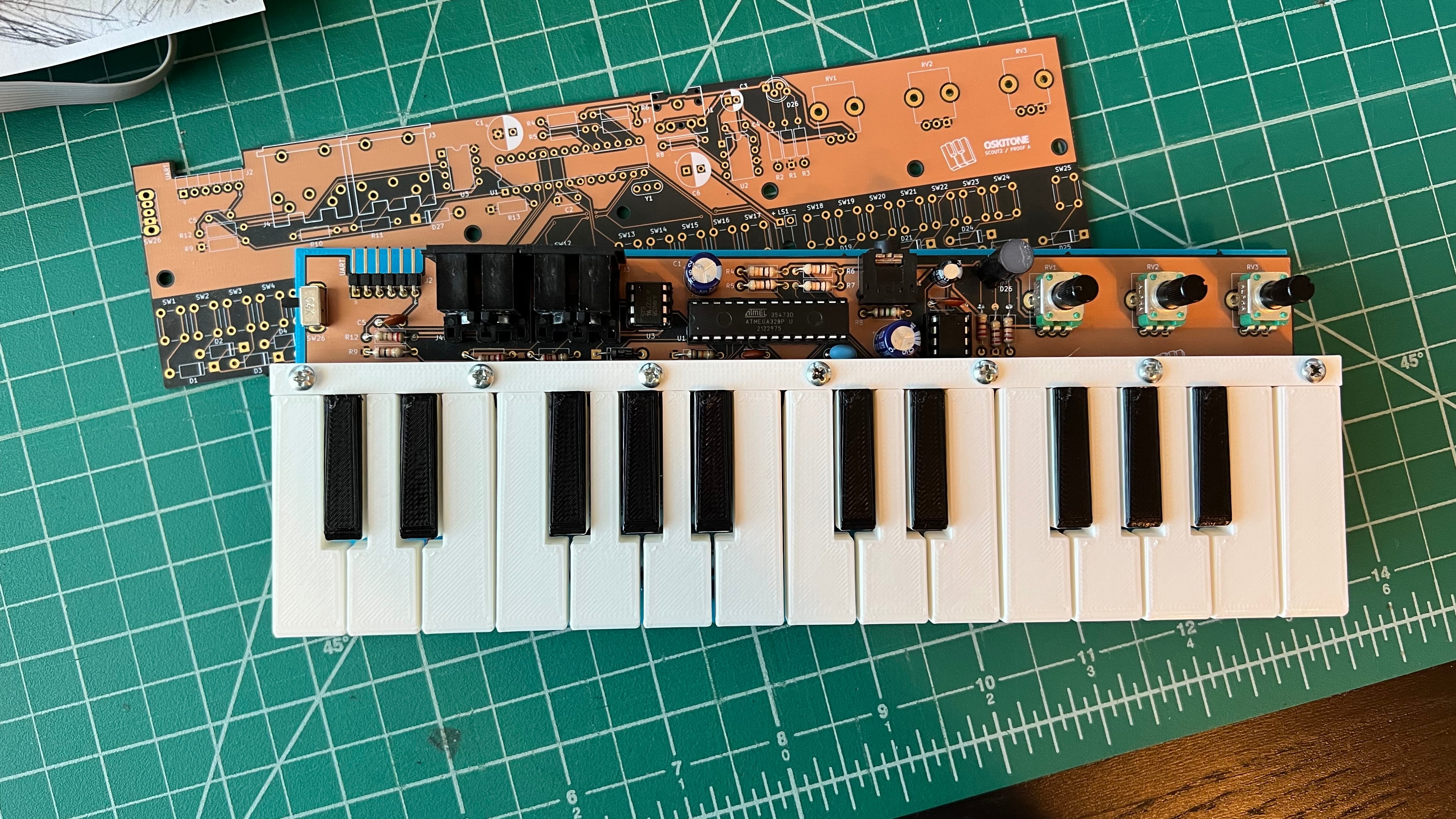
This is a prototype around a PCB I sent off to fab in March 2022... that I'm slowly bringing back to life. I'm kind of using it as a springboard for the next thing, whatever that is and whenever it happens!
Very much work-in-progress. License will be MIT like other kits.
Forked from scout's 2-25_keys branch
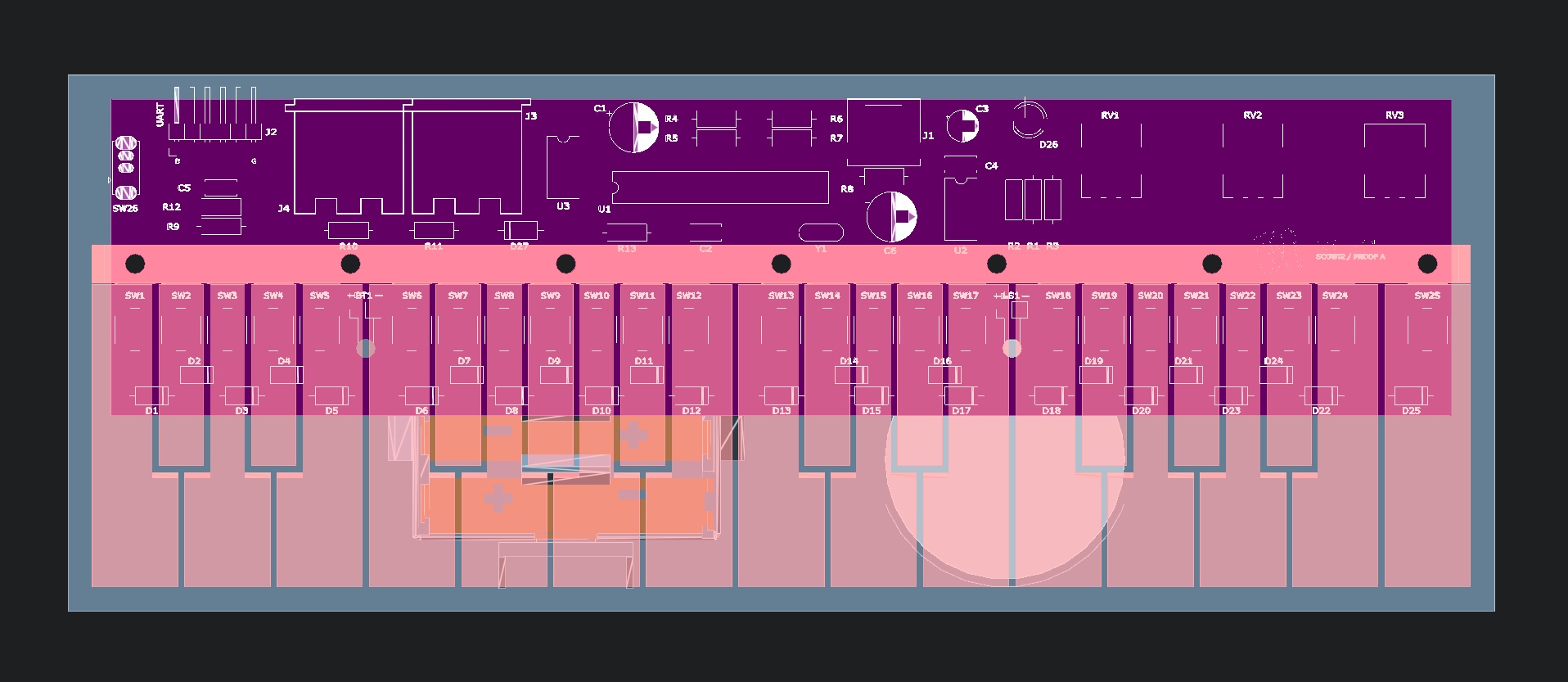
Anything else?
https://github.com/user-attachments/assets/99f4f9d2-c58f-4821-b225-9032d2b2e849
The UART header works the same as the OG Scout.
The cable's black wire should be on the left and green on the right.
| Designator | Footprint | Quantity | Designation |
|---|---|---|---|
| SW1-SW25 | SW_PUSH_6mm | 25 | SPST |
| BT1 | PinHeader_1x02_P2.54mm_Vertical | 1 | 4.5v |
| LS1 | PinHeader_1x02_P2.54mm_Vertical | 1 | Speaker |
| RV1 | Potentiometer_Bourns_PTV09A-1_Single_Vertical | 1 | 10k Log |
| Y1 | Resonator-3Pin_W7.0mm_H2.5mm | 1 | 16.00MHz |
| U2 | DIP-8_W7.62mm | 1 | LM386 |
| R4,R5,R7,R6 | R_Axial_DIN0207_L6.3mm_D2.5mm_P10.16mm_Horizontal | 4 | 10K |
| J1 | AUDIO-JACK | 1 | AudioJack2_SwitchT |
| C2,C4,C5 | C_Disc_D5.0mm_W2.5mm_P5.00mm | 3 | .1uF |
| C6,C1 | CP_Radial_D8.0mm_P3.50mm | 2 | 220uF |
| U1 | DIP-28_W7.62mm | 1 | ATmega328P-PU |
| D1-D25,D27 | D_DO-41_SOD81_P10.16mm_Horizontal | 26 | D |
| J2 | PinHeader_1x06_P2.54mm_Horizontal | 1 | Conn_01x06_Male |
| R8 | R_Axial_DIN0207_L6.3mm_D2.5mm_P10.16mm_Horizontal | 1 | 1m |
| R9,R13 | R_Axial_DIN0207_L6.3mm_D2.5mm_P10.16mm_Horizontal | 2 | 10k |
| R10,R1,R11,R3,R2,R12 | R_Axial_DIN0207_L6.3mm_D2.5mm_P10.16mm_Horizontal | 6 | 220 |
| D26 | LED_D5.0mm-4_RGB_Staggered_Pins | 1 | LED_CRGB |
| J4,J3 | DIN5-RA-PTH | 2 | DIN5 |
| SW26 | SW_Slide_1P2T_CK_OS102011MS2Q | 1 | SW_SPST |
| RV2,RV3 | Potentiometer_Bourns_PTV09A-1_Single_Vertical | 2 | 10k |
| C3 | CP_Radial_D5.0mm_P2.00mm | 1 | 1uF |
| U3 | DIP-8_W7.62mm | 1 | 6N138 |
TODO: update to PROOF B
Normally I'd put them on thingiverse/etc, but here they're included in the repo in the stls folder.
Assumes parts_cafe is in a sibling directory and is up to date on the main branch. Here's how I've got it:
\ oskitone
    \ parts_cafe
    \ scout_2_prototype
You'll also need to install the Orbitron font.
| Qty | Value | Footprint | References |
|---|---|---|---|
| 25 | 1N4148 | Diode_THT:D_DO-41_SOD81_P10.16mm_Horizontal | D1, D2, D10, D11, D12, D13, D14, D15, D16, D17, D18, D19, D20, D21, D22, D23 +9 |
| 25 | SPST | Button_Switch_THT:SW_PUSH_6mm | SW1, SW2, SW10, SW11, SW12, SW13, SW14, SW15, SW16, SW17, SW18, SW19, SW20, SW21, SW22, SW23 +9 |
| 9 | MountingHole_3.2mm_M3 | MountingHole:MountingHole_3.2mm_M3 | , , , , , , , , |
| 6 | 220 | Resistor_THT:R_Axial_DIN0207_L6.3mm_D2.5mm_P10.16mm_Horizontal | R1, R2, R3, R10, R11, R12 |
| 4 | 10K | Resistor_THT:R_Axial_DIN0207_L6.3mm_D2.5mm_P10.16mm_Horizontal | R4, R5, R6, R7 |
| 3 | .1uF | Capacitor_THT:C_Disc_D5.0mm_W2.5mm_P5.00mm | C2, C4, C5 |
| 2 | 10k | Potentiometer_THT:Potentiometer_Bourns_PTV09A-1_Single_Vertical | RV2, RV3 |
| 2 | 10k | Resistor_THT:R_Axial_DIN0207_L6.3mm_D2.5mm_P10.16mm_Horizontal | R9, R13 |
| 2 | 220uF | Capacitor_THT:CP_Radial_D8.0mm_P3.50mm | C1, C6 |
| 2 | DIN5 | Sparkfun_Connectors:DIN5-RA-PTH | J3, J4 |
| 1 | .05uF | kicad-official/Capacitor_THT.pretty:C_Disc_D5.0mm_W2.5mm_P5.00mm | C9 |
| 1 | .1uF | kicad-official/Capacitor_THT.pretty:C_Disc_D5.0mm_W2.5mm_P5.00mm | C7 |
| 1 | 10 | kicad-official/Resistor_THT.pretty:R_Axial_DIN0207_L6.3mm_D2.5mm_P10.16mm_Horizontal | R14 |
| 1 | 10k Log | Potentiometer_THT:Potentiometer_Bourns_PTV09A-1_Single_Vertical | RV1 |
| 1 | 16.00MHz | Crystal:Resonator-3Pin_W7.0mm_H2.5mm | Y1 |
| 1 | 1m | Resistor_THT:R_Axial_DIN0207_L6.3mm_D2.5mm_P10.16mm_Horizontal | R8 |
| 1 | 1uF | Capacitor_THT:CP_Radial_D5.0mm_P2.00mm | C3 |
| 1 | 4.5v | Connector_PinHeader_2.54mm:PinHeader_1x02_P2.54mm_Vertical | BT1 |
| 1 | 6N138 | Package_DIP:DIP-8_W7.62mm | U3 |
| 1 | ATmega328P-PU | Package_DIP:DIP-28_W7.62mm | U1 |
| 1 | AudioJack2_SwitchT | sparkfun-connectors:AUDIO-JACK | J1 |
| 1 | Conn_01x06_Male | Connector_PinHeader_2.54mm:PinHeader_1x06_P2.54mm_Horizontal | J2 |
| 1 | D | Diode_THT:D_DO-41_SOD81_P10.16mm_Horizontal | D27 |
| 1 | LED_CRGB | LED_THT:LED_D5.0mm-4_RGB_Staggered_Pins | D26 |
| 1 | LM386 | Package_DIP:DIP-8_W7.62mm | U2 |
| 1 | SW_SPST | Button_Switch_THT:SW_Slide_1P2T_CK_OS102011MS2Q | SW26 |
| 1 | Speaker | Connector_PinHeader_2.54mm:PinHeader_1x02_P2.54mm_Vertical | LS1 |
| 1 | Val** | scout:branding | Ref** |
It measures 221.4 × 52.3 mm and has 2 copper layers, 1.6 mm thick.
98 parts, built around the ATMEGA328P-PU and LM386. The full list of its parts is on this page, with links to each part's symbol and footprint where PCBKit's library has them.
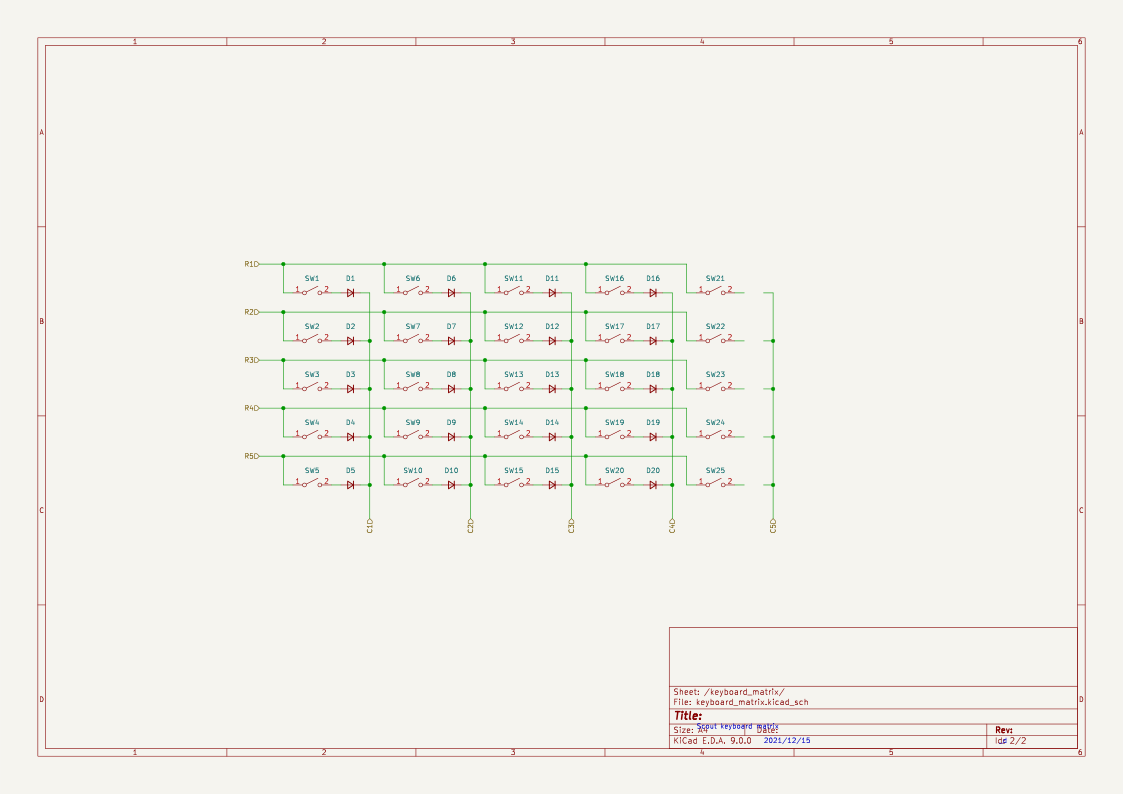
From the oskitone/scout_2_prototype repository on GitHub, at the commit this page was made from: the board is kicad/scout/scout.kicad_pcb and its schematic kicad/scout/keyboard_matrix.kicad_sch. PCBKit opens the board in the browser, with nothing to install.
Its repository states no licence, so its author keeps all rights: ask oskitone before reusing the design.
mattybrad/drumkid
Version 4 was the first successful working design, with full code, schematics, Gerbers, etc available on GitHub.

leomil72/LM80C
A Z80-based homebrew computer withTMS9918, AY-3-8910, Z80 CTC, Z80 PIO, and Z80 SIO


profdc9/RFBitBanger
A QRP digital transceiver created from readily available parts for off-the-grid maintenance

oskitone/poly555
The POLY555 is a polyphonic, analog, square wave synth based on the 555 timer chip.

robfinch/Cores
Cores ===== RTF's Cores Use at your own risk. Welcome to my galaxy of cores. Contained in the directories are IP cores, source code for digital circuits.
