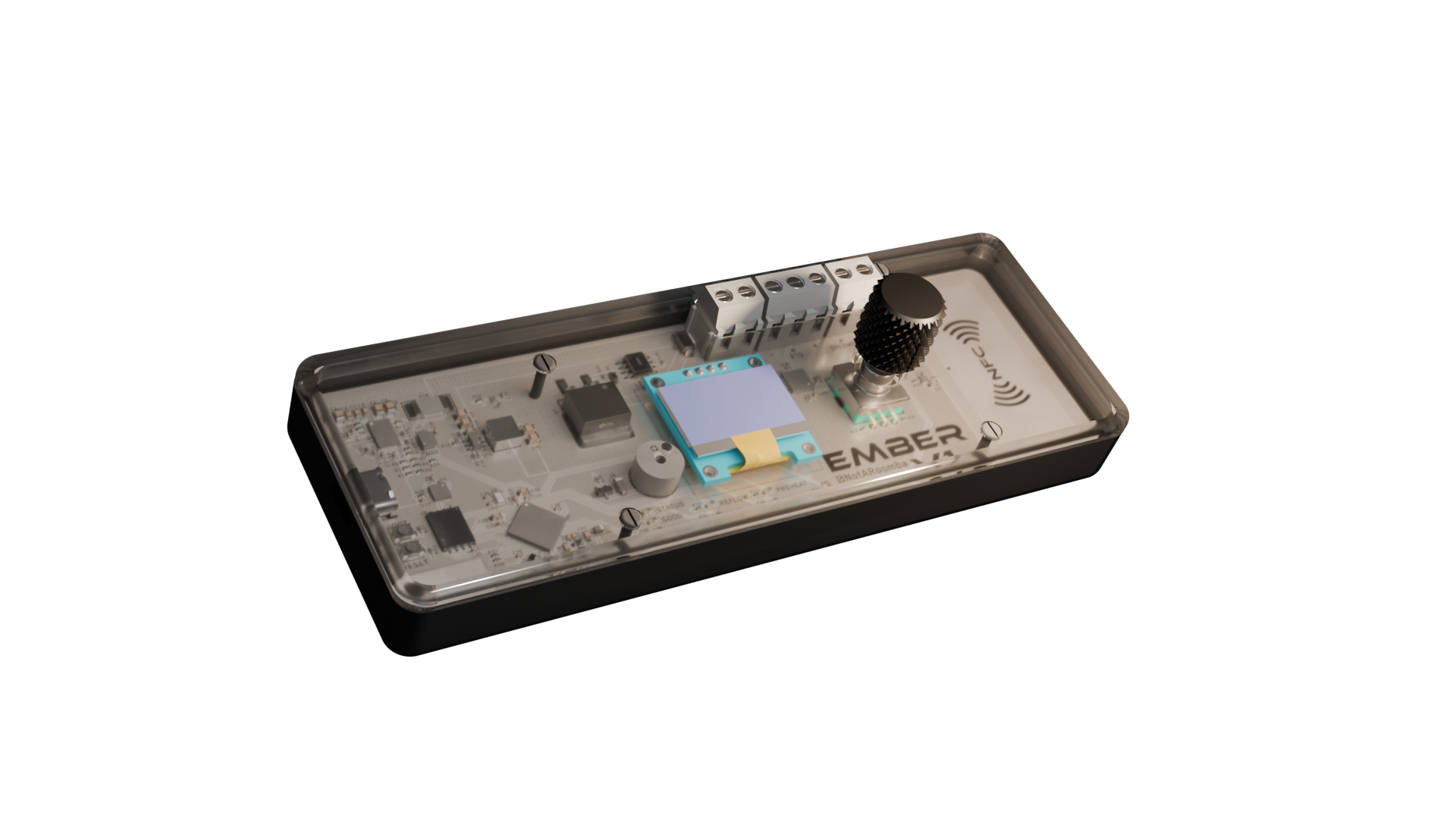
Heatbed
A custom hot plate powered by USB-C Power Delivery.
- Size
- 120 × 120 mm
- Copper layers
- 2
- Thickness
- 1.6 mm
- Parts
- 4
- Nets
- 5
- Pads
- 6
- Tracks, vias
- 0, 0
- Routed
- Not yet
- KiCad
- KiCad 9.0 (file 20241229)
- Created
- 14 Nov 2025
- Updated
- 27 Sep 2026
Overview
Heatbed is an open-source printed circuit board by notaroomba, from the notaroomba/ember repository on GitHub. It is a 2-layer board of 120 × 120 mm with 4 parts on 5 nets.
Its parts include 2 resistors and 2 connectors.
README
README.md
Ember
A high-performance USB-C powered reflow hotplate with Bluetooth connectivity and intelligent temperature control!
Key Features • PCB • Case • Heatbed • Credits • License
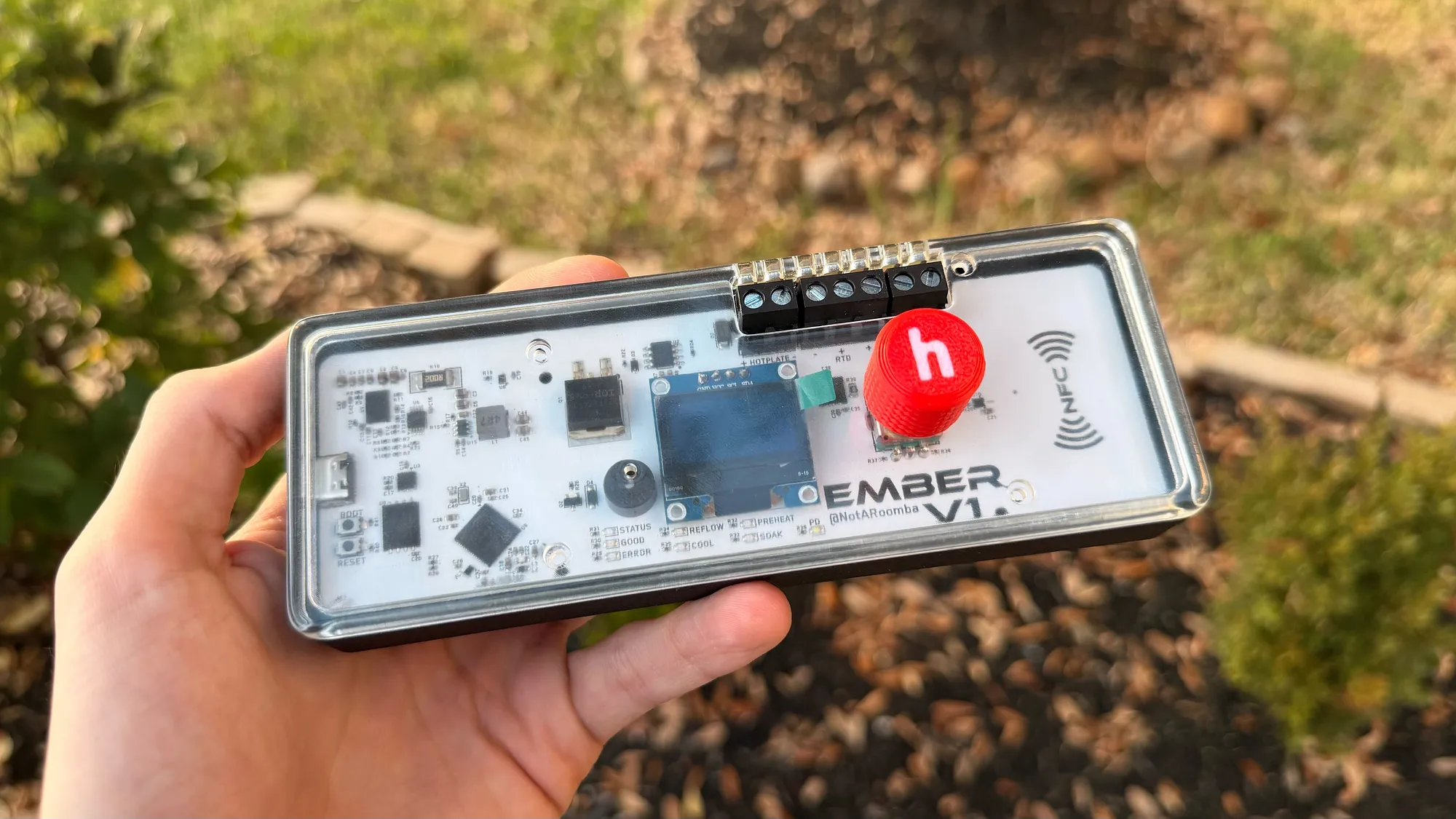
Key Features
- USB-C Power Delivery up to 100W (20V) using TI's TPS25730D
- STM32WB55CG microcontroller with Bluetooth support
- Large
400mm x 400mm200mm x 200mm120mm x 120mm (for now) flexible heatbed for big PCB reflow - Dual temperature sensing with MAX6675 thermocouple and PT1000 RTD
- OLED display with rotary encoder for easy control and preset management
- NFC support for wireless temperature profile transfer and preset storage
- Gate driver for precise PWM heatbed control
- Current and board temperature monitoring for safety
- 32MB Flash memory for graphics and data storage
- Portable design with custom acrylic / nylon case
PCB
Designed in KiCad!
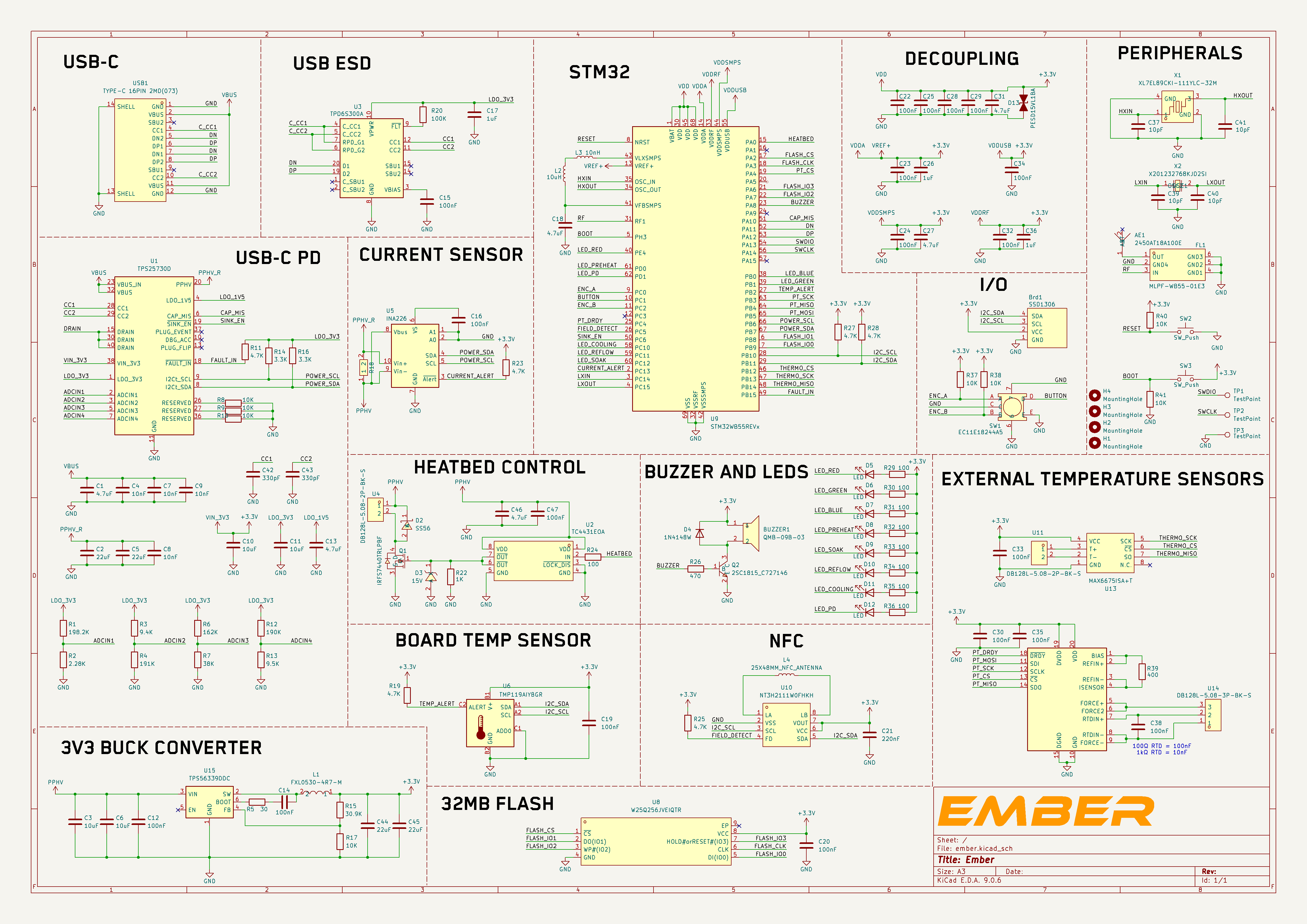
Schematic
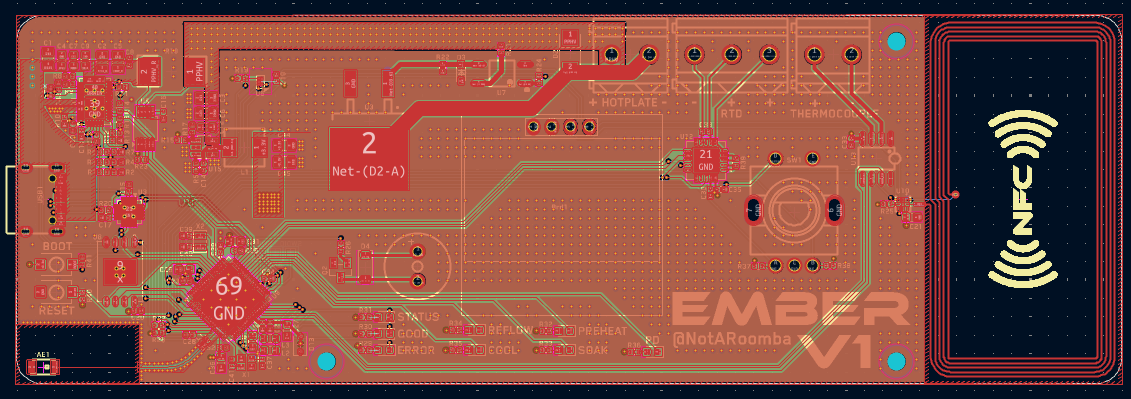
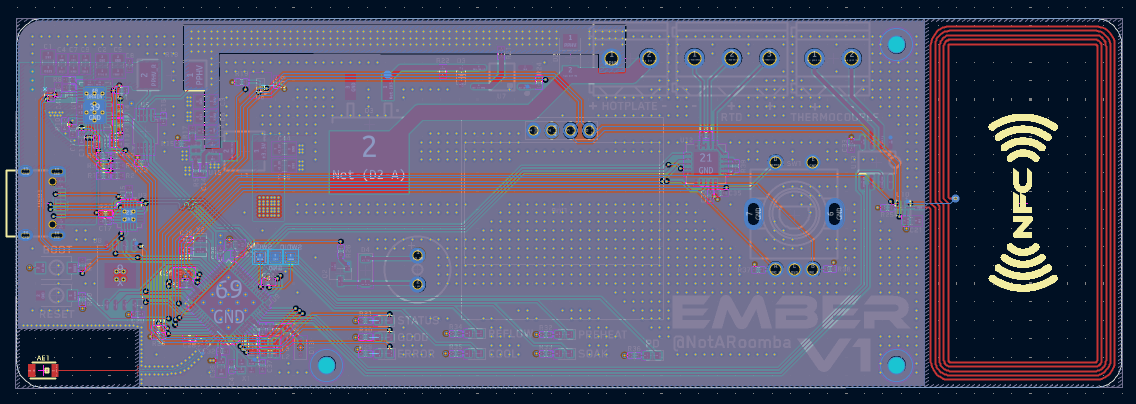
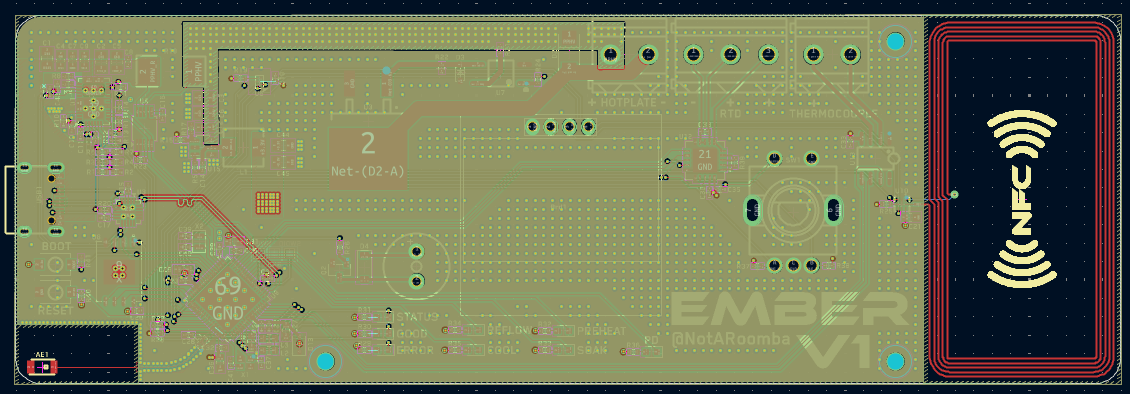
PCB Layout
Front:

Back:

Ground Plane:

Power Plane:
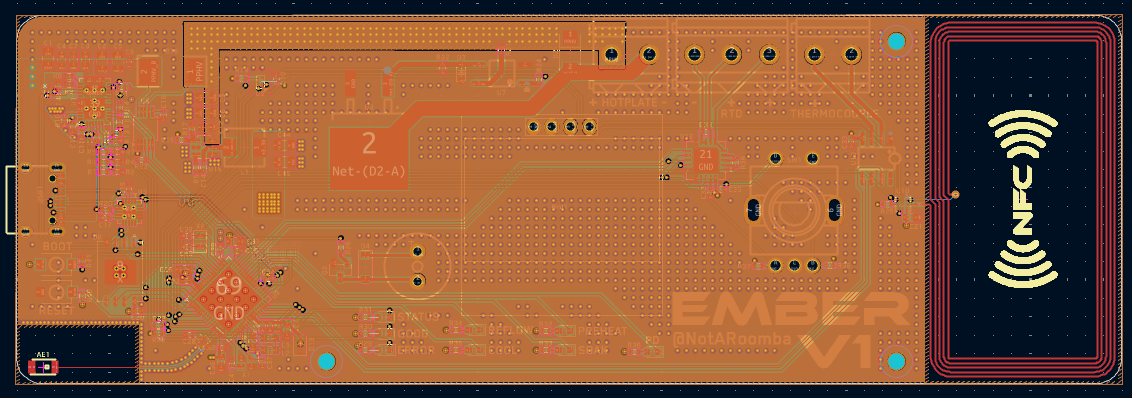
Board dimensions: 50mm x 150mm
Case
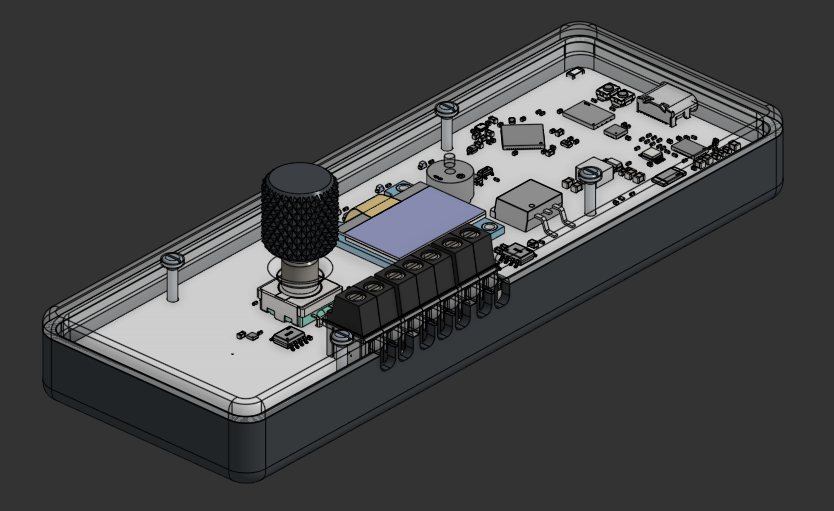
Custom designed case in OnShape with practical features:
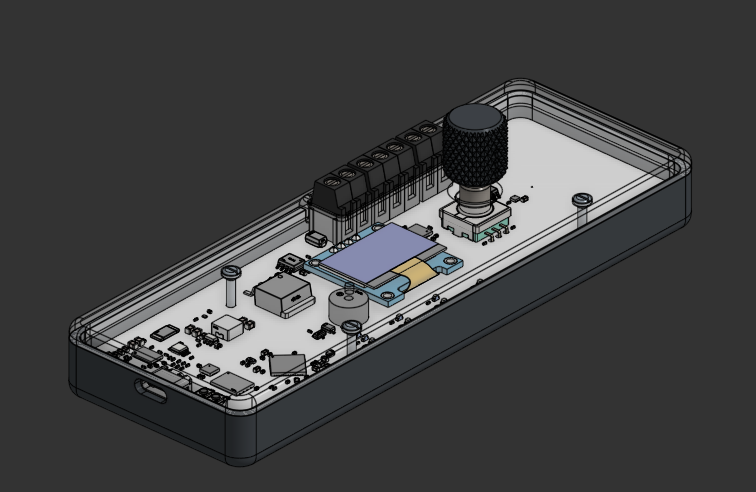
Features:
- USB-C port cutout with flush cable routing
- Screw terminal access for heatbed and temperature sensor connections
- Heatset inserts for secure assembly with slotted cylindrical head screws
- High-quality materials: PA11-HP Nylon base with acrylic top for visibility
- Rounded corners for aesthetics and safety
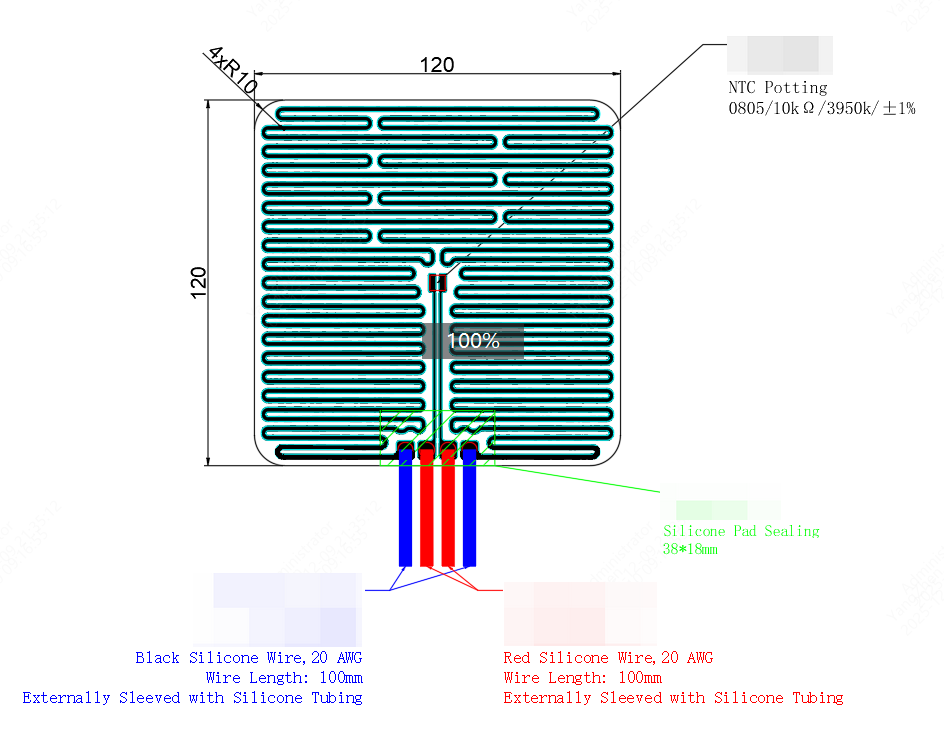
Heatbed
The heatbed uses JLCPCB's flexible heater technology for cost-effective large-area heating.
The flexible heater connects to the main PCB via screw terminals!
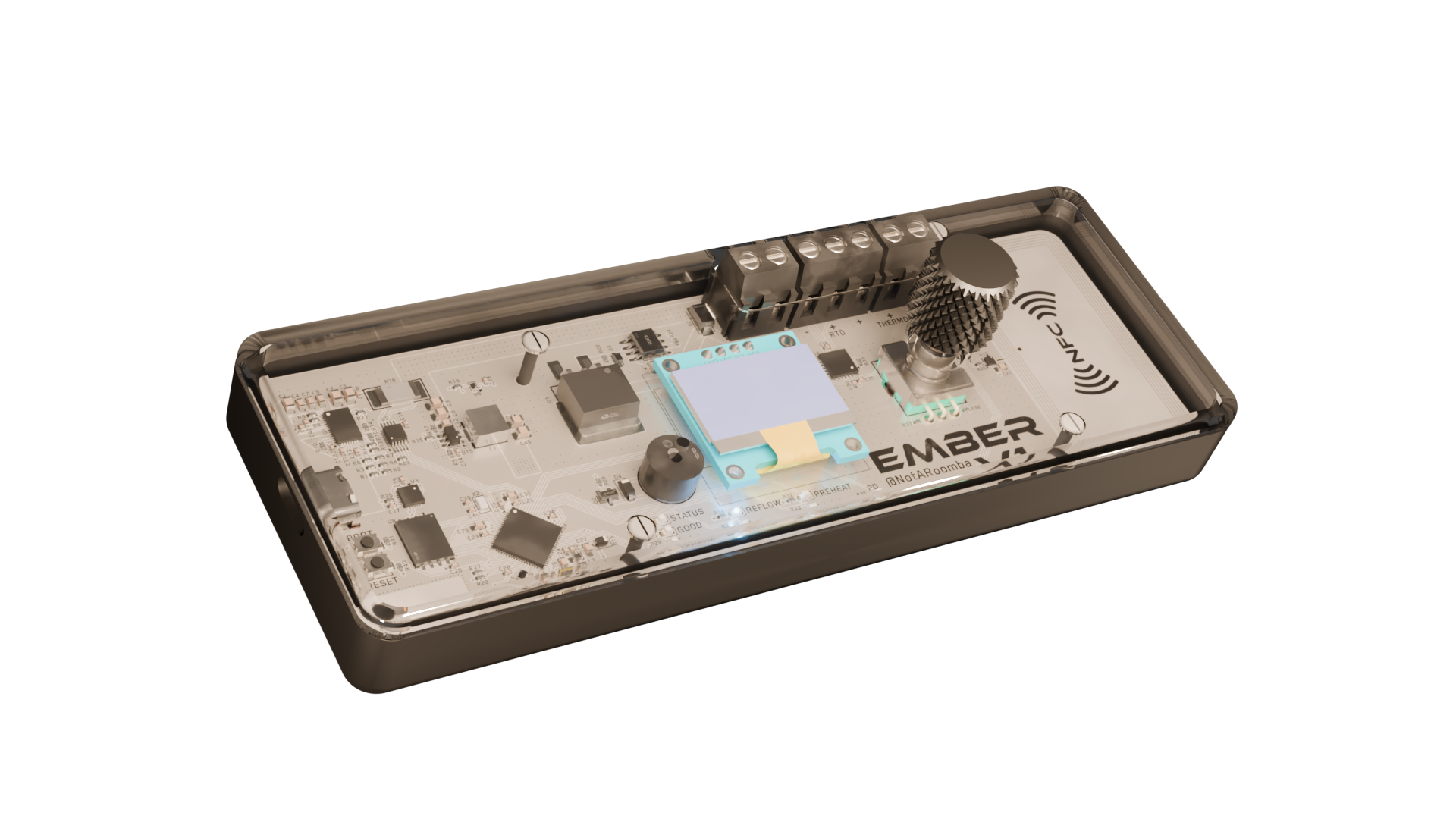
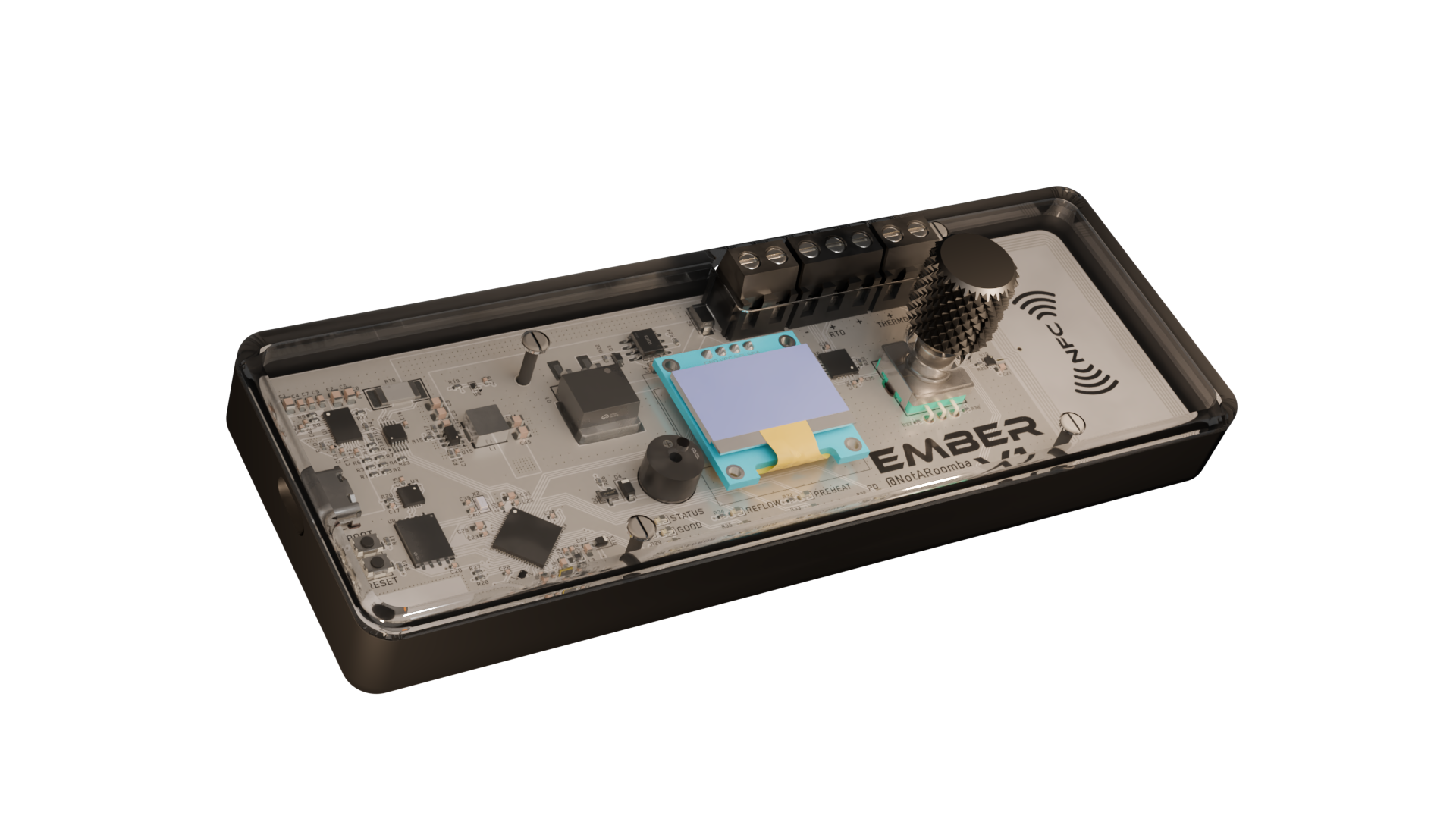
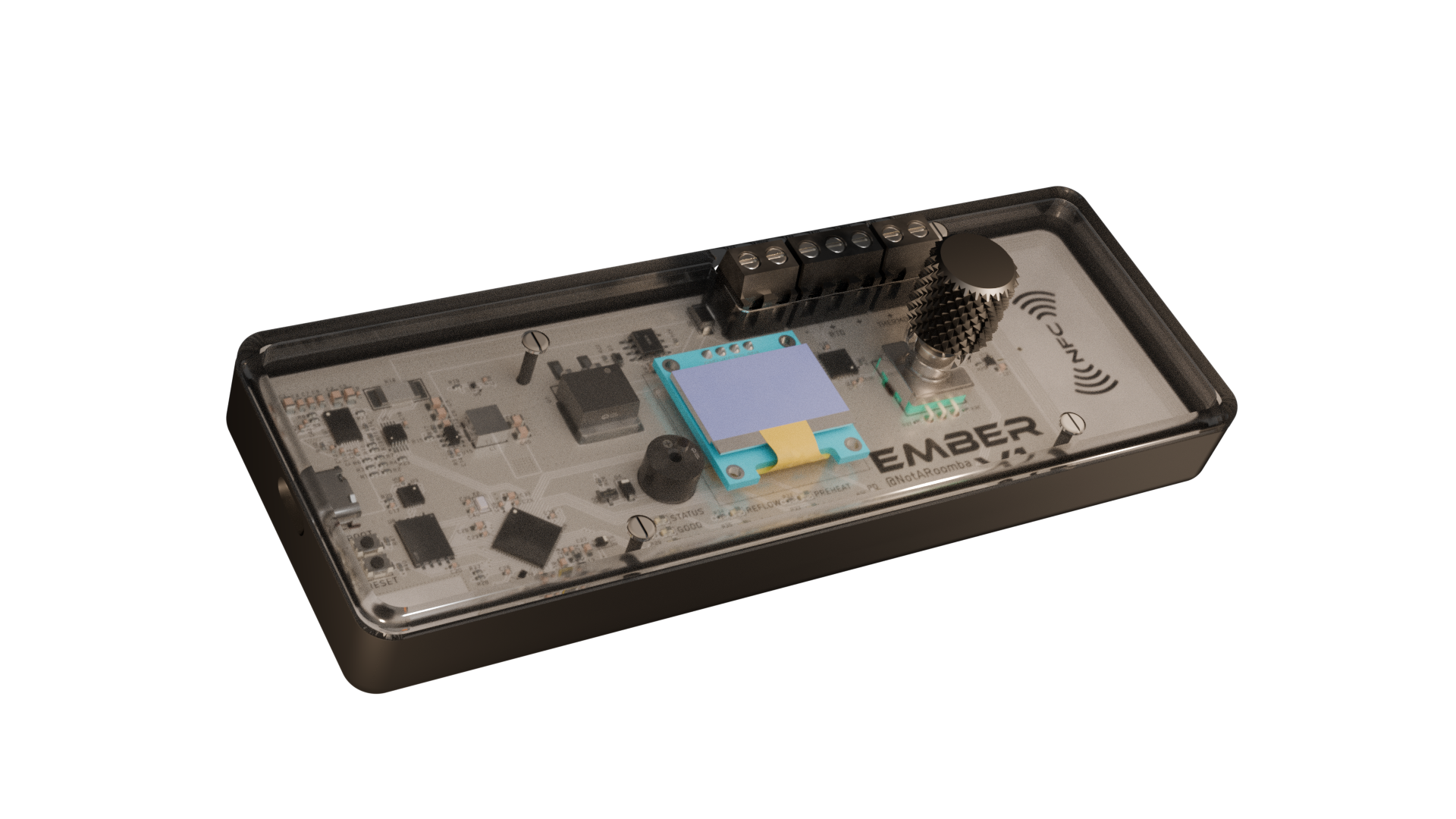
3D Renders
Credits
This project uses:
- KiCad
- OnShape for case design
- Blender for 3D renders
- STM32CubeMX
- Inspiration from this reflow hotplate project
- Arduino GFX Tool for OLED UI/UX design
You may also like...
- Cyberboard – A Raspberry Pi Pico-sized STM32 development board with Bluetooth
- Trace – A comprehensive PCB ruler with reference footprints
- CyberCard – A Cyberpunk themed NFC hacker card
- Niveles De Niveles – Real-time flood alert app
- Linea – An EMR tablet
- Tamaki – A cute HackPad
License
MIT
notaroomba.dev · GitHub @NotARoomba ·
Parts
4| Qty | Value | Footprint | References |
|---|---|---|---|
| 2 | Conn_01x01 | TestPoint:TestPoint_Pad_D4.0mm | J1, J2 |
| 2 | R | Resistor_SMD:R_0805_2012Metric | R1, R2 |
More from notaroomba/ember
1- 4 layers150 × 50 mm

Similar boards
- 2 layers18.5 × 26 mm

24g2usb rp2350zero
joypad-ai/joypad-os
Universal controller firmware for building adapters, dongles, and custom controllers.
4 parts1.7kApache-2.0 - 2 layers116 × 33 mm

- 2 layers19 × 18 mm

Daughter board
hackclub/OnBoard
💡 Join 1,000 teenagers and make your first PCB with a $100 grant!
4 parts915 - 2 layers24.8 × 24.8 mm

Nrf24 breakout
tardate/LittleArduinoProjects
a collection of "Little Electronic & Arduino Projects", most involving electronics or an Arduino in one way or another!
4 parts803MIT - 2 layers26 × 20 mm

Cap chain
drandyhaas/KiCadRoutingTools
A set of Python/Rust tools to aid routing in KiCad
4 parts744MIT - 2 layers34.7 × 20 mm

XG Station Power MSI
osy/XG_Mobile_Station
Open source eGPU dock for ROG Ally and ROG Flow
4 parts712CC-BY-4.0 - 2 layers20.3 × 24.5 mm

Jack power input
Luos-io/luos_engine
Open-source and real-time orchestrator for cyber-physical-systems, to easily design, test and deploy embedded applications and digital twins.
4 parts546MIT - 2 layers35.1 × 92.1 mm

SDEX2M2 MicroSD Express to M.2 NVMe Adapter for Switch 2 WIP
NVNTLabs/switch2-SDEX2M2
Micro SD Express to M.2 NVME Adapter for Nintendo Switch 2
4 parts542GPL-3.0
Questions
How big is the Heatbed PCB?
It measures 120 × 120 mm and has 2 copper layers, 1.6 mm thick.
What parts does the Heatbed use?
4 parts. The full list of its parts is on this page, with links to each part's symbol and footprint where PCBKit's library has them.
Where can I download the Heatbed KiCad files?
From the notaroomba/ember repository on GitHub, at the commit this page was made from: the board is hardware/heatbed/heatbed.kicad_pcb and its schematic hardware/board/ember.kicad_sch. PCBKit opens the board in the browser, with nothing to install.
Can I use the Heatbed design in my own project?
Its repository states no licence, so its author keeps all rights: ask notaroomba before reusing the design.