
2 layers65 × 120 mm
Bottom
not-sample-text/Proiect-Licenta
This repository represents the final version submitted for my Bachelor's Thesis.
52 parts1

This repository represents the final version submitted for my Bachelor's Thesis.
Top is an open-source printed circuit board by not-sample-text, from the not-sample-text/Proiect-Licenta repository on GitHub. It is a 2-layer board of 65 × 120 mm with 33 parts on 27 nets, routed with 152 tracks and 147 vias.
Its parts include 14 switches, 12 diodes and 2 connectors.
This repository represents the final version submitted for my Bachelor's Thesis.
Active development for this project has moved to ApexPad. Please refer to the new repository for the most recent updates, bug fixes, and feature development.
The PROS3 Macropad is a versatile, open-source 12-key macropad built around the powerful ESP32-S3. Designed as a university thesis project, it features a rotary encoder, OLED display, RGB underglow, and a complete software ecosystem for deep customization.
A collection of renders showcasing the hardware.
| Top Plate | Top Plate (Angled) |
|---|---|
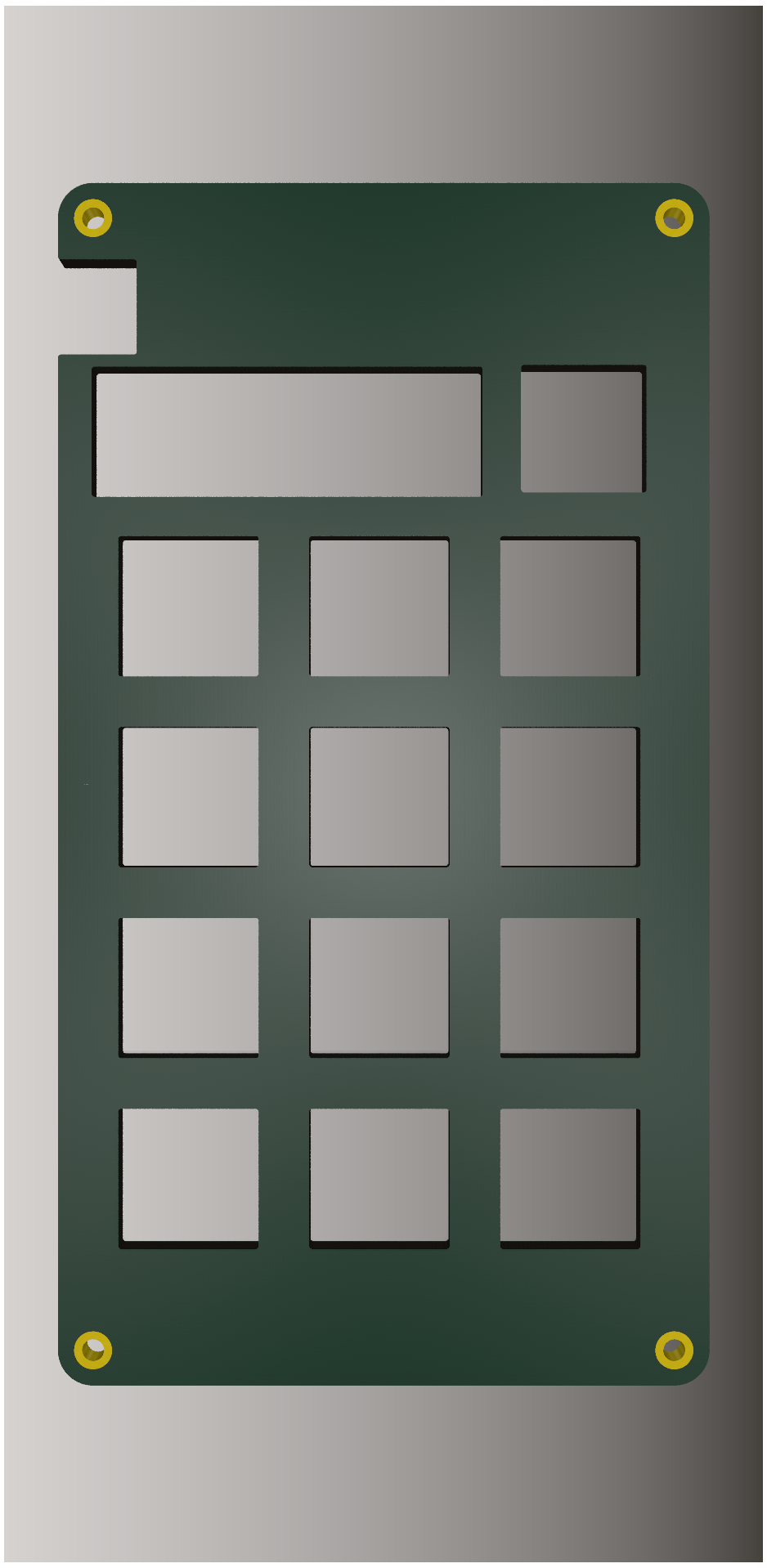 | 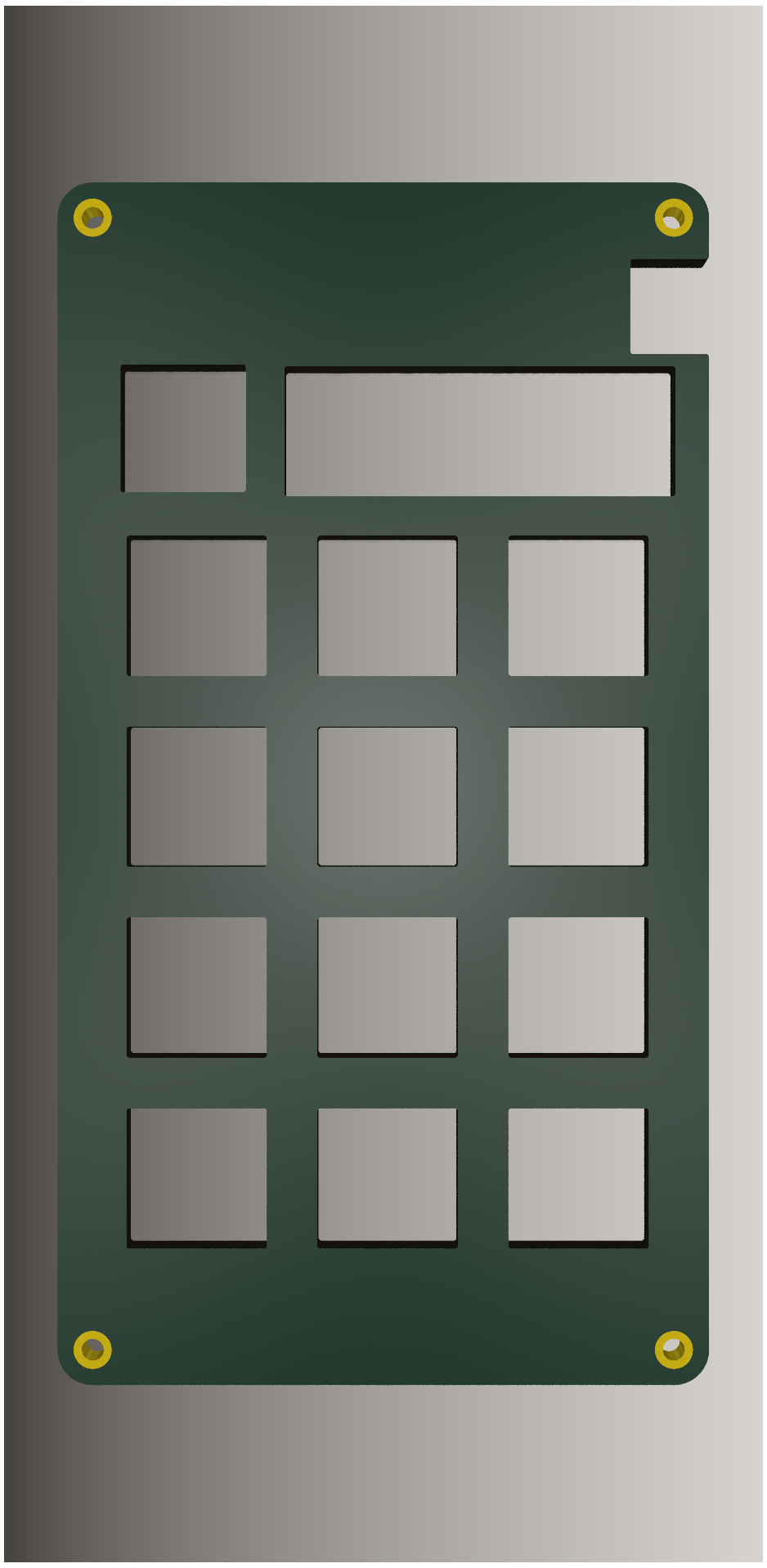 |
| Top View | Top (Angled) |
|---|---|
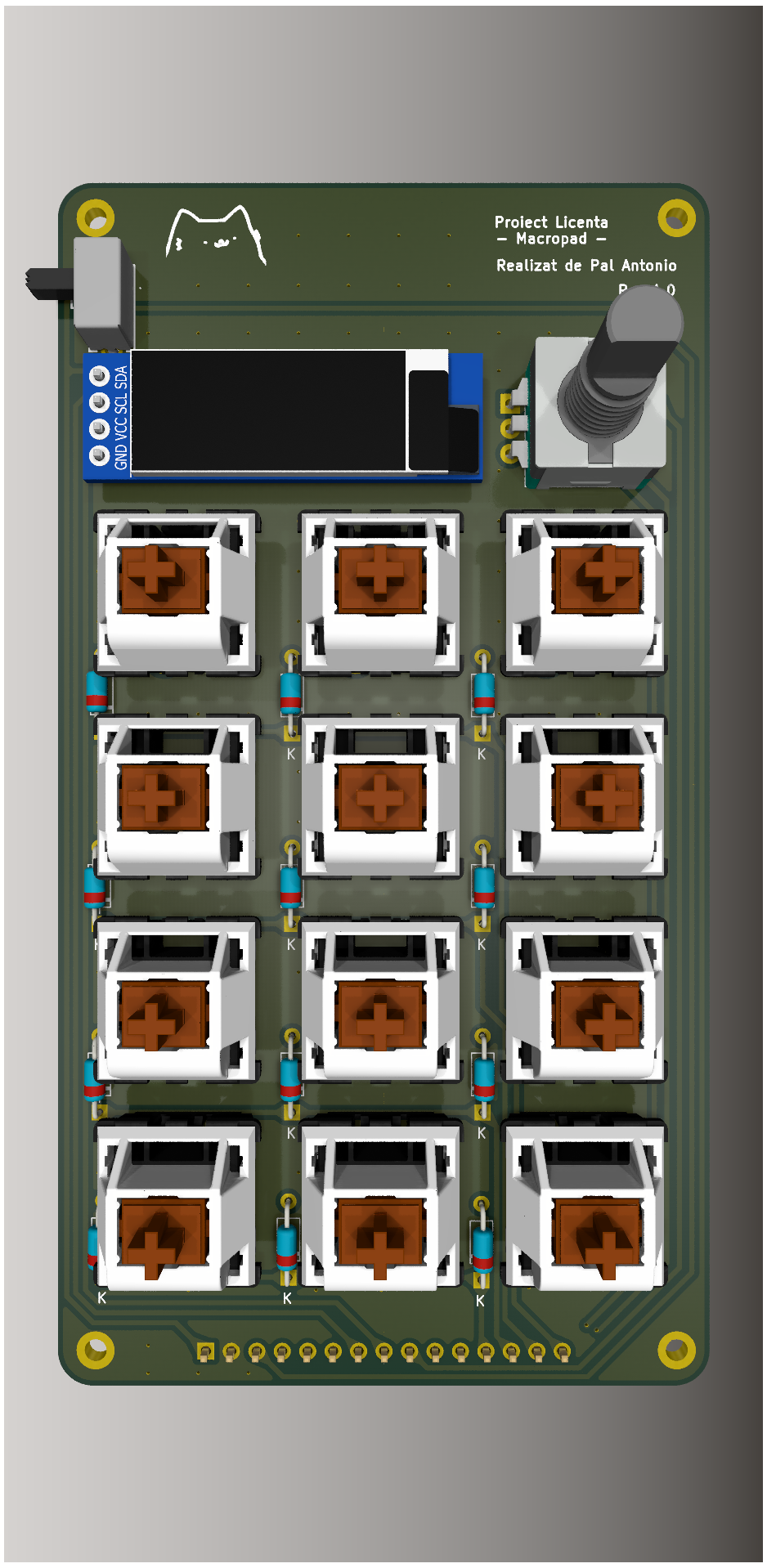 | 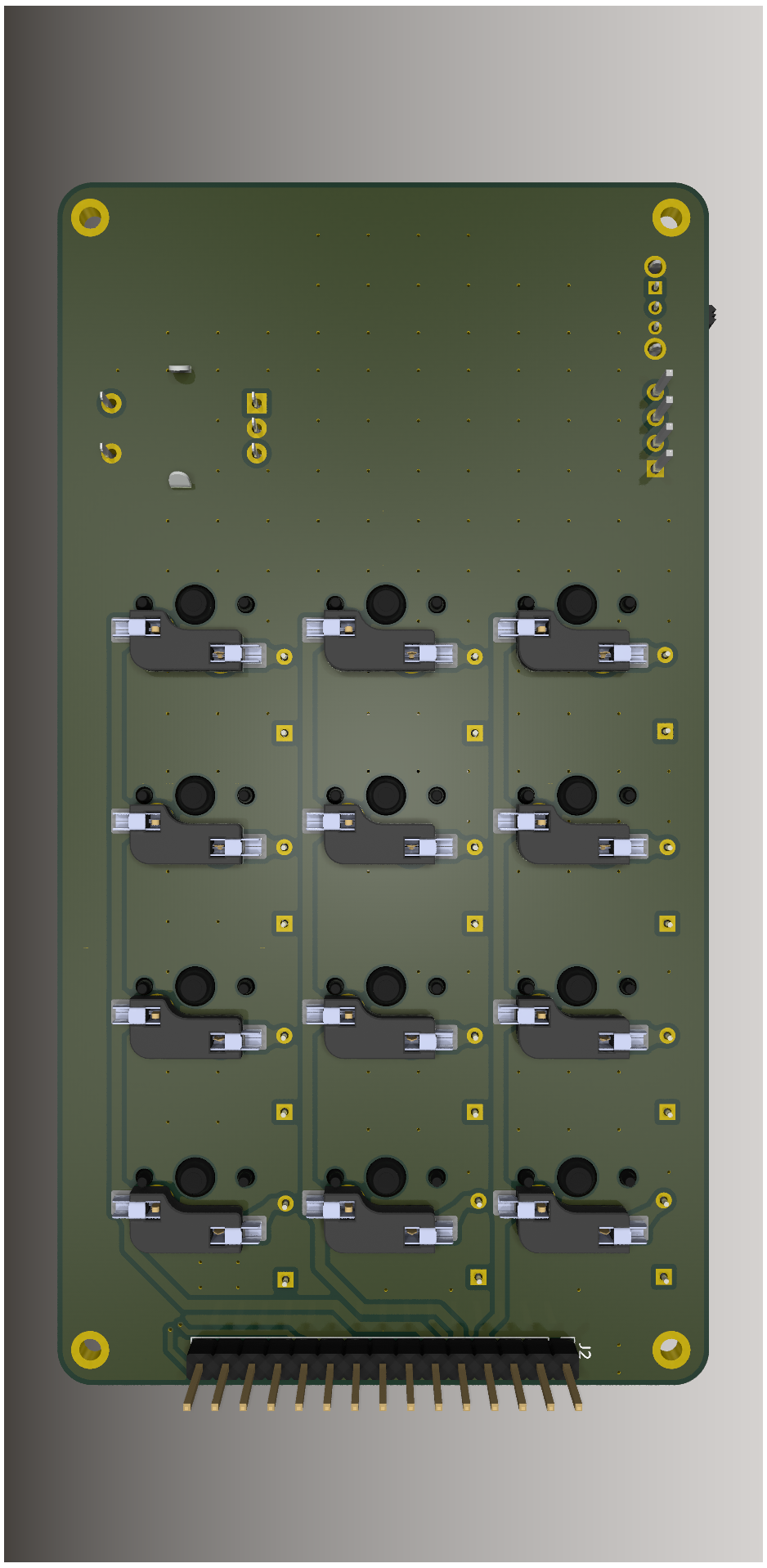 ! |
| Bottom Render | Bottom (Angled) |
|---|---|
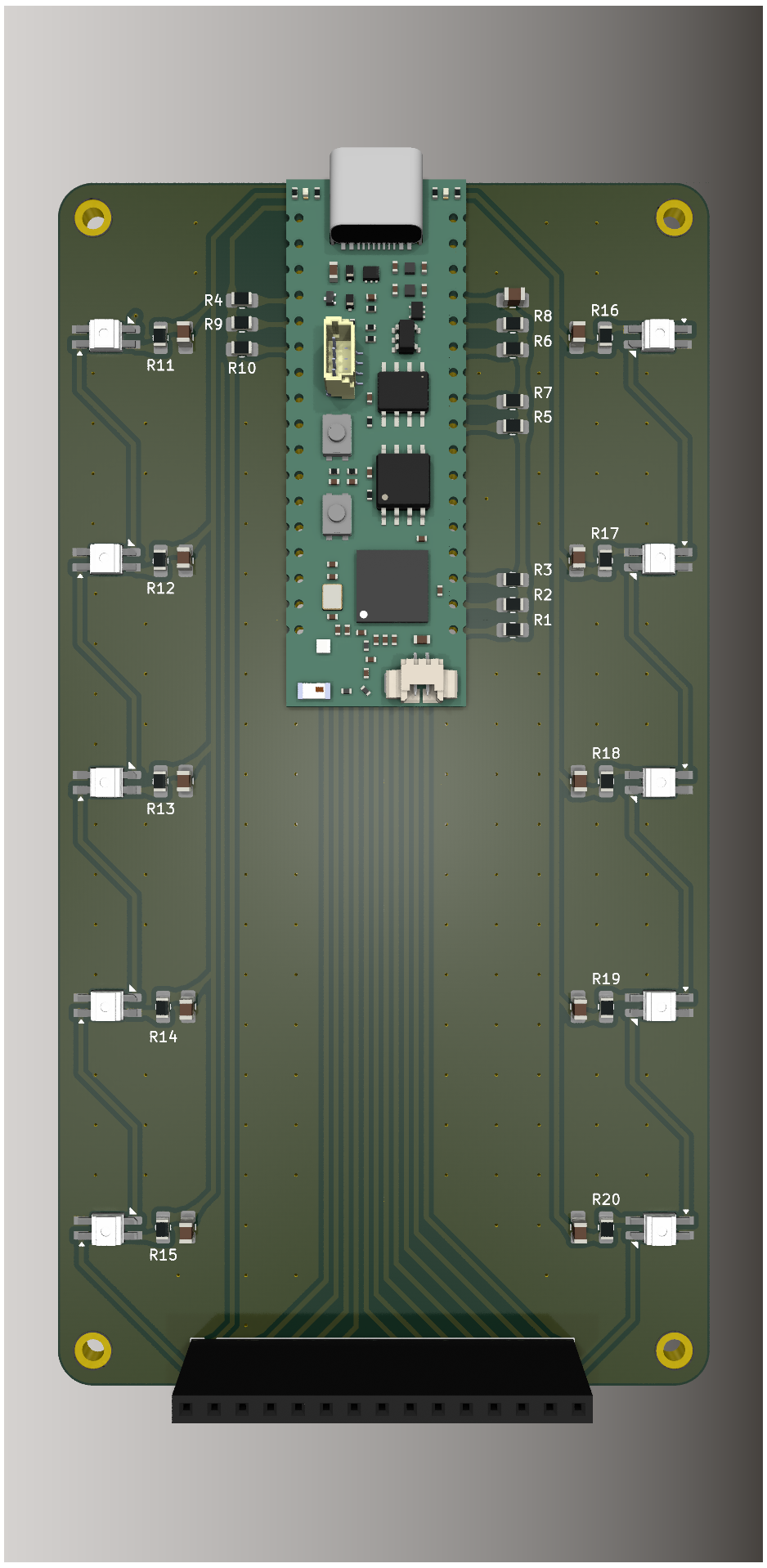 | 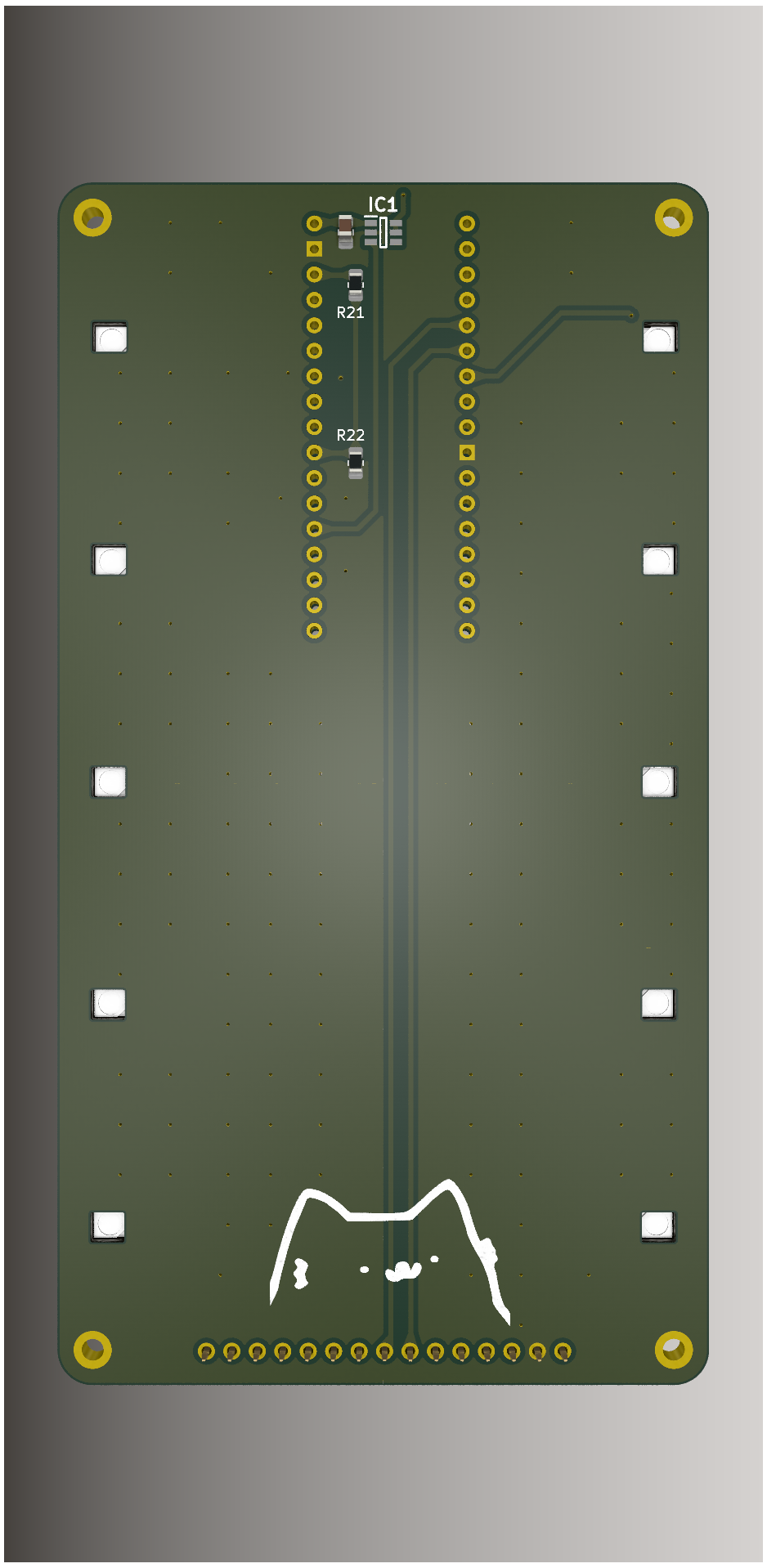 |
This repository contains the complete engineering files (hardware, firmware, and software) for a highly programmable macropad designed to streamline digital workflows.
The project is built on three pillars:
This architecture allows the macropad to go beyond simple keystrokes and act as a powerful automation tool.
For a complete technical deep-dive, please see the Full Technical Documentation. (Pentru documentația în limba română, consultați acest document).
hardware/ directory to fabricate the PCBs and source the components from the Bill of Materials.firmware/ directory to the ESP32-S3.config.json file to your Downloads folder.For a detailed, step-by-step guide, please refer to the Complete User Workflow section in the documentation.
This project was made possible by the following open-source projects and communities:
The hardware and software are provided as-is under a permissive license. This project includes components from third-party libraries which are subject to their own licenses. Please see the individual source files for more details.
| Qty | Value | Footprint | References |
|---|---|---|---|
| 12 | 1N4148 | Top-Footprints:D_DO-35_SOD27_P7.62mm_Horizontal | D1, D2, D3, D4, D5, D6, D7, D8, D9, D10, D11, D12 |
| 12 | Keyswitch | Top-Footprints:MX_Hotswap_1.00u | S1, S2, S3, S4, S5, S6, S7, S8, S9, S10, S11, S12 |
| 4 | MountingHole_Pad | MountingHole:MountingHole_2.2mm_M2_DIN965_Pad | H1, H2, H3, H4 |
| 1 | Conn_01x15 | Top-Footprints:PinHeader_1x15_P2.54mm_Vertical | J2 |
| 1 | OLED_128x32 | Top-Footprints:OLED_128x32 | J1 |
| 1 | RotaryEncoder_Switch | Top-Footprints:Encoder_EC11_MX | SW2 |
| 1 | SLW-864574-5A-RA-N-D | Top-Footprints:SLW8645745ARAND | SW1 |
The 32 most common of 33 parts.

hoglet67/RGBtoHDMI
Bare-metal Raspberry Pi project that provides pixel-perfect sampling of Retro Computer RGB/YUV video and conversion to HDMI

mntmn/amiga2000-gfxcard
MNT VA2000, an Open Source Amiga 2/3/4000 Graphics Card (Zorro II/III), written in Verilog

hackclub/OnBoard
💡 Join 1,000 teenagers and make your first PCB with a $100 grant!

Arrow-air/project-quiver
Project Quiver documentation, designs, and project artifacts.

ozel/DIY_particle_detector
A mobile low-cost spectrometer for measuring radioactivity and the energy of ionising radiation like alpha particles and electrons

BlueAndi/Pixelix
Full RGB LED matrix, based on an ESP32 and WS2812B LEDs or emulated LEDs on TFT.

jrsteensen/OpenHornet
OpenHornet 1:1 F/A-18C Simulator Repository

It measures 65 × 120 mm and has 2 copper layers, 1.6 mm thick.
33 parts. The full list of its parts is on this page, with links to each part's symbol and footprint where PCBKit's library has them.
From the not-sample-text/Proiect-Licenta repository on GitHub, at the commit this page was made from: the board is hardware/pcb/top/top.kicad_pcb and its schematic hardware/pcb/bottom/bottom.kicad_sch. PCBKit opens the board in the browser, with nothing to install.
Its repository states no licence, so its author keeps all rights: ask not-sample-text before reusing the design.
