2 layers30 × 70 mm

 mzanetti/alfeedo3
Smart, Open-Source Pet Feeding.
Alfeedo base is an open-source printed circuit board by mzanetti, from the mzanetti/alfeedo repository on GitHub, published under the GPL-3.0 licence. It is a 2-layer board of 70 × 50 mm with 17 parts on 41 nets, routed with 142 tracks and 0 vias.
Its parts include 3 ICs, 3 connectors, 1 capacitor and 1 resistor. It belongs with the ESP32 and ESP8266 boards of this library.
A fully featured, smart home integrated cat feeder.
This repository contains the firmware for the 3D printed cat feeder Alfeedo.
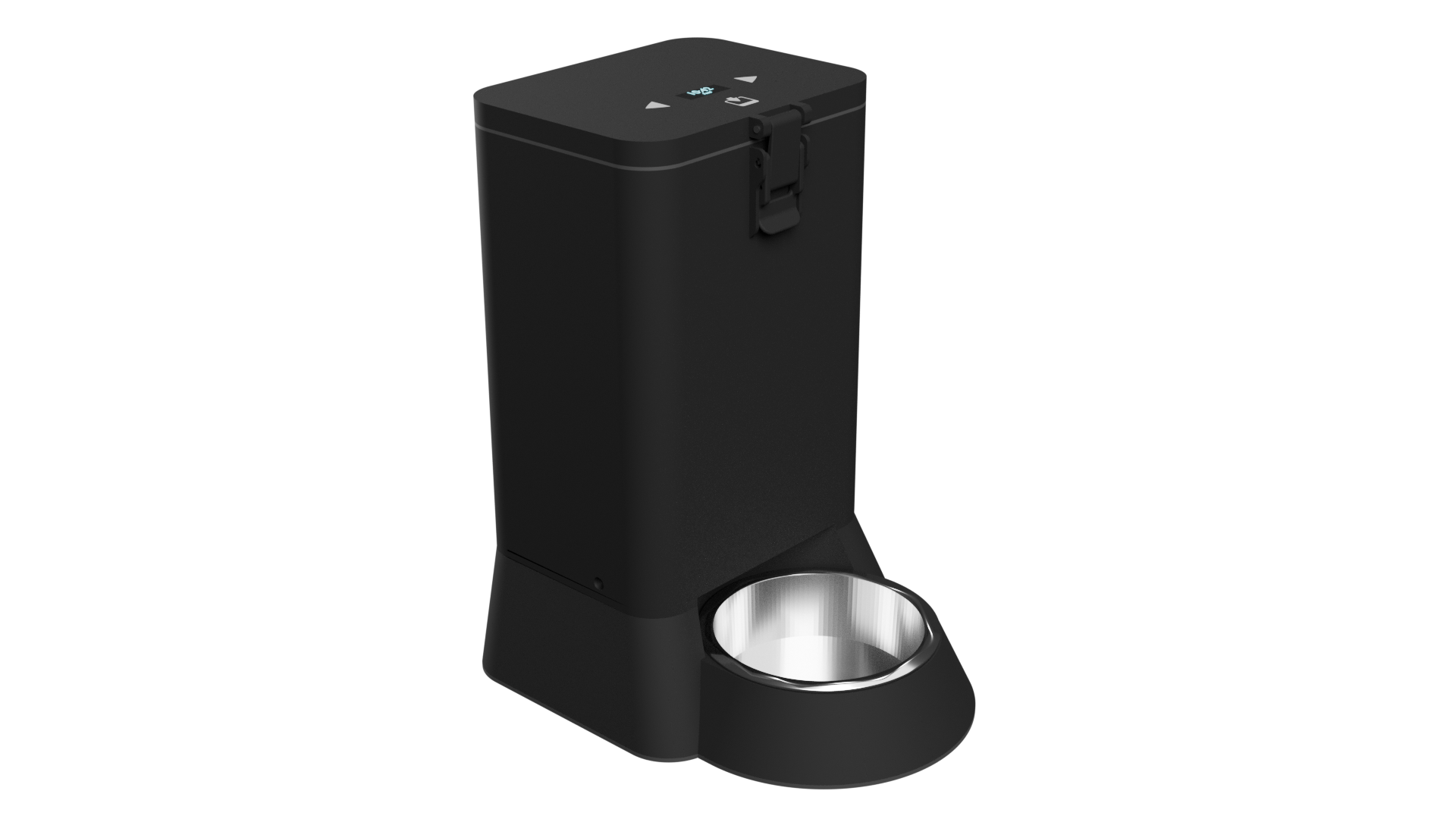
| Main view | Timer settings | Logs | Settings |
|---|---|---|---|
 | 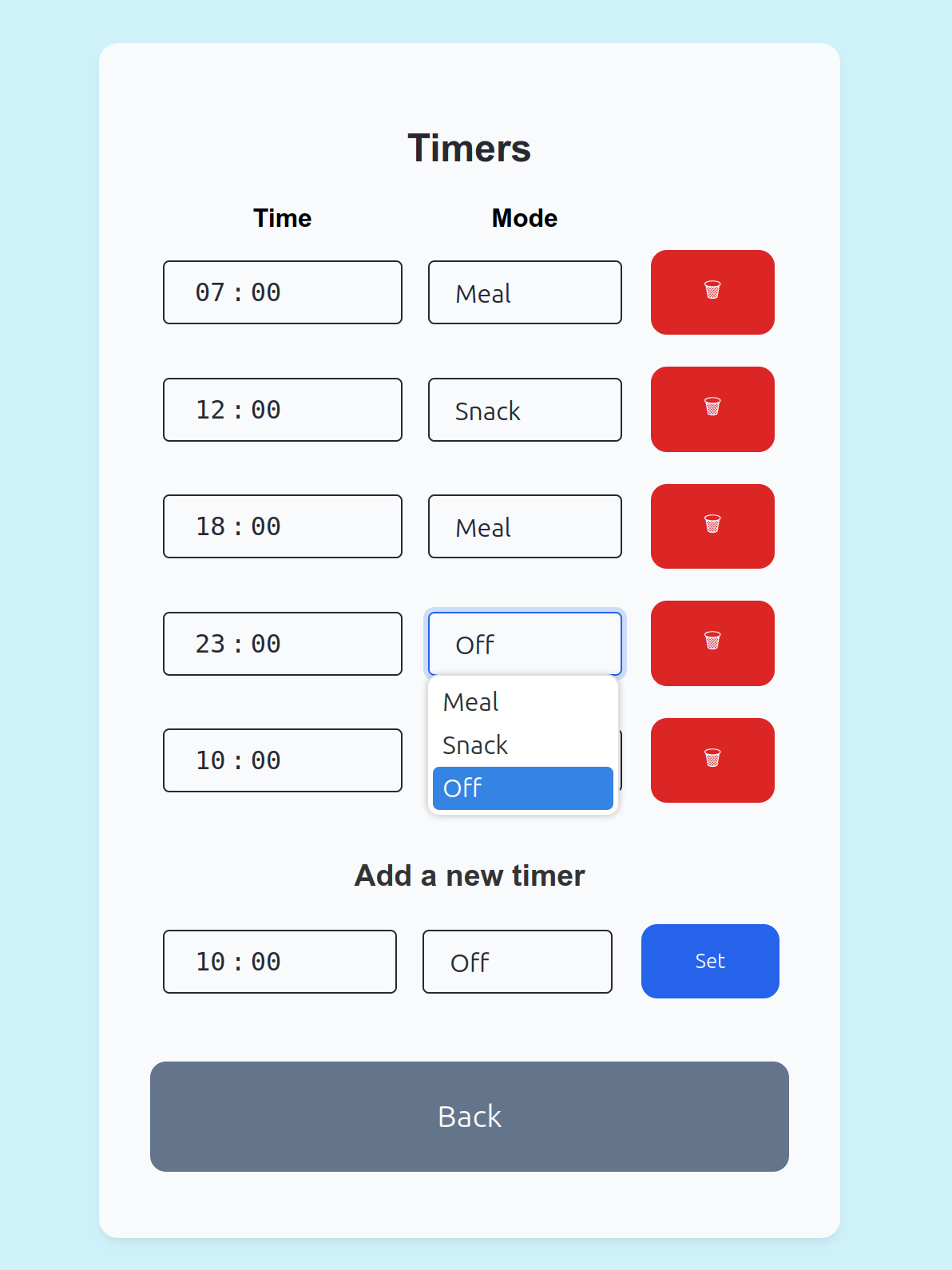 | 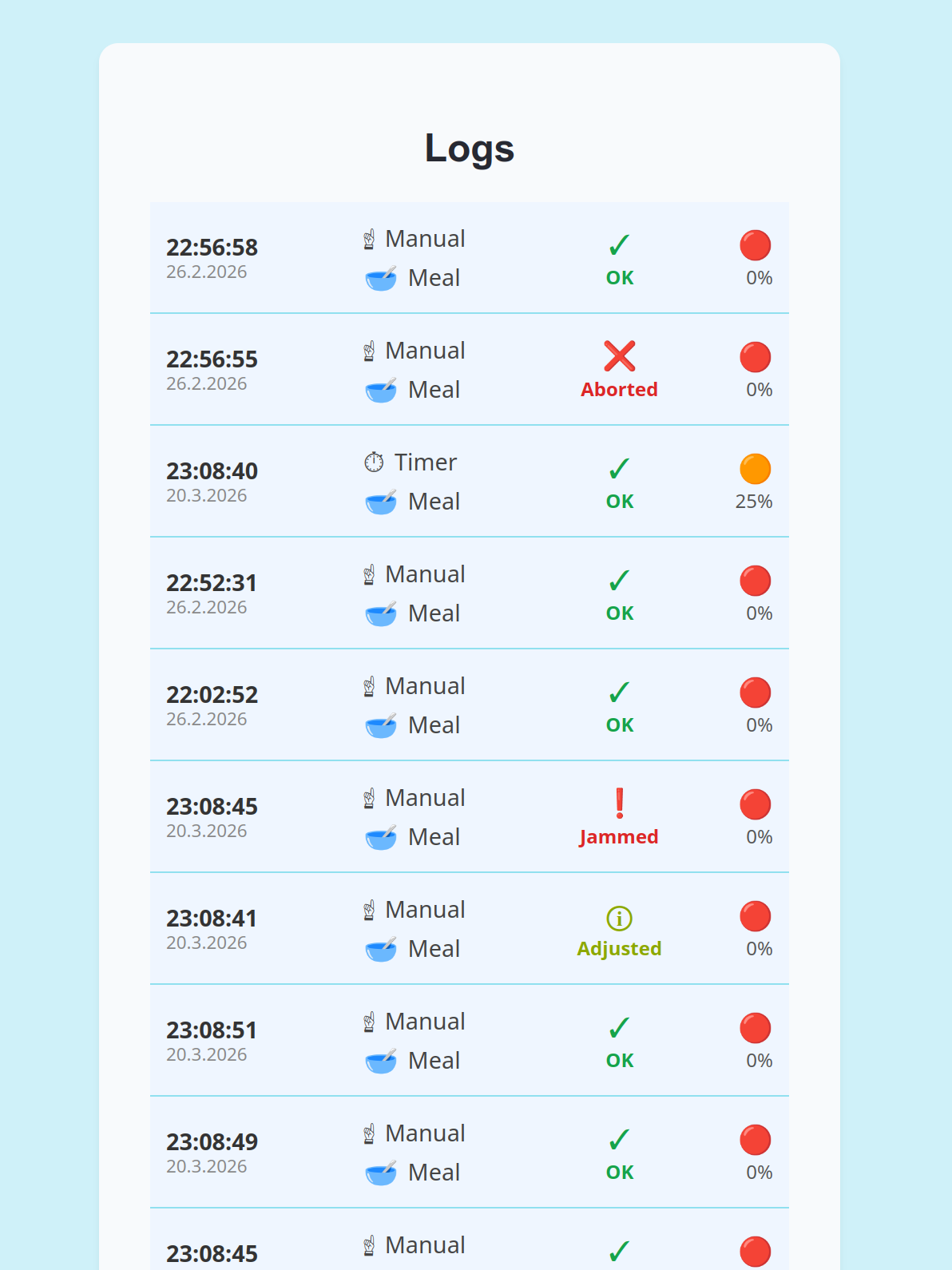 | 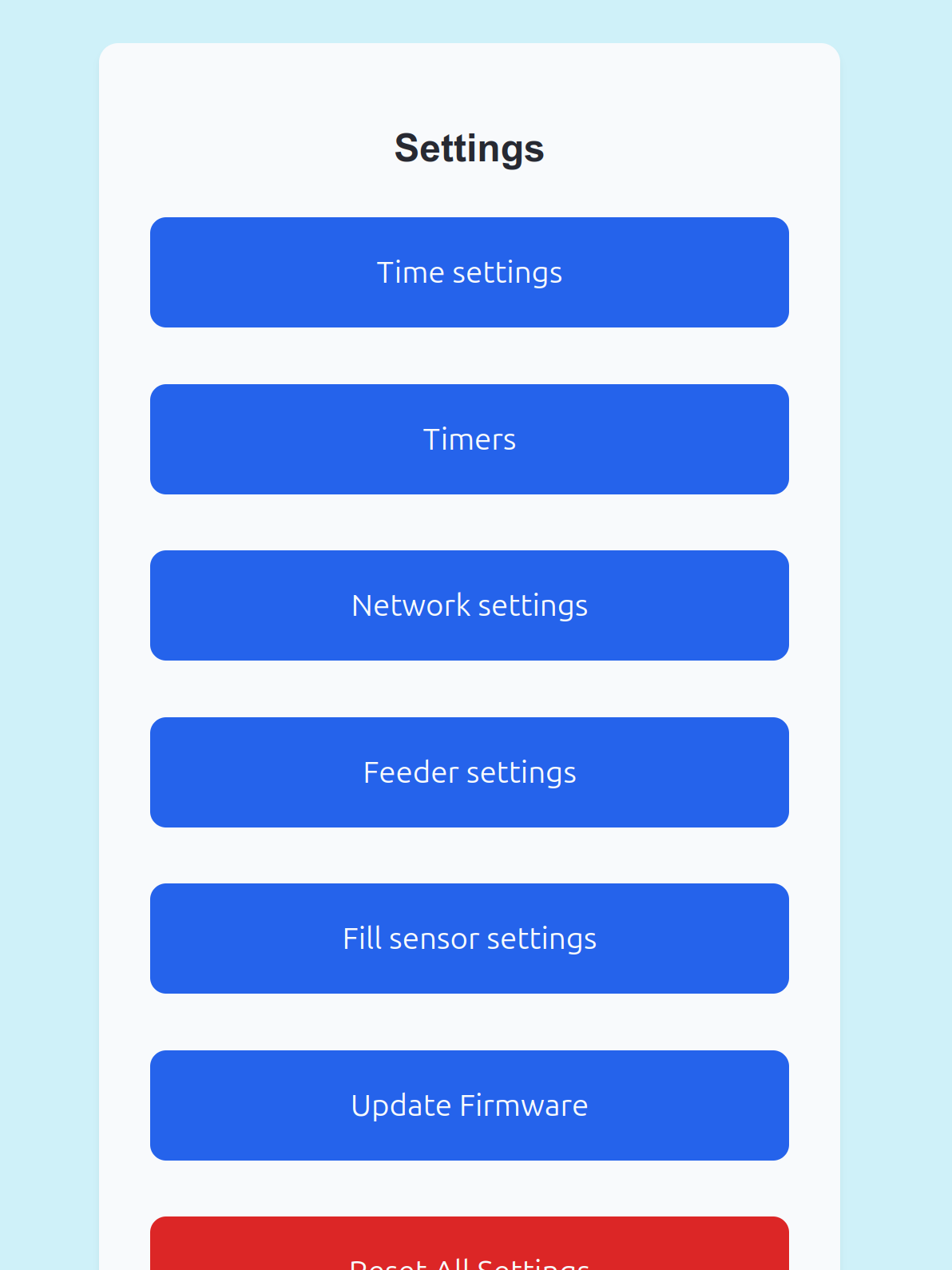 |
3D print model files along with a bill of materials are available on Makerworld.
Follow print and assembly instructions provided with the model files.
Electronics wiring can be simplified by ordering the Alfeedo PCB using the provided Gerber files in pcb/.
Flash the device using the web flasher.
Note that the provided firmware assumes wiring to look like on the Alfeedo PCB. If instead you prefer using a different setup, you'll have to build the firmware yourself and adjust the pins in hwsettings.h.
This project is based on platformio.
| Qty | Value | Footprint | References |
|---|---|---|---|
| 4 | MountingHole | MountingHole:MountingHole_2.2mm_M2 | H1, H2, H3, H4 |
| 1 | 100µF | Capacitor_THT:CP_Radial_D8.0mm_P2.50mm | C1 |
| 1 | 12V Step-Up | My Parts:12V Step-up | U1 |
| 1 | 1K | Resistor_THT:R_Axial_DIN0207_L6.3mm_D2.5mm_P7.62mm_Horizontal | R1 |
| 1 | ESP32 NodeMCU | My Parts:NodeMCU CH340 | U4 |
| 1 | LOGO | AlfeedoLibrary:logo_small | G*** |
| 1 | LOGO | AlfeedoLibrary:logo | G*** |
| 1 | Lid Port | Connector_IDC:IDC-Header_2x04_P2.54mm_Vertical | U2 |
| 1 | MOTOR | Connector_JST:JST_XH_B4B-XH-A_1x04_P2.50mm_Vertical | J6 |
| 1 | PWR | Connector_JST:JST_XH_B2B-XH-A_1x02_P2.50mm_Vertical | J4 |
| 1 | RES | Connector_JST:JST_XH_B3B-XH-A_1x03_P2.50mm_Vertical | J1 |
| 1 | UART_1 | Jumper:SolderJumper-2_P1.3mm_Bridged_RoundedPad1.0x1.5mm | JP2 |
| 1 | UART_2 | Jumper:SolderJumper-2_P1.3mm_Bridged_RoundedPad1.0x1.5mm | JP1 |
| 1 | ~ | My Parts:TMC2209 | TMC2209 |


hoglet67/RGBtoHDMI
Bare-metal Raspberry Pi project that provides pixel-perfect sampling of Retro Computer RGB/YUV video and conversion to HDMI


hackclub/OnBoard
💡 Join 1,000 teenagers and make your first PCB with a $100 grant!

DDeGonge/OS-ARM
This arm is not industrial and it will not be fast, but that is not my goal. But it will hopefully be a very nice looking arm fully capable of 6dof motion, cheap enough to keep it accessable but capable enough to…


It measures 70 × 50 mm and has 2 copper layers, 1.6 mm thick.
17 parts. The full list of its parts is on this page, with links to each part's symbol and footprint where PCBKit's library has them.
From the mzanetti/alfeedo repository on GitHub, at the commit this page was made from: the board is pcb/alfeedo-base/alfeedo-base.kicad_pcb and its schematic pcb/alfeedo-base/alfeedo-base.kicad_sch. PCBKit opens the board in the browser, with nothing to install.
Its repository publishes it under the GPL-3.0 licence: you may reuse it on that licence's terms (keep the author's notice, and for a copyleft licence share your changes alike).