2 layers20.5 × 24.8 mm

 marioguzzzman/diy-shell.phone
Sea Shells, She Tells unfolds as an artistic research project, developing both an artwork, an installation of the Shetells artwork - and a toolkit - the DIY Shell Phone.
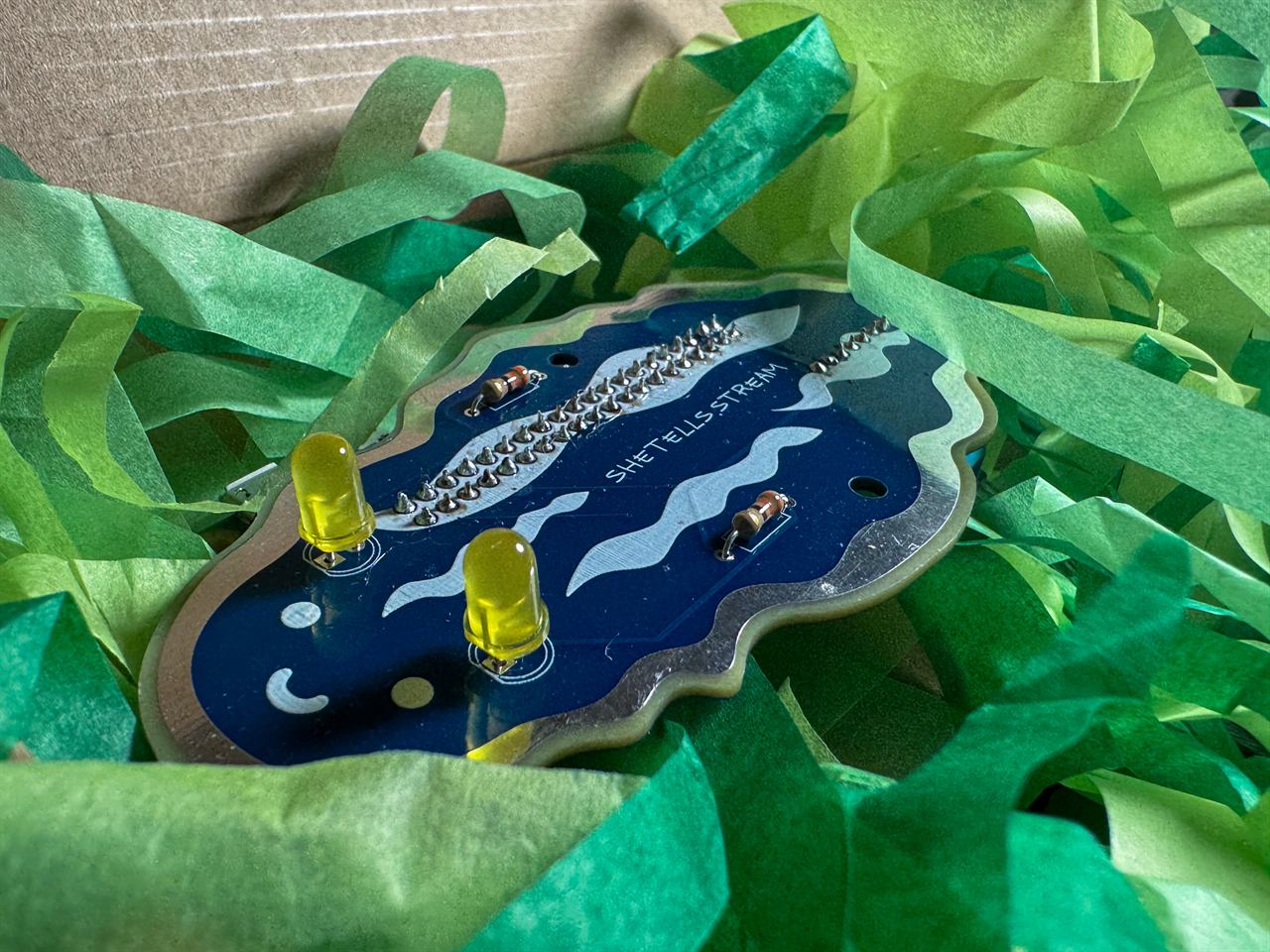
Shellphone sound snail is an open-source printed circuit board by marioguzzzman, from the marioguzzzman/diy-shell.phone repository on GitHub, published under the MIT licence. It is a 2-layer board of 106.5 × 54.4 mm with 8 parts on 36 nets, routed with 56 tracks and 4 vias.
Its parts include 2 resistors, 2 diodes and 2 connectors. It belongs with the audio and music boards of this library.
This repository is the open-source reference for the DIY Shell Phone, so anyone can build their own.
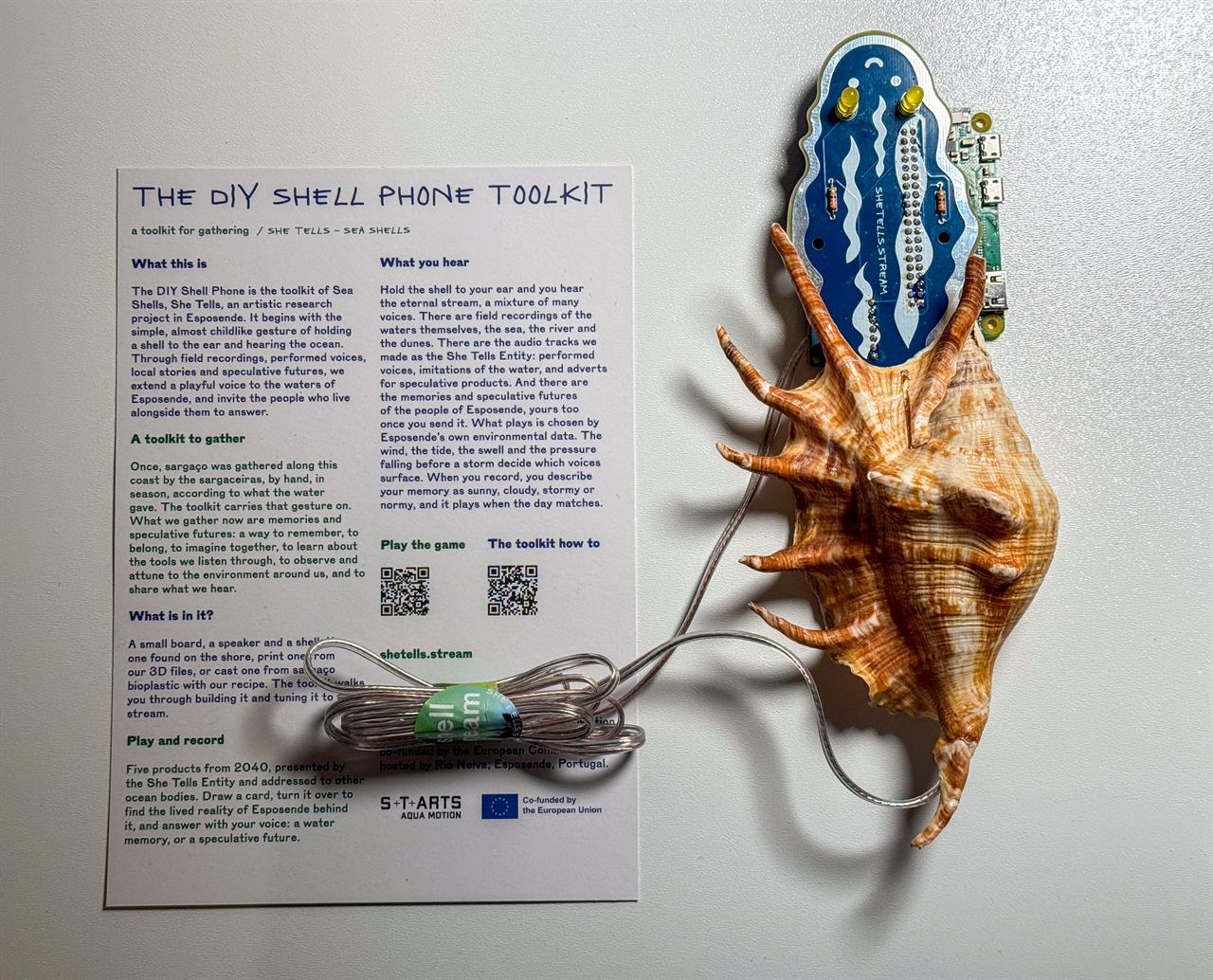
The DIY Shell Phone is the toolkit of Sea Shells, She Tells, an artistic research project in Esposende. It begins with the simple, almost childlike gesture of holding a shell to the ear and hearing the ocean. Through field recordings, performed voices, local stories and speculative futures, we extend a playful voice to the waters of Esposende, and invite the people who live alongside them to answer.
Building a kit? Start with the Assembly guide, then the Wi-Fi setup.
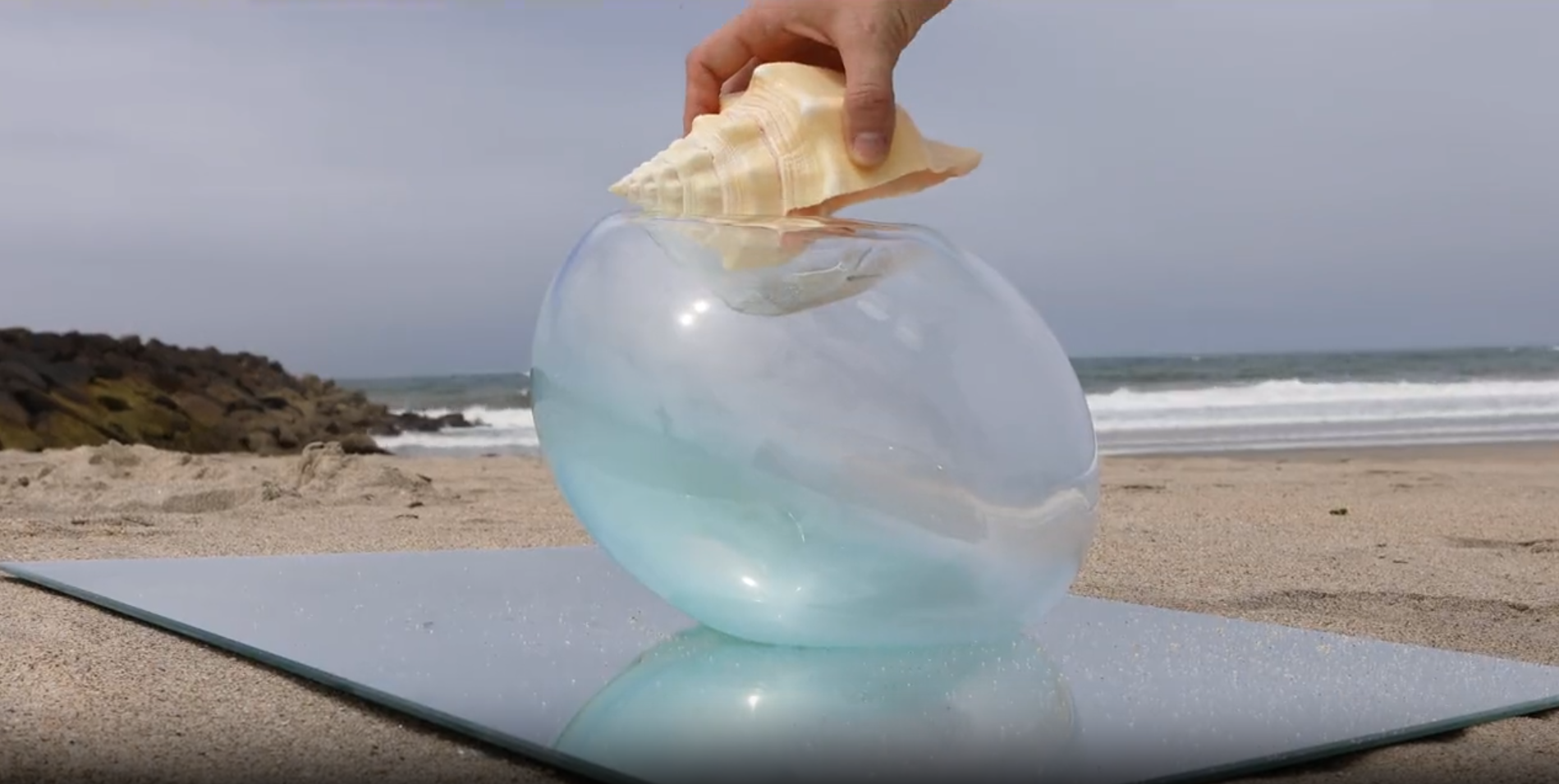
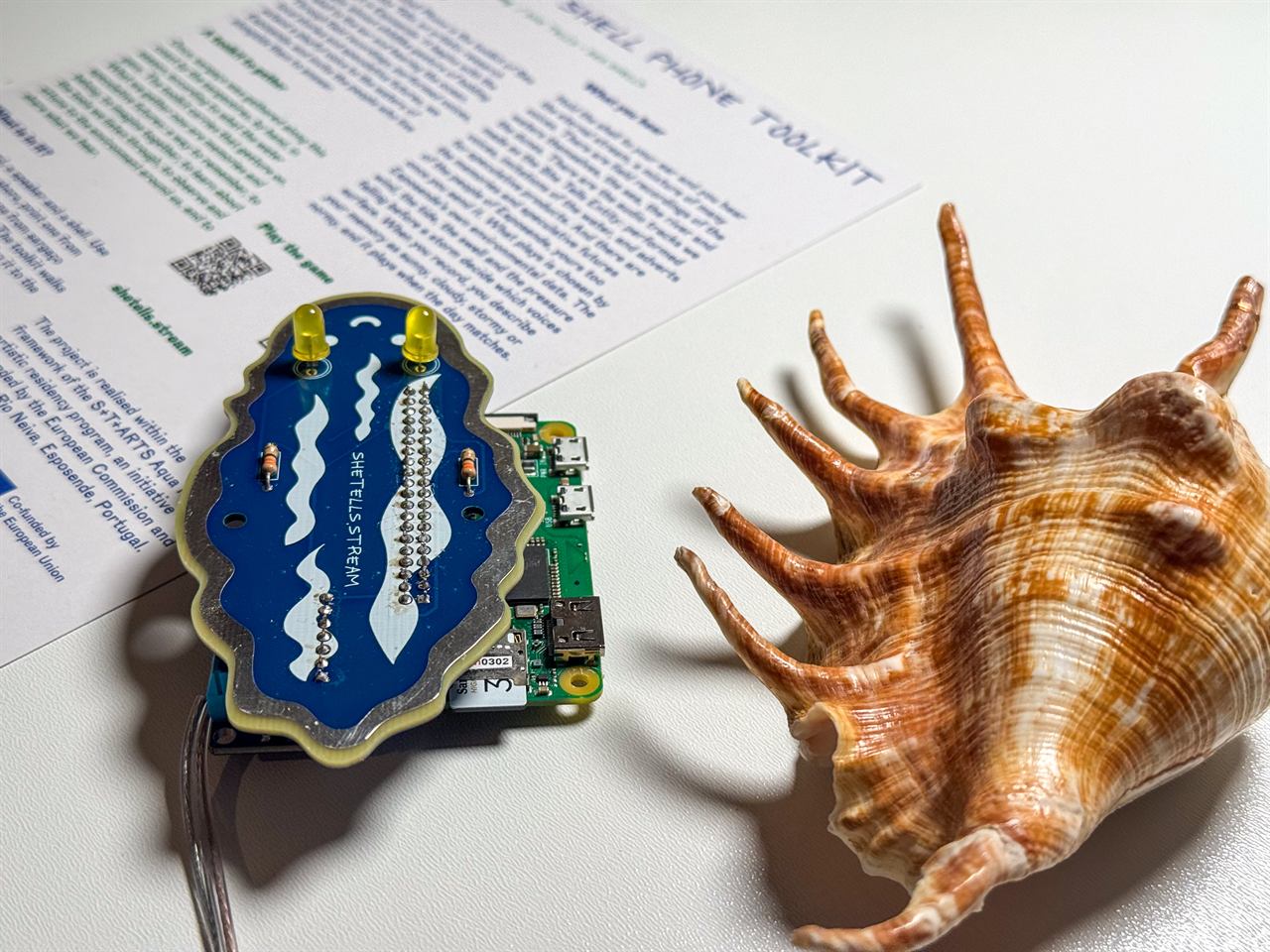
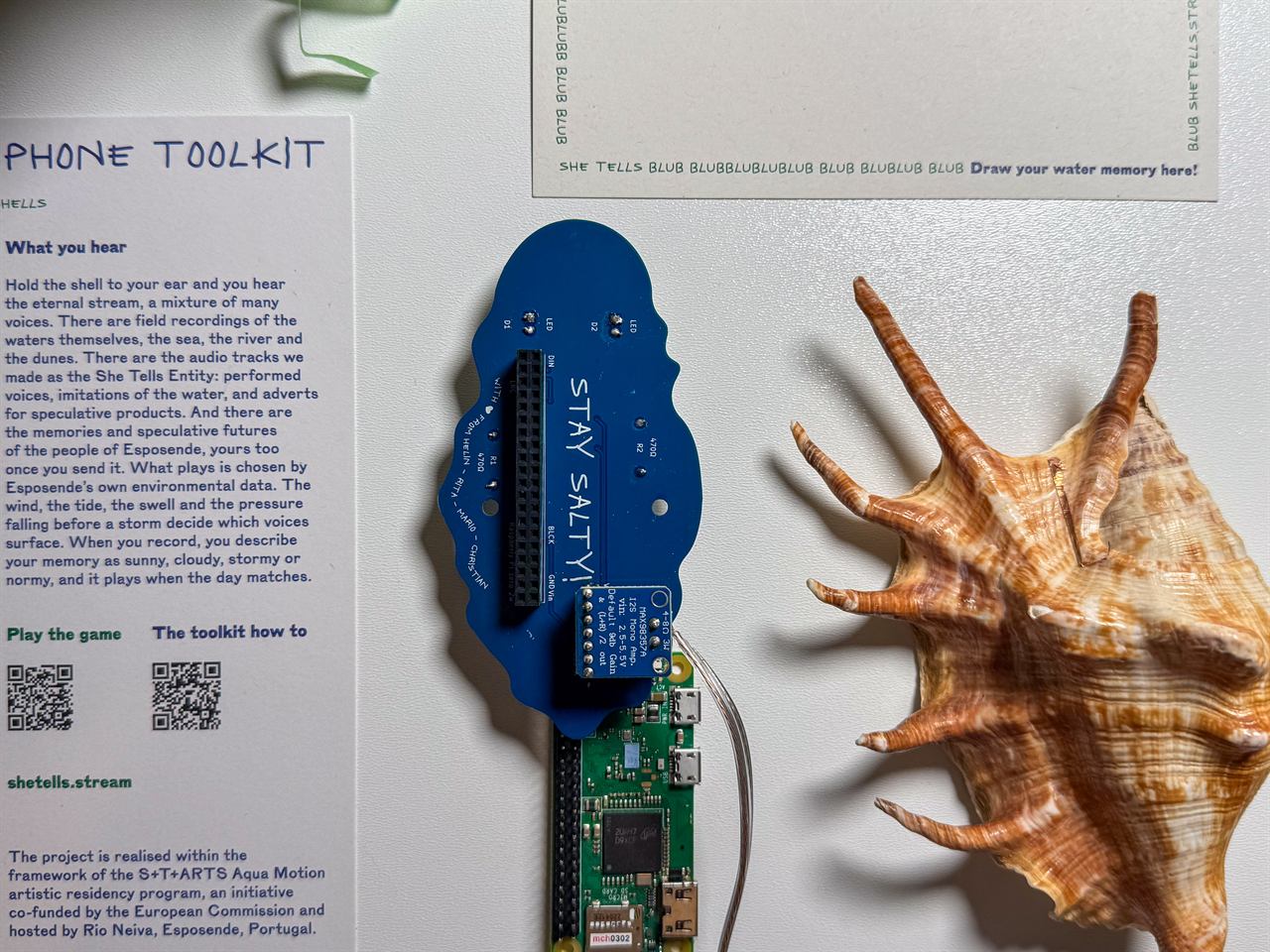
English - The Shellphone is a shell you can listen to. Inside a shell sits a Raspberry Pi Zero W (or Zero 2 W) and a small custom audio board. When you hold the shell to your ear, it connects over WiFi to shetells.stream and plays its live stream - a flow of voices and memories that people have shared about water: the sea, rivers, drought, the things we are losing. It turns a familiar gesture - listening to a shell - into a way of listening to each other, and to the water. (You can also explore the Living Archive to see the memories and the process behind the piece.)
Português - O Shellphone é uma concha que se pode escutar. Dentro de uma concha estão uma Raspberry Pi Zero W (ou Zero 2 W) e uma pequena placa de áudio feita à medida. Ao aproximar a concha do ouvido, liga-se por WiFi a shetells.stream e reproduz a sua transmissão ao vivo — um fluxo de vozes e memórias que as pessoas partilharam sobre a água: o mar, os rios, a seca, aquilo que estamos a perder. Transforma um gesto familiar - ouvir uma concha - numa forma de nos ouvirmos uns aos outros, e de ouvir a água. (Também podes explorar o Arquivo Vivo para ver as memórias e o processo por detrás da peça.)
The Shellphone is three parts, hidden inside a shell:
Any shell works: a real seashell or the 3D-printable one in enclosure/. Everything is powered over USB (5 V).
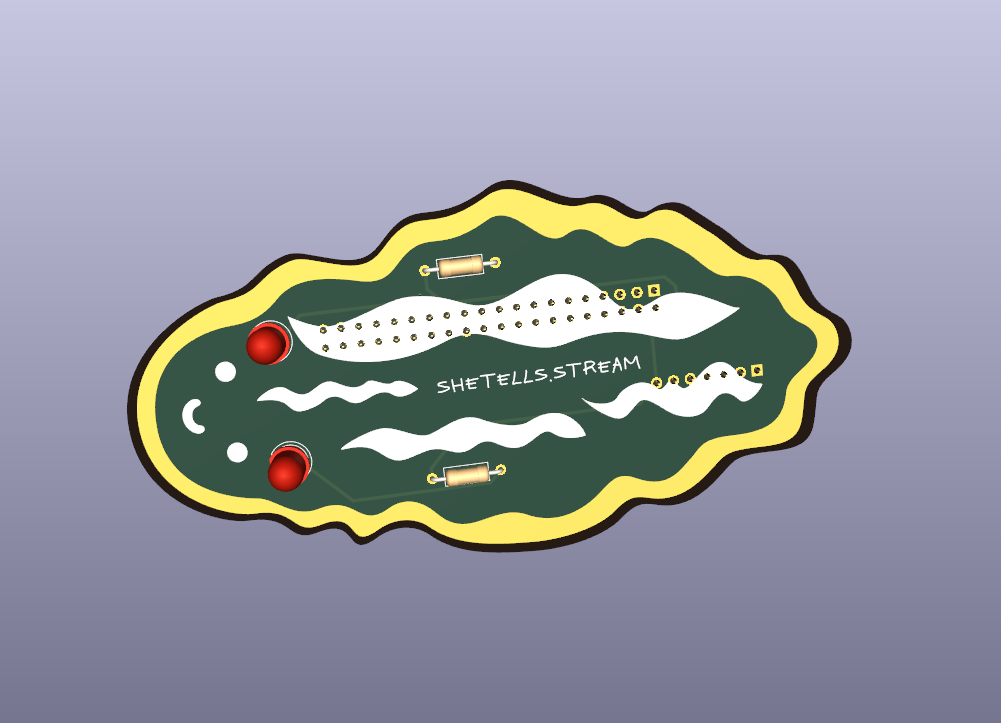
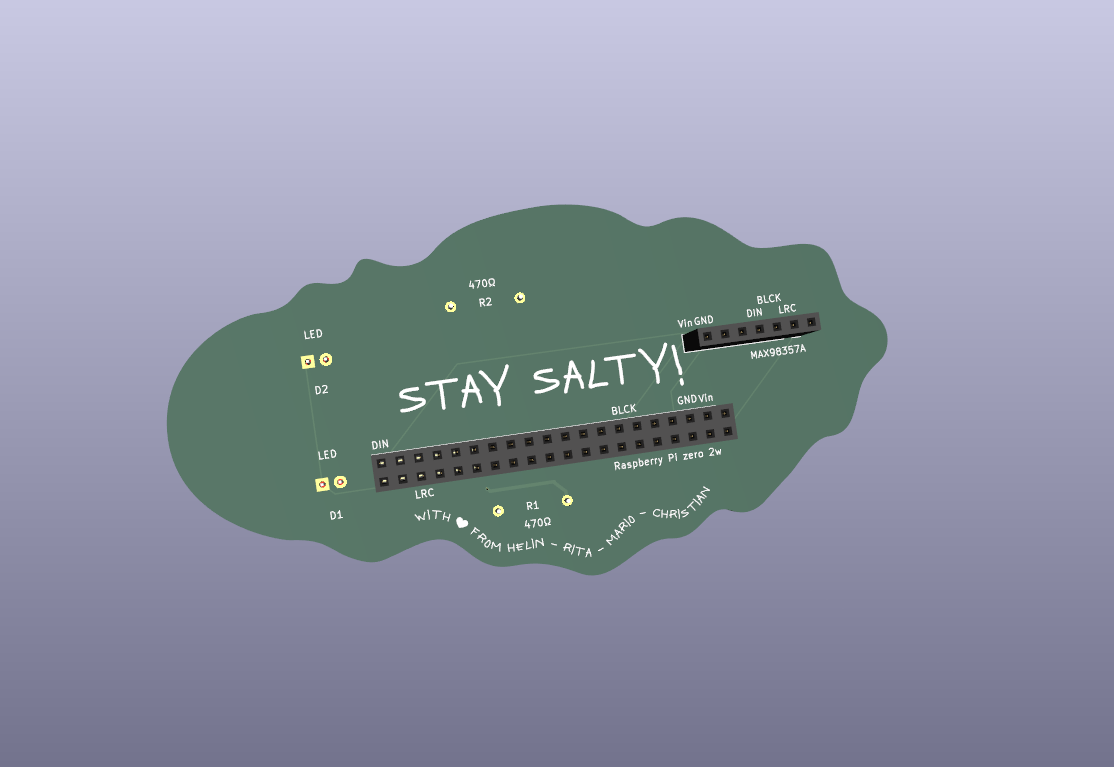
The audio board connects to the Pi's audio pins like this:
| Amp signal | Raspberry Pi pin |
|---|---|
| Audio clock (BCLK) | GPIO18 (pin 12) |
| Word select (LRC) | GPIO19 (pin 35) |
| Audio data (DIN) | GPIO21 (pin 40) |
| Power (Vin) | 5V (pin 2) |
| Ground (GND) | GND (pin 6) |
The two LED antennas are wired from 5 V through a 470 Ω resistor each to GND, so they are always on when the board has power (they are not controlled by the Pi).
(Full board design: hardware/pcb/, a KiCad project.)
| Folder / file | What's inside | Status |
|---|---|---|
docs/assembly.md | Step-by-step assembly guide with photos | ✅ |
docs/wifi-setup.md | Connecting the Shellphone to Wi-Fi | ✅ |
hardware/pcb/ | KiCad design files for the audio board | ✅ Designed |
hardware/bom.md | Bill of Materials - the full parts list | ✅ |
enclosure/ | 3D-printable shell (.3mf, .obj), optional | ✅ Included |
images/ | Build photos and board renders | ✅ |
| Software | Comes pre-installed on the kit's SD card | 🚧 Instructions for flashing your own card coming |
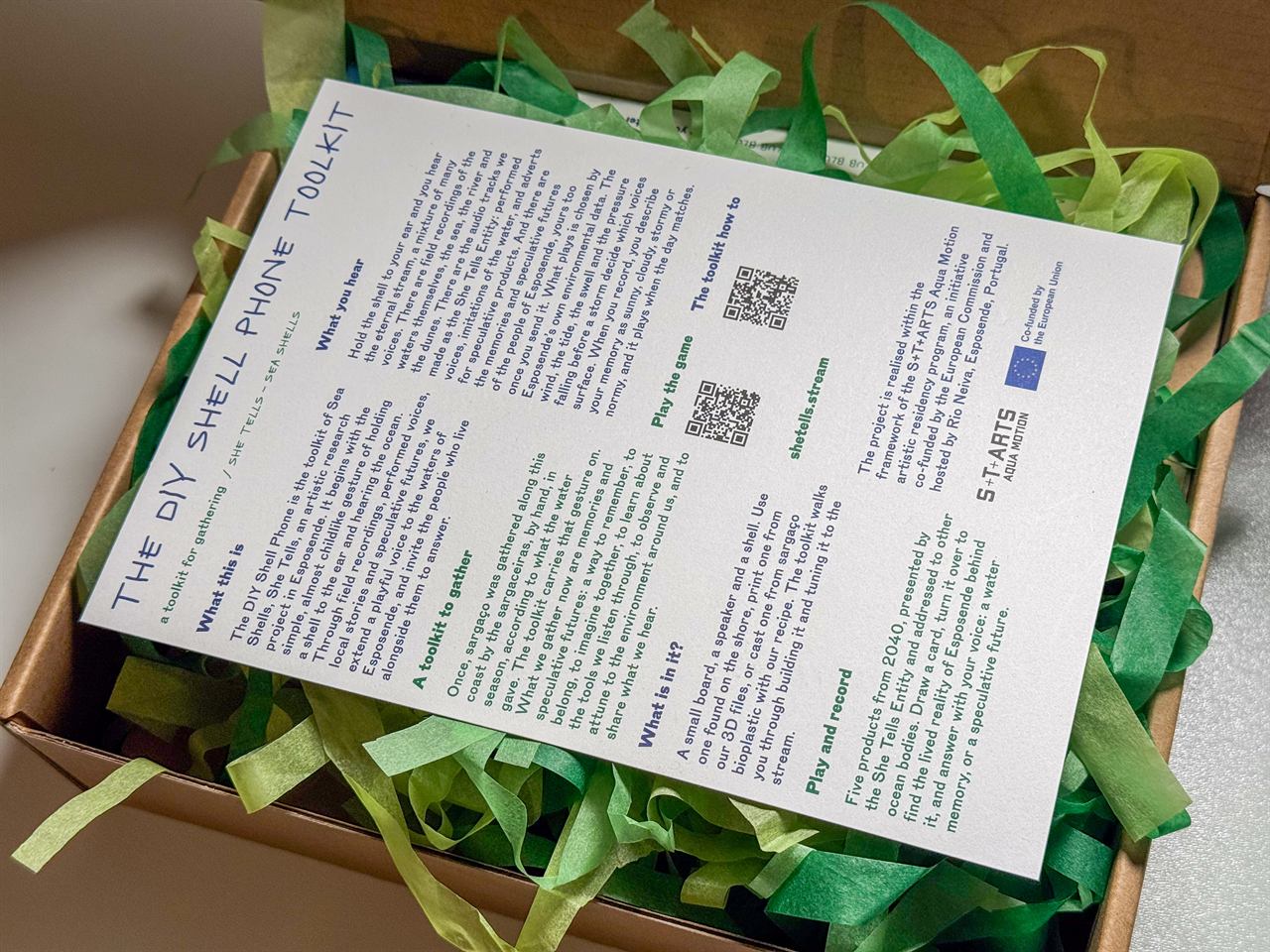
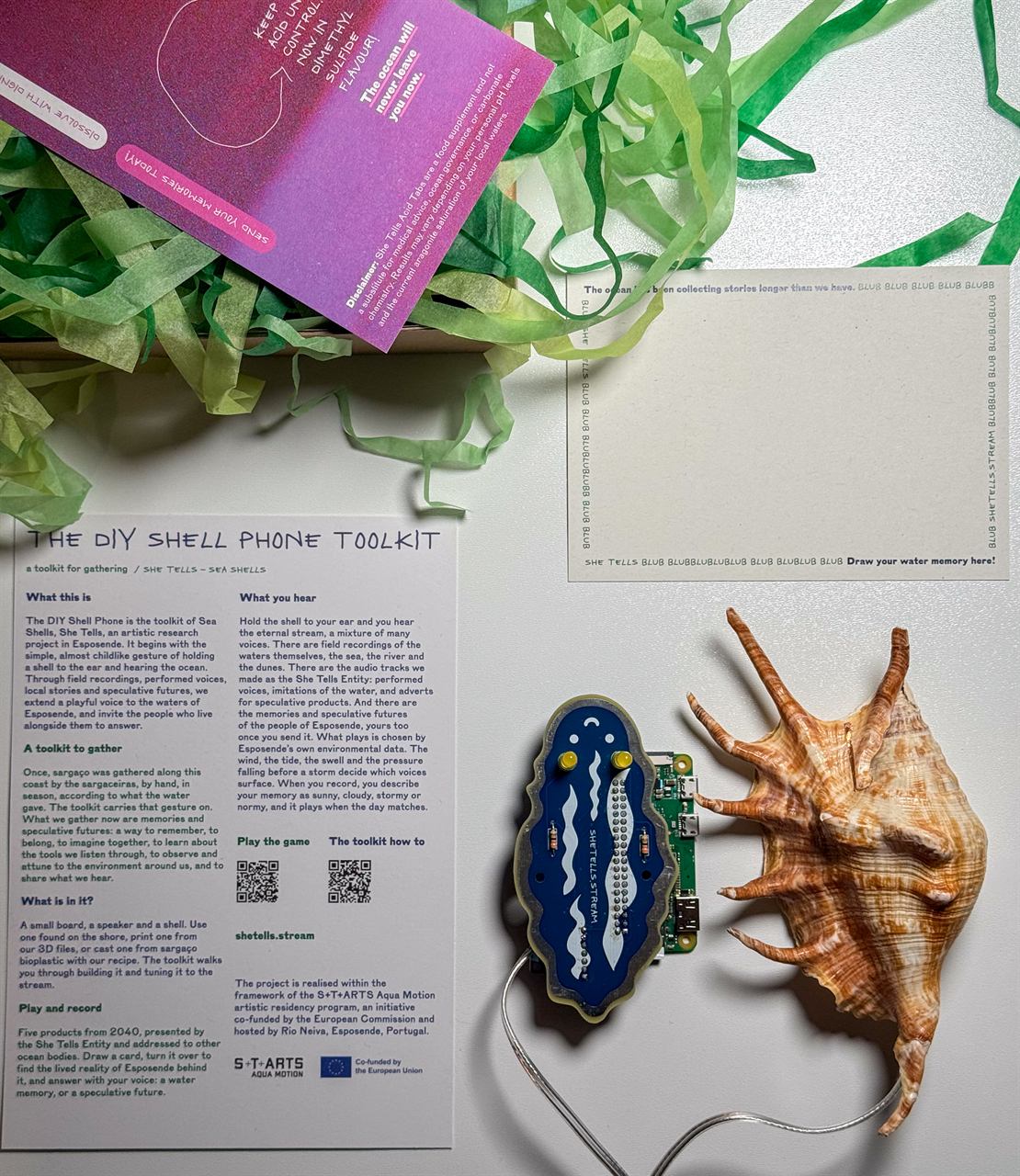
hardware/pcb/, export the Gerber files, and send them to any PCB fab (e.g. JLCPCB, PCBWay).enclosure/.The kit comes with a pre-flashed SD card: the software that connects to Wi-Fi and plays the stream is already on it. 🚧 Instructions for making your own pre-flashed card are coming.
Made by:
Co-funded by the European Union within the S+T+ARTS Aqua Motion residency, hosted by Rio Neiva, Esposende.
| Qty | Value | Footprint | References |
|---|---|---|---|
| 2 | 470Ω | Resistor_THT:R_Axial_DIN0207_L6.3mm_D2.5mm_P10.16mm_Horizontal | R1, R2 |
| 2 | LED | LED_THT:LED_D5.0mm | D1, D2 |
| 2 | MountingHole | MountingHole:MountingHole_3.2mm_M3_DIN965 | H1, H2 |
| 1 | MAX98357A | Connector_PinSocket_2.54mm:PinSocket_1x07_P2.54mm_Vertical | J2 |
| 1 | Raspberry_Pi_2_3 | Connector_PinSocket_2.54mm:PinSocket_2x20_P2.54mm_Vertical | J1 |

joeycastillo/Sensor-Watch
A board replacement for the classic Casio F-91W wristwatch

rusefi/rusefi
rusefi - GPL internal combustion engine control unit

hoglet67/RGBtoHDMI
Bare-metal Raspberry Pi project that provides pixel-perfect sampling of Retro Computer RGB/YUV video and conversion to HDMI

shanteacontrols/OpenDeck
A platform for building interactive control and sensing devices using MIDI and OSC built with Zephyr RTOS.

hackclub/OnBoard
💡 Join 1,000 teenagers and make your first PCB with a $100 grant!

dangiu/PicoMemcard
Emulating PSX Memory Card (or controller) using a Raspberry Pi Pico

OLIMEX/DIY-LAPTOP
Do It Yourself Open Source Hardware and Software Modular Hacker's Friendly Laptop
It measures 106.5 × 54.4 mm and has 2 copper layers, 1.6 mm thick.
8 parts. The full list of its parts is on this page, with links to each part's symbol and footprint where PCBKit's library has them.
From the marioguzzzman/diy-shell.phone repository on GitHub, at the commit this page was made from: the board is hardware/pcb/shellphone_sound_snail.kicad_pcb and its schematic hardware/pcb/shellphone_sound_snail.kicad_sch. PCBKit opens the board in the browser, with nothing to install.
Its repository publishes it under the MIT licence: you may reuse it on that licence's terms (keep the author's notice, and for a copyleft licence share your changes alike).