6 layers100 × 100 mm

 lsartory/Clavier212
An FPGA-based mechanical keyboard with an integrated USB hub and communication interfaces
Clavier is an open-source printed circuit board by lsartory, from the lsartory/Clavier repository on GitHub. It is a 4-layer board of 431.5 × 125.5 mm with 344 parts on 289 nets, routed with 2,802 tracks and 270 vias.
It is built around the LFE5U-25F-6BG256C, TLV62569DBVR-TP and CH347F, with the GL852G-OHY60, W25Q128JVSIQ and TPESD0594PA among its other parts. Its parts include 107 switches, 40 capacitors, 32 resistors, 19 ICs and 10 connectors. It belongs with the interfaces and adapters and keyboards and input boards and the FPGA and CPLD boards of this library.


Clavier (French for ‘keyboard’) is an FPGA-based mechanical keyboard with an integrated USB hub, and numerous communication interfaces (JTAG, SPI, I²C, UART).
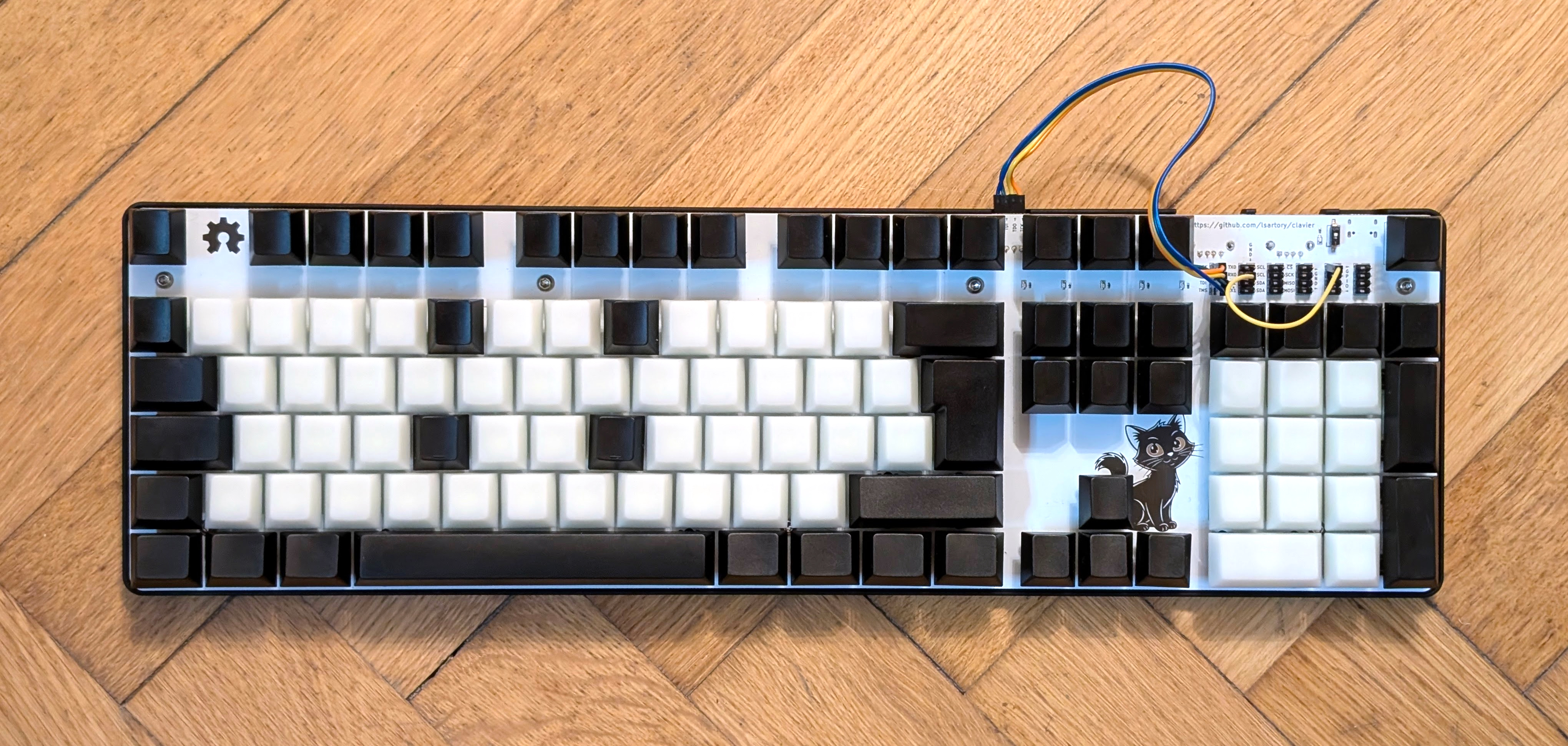
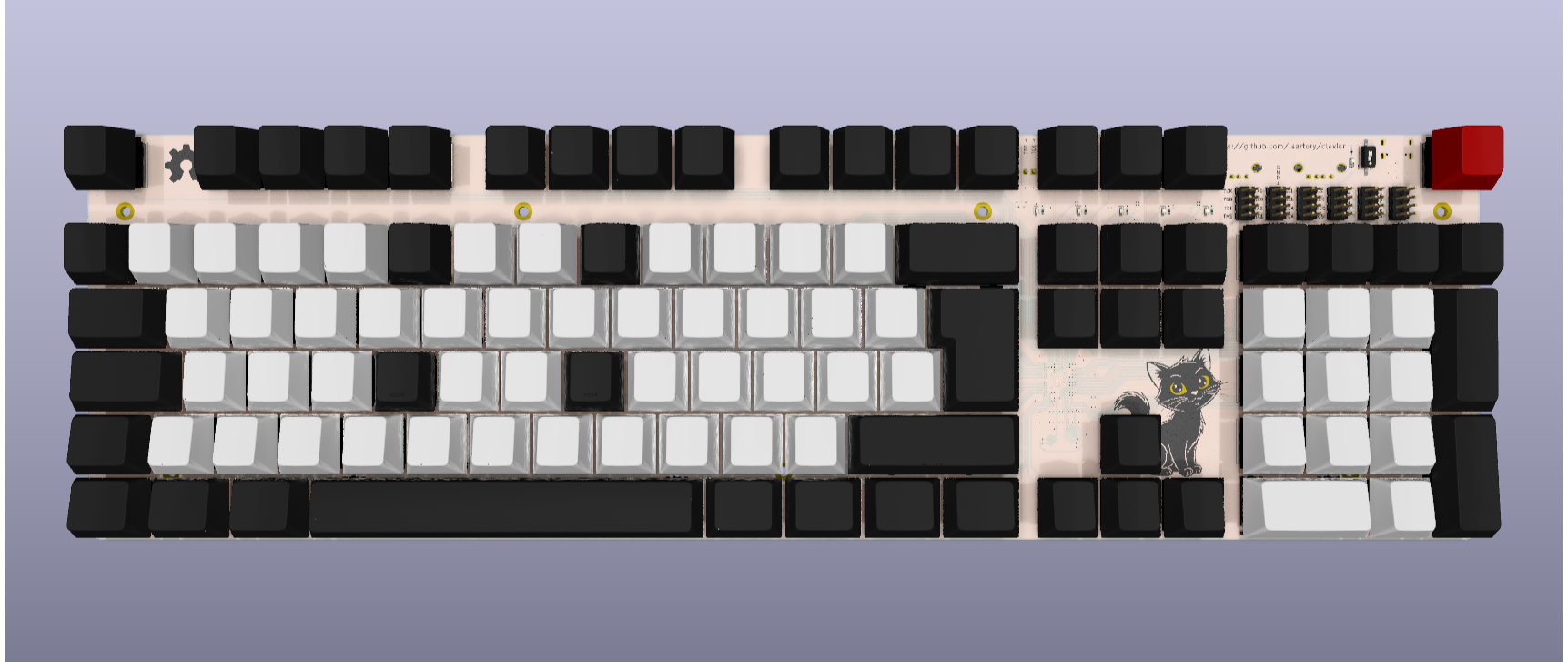
It's the coffee key. Use it to lock your computer and go have a break.
It can also be long-pressed for 5 seconds to reset the FPGA.
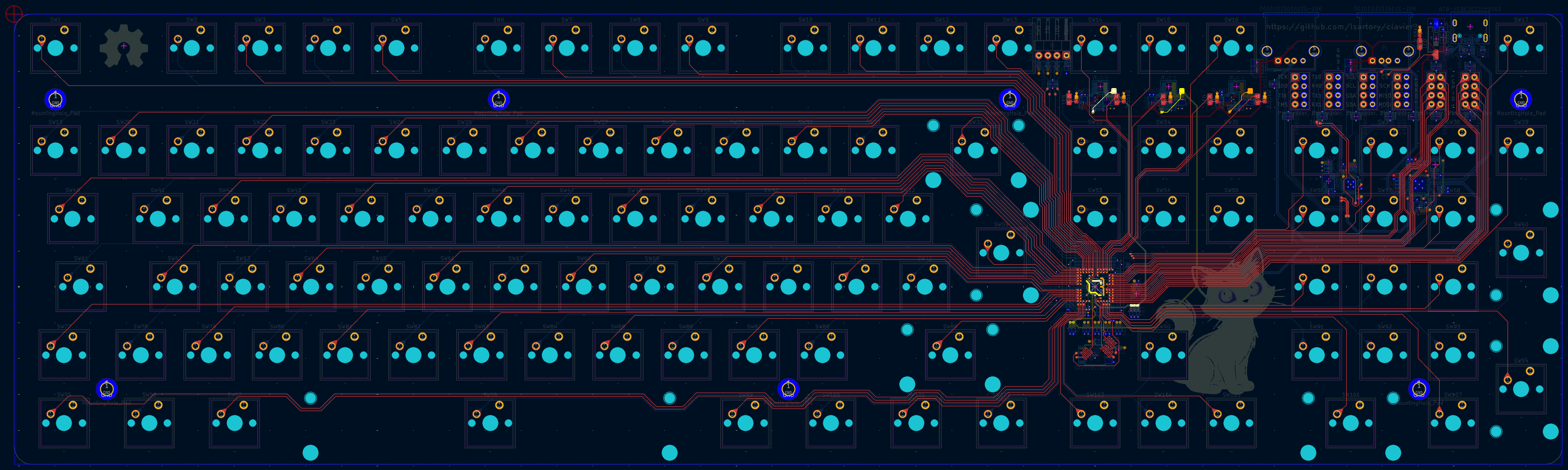
The PCB has 4 layers and requires no unusual capabilities to produce. It is however not easy to assemble by hand mostly due to 0402 passives and the FPGA in BGA packaging.
A PDF version of the schematics is available here, for convenience: PCB/doc/clavier.pdf.
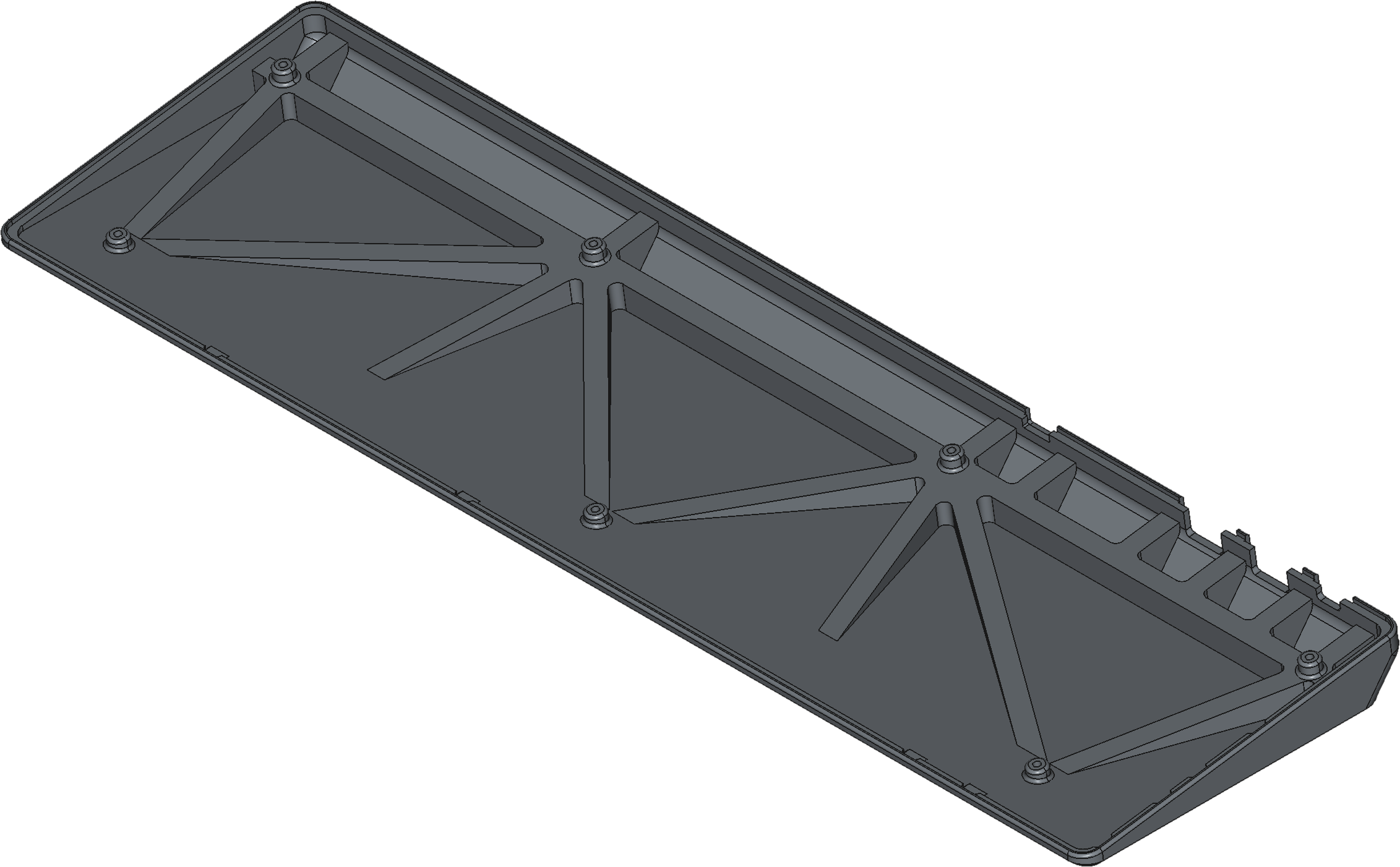
An OpenSCAD version of the housing was created first and is fine for 3D printing. The FreeCAD version was created afterwards for exporting to STEP, which is more suitable for CNC machining. Both alternatives are functionally equivalent.
The first version fits properly, but it turns out that it is not angled in a comfortable way. To correct this, a second version was created with an angle of 8° that makes the front part much thinner. This one is only available in FreeCAD.
Simply run make in the FPGA subfolder.
If using OSS CAD Suite, make sure the environment is set first.
The integrated JTAG interface can be used to program the FPGA.
The switch SW18 is used to toggle the interfaces on or off. The LED D1 close by displays the current status.
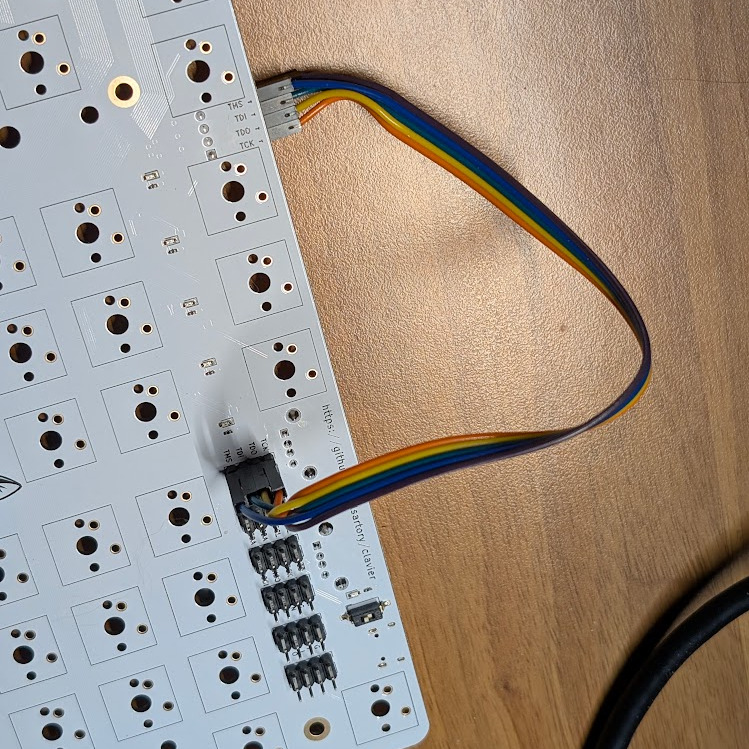
Connect the JTAG interface with jumper cables, then run either make prog-sram or make prog-flash, depending on if the configuration needs to be permanent or not.
Except for the GPIOs that are connected directly to the FPGA, communications are handled by the CH347F.
| Qty | Value | Footprint | References |
|---|---|---|---|
| 89 | ~ | clavier:SW_Cherry_MX_1.00u_PCB | SW1, SW2, SW10, SW11, SW12, SW13, SW14, SW15, SW16, SW17, SW19, SW20, SW103, SW104, SW105, SW107 +73 |
| 26 | ~ | clavier:KC_Cherry_MX_R1_1.00u_Black | KC1, KC2, KC3, KC10, KC11, KC12, KC13, KC14, KC15, KC16, KC18, KC23, KC26, KC32, KC33, KC34 +10 |
| 17 | 1µF | Capacitor_SMD:C_0402_1005Metric_Pad0.74x0.62mm_HandSolder | C14, C16, C17, C19, C20, C22, C24, C25, C26, C27, C28, C31, C33, C35, C37, C38 +1 |
| 15 | ~ | clavier:KC_Cherry_MX_R4_1.00u_White | KC77, KC78, KC79, KC80, KC81, KC82, KC83, KC84, KC85, KC86, KC87, KC90, KC91, KC92, KC105 |
| 15 | ~ | clavier:KC_Cherry_MX_R2_1.00u_White | KC40, KC41, KC42, KC43, KC44, KC45, KC46, KC47, KC48, KC49, KC50, KC51, KC55, KC56, KC57 |
| 13 | ~ | clavier:KC_Cherry_MX_R3_1.00u_White | KC61, KC62, KC63, KC65, KC66, KC68, KC69, KC70, KC71, KC72, KC73, KC74, KC75 |
| 12 | TPESD0594PA | Package_DFN_QFN:Diodes_UDFN-10_1.0x2.5mm_P0.5mm | U1, U2, U3, U4, U5, U9, U10, U11, U12, U13, U14, U15 |
| 10 | 22µF | Capacitor_SMD:C_0805_2012Metric | C1, C2, C3, C4, C5, C6, C7, C8, C9, C10 |
| 10 | ~ | clavier:KC_Cherry_MX_R1_1.00u_White | KC19, KC20, KC21, KC22, KC24, KC25, KC27, KC28, KC29, KC30 |
| 8 | 100nF | Capacitor_SMD:C_0402_1005Metric_Pad0.74x0.62mm_HandSolder | C15, C21, C29, C30, C32, C34, C36, C39 |
| 8 | 10kΩ | Resistor_SMD:R_0402_1005Metric_Pad0.72x0.64mm_HandSolder | R10, R11, R12, R23, R24, R25, R29, R32 |
| 8 | ~ | clavier:SW_Cherry_MX_1.25u_PCB | SW77, SW95, SW96, SW97, SW99, SW100, SW101, SW102 |
| 8 | ~ | clavier:KC_Cherry_MX_R4_1.25u_Black | KC76, KC94, KC95, KC96, KC97, KC98, KC99, KC100 |
| 7 | 2.55kΩ | Resistor_SMD:R_0402_1005Metric_Pad0.72x0.64mm_HandSolder | R1, R2, R3, R4, R5, R6, R13 |
| 7 | MountingHole_Pad | MountingHole:MountingHole_3.2mm_M3_ISO7380_Pad_TopBottom | H1, H2, H3, H4, H5, H6, H7 |
| 6 | 100kΩ | Resistor_SMD:R_0402_1005Metric_Pad0.72x0.64mm_HandSolder | R19, R20, R21, R22, R26, R27 |
| 6 | LED | LED_SMD:LED_0603_1608Metric_Pad1.05x0.95mm_HandSolder | D1, D2, D3, D4, D5, D6 |
| 6 | Pin header, 2x4 | Connector_PinHeader_2.54mm:PinHeader_2x04_P2.54mm_Vertical | J1, J2, J3, J4, J5, J6 |
| 6 | ~ | clavier:Stabilizer_2.00u | ST1, ST2, ST3, ST4, ST5, ST7 |
| 4 | 2.2µH | Inductor_SMD:L_1210_3225Metric | L1, L2, L3, L4 |
| 4 | ~ | clavier:KC_Cherry_MX_R4_1.00u_Black | KC89, KC101, KC102, KC103 |
| 3 | 10µF | Capacitor_SMD:C_0805_2012Metric | C11, C12, C13 |
| 3 | TLV62569DBVR | Package_TO_SOT_SMD:SOT-23-5 | U6, U7, U8 |
| 3 | ~ | clavier:KC_Cherry_MX_R2_1.00u_Black | KC52, KC53, KC54 |
| 2 | 1.5kΩ | Resistor_SMD:R_0402_1005Metric_Pad0.72x0.64mm_HandSolder | R15, R31 |
| 2 | 12MHz | Crystal:Crystal_SMD_2520-4Pin_2.5x2.0mm | Y2, Y3 |
| 2 | 20pF | Capacitor_SMD:C_0402_1005Metric_Pad0.74x0.62mm_HandSolder | C18, C23 |
| 2 | 5.1kΩ | Resistor_SMD:R_0402_1005Metric_Pad0.72x0.64mm_HandSolder | R7, R8 |
| 2 | 901-211A1021D10100 | clavier:USB_A_Molex_67643_Horizontal | J9, J10 |
| 2 | ~ | clavier:SW_Cherry_MX_2.00u_PCB | SW32, SW106 |
| 2 | ~ | clavier:KC_Cherry_MX_R3_1.00u_Barred_Black | KC64, KC67 |
| 2 | ~ | clavier:SW_Cherry_MX_2.00u_Vertical_PCB | SW60, SW94 |
| 1 | 1.37kΩ | Resistor_SMD:R_0402_1005Metric_Pad0.72x0.64mm_HandSolder | R18 |
| 1 | 1.65kΩ | Resistor_SMD:R_0402_1005Metric_Pad0.72x0.64mm_HandSolder | R17 |
| 1 | 11.5kΩ | Resistor_SMD:R_0402_1005Metric_Pad0.72x0.64mm_HandSolder | R14 |
| 1 | 1kΩ | Resistor_SMD:R_0402_1005Metric_Pad0.72x0.64mm_HandSolder | R9 |
| 1 | 4.75kΩ | Resistor_SMD:R_0402_1005Metric_Pad0.72x0.64mm_HandSolder | R16 |
| 1 | 47kΩ | Resistor_SMD:R_0402_1005Metric_Pad0.72x0.64mm_HandSolder | R28 |
| 1 | 680Ω | Resistor_SMD:R_0402_1005Metric_Pad0.72x0.64mm_HandSolder | R30 |
| 1 | 8MHz | Crystal:Crystal_SMD_3225-4Pin_3.2x2.5mm | Y1 |
| 1 | 918-418K2023S40001 | Connector_USB:USB_C_Receptacle_GCT_USB4105-xx-A_16P_TopMnt_Horizontal | J7 |
| 1 | CH347F | Package_DFN_QFN:QFN-28-1EP_4x4mm_P0.4mm_EP2.4x2.4mm | U17 |
| 1 | DSIC01LS-P | Button_Switch_SMD:SW_DIP_SPSTx01_Slide_6.7x4.1mm_W8.61mm_P2.54mm_LowProfile | SW18 |
| 1 | GL852G-OHY60 | Package_DFN_QFN:QFN-28-1EP_5x5mm_P0.5mm_EP3.75x3.75mm | U16 |
| 1 | LFE5U-25F-6BG256C | Package_BGA:BGA-256_14.0x14.0mm_Layout16x16_P0.8mm_Ball0.45mm_Pad0.32mm_NSMD | U18 |
| 1 | Logo_Open_Hardware_Large | Symbol:OSHW-Symbol_13.4x12mm_SilkScreen | OSHW1 |
| 1 | Pin header, 1x4 | Connector_PinHeader_2.54mm:PinHeader_1x04_P2.54mm_Horizontal | J8 |
| 1 | Polyfuse | Fuse:Fuse_0805_2012Metric_Pad1.15x1.40mm_HandSolder | F1 |
| 1 | SD05C-7 | Diode_SMD:D_SOD-323 | D7 |
| 1 | W25Q128JVSIQ | Package_SO:SOIC-8_5.3x5.3mm_P1.27mm | U19 |
| 1 | ~ | clavier:KC_Cherry_MX_R4_2.75u_Black | KC88 |
| 1 | ~ | clavier:KC_Cherry_MX_R4-R4_1.00u_Black | KC93 |
| 1 | ~ | clavier:SW_Cherry_MX_1.75u_PCB | SW61 |
| 1 | ~ | clavier:KC_Cherry_MX_R1_2.00u_Black | KC31 |
| 1 | ~ | clavier:SW_Cherry_MX_1.50u_PCB | SW40 |
| 1 | ~ | clavier:SW_Cherry_MX_2.75u_PCB | SW89 |
| 1 | ~ | clavier:KC_Cherry_MX_R3_1.75u_Black | KC60 |
| 1 | ~ | clavier:KC_Cherry_MX_R2_1.50u_Black | KC39 |
| 1 | ~ | clavier:KC_Cherry_MX_R4_2.00u_White | KC104 |
| 1 | ~ | clavier:SW_Cherry_MX_ISOEnter_PCB | SW59 |
| 1 | ~ | clavier:KC_Cherry_MX_R2-R3_1.00u_Black | KC59 |
| 1 | ~ | clavier:KC_Cherry_MX_R2-R3_ISO_Enter_Black | KC58 |
| 1 | ~ | clavier:Stabilizer_6.25u | ST6 |
| 1 | ~ | clavier:KC_Cherry_MX_R1_1.00u_Red | KC17 |
| 1 | ~ | clavier:KC_Cherry_MX_R4_6.25u_Black | KC106 |
| 1 | ~ | clavier:SW_Cherry_MX_6.25u_PCB | SW98 |
It measures 431.5 × 125.5 mm and has 4 copper layers, 1.61 mm thick.
344 parts, built around the LFE5U-25F-6BG256C, TLV62569DBVR-TP, CH347F and GL852G-OHY60. The full list of its parts is on this page, with links to each part's symbol and footprint where PCBKit's library has them.
From the lsartory/Clavier repository on GitHub, at the commit this page was made from: the board is PCB/clavier.kicad_pcb and its schematic PCB/clavier.kicad_sch. PCBKit opens the board in the browser, with nothing to install.
Its repository states no licence, so its author keeps all rights: ask lsartory before reusing the design.

s-t-e-f-a-n/twinusb
H₂H³ | Twin USB Host Switch × Triple USB Hub (with OLED Telemetry)

Kilan777/HomeDeck
Jarvis HomeDeck: a Raspberry Pi CM4 carrier board and voice-assistant software for a 7-inch smart display (KiCad hardware, generated from Python, plus the Python/JS assistant)

JulienKluge/Clock-odial
Clock-odial is a PCB featuring a ECP5 fpga for frequency/clock signal processing

Rahul9-spb/FPGA-1
A compact 4-layer FPGA development board based on the Lattice LFE5U-25F-6BG256C, designed to explore high-speed PCB design, FPGA hardware, memory interfaces, and signal integrity practices.


LuizFernandoOliveira/Conversor-USB-UART-SPI-I2C-JTAG
This work is licensed under a [Creative Commons Attribution-NonCommercial-NoDerivs 4.0 International License][cc-by-nc-nd].
