Skip to the content
2 layers16.8 × 10.2 mmCommonmode choke, the printed circuit board in 3D

Commonmode choke

loxodes/emc_tools28

experimental open hardware e-field and h-field probes and LISN

Size
16.8 × 10.2 mm
Copper layers
2
Thickness
1.6 mm
Parts
3
Nets
4
Pads
14
Tracks, vias
2, 11
Pours
4
Routed
Yes
KiCad
KiCad 7 (file 20221018)
Created
17 May 2016
Updated
26 Dec 2022

Overview

Commonmode choke is an open-source printed circuit board by loxodes, from the loxodes/emc_tools repository on GitHub, published under the MIT licence. It is a 2-layer board of 16.8 × 10.2 mm with 3 parts on 4 nets, routed with 2 tracks and 11 vias.

It belongs with the sensors and measurement boards of this library.

README

README.md

em_probes

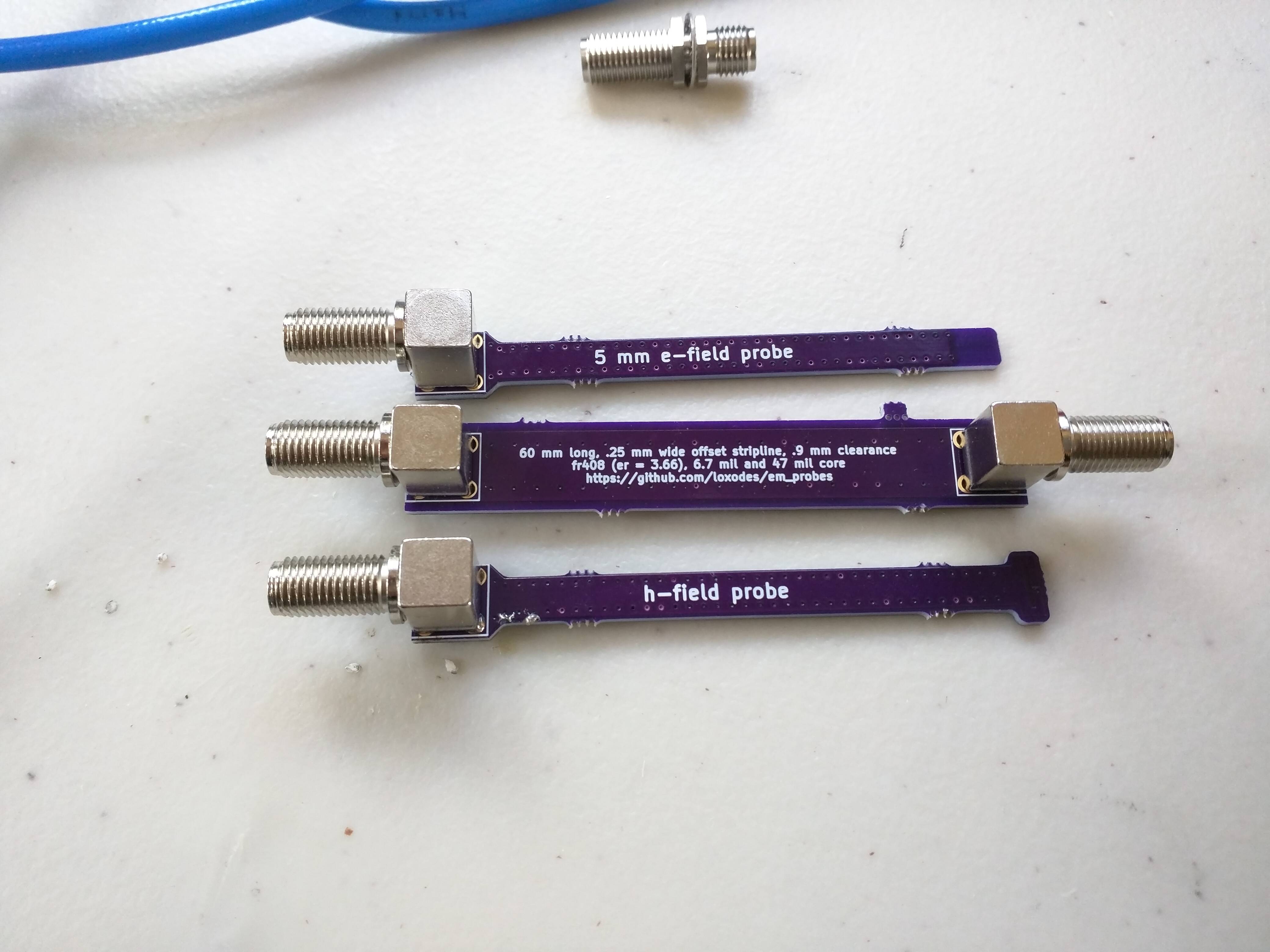
experimental open hardware near field e-field and h-field probes

picture of modules See doc folder for scalar network analyzer captures of probe performance.

h-field probe design from "Study of Magnetic Probes Used in EMI Measurements", DOI 10.1109/APEMC.2015.7175309

picture of modules

Parts

3
QtyValueFootprintReferences
2Conn_Coaxialjtk_kicad_libs:SMA_Cinch_142-0711-821_EdgeMountJ1, J2
1DFT4532-224Bjtk_kicad_libs:DFT4532FL1

More from loxodes/emc_tools

3
  • 2 layers112 × 60.5 mmLisn, the printed circuit board in 3D

    Lisn

    loxodes/emc_tools

    experimental open hardware e-field and h-field probes and LISN

    38 parts28MIT
  • 2 layers31.5 × 20.5 mmPreamp, the printed circuit board in 3D

    Preamp

    loxodes/emc_tools

    experimental open hardware e-field and h-field probes and LISN

    21 parts28MIT
  • 4 layers68 × 10 mmFr408 stripline test, the printed circuit board in 3D

    Fr408 stripline test

    loxodes/emc_tools

    experimental open hardware e-field and h-field probes and LISN

    2 parts28MIT

Similar boards

  • 2 layers40 × 30 mmBlinky, the printed circuit board in 3D

    Blinky

    earthtojake/text-to-cad

    Design physical products with AI

    3 parts26kMIT
  • 2 layers51.9 × 16 mmPassive2-rpi non standard adapter, the printed circuit board in 3D

    Passive2-rpi non standard adapter

    hzeller/rpi-rgb-led-matrix

    Controlling up to three chains of 64x64, 32x32, 16x32 or similar RGB LED displays using Raspberry Pi GPIO

    3 parts4.4kGPL-2.0
  • 2 layers16.3 × 16.3 mmSensor, the printed circuit board in 3D

    Sensor

    scottbez1/splitflap

    DIY split-flap display

    3 parts4.2k
  • 2 layersSub, the printed circuit board in 3D

    Sub

    atopile/atopile

    Design circuit boards with code! ✨ Get software-like design reuse 🚀, validation, version control and collaboration in hardware; starting with electronics ⚡️

    3 parts4kMIT
  • 2 layers85 × 30 mmDual stomp, the printed circuit board in 3D

    Dual stomp

    torvalds/GuitarPedal

    Linus learns analog circuits

    3 parts2.5kGPL-2.0
  • 2 layers124.5 × 33.7 mm172319-1 connector, the printed circuit board in 3D

    172319-1 connector

    rusefi/rusefi

    rusefi - GPL internal combustion engine control unit

    3 parts1.2k
  • 2 layers10.5 × 83 mmProgrammingAdapter, the printed circuit board in 3D

    ProgrammingAdapter

    stuartpittaway/diyBMSv4

    Version 4 of the diyBMS

    3 parts1.1k
  • 2 layers21.2 × 51.3 mmPico reset, the printed circuit board in 3D

    Pico reset

    hackclub/sprig

    🍃 Learn to code by making games in a JavaScript web-based game editor.

    3 parts1.1kMIT

Questions

How big is the Commonmode choke PCB?

It measures 16.8 × 10.2 mm and has 2 copper layers, 1.6 mm thick.

What parts does the Commonmode choke use?

3 parts. The full list of its parts is on this page, with links to each part's symbol and footprint where PCBKit's library has them.

Where can I download the Commonmode choke KiCad files?

From the loxodes/emc_tools repository on GitHub, at the commit this page was made from: the board is commonmode_choke/commonmode_choke.kicad_pcb and its schematic commonmode_choke/commonmode_choke.kicad_sch. PCBKit opens the board in the browser, with nothing to install.

Can I use the Commonmode choke design in my own project?

Its repository publishes it under the MIT licence: you may reuse it on that licence's terms (keep the author's notice, and for a copyleft licence share your changes alike).