4 layers120 × 88 mm
 looprotate/lx321
A from-scratch computing platform: custom processor, LLVM compiler backend and custom hardware.
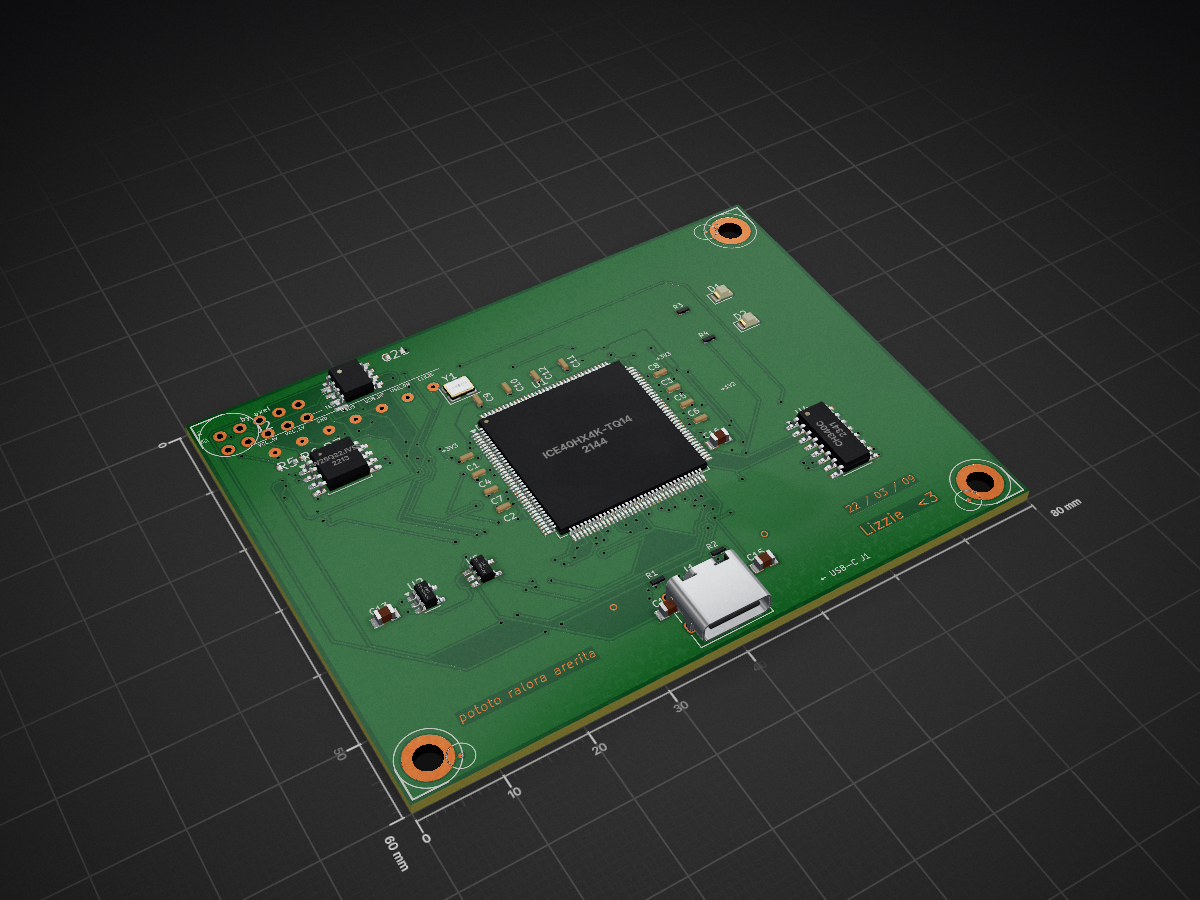
Lx32-fpga is an open-source printed circuit board by looprotate, from the looprotate/lx32 repository on GitHub. It is a 4-layer board of 80 × 60 mm with 49 parts on 94 nets, routed with 1,233 tracks and 216 vias.
It is built around the ICE40HX4K-TQ144, CH340C and W25Q32JVSSIQ, with the AP2112K-3.3 among its other parts. Its parts include 17 capacitors, 7 resistors, 6 ICs, 2 diodes and 2 connectors. It belongs with the fPGA and programmable logic boards and the FPGA and CPLD boards of this library.


I built a computer from scratch because ChatGPT told me "no hay huevos." So here we are.
Custom processor, custom PCB, custom compiler. The whole thing.
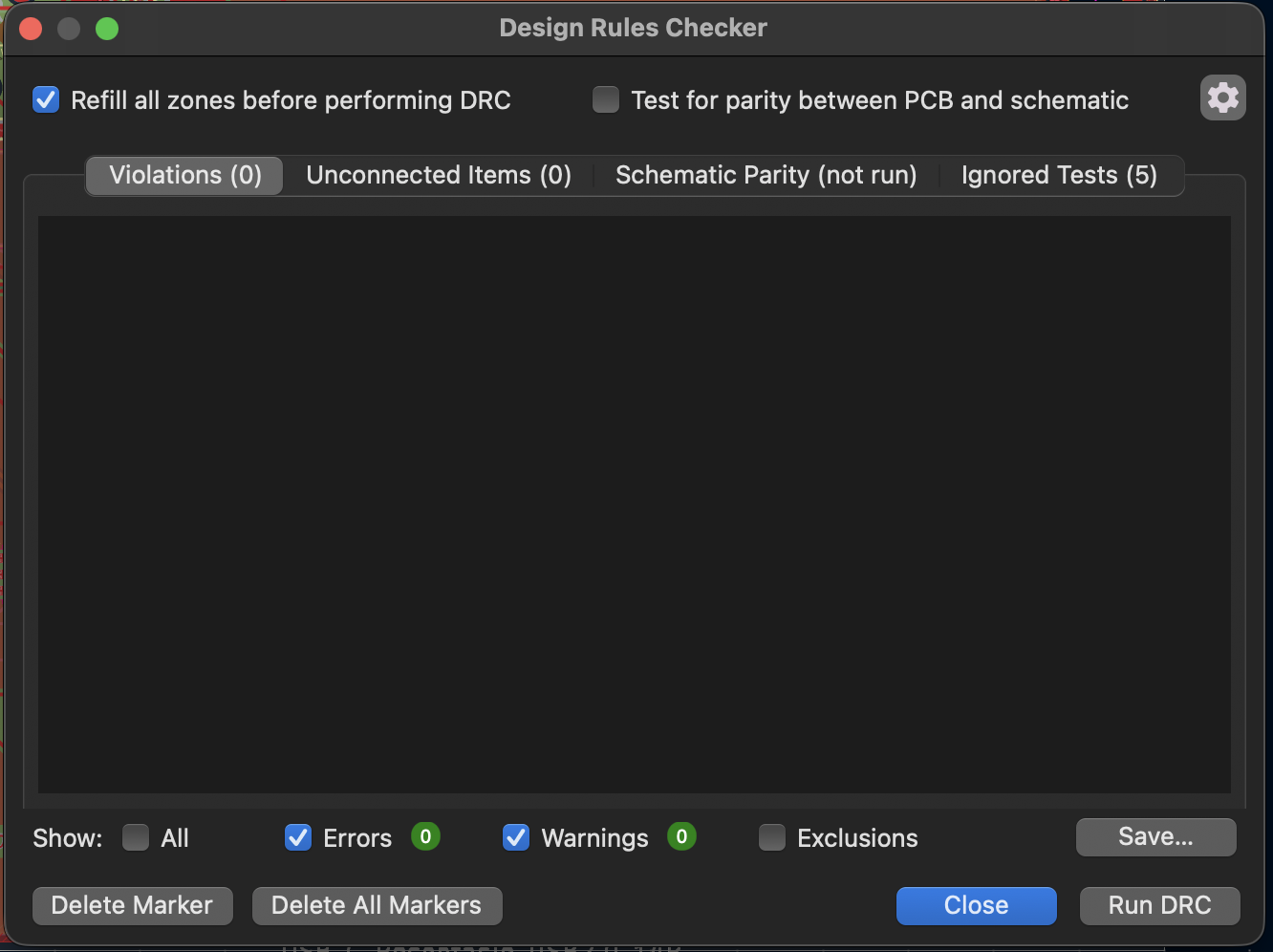
Zero violations. Zero unconnected items. I cried a little.
(also this is the 5th time I rewrote this README. if it still looks AI-generated I give up)
lx32 is a 32-bit CPU with a custom instruction set, running on a custom PCB, compiled by a custom LLVM backend. You can write C, compile it, and it runs on simulation (for now).
I wanted to actually understand how computers work, not just read about it. So I built one.
The board is 80x60mm, about the size of a credit card. Black soldermask, gold finish.
Here's what it looks like:
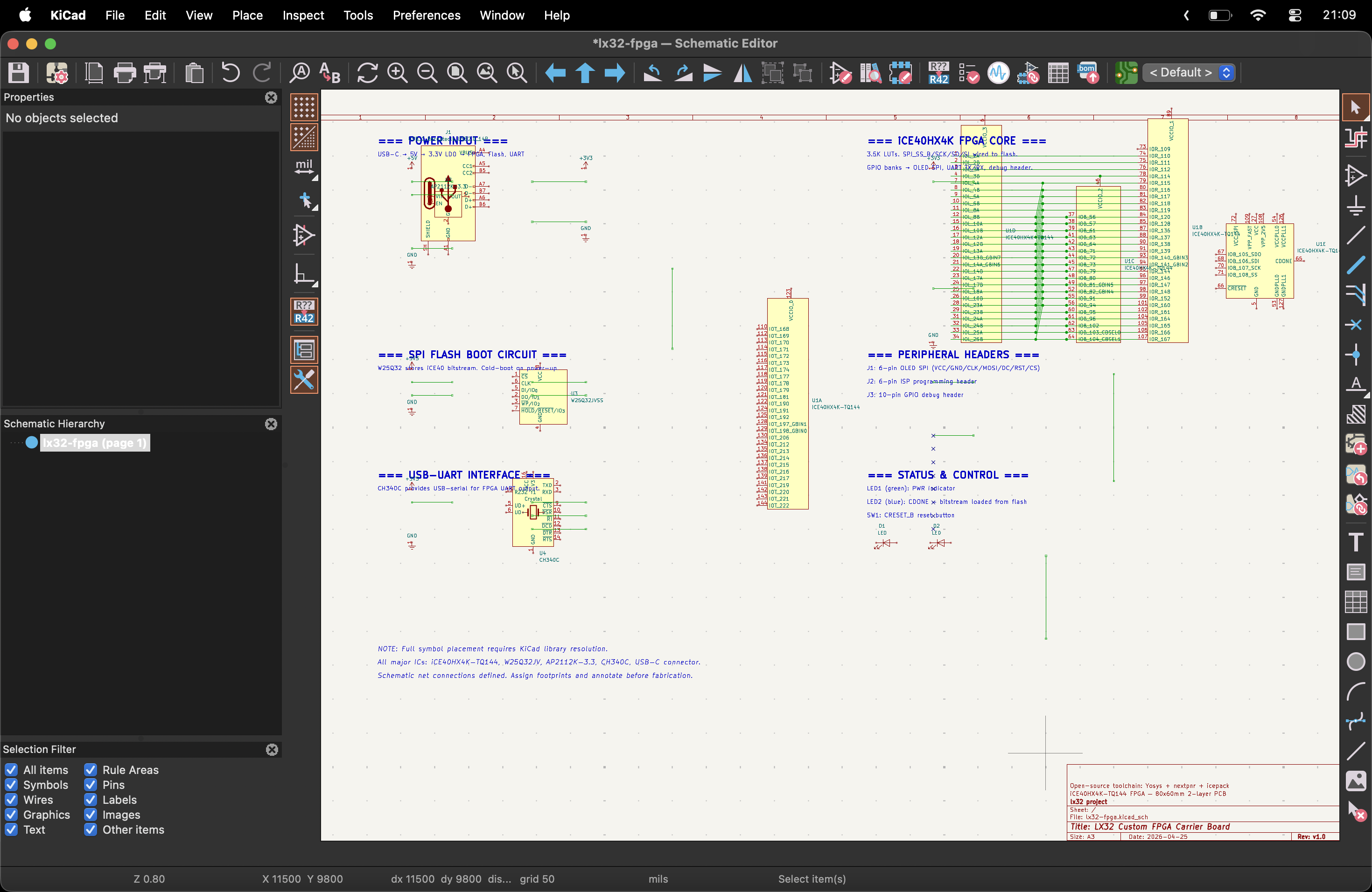
The schematics:
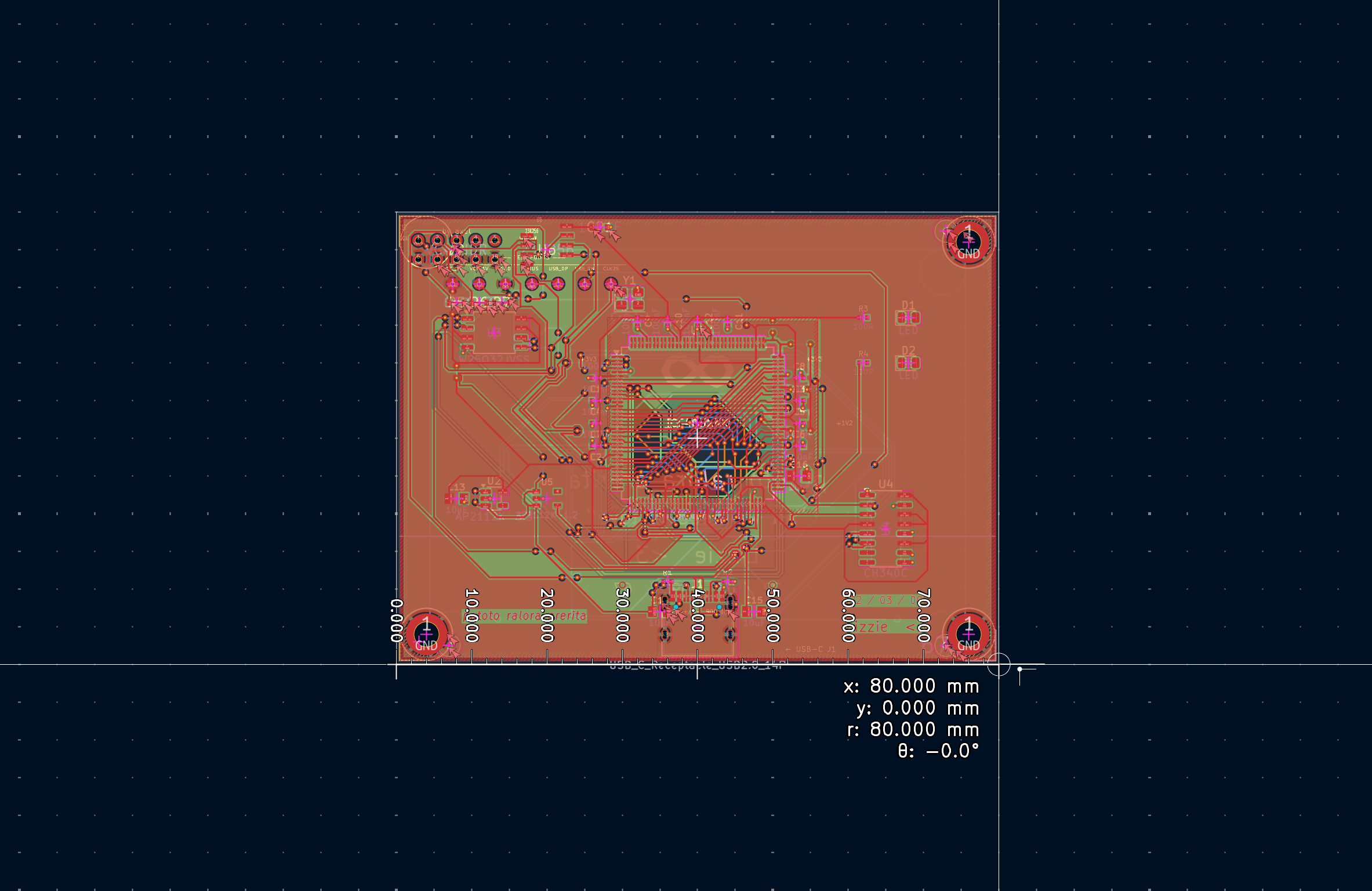
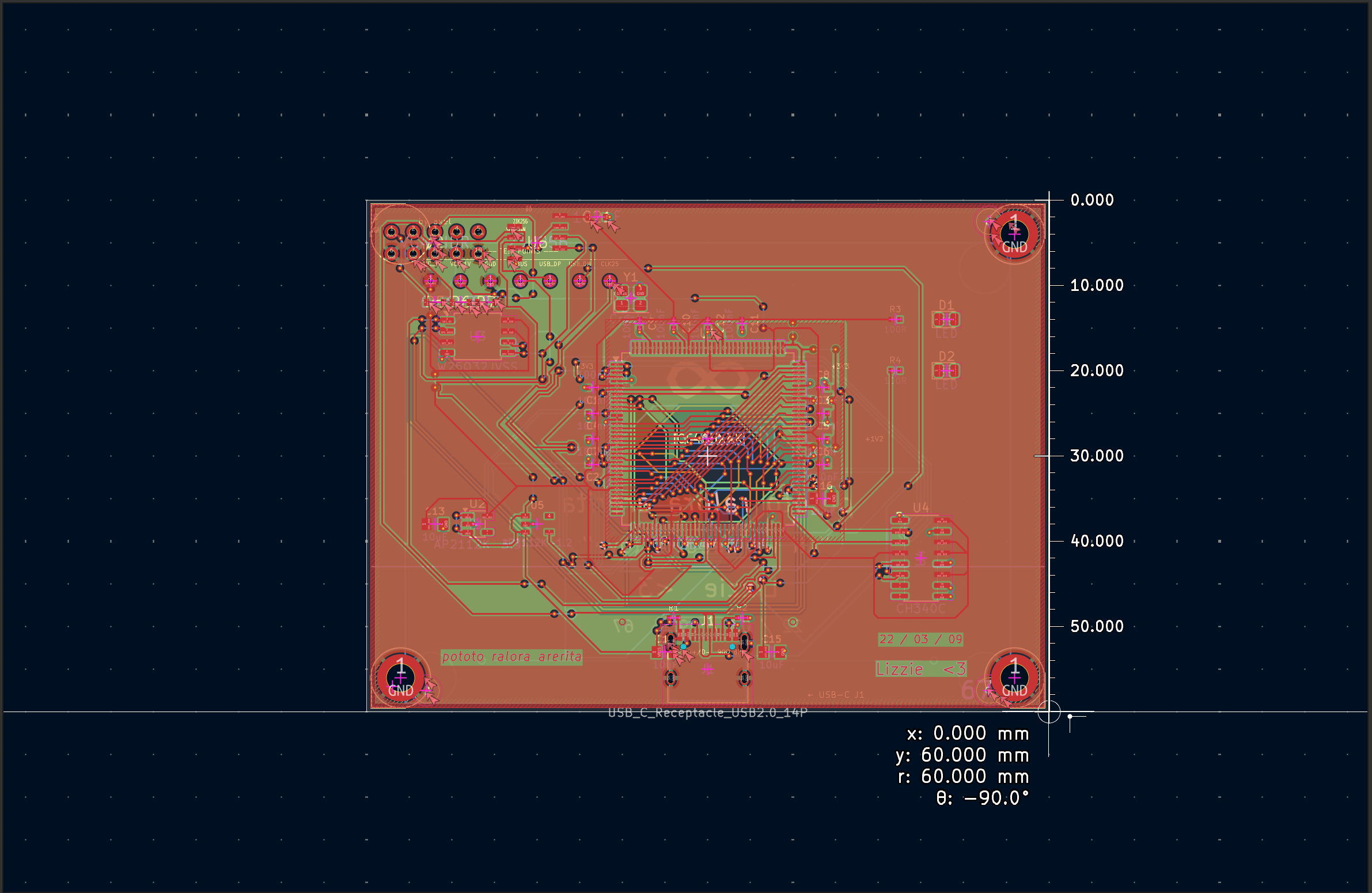
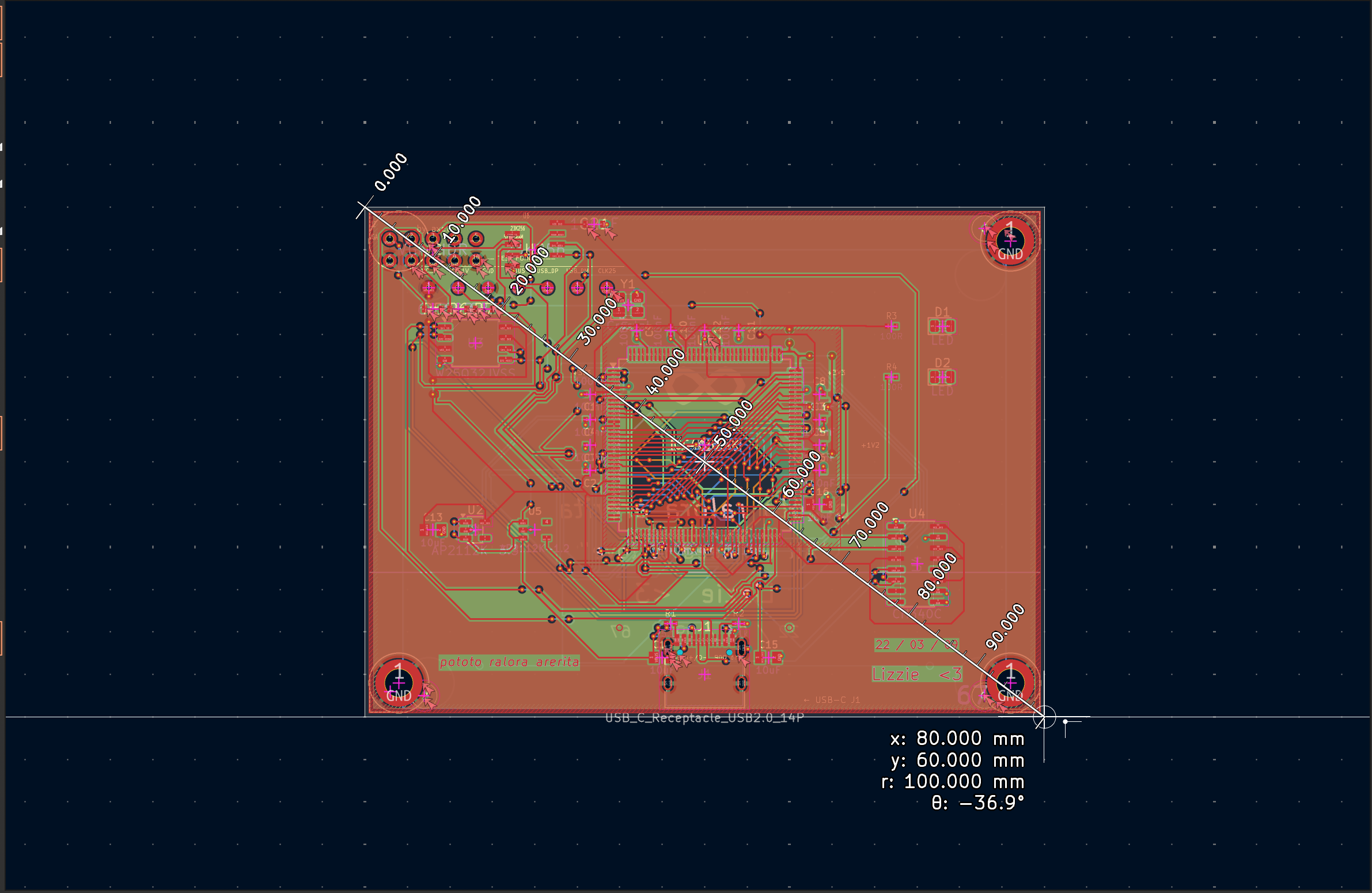
Measurements:
Long:
Width:
Full view:
The main chip is a Lattice iCE40HX4K FPGA — that's what becomes the processor. I chose it because the toolchain is fully open source (Yosys, nextpnr, icepack).
The rest of the board is USB-C for power and programming, SPI flash so the bitstream loads on power-up, two LDOs for the separate 3.3V and 1.2V rails, a USB-UART bridge to talk to it from my laptop, 32KB of external SRAM, and a VGA header. There's also an OLED that shows register values and the current instruction live, which is the coolest part honestly.
3D render, front:
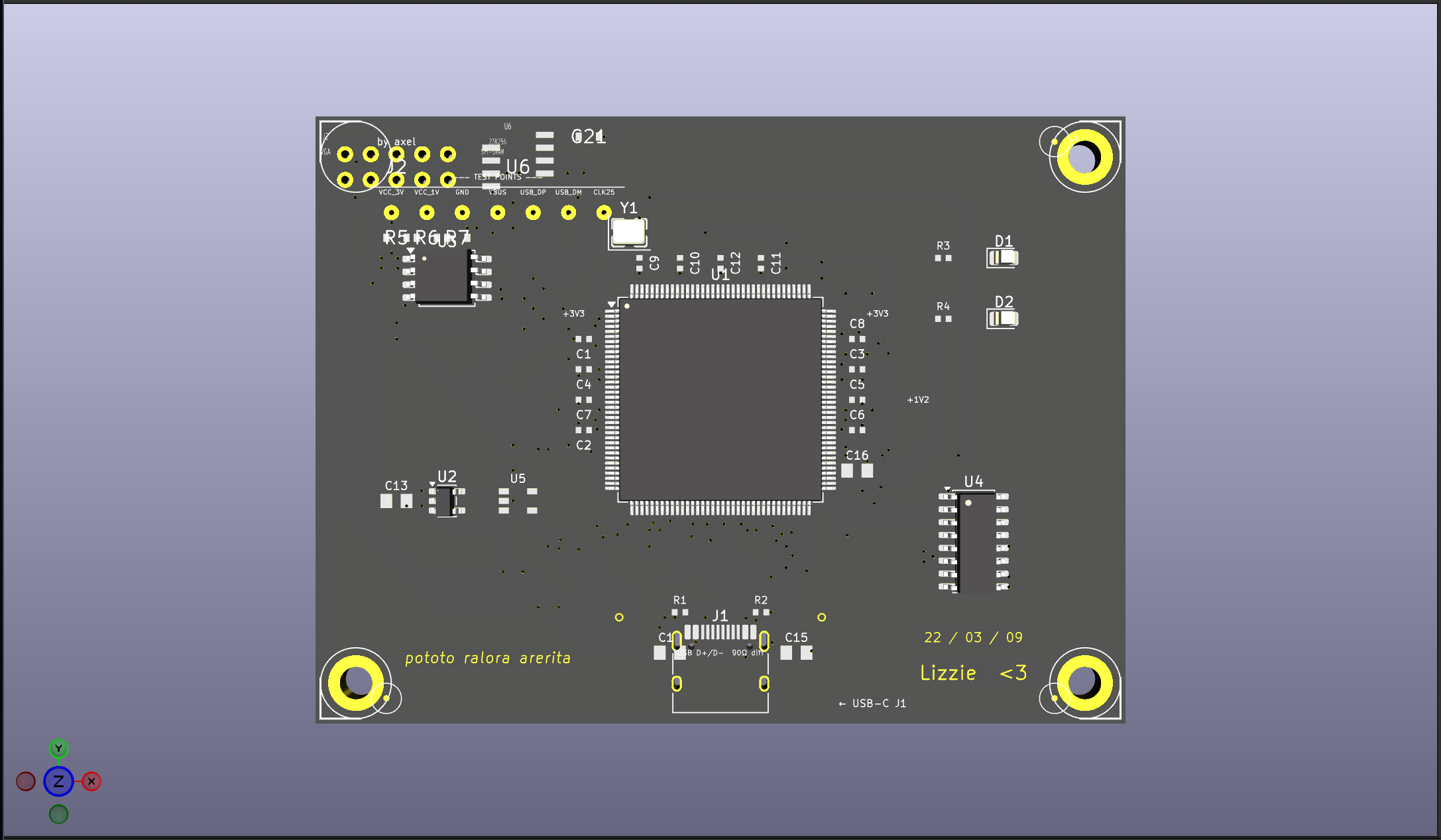
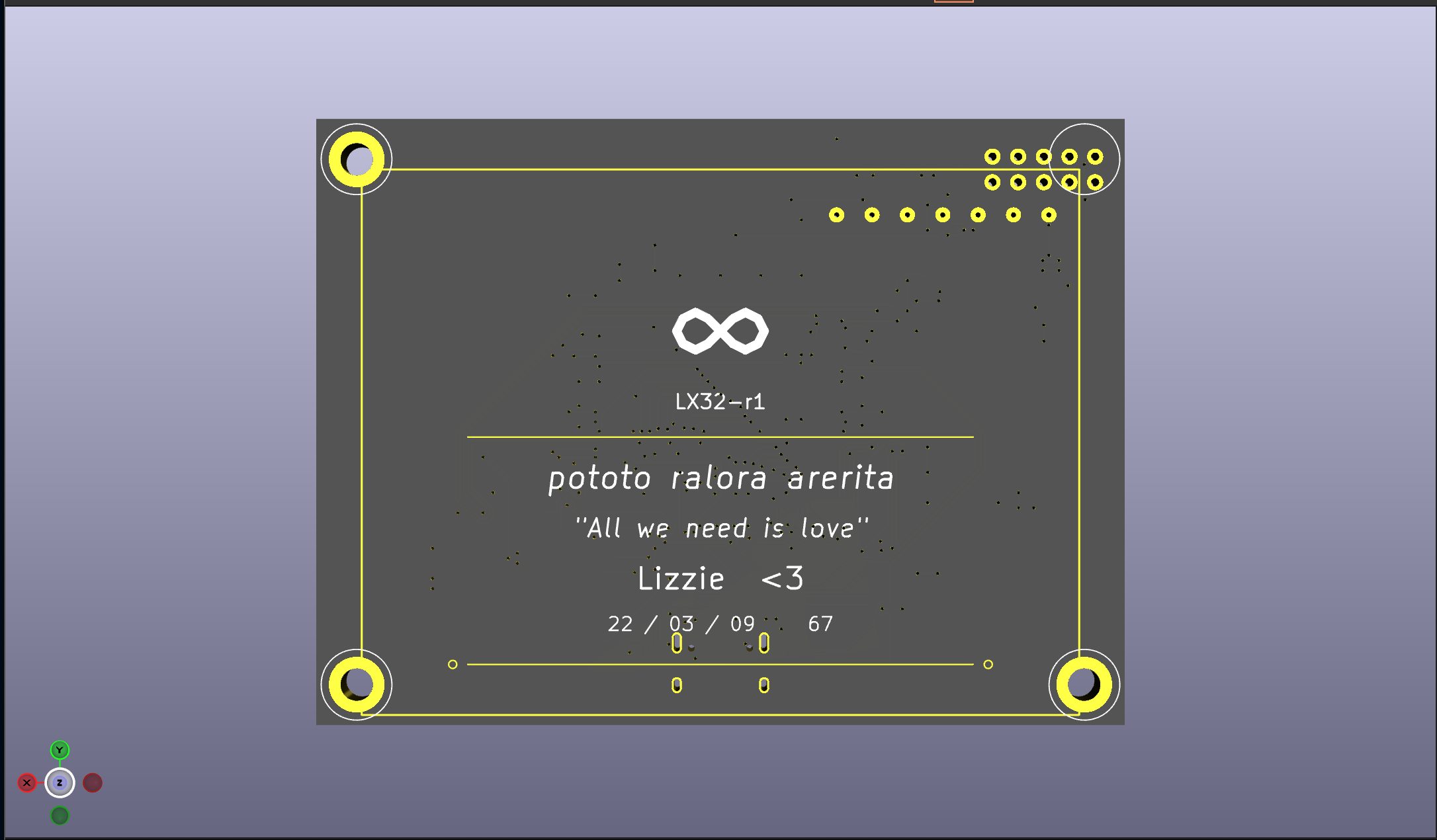
3D render, back:
.STEP file if you want it: lx32-fpga.step
32 registers, fixed 32-bit instruction width, single-cycle. I made up the instruction encoding: ADD, SUB, AND, OR, XOR, shifts, loads, stores, branches, jumps, LUI, AUIPC. x0 is hardwired to zero. Everything is in rtl/ and every module has a spec in docs/rtl/.
I wrote a Rust model of the processor, then a fuzzer that fires random instruction sequences through both Verilator and the model at the same time and compares cycle by cycle.
| module | test vectors | result |
|---|---|---|
| ALU | 100,000,000 | passed |
| Branch Unit | 100,000,000 | passed |
| Control Unit | 100,000,000 | passed |
| Register File | 100,000,000 | passed |
| Full System | 100,000,000 | passed |
| Total | 1,100,000,000+ | zero failures |
Runs in under 75 seconds. I also tortured my laptop with a Python script to run it on loop. There are Coq proofs for some properties and formal verification through sby too.
LLVM backend for lx32 — instruction patterns, register file, calling convention. Eight programs compile and run end-to-end: return, pointer store, call chain, branch/loop, compare/assign, pointer walk, iterative fibonacci, recursive fibonacci.
Write C, compile with LLVM, runs on this board.
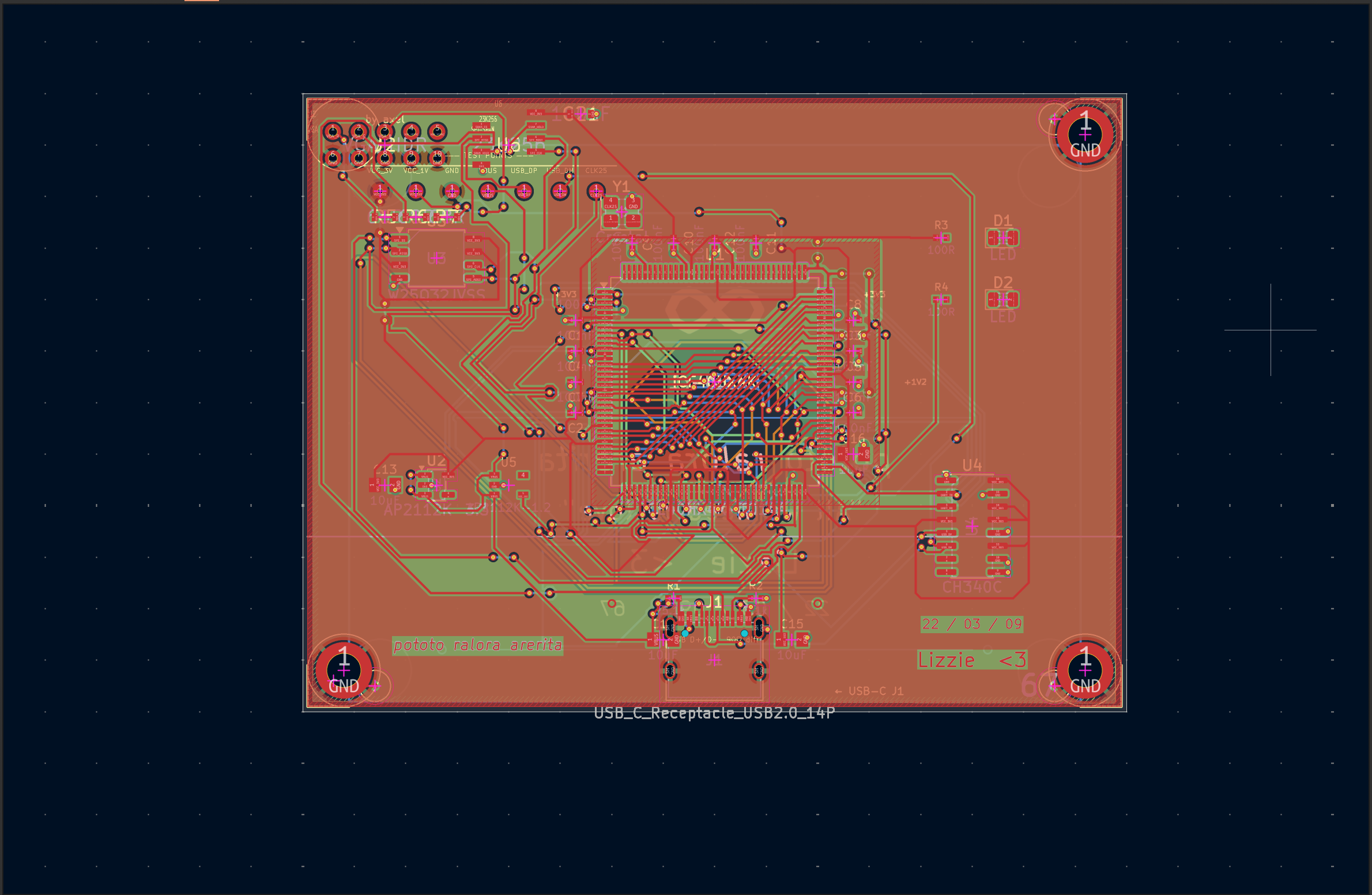
ENIG means the exposed copper comes out gold on black soldermask. I put personal stuff on both sides.
The back has an infinity symbol, pototo ralora arerita, "All we need is love", Lizzie <3, 22/03/09, and 67 (that last one I didn't choose, it just ended up there).
It's a working computer and it also has my whole heart on it.
git clone https://github.com/looprotate/lx32.git
cd lx32
make setup
You'll need: verilator, Rust (cargo), coqc, sby, yosys, z3, g++.
make sim TB=lx32_system_tb    # full system sim
make validate                  # full test suite (1.1B vectors)
make formal-all # formal proofsFull BOM: lx32-bom.csv
| Part | Qty | Total |
|---|---|---|
| Custom LX32 PCB (JLCPCB, 4-layer, ENIG, black mask) | 5 | $15.00 |
| Lattice iCE40HX4K-TQ144 | 2 | $19.00 |
| CH340C USB-UART (SOP-16) | 2 | $0.90 |
| W25Q32JVSSIQ SPI Flash 32Mb | 2 | $1.10 |
| AP2112K-3.3TRG1 LDO 3.3V | 2 | $0.60 |
| AP2112K-1.2TRG1 LDO 1.2V | 2 | $0.60 |
| 25MHz Crystal SMD 3225 | 2 | $0.70 |
| USB-C connector SMD | 2 | $0.80 |
| Microchip 23K256 SPI SRAM (SOIC-8) | 2 | $1.20 |
| VGA 2x5 header + 68Ω resistors | -- | $0.76 |
| Passives (caps, resistors, LEDs) | -- | $0.58 |
| 2.54mm pin headers | 1 | $0.80 |
| M3 standoffs + screws | 12 | $1.00 |
| 0.96" OLED display | 1 | $14.22 |
| Jumper wires + breadboard | 1 | $9.89 |
| Shipping JLCPCB to Uruguay | -- | $22.00 |
| Shipping Tiendamia | -- | $38.00 |
| Total | $127.15 |
MIT
| Qty | Value | Footprint | References |
|---|---|---|---|
| 12 | 100nF | C_0402_1005Metric | C1, C2, C3, C4, C5, C6, C7, C8, C9, C10, C11, C12 |
| 4 | 10uF | C_0805_2012Metric | C13, C14, C15, C16 |
| 4 | MH_M3 | MH1, MH2, MH3, MH4 | |
| 3 | 68R | R5, R6, R7 | |
| 3 | Fiducial | FID1, FID2, FID3 | |
| 2 | 100R | R_0402_1005Metric | R3, R4 |
| 2 | 5.1k | R_0402_1005Metric | R1, R2 |
| 2 | LED | LED_0805_2012Metric | D1, D2 |
| 1 | 100nF | C21 | |
| 1 | 23K256 | U6 | |
| 1 | AP2112K-1.2 | SOT-23-5 | U5 |
| 1 | AP2112K-3.3 | SOT-23-5 | U2 |
| 1 | CH340C | SOIC-16_3.9x9.9mm_P1.27mm | U4 |
| 1 | CLK25 | TP7 | |
| 1 | Crystal | Crystal_SMD_3225-4Pin | Y1 |
| 1 | GND | TP3 | |
| 1 | ICE40HX4K-TQ144 | TQFP-144_20x20mm_P0.5mm | U1 |
| 1 | USB_C_Receptacle_USB2.0_14P | USB_C_Receptacle | J1 |
| 1 | USB_DM | TP6 | |
| 1 | USB_DP | TP5 | |
| 1 | VBUS | TP4 | |
| 1 | VCC_1V2 | TP2 | |
| 1 | VCC_3V3 | TP1 | |
| 1 | VGA_HDR | J2 | |
| 1 | W25Q32JVSS | SOIC-8_5.3x5.3mm_P1.27mm | U3 |
It measures 80 × 60 mm and has 4 copper layers, 1.6 mm thick.
49 parts, built around the ICE40HX4K-TQ144, CH340C, W25Q32JVSSIQ and AP2112K-3.3. The full list of its parts is on this page, with links to each part's symbol and footprint where PCBKit's library has them.
From the looprotate/lx32 repository on GitHub, at the commit this page was made from: the board is pcb/lx32-fpga.kicad_pcb and its schematic pcb/lx32-fpga.kicad_sch. PCBKit opens the board in the browser, with nothing to install.
Its repository states no licence, so its author keeps all rights: ask looprotate before reusing the design.


RobertGawron/GammaSpectrometer
Device for quantitative analyze energy spectra of gamma-ray sources. Allows to study what radioactive isotopes in what quantities are present in measured sample.

transistorfet/fidget
An FPGA board that can interface to the Computie expansion bus using an iCE40HX1K


dineshannayya/riscduino_bringup
Host all the MPW Bring-up related Enviornment


SuperPower/esp32_shield
All hardware designs and products you can find in this repository is licensed under CERN Open Hardware Licence Version 2 - Weakly Reciprocal