2 layers65 × 44 mm
Dongle proto
kesyog/hangman
A Bluetooth-enabled strength testing and training tool that scales
40 parts42Apache-2.0

 kesyog/hangman42
A Bluetooth-enabled strength testing and training tool that scales
Proto1 0 is an open-source printed circuit board by kesyog, from the kesyog/hangman repository on GitHub, published under the Apache-2.0 licence. It is a 2-layer board of 65 × 44 mm with 47 parts on 51 nets, routed with 261 tracks and 41 vias.
It is built around the BT832, ADS1230IPW and SSM3J378R,LF. Its parts include 10 capacitors, 9 resistors, 3 connectors, 2 ICs and 2 switches. It belongs with the radio and wireless and sensors and measurement boards of this library.


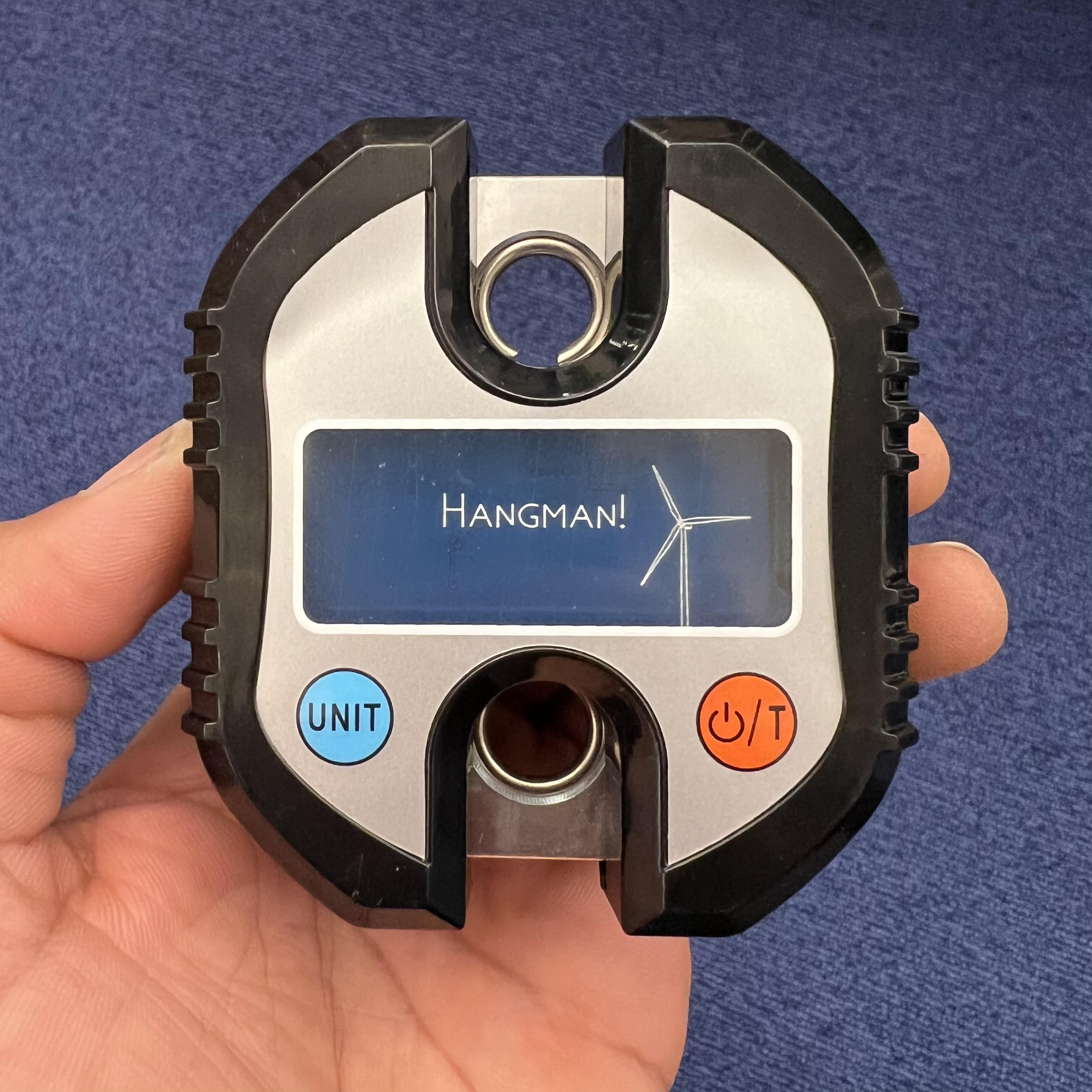
Hangman is a Bluetooth-enabled crane scale. It's intended use is as a climbing training and rehab tool, but it can be used anywhere that requires measuring force or weight.
The hardware retrofits a cheap (~$23) 150kg crane scale from Amazon with a custom PCB based around a Nordic nRF52 microcontroller and a differential ADC. The firmware uses Embassy, an embedded async framework written in Rust, as well as Nordic's SoftDevice Bluetooth stack.
Crane scales have become popular in the climbing community as a means to train and rehab fingers. This is a fun project to learn and practice various concepts I was unfamiliar or rusty with: BLE 101, async Rust on embedded, nRF52 development, SMT soldering and PCB design, etc. Maybe it'll even help my fingers get stronger.
The scale is feature-complete. Weight measurement works great with the Progressor API and compatible tools. Battery life is guesstimated to be in the range of several months to a couple of years depending on usage.
There are still a few more software updates planned. See the Issues section for the major ones.
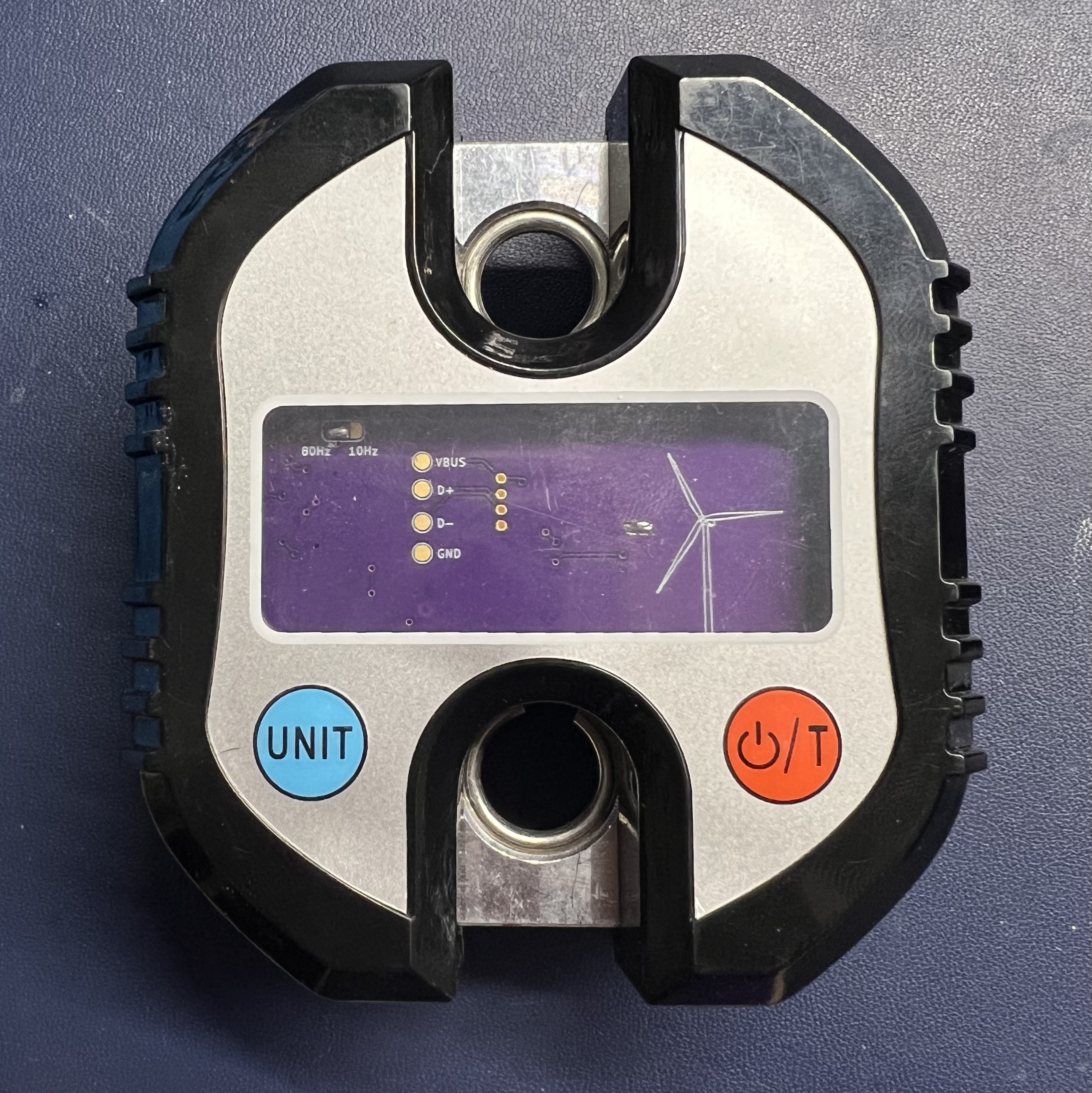
See title picture. A custom PCB based on a Fanstel BT832 nRF52832-based module and a Texas Instruments ADS1230 ADC. Thanks to a better ADC and PCB layout, noise performance should be improved over previous revisions and most importantly, it's much prettier.
A custom PCB based on a nRF52840 USB dongle and an HX711 ADC, the same differential ADC used on the Tindeq.
This is not an officially supported Google product. Wouldn't that be funny though?
This has no affiliation with Tindeq.
| Qty | Value | Footprint | References |
|---|---|---|---|
| 8 | TestPoint_Small | TestPoint:TestPoint_Pad_D1.5mm | TP1, TP2, TP3, TP4, TP5, TP6, TP7, TP8 |
| 6 | MountingHole | MountingHole:MountingHole_2.2mm_M2 | H1, H2, H3, H4, H5, H6 |
| 4 | 47 | Resistor_SMD:R_0603_1608Metric | R4, R5, R6, R7 |
| 3 | 0.1uF | Capacitor_SMD:C_0603_1608Metric | C4, C5, C6 |
| 3 | 10uF | Capacitor_SMD:C_0805_2012Metric | C8, C9, C10 |
| 3 | Fiducial | Fiducial:Fiducial_0.5mm_Mask1mm | FID1, FID2, FID3 |
| 2 | 100 | Resistor_SMD:R_0603_1608Metric | R1, R2 |
| 2 | 10nF | Capacitor_SMD:C_0603_1608Metric | C3, C7 |
| 2 | 10pF | Capacitor_SMD:C_0603_1608Metric | C1, C2 |
| 2 | 2223-TS02-66-70-BK-160-LCR-D-ND (Digikey) | Button_Switch_THT:SW_PUSH_6mm_H7.3mm | SW1, SW2 |
| 2 | 50k | Resistor_SMD:R_0603_1608Metric | R3, R9 |
| 1 | 32.768kHz | Crystal:Crystal_SMD_3215-2Pin_3.2x1.5mm | Y1 |
| 1 | ADS1230 | Package_SO:TSSOP-16_4.4x5mm_P0.65mm | U2 |
| 1 | BT832 | hangman:BT832 | U1 |
| 1 | Battery | Connector_Wire:SolderWire-0.5sqmm_1x02_P4.6mm_D0.9mm_OD2.1mm | BT1 |
| 1 | Conn_01x01 | Connector_Wire:SolderWire-0.5sqmm_1x01_D0.9mm_OD2.1mm | J3 |
| 1 | Conn_01x04 | Connector_Wire:SolderWire-0.1sqmm_1x04_P3.6mm_D0.4mm_OD1mm | J1 |
| 1 | Conn_ARM_JTAG_SWD_10 | Connector_PinHeader_1.27mm:PinHeader_2x05_P1.27mm_Vertical_SMD | J2 |
| 1 | LED | LED_SMD:LED_0603_1608Metric_Pad1.05x0.95mm_HandSolder | D1 |
| 1 | SSM3J378R | Package_TO_SOT_SMD:SOT-23 | Q1 |
| 1 | TBD | Resistor_SMD:R_0805_2012Metric | R8 |
kesyog/hangman
A Bluetooth-enabled strength testing and training tool that scales


heimdall-suite/heimdall-switch
Wireless power switch node for RC vehicles, part of the Heimdall Suite.


VoronDesign/Voron-Hardware
Cool Hardware designed by the Voron Design group

hackclub/OnBoard
💡 Join 1,000 teenagers and make your first PCB with a $100 grant!
It measures 65 × 44 mm and has 2 copper layers, 1.6 mm thick.
47 parts, built around the BT832, ADS1230IPW and SSM3J378R,LF. The full list of its parts is on this page, with links to each part's symbol and footprint where PCBKit's library has them.
From the kesyog/hangman repository on GitHub, at the commit this page was made from: the board is boards/proto1_0/proto1_0.kicad_pcb and its schematic boards/dongle_proto/dongle_proto.kicad_sch. PCBKit opens the board in the browser, with nothing to install.
Its repository publishes it under the Apache-2.0 licence: you may reuse it on that licence's terms (keep the author's notice, and for a copyleft licence share your changes alike).