4 layers81.3 × 81.3 mm
Pico with ken interface
kawashimaken/general-purpose-ken-interface
A modular, multi-MCU prototyping platform with a unified pin-assignment standard and horizontally-stackable expansion boards.
36 parts3MIT

 kawashimaken/general-purpose-ken-interface3
A modular, multi-MCU prototyping platform with a unified pin-assignment standard and horizontally-stackable expansion boards.
Esp32-s3-with ken interface is an open-source printed circuit board by kawashimaken, from the kawashimaken/general-purpose-ken-interface repository on GitHub, published under the MIT licence. It is a 4-layer board of 50.8 × 81.3 mm with 41 parts on 66 nets, routed with 418 tracks and 146 vias.
It is built around the CH340C, ESP32-S3-WROOM-1-N8 and AMS1117-3.3, with the PM254-2-15-W-8.5, XDZ254-2-15-W-2.5-G1 and TSC015A03526A among its other parts. Its parts include 9 capacitors, 8 resistors, 5 ICs, 4 diodes and 3 switches. It belongs with the interfaces and adapters boards and the ESP32 boards of this library.


A modular, multi-MCU prototyping platform with a unified pin-assignment standard and horizontally-stackable expansion boards.
Status: Hardware design (KiCad) is published in this repository. Software libraries (Hardware Abstraction Layer and demo applications) are under active development and will be released separately in the near future.
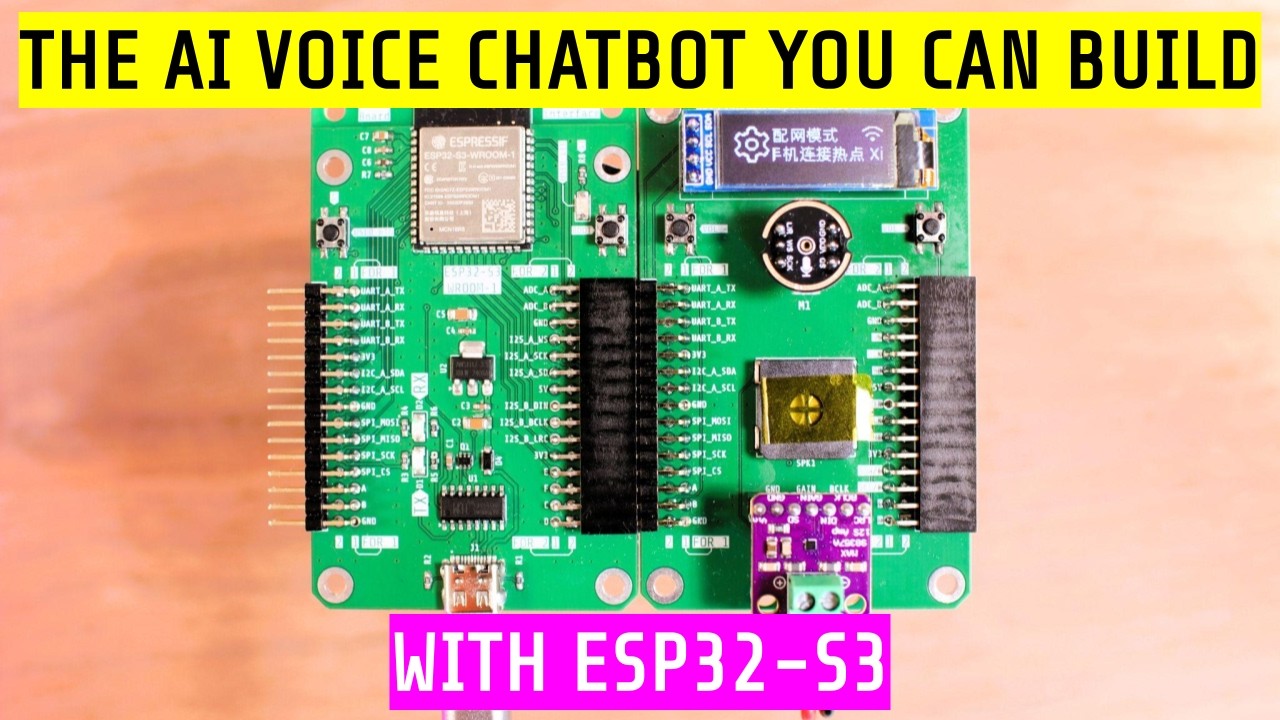
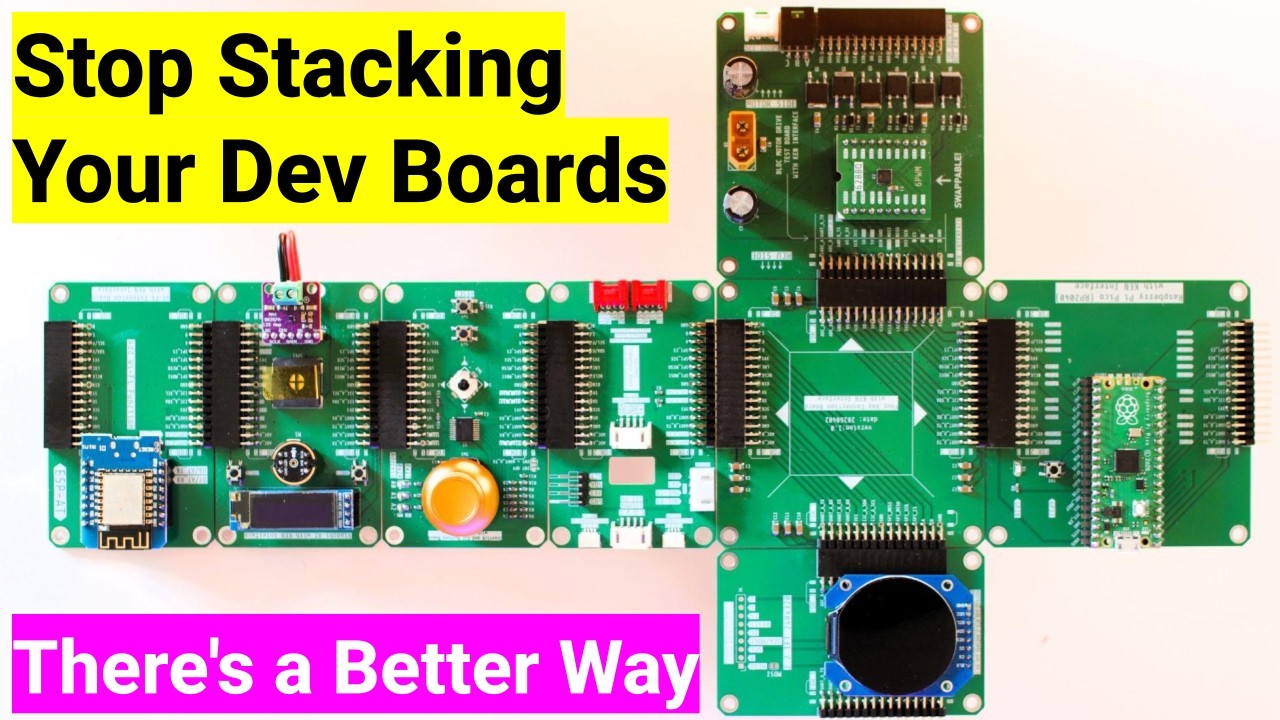
At its core, KEN Interface is a standardized pin-assignment pattern shared between MCU boards and expansion boards.
If you have worked with Arduino shields, the idea will feel familiar — because the pin layout is fixed, any compatible expansion board just plugs straight in and works. KEN Interface follows the same philosophy, but with a few key differences.
Instead of stacking boards vertically like Arduino shields, KEN Interface uses 15×2 right-angle pin headers so boards connect side by side. The left and right connectors are completely symmetrical — it does not matter which side you plug into.
Add a junction board into the mix, and you can expand in multiple directions: left, right, up, down. Since nothing is buried under another board, every module stays visible, and you can read the pin labels right off the PCB. No more hunting for which wire goes where.
KEN Interface currently supports four MCUs:
| MCU | Notes |
|---|---|
| ESP32 (WROOM-32) | Wi-Fi / BLE built-in |
| ESP32-S3 (WROOM-1) | Wi-Fi / BLE / native USB / dual core |
| Raspberry Pi Pico (RP2040) | Dual core, PIO for I2S, low cost |
| STM32G431 (WeAct CBU6) | 170 MHz, real DSP, hardware FPU |
The same expansion board works with all of them. Swap the MCU board, and you are good to go — no rewiring required.
Even though each MCU uses different physical pin numbers, the functional pin groups sit at fixed positions across all KEN Interface boards. Build your code around a HAL (Hardware Abstraction Layer), and a single codebase can run on all four MCUs.
The Ken Interface software library that provides this HAL is currently being developed and will be released in a separate repository.
The pin layout exposes the default peripheral interfaces that most modern MCUs provide out of the box.
| Group | Purpose |
|---|---|
| UART_A | General-purpose serial communication |
| UART_B | Secondary serial / debugging (some MCUs have native USB instead) |
| I2C | Sensors, OLEDs, character LCDs, I/O expanders |
| SPI | TFT displays, fast peripherals |
| I2S_A / I2S_B | Microphones, digital audio (PIO emulation on Pico) |
| PWM_A — PWM_F | DC motors, stepper motors, BLDC motors, servos |
| ADC_A / ADC_B | Analog inputs (sensors, joysticks) |
| Power rails | 3.3 V and 5 V |
"If the MCU supports it, we connect it. If it does not, it is just Not Available."
Not every MCU covers every group. For example:
These were deliberate trade-offs, figured out the hard way through multiple board revisions.
The complete pin assignment matrix across all four MCUs is documented in the KiCad schematic and accompanying spreadsheet (see kicad/).
.
├── kicad/              KiCad PCB project — schematic, board, and gerbers
├── LICENSE             MIT License
└── README.md           This file
Currently this repository contains the hardware design only (KiCad project for the KEN Interface base board and expansion modules).
The accompanying software (HAL library and example applications) is under active development and will be linked here once published.
Several expansion modules built on KEN Interface:
KEN Interface is not a silver bullet. A few honest caveats:
A well-designed HAL can hide many of these differences, but it cannot eliminate them entirely. KEN Interface provides a common hardware standard and a foundation for HAL design — it does not remove the underlying differences between MCUs.
Planned additions include:
The KiCad project template is published in this repository. If you would like to build your own KEN Interface-compatible board, the schematic symbols, footprints, and design rules are all in kicad/.
Pull requests, design suggestions, and new expansion-board ideas are very welcome.
The hardware design files in this repository are released under the MIT License (see LICENSE).
Future software components will be released under their own licenses — typically MIT or LGPL — and will be linked from this README once published.
Designed and maintained by Kawashima Ken (@kawashimaken).
If you build something with KEN Interface, please consider sharing it — issues, pull requests, and ideas are all welcome.
| Qty | Value | Footprint | References |
|---|---|---|---|
| 4 | 100nF | Capacitor_SMD:C_0603_1608Metric_Pad1.08x0.95mm_HandSolder | C1, C3, C4, C9 |
| 3 | 1k | Resistor_SMD:R_0603_1608Metric_Pad0.98x0.95mm_HandSolder | R3, R4, R8 |
| 3 | LED | LED_SMD:LED_1206_3216Metric_Pad1.42x1.75mm_HandSolder | D1, D2, D3 |
| 3 | TSC015A03526A | TSC015A03526A:SW-SMD_4P-L4.5-W4.5-P3.00-LS6.8 | SW1, SW2, SW3 |
| 2 | 10uF | Capacitor_SMD:C_1206_3216Metric_Pad1.33x1.80mm_HandSolder | C2, C5 |
| 2 | 470 | Resistor_SMD:R_0603_1608Metric_Pad0.98x0.95mm_HandSolder | R5, R6 |
| 2 | 5k1 | Resistor_SMD:R_0603_1608Metric_Pad0.98x0.95mm_HandSolder | R1, R2 |
| 2 | MountHole | MountingHole:MountingHole_3.2mm_M3_DIN965_Pad | H1, H2 |
| 1 | 0.1uF | Capacitor_SMD:C_0603_1608Metric_Pad1.08x0.95mm_HandSolder | C8 |
| 1 | 10k | Resistor_SMD:R_0603_1608Metric_Pad0.98x0.95mm_HandSolder | R7 |
| 1 | 10uF | Capacitor_SMD:C_0805_2012Metric_Pad1.18x1.45mm_HandSolder | C7 |
| 1 | 1uF | Capacitor_SMD:C_0603_1608Metric_Pad1.08x0.95mm_HandSolder | C6 |
| 1 | AMS1117-3.3 | Package_TO_SOT_SMD:SOT-223-3_TabPin2 | U2 |
| 1 | B5819W_C109213 | B5819W:SOD-123_L2.8-W1.8-LS3.7-RD | D4 |
| 1 | CH340C | Package_SO:SOIC-16_3.9x9.9mm_P1.27mm | U1 |
| 1 | ESP32-S3-WROOM-1 | RF_Module:ESP32-S3-WROOM-1 | U4 |
| 1 | G*** | kibuzzard-696F5E93 | kibuzzard-696F5E93 |
| 1 | G*** | kibuzzard-69756FE8 | kibuzzard-69756FE8 |
| 1 | G*** | kibuzzard-69BBF8DF | kibuzzard-69BBF8DF |
| 1 | G*** | kibuzzard-69BBF8B2 | kibuzzard-69BBF8B2 |
| 1 | G*** | kibuzzard-69BBF8C4 | kibuzzard-69BBF8C4 |
| 1 | G*** | kibuzzard-69BBE7EF | kibuzzard-69BBE7EF |
| 1 | G*** | kibuzzard-69BBE90D | kibuzzard-69BBE90D |
| 1 | G*** | kibuzzard-696F5E7C | kibuzzard-696F5E7C |
| 1 | PM254-2-15-W-8.5 | PM254-2-15-W-8.5:HDR-TH_30P-P2.54-H-F-R2-C15-W8.5 | U5 |
| 1 | TYPE-C-31-M-12 | TYPE-C-31-M-12:HRO_TYPE-C-31-M-12 | J1 |
| 1 | UMH3N | UMH3N:SC-70-6_L2.2-W1.3-P0.65-LS2.1-BR | Q1 |
| 1 | XDZ254-2-15-W-2.5-G1 | XDZ254-2-15-W-2.5-G1:HDR-TH_30P-P2.54-H-M-R2-C15-S2.54-N | U3 |
kawashimaken/general-purpose-ken-interface
A modular, multi-MCU prototyping platform with a unified pin-assignment standard and horizontally-stackable expansion boards.

kawashimaken/general-purpose-ken-interface
A modular, multi-MCU prototyping platform with a unified pin-assignment standard and horizontally-stackable expansion boards.

kawashimaken/general-purpose-ken-interface
A modular, multi-MCU prototyping platform with a unified pin-assignment standard and horizontally-stackable expansion boards.

kawashimaken/general-purpose-ken-interface
A modular, multi-MCU prototyping platform with a unified pin-assignment standard and horizontally-stackable expansion boards.

kawashimaken/general-purpose-ken-interface
A modular, multi-MCU prototyping platform with a unified pin-assignment standard and horizontally-stackable expansion boards.

mornepousse/SpLiT_KaSe
Custom ergonomic split fully-wireless keyboard - ESP32-S3, NRF24L01+, KiCad 9

hackclub/OnBoard
💡 Join 1,000 teenagers and make your first PCB with a $100 grant!

Safecast/bGeigieScint
The board features an integrated boost converter + linear regulator topology for SiPM bias generation:

duanestorey/hifi-amp
A high-fidelity four-channel amplifier with active-crossovers and room correction


mornepousse/KeSp_dongle
Recepteur USB 2.4 GHz du clavier Niphargus et de la souris Conchodytes — ESP32-S3 / ESP32-P4, nRF24L01+, format M.2 Key B


It measures 50.8 × 81.3 mm and has 4 copper layers, 1.2 mm thick.
41 parts, built around the CH340C, ESP32-S3-WROOM-1-N8, AMS1117-3.3 and PM254-2-15-W-8.5. The full list of its parts is on this page, with links to each part's symbol and footprint where PCBKit's library has them.
From the kawashimaken/general-purpose-ken-interface repository on GitHub, at the commit this page was made from: the board is kicad/esp32-s3-with-ken-interface/esp32-s3-with-ken-interface.kicad_pcb and its schematic kicad/display-with-ken-interface-2/display-with-ken-interface-2.kicad_sch. PCBKit opens the board in the browser, with nothing to install.
Its repository publishes it under the MIT licence: you may reuse it on that licence's terms (keep the author's notice, and for a copyleft licence share your changes alike).