
2 layers65 × 62 mm

 Karpova-Lab/syringe-pump33
Easy-to-build syringe pump with microliter accuracy
Module pycontrol is an open-source printed circuit board by Karpova-Lab, from the Karpova-Lab/syringe-pump repository on GitHub. It is a 2-layer board of 26.1 × 17.2 mm with 3 parts on 14 nets, routed with 13 tracks and 0 vias.
It is built around the PJ012-8P8C1.
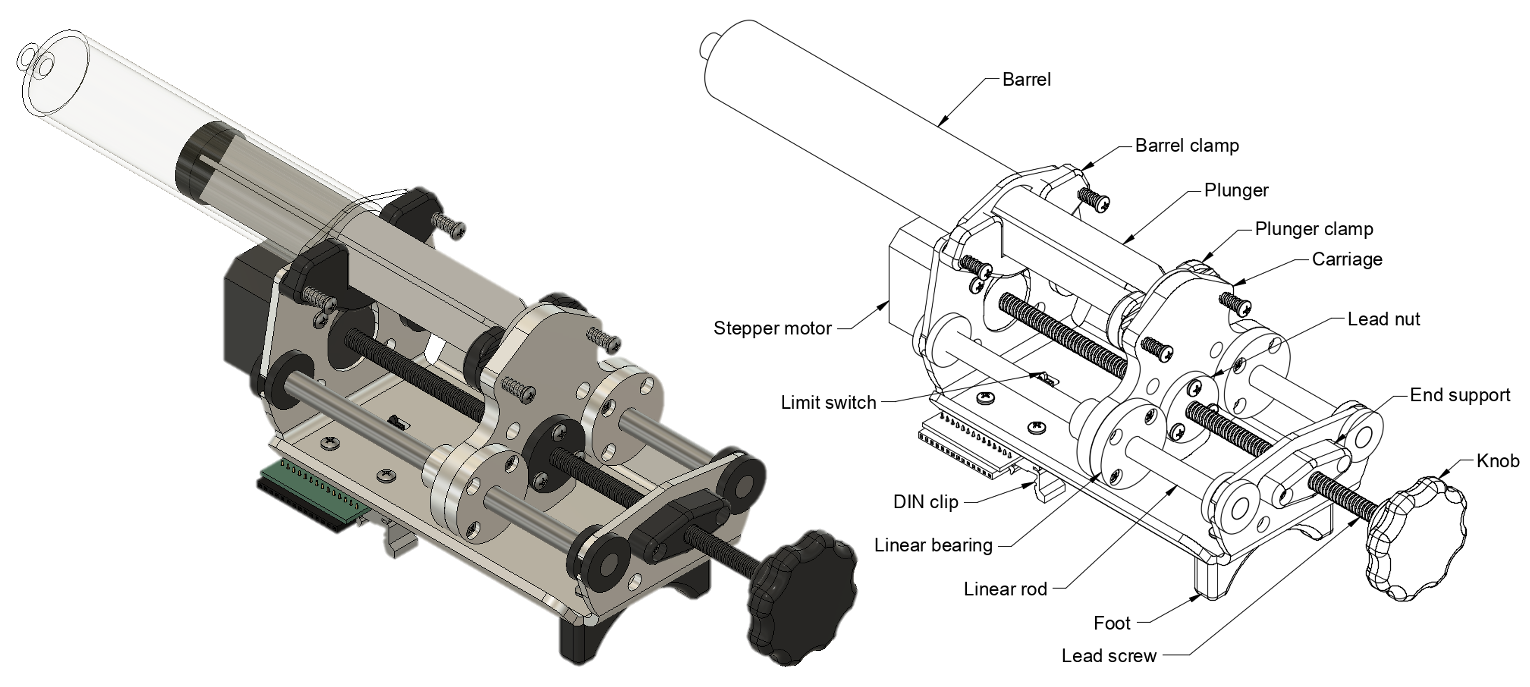
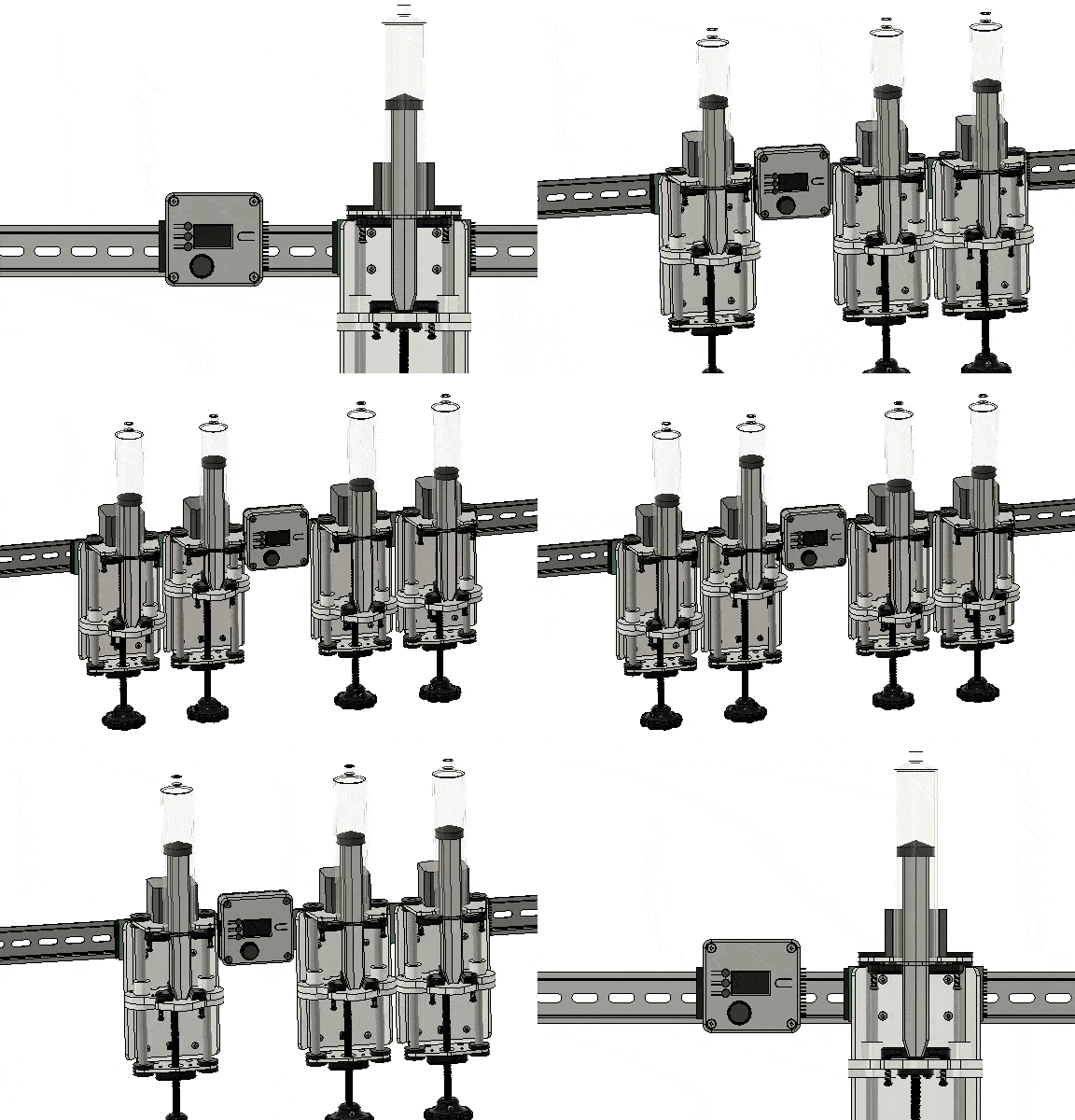
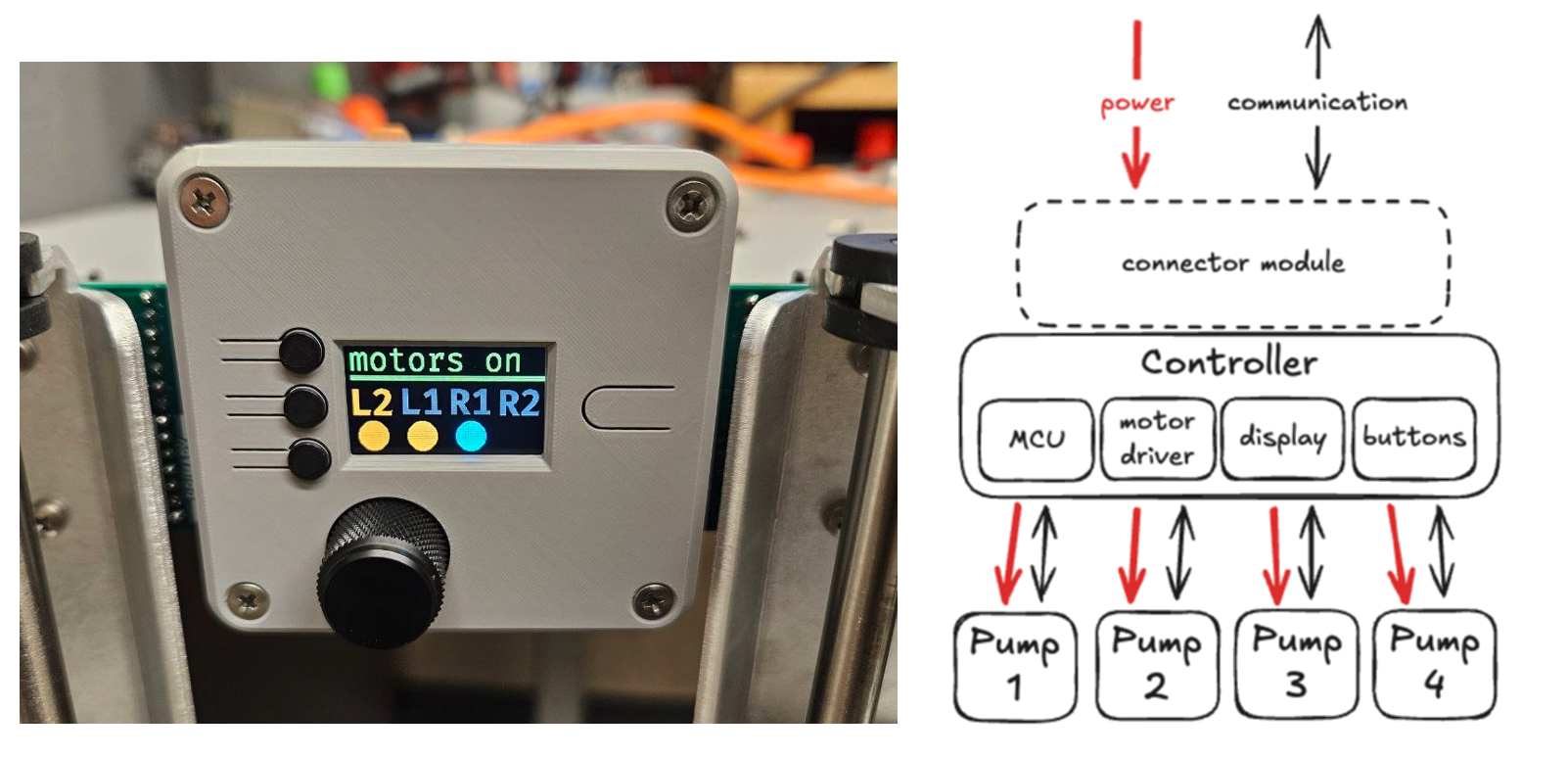
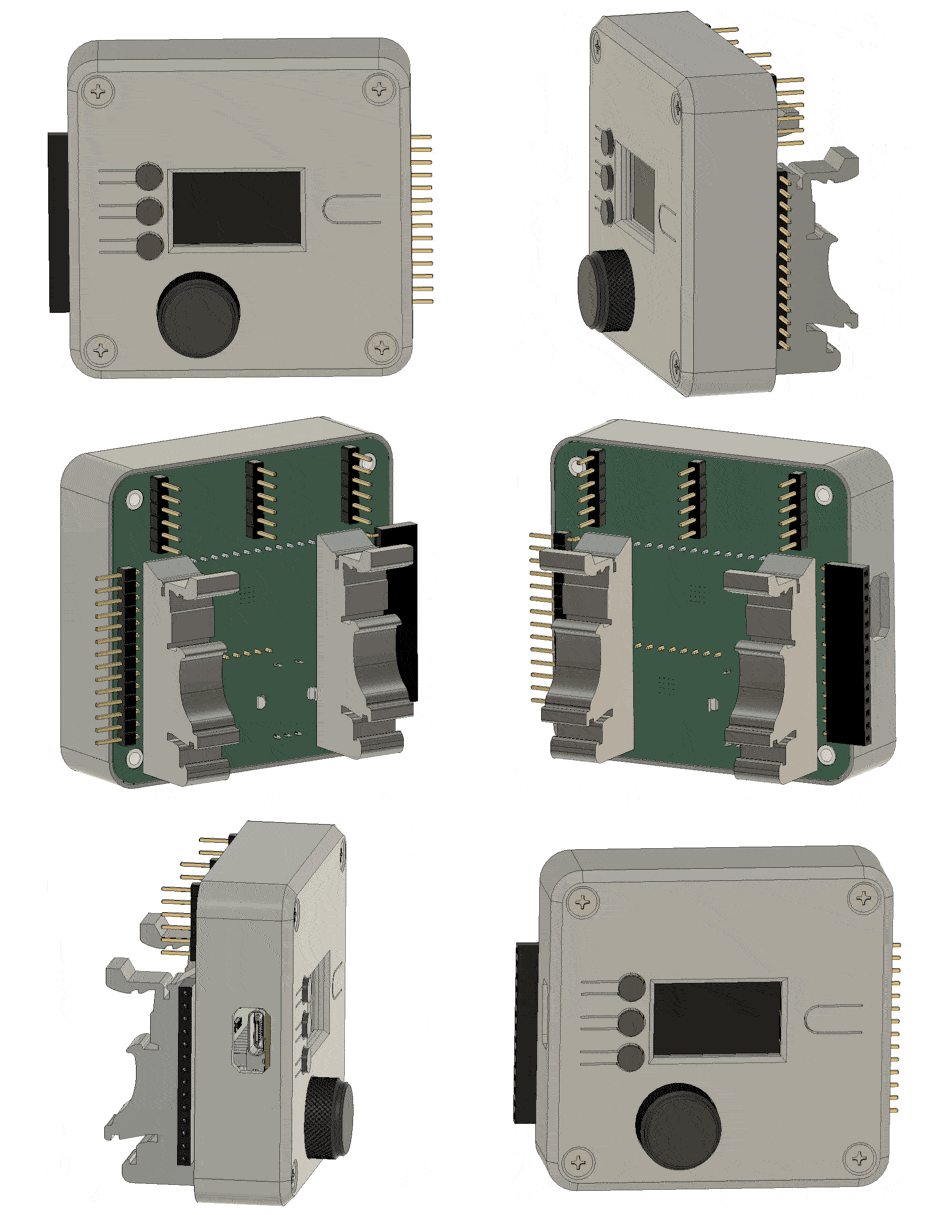
| Version | Date | Number of Parts | Design and Materials | Links |
|---|---|---|---|---|
| 1 | Dec 2016 | lasercut acrylic | demo video | |
| 2a | Dec 2017 | lasercut acrylic | demo video | |
| 2b | Jun 2017 | 89  | lasercut acrylic | demo video, repo, docs |
| 3 | Oct 2020 | 70  | aluminum base and MJF printed parts | demo video, assembly video, repo, docs |
| 4 | Aug 2025 | 49  | bent aluminum frame and FDM printed parts | assembly video, repo, docs |
This project is licensed under the Janelia open-source hardware license and Janelia 3-term BSD open-source software license.
Please contact innovation@janelia.hhmi.org if you have any questions about licensing or would like to use this project commercially.
| Qty | Value | Footprint | References |
|---|---|---|---|
| 2 | 0022285064 | Connector_PinHeader_2.54mm:PinHeader_1x06_P2.54mm_Vertical | J1, J3 |
| 1 | PJ012-8P8C1 | asl_footprints:RJ45_TH_Vertical_PJ012 | J2 |


hzeller/rpi-rgb-led-matrix
Controlling up to three chains of 64x64, 32x32, 16x32 or similar RGB LED displays using Raspberry Pi GPIO


atopile/atopile
Design circuit boards with code! ✨ Get software-like design reuse 🚀, validation, version control and collaboration in hardware; starting with electronics ⚡️


hackclub/sprig
🍃 Learn to code by making games in a JavaScript web-based game editor.
It measures 26.1 × 17.2 mm and has 2 copper layers, 1.6 mm thick.
3 parts, built around the PJ012-8P8C1. The full list of its parts is on this page, with links to each part's symbol and footprint where PCBKit's library has them.
From the Karpova-Lab/syringe-pump repository on GitHub, at the commit this page was made from: the board is ecad/module_pycontrol.kicad_pcb and its schematic ecad/controller.kicad_sch. PCBKit opens the board in the browser, with nothing to install.
Its repository states no licence, so its author keeps all rights: ask Karpova-Lab before reusing the design.