2 layers98 × 27 mm
 josdo/smesh3
A smesh node (or "snode") consists of a sensor payload plus a Meshtastic board that can relay readings using long range LoRa radio.
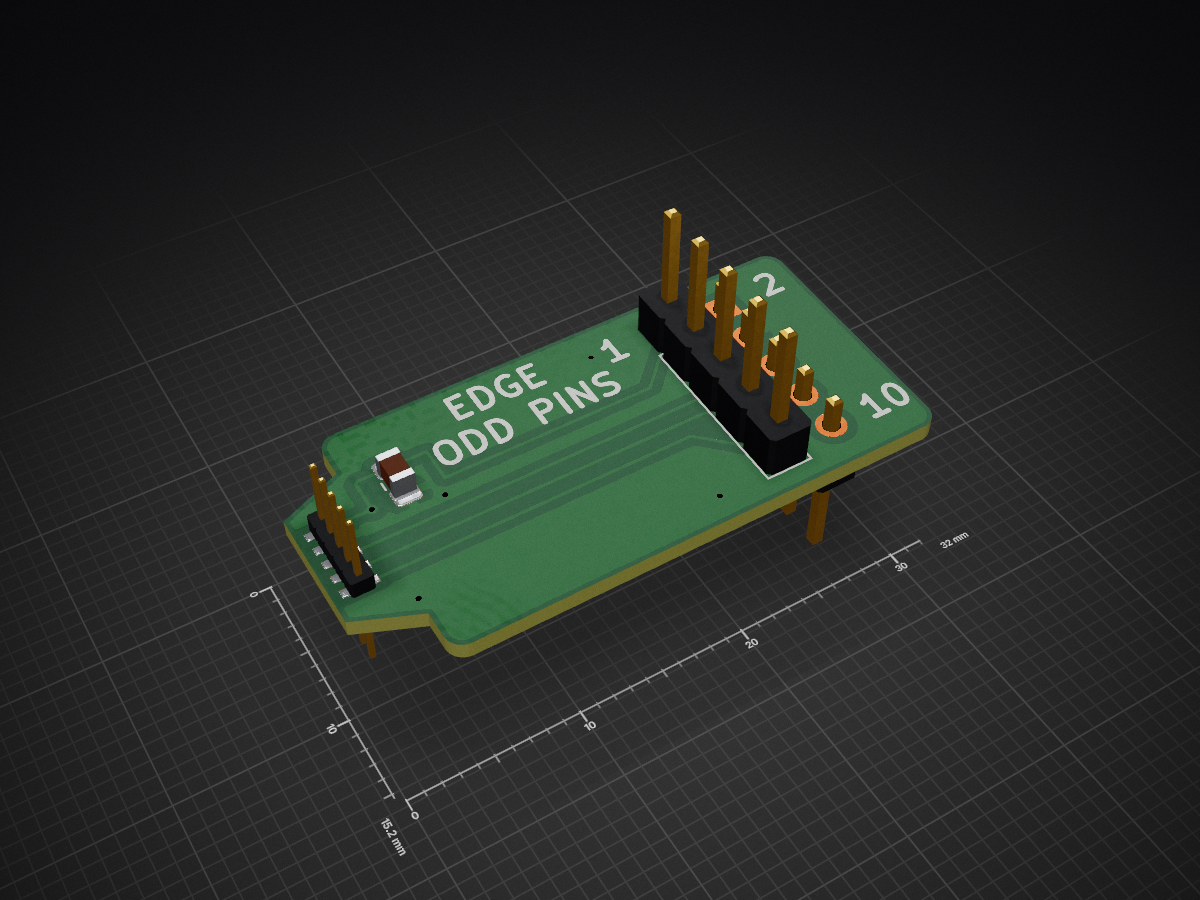
SmokeSensorConnector7 is an open-source printed circuit board by josdo, from the josdo/smesh repository on GitHub. It is a 2-layer board of 32 × 15.2 mm with 5 parts on 8 nets, routed with 45 tracks and 6 vias.
Its parts include 4 connectors and 1 capacitor. It belongs with the radio and wireless boards of this library.
SMesh is a sensor mesh network ("smesh") that performs long duration environmental sensing for sustainability research at Stanford.
A smesh node (or "snode") consists of a sensor payload plus a Meshtastic board that can relay readings using long range LoRa radio.
snode is a Python package that contains all dependencies and code to read from snodes.
Files are organized into three directories:
snode/scriptssnode/snodesnode/testsTo run any Python code:
cd snodepoetry installpoetry run python PATH/TO/SCRIPT.PYSnodes run a stable version of Meshtastic firmware with small modifications.
To access this firmware:
git clone https://github.com/josdo/meshtastic-firmware.githeltec-v3 from the list of options given.| Qty | Value | Footprint | References |
|---|---|---|---|
| 2 | Conn_01x05_Pin | Connector_PinHeader_1.00mm:PinHeader_2x05_P1.00mm_Vertical_SMD | J1, J3 |
| 2 | Conn_01x05_Socket | Connector_PinSocket_2.54mm:PinSocket_1x05_P2.54mm_Vertical | J2, J4 |
| 1 | 10 uF | Capacitor_SMD:C_0805_2012Metric_Pad1.18x1.45mm_HandSolder | C2 |
It measures 32 × 15.2 mm and has 2 copper layers, 1 mm thick.
5 parts. The full list of its parts is on this page, with links to each part's symbol and footprint where PCBKit's library has them.
From the josdo/smesh repository on GitHub, at the commit this page was made from: the board is boards/smokeSensorConnector7.kicad_pcb and its schematic boards/smokeSensorConnector7.kicad_sch. PCBKit opens the board in the browser, with nothing to install.
Its repository states no licence, so its author keeps all rights: ask josdo before reusing the design.

joypad-ai/joypad-os
Universal controller firmware for building adapters, dongles, and custom controllers.

OLIMEX/OLINUXINO
OLINUXINO is Open Source / Open Hardware, low cost from EUR 24 Linux Industrial grade Single Board Computer capable to operate -25+85C

jamro/tiny-engineer
A small desktop robot that brings an AI coding assistant to life, physically acting out when it reads files, thinks, writes code, and finishes work.

hackclub/OnBoard
💡 Join 1,000 teenagers and make your first PCB with a $100 grant!


Luos-io/luos_engine
Open-source and real-time orchestrator for cyber-physical-systems, to easily design, test and deploy embedded applications and digital twins.