2 layers

 JBlitzar/flsh
flashlight
Flsh batt is an open-source printed circuit board by JBlitzar, from the JBlitzar/flsh repository on GitHub, published under the GPL-3.0 licence. It is a 2-layer board of 93 × 50 mm with 5 parts on 3 nets.
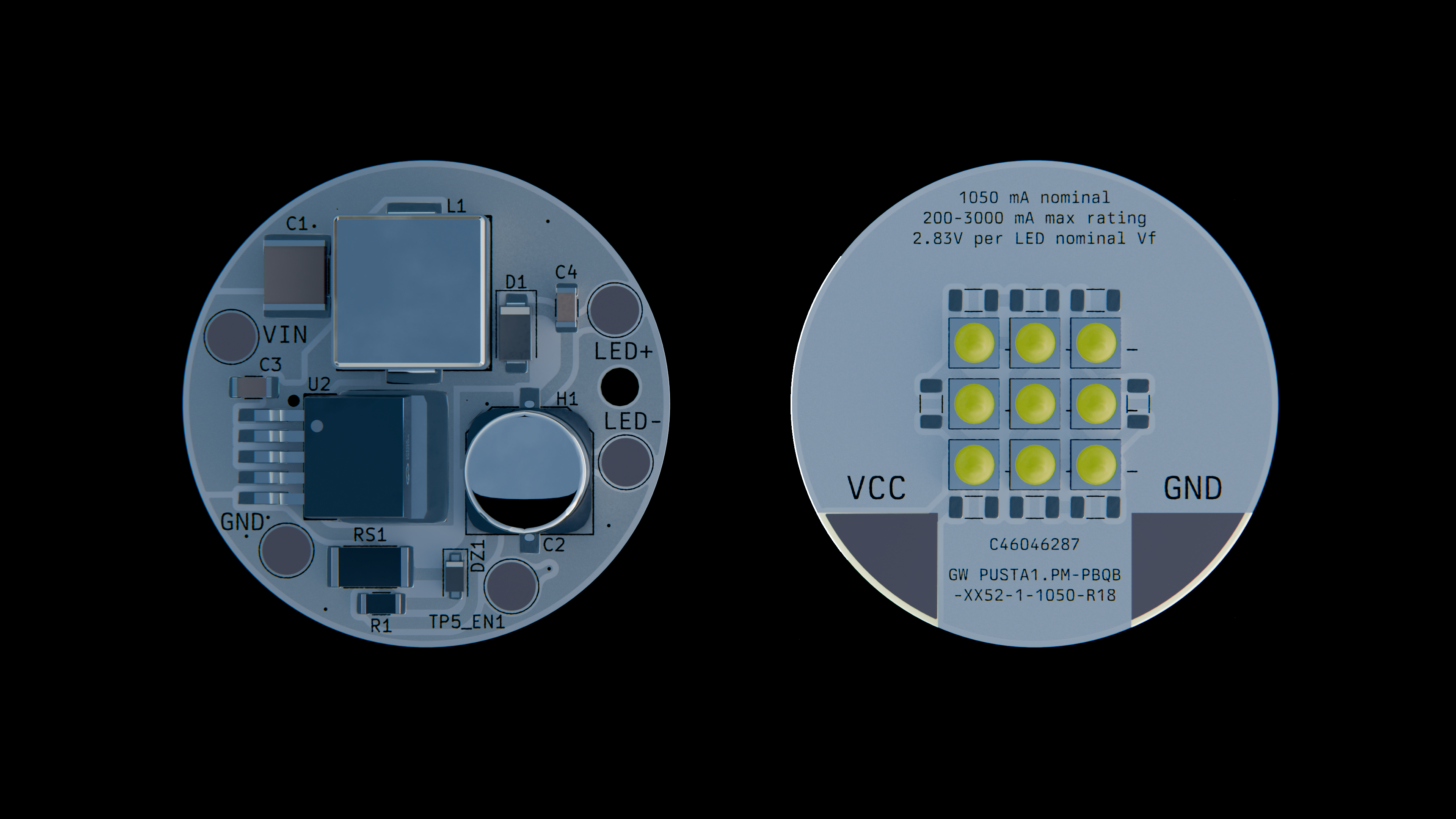
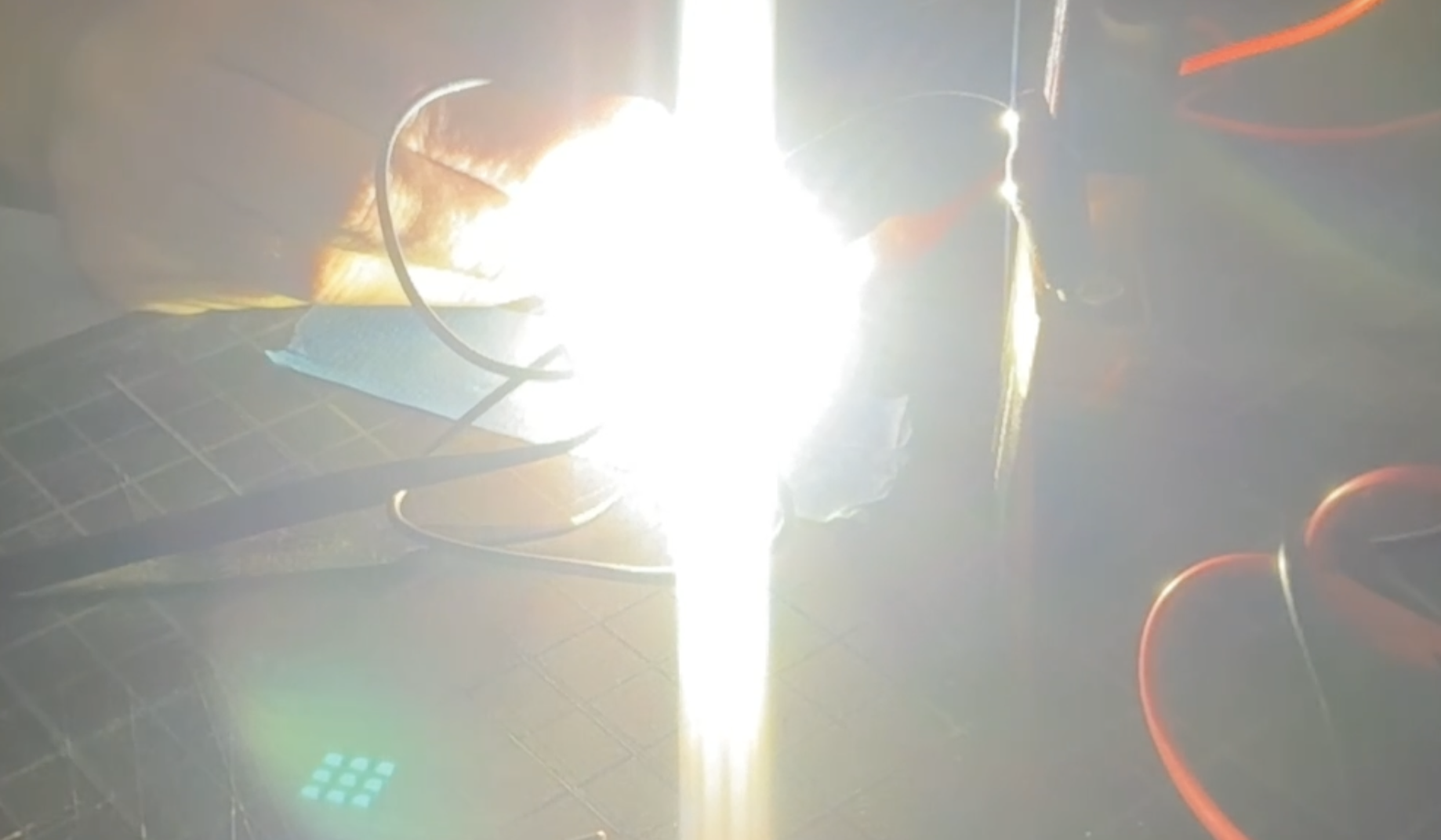
A flashlight with the brightness of 83 iphones.
Some features:
I made this because I thought it would be pretty cool. Also I got to think about designing power circuitry. I looked at a lot of different ICs before settling on the XL6006. In the end, TI and Analog both were beaten out by Shanghai Xinlong Semiconductor Technology Co., Ltd, so there you go! While the XL6006 gets a bad rap on cheap aliexpress boost boards, the chip itself will work fine if you have a good inductor etc. And it only requires like five passives to work! I evaluated a lot of different designs, see planning.
In terms of the LEDs, I pretty much went on to LCSC and clicked "sort high to low" on lumens. But really, I thought this was more reasonable than most CoB solutions.
You might be wondering why they are in series. This is to prevent thermal runaway, where one LED uses slightly more current, which causes it to get hotter, which causes it to hog current slightly more, etc in a positive feedback loop. You can use ballast resistors. I just wired them in series and accepted the steep boost ratio.
PWM dimming? hahaha you can source and solder a different sense resistor to get a different brightness.
2x21700 to VIN / GND on the boost board, then LED+ / LED- on the boost board to VCC / GND on the emitter board.
As you can tell, this is, for the moment, mostly the bones of a flashlight (ie the PCBs) rather than an actual assembly.
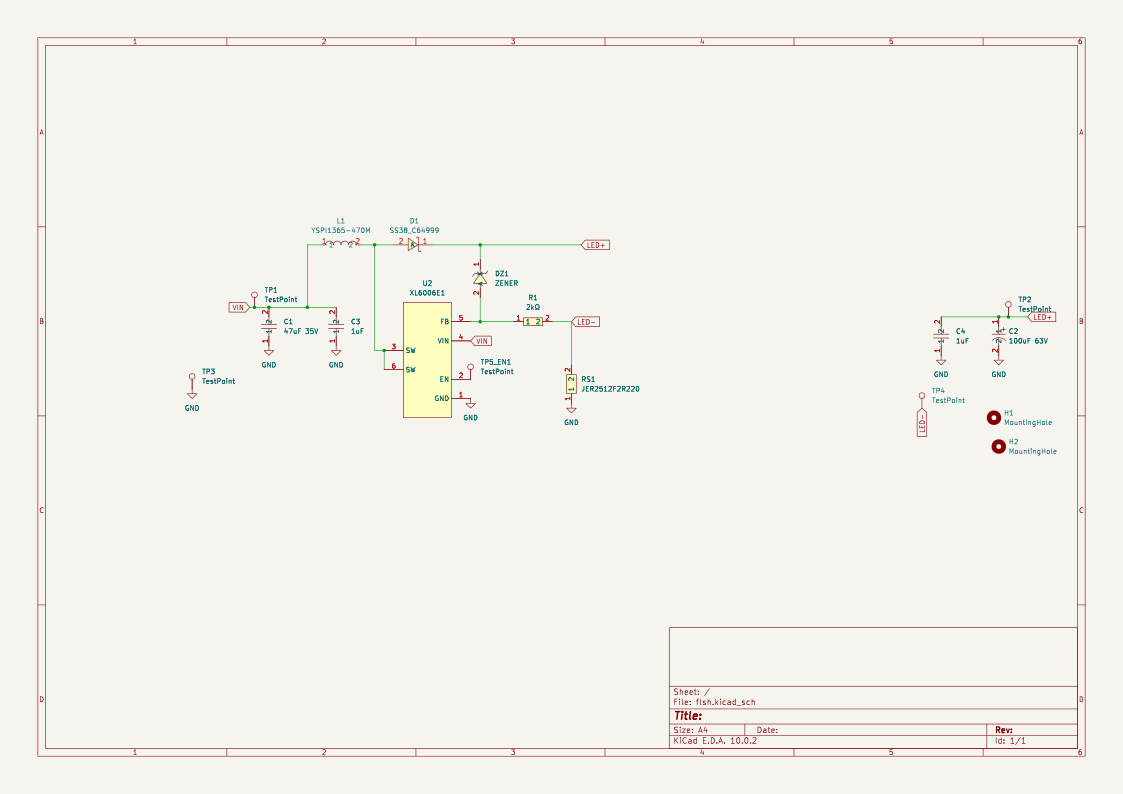
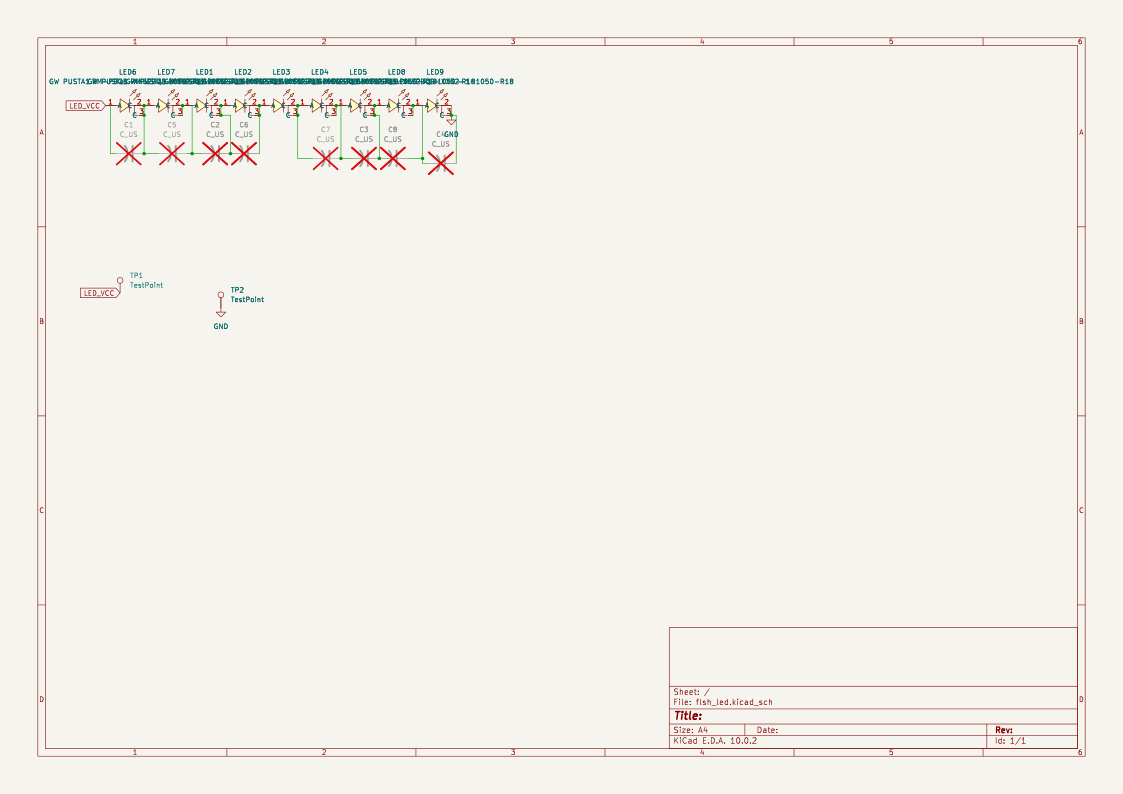
View on KiCanvas | View iBOM (or open PCB/flsh/bom/ibom.html locally)
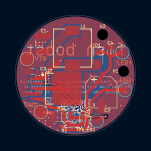 | 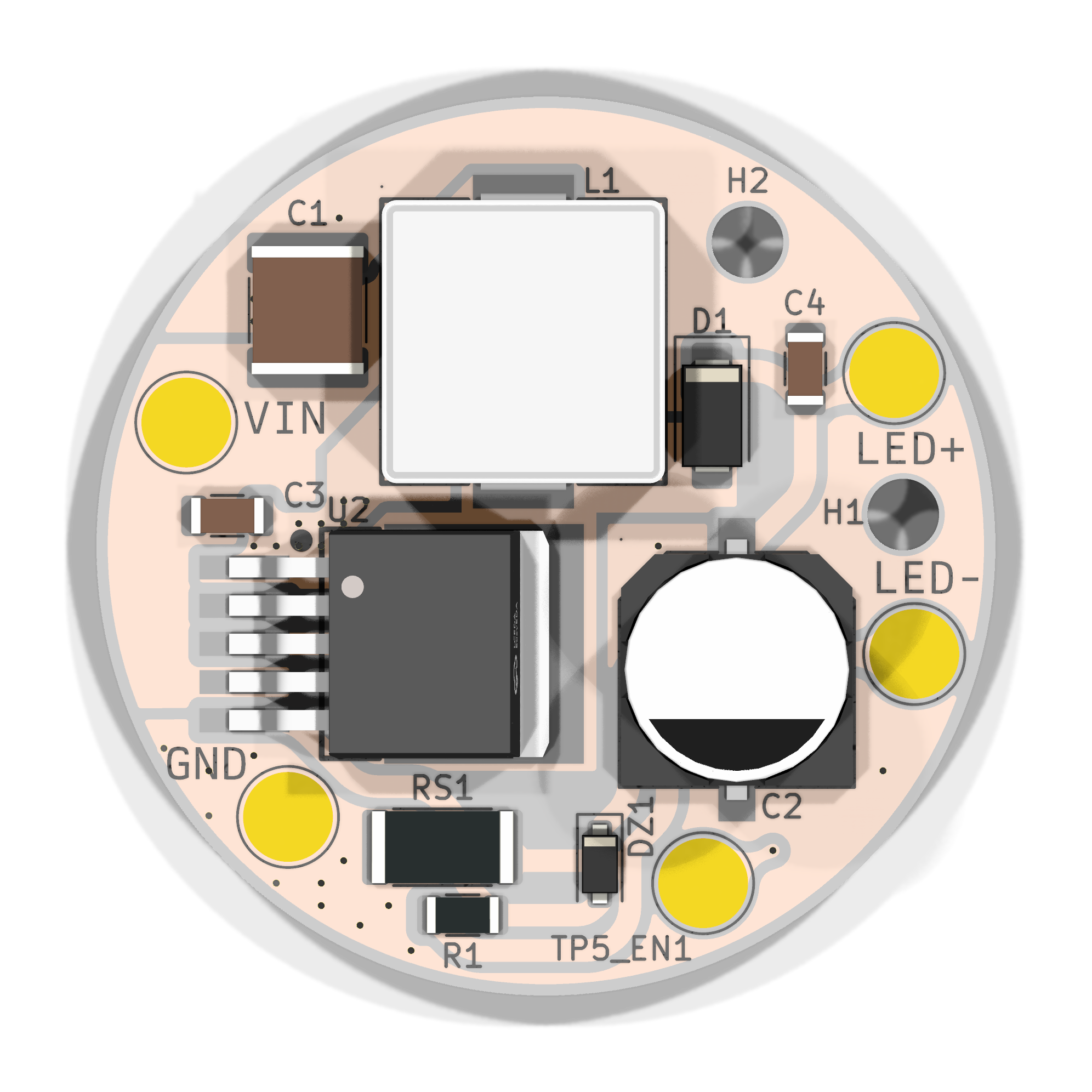 |
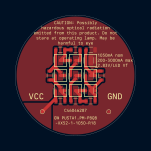 | 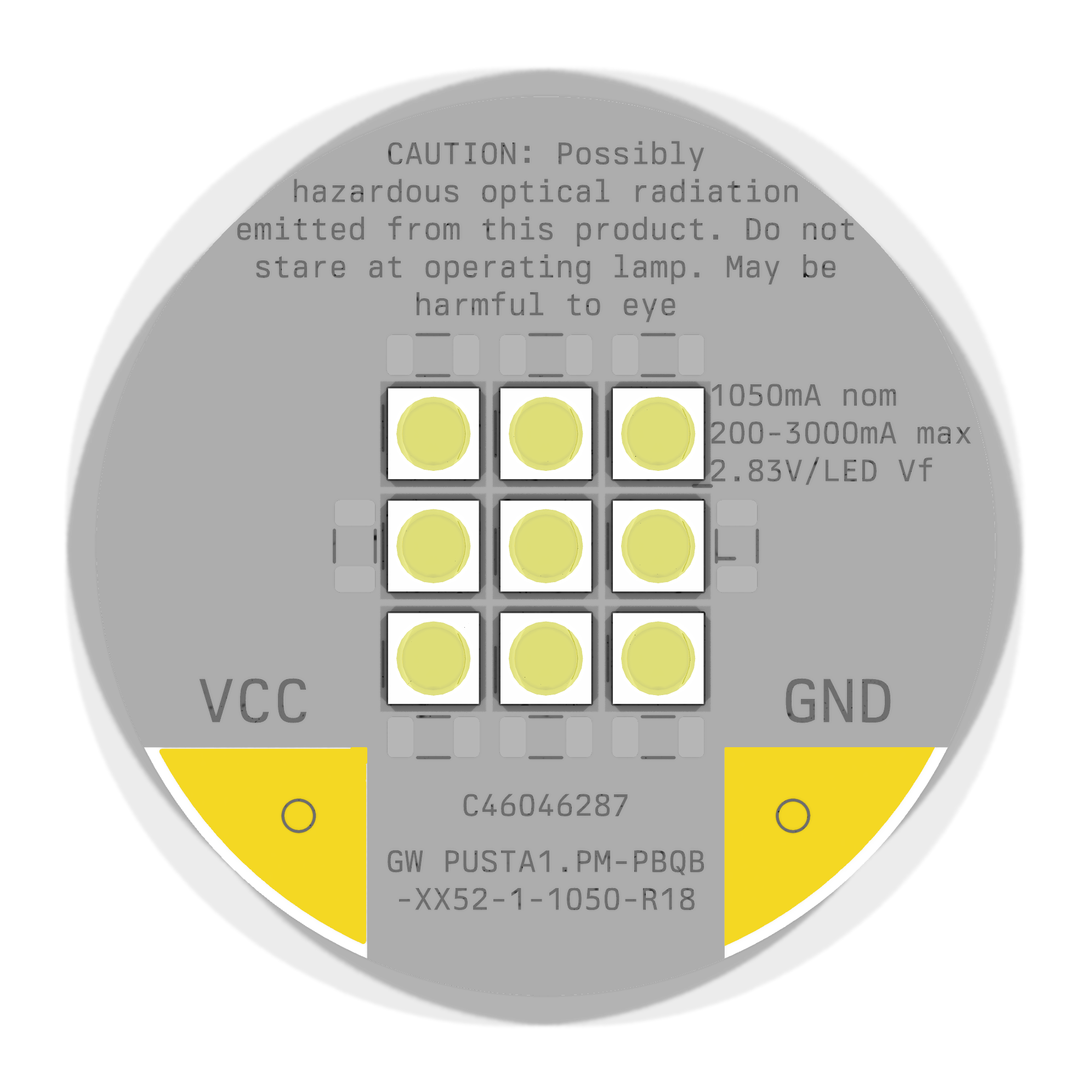 |
This is a ballpark, YMMV based on sourcing, promotions, discounts
| Item | Link | Extended Cost | Notes |
|---|---|---|---|
| 10x LEDs (MOQ) | https://www.lcsc.com/product-detail/C46046287.html | 17.15 | |
| LED PCB | N/A | 2.44 | |
| Boost components | N/A | 18 | See fabrication BOM in README for C-numbers |
| LCSC shipping | N/A | 8 | |
| JLC shipping | N/A | 3.3 | |
| Total | 48.89 |
| Designator | Footprint | Quantity | Value | LCSC Part # |
|---|---|---|---|---|
| C1 | C_2220_5750Metric | 1 | 47uF 35V | C27840590 |
| C2 | CAP-SMD_BD10.0-L10.3-W10.3-FD | 1 | 100uF 63V | C53120969 |
| C3, C4 | C_1206_3216Metric | 2 | 1uF | C13832 |
| D1 | D_SMA | 1 | SS38 | C64999 |
| DZ1 | D_SOD-123F | 1 | ZENER (BZT52C39, 39V) | C49023525 |
| L1 | IND-SMD_L13.8-W12.6_H6.5 | 1 | YSPI1365-470M (47uH) | C497913 |
| R1 | R_1206_3216Metric | 1 | 2k | C133543 |
| RS1 | R_2512_6332Metric | 1 | JER2512F2R220 (0.22R) | C49164922 |
| U2 | TO-263-5_L10.2-W9.9-P1.70-LS14.4-TL | 1 | XL6006E1 | C73346 |
| Designator | Footprint | Quantity | Value | LCSC Part # |
|---|---|---|---|---|
| LED1, LED2, LED3, LED4, LED5, LED6, LED7, LED8, LED9 | LED-SMD_3P-L3.7-W3.7_GW-PUSTA1.PM-NAPD-XX510-1-1050-R18 | 9 | GW PUSTA1.PM-PBQB-XX52-1-1050-R18 | C46046287 |
| Qty | Value | Footprint | References |
|---|---|---|---|
| 3 | TestPoint | TestPoint:TestPoint_Pad_D4.0mm | TP1, TP2, TP3 |
| 2 | 1121 | flsh_batt:BAT_1121 | BT1, BT2 |


joypad-ai/joypad-os
Universal controller firmware for building adapters, dongles, and custom controllers.

OLIMEX/OLINUXINO
OLINUXINO is Open Source / Open Hardware, low cost from EUR 24 Linux Industrial grade Single Board Computer capable to operate -25+85C

jamro/tiny-engineer
A small desktop robot that brings an AI coding assistant to life, physically acting out when it reads files, thinks, writes code, and finishes work.

hackclub/OnBoard
💡 Join 1,000 teenagers and make your first PCB with a $100 grant!


Luos-io/luos_engine
Open-source and real-time orchestrator for cyber-physical-systems, to easily design, test and deploy embedded applications and digital twins.
It measures 93 × 50 mm and has 2 copper layers, 1.6 mm thick.
5 parts. The full list of its parts is on this page, with links to each part's symbol and footprint where PCBKit's library has them.
From the JBlitzar/flsh repository on GitHub, at the commit this page was made from: the board is PCB/flsh/flsh_batt.kicad_pcb and its schematic PCB/flsh/flsh.kicad_sch. PCBKit opens the board in the browser, with nothing to install.
Its repository publishes it under the GPL-3.0 licence: you may reuse it on that licence's terms (keep the author's notice, and for a copyleft licence share your changes alike).
