4 layers55 × 72.1 mm
Main unit
HyFiVeUser/HyFiVe
For this use case we developed a very flexible autonomous measuring system, which can be deployed on fishing gear to collect data in an affordable and scalable way.
132 partsCC-BY-SA-4.0

 HyFiVeUser/HyFiVe
For this use case we developed a very flexible autonomous measuring system, which can be deployed on fishing gear to collect data in an affordable and scalable way.
KellerConnector is an open-source printed circuit board by HyFiVeUser, from the HyFiVeUser/HyFiVe repository on GitHub, published under the CC-BY-SA-4.0 licence. It is a 2-layer board with 2 parts on 5 nets, routed with 11 tracks and 1 via.

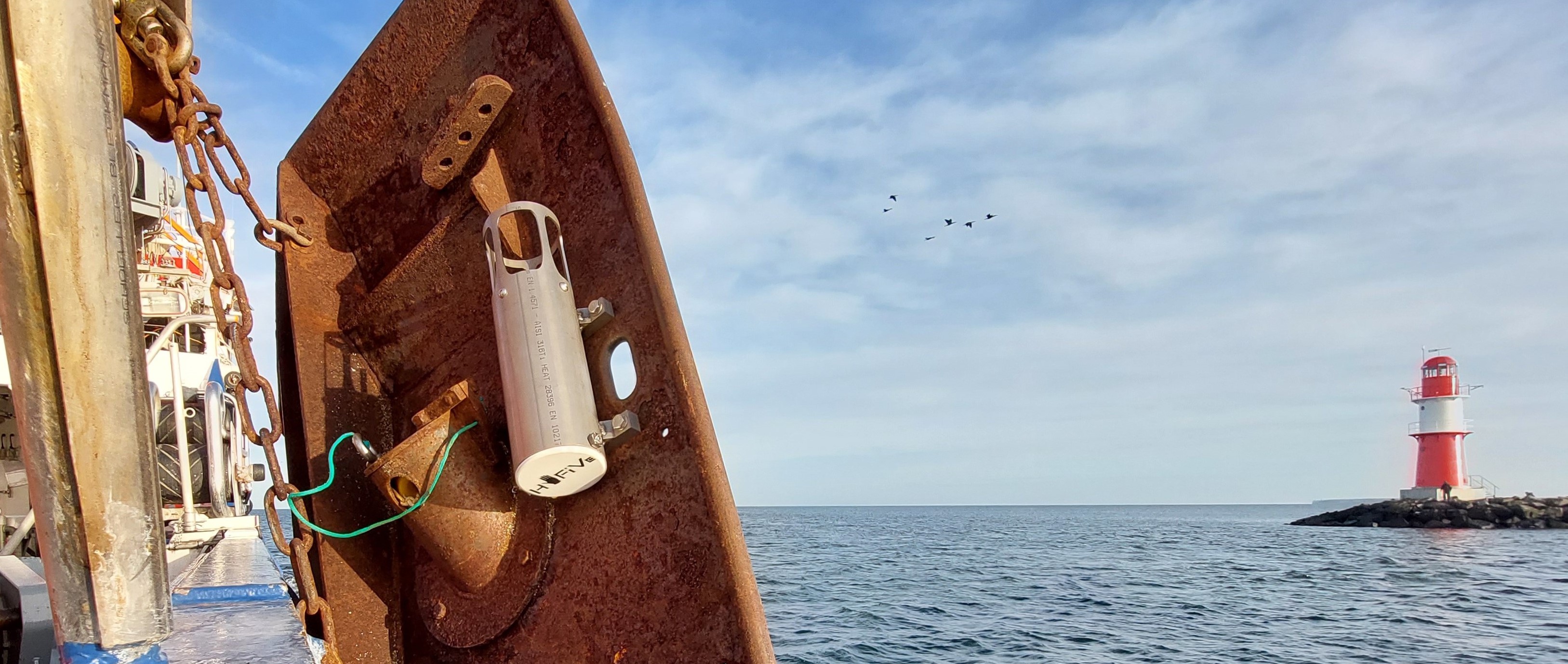
Whether for modelling climate change or for our understanding of fish stocks – ocean data is essential for many disciplines. Usually, this data is collected by research vessels, which are cost-intensive and thus limited in space and time. To increase data resolution ‘vessels of opportunity’ can be a scalable alternative. In this concept vessels are used as measuring platforms, that are originally financed for a non-scientific purpose. Especially fishing vessels are of interest as they deploy gear in deep water and so make the whole water column accessible for an attached measuring system.
For this use case we developed a very flexible autonomous measuring system, which can be deployed on fishing gear to collect data in an affordable and scalable way. This was done within the project ‘Hydrography on Fishing Vessels - HyFiVe’
This measuring system essentially consists of three components:
As overarching topic, bi-directional communication between these components is described separately.
The HyFiVe system offers many advantages:
The system was developed in an agile method, so prototypes were built from an early stage on and tested continuously. Till the end of the first project in Sept 2024 the system was deployed on over ten vessels, among them research vessels, trawl fishing vessels, gill net fishing vessels and recreational vessels like sailing boats.
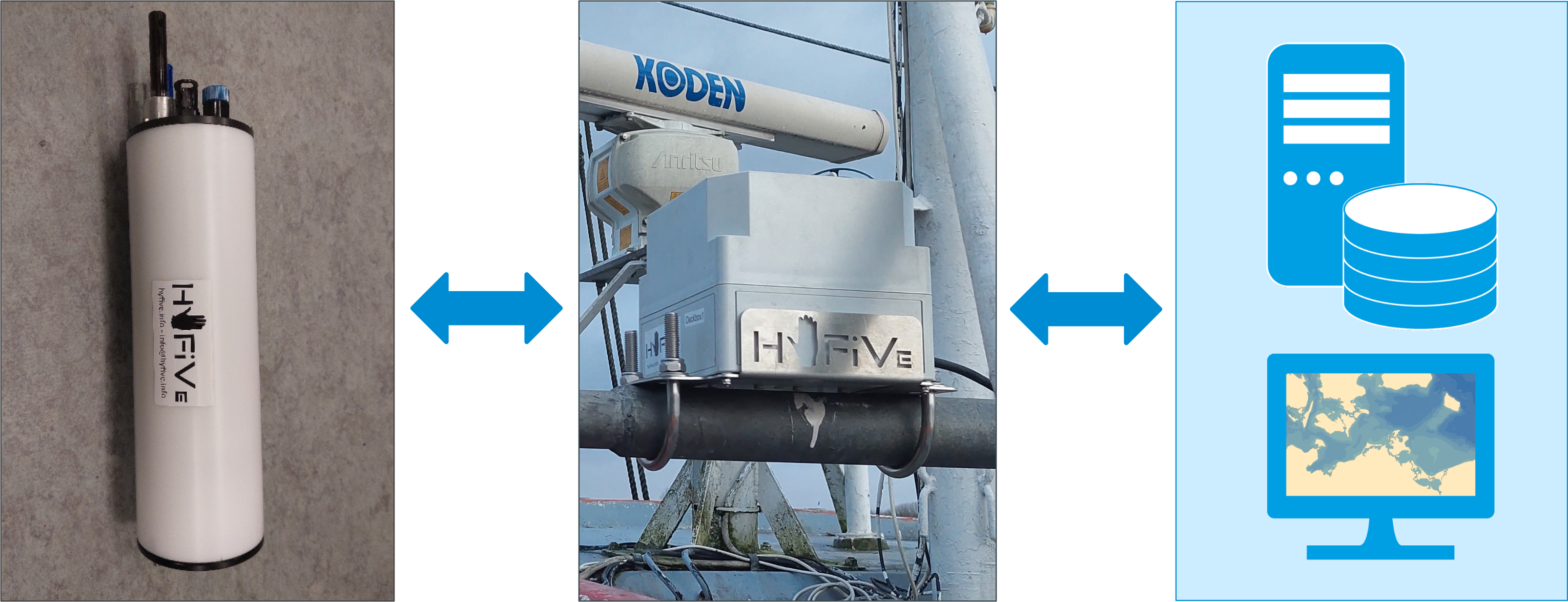
Figure 1: [blocked] Logger, deck box and server - the three components of the HyFiVe measuring system
This documentation is aimed to enable you to build an own HyFiVe system and therefore contains detailed informations about all parts. If you are interested in building a system and lack information, please get in contact with us.
Disclaimer: We do not guarantee that the description is accurate throughout or complete. All your work is done at your own risk. Please comply with all necessary and legal safety precautions, especially when high voltage is involved, to avoid damage to yourself, others and the hardware.
The three components have separate folders with hardware, software and specific information including READMEs which can be followed step by step. The READMEs contain
HyFiVe is an open-source project consisting of software, hardware, and documentation components. Each part of this project is licensed under a different copyleft license to ensure it remains free and open:
The HyFiVe logo is not published under above licenses and not free to use.
An overview of the legal implications resulting from this licenses can be fund under https://joinup.ec.europa.eu/collection/eupl/solution/joinup-licensing-assistant/jla-find-and-compare-software-licenses.
This project was funded by the German Federal Ministry of Food and Agriculture.

| Qty | Value | Footprint | References |
|---|---|---|---|
| 1 | Conn_01x04 | Connector_Molex:Molex_PicoBlade_53261-0471_1x04-1MP_P1.25mm_Horizontal | J1 |
| 1 | Conn_01x05 | Library:KellerConnector | J2 |
HyFiVeUser/HyFiVe
For this use case we developed a very flexible autonomous measuring system, which can be deployed on fishing gear to collect data in an affordable and scalable way.

HyFiVeUser/HyFiVe
For this use case we developed a very flexible autonomous measuring system, which can be deployed on fishing gear to collect data in an affordable and scalable way.

HyFiVeUser/HyFiVe
For this use case we developed a very flexible autonomous measuring system, which can be deployed on fishing gear to collect data in an affordable and scalable way.

HyFiVeUser/HyFiVe
For this use case we developed a very flexible autonomous measuring system, which can be deployed on fishing gear to collect data in an affordable and scalable way.

HyFiVeUser/HyFiVe
For this use case we developed a very flexible autonomous measuring system, which can be deployed on fishing gear to collect data in an affordable and scalable way.

HyFiVeUser/HyFiVe
For this use case we developed a very flexible autonomous measuring system, which can be deployed on fishing gear to collect data in an affordable and scalable way.

HyFiVeUser/HyFiVe
For this use case we developed a very flexible autonomous measuring system, which can be deployed on fishing gear to collect data in an affordable and scalable way.

hzeller/rpi-rgb-led-matrix
Controlling up to three chains of 64x64, 32x32, 16x32 or similar RGB LED displays using Raspberry Pi GPIO


adamws/kicad-kbplacer
KiCad plugin for automatic keyboard's key placement and routing

Luos-io/luos_engine
Open-source and real-time orchestrator for cyber-physical-systems, to easily design, test and deploy embedded applications and digital twins.

NVNTLabs/switch2-SDEX2M2
Micro SD Express to M.2 NVME Adapter for Nintendo Switch 2

BlueSCSI/BlueSCSI-v2
BlueSCSI v2/Ultra - an open source, open hardware, SCSI emulator using the Pi Pico PR2040 and Pico 2 RP2350

ohmtech-rdi/eurorack-blocks
Software to Hardware Prototyping for Eurorack using C++, Max/Gen~ or Faust

2 parts. The full list of its parts is on this page, with links to each part's symbol and footprint where PCBKit's library has them.
From the HyFiVeUser/HyFiVe repository on GitHub, at the commit this page was made from: the board is 01_Logger/01_Basic_Logger/01_Electronics/KellerConnector/KellerConnector.kicad_pcb and its schematic 01_Logger/01_Basic_Logger/01_Electronics/KellerConnector/KellerConnector.kicad_sch. PCBKit opens the board in the browser, with nothing to install.
Its repository publishes it under the CC-BY-SA-4.0 licence: you may reuse it on that licence's terms (keep the author's notice, and for a copyleft licence share your changes alike).