2 layers20.5 × 24.8 mm

 goscickiw/Adapter-HRT902-TPN31A
Adapter powielacza HRT 902 do montażu w miejscu TPN-31A
Adapter HRT902-TPN31A is an open-source printed circuit board by goscickiw, from the goscickiw/Adapter-HRT902-TPN31A repository on GitHub, published under the CC-BY-SA-4.0 licence. It is a 2-layer board of 74.5 × 35.6 mm with 8 parts on 4 nets, routed with 10 tracks and 0 vias.
It belongs with the interfaces and adapters boards of this library.
Adapter powielacza HRT 902 do montażu w miejscu TPN-31A
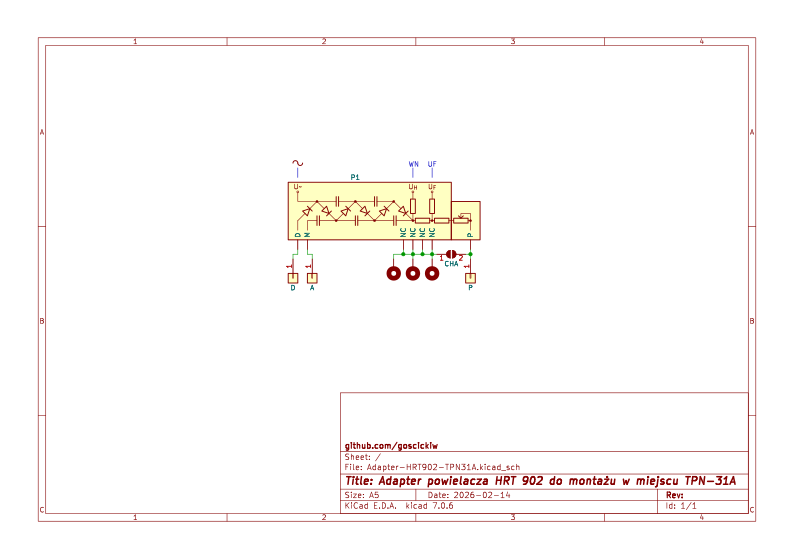
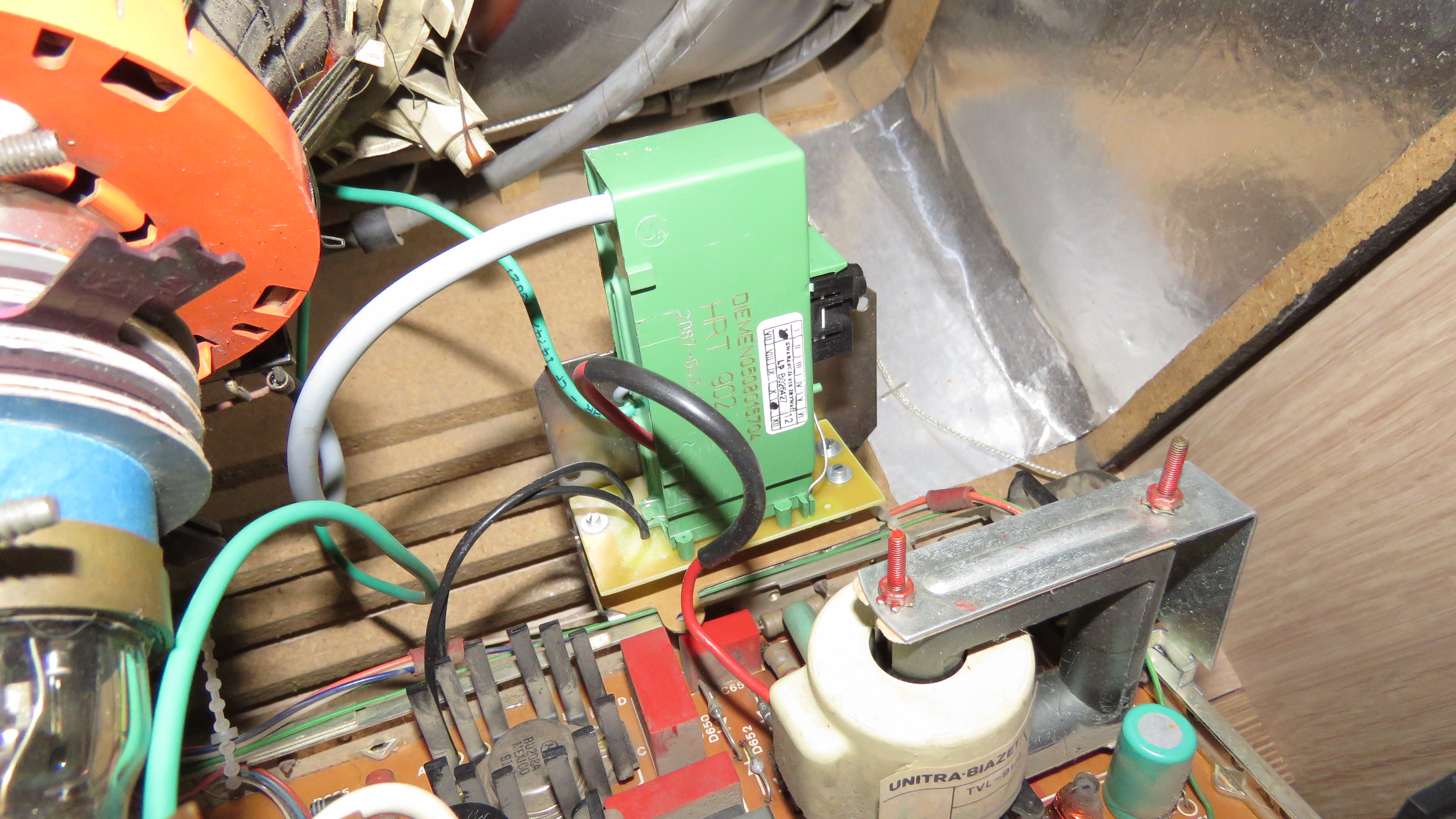
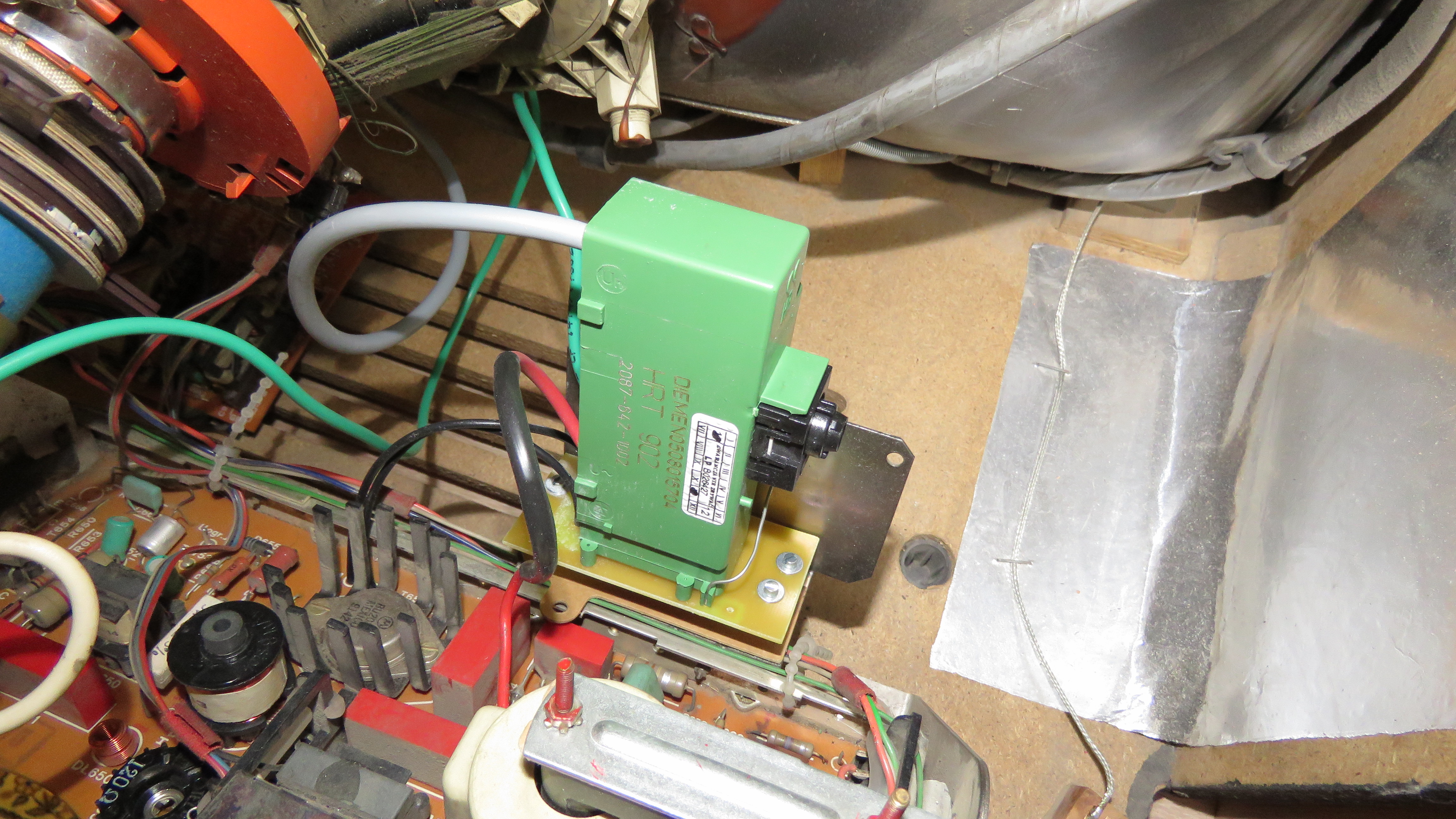
Płytka została zaprojektowana w celu ułatwienia montażu powielacza HRT 902 produkcji HR Diemen w miejscu powielacza TPN-31A produkcji Miflex w telewizorze Unimor Neptun M547 BT. Możliwe, że będzie pasować również do innych powielaczy i telewizorów.
Oryginalne powielacze Miflex montowane są śrubowo, a zamienniki takie jak HRT 902 są lutowane bezpośrednio do płytki drukowanej. Aby solidnie zamocować taki zamiennik, można zastosować płytkę drukowaną z otworami na śruby w tych samych miejscach co w oryginalnym powielaczu Miflex.
Uwaga: Ponieważ powielacz montowany jest na płytce pionowo, należy sprawdzić czy zmieści się w taki sposób w telewizorze.
Za pomocą zworki "CHA" można połączyć wyprowadzenie "P" z masą (chassis) telewizora, dzięki czemu nie trzeba łączyć wyprowadzenia "P" przewodem. Płytka musi być w tym przypadku zamocowana za pomocą dystansów metalowych na elemencie połączonym z masą.
 |  |
|---|
Projekt na licencji CC BY-SA 4.0.
| Qty | Value | Footprint | References |
|---|---|---|---|
| 3 | MountingHole_Pad | MountingHole:MountingHole_3.2mm_M3_Pad | H1, H2, H3 |
| 1 | A | Connector_Wire:SolderWire-1sqmm_1x01_D1.4mm_OD3.9mm | J2 |
| 1 | CHA | Jumper:SolderJumper-2_P1.3mm_Open_RoundedPad1.0x1.5mm | JP1 |
| 1 | D | Connector_Wire:SolderWire-1sqmm_1x01_D1.4mm_OD3.9mm | J1 |
| 1 | P | Connector_Wire:SolderWire-1sqmm_1x01_D1.4mm_OD3.9mm | J3 |
| 1 | ~ | Adapter-HRT902-TPN31A:HRT902 | P1 |

joeycastillo/Sensor-Watch
A board replacement for the classic Casio F-91W wristwatch

rusefi/rusefi
rusefi - GPL internal combustion engine control unit

hoglet67/RGBtoHDMI
Bare-metal Raspberry Pi project that provides pixel-perfect sampling of Retro Computer RGB/YUV video and conversion to HDMI

shanteacontrols/OpenDeck
A platform for building interactive control and sensing devices using MIDI and OSC built with Zephyr RTOS.

hackclub/OnBoard
💡 Join 1,000 teenagers and make your first PCB with a $100 grant!

dangiu/PicoMemcard
Emulating PSX Memory Card (or controller) using a Raspberry Pi Pico

OLIMEX/DIY-LAPTOP
Do It Yourself Open Source Hardware and Software Modular Hacker's Friendly Laptop
It measures 74.5 × 35.6 mm and has 2 copper layers, 1.6 mm thick.
8 parts. The full list of its parts is on this page, with links to each part's symbol and footprint where PCBKit's library has them.
From the goscickiw/Adapter-HRT902-TPN31A repository on GitHub, at the commit this page was made from: the board is Adapter-HRT902-TPN31A/Adapter-HRT902-TPN31A.kicad_pcb and its schematic Adapter-HRT902-TPN31A/Adapter-HRT902-TPN31A.kicad_sch. PCBKit opens the board in the browser, with nothing to install.
Its repository publishes it under the CC-BY-SA-4.0 licence: you may reuse it on that licence's terms (keep the author's notice, and for a copyleft licence share your changes alike).