

2 layers75.7 × 59.4 mm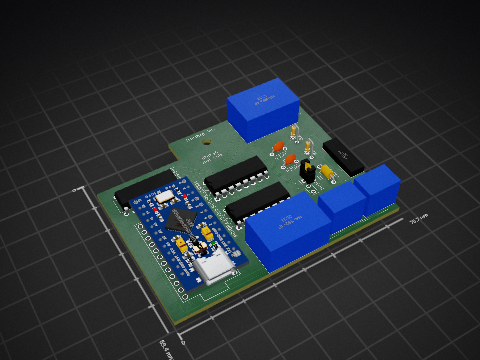
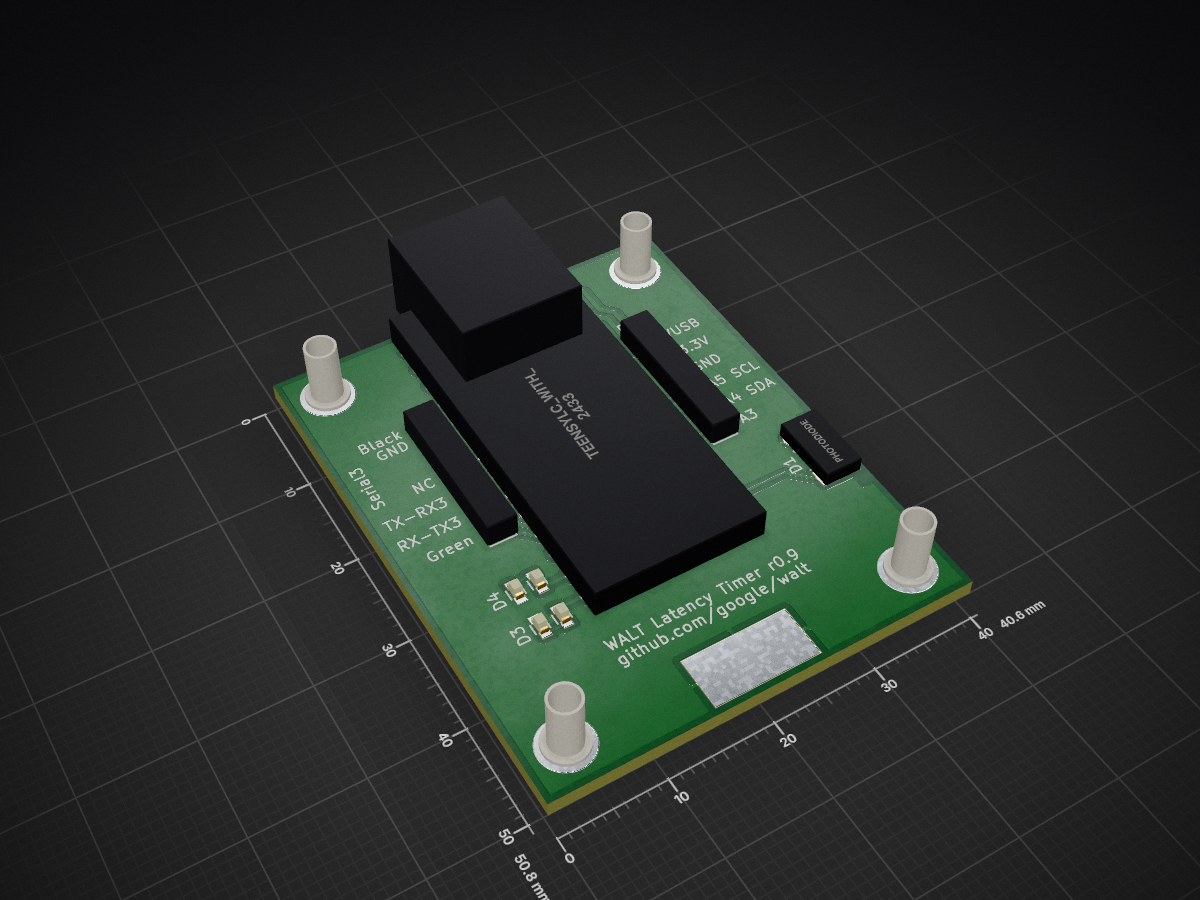
 google/walt474
A device for measuring latency of physical sensors and outputs on phones and computers
WALTsm is an open-source printed circuit board by google, from the google/walt repository on GitHub, published under the Apache-2.0 licence. It is a 2-layer board of 40.6 × 50.8 mm with 26 parts on 42 nets, routed with 117 tracks and 3 vias.
It is built around the LM321MFX and ADXL335BCP. Its parts include 8 resistors, 4 diodes, 3 ICs, 3 connectors and 2 capacitors. It belongs with the sensors and measurement boards and the NXP (LPC, Kinetis, i.MX RT) boards of this library.
DISCLAIMER: This is not an official Google product.
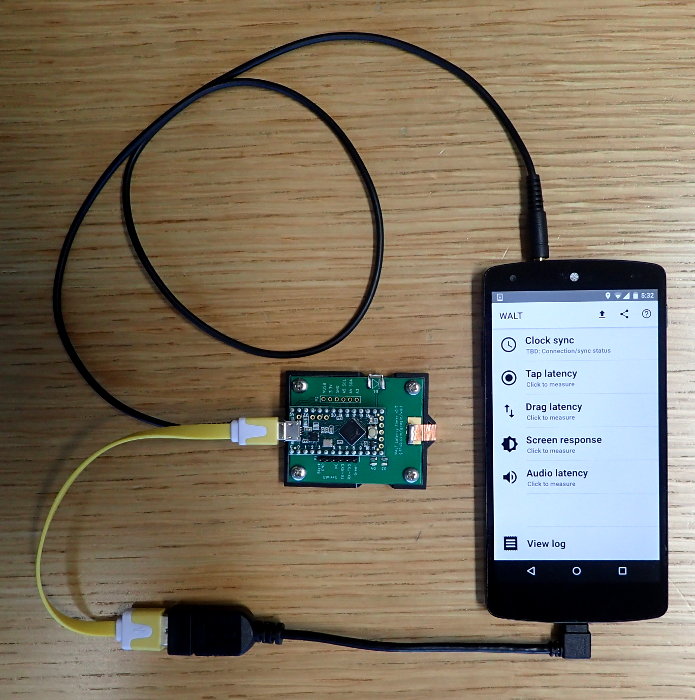
WALT is designed to measure the latency of physical sensors and outputs on phones and computers. It can currently perform the following measurements:
The WALT app for Android can be installed from Google Play or downloaded in the releases section; the iOS app must be built from source.
hardware/.| Qty | Value | Footprint | References |
|---|---|---|---|
| 3 | 100 | walt_footprints:R_0603_pad07mm_long | R5, R7, R8 |
| 2 | 0.1uF | Capacitors_SMD:C_0805 | C1, C2 |
| 2 | 330 | walt_footprints:R_0603_pad07mm_long | R1, R2 |
| 2 | CONN_01X06 | walt_footprints:Pin_Header_Straight_1x06 | P1, P2 |
| 2 | LED | walt_footprints:R_0603_pad07mm_long | D3, D4 |
| 2 | Photodiode | walt_footprints:BPW34_DIP2 | D1, D2 |
| 1 | 3,3k | walt_footprints:R_0603_pad07mm_long | R4 |
| 1 | 3.3k | walt_footprints:R_0603_pad07mm_long | R6 |
| 1 | 510k | walt_footprints:R_0603_pad07mm_long | R3 |
| 1 | ADXL335 | Housings_DFN_QFN:QFN-16-1EP_4x4mm_Pitch0.65mm | U2 |
| 1 | JACK_TRRS | walt_footprints:TRRS_SJ_43514 | J1 |
| 1 | LM321MFX | TO_SOT_Packages_SMD:SOT-23-5 | U3 |
| 1 | TeensyLC_with_headers | walt_footprints:Teensy_DIP-28_W15.24mm | U1 |
The 20 most common of 26 parts.
It measures 40.6 × 50.8 mm and has 2 copper layers, 1.6 mm thick.
26 parts, built around the LM321MFX and ADXL335BCP. The full list of its parts is on this page, with links to each part's symbol and footprint where PCBKit's library has them.
From the google/walt repository on GitHub, at the commit this page was made from: the board is hardware/kicad/WALTsm.kicad_pcb. PCBKit opens the board in the browser, with nothing to install.
Its repository publishes it under the Apache-2.0 licence: you may reuse it on that licence's terms (keep the author's notice, and for a copyleft licence share your changes alike).


hackclub/OnBoard
💡 Join 1,000 teenagers and make your first PCB with a $100 grant!

