2 layers20.5 × 24.8 mm

 galopago/me2188c-slim2
Small step-up module based on the ME2188 chip, designed specifically for low-power 3.3V embedded systems. It allows you to boost the voltage from a single 1.5V battery to 3.3V, enabling you to power your projects efficiently.
Me2188c slim is an open-source printed circuit board by galopago, from the galopago/me2188c-slim repository on GitHub. It is a 2-layer board of 15.7 × 15.7 mm with 8 parts on 6 nets, routed with 24 tracks and 0 vias.
Its parts include 4 capacitors, 1 IC, 1 connector and 1 inductor. It belongs with the power boards of this library.
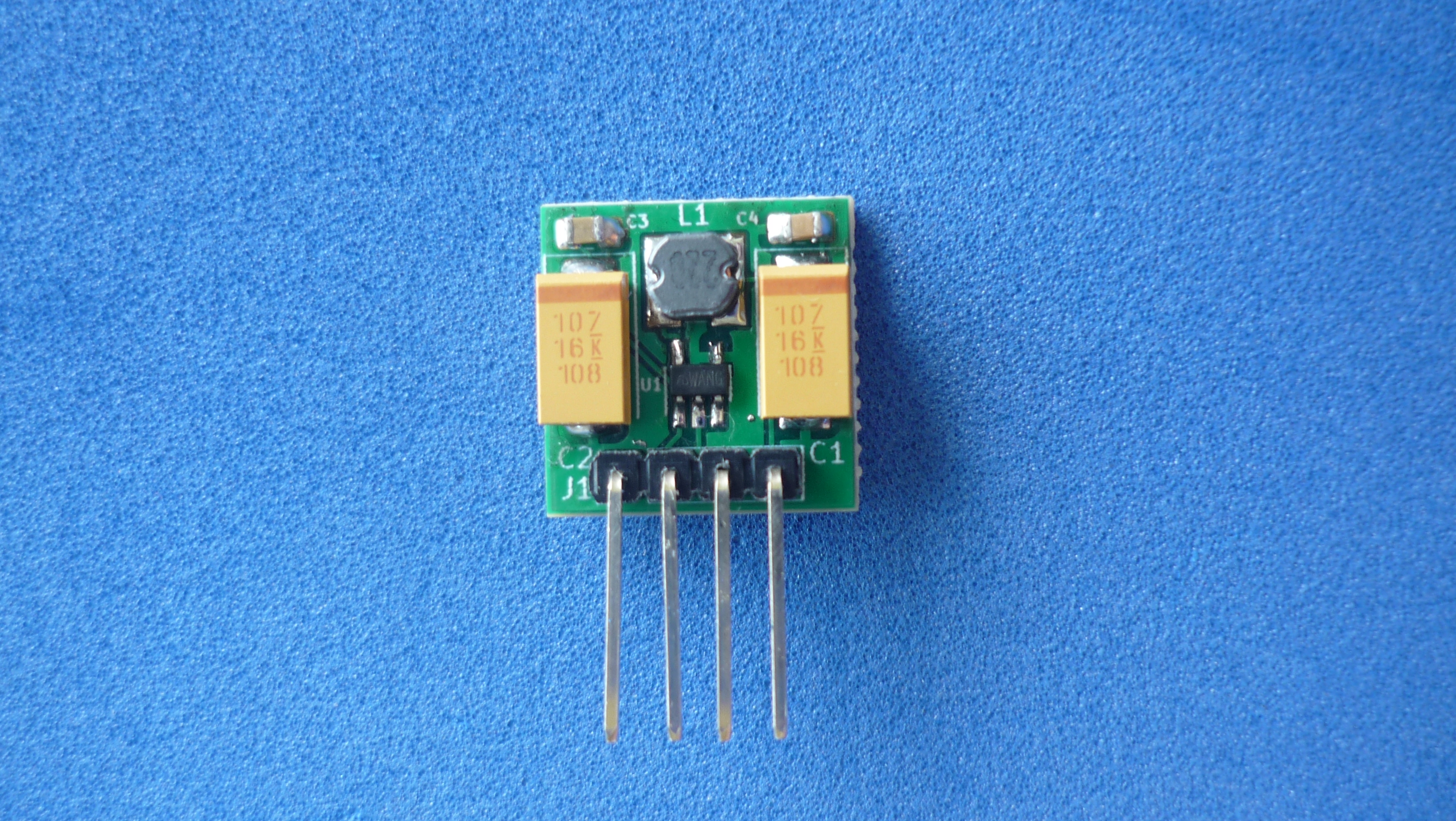
This is a small step-up module based on the chip, designed specifically for low-power 3.3V embedded systems. It allows you to boost the voltage from a single 1.5V battery to 3.3V, enabling you to power your projects efficiently.
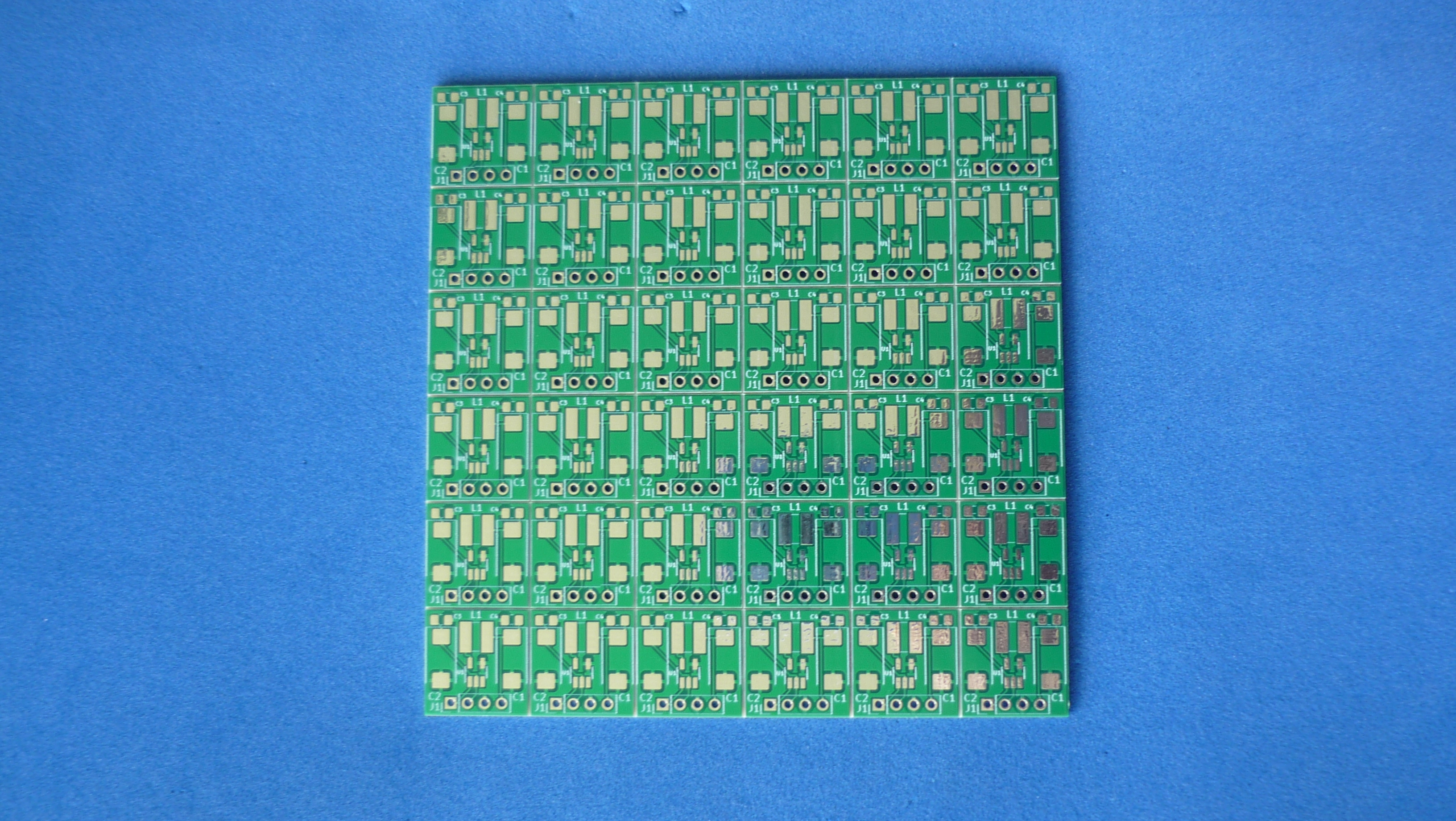
Here you can find images of the finished module and the panelized PCB. These images will help you visualize the module's physical appearance and layout.
This project is licensed under the MIT License.
| Qty | Value | Footprint | References |
|---|---|---|---|
| 2 | 100nF | Capacitor_SMD:C_0805_2012Metric_Pad1.18x1.45mm_HandSolder | C3, C4 |
| 1 | 100uF | Capacitor_Tantalum_SMD:CP_EIA-7343-31_Kemet-D_Pad2.25x2.55mm_HandSolder | C2 |
| 1 | 10uF | Capacitor_Tantalum_SMD:CP_EIA-7343-31_Kemet-D_Pad2.25x2.55mm_HandSolder | C1 |
| 1 | 22uH | Inductor_SMD:L_Ferrocore_DLG-0403 | L1 |
| 1 | Conn_01x04_Male | Connector_PinHeader_2.54mm:PinHeader_1x04_P2.54mm_Vertical | J1 |
| 1 | ME2188 | Package_TO_SOT_SMD:SOT-23-5_HandSoldering | U1 |
The 7 most common of 8 parts.

joeycastillo/Sensor-Watch
A board replacement for the classic Casio F-91W wristwatch

rusefi/rusefi
rusefi - GPL internal combustion engine control unit

hoglet67/RGBtoHDMI
Bare-metal Raspberry Pi project that provides pixel-perfect sampling of Retro Computer RGB/YUV video and conversion to HDMI

shanteacontrols/OpenDeck
A platform for building interactive control and sensing devices using MIDI and OSC built with Zephyr RTOS.

hackclub/OnBoard
💡 Join 1,000 teenagers and make your first PCB with a $100 grant!

dangiu/PicoMemcard
Emulating PSX Memory Card (or controller) using a Raspberry Pi Pico

OLIMEX/DIY-LAPTOP
Do It Yourself Open Source Hardware and Software Modular Hacker's Friendly Laptop
It measures 15.7 × 15.7 mm and has 2 copper layers, 1.6 mm thick.
8 parts. The full list of its parts is on this page, with links to each part's symbol and footprint where PCBKit's library has them.
From the galopago/me2188c-slim repository on GitHub, at the commit this page was made from: the board is me2188c-slim.kicad_pcb and its schematic me2188c-slim.kicad_sch. PCBKit opens the board in the browser, with nothing to install.
Its repository states no licence, so its author keeps all rights: ask galopago before reusing the design.