4 layers74 × 114 mm

 fredriknk/spimux
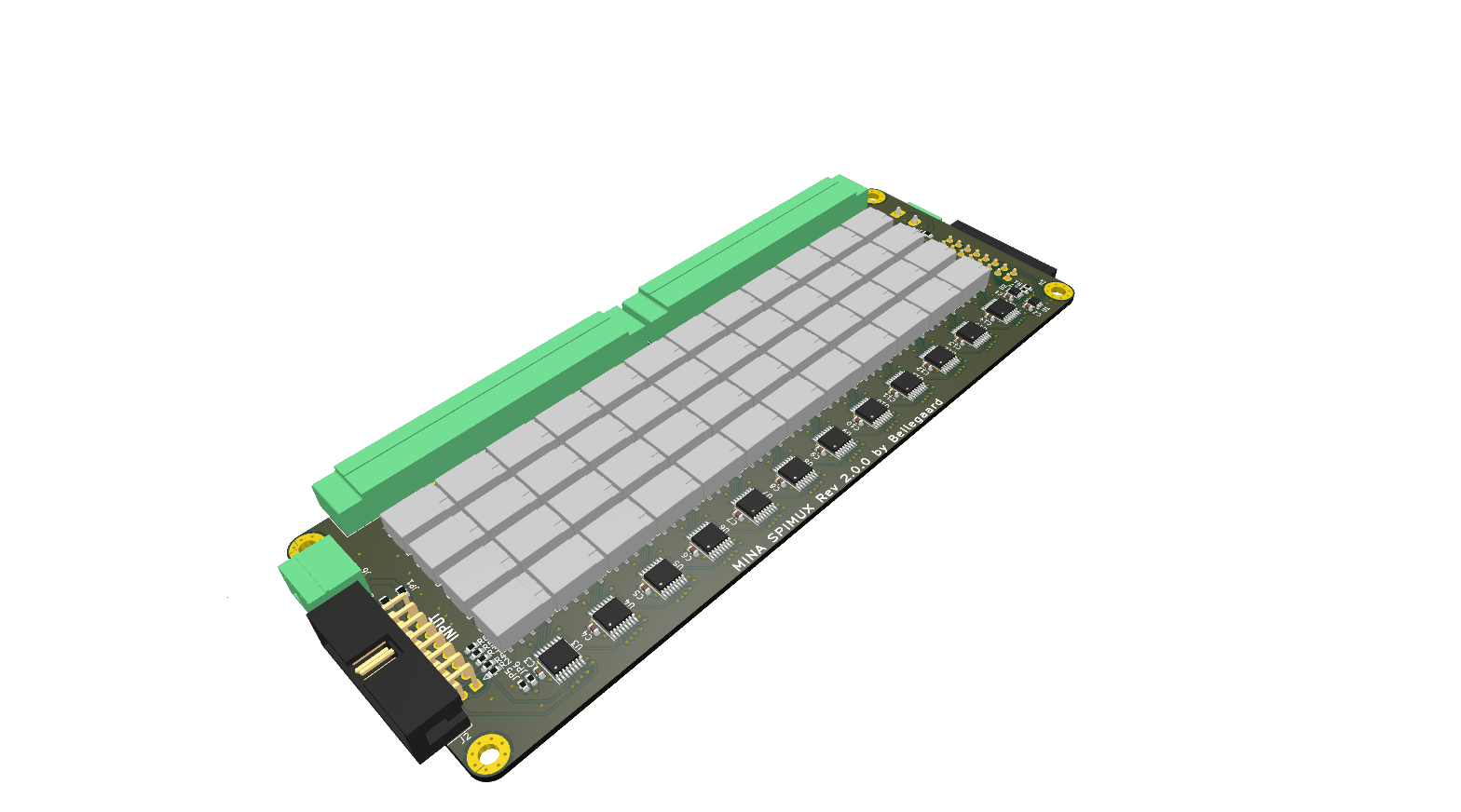
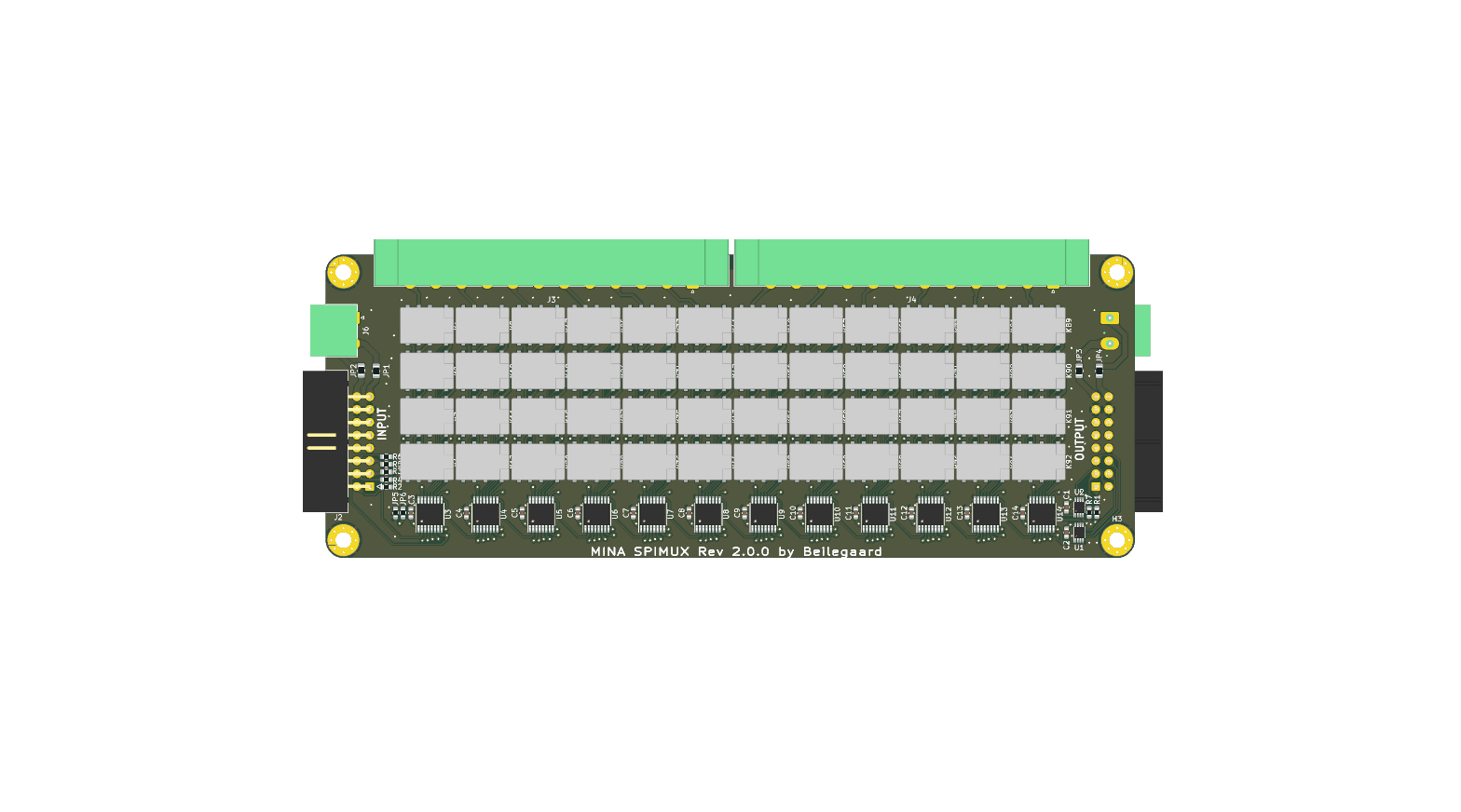
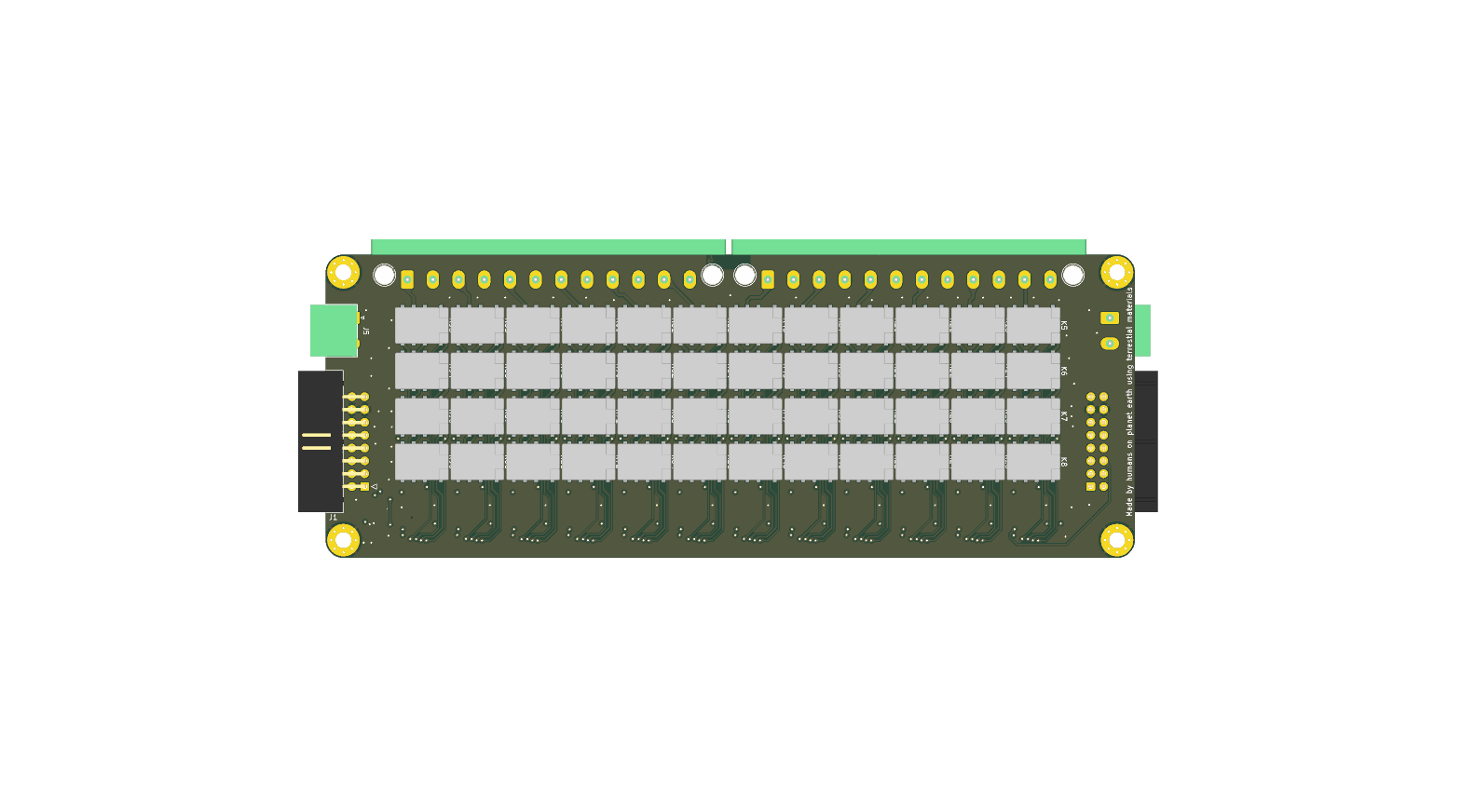
Spimux is an open-source printed circuit board by fredriknk, from the fredriknk/spimux repository on GitHub, published under the BSD-3-Clause licence. It is a 4-layer board of 160 × 60 mm with 147 parts on 350 nets, routed with 2,647 tracks and 444 vias.
It is built around the TPIC6C596D and AGQ200S12Z. Its parts include 96 switches, 14 capacitors, 14 ICs, 7 resistors and 6 connectors.


INFO INFO
Remember to run generate_outputs.bat/sh to update the outputs and pictures. readmetemplate
| Qty | Value | Footprint | References |
|---|---|---|---|
| 96 | AGQ200S12Z | muxlib_footprints:Relay_2P2T_10x6mm_TE_IMxxG | K1, K2, K10, K11, K12, K13, K14, K15, K16, K17, K18, K19, K20, K21, K22, K23 +80 |
| 14 | 0.1uF | Capacitor_SMD:C_0603_1608Metric | C1, C2, C3, C4, C5, C6, C7, C8, C9, C10, C11, C12, C13, C14 |
| 12 | TPIC6C596 | Package_SO:TSSOP-16_4.4x5mm_P0.65mm | U3, U4, U5, U6, U7, U8, U9, U10, U11, U12, U13, U14 |
| 7 | 10k | Resistor_SMD:R_0603_1608Metric | R1, R2, R3, R4, R5, R6, R7 |
| 4 | Jumper_2_Bridged | Resistor_SMD:R_0805_2012Metric | JP1, JP2, JP3, JP4 |
| 4 | MountingHole_Pad | MountingHole:MountingHole_3.2mm_M3_Pad_Via | H1, H2, H3, H4 |
| 2 | 1847712 | muxlib_footprints:New_PhoenixContact_MC_1,5_12-GF-5.08_1x12_P5.08mm_Horizontal_ThreadedFlange_MountHole | J3, J4 |
| 2 | Conn_01x02 | muxlib_footprints:New_PhoenixContact_MC_1,5_2-G-5.08_1x02_P5.08mm_Horizontal | J5, J6 |
| 2 | Conn_01x16 | Connector_IDC:IDC-Header_2x08_P2.54mm_Horizontal | J1, J2 |
| 2 | Jumper_2_Bridged | Resistor_SMD:R_0603_1608Metric | JP5, JP6 |
| 2 | SN74LVC3G34DCUR | Package_SO:VSSOP-8_2.3x2mm_P0.5mm | U1, U2 |

bitaxeorg/bitaxeGamma
Bitaxe based on the BM1370 from the S21 Pro

clydeshaffer/gametank
design files for the gametank hardware implementation

NoBlackBoxes/LastBlackBox
A course for brains interested in brains (not tools interested in tools)

hkustenterprize/RM2025-Wireless-JLink
Wireless JLink-OB based on Allwinner V3S


martinribelotta/h7dragonman
STM32H7 board for industrial protocol bridge

charlesbaynham/GP22_RF_Photon_Correllation
Schematic, PCB and source code for a low-cost TDC interface designed for performing RF--Photon correllation for atomic physics experiments
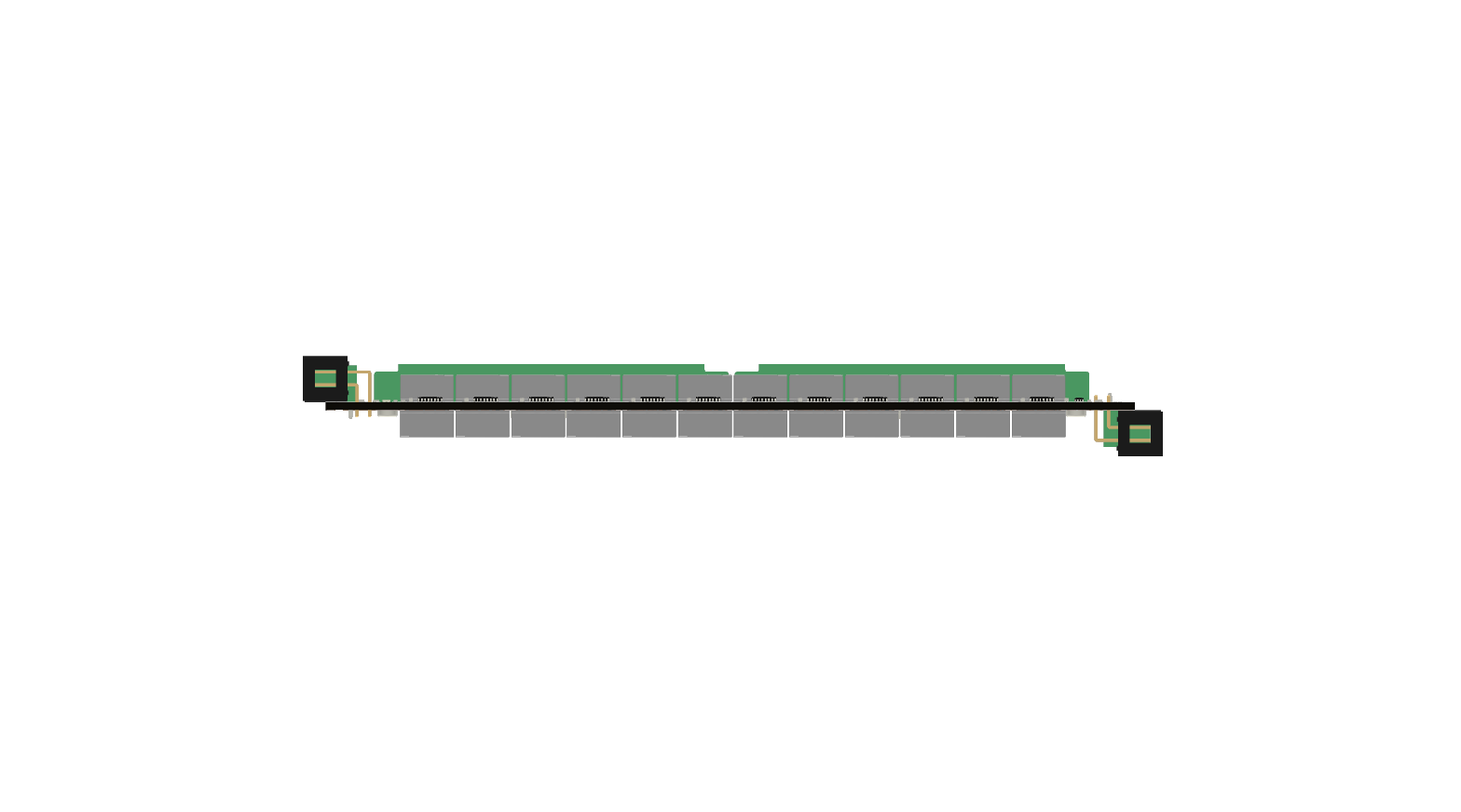
It measures 160 × 60 mm and has 4 copper layers, 1.6 mm thick.
147 parts, built around the TPIC6C596D and AGQ200S12Z. The full list of its parts is on this page, with links to each part's symbol and footprint where PCBKit's library has them.
From the fredriknk/spimux repository on GitHub, at the commit this page was made from: the board is CAD/spimux.kicad_pcb and its schematic CAD/Relay_group.kicad_sch. PCBKit opens the board in the browser, with nothing to install.
Its repository publishes it under the BSD-3-Clause licence: you may reuse it on that licence's terms (keep the author's notice, and for a copyleft licence share your changes alike).