2 layers30 × 30 mm
 fred-corp/ForceKey7
a force sensitive morse paddle key
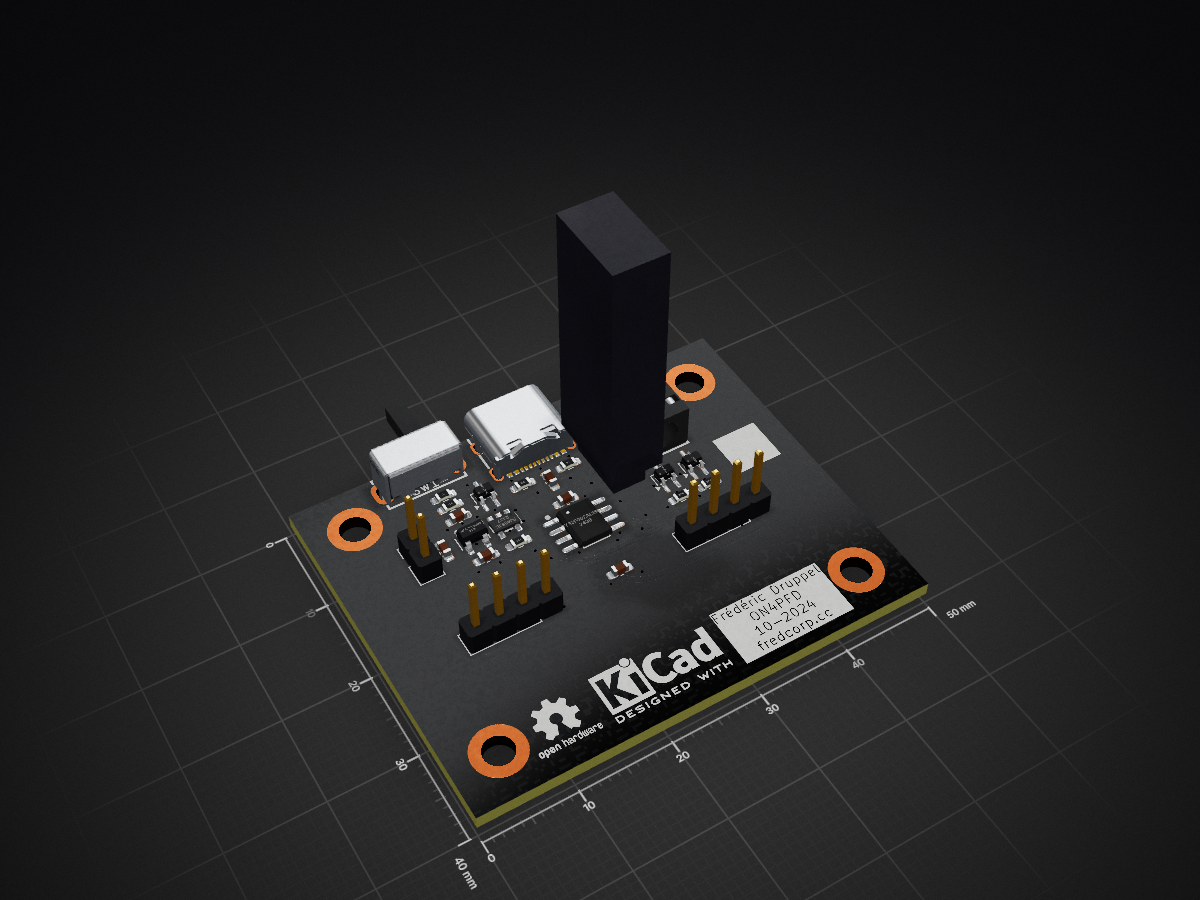
ForceKey v1.0 is an open-source printed circuit board by fred-corp, from the fred-corp/ForceKey repository on GitHub, published under the CC-BY-SA-4.0 licence. It is a 2-layer board of 50 × 40 mm with 38 parts on 28 nets, routed with 157 tracks and 46 vias.
It is built around the PY32F002AL15S6TU, ME6211C33M5G-N and PJ4054B, with the BC817-40W, PJ-320A and SK12D07VG6 among its other parts. Its parts include 7 resistors, 6 capacitors, 5 connectors, 3 ICs and 3 transistors.


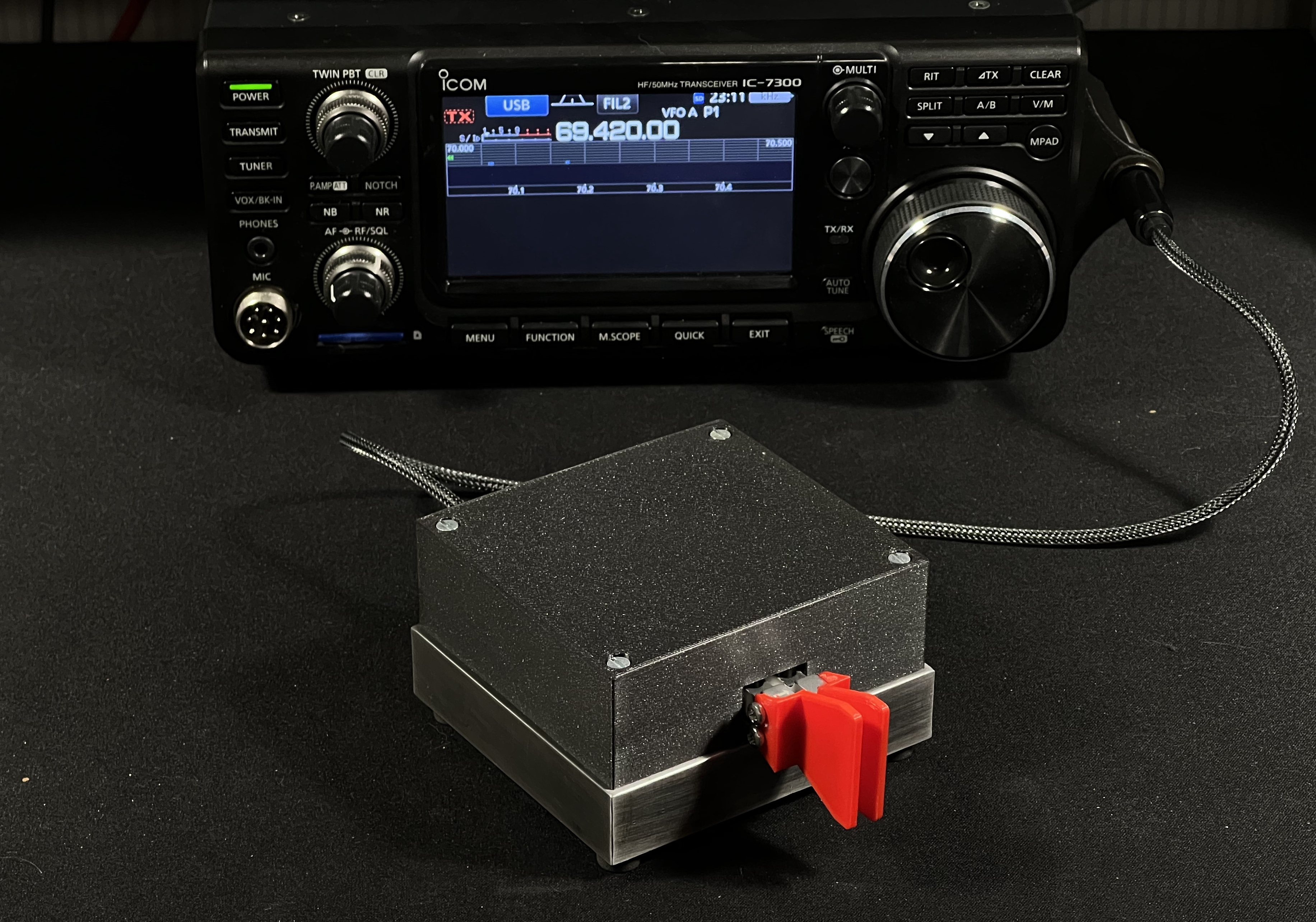
The Force Key solid-state morse paddle key, which, as the name implies, uses force senors (load cells) to detect the user's input. It is designed to work in single-lever mode or twin-lever mode.
The output is a standard 3.5mm stereo jack, which can be connected to any morse keyer or transceiver.
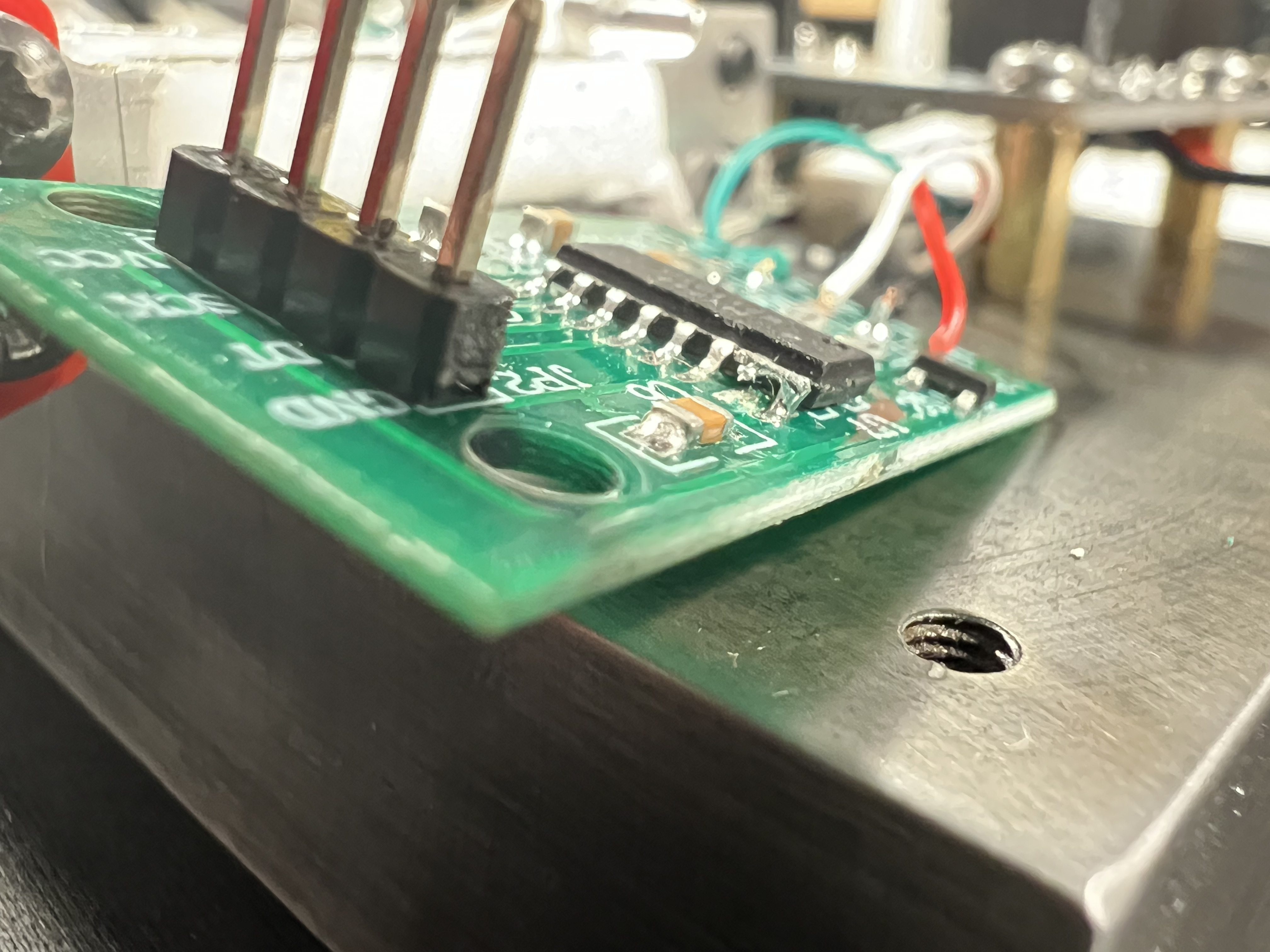
The HX711 has to be modded to output data at 80Hz rate, which is done by lifting pin 15 and bridging it to pin 16 :
The Force key is inspired by the Solid State Paddle by 9A5N, which is a beautiful product; but because of my student budget, I decided to make my own version.
It was a nice challenge as I wanted to use the Puya PY32F002A microcontroller, which is not very common in the maker community.
I also wanted to machine the base and load cell supports myself, which was exciting as I don't get to use the mills and lathes of my university very often as I'm an EE student.
Please consider buying the original product if you can afford it, it's a great product and it's worth the price (thanks F4IEY for showing it to me in the first place !).
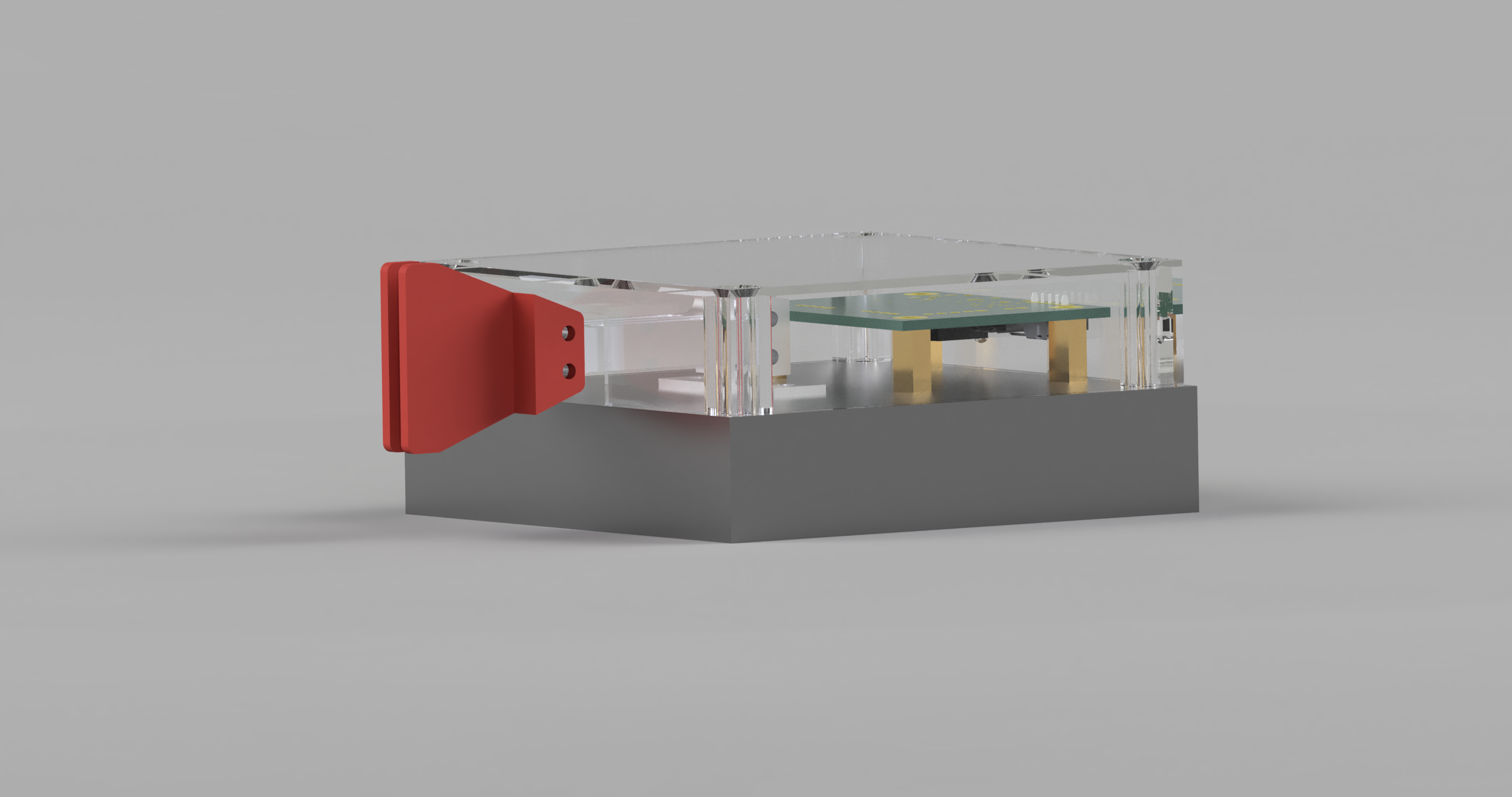
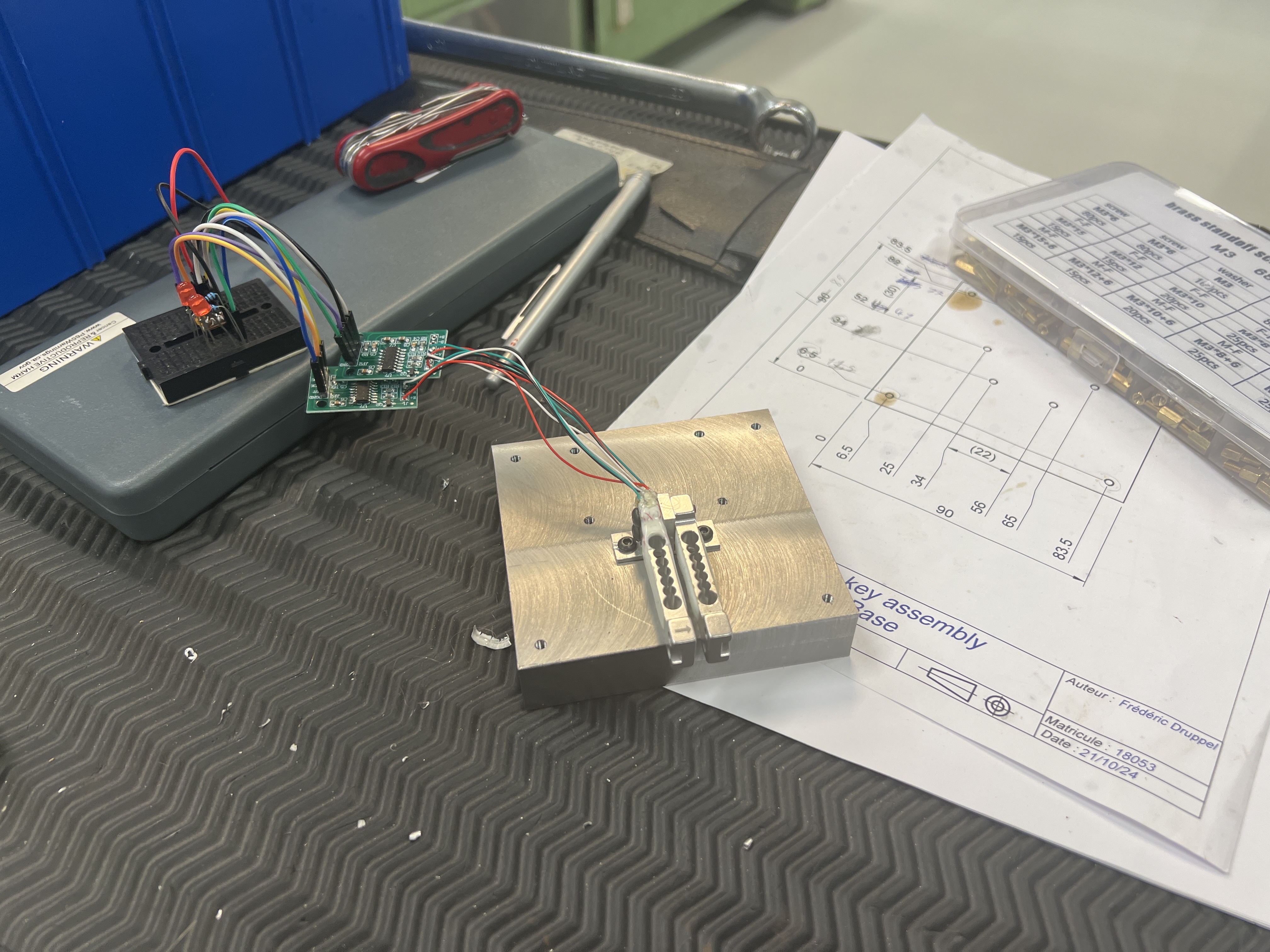
The final base ended up being 90x85x20mm due to the available scrap blank; the CAD was then adapted to fit the new dimensions.
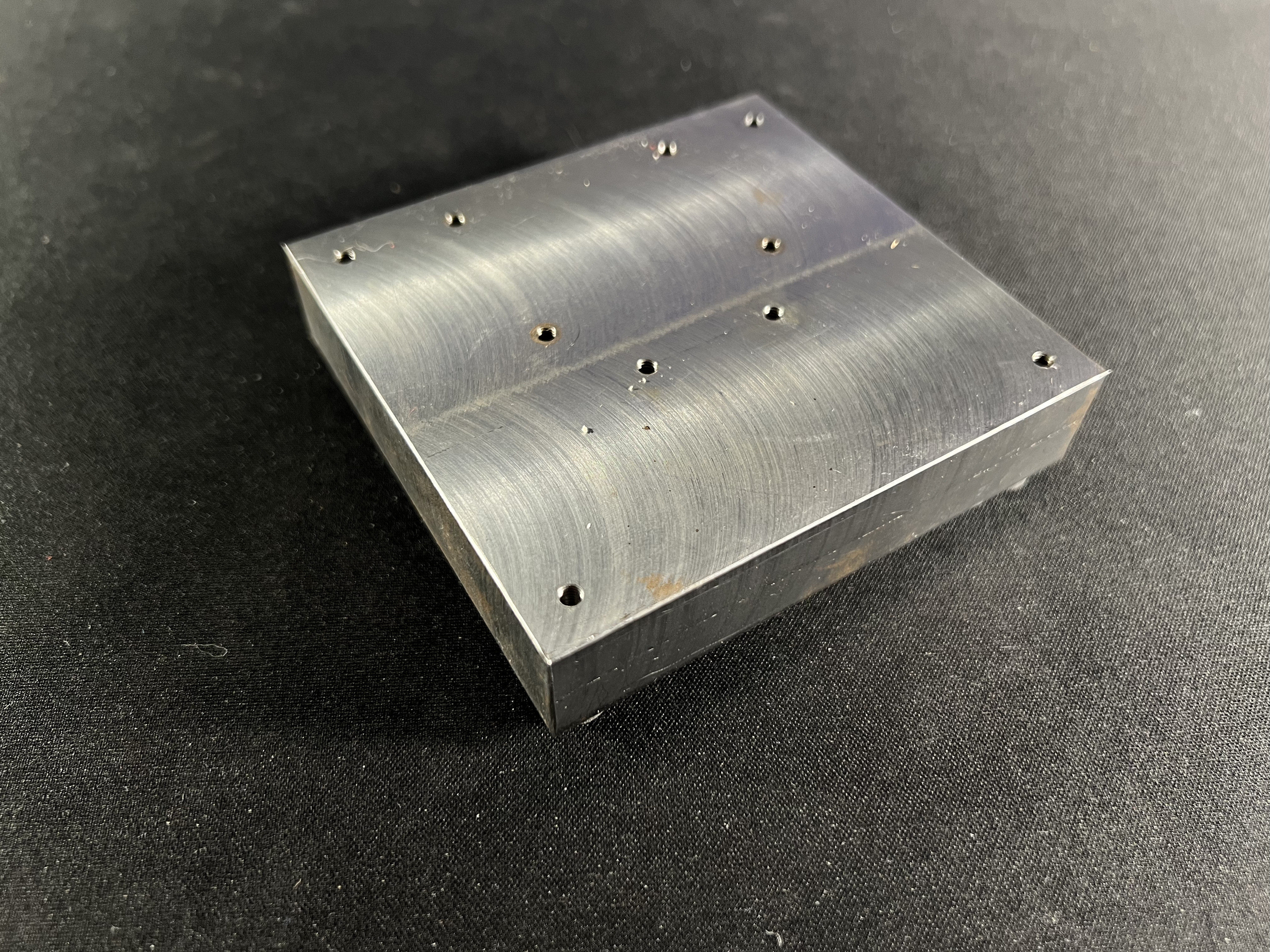
It was amazing to be able to use the machines of my university. It took a whole afternoon to machine both parts (base and load-cell support), but it was really fun ! Thanks again to my teacher for all the help and advice.
Before :
After :
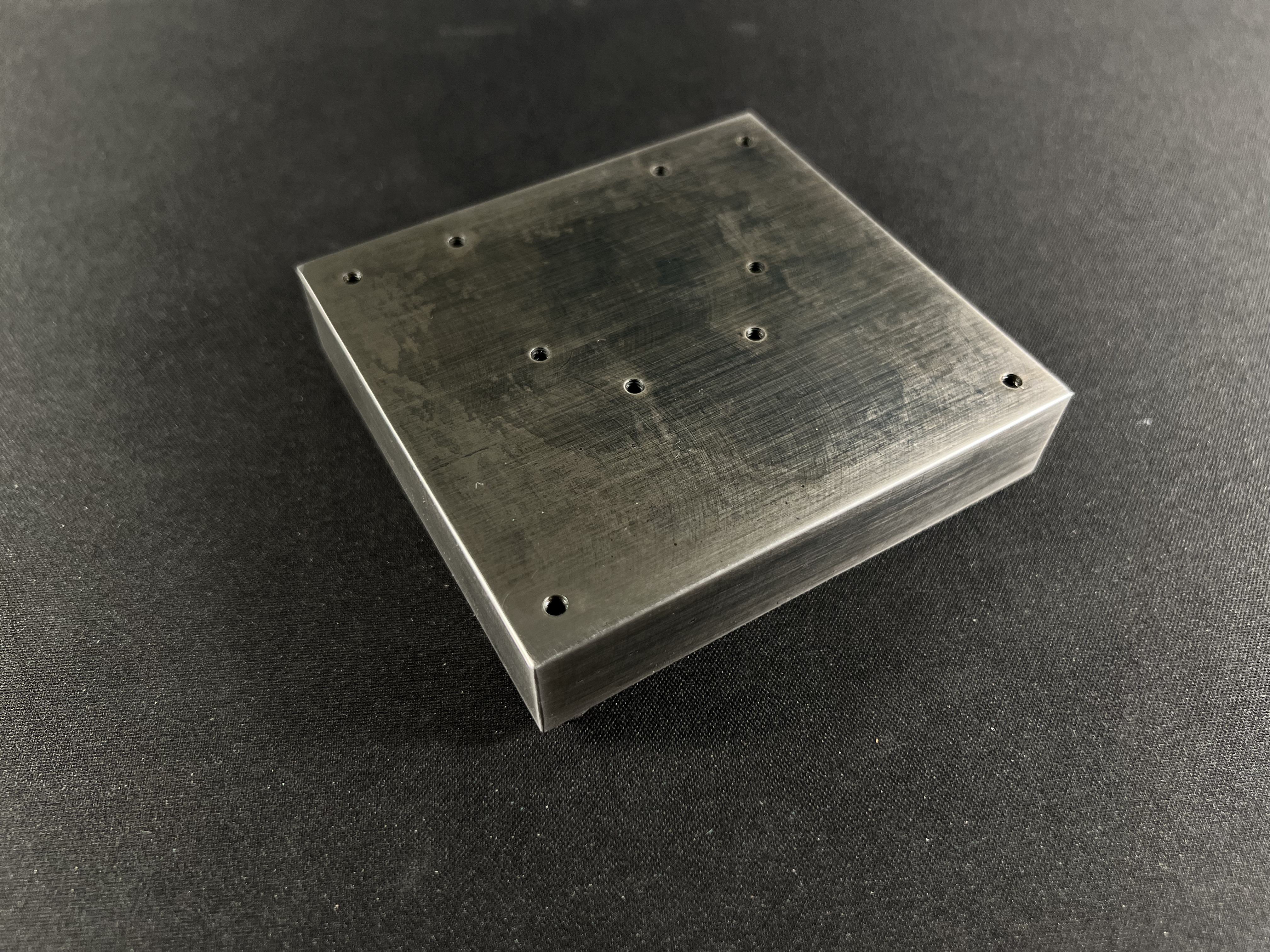
After a lot of sanding with 180 and 320 scotch-brite, I used a cold bluing solution to give the base a nice black finish. It's not perfect nor uniform, but it gives a great old-school look to the base.
Partial assembly before bluing :
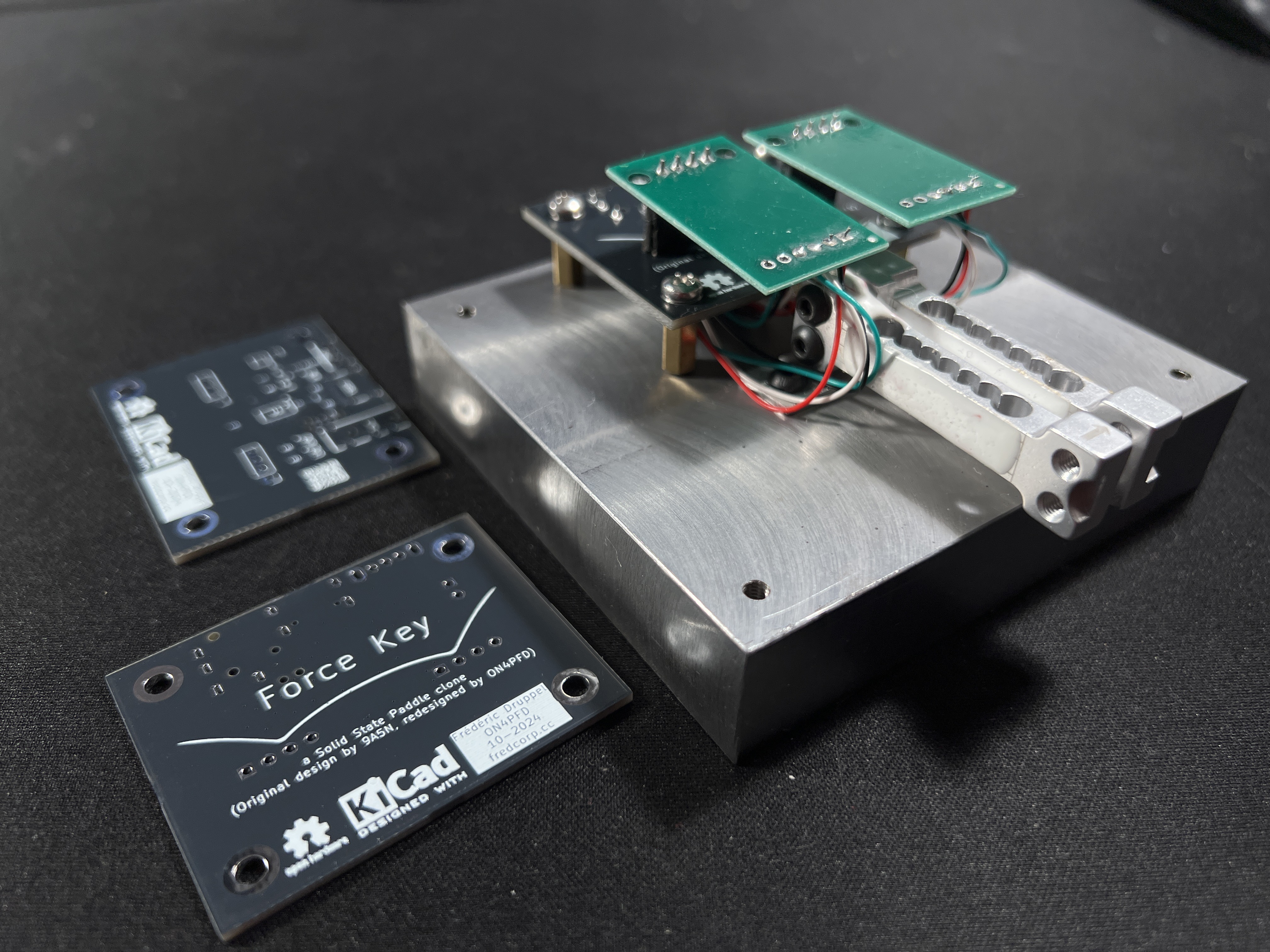
Assembly before bluing :
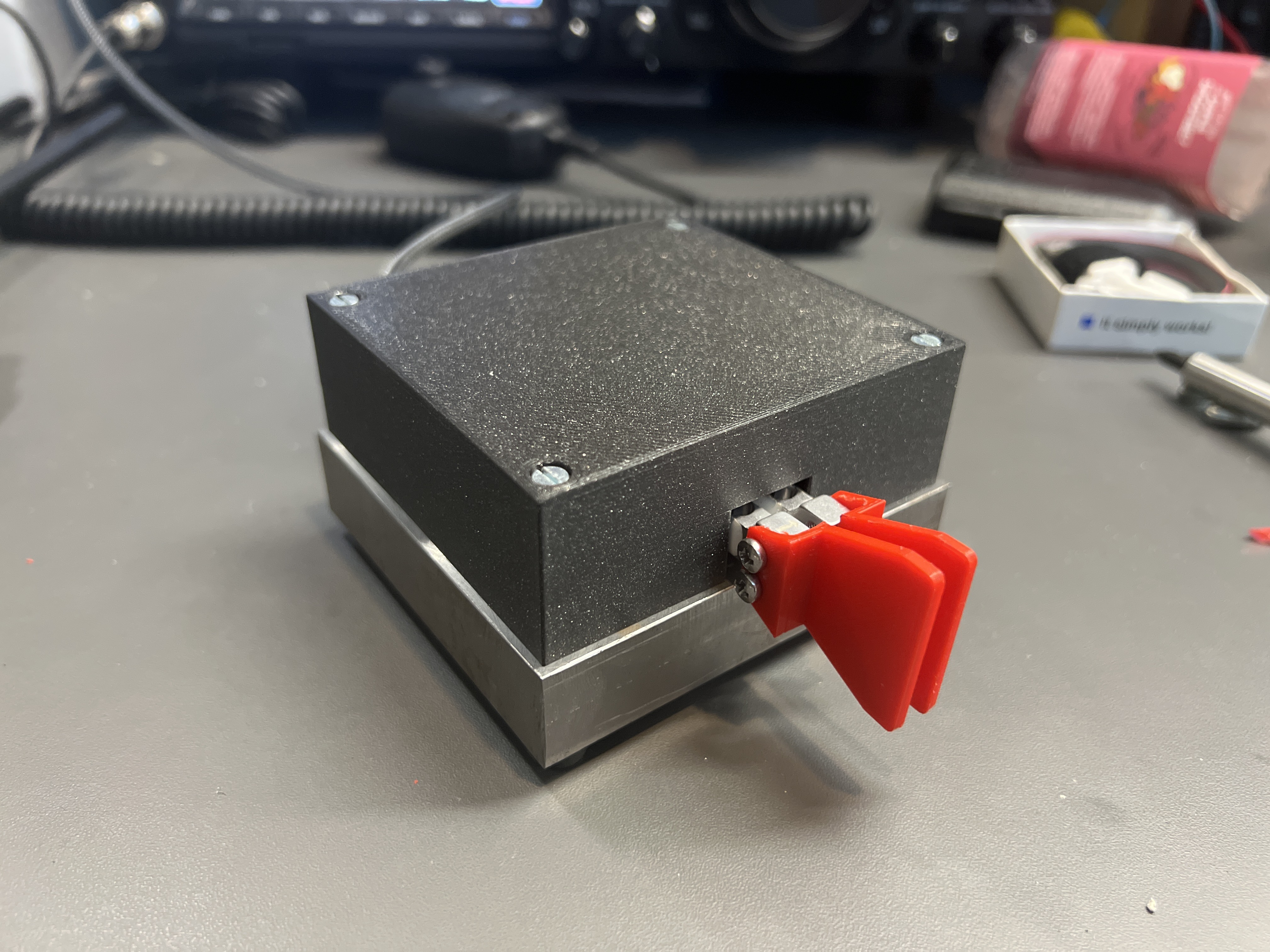
Partial assembly after bluing :
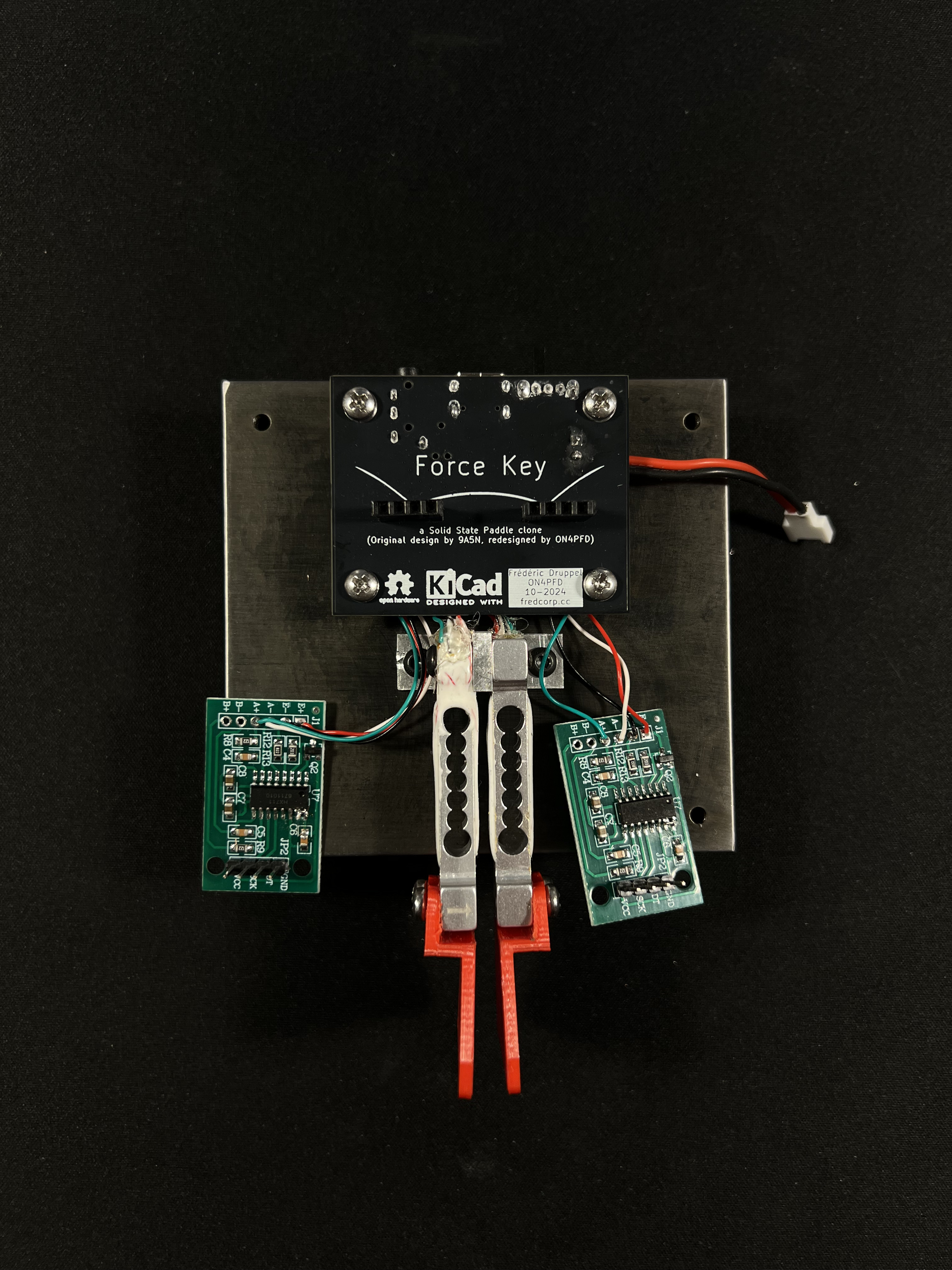
Final assembly :
Made with ❤️, lots of ☕️, and lack of 🛌
Published under CreativeCommons BY-SA 4.0

This work is licensed under a Creative Commons Attribution-ShareAlike 4.0 International License.
| Qty | Value | Footprint | References |
|---|---|---|---|
| 4 | 5.1k | Resistor_SMD:R_0603_1608Metric_Pad0.98x0.95mm_HandSolder | R3, R4, R6, R7 |
| 4 | MountingHole_3.2mm_M3_DIN965_Pad | MountingHole:MountingHole_3.2mm_M3_DIN965_Pad | H1, H2, H3, H4 |
| 3 | 10u | Capacitor_SMD:C_0603_1608Metric_Pad1.08x0.95mm_HandSolder | C4, C5, C6 |
| 3 | 1u | Capacitor_SMD:C_0603_1608Metric_Pad1.08x0.95mm_HandSolder | C1, C2, C3 |
| 3 | 2k | Resistor_SMD:R_0603_1608Metric_Pad0.98x0.95mm_HandSolder | R1, R2, R5 |
| 3 | BC817-40W | Package_TO_SOT_SMD:SOT-323_SC-70_Handsoldering | Q1, Q2, Q3 |
| 2 | PINHD_1x4_Male | Connector_PinHeader_2.54mm:PinHeader_1x04_P2.54mm_Vertical | J2, J3 |
| 1 | Conn_ARM_SWD_TagConnect_TC2030-NL | Connector:Tag-Connect_TC2030-IDC-NL_2x03_P1.27mm_Vertical | J4 |
| 1 | ME6211C33M5 | Package_TO_SOT_SMD:SOT-23-5 | U2 |
| 1 | PINHD_1x2_Male | Connector_PinHeader_2.54mm:PinHeader_1x02_P2.54mm_Vertical | J1 |
| 1 | PJ-320A | PJ-320A:AUDIO-TH_XKB_PJ-320A | CN1 |
| 1 | PJ4054B | PJ4054B:SOT-23-5_L2.9-W1.6-P0.95-LS2.8-BL | U3 |
| 1 | PY32F002AL15S6TU | PY32:SOP-8_L4.9-W3.9-P1.27-LS6.0-BL-1 | U1 |
| 1 | SK12D07VG6 | SK12D07VG6:SW-TH_SK12D07VG6 | SW1 |
| 1 | TYPE-C 16PIN 2MD(073) | TYPE-C:USB-C-SMD_TYPE-C-6PIN-2MD-073 | USB1 |
The 30 most common of 38 parts.
It measures 50 × 40 mm and has 2 copper layers, 1.6 mm thick.
38 parts, built around the PY32F002AL15S6TU, ME6211C33M5G-N, PJ4054B and BC817-40W. The full list of its parts is on this page, with links to each part's symbol and footprint where PCBKit's library has them.
From the fred-corp/ForceKey repository on GitHub, at the commit this page was made from: the board is hardware/pcb/ForceKey_v1.0/ForceKey_v1.0.kicad_pcb and its schematic hardware/pcb/ForceKey_v1.0/ForceKey_v1.0.kicad_sch. PCBKit opens the board in the browser, with nothing to install.
Its repository publishes it under the CC-BY-SA-4.0 licence: you may reuse it on that licence's terms (keep the author's notice, and for a copyleft licence share your changes alike).


simonyiszk/ARDF-80m-rx
Rókavevő a 80m-es rádióamatőr sávra (3579 kHz fix frekvenciájú)

pierrechevalier83/ferris
A low profile split keyboard designed to satisfy one single use case elegantly

softcomplex/Digirig-Mobile
Integrated digital modes interface for amateur radio

LouWii/ErgoMax
Custom ergo split keyboard project, based on ErgoDox, with hot swap sockets

DarcyJProjects/touchtone555
An open-source DIY, NE555-based analogue synthesizer - play notes with a stylus