2 layers134 × 93.8 mm
Reversible split
flhps/splaybreak-keyboard
A split ergonomic wireless keyboard using MX switches.
22 parts13CERN-OHL-P-2.0

 flhps/splaybreak-keyboard13
A split ergonomic wireless keyboard using MX switches.
Reversible split is an open-source printed circuit board by flhps, from the flhps/splaybreak-keyboard repository on GitHub, published under the CERN-OHL-P-2.0 licence. It is a 2-layer board of 134 × 93.8 mm with 22 parts on 52 nets, routed with 196 tracks and 0 vias.
It belongs with the keyboards and input boards of this library.
A simple but versatile 36-key split ergonomic wireless keyboard.
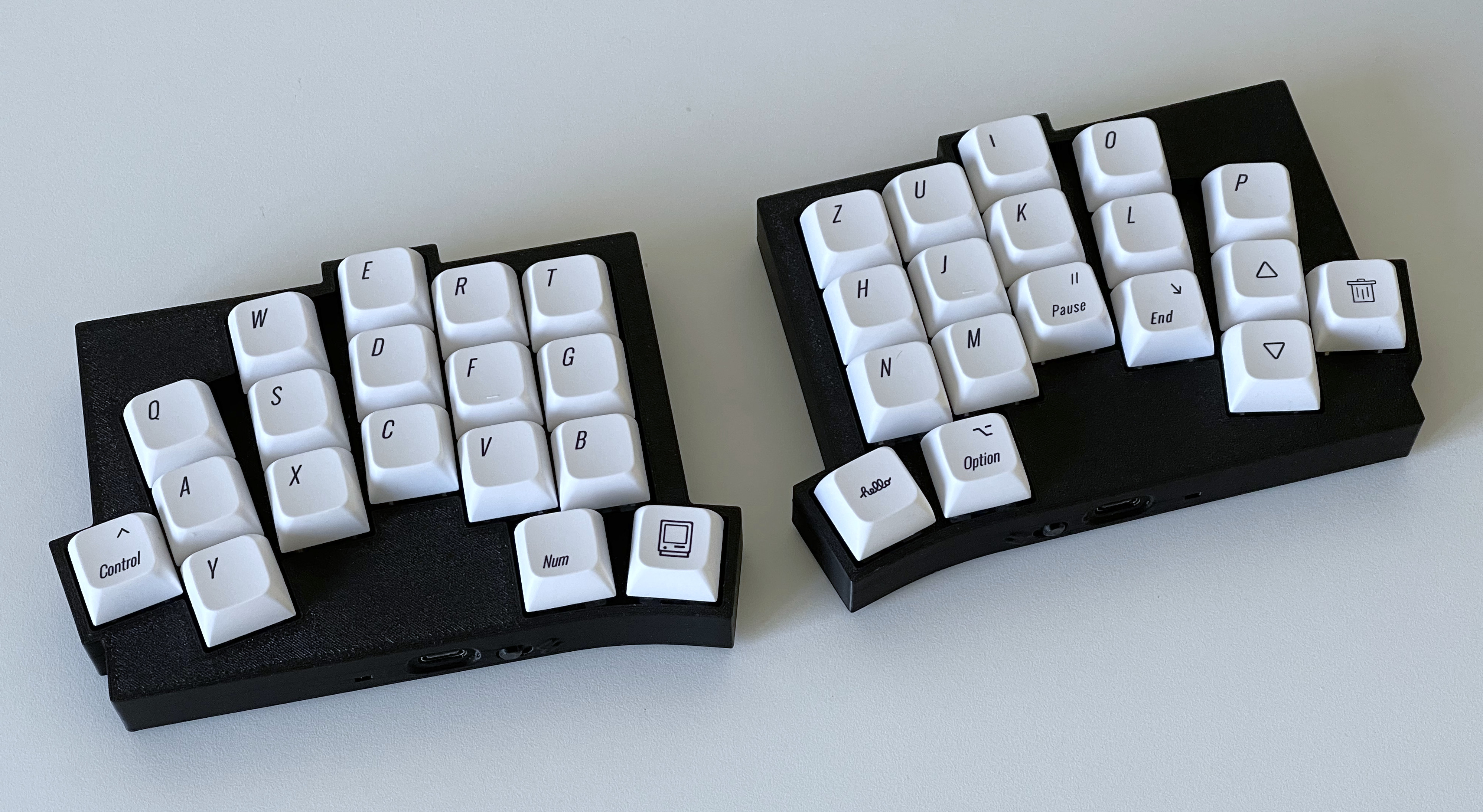 Model B with MX switches and XDA keycaps
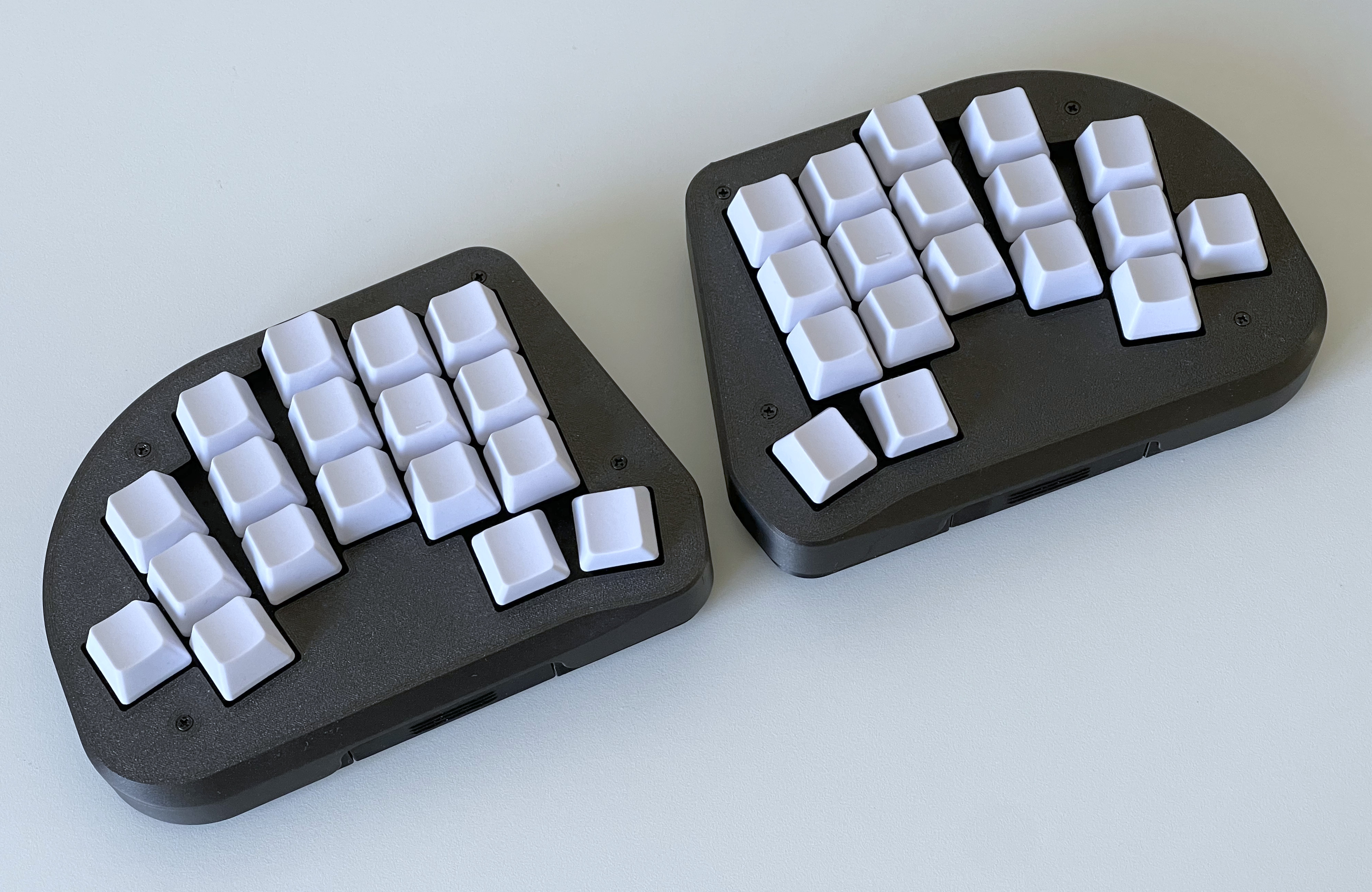 Model A with MX switches and OEM keycaps
This is a split keyboard, that is heavily inspired by my recent personal dive into the world of open mechanical split keyboards. At the time of writing, I have used these two models on an almost daily basis for over 6 months.
There are two models that use the same PCB and mostly the same build parts:
| Model | Hot Swap MX | Hot Swap Choc V1 | Gasket Mount | Battery | Magnetic Access Hatch | Nice Buttons and Port |
|---|---|---|---|---|---|---|
| A | ✅ | ⚠ | ✅ | 2000mAh | ✅ | |
| B | ✅ | ⚠ | 500mAh | ✅ |
More information can be found in the individual build guides:
[!WARNING] While the PCB accepts hot swap sockets for Choc V1 switches, the case dimensions are not tested with them.
A big focus was to keep this keyboard somewhat simple and cheap. That is why it uses the popular Pro Micro controllers and that limits the number of keys per side to 18 because we want to avoid having to solder diodes. The keyboards are wireless with massive batteries for easier daily use at home and on the go. Since the whole keyboard layout is in the firmware, these can also be used with devices such as phones or tablets. While screens can be cool, this design has none because they cost money and reduce battery life.
For flexibility (and cost reduction), the PCB is reversible. It means you need to order less and any PCB you have left can replace one that you accidentally destroyed. Also, the PCB has support for MX switches and Choc v1 switches. That would enable the use of this PCB for a super thin travel option.
There are only two thumb keys, because they would increase the design's footprint by a lot if they were to be positioned comfortably. The current inner thumb key is the resting position, meaning a third one would have to be even more toward the inside. However, I wanted to create a somewhat compact key arrangement and case. Instead, the extra thumb key is moved to the pinky. This emulates the extra outer keys like tab or enter on a conventional keyboard an is intended to make it easier for people who frequently switch between conventional and split keyboards. It also makes switching from a conventional keyboard to this one easier.
This project features two different keyboard models, which only differ in assembly instructions and the provided case files, which are FDM-printable. I was never a big fan of the very gritty designs featuring lots of open electronics, so I designed some fully enclosed cases.
For repairability, model A has everything socketed, making error search and replacements easier. It is also built to improve sound through a gasket mount. Model B foregoes some of that and becomes more compact and arguably more stylish. There, the controller is soldered directly to the PCB.
Both models can use the same firmware. I have prepared a template that already contain a usable layout:
zmk-config-splaybreak-template
Build ergogen in the ergogen directory:
ergogen --clean .Big inspirations were:
The design uses ergogen footprints from @ceoloide's ergogen PCB footprints. The reversible hotswap footprint for both MX and Choc is extracted from the Lily58 Pro's kicad file.
The ergogen guide from FlatFootFox was very helpful.
And of course, this project would probably not exist without the excellent tool that is ergogen.
| Qty | Value | Footprint | References |
|---|---|---|---|
| 18 | MX | S1, S2, S3, S4, S5, S6, S7, S10, S11, S12, S13, S14, S15, S16, S17, S18 +2 | |
| 1 | — | ceoloide:mcu_nice_nano | MCU1 |
| 1 | — | ceoloide:battery_connector_jst_ph_2 | JST1 |
| 1 | — | ceoloide:reset_switch_smd_side | RST1 |
| 1 | — | ceoloide:power_switch_smd_side | PWR1 |
It measures 134 × 93.8 mm and has 2 copper layers, 1.6 mm thick.
22 parts. The full list of its parts is on this page, with links to each part's symbol and footprint where PCBKit's library has them.
From the flhps/splaybreak-keyboard repository on GitHub, at the commit this page was made from: the board is ergogen/output/pcbs/reversible_split.kicad_pcb. PCBKit opens the board in the browser, with nothing to install.
Its repository publishes it under the CERN-OHL-P-2.0 licence: you may reuse it on that licence's terms (keep the author's notice, and for a copyleft licence share your changes alike).
flhps/splaybreak-keyboard
A split ergonomic wireless keyboard using MX switches.

VoronDesign/Voron-Hardware
Cool Hardware designed by the Voron Design group

hoglet67/RGBtoHDMI
Bare-metal Raspberry Pi project that provides pixel-perfect sampling of Retro Computer RGB/YUV video and conversion to HDMI

hackclub/OnBoard
💡 Join 1,000 teenagers and make your first PCB with a $100 grant!

abhishek-kakkar/BeagleLogic
A Software Suite that implements a logic analyzer with the PRU on the BeagleBone / BeagleBone Black.

Chrismettal/flipper-zero-backpacks
Backpack-style addon boards for the Flipper Zero!


CRImier/MyKiCad
My KiCad boards. Can't be bothered uploading individually anymore, so here you go.