2 layers
Encoder
byrantech/laptop
anyon_e, a highly integrated, high end, open source laptop. Attempt the impossible.
7 parts4.3kMIT

 fitch/SVI-328-MegaROM7
A 1024 kB ROM cartridge for Spectravideo 328
SVI-328-MegaROM is an open-source printed circuit board by fitch, from the fitch/SVI-328-MegaROM repository on GitHub. It is a 2-layer board of 55 × 59 mm with 7 parts on 42 nets, routed with 169 tracks and 0 vias.
Its parts include 2 capacitors, 2 resistors, 2 ICs and 1 connector. It belongs with the retro computing and games boards of this library.
This is a 1024 kB (8 megabit) ROM cartridge for Spectravideo 328 that fits into a standard SVI-328 game cartridge slot without any hardware modifications.
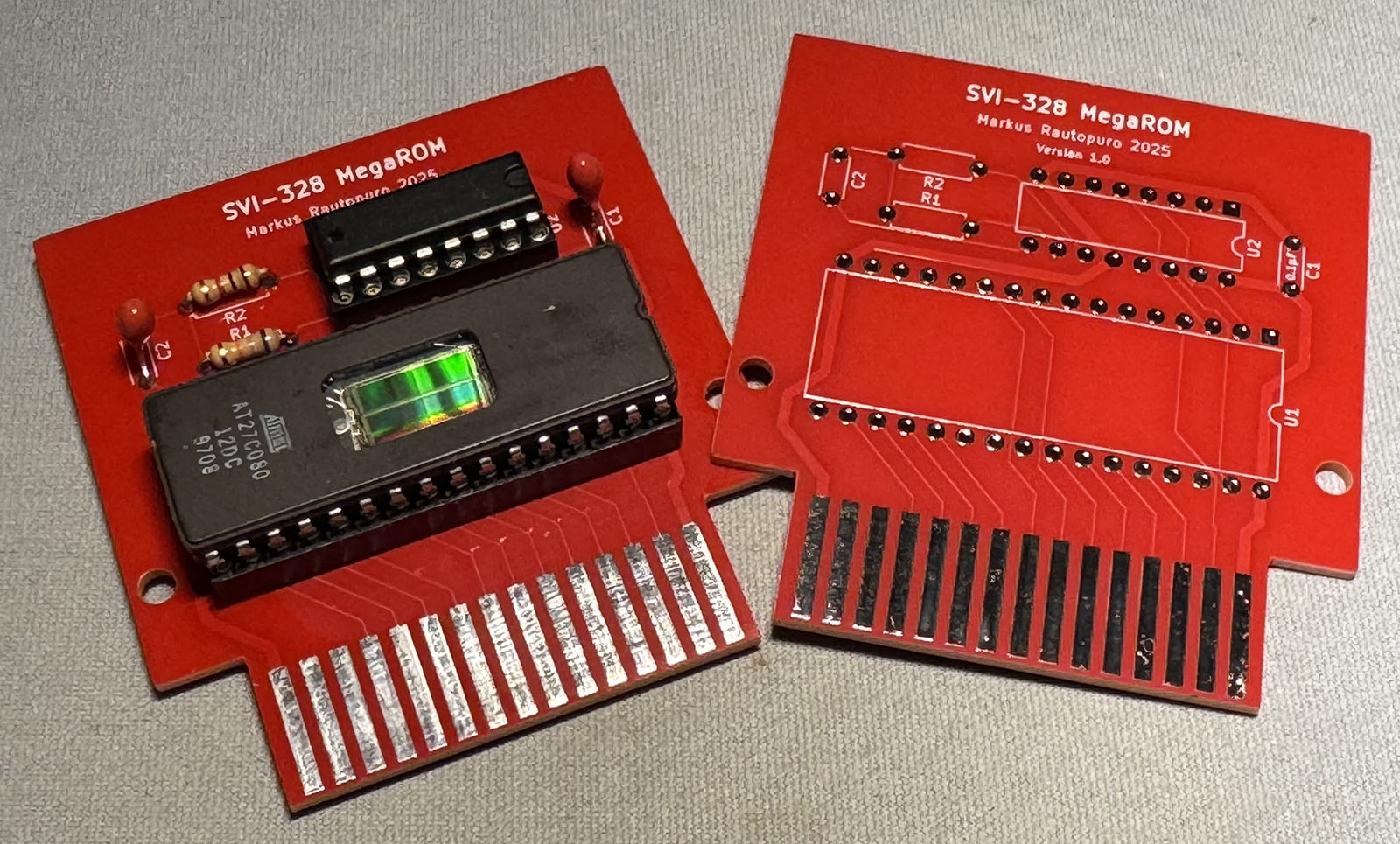
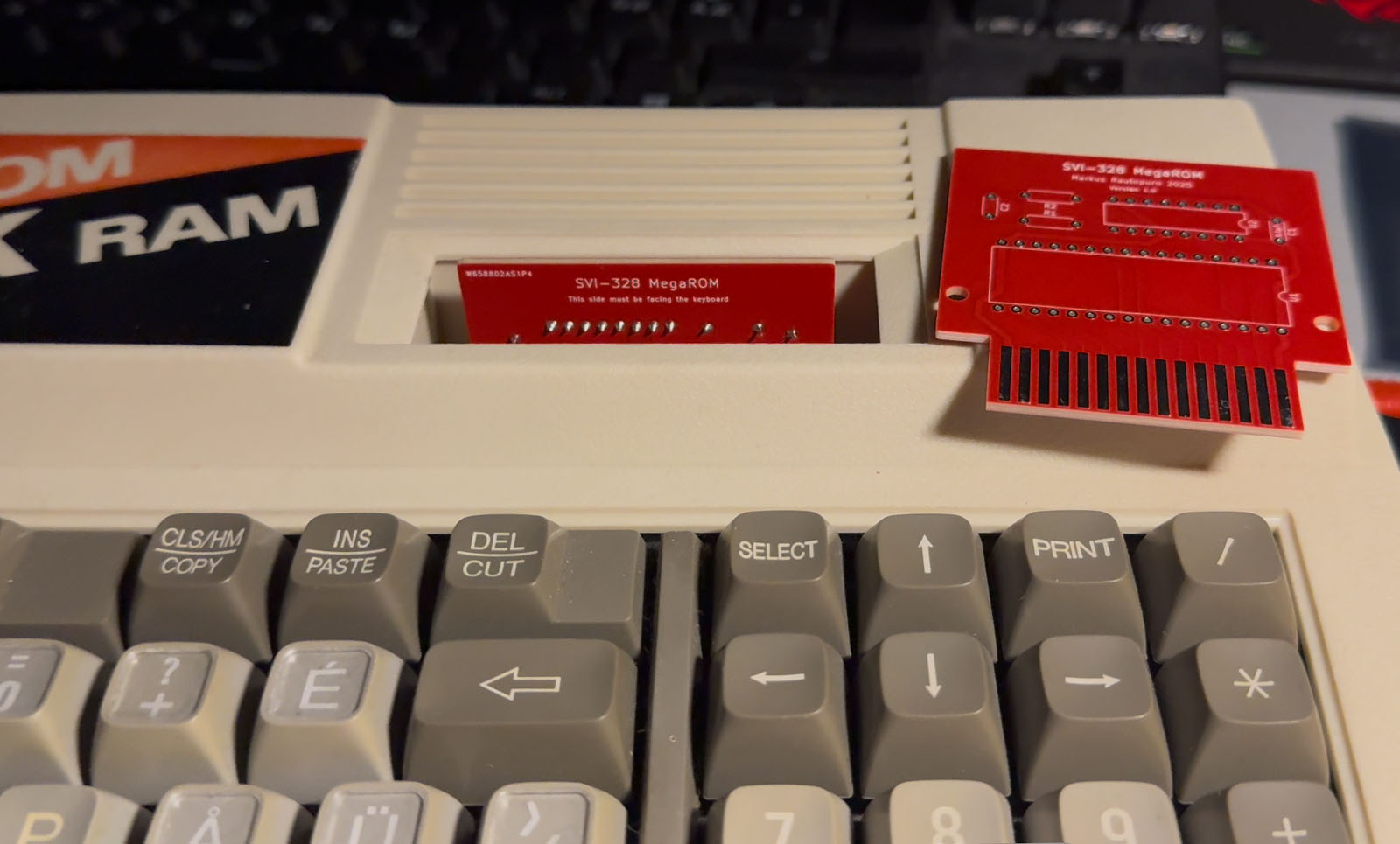
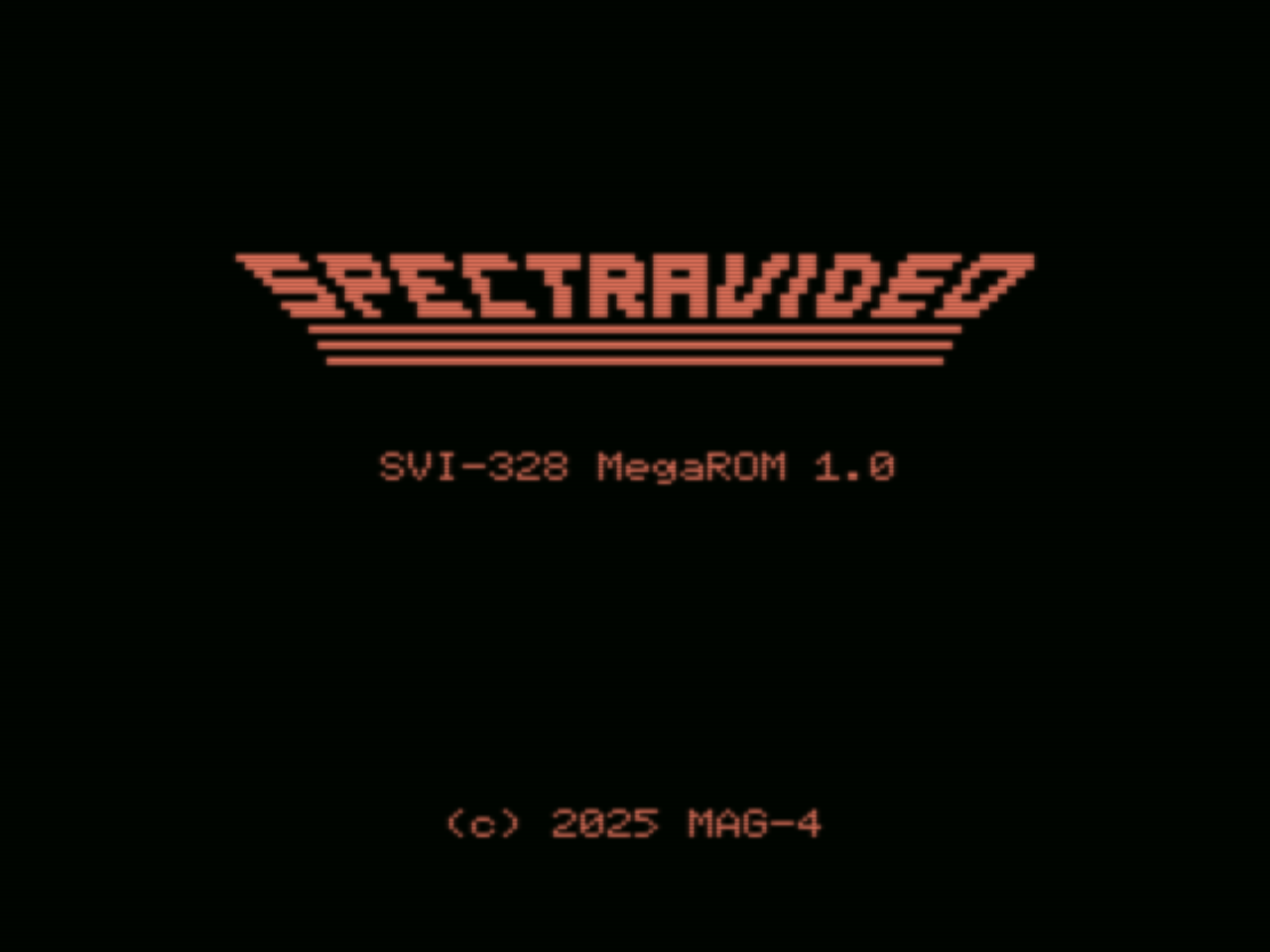
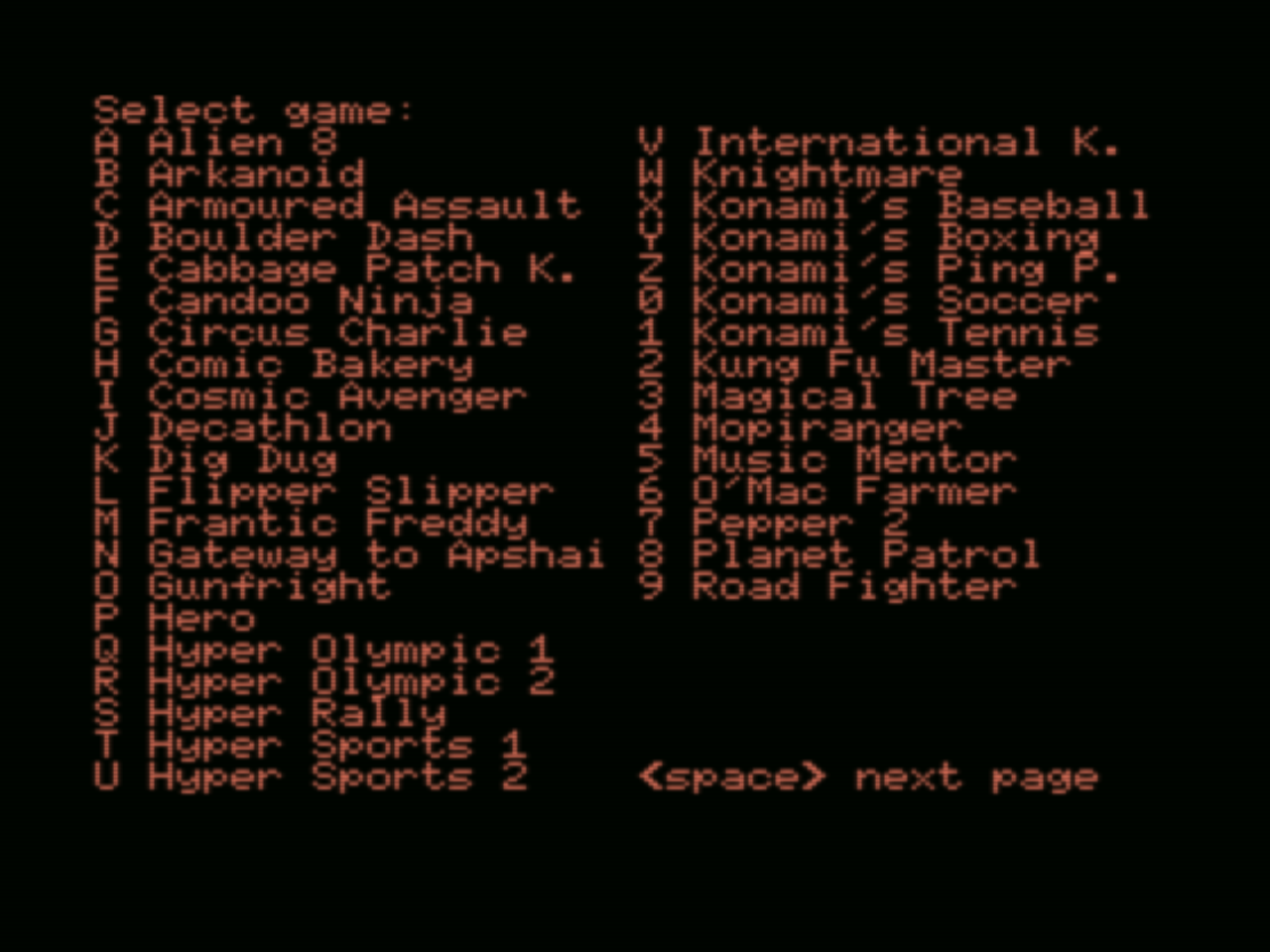
The implementation is based on Timo Soilamaa's idea on having a CD4060 binary counter chip with a built-in oscillator to control high address lines of a large memory chip. This version exposes a 16 kB window of a larger 1024 kB at time to SVI-328 and changes the window to the next after a while has passed. A more thorough explanation on how it works is found in chapter The hardware and Cartridge ROM contents and operation.
This repository contains:
The implementation has been tested with macOS Sonoma 14.6.1 and requires the following software to be installed, and found from path when executing the makefile:
Follow these instructions to get a version up and running in openMSX emulator.
When you have installed the previous programs, get a ready 32 kB ROM image like Frantic Freddy, review roms/roms.json.example and create roms/roms.json with the following content:
[
    {
        "name": "Frantic Freddy",
        "author": "Spectravideo",
        "file": "franticfreddy.rom.32.dat.zx0",
        "type": "rom.32.zx0",
        "jump": "0x000c",
        "crc16": "0x9c06"
    }
]
You can place the ROM image to uncompressed_roms folder with file name franticfreddy.rom.32.dat and then run ./calculate_crc16.sh to see if the crc16 matches the example above. If it does, you're using the correct ROM image.
Now compress the ROM image using zx0 with zx0 franticfreddy.rom.32.dat. You should see something like this:
ZX0 v2.2: Optimal data compressor by Einar Saukas
[...............................................]
File compressed from 32768 to 8363 bytes! (delta 2)
Move franticfreddy.rom.32.dat.zx0 to roms folder.
Now, create an emulator version of the ROM image with make emulator.
Then, use make run to run the version in openMSX emulator.
You should now see the game selector on screen. Press A to load the game and then navigate to Memory debugger to do the following (to simulate the changing ROM window):
The game should now load.
The cartridge design in inspired by Noel Llopis' 32 kB cartridge for Spectravideo 328. The physical design, however, differs so that the edge connector is now exactly 40 mm wide making it align with the cartridge slot better.
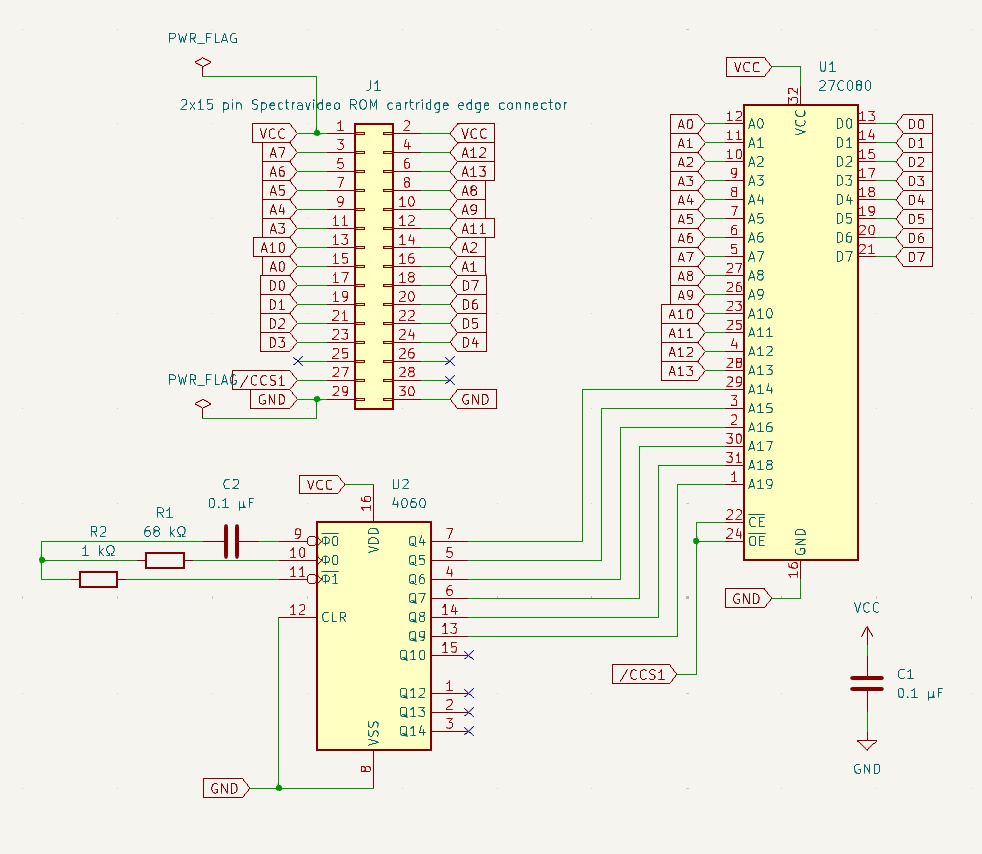
The cartridge has the following components:
See chapter Sector rotation for information on how the CD4060 operates with the 27C080.
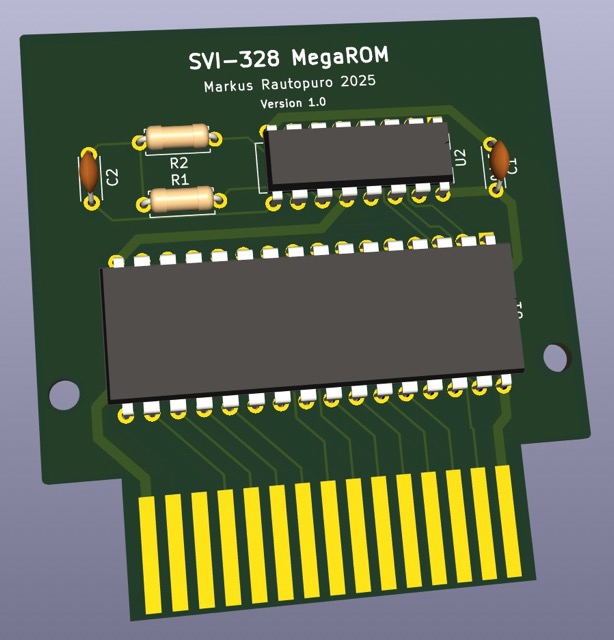
I recommend using a 32-pin spring socket under the memory chip so that it's easy to detach and attach the EPROMs.
The 1024 kB ROM memory is divided into 64 16384 byte sections (sectors), which consist of the following main parts:
Sector 0 (the first sector) contains the following functionality in the sector data (2.) section:
DZX0_ADDRESS) and also copies the launcher to high RAM (LAUNCHER_ADDRESS, see makefile for the values)Other sectors (from 1 to 63) contain the game data. This will be explained in chapter Game data.
The 1024 kB of a 27C080 is accessed via address lines A0..A19 (2^20 bytes) the following way:
The binary counter starts from 0, when all the Qx lines are low (zero). After 8 clock cycles line Q3 goes high (~125 ms) and sets A14 high (1). This will make the 270C080 address pointer point to the 2nd 16 kB block and so on. Cycling through all the 16 kB sectors takes ~8 seconds in this configuration.
As each of the sectors contain the sector identifier byte (starting from 0x00 in sector 0, continuing as 0x01 in sector 1 and so on), you can always check which sector is visible by reading the memory address 0x3fff (when bank xx is selected by setting /CART low using the PSG).
The ~125 ms rotation speed is based on that then the CPU has enough time to read the 16 kB of sector data and write it to RAM using FastLDIR memory copying function.
When the SVI-328 is booted up with the cartridge ROM attached, it follows these phases:
di and ld sp, xxxx instructions which instructs the SVI-328 that we have a valid cartridge ROM attached.DZX0_ADDRESS (so it won't get overwritten later) and also a compressed copy of the launcher to address 0xc000. Then, the launcher is decompressed to address LAUNCHER_ADDRESS.LAUNCHER_ADDRESS.The launcher consists of the following sections:
.load_another_part:)The launcher supports different types of game or applicaton ROM images, these are explained in the next chapters.
gamedata.js processes the roms.json and outputs corresponding sector data files into build directory and also generates gamedata.asm to be used for the game launch metadata when building the final ROM.
cas.8 and cas.16 are uncompressed 8 kB or 16 kB images based on .cas file data. An example of a typical cas.16 game is Mass Tael's Spectravideo games like Turboat or SASA.
gamedata.js defaults these ROMs to have a jump and load address of 0x8800, which you can override with jump or load keys if needed.
The following is an example on how to configure a 16384 byte image to be launched using roms.json:
{
    "name": "SASA",
    "author": "Mass Tael",
    "file": "sasa.cas.16.dat",
    "type": "cas.16",
    "crc16": "0x166f"
}
cas.16.zx0 is a compressed version of the cas.16 image.
rom.32.zx0 is a compressed 32 kB ROM image.
The following is an example on how to configure a 32768 byte image to be launched using roms.json:
{
    "name": "Frantic Freddy",
    "author": "Spectravideo",
    "file": "franticfreddy.rom.32.dat.zx0",
    "type": "rom.32.zx0",
    "jump": "0x000c",
    "crc16": "0x9c06"
}
In this case, a non-standard jump address of 0x000c is needed in order for the Frantic Freddy ROM code not to switch /CART low again.
msx.32.pletter is a 32 kB MSX ROM packed with Pletter. This is the format the MSX ROM-loader for SVI-328 uses by default. However, it is recommended to use msx.32.zx0 as it packs the games smaller.
Note that with this ROM type you need to split the 32 kB ROM into two 16 kB parts and pack them individually. The following is an example on how to configure a 32768 byte image to be launched using roms.json:
{
    "name": "Arkanoid",
    "author": "Taito",
    "files": [
        "arkanoid.msx.32.part1.dat.pletter",
        "arkanoid.msx.32.part2.dat.pletter"
    ],
    "type": "msx.32.zx0"
}'msx.32.zx0' is a 32 kB MSX ROM packed with ZX0. It is required to split the 32 kB ROM into two 16 kB pieces and then packing them. Please use the script split_roms.sh to split the original ROM and pack the pieces with ZX0.
The following is an example on how to configure a 32768 byte MSX image to be launched using roms.json:
{
    "name": "Zanac",
    "author": "Compile",
    "files": [
        "zanac.msx.32.part1.dat.zx0",
        "zanac.msx.32.part2.dat.zx0"
    ],
    "type": "msx.32.zx0"
}'msx.16.zx0' is a 16 kB MSX ROM packed with ZX0. It can be supplied in single file.
The following is an example on how to configure a 16384 byte MSX image to be launched using roms.json:
{
    "name": "Boulder Dash",
    "author": "First Star Software",
    "file": "boulderdash.msx.16.dat.zx0",
    "type": "msx.16.zx0"
}'rom.48.zx0' is a SVI-328 game that has 48 kB size. Note that this is not a ROM image as SVI-328 48 kB ROMs are virtuallu non-existent and the physical ROM cartridges operate a little differently than 32 kB ROMs.
Compiling the production ROM with make production shows the maximum compressed image file size that can be loaded in single part:
Maximum compressed ROM size in this build: 31898
If the compressed image exceeds that size, you need to split the image into parts using split_roms.sh script.
Here are examples of games with compressed size less than ~31k and larger:
{
    "name": "Gunfright",
    "author": "Ultimate Play the Game",
    "file": "gunfright.rom.48.dat.zx0",
    "type": "rom.48.zx0"
}

{
    "name": "Knightmare",
    "author": "Konami",
    "files": [
        "knightmare.rom.48.part1.dat.zx0",
        "knightmare.rom.48.part2.dat.zx0"
    ],
    "type": "rom.48.zx0"
}'cas.len.zx0' is a format which has a variable size (other than 8 or 16 kB).
In this ROM type, you need to supply the uncompressed game length using length parameter.
{
    "name": "Hero",
    "author": "Activision",
    "file": "hero.cas.len.dat.zx0",
    "type": "cas.len.zx0",
    "crc16": "0x0ecb",
    "load": "0x8000",
    "jump": "0x8000",
    "length": "17153"
}To compile the production version of the ROM cartridge image, please use make production.
If the build prosess reports an error (see below) about modifying SECTOR0_START, you need to supply a larger value to the makefile.
z88dk-z80asm -o=build/sector0.bin -DSECTOR0_START=9100 -DLAUNCHER_ADDRESS=0x8001               -DDZX0_ADDRESS=65468                    -m -l -b -DROM_ID=0 build/rom1024.asm -I=asm
build/rom1024.asm:24: error: integer range: -$3e6
^---- defs SECTOR0_START-$, 0xff ; If this fails, increase SECTOR0_START in makefile
    ^---- defs SECTOR0_START-$,255
If you supplied a value large enough, the build process successfully completes and suggests the actual value:
Magic number (use this in makefile): 10095
Maximum compressed ROM size in this build: 31943
1024 kB version compiled (release/cart1024.rom)
To optimize the ROM cartridge usage you should use the provided Magic number as SECTOR0_START value. In some cases, even if you supply the exact magic number, the build process still can crash with a following type of error:
build/rom1024.asm:24: error: integer range: -1
^---- defs SECTOR0_START-$, 0xff ; If this fails, increase SECTOR0_START in makefile
    ^---- defs SECTOR0_START-$,255
Then, just increase SECTOR0_START with one or two, rebuild and keep doing this until it successfully builds the ROM image. As supplying a different value will change the contents of the launcher image, and once it is compressed with different contents, the resulting image lenght may vary. This makes it impossible to know the resulting compressed launcher image size in beforehand.
You will find the resulting ROM image from release/cart1024.rom.
To burn the ROM image to an EPROM, you can use minipro version 0.7.2 on macOS. Use the following command with AT27C080 with DIP32 pins:
minipro -p AT27C080@DIP32 -w cart1024.romFor the EPROM burner, I'm suggesting a TL866II Plus programmer. To erase the UV EPROMS you can use a UV EPROM eraser.
I had to update the programmer firmware first with a Windows machine in order to get it to work on macOS. See the details of the minipro output below:
Found T48 01.1.31 (0x11f)
Warning: T48 support is experimental!
Device code: 44A13469
Serial code: VTQRRFJKXR60YE8R9I6Y4274

VPP=13V, VDD=6.5V, VCC=5V, Pulse=50us
Chip ID: 0x1E8A  OK
Writing Code...  257.18Sec  OK
Reading Code...  7.25Sec  OK
Verification OKThis cartridge ROM is based on Timo Soilamaa's idea on using the binary counter chip as the address mapper. I would like to thank Timo also on providing valuable information about the Spectravideo 328 hardware, some hands-on testing and advice on using the MSX ROM-loader for SVI-328.
The PCB design is inspired by Noel Llopis' SVI-328 32 kB cartridge project.
I've also gotten useful information from Duncan Morrison about .CAS files and the information about 32 kB and 64 kB ROMs from Tony Cruise.
For license of using this source code and hardware, please see LICENSE.
The ROM code includes EXEROM binary from MSX ROM-loader for SVI-328 version 1.5 by NYYRIKKI. See the licensing information from here.
Also, the launcher uses ZX0 "Standard" decompressor by Einar Saukas & Urusergi. See the licensing information from here.
| Qty | Value | Footprint | References |
|---|---|---|---|
| 1 | 0.1 μF | Capacitor_THT:C_Disc_D4.3mm_W1.9mm_P5.00mm | C2 |
| 1 | 0.1μF | Capacitor_THT:C_Disc_D4.3mm_W1.9mm_P5.00mm | C1 |
| 1 | 1 kΩ | Resistor_THT:R_Axial_DIN0207_L6.3mm_D2.5mm_P7.62mm_Horizontal | R2 |
| 1 | 27C080 | Package_DIP:DIP-32_W15.24mm | U1 |
| 1 | 2x15 pin Spectravideo ROM cartridge edge connector | Spectravideo:ROM cartridge edge connector | J1 |
| 1 | 4060 | Package_DIP:DIP-16_W7.62mm | U2 |
| 1 | 68 kΩ | Resistor_THT:R_Axial_DIN0207_L6.3mm_D2.5mm_P7.62mm_Horizontal | R1 |
byrantech/laptop
anyon_e, a highly integrated, high end, open source laptop. Attempt the impossible.


AxxAxx/AxxSolder
STM32 Based soldering station for JBC cartridges, 9-24 VDC and USB-PD power


jamro/tiny-engineer
A small desktop robot that brings an AI coding assistant to life, physically acting out when it reads files, thinks, writes code, and finishes work.

hoglet67/RGBtoHDMI
Bare-metal Raspberry Pi project that provides pixel-perfect sampling of Retro Computer RGB/YUV video and conversion to HDMI

It measures 55 × 59 mm and has 2 copper layers, 1.6 mm thick.
7 parts. The full list of its parts is on this page, with links to each part's symbol and footprint where PCBKit's library has them.
From the fitch/SVI-328-MegaROM repository on GitHub, at the commit this page was made from: the board is pcb/SVI-328-MegaROM.kicad_pcb and its schematic pcb/SVI-328-MegaROM.kicad_sch. PCBKit opens the board in the browser, with nothing to install.
Its repository states no licence, so its author keeps all rights: ask fitch before reusing the design.