

4 layers140 × 104 mm
Remram
hasenbanck/remram
32bit STM32F7 based 3D printing controller using TMC2130 stepper driver
264 parts40

 exentio/kurumi1
Addressable RGB strip controller
Kurumi is an open-source printed circuit board by exentio, from the exentio/kurumi repository on GitHub, published under the CERN-OHL-S-2.0 licence. It is a 2-layer board of 36 × 30 mm with 21 parts on 26 nets, routed with 99 tracks and 68 vias.
It is built around the SN74LVC1T45DRL and TPS54308DDC. Its parts include 6 capacitors, 5 resistors, 3 ICs, 3 connectors and 1 inductor. It belongs with the lEDs and displays boards and the ESP32 and RISC-V boards of this library.
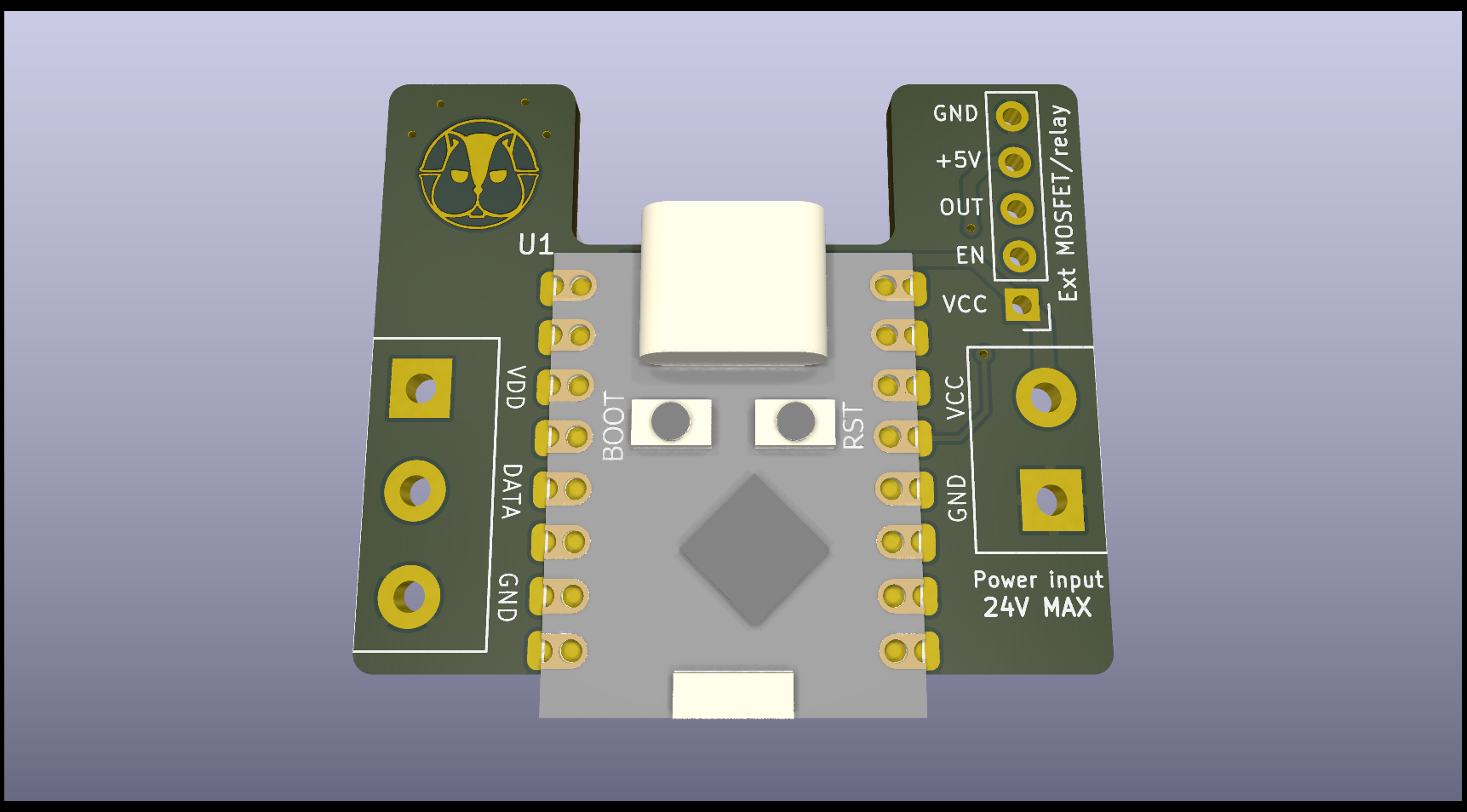
Addressable LED strip controller, based on the ESP32-C3 SuperMini.
This is a shrinkage of a previous private project that was quite janky due to
my friend's needs.
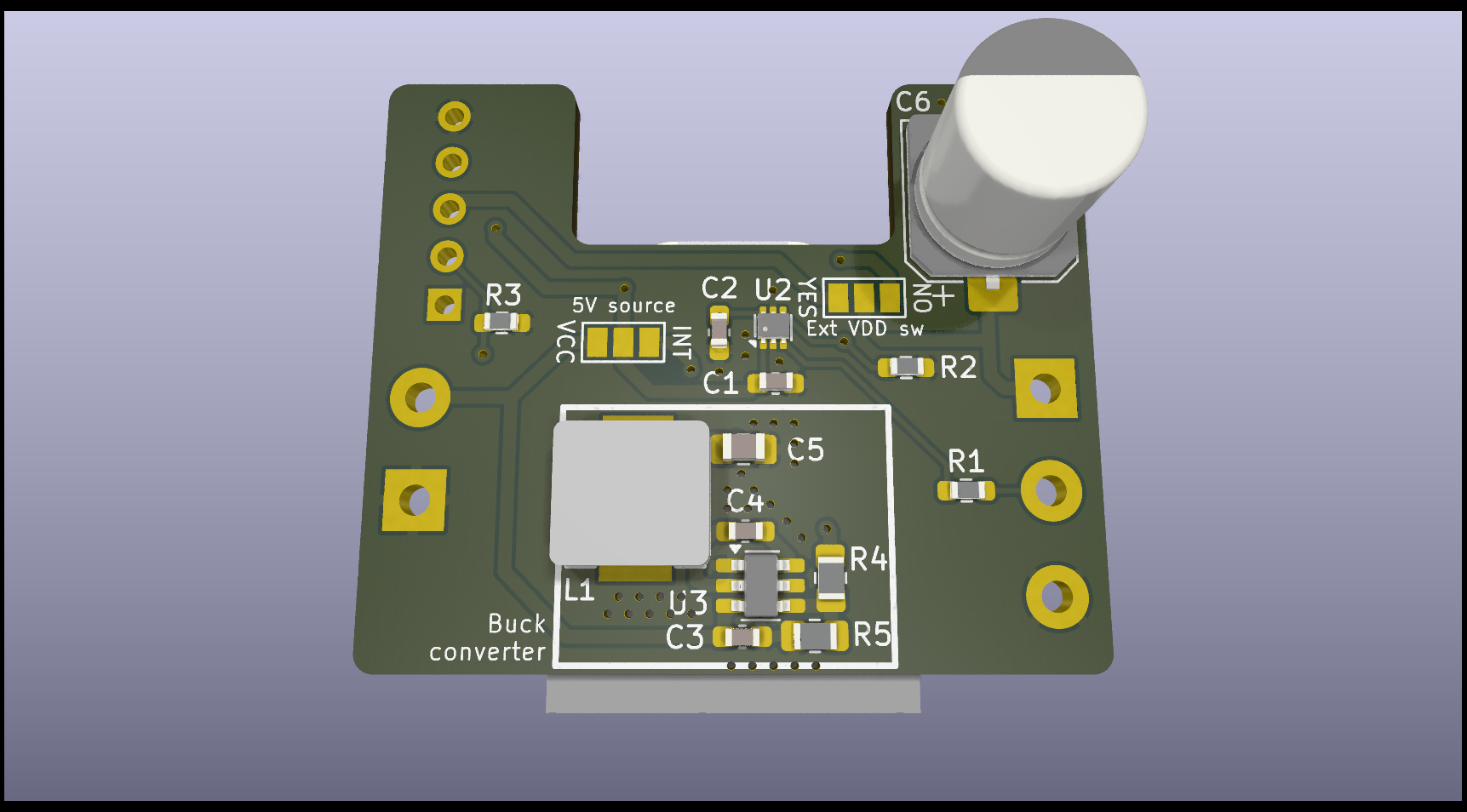
WARNING: the buck converter is currently not working properly.
Designed to run at 5V or any voltage between 12V and 24V.
In case of 5V strips, the buck converter part won't need to be populated;
instead, short jumper JP1's central pin to VCC.
DON'T DO THIS FOR ANY VOLTAGE OVER 5V OR YOU WILL FRY YOUR ESP32.
For strips running at 12V or more, short JP1 to INT (internal converter).
The buck converter is not designed for voltages over 24V.
The data pin is connected to GPIO5, at the moment no ESPhome or WLED configuration has been made, you'll have to spin your own until I get the board and test everything.
The board also supports using relays or MOSFETs to cut power to the strip by using the broken out pins J3. The EN pin is connected to GPIO4 and can be used to control the switching device. Don't forget to short JP2 as needed, whether you want to switch the power or not.
It's recommended to add insulation over the jumpers and on unpopulated pads on the bottom if the buck converter is not used (i.e. electrical or kapton tape).
| Qty | Value | Footprint | References |
|---|---|---|---|
| 2 | 1uF | Capacitor_SMD:C_0603_1608Metric_Pad1.08x0.95mm_HandSolder | C1, C2 |
| 2 | 4.7K | Resistor_SMD:R_0603_1608Metric_Pad0.98x0.95mm_HandSolder | R2, R3 |
| 1 | 100K | Resistor_SMD:R_0805_2012Metric_Pad1.20x1.40mm_HandSolder | R4 |
| 1 | 100nF | Capacitor_SMD:C_0603_1608Metric_Pad1.08x0.95mm_HandSolder | C4 |
| 1 | 10uH | CYA0630:CYA0630 | L1 |
| 1 | 13.7K | Resistor_SMD:R_0805_2012Metric_Pad1.20x1.40mm_HandSolder | R5 |
| 1 | 2.2uF | Capacitor_SMD:C_0603_1608Metric_Pad1.08x0.95mm_HandSolder | C3 |
| 1 | 33uF | Capacitor_SMD:C_0805_2012Metric_Pad1.18x1.45mm_HandSolder | C5 |
| 1 | 470 | Resistor_SMD:R_0603_1608Metric_Pad0.98x0.95mm_HandSolder | R1 |
| 1 | 470uF | Capacitor_SMD:CP_Elec_8x10.5 | C6 |
| 1 | 5V source | Jumper:SolderJumper-3_P1.3mm_Open_Pad1.0x1.5mm_NumberLabels | JP1 |
| 1 | ESP32-C3_SUPERMINI | ESP32-C3_SUPERMINI:MODULE_ESP32-C3_SUPERMINI_CASTELLATED | U1 |
| 1 | Ext MOSFET/Relay | Connector_PinHeader_2.54mm:PinHeader_1x05_P2.54mm_Vertical | J3 |
| 1 | Ext VDD sw | Jumper:SolderJumper-3_P1.3mm_Open_Pad1.0x1.5mm_NumberLabels | JP2 |
| 1 | LEDs | TerminalBlock:TerminalBlock_bornier-3_P5.08mm | J2 |
| 1 | Power input | TerminalBlock:TerminalBlock_bornier-2_P5.08mm | J1 |
| 1 | SN74LVC1T45DRL | Package_TO_SOT_SMD:SOT-563 | U2 |
| 1 | TPS54308 | Package_TO_SOT_SMD:SOT-23-6_Handsoldering | U3 |
The 20 most common of 21 parts.
hasenbanck/remram
32bit STM32F7 based 3D printing controller using TMC2130 stepper driver


felixznr/ALBERT
Albert I was a rhesus macaque monkey and the first mammal launched on a rocket (V-2 Rocket "Blossom No. 3") on June 18, 1948.

Kraad25/TPS5430_Buck_5V
12V-to-5V synchronous buck converter (TPS54308), designed in KiCad


spiwocoal/547452
Convertidor DC/DC topología SEPIC para ramo Taller de sistemas electrónicos
It measures 36 × 30 mm and has 2 copper layers, 1.6 mm thick.
21 parts, built around the SN74LVC1T45DRL and TPS54308DDC. The full list of its parts is on this page, with links to each part's symbol and footprint where PCBKit's library has them.
From the exentio/kurumi repository on GitHub, at the commit this page was made from: the board is kurumi.kicad_pcb and its schematic kurumi.kicad_sch. PCBKit opens the board in the browser, with nothing to install.
Its repository publishes it under the CERN-OHL-S-2.0 licence: you may reuse it on that licence's terms (keep the author's notice, and for a copyleft licence share your changes alike).