2 layers40 × 30 mm

 electronut/ElectronutLabs-PogoProg14
Pogo Pin Programmer with 2.54 mm pitch - perfect for SWD programming
PogoprogB is an open-source printed circuit board by electronut, from the electronut/ElectronutLabs-PogoProg repository on GitHub. It is a 2-layer board of 29.6 × 42.5 mm with 3 parts on 4 nets, routed with 16 tracks and 0 vias.
It belongs with the interfaces and adapters boards of this library.
Note: This repository has been moved to our GitLab page on May 2019, and will not receive any updates or be monitored. Please follow this link to go to the new repository: https://gitlab.com/electronutlabs-public/ElectronutLabs-PogoProg
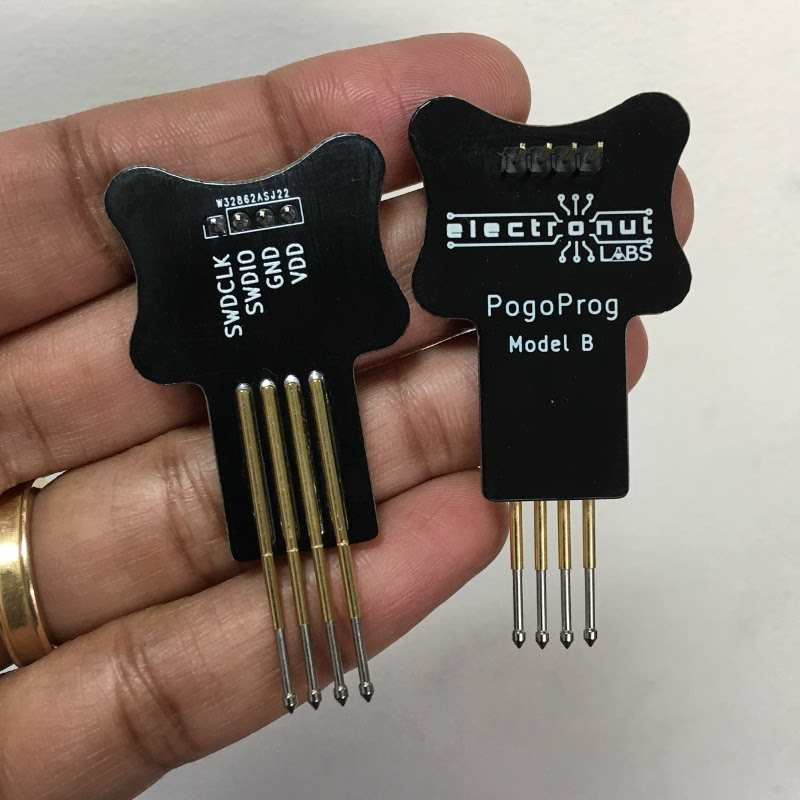
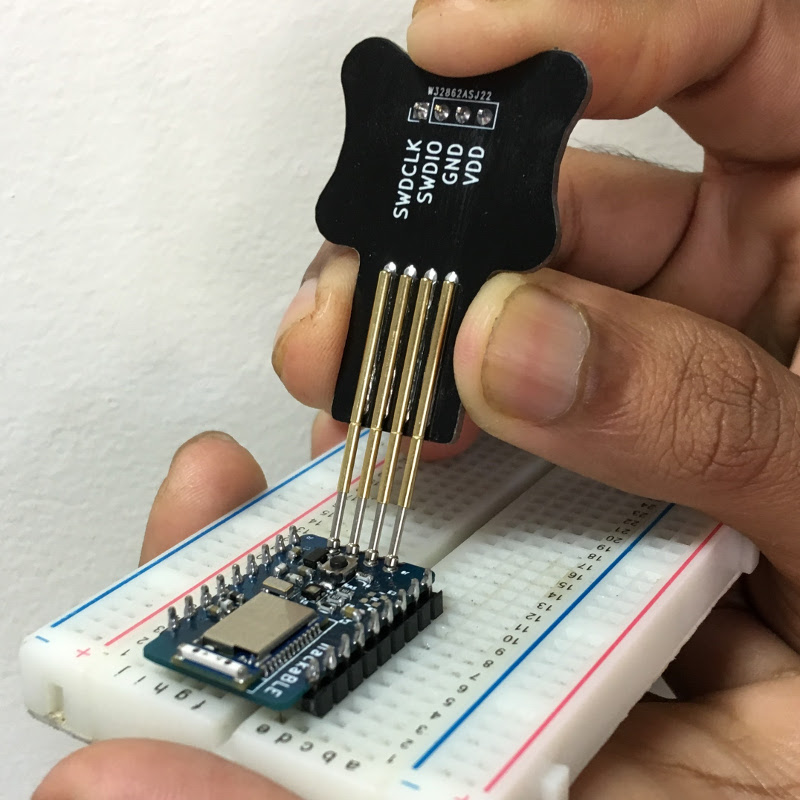
Pogo Pin Programmer with 2.54 mm pitch - perfect for SWD programming.
Most microcontrollers support the SWD protocol as a convenient method to program and debug the chip. If you are making a custom PCB for a product or project, it's a good idea to add an SWD programming header to the board. PogoProg Model B is designed for use with such a 4-pin 2.54mm header that uses the SWDIO, SWDCLK, VDD and GND pins. (Of course you can use this programmer for any 4 signal lines, as long as the pitch is compatible.)
We design a lot of custom hardware and it's a common practise to add an SWD header to a PCB. We've been making do with make-shift programmers for a while now. We finally decided that it would be a good idea to make a well-designed product that would be helpful to the maker community at large.
We've taken care to design PogoPin with ergonomics and aesthetics in mind. Pogo pins are expensive and inconvenient to source in small quantities, so we believe that providing a pre-soldered inexpensive programmer could be beneficial.
PogoProg is available for purchase from our Tindie store. Please email us at info@electronut.in if you have any questions.
| Qty | Value | Footprint | References |
|---|---|---|---|
| 1 | LOGO | pogoprogB:logo | G*** |
| 1 | SWD | pogoprogB:pogopin_04x01 | J1 |
| 1 | SWD | Pin_Headers:Pin_Header_Straight_1x04_Pitch2.54mm | J2 |

hzeller/rpi-rgb-led-matrix
Controlling up to three chains of 64x64, 32x32, 16x32 or similar RGB LED displays using Raspberry Pi GPIO


atopile/atopile
Design circuit boards with code! ✨ Get software-like design reuse 🚀, validation, version control and collaboration in hardware; starting with electronics ⚡️


hackclub/sprig
🍃 Learn to code by making games in a JavaScript web-based game editor.
It measures 29.6 × 42.5 mm and has 2 copper layers, 1.6 mm thick.
3 parts. The full list of its parts is on this page, with links to each part's symbol and footprint where PCBKit's library has them.
From the electronut/ElectronutLabs-PogoProg repository on GitHub, at the commit this page was made from: the board is pcb/modelB/pogoprogB.kicad_pcb. PCBKit opens the board in the browser, with nothing to install.
Its repository states no licence, so its author keeps all rights: ask electronut before reusing the design.