
2 layers36.1 × 21 mm

 dwillmore/TSSOP20_breakout18
A generic breakout board for TSSOP20 chips to a SIP header meant for breadboard use
Generic TSSOP20 is an open-source printed circuit board by dwillmore, from the dwillmore/TSSOP20_breakout repository on GitHub, published under the CERN-OHL-W-2.0 licence. It is a 2-layer board of 52.3 × 16.3 mm with 45 parts on 37 nets, routed with 257 tracks and 9 vias.
It is built around the CH32V003F4P6. Its parts include 20 connectors, 6 resistors, 3 capacitors and 2 ICs. It belongs with the RISC-V boards of this library.
A generic breakout board for TSSOP20 chips to a SIP header meant for breadboard use
New V3 coming shortly
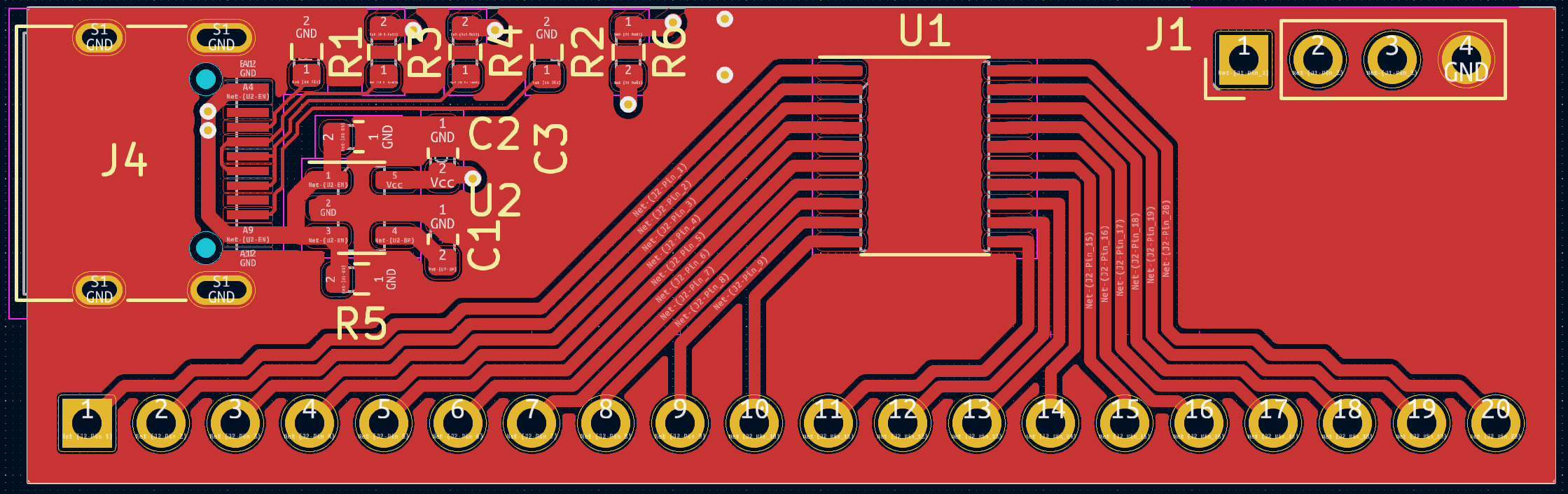
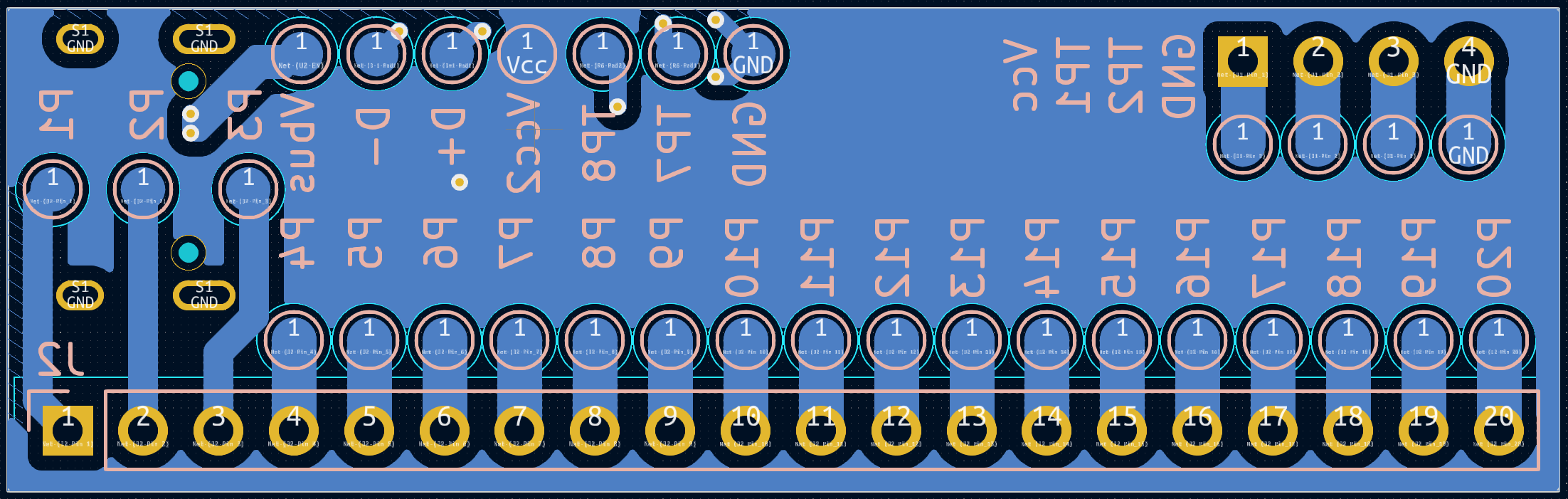
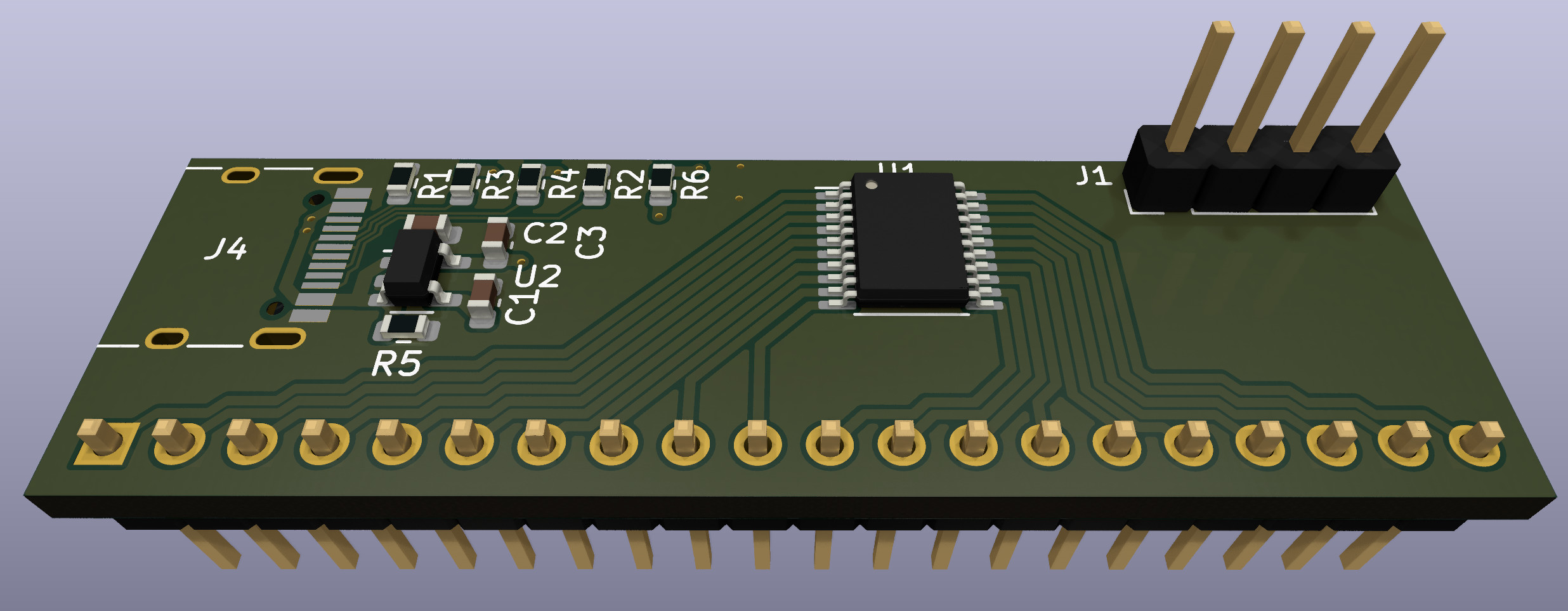
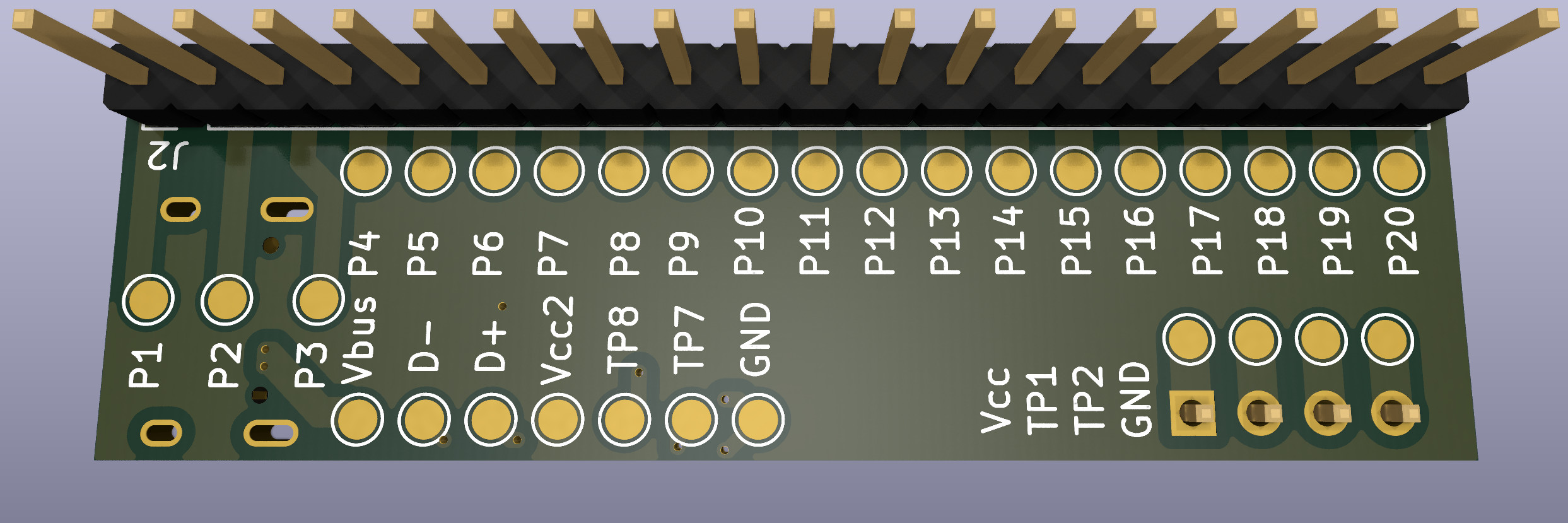
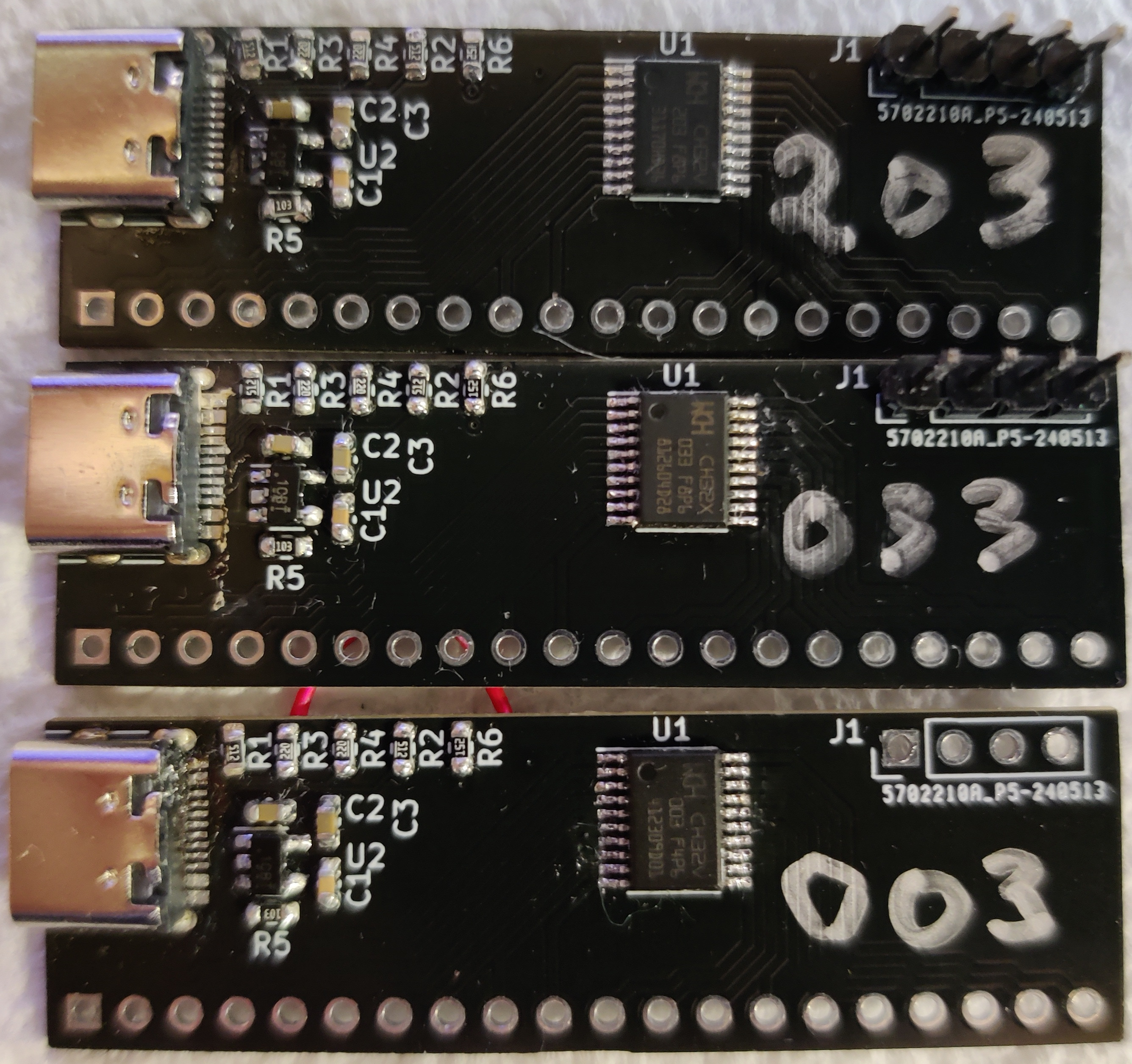
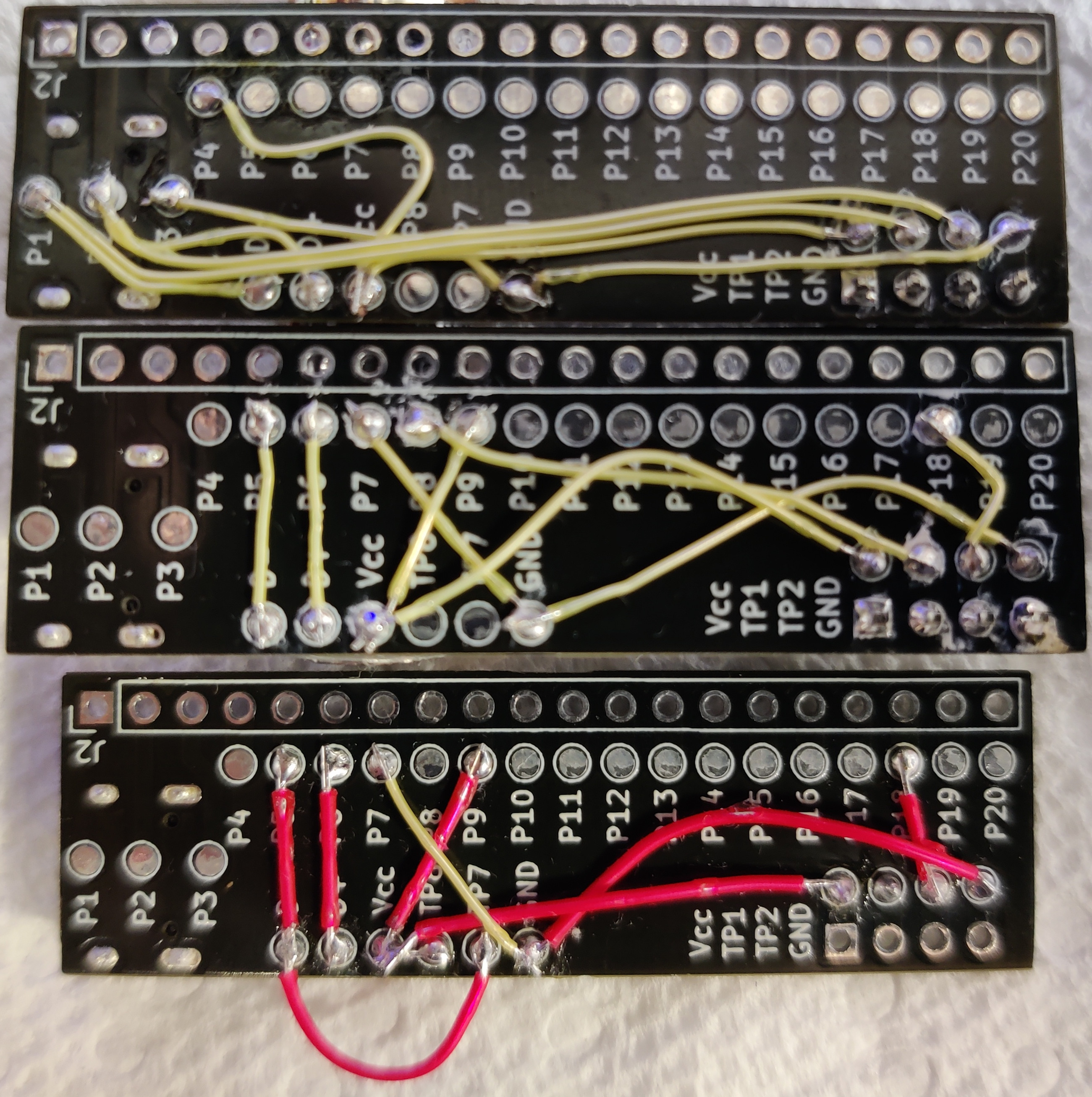
This is more of a guidance than a specific BOM as it will vary with the features needed on the board and the needs of the specific chip being used.
| Qty | Value | Footprint | References |
|---|---|---|---|
| 17 | ~ | TestPoint:TestPoint_Pad_D1.5mm | P1, P2, P3, P4, P5, P6, P7, P8, P10, P11, P12, P13, P15, P16, P18, P20 +1 |
| 6 | R_US | Resistor_SMD:R_0603_1608Metric | R1, R2, R3, R4, R5, R6 |
| 5 | GND | TestPoint:TestPoint_Pad_D1.5mm | GND, GND, P14, P17, P19 |
| 3 | C_Small | Capacitor_SMD:C_0603_1608Metric | C1, C2, C3 |
| 2 | Vcc | TestPoint:TestPoint_Pad_D1.5mm | Vcc, Vcc2 |
| 1 | CH32V003F4P6 | Package_SO:TSSOP-20_4.4x6.5mm_P0.65mm | U1 |
| 1 | Conn_01x04_Pin | Connector_PinHeader_2.54mm:PinHeader_1x04_P2.54mm_Vertical | J1 |
| 1 | Conn_01x20_Pin | Connector_PinHeader_2.54mm:PinHeader_1x20_P2.54mm_Vertical | J2 |
| 1 | D+ | TestPoint:TestPoint_Pad_D1.5mm | D+ |
| 1 | D- | TestPoint:TestPoint_Pad_D1.5mm | D- |
| 1 | Test/Prog1 | TestPoint:TestPoint_Pad_D1.5mm | TP1 |
| 1 | Test/Prog2 | TestPoint:TestPoint_Pad_D1.5mm | TP2 |
| 1 | USB_C_Receptacle_USB2.0 | Connector_USB:USB_C_Receptacle_HRO_TYPE-C-31-M-12 | J4 |
| 1 | USB_Pullup | TestPoint:TestPoint_Pad_D1.5mm | TP7 |
| 1 | USB_PullupN | TestPoint:TestPoint_Pad_D1.5mm | TP8 |
| 1 | Vbus | TestPoint:TestPoint_Pad_D1.5mm | Vbus |
| 1 | ~ | Package_TO_SOT_SMD:SOT-23-5 | U2 |


gili-yankovitch/SwordOfSecrets
To solve the challenge you will need to discover a series of flags, hidden inside the sword. Each one will help you unlock the next step in the challenge, to finally reveal the ultimate secret the sword holds.


bsidestlv/bsidestlv-2025-badge
To solve the challenge you will need to discover a series of flags, hidden inside the badge. Each one will help you unlock the next step in the challenge, to finally reveal the ultimate secret the badge holds.


bsidesorlando/2026-badge
The electronic badge for BSides Orlando 2026, themed around retro-futurism: a 1960s World's Fair vision of tomorrow, with Lil Chompy the alligator at the wheel of a flying car.

It measures 52.3 × 16.3 mm and has 2 copper layers, 1.69 mm thick.
45 parts, built around the CH32V003F4P6. The full list of its parts is on this page, with links to each part's symbol and footprint where PCBKit's library has them.
From the dwillmore/TSSOP20_breakout repository on GitHub, at the commit this page was made from: the board is KiCAD source/Generic TSSOP20.kicad_pcb and its schematic KiCAD source/Generic TSSOP20.kicad_sch. PCBKit opens the board in the browser, with nothing to install.
Its repository publishes it under the CERN-OHL-W-2.0 licence: you may reuse it on that licence's terms (keep the author's notice, and for a copyleft licence share your changes alike).