
2 layers142.5 × 101 mm
Hillside46
mmccoyd/hillside
Family of split ergonomic keyboards with three rows of six or five keys and a generous thumb arc
92 parts448MIT

 dcpedit/dissatisfaction30147
To get the PCB manufactured, upload dissat-pcb.zip to JLCPCB, select your desired PCB color while keeping all the other default options, and place your order (minimum 5).
Dissatisfaction30 is an open-source printed circuit board by dcpedit, from the dcpedit/dissatisfaction30 repository on GitHub, published under the CC-BY-4.0 licence. It is a 2-layer board of 190.5 × 85.7 mm with 55 parts on 59 nets, routed with 380 tracks and 41 vias.
It is built around the BAV70. Its parts include 16 diodes, 1 IC, 1 connector and 1 switch. It belongs with the AVR (ATmega, ATtiny) boards of this library.
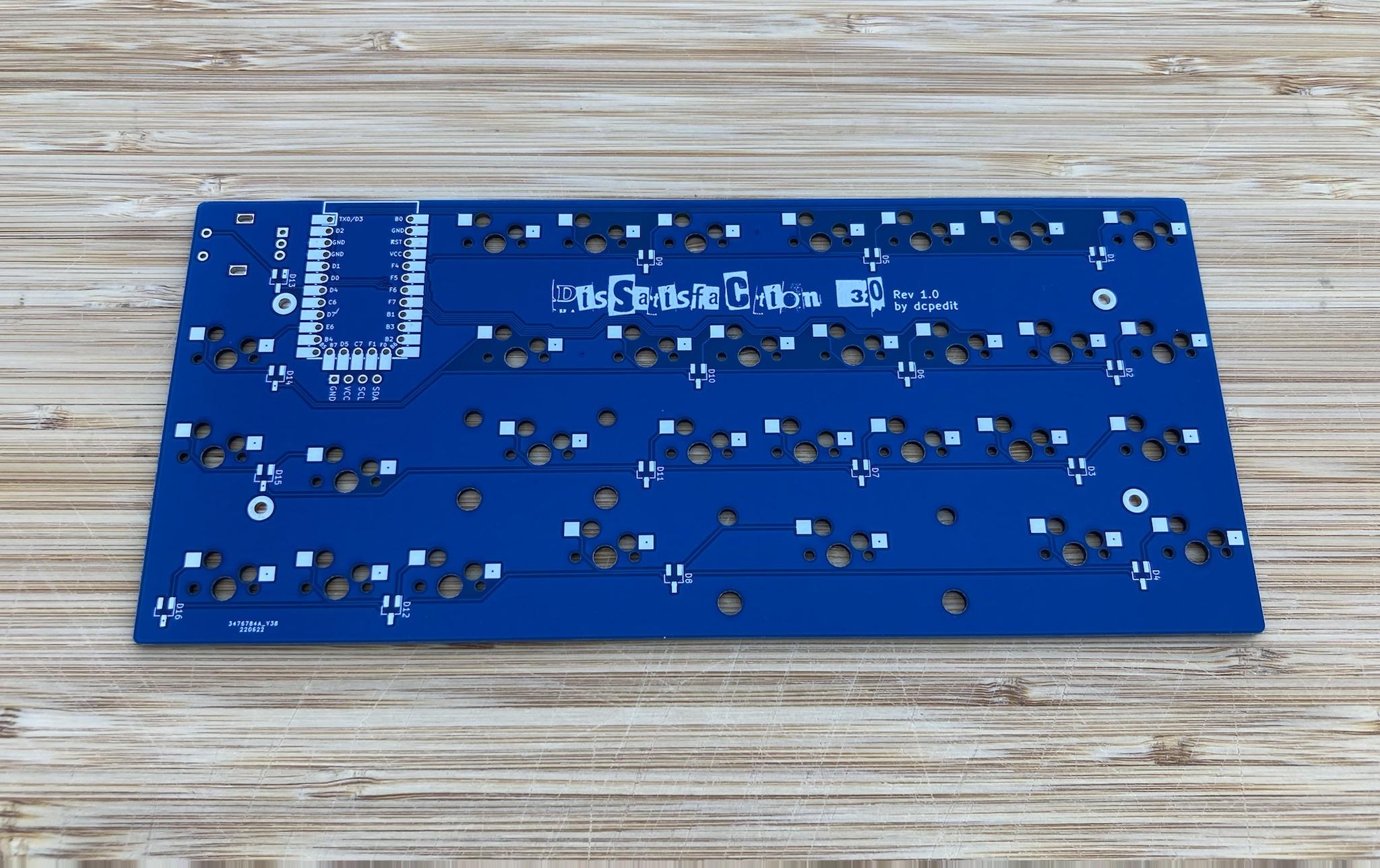
To get the PCB manufactured, upload dissat-pcb.zip to JLCPCB, select your desired PCB color while keeping all the other default options, and place your order (minimum 5). If you made tweaks to the PCB in KiCad, follow this tutorial to generate new Gerber files
| Name | Qty | Notes |
|---|---|---|
| Elite-C controller | 1 | Soldered directly onto PCB |
| SSD1306 128x32 OLED | 1 | |
| EC11 rotary encoder | 1 | |
| Key switches | 30 | |
| 3u stabalizer | 1 | |
| 2u stabalizer | 1 | |
| OLED header (1x4) | 1 | Link |
| Kailh hot swap socket | 30 | Link |
| BAV70 SMD diode | 16 | Link |
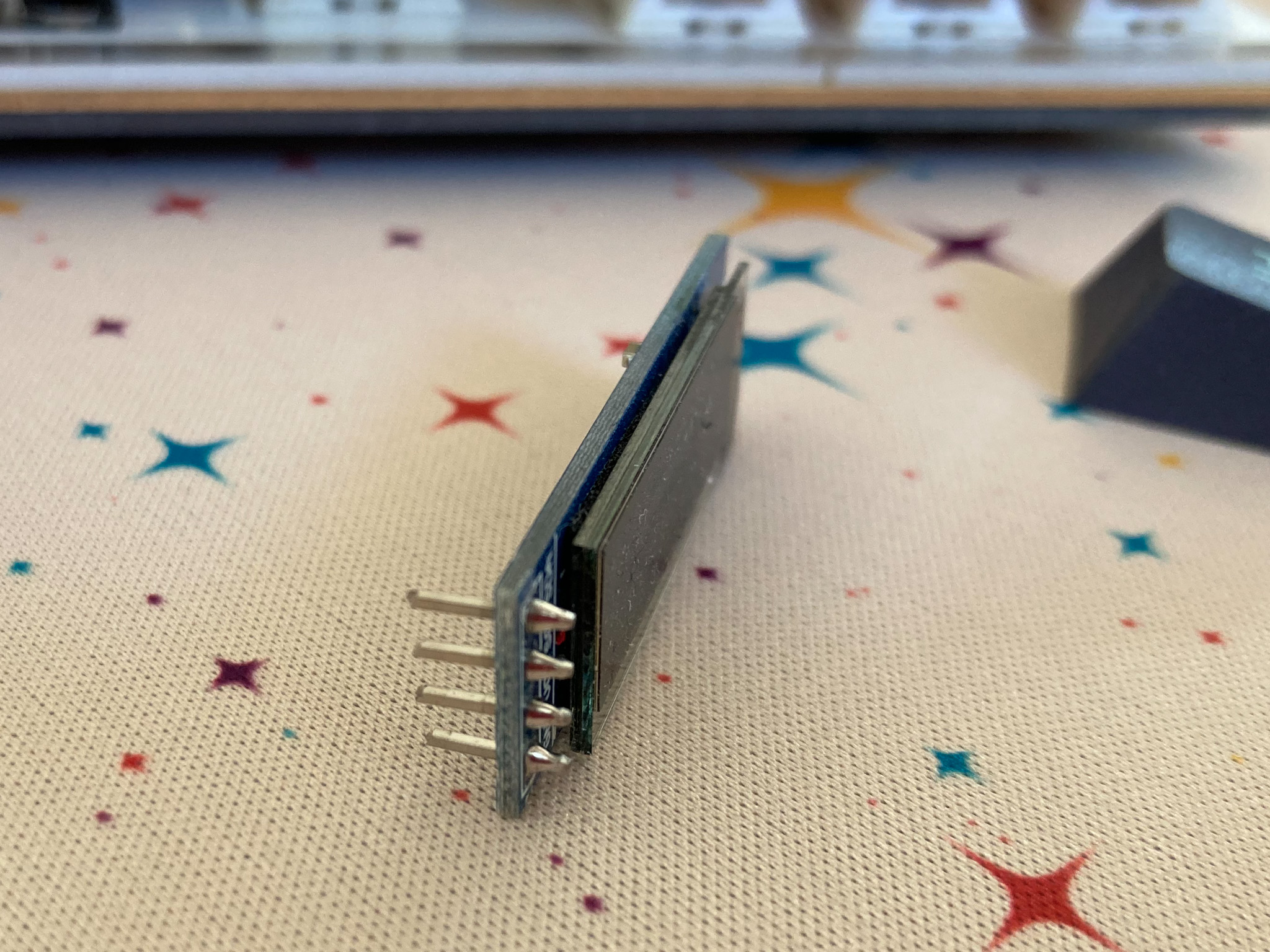
You will need to sand the OLED header down so that the plastic is about 7mm in height (not including the pins). Also remove any plastic spacers on the OLED pins, and make sure the pins insert fully into the now shorter header. If it doesn't sit flush with the OLED PCB, cut the OLED pins a bit shorter until it does.
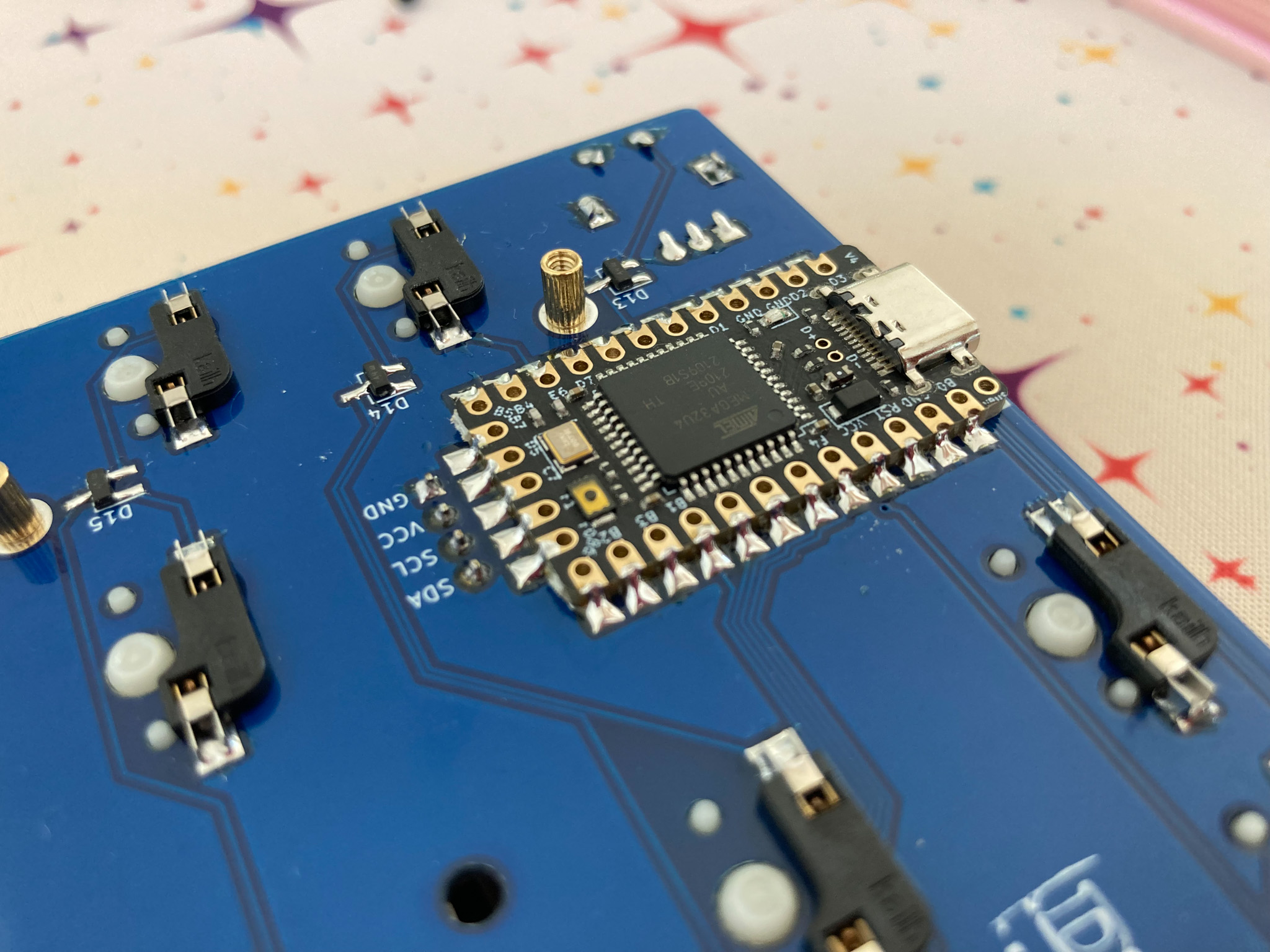
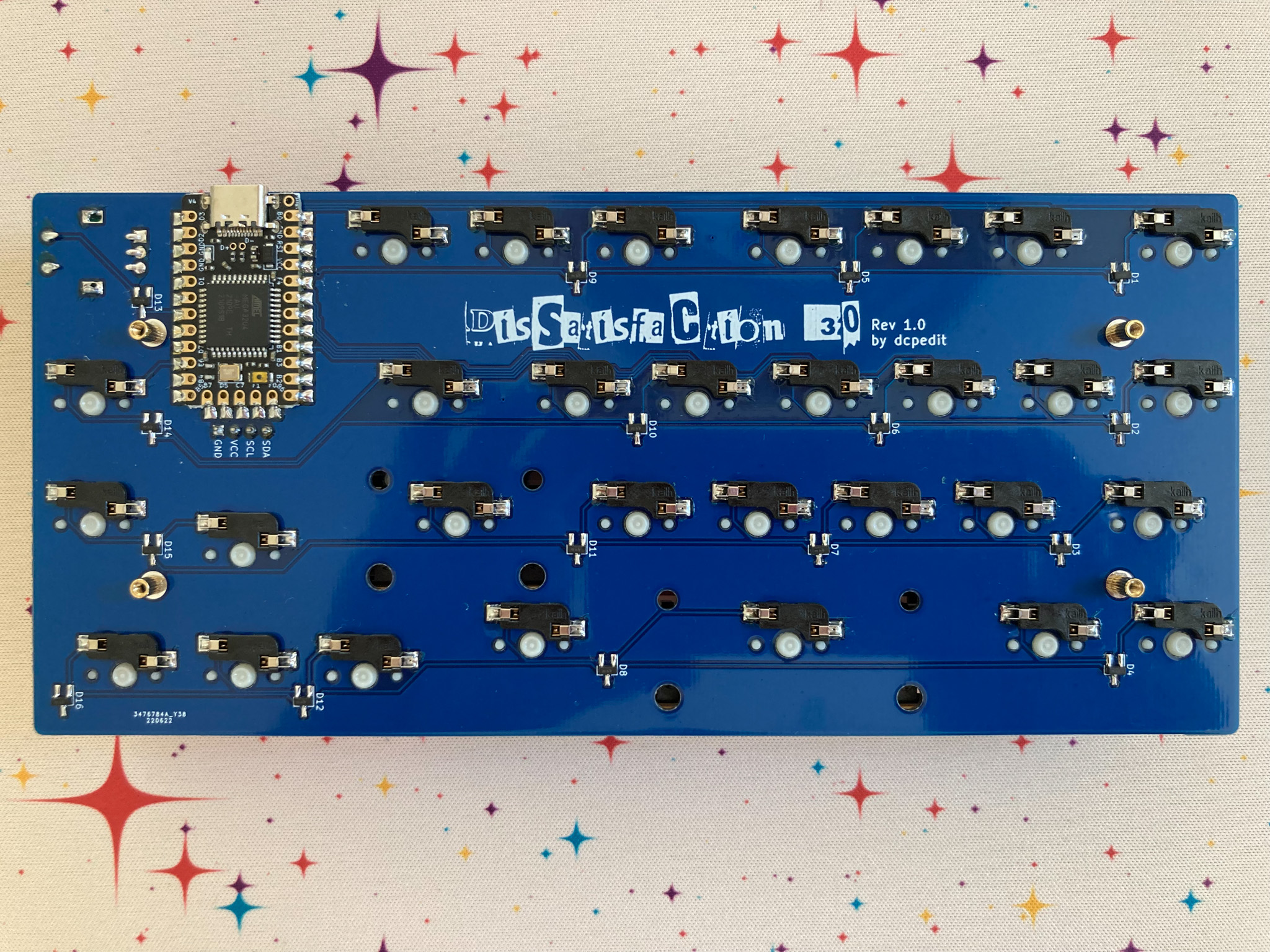
It is also possible to replace the Elite-C with a nice!nano for wireless support or a Pro-Micro since the bottom 5 pins are not used. But the included case design expects the controler to be soldered directly onto the PCB, so using a controller that requires low-profile sockets (I suggest Mill-Max 315-43-112-41-003000) will also require a change to the case to allow for the extra height. Try cutting out a space below the controller on layer #8 (similar to layer #7)
| Qty | Value | Footprint | References |
|---|---|---|---|
| 24 | MX-NoLED | MX_Only:MXOnly-1U-Hotswap | MX00, MX01, MX03, MX10, MX11, MX12, MX20, MX21, MX22, MX30, MX31, MX32, MX40, MX41, MX42, MX43 +8 |
| 16 | BAV70 | Keebio-Parts:SOT-23_Handsoldering | D1, D2, D3, D4, D5, D6, D7, D8, D9, D10, D11, D12, D13, D14, D15, D16 |
| 4 | MountingHole | MountingHole:MountingHole_2.2mm_M2_Pad | H1, H2, H3, H4 |
| 2 | LOGO | dissat:logo | G***, G*** |
| 2 | MX-NoLED | MX_Only:MXOnly-1.5U-Hotswap | MX02, MX61 |
| 2 | MX-NoLED | MX_Only:MXOnly-1.25U-Hotswap | MX13, MX33 |
| 1 | Elite-C | Keebio-Parts:Elite-C-castellated-29pin-holes | U1 |
| 1 | MX-NoLED | MX_Only:MXOnly-2U-Hotswap | MX52 |
| 1 | MX-NoLED | MX_Only:MXOnly-3U-Hotswap | MX23 |
| 1 | OLED | Custom_Footprints:SSD1306_OLED | J1 |
| 1 | Rotary_Encoder_Switch | Rotary_Encoder:RotaryEncoder_Alps_EC11E-Switch_Vertical_H20mm | SW1 |
mmccoyd/hillside
Family of split ergonomic keyboards with three rows of six or five keys and a generous thumb arc


TobleMiner/DC-UPS
A small DC UPS, designed to keep small appliances like consumer network equipment running during power outages

carrefinho/visorbearer
32-key unibody split wireless keyboard with 8 RGB LED indicators

rusefi/hw_microRusEfi
microRusEfi board for rusEfi ECU

ebastler/E80-1800
QMK compatible PCB replacement for Cherry G80-1800

dcpedit/mod-mmm
The ortholinear build is almost identical to the standard one and utilizes the same daughterboard. Below are some additional notes regarding this layout

It measures 190.5 × 85.7 mm and has 2 copper layers, 1.6 mm thick.
55 parts, built around the BAV70. The full list of its parts is on this page, with links to each part's symbol and footprint where PCBKit's library has them.
From the dcpedit/dissatisfaction30 repository on GitHub, at the commit this page was made from: the board is pcb/pcb.kicad_pcb and its schematic bottom/bottom.kicad_sch. PCBKit opens the board in the browser, with nothing to install.
Its repository publishes it under the CC-BY-4.0 licence: you may reuse it on that licence's terms (keep the author's notice, and for a copyleft licence share your changes alike).