2 layers102.4 × 211.3 mm
Haxophone001
cardonabits/haxo-hw
Haxophone, an electronic musical instrument that resembles a saxophone
92 parts674

 ctranstrum/patagona1
Patagona Wireless Keyboards
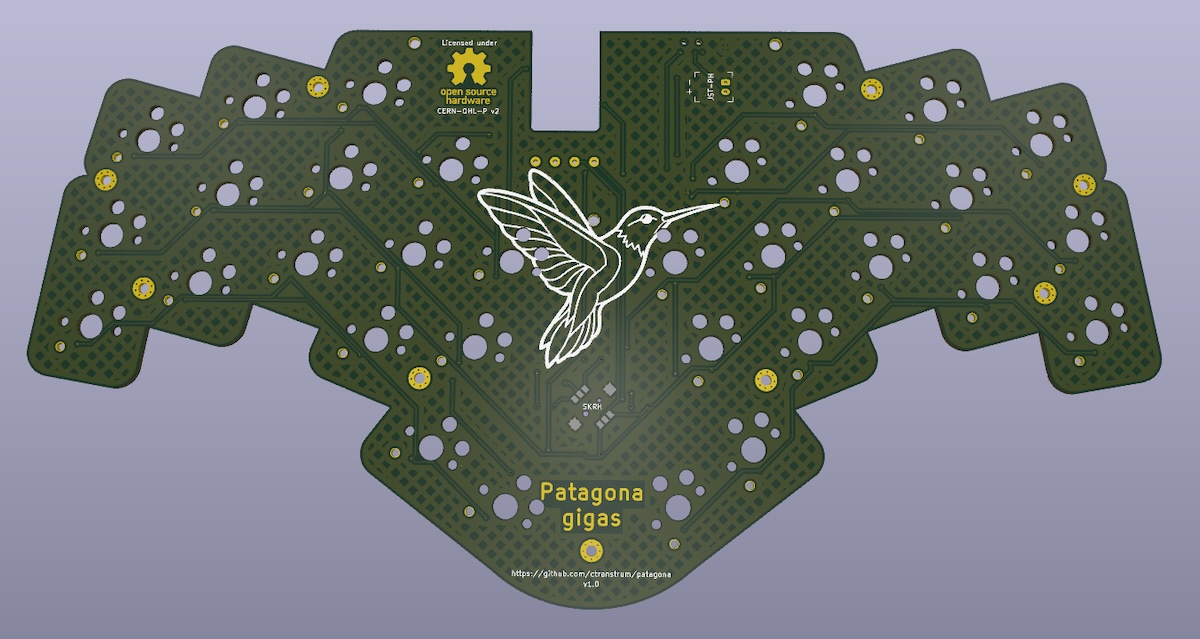
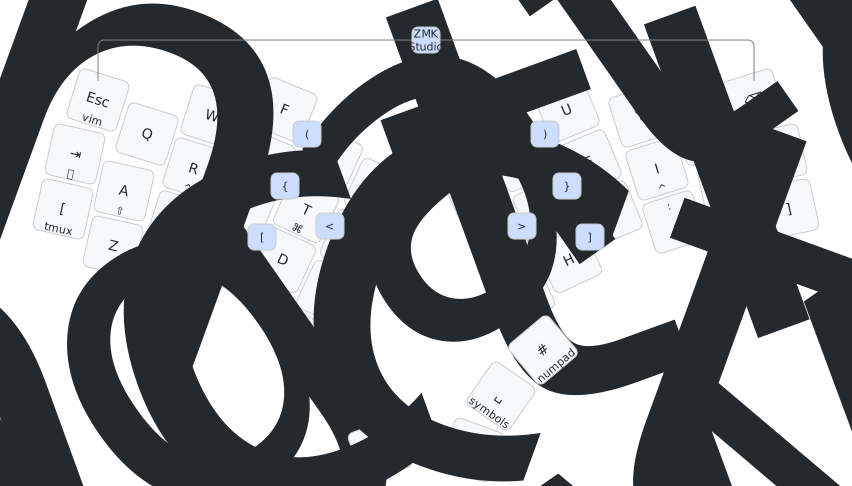
Gigas is an open-source printed circuit board by ctranstrum, from the ctranstrum/patagona repository on GitHub, published under the CERN-OHL-P-2.0 licence. It is a 2-layer board of 228.6 × 117.8 mm with 92 parts on 54 nets, routed with 427 tracks and 27 vias.
It belongs with the keyboards and input boards of this library.
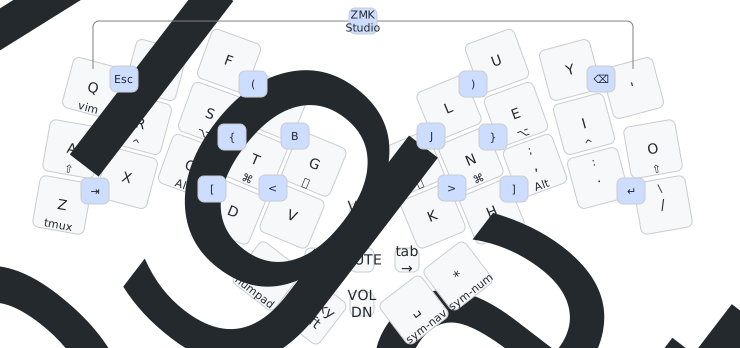
Compact wireless ergo keyboards built around the XIAO BLE microcontroller and running ZMK firmware with full ZMK Studio support. Named after the two species of giant hummingbird — the largest hummingbirds in the world.
30–32 keys with a five-way joystick switch at the center, within reach of either thumb for scroll, navigation, or mouse control.
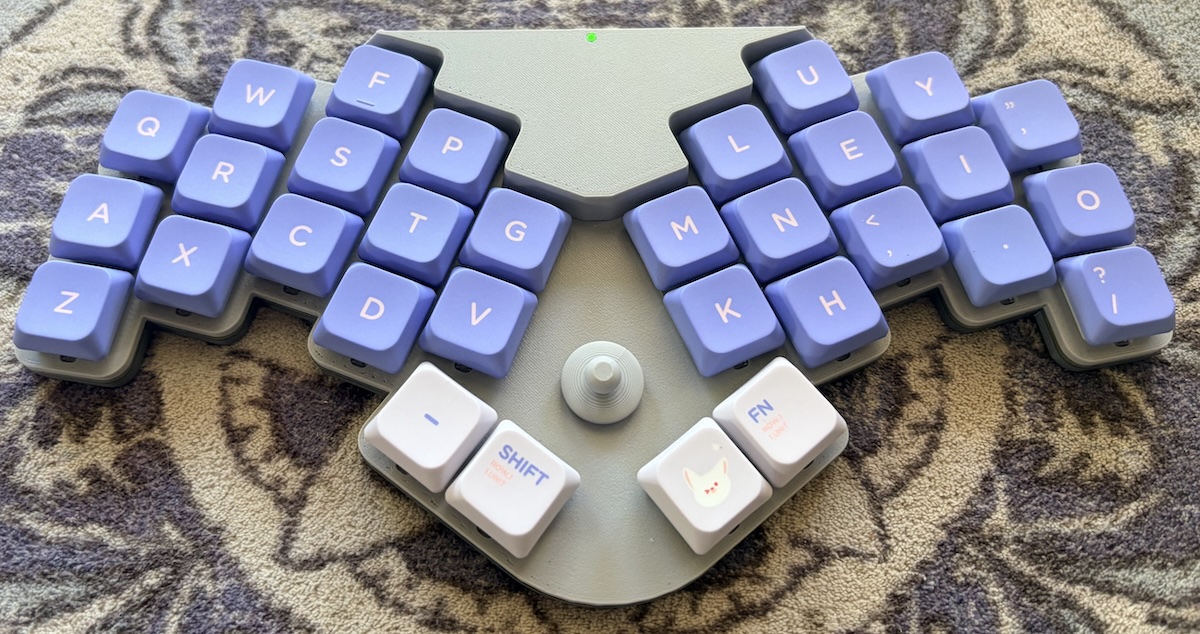
Build guide · Printable case files · Firmware
40–42 keys for those who want the 3x6 layout and more thumb keys.
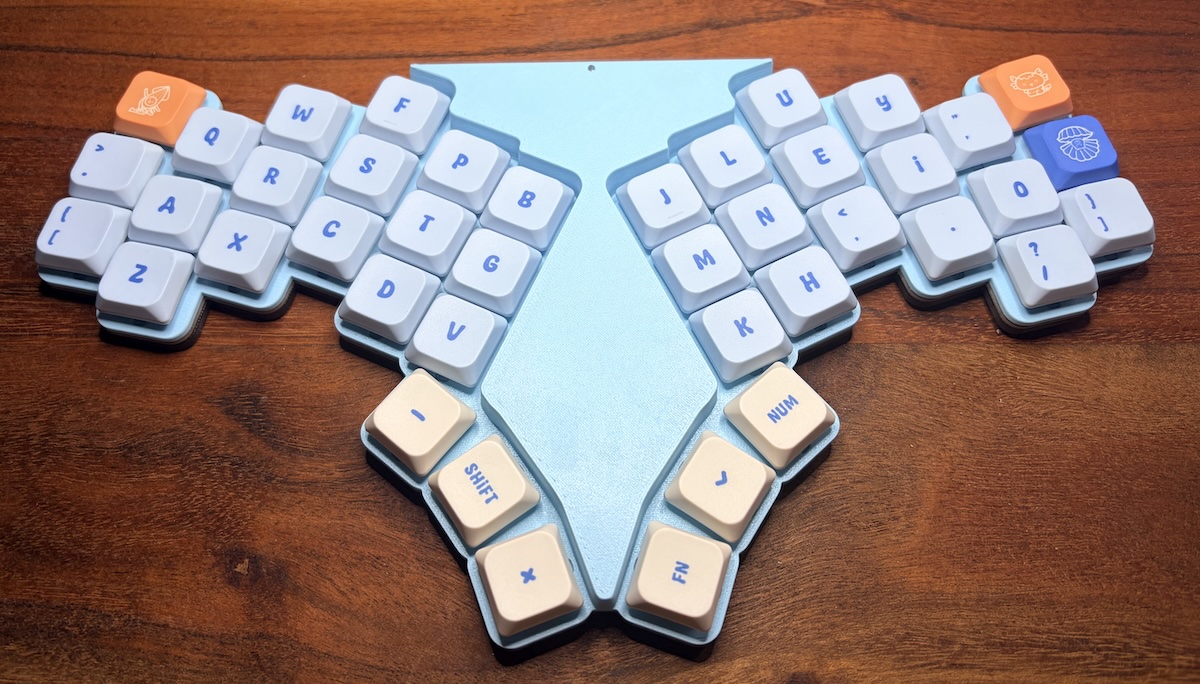
Build guide · Printable case files · Firmware
The Patagona genus is home to the two largest hummingbirds in the world. P. gigas is the migratory giant, ascending over 4,000 meters and traveling more than 4,000 km each way between the Chilean coast and the Peruvian Andes each year. P. chaski is its slightly larger but sedentary cousin.
These keyboards follow in the tradition of the original Hummingbird design, which used a XIAO SAMD21 and topped out at 30 keys due to the maximum capacity of the 5×6 matrix allowed by the 11 pins on that board. The Patagona boards use the XIAO BLE, whose NFC pads can be repurposed as GPIO — adding two extra pins, enabling a 6×7 matrix and up to 42 keys.
| Qty | Value | Footprint | References |
|---|---|---|---|
| 37 | ComboDiode | SW1, SW2, SW10, SW11, SW12, SW13, SW14, SW15, SW16, SW17, SW18, SW19, SW20, SW21, SW22, SW23 +21 | |
| 32 | ceoloide:switch_choc_v1_v2 | S1, S2, S10, S11, S12, S13, S14, S15, S16, S17, S18, S19, S20, S21, S22, S23 +16 | |
| 9 | MountingHole_2.2mm_M2_Pad_Via | , , , , , , , , | |
| 4 | SMDPad | PAD1, PAD2, PAD3, PAD4 | |
| 3 | ScrewHole_2.2mm_M2 | , , | |
| 1 | p-gigas | PG** | |
| 1 | ceoloide:battery_connector_jst_ph_2 | JST1 | |
| 1 | pts526 | SW38 | |
| 1 | Alps_Alpine_SKRH | SKRH1 | |
| 1 | E73:SPDT_C128955 | T1 | |
| 1 | xiao-ble | MCU1 |
The 91 most common of 92 parts.
cardonabits/haxo-hw
Haxophone, an electronic musical instrument that resembles a saxophone

Allen-Synthesis/EuroPi
EuroPi: A reprogrammable Eurorack module based on the Raspberry Pi Pico

mmccoyd/hillside
Family of split ergonomic keyboards with three rows of six or five keys and a generous thumb arc

ChrisChrisLoLo/keezyboost40
4x10 ortholinear with an LCD in the middle. Uses the Raspberry Pi Pico, as well as Rust firmware

nodestark/mdb-esp32-cashless
ESP32-based MDB cashless device for vending machines, supporting EVA DTS DEX/DDCMP telemetry and payments over the MDB protocol via Bluetooth and MQTT


cnlohr/cnhardware
My dumping grounds for all my kicad projects and random hardware bringup.
It measures 228.6 × 117.8 mm and has 2 copper layers, 1.6 mm thick.
92 parts. The full list of its parts is on this page, with links to each part's symbol and footprint where PCBKit's library has them.
From the ctranstrum/patagona repository on GitHub, at the commit this page was made from: the board is pcb/gigas.kicad_pcb. PCBKit opens the board in the browser, with nothing to install.
Its repository publishes it under the CERN-OHL-P-2.0 licence: you may reuse it on that licence's terms (keep the author's notice, and for a copyleft licence share your changes alike).