2 layers320.5 × 127.5 mm
 cfbender/keyboards64
A collection of all of my keyboard projects
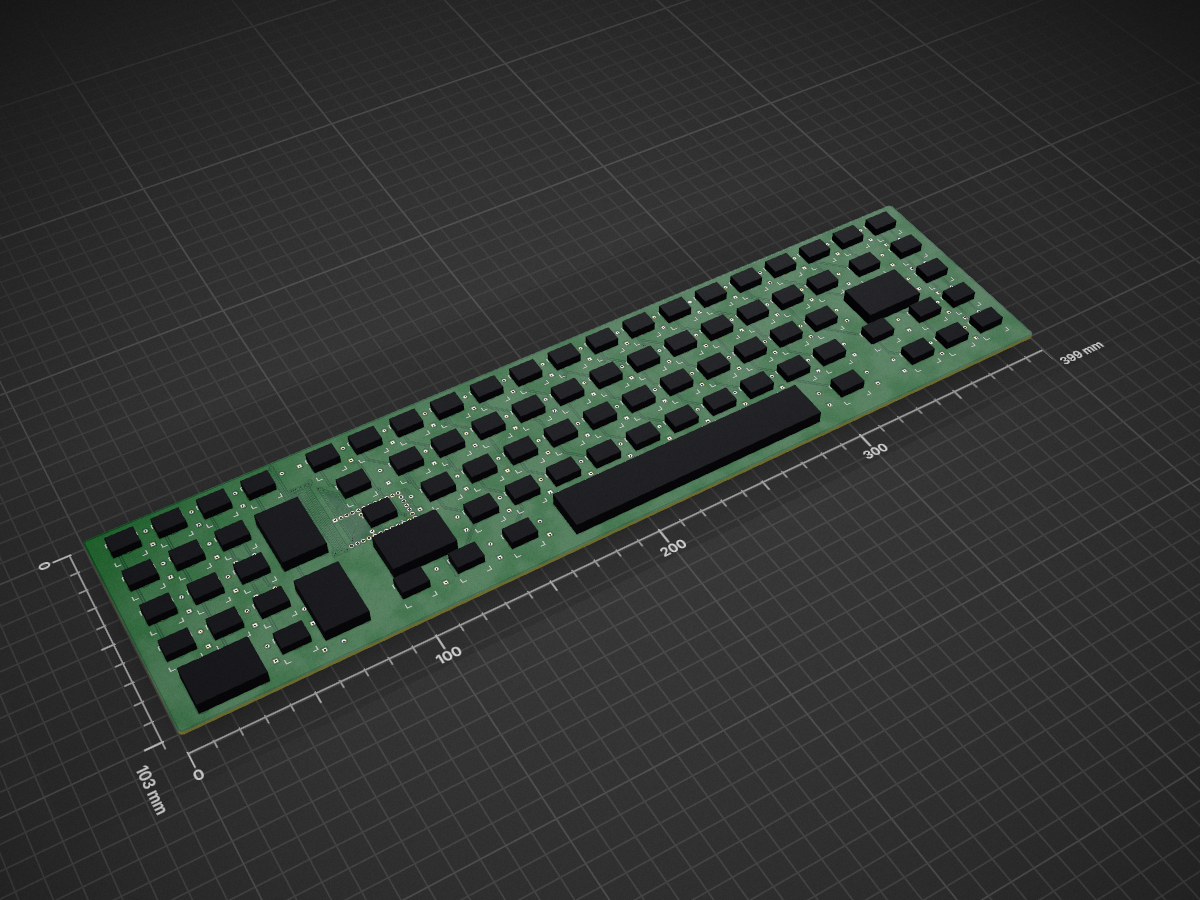
SouthPole is an open-source printed circuit board by cfbender, from the cfbender/keyboards repository on GitHub, published under the MPL-2.0 licence. It is a 2-layer board of 399 × 103 mm with 170 parts on 114 nets, routed with 1,005 tracks and 53 vias.
Its parts include 84 diodes, 84 switches and 1 IC. It belongs with the keyboards and input boards and the AVR (ATmega, ATtiny) boards of this library.
In here you will find my growing list of mechanical keyboard design projects, some of which have been run as local or larger GBs with KeyHive.
Please let me know if you have any questions with ordering any PCBs (or let me know if you do it regardless!), or have any questions on how they are designed or function.
Please feel free to open any issues with any cases or PCBs that you have here, and I will do my best to address them!
All of my acrylic case files follow the below naming standard:
L<layer number>F<layer number>| Qty | Value | Footprint | References |
|---|---|---|---|
| 84 | D | keyboard_parts:D_axial | D1, D2, D10, D11, D12, D13, D14, D15, D16, D17, D18, D19, D20, D21, D22, D23 +68 |
| 70 | KEYSW | keebs:Mx_Alps_100 | K1, K2, K3, K10, K11, K12, K13, K14, K15, K18, K23, K24, K25, K26, K28, K29 +54 |
| 3 | KEYSW | keebs:Mx_Alps_200 | K9, K16, K17 |
| 3 | KEYSW | keebs:Mx_Alps_150 | K19, K62, K78 |
| 3 | KEYSW | keebs:Mx_Alps_125 | K22, K27, K32 |
| 2 | KEYSW | keebs:Mx_Alps_225 | K21, K74 |
| 2 | KEYSW | keebs:Mx_Alps_175 | K20, K70 |
| 1 | KEYSW | MX_Alps_Hybrid:MX-7U-ReversedStabilizers-NoLED | K45 |
| 1 | LOGO | LOGO | G*** |
| 1 | TEENSY2.0 | keebs:Teensy_20 | U1 |


OLIMEX/ESP32-EVB
ESP32 WiFi / BLE Development board with Ethernet interface, Relays, microSD card

Miceuz/rs485-moist-sensor
Digital (RS485 - based) soil moisture and temperature sensor


ATmega8/kiterf
Release KiteRF is a SDR system with K210 & FPGA & ESP32 as its core controller, which make SDR more intelligent, portable and cheap.

JMHanson4/Miasma_1.03_Revised
1) Updated the footprints and symbols to ones included in KiCAD 5.1.5, or otherwise included the auxillary libraries in the repository.

SP6GK/Forte-600-HF-RF-Amplifier
Project of 600 W LDMOS amlifier based on 2xMRF300.

It measures 399 × 103 mm and has 2 copper layers, 1.6 mm thick.
170 parts. The full list of its parts is on this page, with links to each part's symbol and footprint where PCBKit's library has them.
From the cfbender/keyboards repository on GitHub, at the commit this page was made from: the board is southpole/designFiles/SouthPole.kicad_pcb. PCBKit opens the board in the browser, with nothing to install.
Its repository publishes it under the MPL-2.0 licence: you may reuse it on that licence's terms (keep the author's notice, and for a copyleft licence share your changes alike).