6 layers165 × 100 mm
Daq eval board
Cerybra/physarum-biocomputer
The official repository of the Cerybra Biocomputer.
240 partsAGPL-3.0

 Cerybra/physarum-biocomputer
The official repository of the Cerybra Biocomputer.
Card full is an open-source printed circuit board by Cerybra, from the Cerybra/physarum-biocomputer repository on GitHub, published under the AGPL-3.0 licence. It is a 6-layer board of 128.8 × 60 mm with 25 parts on 33 nets, routed with 114 tracks and 0 vias.
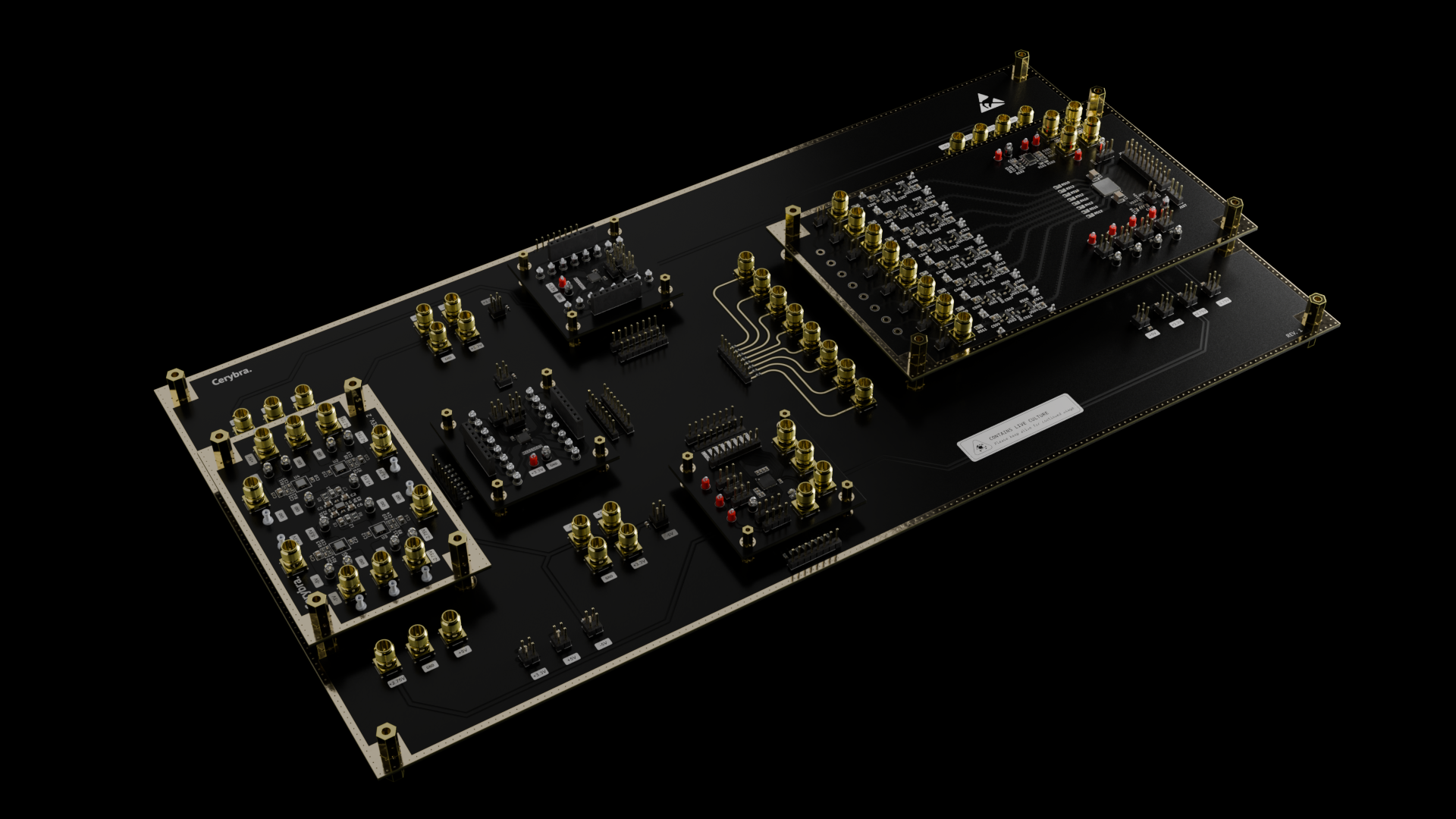
The project structure is organized as follows:
📂 adaptors: contains all of the hardware files for the various adaptors that are compatible with the biocomputer carrier board.
📂 data: contains all of the experimentally collected data.
📂 devices: contains all of the hardware files for both the open-air and enclosure-type devices.
📂 modules: contains all of the hardware files for each of the biocomputer modules.
📂 software: contains all of the software used in performing experiments.
📂 simulations: contains all of the code used in performing equivalent circuit simulations.
📂 plots: contains all of the code used in producing the main figures.
📂 repository
data
device-pulse-recordingsdevice-regression-recordingsdevice-sweep-recordingseis-recordingsnoise-recordingsreservoir-computing-recordingsmodules
biocomputer-eval-motherboarddac-eval-moduledaq-eval-boarddual-rail-power-eval-moduleselector-eval-moduleadaptors
1x1-adaptor4x1-adaptor8x1-adaptorcard-halfcard-fullconfigurable-adaptorstandard-adaptorsoftware
examplesdevices
enclosurespluggablesimulationsplotsTo reproduce all of the main figures, either clone the repository or download the data directory. Then, run each of the scripts within the plots/main directory.
| Qty | Value | Footprint | References |
|---|---|---|---|
| 16 | Conn_Coaxial | NeuroPhy_Adaptor:1333801201 | J1, J2, J3, J4, J5, J6, J7, J8, J9, J10, J11, J12, J13, J14, J15, J16 |
| 4 | Conn_01x08 | Connector_PinHeader_2.54mm:PinHeader_1x08_P2.54mm_Vertical | J17, J18, J19, J20 |
| 3 | LOGO | LOGO | G***, G***, G*** |
| 2 | Conn_Coaxial | Connector_Coaxial:SMA_Amphenol_132134-11_Vertical | J21, J22 |
Cerybra/physarum-biocomputer
The official repository of the Cerybra Biocomputer.

Cerybra/physarum-biocomputer
The official repository of the Cerybra Biocomputer.

Cerybra/physarum-biocomputer
The official repository of the Cerybra Biocomputer.

Cerybra/physarum-biocomputer
The official repository of the Cerybra Biocomputer.

Cerybra/physarum-biocomputer
The official repository of the Cerybra Biocomputer.

Cerybra/physarum-biocomputer
The official repository of the Cerybra Biocomputer.

Cerybra/physarum-biocomputer
The official repository of the Cerybra Biocomputer.

Cerybra/physarum-biocomputer
The official repository of the Cerybra Biocomputer.

Cerybra/physarum-biocomputer
The official repository of the Cerybra Biocomputer.

Cerybra/physarum-biocomputer
The official repository of the Cerybra Biocomputer.

Cerybra/physarum-biocomputer
The official repository of the Cerybra Biocomputer.

Cerybra/physarum-biocomputer
The official repository of the Cerybra Biocomputer.


bugg-resources/bugg-hardware-mic
This repository contains the KiCad source files for the microphone PCB of the Bugg recording device.


Susensio/soft-starter
Arduino project for soft start led strips, imitating incandescent bulbs

oxidecomputer/hw-k2
This design provides a PCIe extender that converts from a U.2 PCIe device connector and provides a x4 PCIe CEM slot.

PE1RGU/hf-antenna-switch
Remote HF antenna switch: 3 radios x 4 antennas (path to 8), outdoor relay unit with a hardware safety chain, controlled over Cat6 from a shack interface. KiCad 10, open hardware, designed together with an AI.
It measures 128.8 × 60 mm and has 6 copper layers, 1.6 mm thick.
25 parts. The full list of its parts is on this page, with links to each part's symbol and footprint where PCBKit's library has them.
From the Cerybra/physarum-biocomputer repository on GitHub, at the commit this page was made from: the board is adaptors/card-full/card-full.kicad_pcb and its schematic adaptors/1x1-adaptor/1x1-adaptor.kicad_sch. PCBKit opens the board in the browser, with nothing to install.
Its repository publishes it under the AGPL-3.0 licence: you may reuse it on that licence's terms (keep the author's notice, and for a copyleft licence share your changes alike).