4 layers100 × 180 mm

 cepetr/blue2joy6
Bluetooth HID adapter for Atari 8-bit computers: use modern BLE gamepads or mice to emulate the Atari joystick and paddles.
Blue2joy is an open-source printed circuit board by cepetr, from the cepetr/blue2joy repository on GitHub, published under the CERN-OHL-S-2.0 licence. It is a 2-layer board of 23 × 47.5 mm with 50 parts on 48 nets, routed with 725 tracks and 96 vias.
It is built around the 74LVC2G07DBVR-TD, 74LVC2G17DBVR-TD and 74HCT2G34GV, with the TLV9001IDBV, TPS73133DBV and BSS138 among its other parts. Its parts include 24 resistors, 10 ICs, 8 capacitors, 4 transistors and 2 switches. It belongs with the retro computing and games and keyboards and input boards and the nRF52 and nRF5x boards of this library.


Blue2Joy is an adapter that lets you use modern Bluetooth controllers with Atari 8-bit computers. It emulates digital joysticks, analog paddles, and supports bidirectional communication and much more. Try the live demo: https://cepetr.github.io/blue2joy/main.
While primarily intended for gamepads, the device is not limited to them - in principle, any BLE HID device, such as a keyboard or mouse, can be connected.
Only devices that fully support the BLE HID over GATT Profile (HOGP) are supported. For this reason many older devices (especially gamepads) are unfortunately not usable with Blue2Joy. See compatible devices.
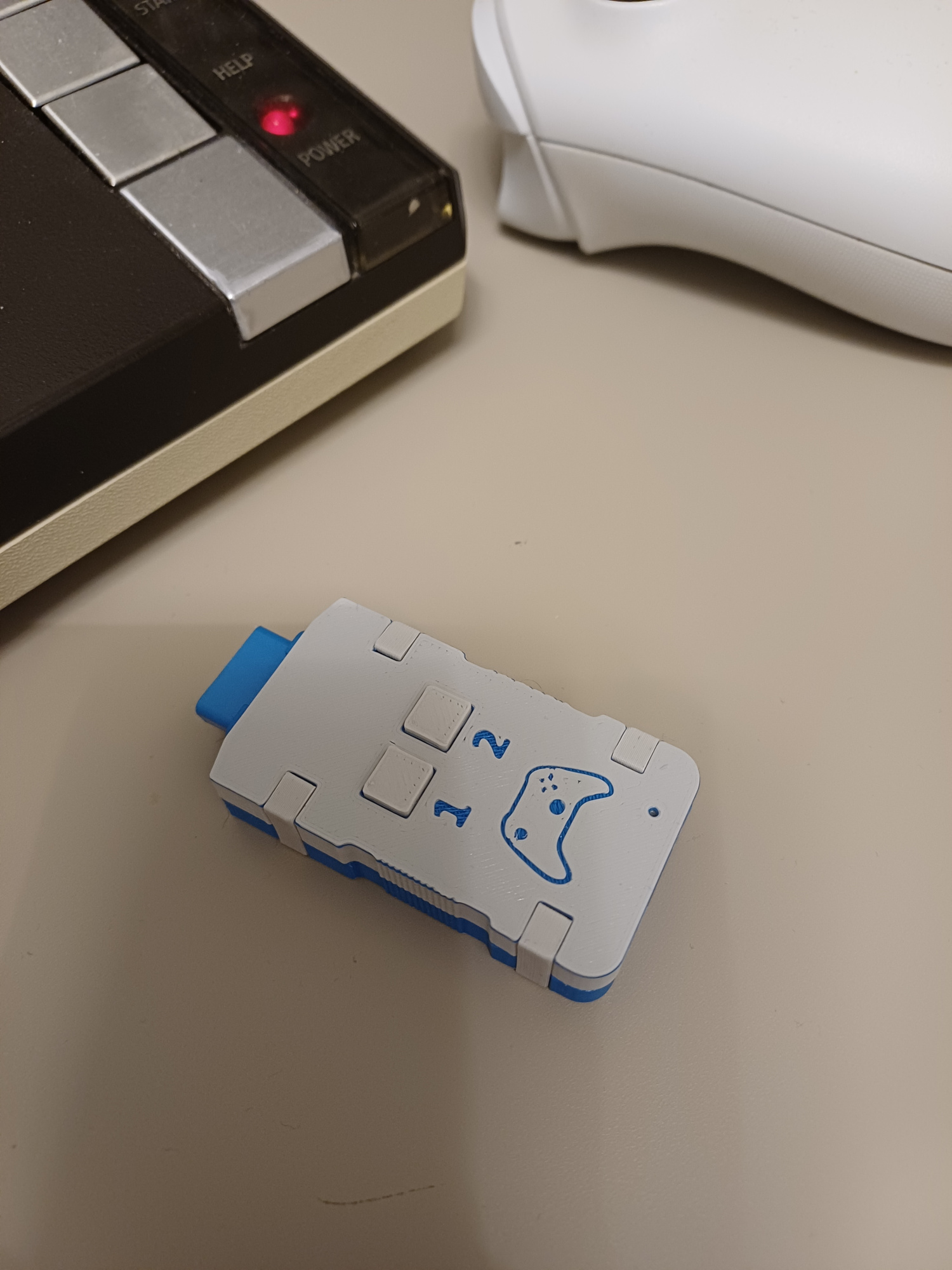
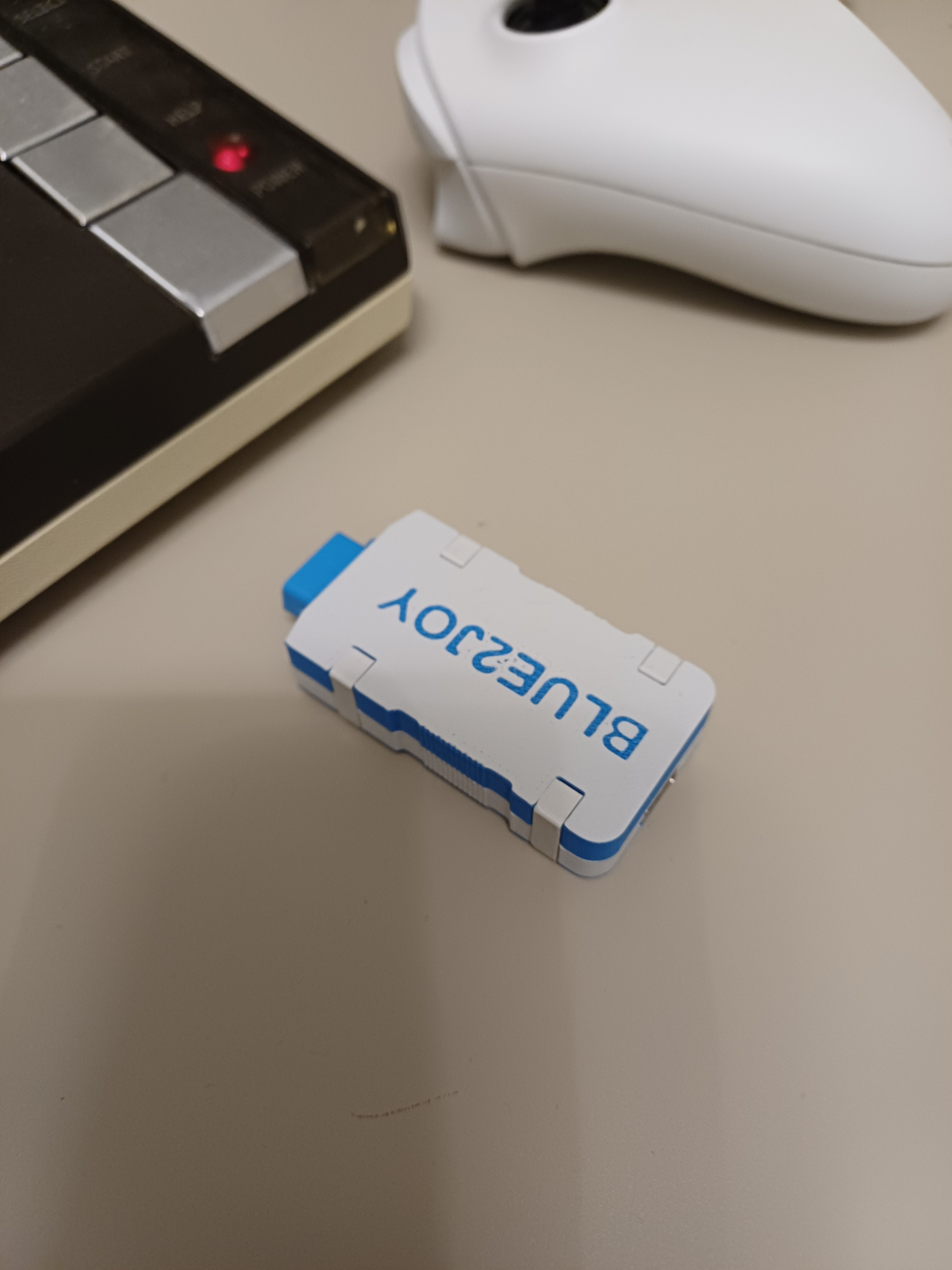
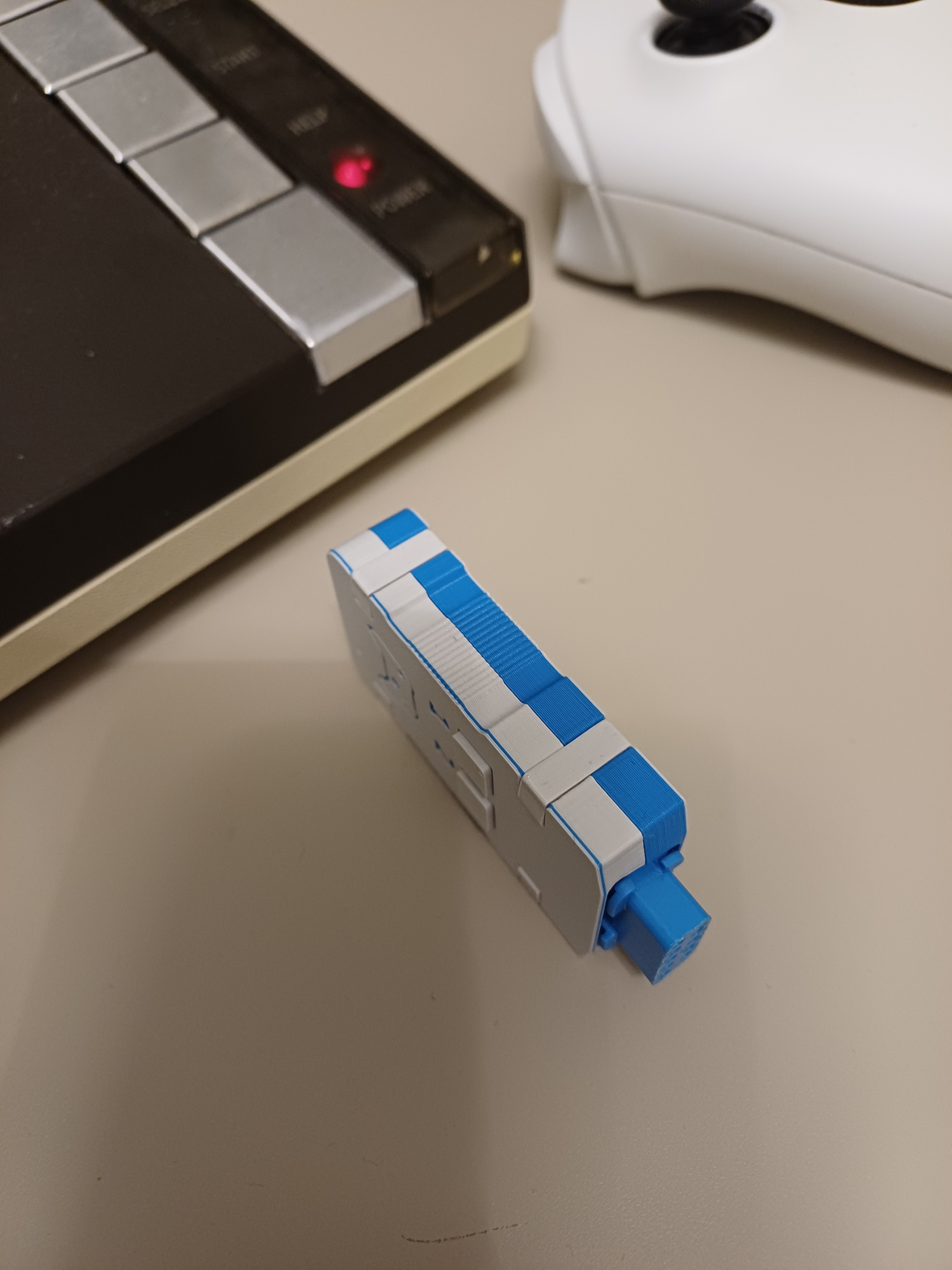
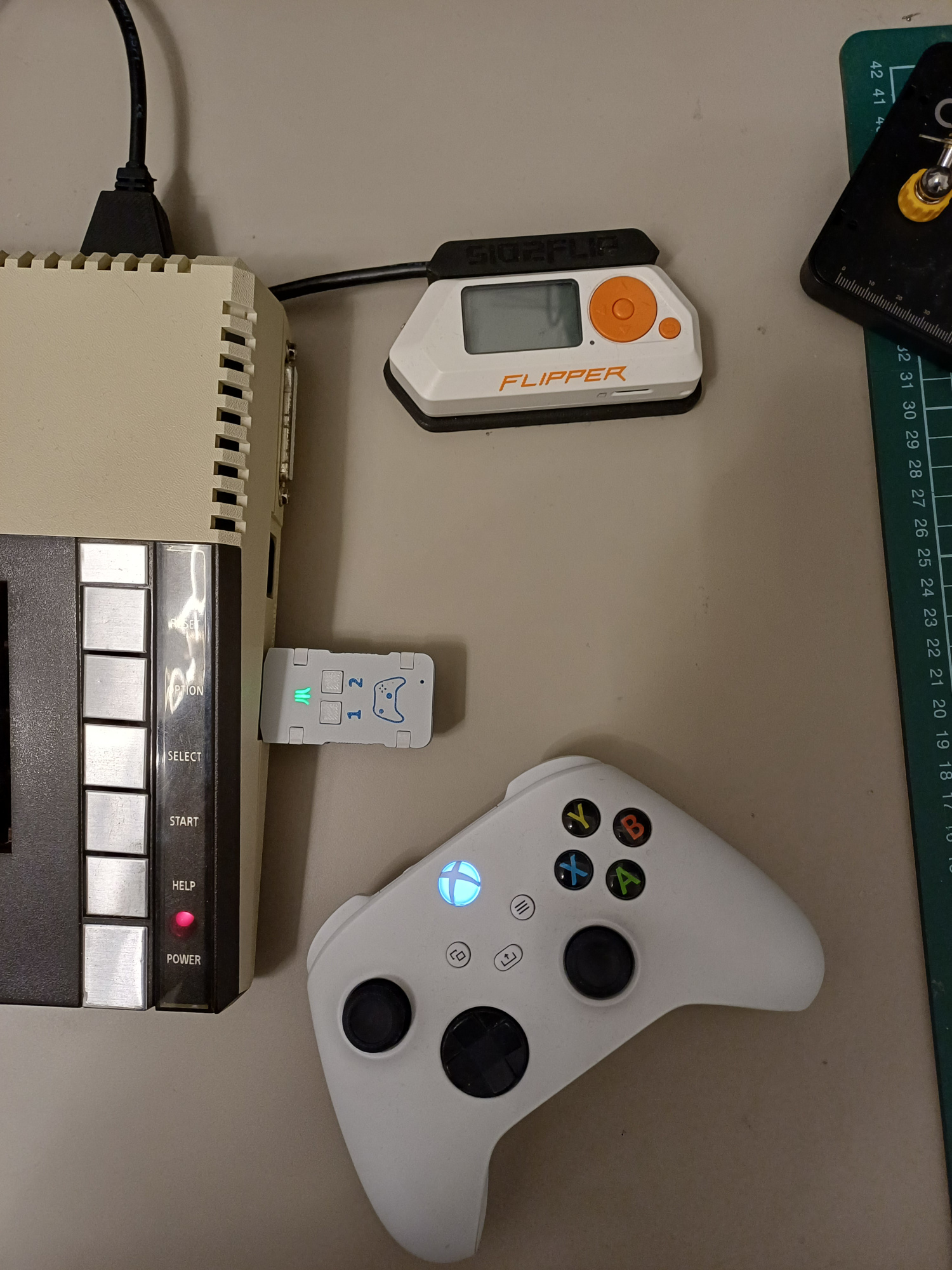
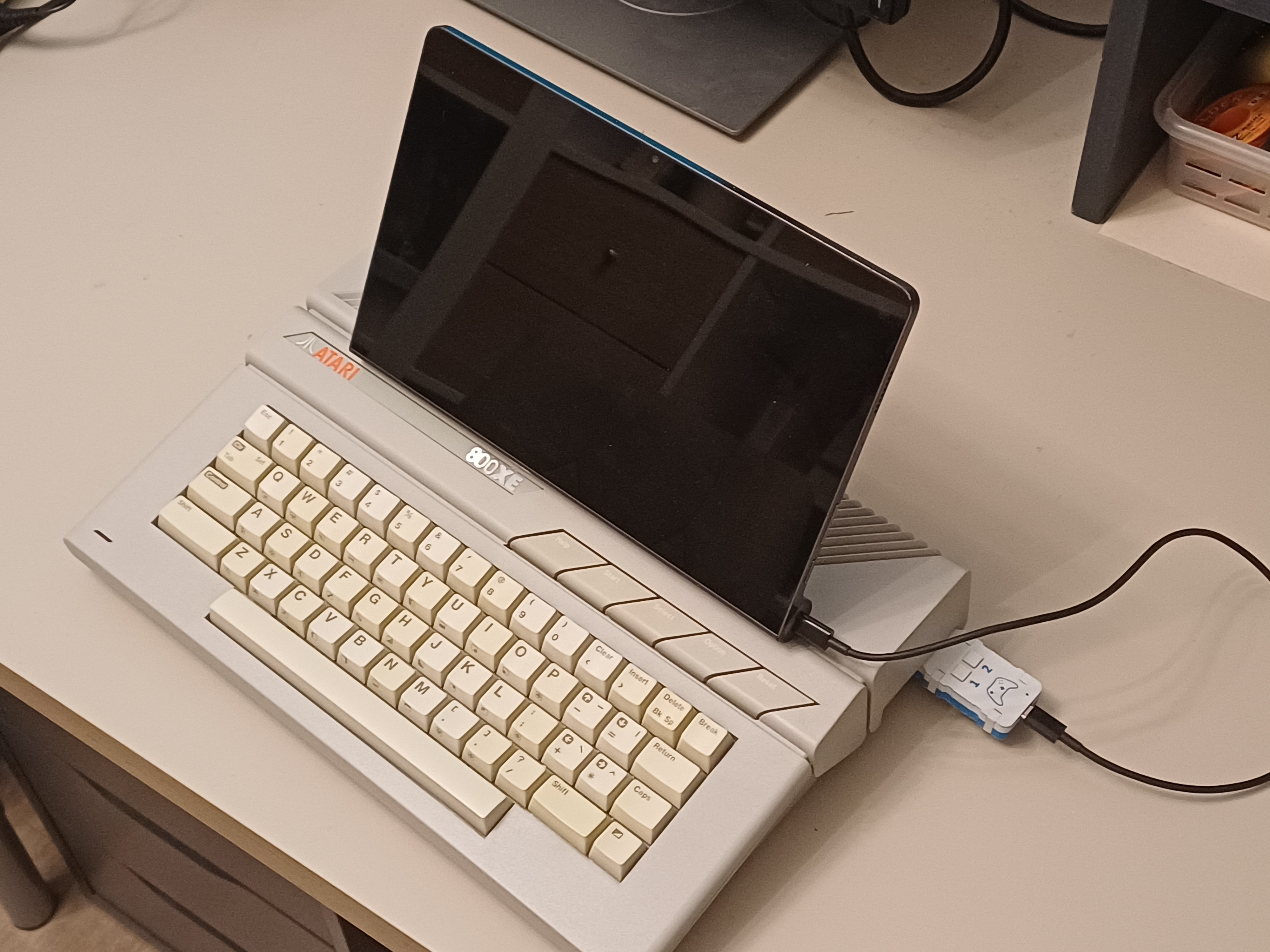
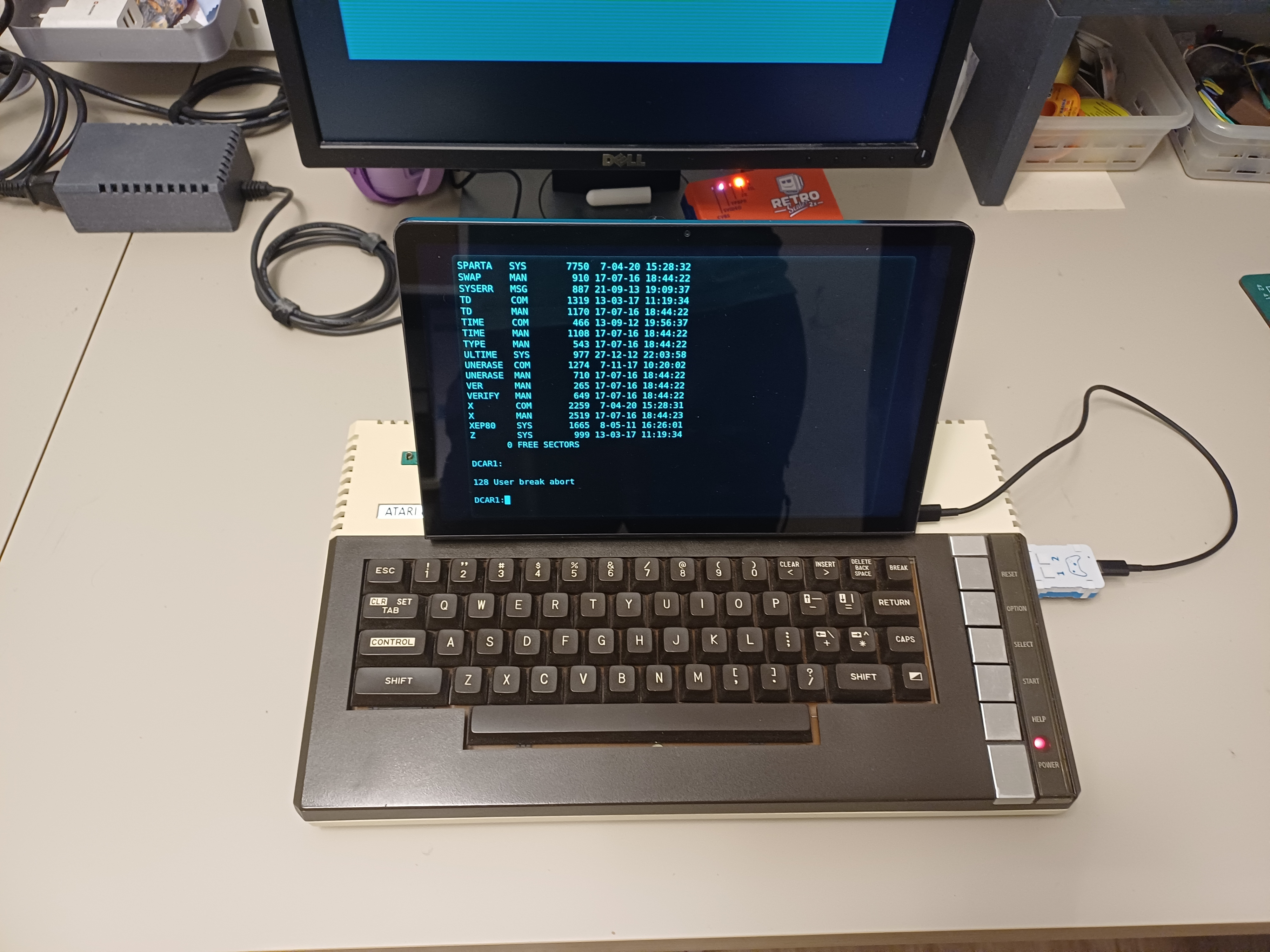

While there are other adapters that let Bluetooth controllers act as digital joysticks, Blue2Joy goes further. Besides standard and expected use cases, there are a few new possible ones that utilize analog input emulation or bidirectional communication:
Although designed for Atari 8-bit systems, Blue2Joy can be used with any device that follows the same joystick port pinout - with paddle functionality available only on Atari computers (see details).
Blue2Joy is currently under active (but really slow) development. The hardware is stable and most of the core features have been successfully tested, but the software still needs some work to reach the level of polish I would consider complete.
This repository contains complete project documentation and source code for all Blue2Joy components shown in the following image.

For more details, see the hardware folder.
For more details, see the firmware folder.
The application is available at https://cepetr.github.io/blue2joy/main.
For more details, see the webconfig folder.
A driver for SpartaDOS that lets you use Blue2Joy as a keyboard. It can be used together with XEP80 or on its own.
For more details, see the atari folder.
For more details, see the atari folder.
I'd be very happy to receive any feedback, pull requests, or even just a note that you've built and tried out Blue2Joy.
This repository contains software, firmware, and hardware design files.
All software and firmware files (in atari/, firmware/ and webconfig/) are licensed under the GNU General Public License, version 3.
See LICENSE-GPL for details.
Schematics, PCB layout, mechanical design files (in hardware/) are licensed under the CERN Open Hardware Licence Version 2 - Strongly Reciprocal. You are free to use, modify, and share them, but if you distribute hardware or modified design files, you must also share your changes under the same license.
See LICENSE-CERN for details.
| Qty | Value | Footprint | References |
|---|---|---|---|
| 13 | 10k | Resistor_SMD:R_0805_2012Metric | R1, R2, R3, R7, R8, R9, R11, R12, R13, R14, R15, R18, R19 |
| 5 | 1k | Resistor_SMD:R_0805_2012Metric | R20, R21, R22, R23, R24 |
| 4 | 1uF | Capacitor_SMD:C_0805_2012Metric | C1, C2, C3, C4 |
| 3 | 100n | Capacitor_SMD:C_0805_2012Metric | C6, C7, C8 |
| 3 | 74LVC2G07DBV | Package_TO_SOT_SMD:SOT-23-6 | U4, U7, U8 |
| 2 | 100k | Resistor_SMD:R_0805_2012Metric | R6, R10 |
| 2 | 1k8 | Resistor_SMD:R_0805_2012Metric | R4, R17 |
| 2 | 2k2 | Resistor_SMD:R_0805_2012Metric | R5, R16 |
| 2 | 74LVC2G17DBV | Package_TO_SOT_SMD:SOT-23-6 | U3, U5 |
| 2 | BSS138 | Package_TO_SOT_SMD:SOT-23 | Q1, Q3 |
| 2 | OMRON B3FS-1010 | Button_Switch_SMD:SW_SPST_Omron_B3FS-100xP | SW1, SW2 |
| 2 | SI2323DDS | Package_TO_SOT_SMD:SOT-23 | Q4, Q5 |
| 1 | 10uF | Capacitor_SMD:C_0805_2012Metric | C5 |
| 1 | 74HCT2G34GV | Package_TO_SOT_SMD:SOT-23-6 | U10 |
| 1 | DE9_Socket | Connector_Dsub:DSUB-9_Socket_EdgeMount_P2.77mm | J1 |
| 1 | TLV9001IDBV | Package_TO_SOT_SMD:SOT-23-5 | U6 |
| 1 | TOREX XC8110AA01MR | Package_TO_SOT_SMD:SOT-23-5 | U9 |
| 1 | TPS73133DBV | Package_TO_SOT_SMD:SOT-23-5 | U2 |
| 1 | WS2812C-2020 | LED_SMD:LED_WS2812B-2020_PLCC4_2.0x2.0mm | D1 |
| 1 | XIAO_nRF52840_Plus | XIAO:XIAO-nRF52840-Plus-SMD | U1 |
It measures 23 × 47.5 mm and has 2 copper layers, 1.6 mm thick.
50 parts, built around the 74LVC2G07DBVR-TD, 74LVC2G17DBVR-TD, 74HCT2G34GV and TLV9001IDBV. The full list of its parts is on this page, with links to each part's symbol and footprint where PCBKit's library has them.
From the cepetr/blue2joy repository on GitHub, at the commit this page was made from: the board is hardware/electronics/blue2joy.kicad_pcb and its schematic hardware/electronics/blue2joy.kicad_sch. PCBKit opens the board in the browser, with nothing to install.
Its repository publishes it under the CERN-OHL-S-2.0 licence: you may reuse it on that licence's terms (keep the author's notice, and for a copyleft licence share your changes alike).


Maverick-Shark/X65_BigMiST
The X65 is an ultimate computer for everyone interested in the venerable 65-series of 8-bit and 16-bit CPUs, i.e. the 6502 and 65816.


VEXU-GHOST/ghost_kicad
Welcome to UT IEEE RAS VEXU GHOST's repository for our PCB developments! - PCB Images - Onboarding
