4 layers254 × 137.7 mm
S100 ColorMagic-1.1-006
RichCini/LomasBoards
Small repository of files/data related to Lomas Data Products S-100 boards.
150 parts1

 cartheur/M6809-multicomputer1
Systems-matching the requirements of novel-ideal in metal to architecture
Nascom ng is an open-source printed circuit board by cartheur, from the cartheur/M6809-multicomputer repository on GitHub, published under the MIT licence. It is a 2-layer board of 170 × 145 mm with 120 parts on 219 nets, routed with 2,333 tracks and 319 vias.
It is built around the 74LS384N, 74LVC244 and 74HCT244D, with the 74LS367PC, 74LVC245AD and 74HCT123D among its other parts. Its parts include 33 capacitors, 28 resistors, 22 connectors, 17 ICs and 7 diodes.


A project to build a system that uses my concept of novel metal to architect a new kind of computer system. This repo serves as a single point-of-reference containing hardware (in PCB form) and software. Multiplicity is the theme.
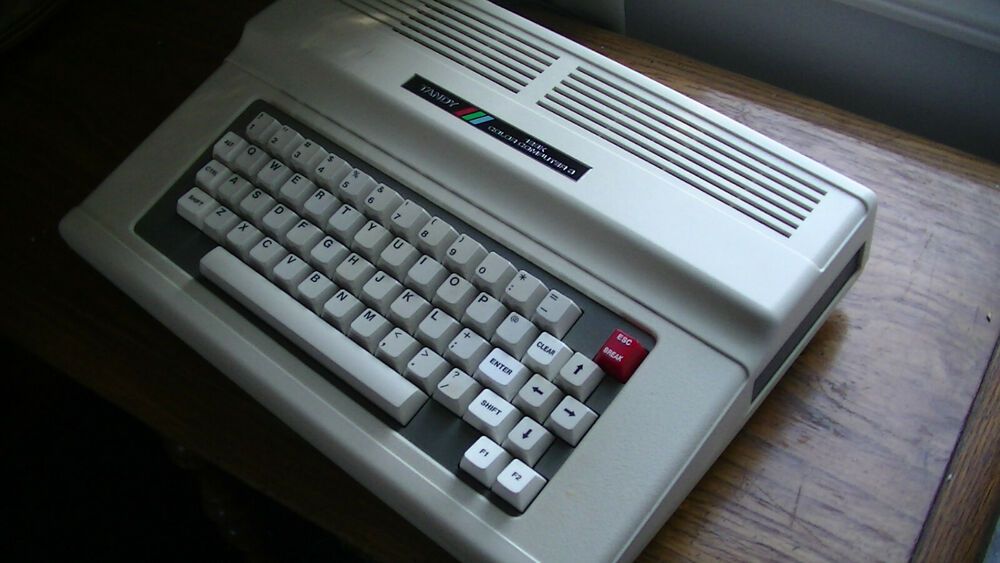
I adored my 6809 machine - A Tandy Color Computer CoCo 2 - it took a significant amount of effort to obtain one. I had asked my parents one Christmas in 1981 but the $399 price tag was too much - considering I had just asked them a few months prior to help me purchase a used Hewlett-Packard 5036A Microprocessor Training Kit where I could learn the ins-and-outs of an Intel 8085. I remember my father lamenting: Could I focus my attention on at least one processor before moving-on to the Motorola 6809? During this time, I had a paper route and was setting-aside $50 per month and by the time 1983, I had a decent amount of savings in the bank earning 5%. Strolling into the local store in the latter part of September, I saw the advertised price in the latest Radio Shack catalog was lower than the CoCo 1! The great news was there were savings to upgrades of 64k, plus some extra ROMs and a game pack - Model 26-3003 Extended Color Basic (ECB). Complaining my slight monetary shortcoming, I was offered a more "economic" alternative where I could assemble the computer myself.
Thinking quite hard on this idea - I had done soldering in the past years making a ruby-crystal laser and a metal detector in the basement over one or two summers - but had stopped the practice because of the rather large (and unwieldy) Weller soldering iron my father had in his toolbox. At the time I did not happen upon the newer pencil-size irons that were out. After pacing around the store thinking intently, I placed a tentative order for the assembled model that I would come back the next day after asking my father that evening if he could help me assemble the 26-3126 (64K, ECB) CoCo 2 kit. As he said he didn't have the time at the moment and I did not want to wait, I schemed the missing funds as I had the monthly collection impending on the route and would have a temporary clutch of extra cash. I was able to leverage the difference and pay back the newspaper after a fifteen-minute telephone call to my "route coordinator" justifying why and when I could make up the difference. Such an experience I remember to this day and it still drives me to insist that one can find ways to learn new things simply by being at the right place and time with a generous amount of coincidental luck. And that this weird and subtle idea of novel metal lies not just in mythology but embodied in hardware that has the highest probability of revealing a real-time AI.
Years later when I started University, I had this CPU in-mind when I sketched-out design ideas into a notebook for what formally began my idea of novel metal. I had been reading about the early years of Cybernetics and the idea of a homeostatic machine - the basic equivalent to what (synthetic) life would be equated to in hardware. Around 2006, I discovered Camelforth latently on the Internet and found some sources to port an exec09 emulator. Camelforth seemed interesting as I could construct a kernel around a conjoined 8-bit foundation with various novel ways of establishing an OS.
Having quite a bit of experience with implementing machine learning and having read about the early ideas of artificial intelligence, I have the contention that what the tech corporations are selling as AI is exactly not it. AI can only be derived from a systems engineering perspective. As I can only contribute so much more hot air to the debate, this project will be the place where we find out the proof in the pudding.
If it ain't here it ain't anywhere, I hereby proclaim.
Read about it here.
I learned about the Forth langauge in an early undergraduate class where the argument was of its powerful nature by focusing on the concept of the word in computing as a basic unit of computational syntax. So, in essence, a complex functional system could be represented as a heirarchy of words, as distinct modules communicating implicitly via a stack mechanism. The most profound take-away, as noted on the Wikipedia page is: Forth has been called a meta-application language: a language that can be used to create problem-oriented languages. This is how I envision a contigous syntactical novel metal system that has an internal computational monologue with constructs not unlike an English language.
Camelforth runs on real hardware using a hardware bank-switching unit on a Multicomputer, via the way the kernel is built. Other works mentioned that Camelforth can also act as boot loader for Grant's port of Microsoft ROM BASIC (hurrah microsoft) and for the N8VEM port of Dave Dunfield's CUBIX and for ports of FLEX, BUGGY, and FUZIX. I have been most interested in leveraging OS-9 via exec09. I am reading into the current status and archives of the operating system via Microware's resources. Here one can find about the architecture.
Rather than a length explanation, check here.
| Qty | Value | Footprint | References |
|---|---|---|---|
| 22 | 0.1u | Capacitor_THT:C_Disc_D3.0mm_W2.0mm_P2.50mm | C1, C11, C13, C14, C16, C17, C18, C19, C21, C22, C23, C26, C27, C28, C30, C31 +6 |
| 6 | 10k | Resistor_THT:R_Axial_DIN0204_L3.6mm_D1.6mm_P7.62mm_Horizontal | R5, R7, R17, R18, R20, R22 |
| 6 | R | Resistor_THT:R_Axial_DIN0204_L3.6mm_D1.6mm_P7.62mm_Horizontal | R23, R24, R25, R26, R27, R28 |
| 5 | 10u | Capacitor_THT:CP_Radial_D5.0mm_P2.50mm | C2, C3, C20, C29, C32 |
| 5 | 150R | Resistor_THT:R_Axial_DIN0204_L3.6mm_D1.6mm_P7.62mm_Horizontal | R9, R12, R13, R14, R15 |
| 5 | Conn_01x04_Male | Connector_PinHeader_2.54mm:PinHeader_1x04_P2.54mm_Vertical | J1, J2, J14, J15, J16 |
| 4 | 220R | Resistor_THT:R_Axial_DIN0204_L3.6mm_D1.6mm_P7.62mm_Horizontal | R1, R2, R3, R4 |
| 4 | Conn_02x08_Odd_Even | Connector_IDC:IDC-Header_2x08_P2.54mm_Vertical | J4, J11, PL2, PL3 |
| 4 | Conn_02x14_Even_Odd | Connector_PinSocket_2.54mm:PinSocket_2x14_P2.54mm_Vertical | J6, J7, J8, J9 |
| 4 | LED | LED_THT:LED_D5.0mm | D1, D2, D3, D4 |
| 4 | MountingHole | MountingHole:MountingHole_3.2mm_M3 | H1, H2, H3, H4 |
| 3 | 74LVC244 | Package_DIP:DIP-20_W7.62mm | U5, U6, U16 |
| 3 | SW_Push | mylib:MOMENTARY_TACTILE_RT_ANGLE | SW1, SW2, SW3 |
| 2 | 33R | Resistor_THT:R_Axial_DIN0204_L3.6mm_D1.6mm_P7.62mm_Horizontal | R10, R19 |
| 2 | 3V6 | Diode_THT:D_DO-35_SOD27_P7.62mm_Horizontal | D5, D6 |
| 2 | 74HCT123 | Package_DIP:DIP-16_W7.62mm | U3, U10 |
| 2 | AS6C4008-55PCN | Package_DIP:DIP-32_W15.24mm | U7, U9 |
| 2 | Conn_02x02_Odd_Even | Connector_PinHeader_2.54mm:PinHeader_2x02_P2.54mm_Vertical | J5, J10 |
| 2 | DB15_Female_HighDensity | Connector_Dsub:DSUB-15-HD_Female_Horizontal_P2.29x1.98mm_EdgePinOffset3.03mm_Housed_MountingHolesOffset4.94mm | J17, J18 |
| 1 | 0.22u | Capacitor_THT:C_Disc_D7.5mm_W2.5mm_P5.00mm | C24 |
| 1 | 100k | Resistor_THT:R_Axial_DIN0204_L3.6mm_D1.6mm_P7.62mm_Horizontal | R16 |
| 1 | 10k | Potentiometer_THT:Potentiometer_Bourns_3296W_Vertical | RV1 |
| 1 | 10u | Capacitor_THT:CP_Radial_Tantal_D4.5mm_P5.00mm | C10 |
| 1 | 1N4148 | Diode_THT:D_DO-35_SOD27_P7.62mm_Horizontal | D7 |
| 1 | 1u | Capacitor_THT:CP_Radial_Tantal_D4.5mm_P5.00mm | C12 |
| 1 | 270k | Resistor_THT:R_Axial_DIN0204_L3.6mm_D1.6mm_P7.62mm_Horizontal | R6 |
| 1 | 2k2 | Resistor_THT:R_Axial_DIN0204_L3.6mm_D1.6mm_P7.62mm_Horizontal | R21 |
| 1 | 33p | Capacitor_THT:C_Disc_D3.0mm_W2.0mm_P2.50mm | C15 |
| 1 | 47u | Capacitor_THT:CP_Radial_Tantal_D4.5mm_P5.00mm | C8 |
| 1 | 5-65p | mylib:Trimmer_Vishay_BFC2808_Fig2 | C25 |
| 1 | 50k | Potentiometer_THT:Potentiometer_Bourns_3296W_Vertical | RV2 |
| 1 | 560k | Resistor_THT:R_Axial_DIN0204_L3.6mm_D1.6mm_P7.62mm_Horizontal | R8 |
| 1 | 5k6 | Resistor_THT:R_Axial_DIN0204_L3.6mm_D1.6mm_P7.62mm_Horizontal | R11 |
| 1 | 74HCT10 | Package_DIP:DIP-14_W7.62mm | U4 |
| 1 | 74HCT244 | Package_DIP:DIP-20_W7.62mm | U8 |
| 1 | 74LS06 | Package_DIP:DIP-14_W7.62mm | U15 |
| 1 | 74LS174 | Package_DIP:DIP-16_W7.62mm | U14 |
| 1 | 74LS367 | Package_DIP:DIP-16_W7.62mm | U11 |
| 1 | 74LS38 | Package_DIP:DIP-14_W7.62mm | U17 |
| 1 | 74LVC245 | Package_DIP:DIP-20_W7.62mm | U2 |
| 1 | Conn_01x03_Male | Connector_PinHeader_2.54mm:PinHeader_1x03_P2.54mm_Vertical | J12 |
| 1 | Conn_01x06 | mylib:uSDcard_breakout_1x06_P2.54mm | J19 |
| 1 | Conn_02x01 | Connector_PinHeader_2.54mm:PinHeader_2x01_P2.54mm_Vertical | J3 |
| 1 | Conn_02x13_Odd_Even | Connector_IDC:IDC-Header_2x13_P2.54mm_Vertical | PL4 |
| 1 | Conn_02x17_Odd_Even | Connector_IDC:IDC-Header_2x17_P2.54mm_Vertical | J20 |
| 1 | KiCad-sm-logo | mylib:KiCad-Logo_5mm_SolderMask | X2 |
| 1 | Mini-DIN_6pins_ver2 | mylib:Connector_Mini-DIN_Female_6Pin_2rows | J13 |
| 1 | NASCOM-logo | mylib:nascom_logo_tiny | X1 |
| 1 | SolderJumper_2_Open | Jumper:SolderJumper-2_P1.3mm_Open_TrianglePad1.0x1.5mm | JP1 |
| 1 | WD2797 | Package_DIP:DIP-40_W15.24mm | U13 |
| 1 | Z80CTC | Package_DIP:DIP-28_W15.24mm | U1 |
| 1 | Z80PIO | Package_DIP:DIP-40_W15.24mm | U12 |
It measures 170 × 145 mm and has 2 copper layers, 1.6 mm thick.
120 parts, built around the 74LS384N, 74LVC244, 74HCT244D and 74LS367PC. The full list of its parts is on this page, with links to each part's symbol and footprint where PCBKit's library has them.
From the cartheur/M6809-multicomputer repository on GitHub, at the commit this page was made from: the board is multicomp/NASCOM4/kicad/nascom_ng/nascom_ng.kicad_pcb. PCBKit opens the board in the browser, with nothing to install.
Its repository publishes it under the MIT licence: you may reuse it on that licence's terms (keep the author's notice, and for a copyleft licence share your changes alike).
RichCini/LomasBoards
Small repository of files/data related to Lomas Data Products S-100 boards.

ksr/p8x
Generated by generators/genkicad.py from the canonical geneagle netlist (CARDS["peripheral-card"]), same standard as the memory card: 4-layer (F/B signals, In1=GND, In2=VCC planes), a bypass cap above each IC, a…


robfinch/Cores
Cores ===== RTF's Cores Use at your own risk. Welcome to my galaxy of cores. Contained in the directories are IP cores, source code for digital circuits.

