2 layers100 × 100 mm

 captainchapster/Entropy322
A dedicated Bitcoin seed phrase generator that uses radioactive decay as an entropy source. Completely open source and designed to be simple, auditable, and built by anyone with readily available components.
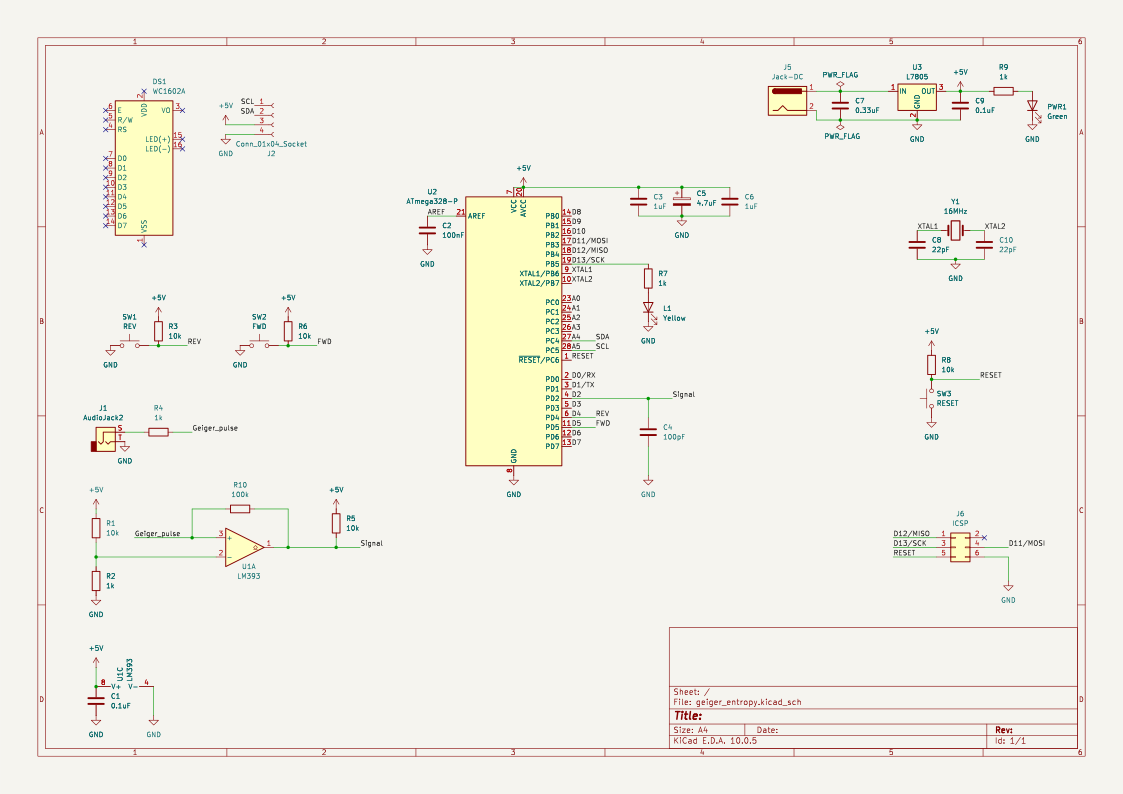
Geiger entropy is an open-source printed circuit board by captainchapster, from the captainchapster/Entropy32 repository on GitHub, published under the MIT licence. It is a 2-layer board of 112 × 63 mm with 36 parts on 49 nets, routed with 135 tracks and 308 vias.
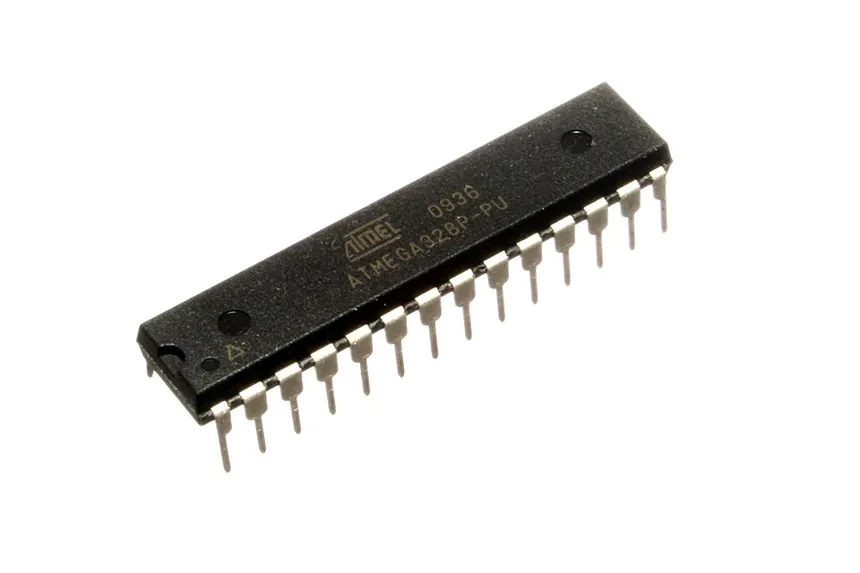
It is built around the ATMEGA328-PU, L7805 and LM393. Its parts include 10 capacitors, 10 resistors, 4 connectors, 3 ICs and 3 switches. It belongs with the sensors and measurement boards and the AVR (ATmega, ATtiny) boards of this library.


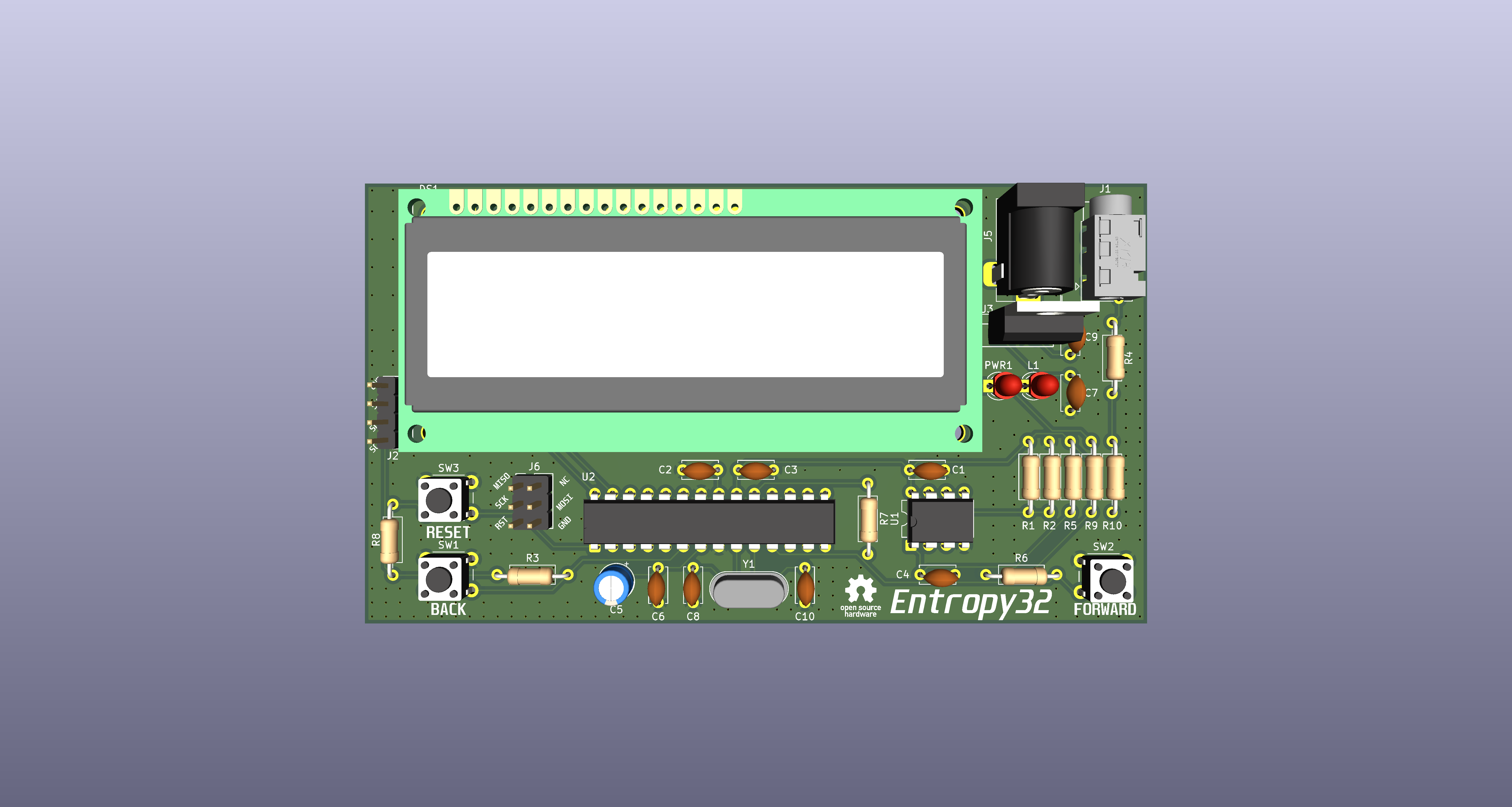
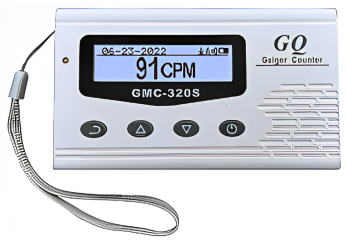
Entropy32 (aka The Universe Bifurcator) is a dedicated Bitcoin seed phrase generator that uses radioactive decay as its entropy source. It's completely open source and designed to be simple, auditable, and buildable by anyone with readily available components.
Pseudo-random number generators are deterministic — given the same seed, they always produce the same output. True randomness for something as consequential as a Bitcoin wallet's seed phrase should come from a physical process nobody can predict or manipulate. Radioactive decay is quantum-mechanically random: the timing of individual decay events is fundamentally unpredictable, making it an ideal entropy source for generating cryptographic secrets.
| File | Purpose |
|---|---|
entropy32.ino | Main firmware — state machine, entropy capture, and UI logic |
sha256.h / sha256.cpp | SHA-256 implementation used to condition raw entropy |
bip39_wordlist.h | BIP39 English wordlist, compiled into firmware |
button.h | Button input handling |
english.txt | Source BIP39 wordlist |
generate_wordlist.py | Script to regenerate bip39_wordlist.h from english.txt |
The Arduino sketch (entropy32.ino) and its accompanying .h/.cpp files must remain in the same top-level folder for the Arduino IDE to compile correctly — it doesn't recurse into subfolders for sketch code. Open entropy32.ino in the Arduino IDE, verify your board settings for the ATmega328P, and flash as normal.
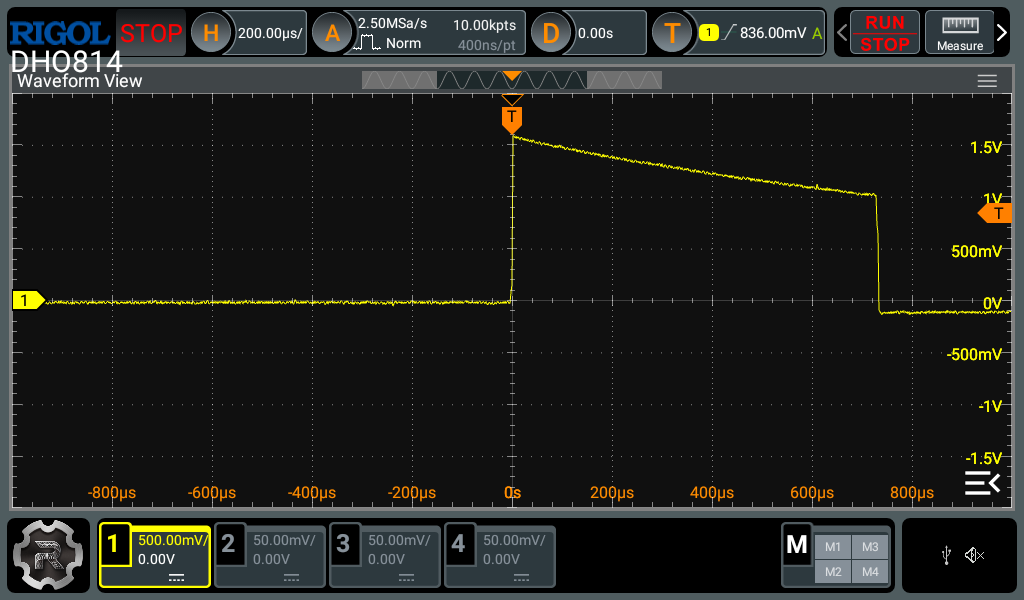
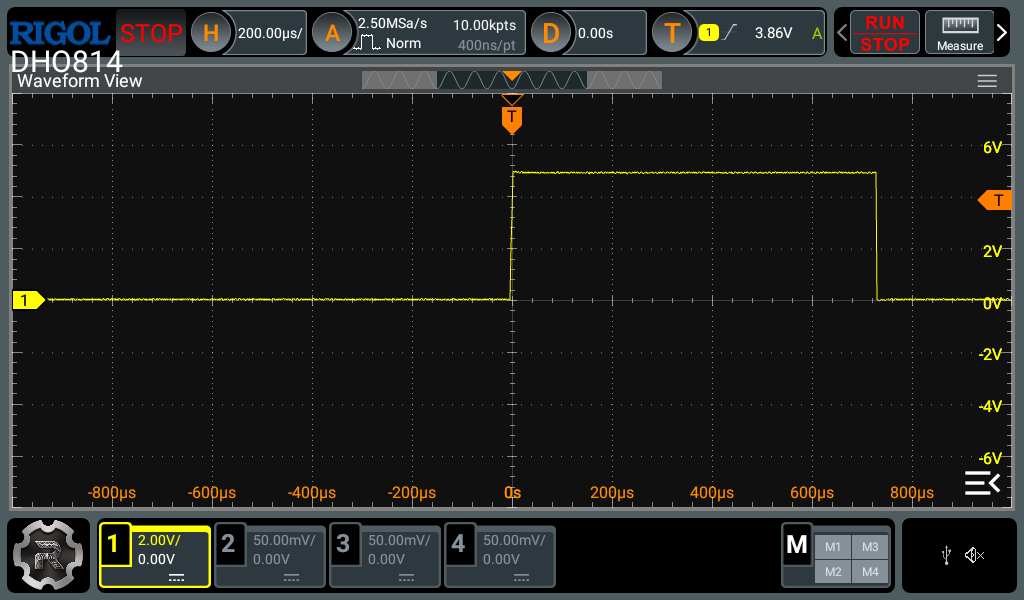
Entropy quality is being validated against the NIST SP 800-90B methodology for entropy sources used in random bit generation.
This is a hobbyist/educational project. If you use it to generate a real Bitcoin seed phrase, understand the risks: verify the entropy quality yourself, review the code, and never trust a seed-generating device (this one included) with significant funds without independent auditing.
MIT LICENSE.CERN-OHL-S v2 LICENSE.| Qty | Value | Footprint | References |
|---|---|---|---|
| 5 | 10k | Resistor_THT:R_Axial_DIN0207_L6.3mm_D2.5mm_P10.16mm_Horizontal | R1, R3, R5, R6, R8 |
| 4 | 1k | Resistor_THT:R_Axial_DIN0207_L6.3mm_D2.5mm_P10.16mm_Horizontal | R2, R4, R7, R9 |
| 2 | 0.1uF | Capacitor_THT:C_Disc_D5.0mm_W2.5mm_P5.00mm | C1, C9 |
| 2 | 1uF | Capacitor_THT:C_Disc_D5.0mm_W2.5mm_P5.00mm | C3, C6 |
| 2 | 22pF | Capacitor_THT:C_Disc_D5.0mm_W2.5mm_P5.00mm | C8, C10 |
| 1 | 0.33uF | Capacitor_THT:C_Disc_D5.0mm_W2.5mm_P5.00mm | C7 |
| 1 | 100k | Resistor_THT:R_Axial_DIN0207_L6.3mm_D2.5mm_P10.16mm_Horizontal | R10 |
| 1 | 100nF | Capacitor_THT:C_Disc_D5.0mm_W2.5mm_P5.00mm | C2 |
| 1 | 100pF | Capacitor_THT:C_Disc_D5.0mm_W2.5mm_P5.00mm | C4 |
| 1 | 16MHz | Crystal:Crystal_HC49-4H_Vertical | Y1 |
| 1 | 4.7uF | Capacitor_THT:CP_Radial_D5.0mm_P2.00mm | C5 |
| 1 | ATmega328-P | Package_DIP:DIP-28_W7.62mm | U2 |
| 1 | AudioJack2 | Connector_Audio:Jack_3.5mm_PJ320E_Horizontal | J1 |
| 1 | Conn_01x04_Socket | Connector_PinHeader_2.54mm:PinHeader_1x04_P2.54mm_Vertical | J2 |
| 1 | FWD | Button_Switch_THT:SW_PUSH_6mm | SW2 |
| 1 | Green | LED_THT:LED_D3.0mm | PWR1 |
| 1 | ICSP | Connector_PinHeader_2.54mm:PinHeader_2x03_P2.54mm_Vertical | J6 |
| 1 | Jack-DC | Connector_BarrelJack:BarrelJack_Horizontal | J5 |
| 1 | L7805 | Package_TO_SOT_THT:TO-220-3_Vertical | U3 |
| 1 | LM393 | Package_DIP:DIP-8_W7.62mm | U1 |
| 1 | RESET | Button_Switch_THT:SW_PUSH_6mm | SW3 |
| 1 | REV | Button_Switch_THT:SW_PUSH_6mm | SW1 |
| 1 | WC1602A | Display:WC1602A | DS1 |
| 1 | Yellow | LED_THT:LED_D3.0mm | L1 |
The 34 most common of 36 parts.
It measures 112 × 63 mm and has 2 copper layers, 1.6 mm thick.
36 parts, built around the ATMEGA328-PU, L7805 and LM393. The full list of its parts is on this page, with links to each part's symbol and footprint where PCBKit's library has them.
From the captainchapster/Entropy32 repository on GitHub, at the commit this page was made from: the board is KiCad/geiger_entropy.kicad_pcb and its schematic KiCad/geiger_entropy.kicad_sch. PCBKit opens the board in the browser, with nothing to install.
Its repository publishes it under the MIT licence: you may reuse it on that licence's terms (keep the author's notice, and for a copyleft licence share your changes alike).


keeos-io/ogham
Ogham — a dual-voice bytebeat synthesizer for Eurorack. Firmware (MIT) and hardware (CC BY-SA 4.0).


computerguy096/snark-barker-mini
A miniaturized version of the Snark Barker

